Category Archives: Commentary on Religion

The Wise Old Wood Gods Laugh

Winter                                   Garden Planning Moon

Tom Crane sent out an e-mail that contained many different photographs of paths and trails.

Then Bill Schmidt sent out this poem.  I love it.  Not always great prosody, but the concept?  Wow. Read all the way to the last stanza.  It’s worth it.

by Sam Walter Foss  (a new hampshire librarian)
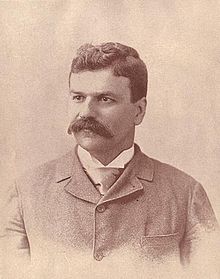
(NH 1858-1911)

The Calf-Path


One day, through the primeval wood,

A calf walked home, as good calves should;

But made a trail all bent askew,

A crooked trail as all calves do.

Since then three hundred years have fled,

And, I infer, the calf is dead.

But still he left behind his trail,

And thereby hangs my moral tale.

The trail was taken up next day,

By a lone dog that passed that way.

And then a wise bell-wether sheep,

Pursued the trail o’er vale and steep;

And drew the flock behind him too,

As good bell-wethers always do.

And from that day, o’er hill and glade.

Through those old woods a path was made.


And many men wound in and out,

And dodged, and turned, and bent about;

And uttered words of righteous wrath,

Because ’twas such a crooked path.

But still they followed – do not laugh –

The first migrations of that calf.

And through this winding wood-way stalked,

Because he wobbled when he walked.


This forest path became a lane,

that bent, and turned, and turned again.

This crooked lane became a road,

Where many a poor horse with his load,

Toiled on beneath the burning sun,

And traveled some three miles in one.

And thus a century and a half,

They trod the footsteps of that calf.


The years passed on in swiftness fleet,

The road became a village street;

And this, before men were aware,

A city’s crowded thoroughfare;

And soon the central street was this,

Of a renowned metropolis;

And men two centuries and a half,

Trod in the footsteps of that calf.


Each day a hundred thousand rout,

Followed the zigzag calf about;

And o’er his crooked journey went,

The traffic of a continent.

A Hundred thousand men were led,

By one calf near three centuries dead.

They followed still his crooked way,

And lost one hundred years a day;

For thus such reverence is lent,

To well established precedent.


A moral lesson this might teach,

Were I ordained and called to preach;

For men are prone to go it blind,

Along the calf-paths of the mind;

And work away from sun to sun,

To do what other men have done.

They follow in the beaten track,

And out and in, and forth and back,

And still their devious course pursue,

To keep the path that others do.

They keep the path a sacred groove,

Along which all their lives they move.

But how the wise old wood gods laugh,

Who saw the first primeval calf!

Ah! many things this tale might teach –

But I am not ordained to preach.
 

On Moving Toward Doing the Work Only I Can Do

Winter                              First Moon of the New Year

Spent yesterday shifting to my new work schedule.  A couple of hours on Ovid, plus analyzing some of Caesar’s Gallic Wars.  Edited three portions of the Tailte Mythos:  Book I and began clipping postings from Ancientrails to consult for my first essay in the Reimagining project.

Also learned that I can’t go to sustaining status at the MIA until I’ve had 8 years as a docent.  Sustaining would cut my tour requirements in half.

This means I’m going to have duck out of the Sierra Club sooner than I had planned.

No plant starts this year.  I’m going to buy already started plants and of those only those we decide to grow for particular, planned uses.  We’re going to shift our gardening now toward minimalism, toward those things we’ll preserve.  Two colonies of bees.  Emphasizing less maintenance everywhere, planting towards a time when the gardens will need even less, eventually very little care.

Life’s focus changes as our lives change and now I’ve become focused on those kind of things only I can do.  Only I can write the Tailte books.  Only I can set down my scattered thoughts about a sort 0f ur-faith, a common reverence all of us on the planet might share.  Others might/will translate Ovid, but only I will work toward a beginner’s level commentary, one similar to Pharr’s commentary on Vergil.

Not sure why now for this shift except to say that I know my time is finite.  Yes, it always has been, that’s true, but now it seems existential.  No, I’m not covering something up here, I’m not ill, in fact, I just got a set of labs that Kate says are typical of a 40 year old.

Long ago, in my 20’s, I read an article about when certain professions reach their maturity.  You know the material about mathematicians and scientists, early ripe, but certain other professions matured much later, writers and artists, for example, with the oldest age of maturation according to this reckoning being 50, for philosophers.

Factoring in my drinking and an early career emphasis on politics and the practical side of religion, I don’t find 65 to far out of range for me.  I feel mature in my thinking and writing skills now and I need to deploy them or my unique contribution will be lost.

How the New Year Might Look

Winter                                           First Moon of the New Year

At an inflection point with the Latin.  Either I keep the pace I currently follow, maybe 6 hours a week; or, I ramp up, say to 10 or 12, maybe a couple of hours each day.  Some analysis of other texts–maybe Caesar or Suetonius or Julian, I have all of these in Loeb Library volumes–plus more translating of the Metamorphoses.  My inclination is to ramp up, do more, focus on Latin and the novel.  That’s what my heart tells me.

That other project, too.  The one I’ve got slotted for 5,000 word essays each month next year.  Where I’m going to give voice to my whirling ideas about the earth, about ge-ology, about what would help us help our home planet.  That one, too.

When you add these things together, they constitute real work and I feel good about that, not trapped or bummed.  Now all I need is a way of allocating my time so I can work them all in and still manage the art, the garden, the bees and family.

That may be my new year’s work.  Pruning activities and creating a new schedule.


Solstice Celebrations. What Might They Mean?

Winter                                  Moon of the Winter Solstice

Something new seems to be happening.  Not sure if I’m reading the rustling in the ether of our culture right, but it feels like the Great Wheel may have begun to reemerge.  Not in a Wiccan or alt-pagan way, though that’s certainly there, but in a from the ground up way (so to speak).

A friend called me tonight to wish me a salubrious solstice.  Kate wants to do a fire tonight. First Universalist has a solstice celebration as do many UU congregations.  There has been, for a while now, solstice celebrations on the continent.  I’m most familiar with ones in Scotland and Sweden.

These celebrations, rituals whatever we might call them are not confined to the Winter Solstice though the spreading knowledge of Christmas’s relationship to the Saturnalia, itself a winter solstice holiday, has given the Winter Solstice a cultural leg up, as has a more general appreciation for the other festivals of light around this time:  Deepavali, Hanukkah, Christmas trees and home decorating–neither one of which has any obvious link with the Christian holiday.

I don’t know quite how to go about measuring the cultural penetration of solstice and equinox awareness, or the depth of its relation to individual’s religious yearnings, but my own sensibilities suggest the penetration has gone far past the surface and has, for some folks, like myself, reached the point of religious sentiment.

The Minneapolis Institute of Arts, in a somewhat ham-fisted way, changed its holiday traditions focus from a sort of Victorian dress up for Christmas to what is now called a Winter Lights celebration.

I’d be interested to know what you think, what you see from your standpoint.

The Death of an Honest Man

Samain                                      Moon of the Winter Solstice

Christopher Hitchens died.  An honest man, Diogenes would have stopped searching.  He faced death as a non-believer, a man whose God Is Not Great made him a name in the theist–anti-theist debates of this millenia’s early days.

His angry anti-religious bias fit in well with the Richard Dawkin and Sam Harris crowd, agreeing with their totalizing, methinks-they-protest-too-much screed.  If religion is so bad, why has it persisted for so long?  A scathing atheist has backed himself into a metaphysical box, one much like the box he insists all religionists occupy.

To adamantly claim God’s non-existence is just as silly and unwarranted as the claim of God’s existence.  Neither can have, by definition, empirical validation, so, in each case we enter the realm of faith, of conjecture believed because it feels right, true.

Faith in its purest forms is a beautiful aspect of human culture, allowing us to transcend the often bleak realities of the day-to-day, finding a blissful reality where others see only pain and boredom.  Marriage, for example, requires faith in another human being, another human being as wonderful and amazing as yourself and as awful and horrible.

Monotheism as practiced in the dominant Western religious traditions is only one item on the menu of faith as offered by human culture and even it comes in three flavors:  Christian, Jewish and Muslim.  The ancient traditions of the West synch up better with the pluralist pantheons of India, Nepal, Tibet, Africa and the indigenous Americas.

Monotheism, rather than religion per se, seems the better target, since it makes definitive and often absolute claims, claims which sometimes pose as divine law, unbreachable and final.  The nature of monotheism’s claims rather than its actual content or institutional form are the problem.

With one deity and one book the temptation to sure knowledge, certain dogma too often overwhelms these believers, though in all three traditions there are, too, the more measured, more humble ways.  In fact, strange as it may seem given the all too charged dialogues of the past twenty years, the liberal orientation–former mainline Christianity, reform Judaism and the Sunni/Sufi mainstream Islam–is numerically dominant.


The Dark Time

Samain                                   Moon of the Winter Solstice

Samain in Lima, Peru.  We came back through Lima from a point on the far side of the city just as evening fell.  Even there, Samain’s pale memory, Halloween, saw children in Mickey Mouse costumes, princess costumes, carrying plastic pumpkins, many of them walking toward a large shopping mall in one area, a Halloween party rocking the joint.

These Latin cultures have a certain affinity with Samain as a festival when the veil between the worlds thins and the dead can cross, come back to visit family or to haunt them.  Cemeteries had fresh flowers at grave markers, grass had been cut, masses said, loved ones remembered.  In the White City, the vast and prominent cemetery in Guyaquil, Ecuador, the mausoleums and the multiple, tall columbariums, the markers climbing the hill in the back all speak to an engagement with death, a sort of living and ongoing engagement with death, so very different from the sterile, hospital based, don’t look culture we’ve created here.

Next week, a week from Wednesday, comes the Winter Solstice and Samain will be at an end.  In sorting material about the Winter Solstice, about Yule, about Saturnalia and even Deepavali and Hanukkah the emphasis is mainly on Sol Invictus, as the Romans called him, the Unconquerable Sun.  An emphasis on the long march of daylight that begins on the longest night.

Another, equal concept celebrates the Winter Solstice as the longest night of the year, the culmination of a steady progress by darkness to push back the realm of light.  Both have their mirror in the human mind.  The light of reason shines itself on the questions we have about the way things are.  How things work.  Why this happens and that does not.  Yes.

But.  A child lives in the warm dark for nine months before coming to the light.  Ideas often lie hidden, tucked away somewhere in the darkness of the mind, back there fermenting, gathering weight.  Dreams sometimes pick those ideas up and play with them.  Too, our life is not all rational, not all light, perhaps not even very much so.

Most of life comes from the irrational, the emotional, the intuitive and to worship the light can be a denial of these important elements in our everyday life.

The Great Wheel shows us the way.  We need the fallow time, the restfulness of winter and the cold, just as we need the sunny time, the growing season, the time of thinking.  These needs are not occasional but persistent, coming into our lives again and again and again just as the earth wheels through the sky, repositioning the sun’s light.  Blessed be.

Hello, Darkness

Samain                                   Moon of the Winter Solstice

The holidays.  We’ve got no decorations up.  No Christmas or other holiday music plays here.  We did all of our shopping online.

When I was at Best Buy a week or so ago while hunting for a device to download pictures to Kate’s i-pad (no joy on that front even now), Christmas music played and, as I said here after that, I responded, singing along, even getting the little uptick in the heart that comes with the commercial or family holiday all Americans celebrate at this time of year.

I do miss some of the over doing, present wrapping–ok, I don’t miss present wrapping, decorating the tree–well, I don’t miss getting the tree, putting up the tree or the occasional nasty surprise like the one my friend Mark discovered when he watered and watered this year’s tree only to discover the pan had cracked and water had leaked out under the tree skirt, nor do I miss taking down the tree, cleaning up the fallen needles, Christmas music–responding in the store meant something to me, but only because I’d spent 40 days away from the US and this is one strong cultural tradition, over saturation spoils the effect, church services–well, I bailed on those a long, long time ago.

So, maybe I’m not too sad about our ascetic approach to the holidays.  Besides, the holiday that now means the most to me, the Winter Solstice, comes along now, too, and I do celebrate that one with candles, meditation and writing.

There is, though, a powerful need for reflection, for love, for warmth in all its manifestations.  Sergio, our guide on a tour in Ushuaia, the southernmost city in the Americas, explained that winters there, where the nights are long long long, often results in depression.

Another argument for a Ge-centric faith, one that acknowledges the darkness, relishes its nurturing power, rejoices at the return of the light and doesn’t have to get overly metaphysical about it.

These brave festivals of the light like Deepavli, Christmas, Hanukkah, Yule and even New Years all respond to the same fundamental astronomical fact, the lengthening of night and the ancient fear that the sun may not return.  In that sense they’re all good, but why not acknowledge, first, the fundamental reason for the season, axial tilt?

Reimagine

Samain                          Moon of the Winter Solstice

Jon sent these two links.  Wish I’d had’em when I owned that farm up near Nevis, Minnesota.  I might still be up there, motoring around on some of these very clever inventions.  They show what an ingenious mind can do when rethinking what appear to be over and done with ideas.

http://opensourceecology.org/
http://www.ted.com/talks/lang/en/marcin_jakubowski.html

Makes me wonder what other ideas need a complete rethink.  Computers have followed a pretty standard architecture up to now, one based on a central processing unit.  I read an article in Scientific American last week about a neural computer which, in essence, gives each unit of a computer a cpu, allowing for massively parallel processing as an integral part of the design. It’s modeled on, but not attempting to replicate, the human brain.

How about housing?  Cars?  Or, my personal quest and long time obsession, religion?  The family?  Electrical generation?  I’m interested in distributed generation where a cul de sac or an apartment building or a couple of blocks city residential units might get their electricity from, say, a combination of wind, solar and geo-thermal units sited in their immediate vicinity.

Here’s another one that could use a complete overhaul, reimagining:  nations.  The nation state is a relatively new phenomenon, most experts date its rise somewhere around 1800, perhaps a hundred years earlier in the instance of Portugal and the Netherlands.  In the wake of the globalization of economic life national boundaries have much different meanings that they did, say, 50 years ago.

Let’s go back to religion for a second.  Over the last several years, 23 to be exact, I’ve wrestled with the hole left by Christianity in my life and sought to fill it through what I call a tactile spirituality, one wedded to the rhythms of the seasons, of flowers and vegetables, of bees.  This direction took its initial impetus from an immersion in Celtic lore while I sifted for writing topics.

Then, I began to follow the Great Wheel of the seasons, a Celtic sacred calendar focused on 8 seasons, rather than four.  That led me to integrate gardening with my sacred calendar.  In the wake of these two changes in my life, I began to see the vegetative and wild natural world as more than tools for food or leisure, rather I began to see that they were my home, that I lived with them and in them, rather than having them as adjuncts to my anthropocentric life.

This whole change, this rethink of what sacred and holy mean, what the locus of my spirituality is and where it is, has had a long maturation, much thought and experimentation.  My hope is that my reimagining might provide a common religious base, a sort of ur-religion, which all humans everywhere can embrace.

As in times past this base religion could certainly have others layered on top of it, its essence after all is to be non-exclusive.  What I hope further is that reasserting, inviting, even luring others to see the sacred and the holy in our planet and its other living beings, they will be more likely to join in to see it healthy and vital.

The Incarnation

Samain                               Moon of the Winter Solstice

Snow.  And darkness.  So different from spring and the lengthening days of South America. The darkness and the snow both make me feel at home, rooted in the season that my genes tell me ought to be going on in December.

Cold seems to have abated and I’ve been working on my nativity presentation.  Now I end with the depression era photograph by Dorothea Lange.  The mother and her children.  A universal and timeless theme.

I’ve just created my first slide show, this one done in the presentation format of openoffice.doc because that’s the software I have on my laptop. (it’s free.)

It gives me the ability to project full view images which I could not do in the .pdf format I used when I checked out the projector on Thursday.

The whole nativity story, of course, comes into the Jesus narrative as an afterthought, a reflection that such an important guy must have had a special and memorable birth.  Not an unusual phenomena in history, but it does make the familiar stories and images very much in the realm of myth and archetype and not history.

The big idea I take away from the nativity narratives is the incarnation.  God becomes human.  Especially in a monotheistic faith this is an extraordinary idea, mind blowing.  Seemingly impossible.  Debate over just how it was possible occupied the Christian church until the Chalcedonian council when competing ideas got sorted and the notion of Jesus as both fully human and fully God became dominant.

In m own breakaway syncretism I put the notion of incarnation in synch with the Hindu namaste. The God in me bows to the God in you.  This way we don’t have to wrestle with the unusual task of fitting an omniscient and omnipresent being into a frail human vessel.  Instead, each of us is a splinter of the divinity, a chip off the old divine block.  We don’t have to pray upward and outward to reach the holy, rather we can go down and in, plumbing our depths, depths which have their roots in the sacred river.

No matter how you understand it this holiseason represents and celebrates the divine human.  Sounds about right to me.  Lets go caroling.

The Problem of Competing Versions of the Truth

Samain                                 Moon of the Winter Solstice

Colds.  Yeccchhh.  Feels like another one coming on.  In the list of things to consider when theodicy is under issue, colds would be at the top of my list.  If God created a good world, why does it have the cold virus?  Or, yes, if you want to be more to the point, cancer or blood clots or the human propensity toward violence.

Some people, read religious fundamentalists of all stripes, believe moral relativism, occasioned by secular humanist cynics or their equivalents, lies at the root of all social ills.  If people would just learn the commands of:  the Koran, Jesus, Hinduism, laissez-faire capitalism, Marxism, and FOLLOW them, then all the speed bumps and wild curves of history would iron out and we could get down to the smooth, orthopraxic life God or Allah or Vishnu or Adam Smith or Karl Marx intended.

Without even delving into the particulars expected by each fundamentalist group, we can see immediately one of the chief problems with fundamentalism.  They can’t all be right.  In other words if the absolute tenets of, say, strict Calvinism and Wahabi Islam conflict, who’s got the right answer?  Marx or Smith?  Vishnu or the Pentecostal Christian?  To make the absolute claim, which does soothe the believer with apparent predictability, you also lay yourself open to the catastrophic consequences of error.

Instead, colds come into the human body because the evolutionary process has created this dance between viral entities and,  in our case, mammals.  In the dance the virus hunts for a home with all the elements it needs to survive and reproduce.  The mammal’s body, as that home, tolerates its presence if it doesn’t throw things too out of whack, when it does.  Bam.  The body’s shock troops go into action.

Is the virus bad?  No.  It just is.  Is our body’s response good?  Well, to us as an organism, bent on survival, yes, but, in the ongoing dynamics of life, no, even our body’s response just is.

In the same wise human acts of all kinds can be judged according to criteria so certain, so dogmatic that they can be determined bad or good, sinful or salvific.  Trouble is, if you step outside that zone of certainty, then the same act may change its colors.

Spare the rod and spoil the child is a good example.  In some fundamentalist Christian groups this dictum is taken as holy writ. This type of fundamentalist certainty is the one clear correlation with both child and domestic abuse.  Abuse is the evaluation of others outside the circle of fundamentalist dogma.

This difficulty becomes even more trenchant, and even more pertinent, when we look from culture.  In the US and the West in general individual human rights trump collective decisions.  That is, genocide such as that carried out by the mercenaries of Moammar Qadafi, though state sanctioned, violated the human rights of those who resisted his government.

In the East though human rights themselves are seen as collective, that is, the good of the whole comes before the individual.  This belief gets its strongest support in the traditional Asian family structure where each family members lives so as to strengthen the whole family.

We in the West see this submersion of the individual in the larger whole as crushing liberty and freedom, the East sees us as leaning toward the irresponsible, selfish.  We tend to act in our  own self interest rather than the interest of the community, so our parents can’t count on us in their old age.  Even our children can’t count on us in our old age.  At least some of the time.

So, who’s got the right of it?  One perspective says the right of it depends on location.  If you’re in the West, then the path of individual improvement and progress is right.  If you’re a contemporary Roman Catholic, then abortion is wrong and heterosexuality is good.

Another perspective, one I hold, acknowledges the multiplicity of perspectives and sees the dialectical truths often illuminated by the conflicts between and among ethical systems as productive for our overall advance.  More on this later.  Gotta go sign a refinance document.