Imbolc Imbolc Moon
 The Imbolc moon has had its night in earth’s shadow, its night as super and blue and red. Hey, up in the sky, it’s Supermoon! And last night it was wonderful again. High, full, behind a faint veil of clouds. Orion and the moon. My two favorite celestial objects. Well, ok, the sun, too, but I can never look at it.
Something in a full moon moves me to the depths of my soul. I can find myself tearing up, a catch in my throat at the sheer extravagance of its beauty. It’s offered over and over, available to all, free.
So, too, Orion. He rises. Greets any who bother to find him. He stands always ready astride the horizon, a hunter and his dog. I don’t know whether he remembers our nights in Muncie while I watched over the entrance gate at the factory, but I like to think he does.
The night sky, in its shorter versions and in its Winter Solstice maximum, offers solace to those of us who want it. The night is, to paraphrase LP Hartley, a foreign country. They do things different there.
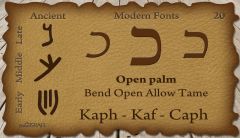 Last night I went back to Beth Evergreen, more kabbalah. Studying the kabbalah at night, especially under a full moon. Yes. Learning about more double letters: Pey, Caph, Reish, Tav.
I know this Jewish immersion of mine must seem odd to some of you who read this; but, it’s happened over many years, a sort of there and back again phenomenon. In this current instance Kate’s conversion long ago made us seek out a synagogue, just to see. We found Beth Evergreen, a special place, unique I imagine, even among Reconstructing congregations.
It was long ago though I read Isaac Bashevis Singer. Chaim Potok. Later, Rebecca Goldstein. It was long ago that I walked into the synagogue in Muncie for an anthropology assignment. It was long ago that I dated the jeweler’s daughter, Karen Singer, and found her father’s knowledge of philosophy astounding. Over the years many Jews have come into my life and I’ve always felt comfortable around them. As if we shared a common spirit. At Beth Evergreen that feeling surfaced immediately and has grown deeper over time.
 Being part of the tribe? No. Not for me. Walking along with the tribe as it wends its way through this moment in time? Yes.
Let me give you an example. The friend I mentioned yesterday, Bonnie Houghton, the green cemetery and burial, rabbi in training, Bonnie, got me going on the Recycle Me idea. It fits so well with my pagan sensibility and it’s something I can act on through this community.
Yesterday was Tu B’Shvat, the new year of the trees. It’s a part of the Jewish holiday year, just like Yom Kippur, Purim and Passover. Kate and I went to the celebration yesterday before kabbalah. Later, as I rested before returning for kabbalah, an image struck me: a Tu B’Shvat celebration in our yet-to-be green cemetery. We would be honoring trees, trees of all kinds yes, but especially, in this celebration, those trees growing from the graves of deceased members of Beth Evergreen.
Can you imagine? An ancient holiday celebrating trees and the gifts that they offer, now including trees with their roots literally in members of the congregation? How mystical, how wonderful would that be. Out there, on the mountain side, perhaps a mountain stream running nearby, a breeze rolling down the slope and my tree, the tree that is a tree and me, our leaves rustling as the gathered folks sing, pray. Yes.
 “The more I have looked into the Quest for the Grail, it is clear it is a Western form of Zen. There is no grail, it is understanding that the veil is the mystery of existence, it is nothing, but our interactions with everyone and everything.” Woolly and friend, Mark Odegard

 The Woolly Mammoths have been my companions, fellow pilgrims, on the way to Canterbury. Or, fellow Tibetan Buddhists inch worming their way around the sacred mountain, Meru. Or, my fellow Torah scholars, davening as we read the sacred texts. Or, fellow Lakotas, our skin pierced and tied to the world tree during the Sun Dance. Or, friends traveling through this life together until it ends.
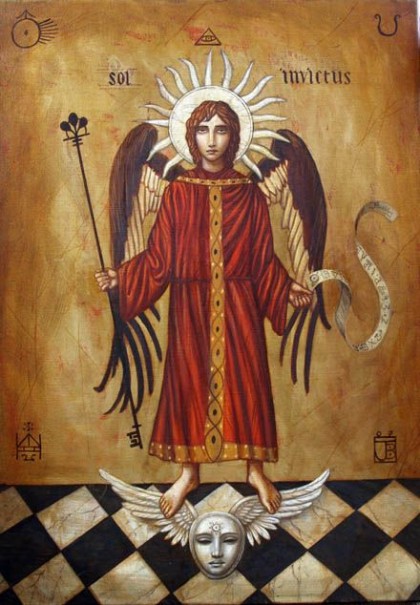 The solstices mark swings to and from extremes, from the longest day to the longest night, there, and as with Bilbo, back again. Darkness and light are never steady in their presence. The earth always shifts in relation to the sun, gradually lengthening the days, then the nights.
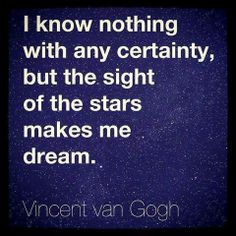 In these long nights the cold often brings clear, cloudless skies. The wonderful Van Gogh quote that I posted a few days ago underscores a virtue of darkness, one we can experience waking or asleep. Dreaming takes us out of the rigors of day to day life and puts us in the realm where ideas and hopes gather. So, the lengthening of the nights increases our opportunity to experience dream time. Whether you believe in Jung’s collective unconscious or not-I do, the rich resources of dreaming are available to us with greater ease when the nights are long and the cold makes sleeping a joy.


 In the darkness we can attend to the dark things within us, the places in our souls where our own origins and their ongoing impacts create a climate for our growth, down below the conscious considerations of our day-to-day lives. We can embrace this darkness, not as a thing to fear, but as a part of life, a necessary and fruitful part of life.
 When Hanukkah ends tonight, it will only be two days to the Winter Solstice. I long ago kicked transcendence out of my religious toolkit, believing it encourages authoritarianism, the patriarchy, and body negativity. How, you might ask? If we find our source of authority outside of ourselves, either up in heaven or with a divine father figure or anywhere outside of our body, we give away our own deepest connection to divinity, the sacred that lies within us. BTW: locating revelation in written texts does the same.
 I also recalled yesterday that I’ve had this end of year let down often. When I worked for the Presbytery, I noticed that no congregation wanted a church executive around during the run up to Christmas and the week after, through New Year’s. This may have been a post-school rationalization to give myself a winter break. Whatever it was I think the pattern is probably there, triggered this time by the end of kabbalah.
 The great wheel has turned again, moving Orion further down the southwestern horizon in the early morning. The air is cooler here. A Beth Evergreen friend, Alan, came in to the kabbalah class and announced, “Winter is really here. It’s so cold outside!” It was 22. Now in my fourth winter season here I’ve stopped commenting.
 Those -40 degree nights at Valhelga during one Woolly retreat. Working out on my snowshoes in the woods behind the library in Anoka, -20 degrees. The moments of -50 degree wind chill. Days with the temperature below zero, many days in a row. Minnesota. Not a lot of snow, but pretty damned cold.
 CC’s work with Maslow sparked a conversation about the difference between human agency in moving up the pyramid as opposed to the necessity of God’s agency. Within my worldview this is a false dichotomy, but the conversation was fruitful. It’s a false dichotomy to me for two reasons. 1. How else would God move someone up the pyramid save through human agency? 2. Since I see energy moving up and down the tree of life, from the invisible to the visible and back through the visible to the invisible, this energy flow is the key agency involved, imh. I might call it chi, or prana, or l’chaim. Could also call it divine or vitality or consciousness. I don’t see that adding God to the conversation accomplishes much.
 In the end I felt heard and honored for my understanding of the relationship between the cyclical turn of the seasons and the meaning of the tree of the life to kabbalists.
 Since I have long believed that the world’s religions are philosophy and poetry accessible to all, I remain eager to learn from them. Since I know their claims cannot all be true, I choose to remain outside them, yet to walk with them as part of my journey. During college, when fellow students were turning to Asian faiths: the hare krishnas, zen, tibetan mysticism, I believed that the religious traditions of the West were most culturally attuned to the American mind. I still believe that and find Judaism and its traditions and thoughts, like Christianity, trigger a depth of understanding I don’t get from the Asian faiths.
 Just noticed a quirky reminder of Coco and the song that saves Hector, Remember Me. Each time I have to login into a site, I enter a username and a password. Then, just below the blanks for those is a small square to check or not. It says, remember me? It reminds me, too, of the posts of the dead on Facebook. I can’t think of anyone else right now, though I know there are others, but I still get the occasional reminder for Kathleen Donahue who died two years ago from lung cancer. In my instance there is the now quite long trail of bytes and bits that breadcrumb my life over the last decade plus. Perhaps we could create
  I’m thinking that an intentional celebration of Samain could reflect, in a Celtic idiom, the upbeat nature of Dia de los Muertos though Samain is a more somber, more dangerous holiday. It emphasizes the thinning of the veil between the living and the dead, the crossing over of loved ones, but also faery folk, those of the Other World. I guess in this sense it has more in common with the festival of Hungry Ghosts in the Chinese tradition, where the dead have to be placated.