Category Archives: Great Wheel

Springtime of the Soul

Fall                                                                               Falling Leaves Moon

A brief interlude of high 70’s and 80’s disappears starting today. It’s 50 and rainy. Better, in my opinion. And more fitting for Michaelmas anyhow. The springtime of the soul.

St. Michael, the Archangel, is God’s general, the militant leader of the warrior angels, chief strategist in the war against the rebel angels and instrumental in ejecting Lucifer, the Morning Star, from heaven. His mass day, today, September 29th, honors him and the other archangels, Gabriel and Raphael, and often, Uriel.

Michaelmas was one of the four English quarter days which celebrated equinox and solstices on set days rather than on their astronomical occurrence. Thus, Michaelmas celebrates the autumnal equinox, which one author called the day of the “darkening.” It is the start of the English university first term and a day when rents were paid for the year, contracts settled and festivals held.

Michaelmas is the springtime of the soul because it presages the coming fallow time. It emphasizes the darkening aspect of the fall equinox when the hours of nighttime begin to exceed those of daylight. When the plant world faces the long dark cold, it turns inward,

goes down into the ground either as seed or as root and gathers its energy, readying itself for emergence in the spring when lightening begins and temperatures warm.

Just so with us. As a cold rain falls here today on Michaelmas in Andover, the joy of sitting inside with a book, or meditating, writing, sewing, quilting comes. Our inner life can begin to blossom, the richness in the soils of our souls feeds projects and dreams and meditations.

This springtime of the soul has only begun today and it will follow, over its time, the fallow season. I welcome you to this nurturing, deep time. Blessed be.


A Crucifixion Moment…for the garden

Fall                                                                                    New (Falling Leaves) Moon

The river birch has begun to shed its golden leaves, small instances of light as matter falling toward the ground. The neighbor’s Norway maple has turned its autumn red, a reliable clue that the seasonal change is well underway.

Senescence becomes the word for gardens, vegetable and flower. Green turns to brown, then withers and falls onto the earth which has held it up so long. Tired, I suppose, from the long fight during the growing season to remain upright.

The water that fills out the cells flees back to the roots or out into the air through transvaporation, so leaves shrivel, stalks collapse. But this is not the field of ruins it appears to be. This is instead gathered nutrients ready to return to the soil following that

most necessary of almost hidden processes, decay.

We have arrived, from one perspective, at our crop’s crucifixion moment, when they give up their bodies on behalf of others. It is only an apparent crucifixion though because the dead will rise again, either from underground chambers where they lie dormant or from seeds. What a wonder. And it happens every year.

Nocturne

Fall Equinox                                                                   New (Falling Leaves) Moon

For those of us who love the night, this is a fulcrum holiday. We enter the long period that starts with the final harvests and does not end completely until the vernal equinox. From today, till then, the night will gain dominance, peaking at the winter solstice, but not relinquishing its grip until the sun hits 0 declination in the east next March.

It’s not that I do not love the light, I do. It is rather that I prefer the dark, the quiet, the solitary. I’m also entranced, quite literally, by what I call Holiseason, that period beginning at Samhain and running through Epiphany. As we move into the dark, we also move into our fears, our paleolithic uneasiness with the reliability of the heavens.

These fears have driven humanity across time and across the globe to create brave holidays that feature the light. Yes, you could say that the emphasis on them really underscores our fears, rather than challenges them, but I choose to go with the perspective that they hit the fear directly. No, night, you cannot have us, not for all the day, never, and surely not for all the year. In the words of Battlestar Galatica, so say we all.

From late October to early January a parade of festivals bring us lights and gifts and warmth and family celebrations. What a delight. Good music, too. And theater.

It all starts tonight.

Mabon 2014 and the Springtime of the Soul

Fall Equinox                                                                      Leaf Change Moon

Today the earth’s celestial equator (the earth’s equator projected into space) passes through the sun’s ecliptic (the sun’s apparent path throughout the year, actually caused by earth’s orbit.) You usually hear this put the other way around; that is, as the sun passing through the earth’s celestial equator, but that represents the stuckness of paleolithic astronomy that assumed the earth was the center of the solar system. From the diagram above you can see the sun’s declination (degree above or below the celestial equator) is 0 on the vernal and autumnal equinoxes.

This same diagram is very clear about the solstices, too. You can see that when the earth’s orbit tilts the northern latitudes toward the sun, the sun is highest in the sky-the summer solstice.  When the sun is lowest in the northern sky-the earth tilts away from the sun and gives us the winter solstice.

Since the summer solstice day time has exceeded night time. In theory the autumnal equinox is the point of equilibrium between light and dark, but at our latitude that day actually occurs on September 25th this year. This is, however, the day the Great Wheel celebrates and it does so because of the sun’s zero declination at earth’s celestial equator.

This week then the victory of the sun, made complete on the summer solstice, begins to wane. The dark god of deep winter gains greater and greater authority as the sun’s rays spread out over a larger area of earth, thus weakening them, and the number of hours that the sun is in our sky, even in its weakened condition relative to the soil, decrease steadily until the night of the winter solstice. Thus comes the fallow, cold time.

It is no accident that the harvest season is now. Over the 475 million years (give or take a hundred million) since plants made it out of the oceans and onto land, plants have adapted themselves to the conditions that work with their particular genetics. Key aspects of a plant’s life include carbon dioxide, soil nutrients, available fresh water, adequate sunlight and temperatures adequate for all these to work with the plant’s life cycle.

Thus, as the earth’s orbit carries it to different relationships with solar strength, temperatures change along with it.  At its maximum when the earth tilts toward the sun and the sun is highest in the sky, the sun’s rays fall on a smaller area of land. Here’s an excellent simulation. University of Nebraska-Lincoln.

Plants have had the past 475 million years to refine their growing season so that it takes maximum benefit of the sun’s strength. In a very real sense the growing season is a clock, or an astronomical observatory directly correlated to the earth’s orbit around the sun–The Great Wheel.

On a spiritual level, if we follow the ancient calendar of the plants, the season of external growth, flowering and seed making, is waning now. Just as the plant either dies out and anticipates its rejuvenation from scattered seed or goes dormant and waits with stored energy below ground in roots or corms or bulbs, so we might consider this season as the one where we shift inward, away from the external demands upon us and the expectations put on us there.

Now we shift toward the interior life, the Self becomes more of a focus, our spiritual life can deepen. We can see this shift in the human life cycle if we compare the second phase of life with its emphasis on family creation and nurture and career, to the third, with its pulling back from those external expectations. The third phase is a post growing season time of life, not in the sense that growth ends, but that its focus is more down and in rather than up and out. The third phase is the fallow time.  Michaelmas on the 29th of this month is known by followers of Rudolf Steiner as the springtime of the soul.

The third phase marks the beginning of the springtime of the soul for the individual.
Movement Toward the Springtime of the Soul

Lughnasa                                                                                 College Moon

The rain and cool have come. The sun is lower in the sky. We will have lost 23 degrees of declination from June 20 to September 20. We have already lost 2 hours and 25 minutes of daylight June 25 through yesterday. The slide toward the Winter Solstice has proceeded and will accelerate on Mabon, September 20th, when the hours of night once again exceed the hours of daylight.

All of this is good news. Especially this year. Both Kate and I are ready to have a smaller property with less growing season work. Not because we don’t love it, but because we want more time now for other matters, like grandchildren and our creative work. The coming of the fallow time means the last garden here and movement toward a new year.  2015 will find us creating a new outdoors life in the Rocky Mountains.


At the Fair

Lughnasa                                                                            College Moon

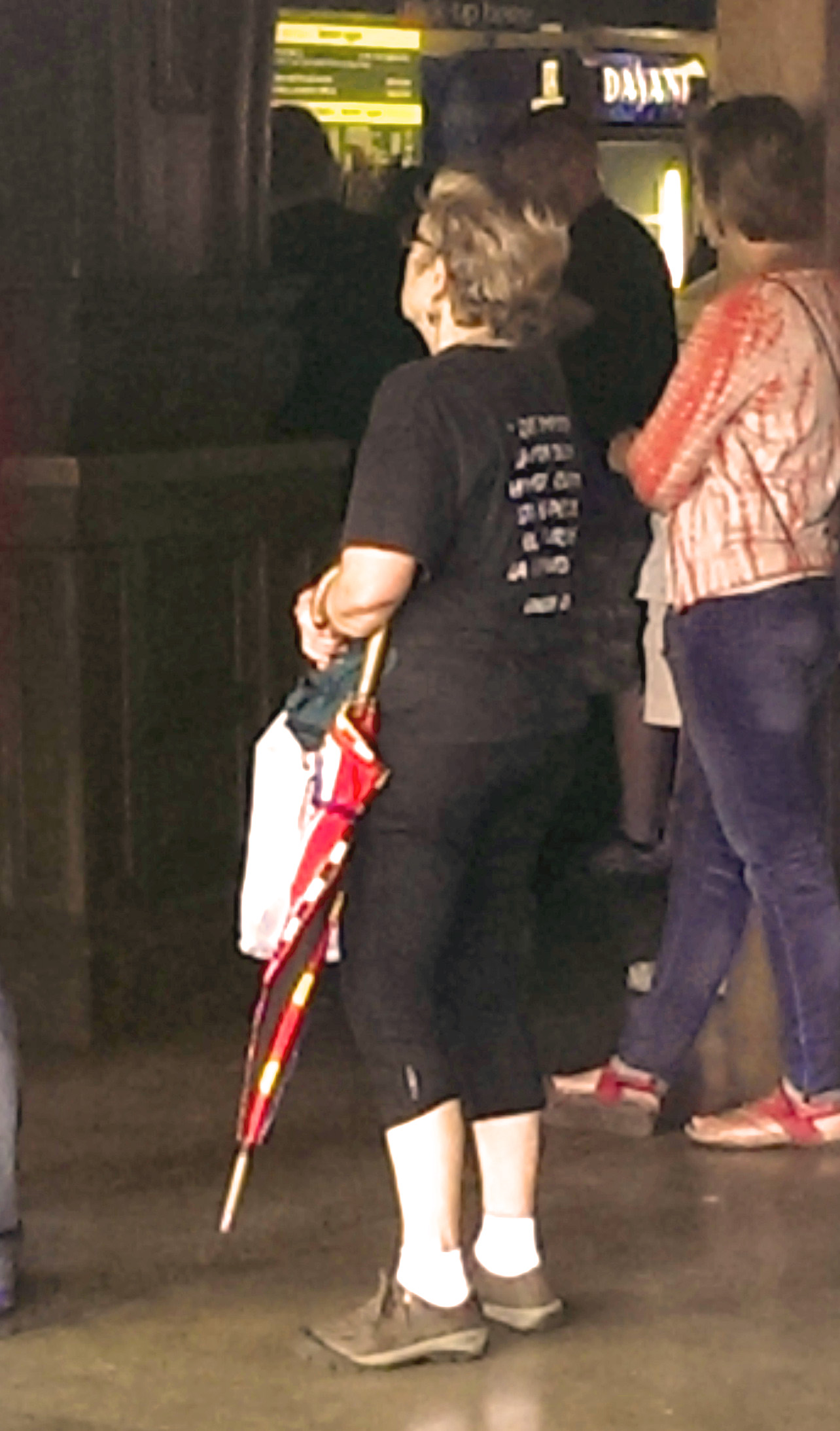
This guy was in line ahead of me for a discounted senior ticket:

fiddledIMAG0580


Samsara

fiddledIMAG0589


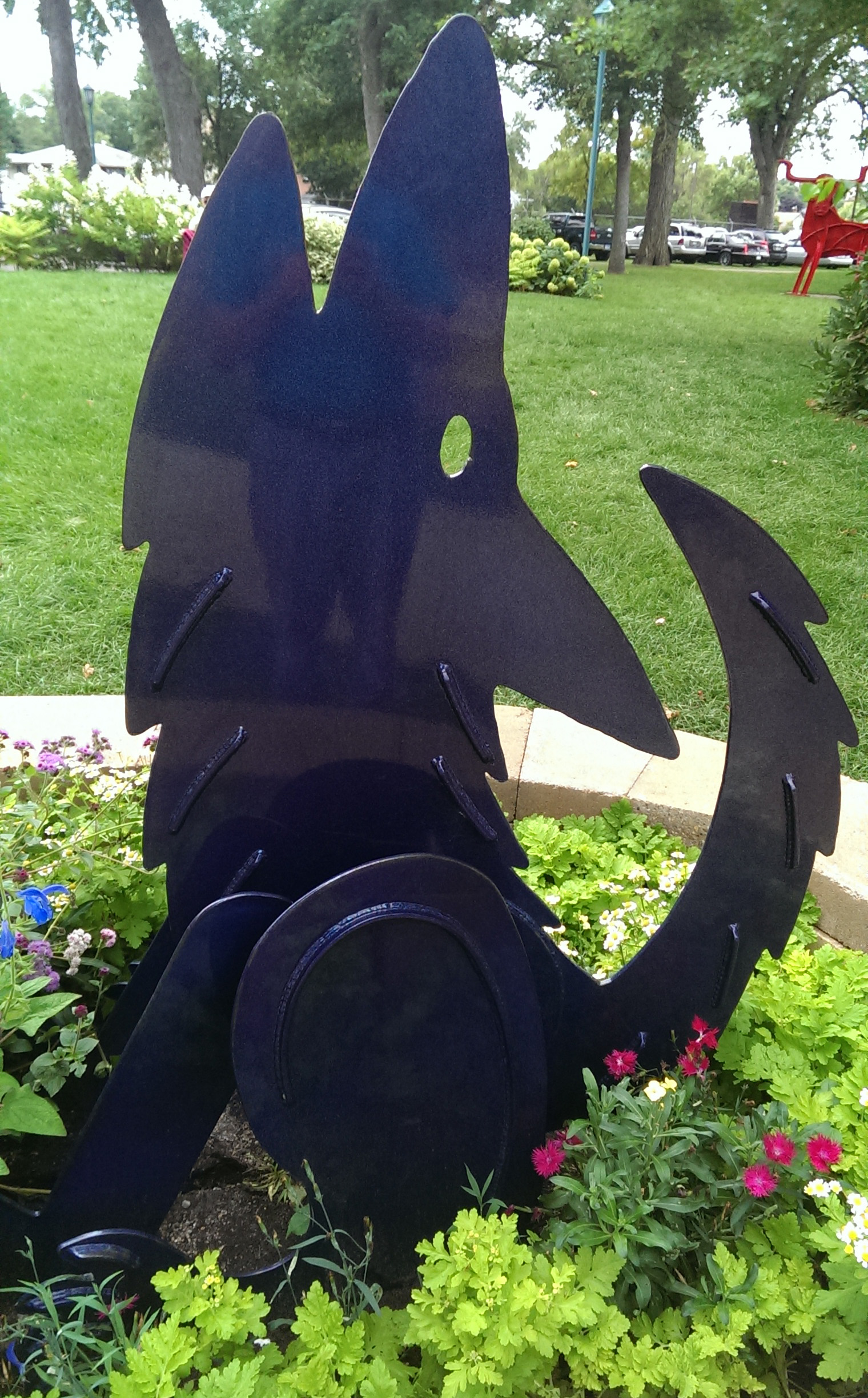
A howl from the West. Our future.


croppedIMAG0600


More of samsara.

fiddledIMAG0591


Dulling the pain of samsara.


croppedIMAG0592


fiddledIMAG0601Kate chooses her way.

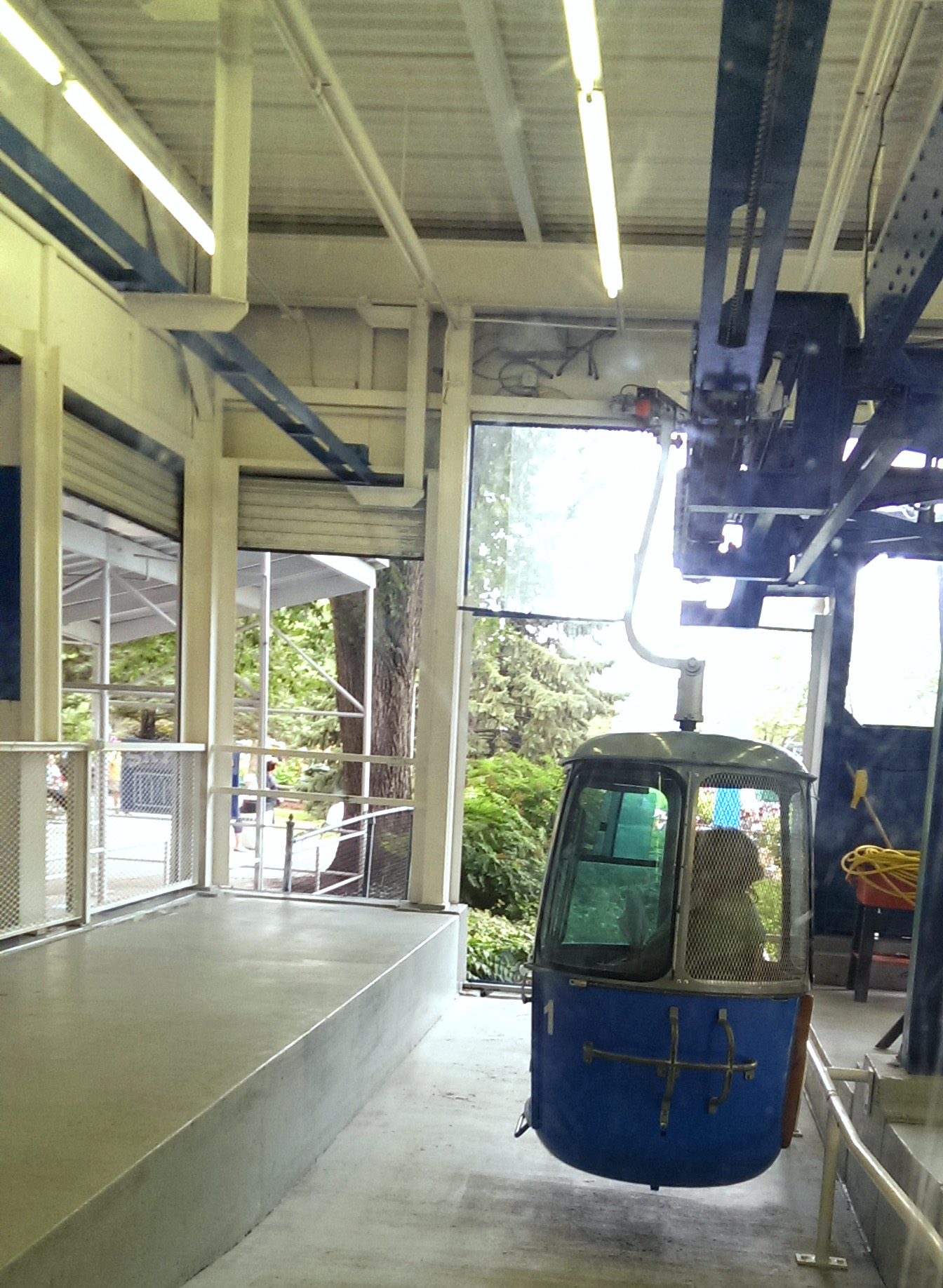
fiddledIMAG0603Leaving the earth behind

fiddledIMAG0605

Mortals

croppedIMAG0612


What we become if we remain at the State Fair too long.


Cheese Curds

Lughnasa                                                           Lughnasa Moon

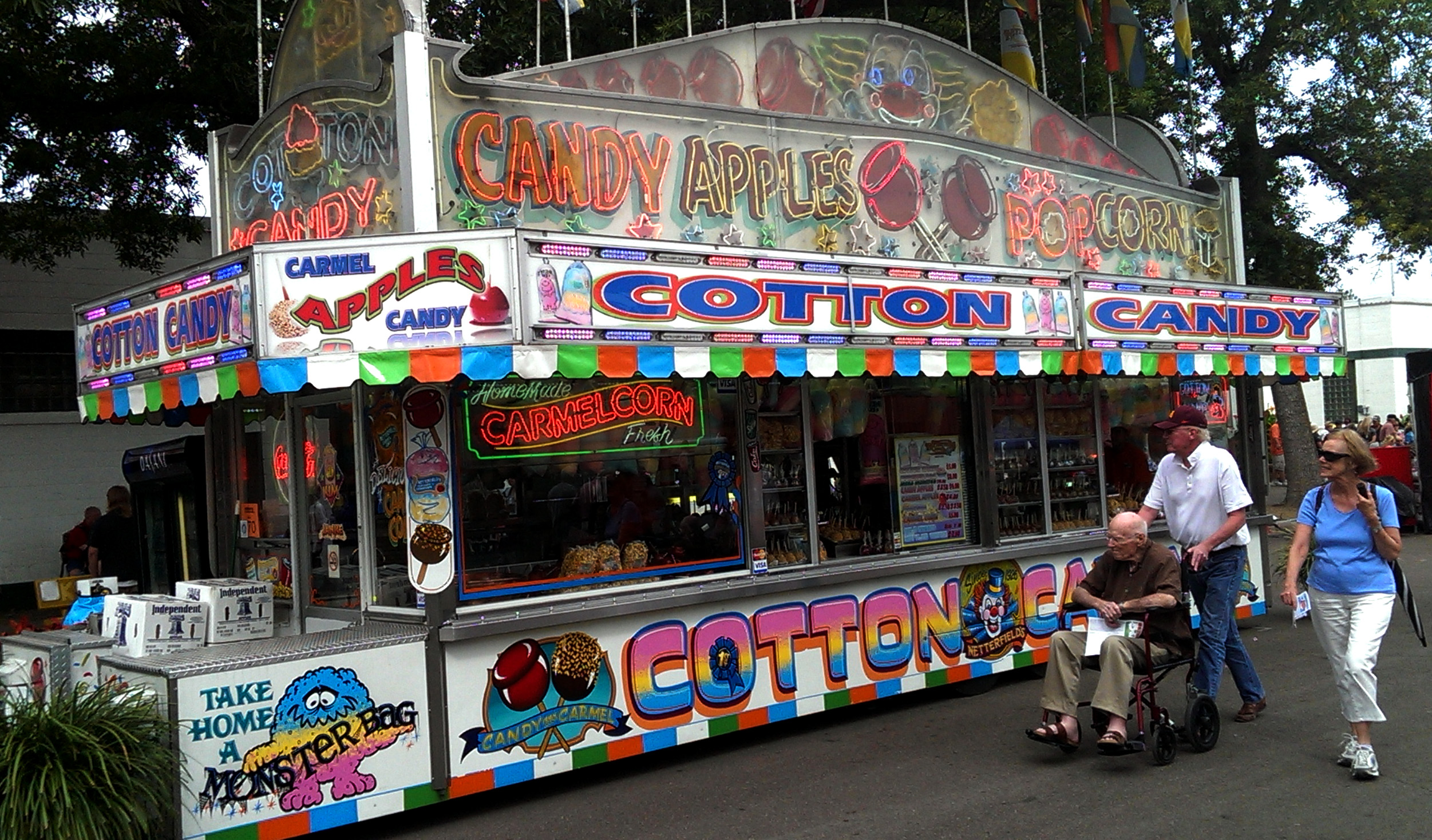
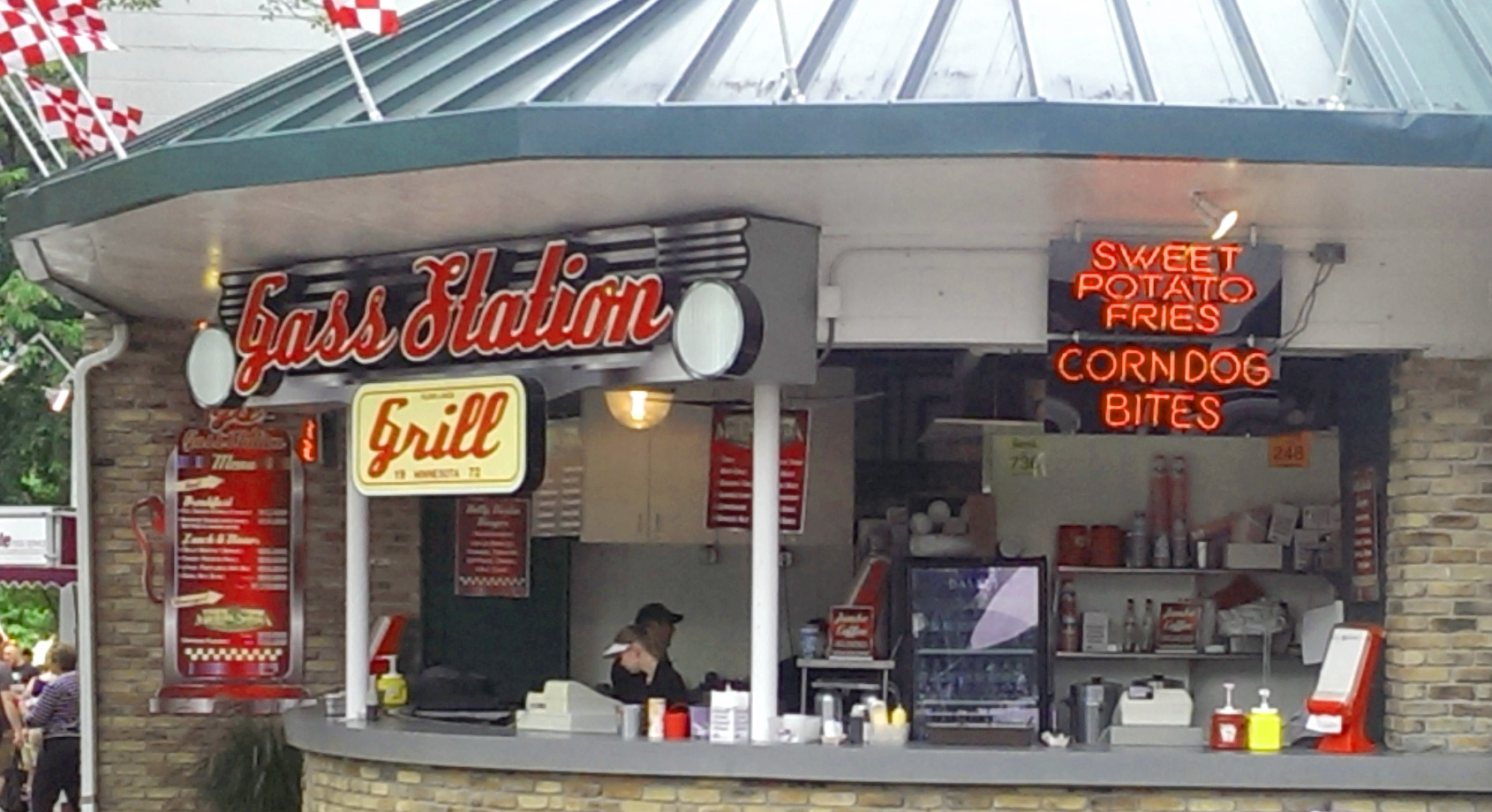
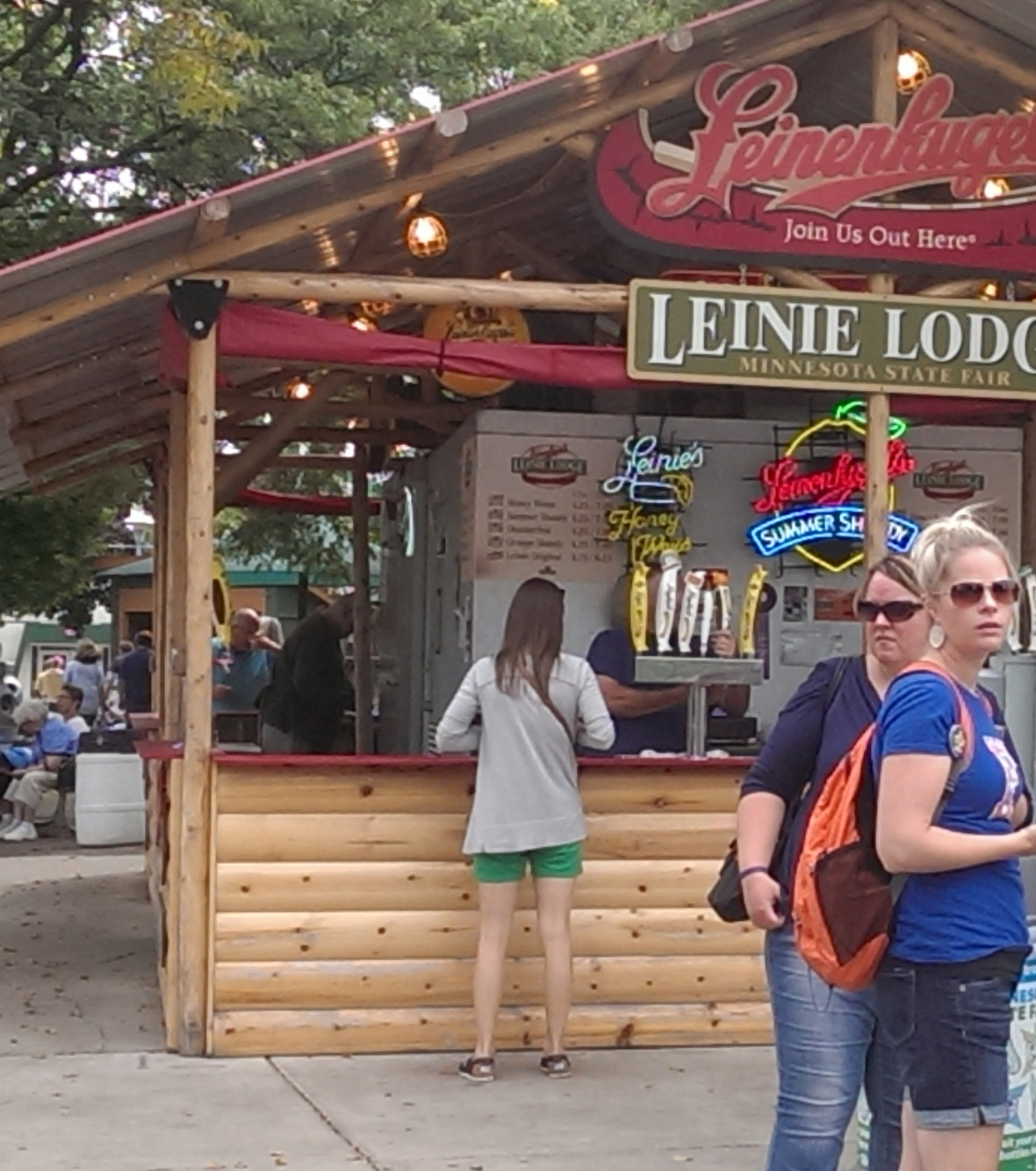
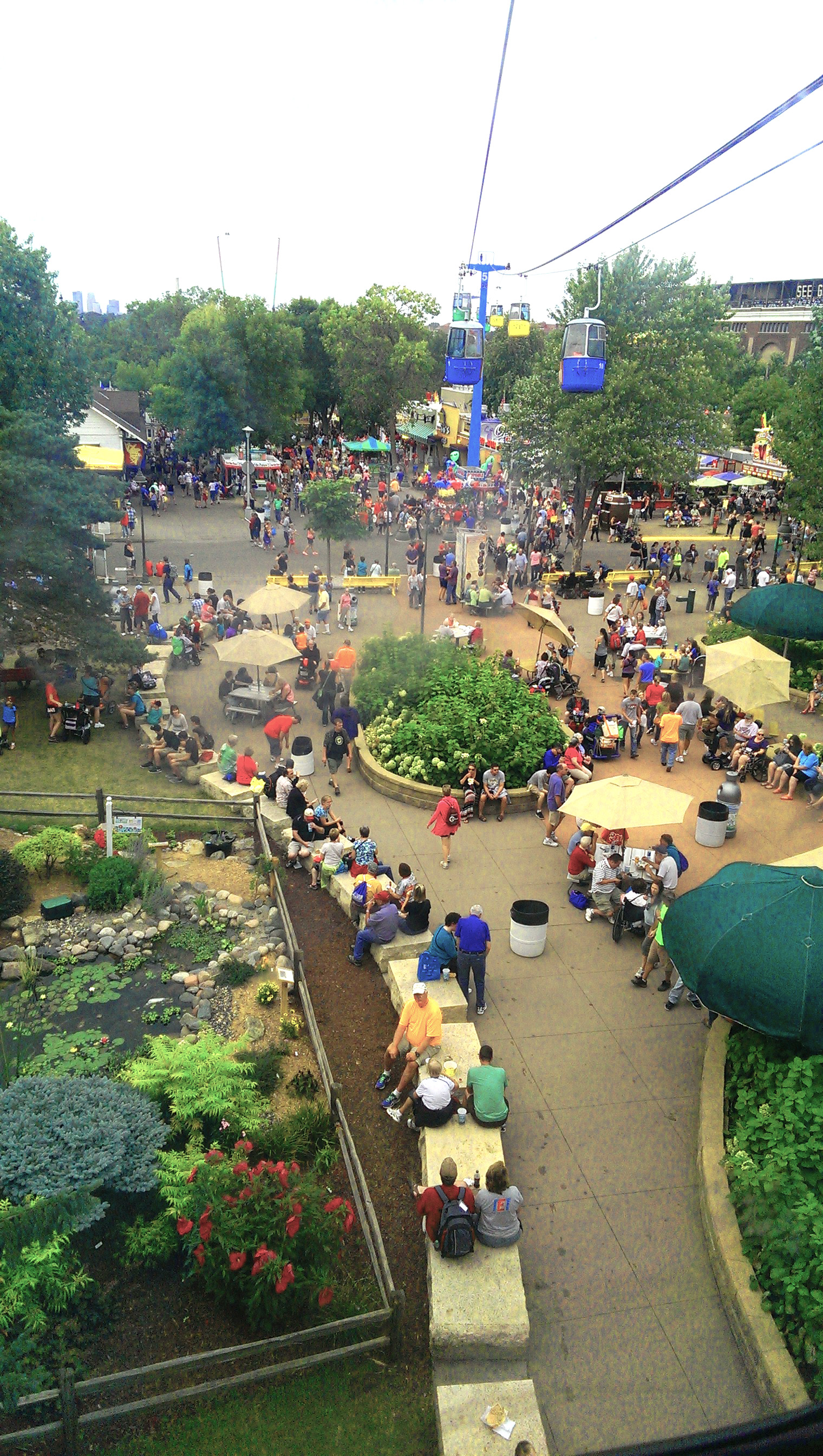
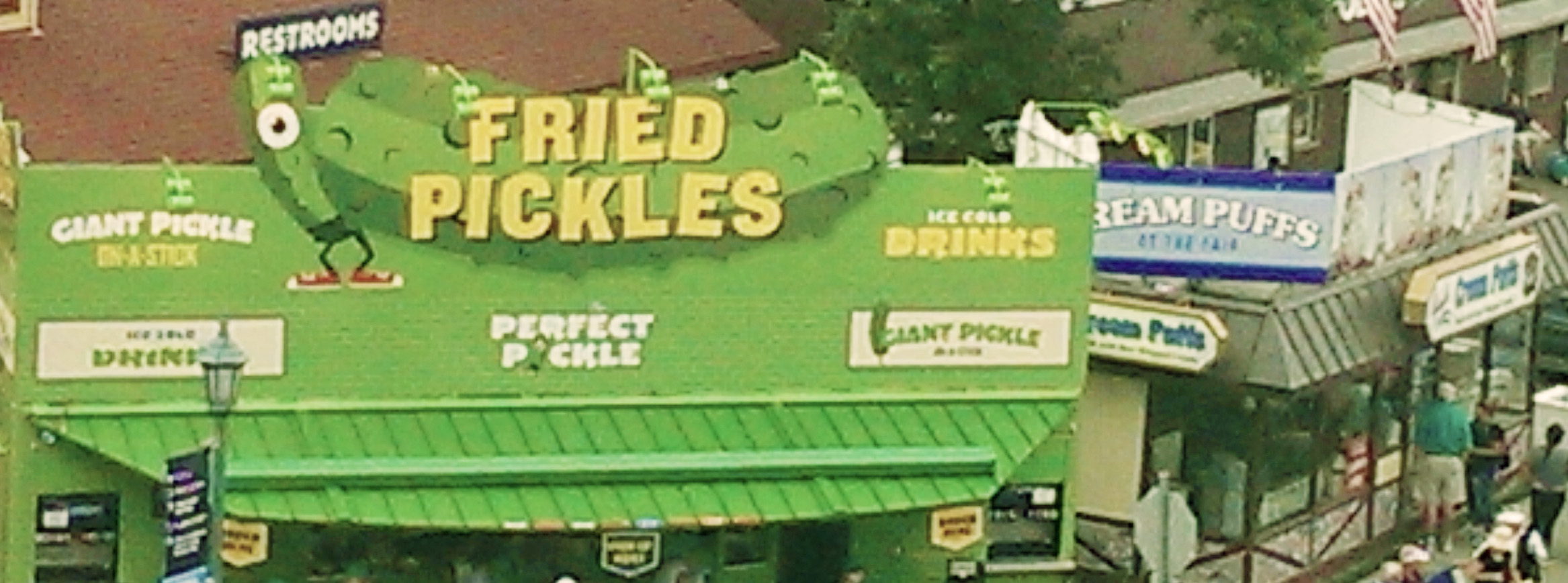
State Fair. A Lughnasa festival writ large. Texas and Minnesota, 1 & 2 in terms of state fair attendance. So Minnesota’s is big. And filled with the improbable from seed art to deep-fried pickles on a stick. Princess Kay of the Milky Way gets immortalized in butter, meaning there is an occupational niche for, yes, butter sculptor.

(Antrim, Ireland. Old Lammas Fair.)

The cows and the pigs and the horses and the chickens and the llamas and the rabbits and the pigeons and the sheep are all here in the city now, rooted out of their familiar stalls or sheds or fields, loaded in wagons and driven into the concrete jungle that is St. Paul, or Falcon Heights if you’re going to be picky.

The DNR has the great pond with Minnesota fish, right across from the giant slide where the gunny sacks serve as seats.  Along the street that runs to the main entrance and you hit cheese curds fried and politicians hoping to avoid being fried.

Then there’s machinery hill where, like the livestock, farm machinery comes into the city for a few days. The tractors seem at home there, a place they belong as much as in the field following the gps to the other end of the furrow.

And the people, walking arm in arm, carrying a WCCO bag, a bunch of colorful brochures and printed information from the DNR, colleges, that wonderful gizmo the hawker made seem magical. They might be eating honey ice cream, purchased at the bee exhibit run by members of the Minnesota Hobby Beekeepers Association.

Carried above the noise and crush of the crowds are ringing bells, flashing lights with their lustre lost in the daylight. The Fair’s id, the Midway. Riding, swooping, throwing, carrying big soft bears no one would buy. Where pointlessness is exactly the point.

It’s all underway right now, through Labor Day. This one will be our last as Minnesota residents and we’re going, probably on Monday. I’ll be headed for the cheese curds.


The Season of Harvest

Lughnasa                                                             Lughnasa Moon

Lughnasa celebrates the beginning of the harvest. Already underway by August 1st, at least here, and continuing through early to mid-October the harvest is concerto after concerto, first the beet and carrot concerto, then the onion, then the garlic. Soon the green beans and the sugar snap peas chime in and the collard greens play their deep green notes and the chard lights up the hall with its rainbow of colors. The opposite of chamber music garden music counts on ancient melodies like the sound of the rain, the wind and thunder of storms, the subtle bass notes of fertile soil.

(alma-tademas-harvest-festival)

We have already passed the allegro first movement and now enter the adagio, the time when various crops come slowly to maturity in late summer and early fall. Around Mabon, the autumnal equinox, the grain crops and corn and beans will begin to peak, the sound of combines and corn pickers, the brilliant blue notes of the September sky, grain falling into golden piles on the wagons, yellow corn piling up. And finally, as October sees the first frosts and the last of the crops come in, the final movement, begun in a frenzy of gathering will trail off, cold and bleak, senescence browning the once vibrant greens.

At the end, summer’s end, is Samain. It marks the end of the growing season and thins the veil between the worlds. As the vegetable world dies again and the fallow season begins, Samain is a time between rich, fruitful life and the darkness and chill of death. It’s an appropriate time for the barrier between the living world and the world of those who have died in it to become permeable, for the dead to come to the living and the living to the dead.

We are now in the harvest season punctuated by Lughnasa, Mabon and Samain, beginning, middle and end. Dance to its music. The music of life renewed and come bountiful.

Summer’s Exhaust

Lughnasa                                                              Lughnasa Moon

Summer’s exhaust has begun to hit our nights as warmer days recede slowly toward the equator.  The light has begun to change, especially in the evenings, but visible during the day as well, coming to us at a different angle. The change is noticeable now, a month and a half after the sun’s greatest height of the year on the Solstice. These subtle clues cue birds and other animals to begin edging toward migration or fur growing or nut gathering. They come to each living thing in a scale appropriate to the action needed, less subtle to the birds and the bees, more subtle to us large mammals.

I’m celebrating the ending of my last northern summer, one I’ll trade next year for a mountain summer, which must be as distinctive in its own way. When I moved north, now 45 years ago, I wanted cleaner breaks between seasons. And I got them. I’ve appreciated the heat and humidity of summer here. The cool blue of fall. The icy depths of winter and the explosive coming of spring. Moving west into the mountains, I’m hoping to modulate the heat and humidity of summer and lessen the brutality of the winter.

It might have been my August trips to Stratford, Ontario as a boy that made me yearn for the northern summer. Along Lake Huron then the skies were heart-breaking, a mix of faded heat and oncoming chill. I felt stimulated, alive both to the weather and to the cultural tradition of Shakespeare and the theater. It was then, too, in 1963 at the Black Swan Coffee House in Stratford that I first heard a radical critique of American policy in Vietnam. Perhaps those things forged a bond, the northern summer and activism, because they’ve been joined since my move to Wisconsin in 1969 only six years later.