Category Archives: Great Wheel

Reimagining Faith: The Chauvet Cave Art

Spring                                                            Bee Hiving Moon

32,000 years ago.  In Europe.  When the Alps had glaciers 9,000 feet thick, in a valley in what is now France, in a cave concealed by an ancient rock slide, these astonishing works remain, a galleries of ancient art, a museum with no light, no movable images and nothing between us and the artists who worked here but time.  These are the oldest works of art.  Period.  And their lines flow from one place to the next, moving with the grace of an angel in flight, creating forms with ease, with economy of line.

Werner Herzog makes strange and wonderful films.  He finds human narratives in fascinating places.  That the French allowed him to film Chauvet testifies to his reputation and he only enhances it with this work.

He interviewed a man, I didn’t get his name or profession, who said to understand the photograph below there are two attributes of life then that could help make sense of it.  The first he said is fluidity.  That is, trees talk, rocks talk, entities are not fixed, they are fluid, one can change into the other, so a woman can become a river, a tree can become a man.  The second is permeability, the forms are not fixed, a woman might have the head of a bull, or a horse the head and upper body of a human.

He suggests, and it certainly makes sense to me, that this drawing from Chauvet Cave illustrates exactly that first example of permeability.  It doesn’t take much to get to Picasso’s Minotaurs or the Labyrinth in Knossos.  Or, Ovid’s Metamorphoses.

Imagine living in a world where life, sentience, spirit embedded itself in everything.  More, image a place where the boundaries of your form and your life were not firm, where the boundary between this place and the Other World seemed always thin.  More, imagine lions with the head and forearms of a cave bear.  Or, a woman turned into a tree by a stream.  A hunter turned into a stag and eaten by his own dogs.

This is a world where neither faith nor belief are necessary because the world is as it is.  Magical.  Changeable.  Wonderful.  Horrifying.  Unpredictable.  Just imagine.
 

Spring 2012: Were You Around for It?

Imbolc                                                      Woodpecker Moon

Spring.  Whoa!  A season that came and went on the day of its inauguration.  A high of 79 here yesterday.  79!

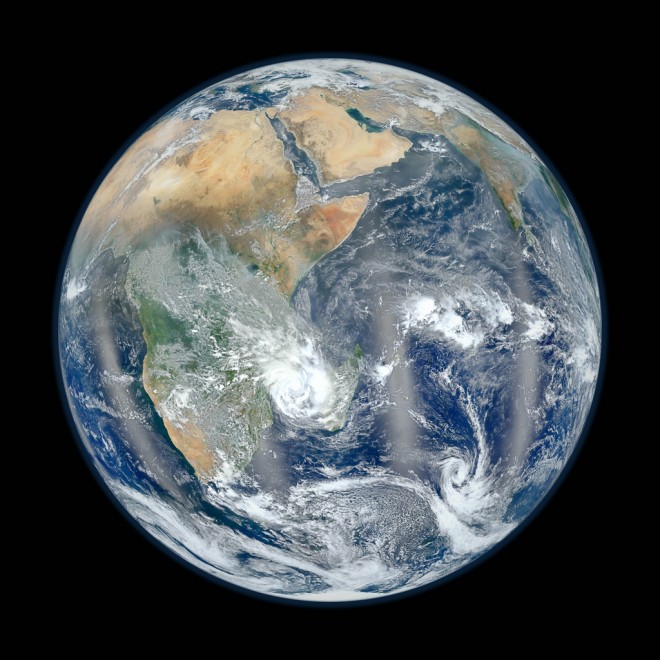
Yes, that’s right, it’s the Spring Equinox again, we’ve reached that point halfway between the Winter Solstice and the Summer Solstice, the time when light begins to dominate in the division between night and day.

Bruce Watson and his son, local weather geeks, publish an annual meteorological calender with lots of nifty data.  Just pulled it out for grins and looked up the Summer Solstice, that’s right, exactly three months from now–IN JUNE–and checked out the average 30 year high for June 20th.  Yep.  79.5.  Now wow.

However the season came and went this year, I’ll always remember spring as a spunky little season that used to hang around and tease with gentle breezes one minute and foot-high drifts the next.  We don’t need to get all weepy, but those were good springs weren’t they?  Hockey and blizzards, they just sort of go together.

Not this year.  Nope, it’s a couple a rounds and a Bud at the 19th Hole.  Outside.

Ostara in the pagan calendar, this holiday nods toward the fertility spring carries in its changeable weather. Continue reading Spring 2012: Were You Around for It?

Timely

Imbolc                                               Woodpecker Moon

In case you feel confident, assured, certain about your worldview, I invite you to read the current Scientific American special issue on Time.


You know all those hard working physicists whose thought power smells like burning transistors in your really fast computer?  Yeah.  Those guys.  Einstein.  Feynman.  Hawking.  Turns out they can’t find time.  Nope.  Not there.


Turns Xeno and that arrow business was right.  You know, you shoot an arrow and it covers half the distance to the target, then half that distance, and then half that distance and so on?  Ad infinitum. Yep.  That’s right.  Stuff happens.

Time has fascinated me for, well, a long time.  Or not.  Western folks, you and me, got stuck on chronos, or linear time, while the pagans and many Asians stayed with cyclical time.  Like the Great Wheel.  Both, according to current thinking, are conventions we use to order our sensory experience.

I haven’t seen in these pages yet a response to Kant’s idea that both time and space are a priori categories, that is, they are part of the way the mind functions and are, as a result, prior to experience, not inherent in experience.  Still makes sense to me.

This may seem like a so-what problem since we already think we know how time works.  Now is now and will be past in a moment when the now now becomes what was future reality only a moment ago.  Yet it turns out that time stands between quantum mechanics and the theories of relativity, frustrating their unification.  Time is relative in Einstein’s constructs and probabilistic in quantum mechanics.  Trust me.  It’s a big deal.

Well, that’s all for this time.

Imbolc 2012

Imbolc                                        Garden Planning Moon

On the Great Wheel we have moved past winter now and have arrived in a season dedicated to Brigid, the triple goddess of smith, hearth and poetry.  Her fiery inspiration fills the kitchen, the world of artisanry and of the poet.

Her fertile presence in the world is also reflected in the name of this cross-quarter season, Imbolc, or in-the-belly.  In Ireland of old this was the season when the ewes became pregnant, that is, had a lamb in-the-belly.  This meant the ewes freshened and could be milked.

(see more of Wendy’s work at paintingdreams)

After a season of bleakness and no growth fresh milk and the cheese made from it would have added a lot to the diet, protein and calcium in particular, and done it with no need to diminish stores or kill an animal.  This was a seasonal miracle.

In our time we can walk or ride to the grocery store and pick up a half gallon of milk in any season.  Imagine what it would have been like to have had only stored vegetables, probably a lot of porridge made from whatever was still left in the root cellar or pantry, and then, suddenly, to have fresh milk.  And cheese.

A glorious thing, I’m sure.

Today we might look in our pantry and check what’s almost gone.  That is, what in your life has gone out of supply.  Energy?  Love?  Imagination?  Motivation?  Friends?  Family.  Consider those the result of a fallow time, a winter of emotional or relational resources.  We all have them at different times and in different seasons of our life.

Look, then, for the new milk.  What’s quickening in your life?  Perhaps a new project.  A new friend.  Maybe a child.  Could be a feeling of confidence, of new direction.

What do you need, after the fresh milk has invigorated you to bring your little one into the world?  More time to devote to it.  More affection to bestow.  More time with yourself for ideas to emerge?  More time with family and friends to allow your relational life to blossom?

Whatever it is, Brigid is the goddess who represents the creative force necessary to freshen your life.  You might look at her and what she means.  Google Brigid.  There are lots of articles.  Don’t get into the ontological question.  Look at how a presence like Brigid might move into your life and give you new perspectives, new images, new paths.

Open yourself to the things you need to have a fruitful and productive new year.  The season awaits.


On Moving Toward Doing the Work Only I Can Do

Winter                              First Moon of the New Year

Spent yesterday shifting to my new work schedule.  A couple of hours on Ovid, plus analyzing some of Caesar’s Gallic Wars.  Edited three portions of the Tailte Mythos:  Book I and began clipping postings from Ancientrails to consult for my first essay in the Reimagining project.

Also learned that I can’t go to sustaining status at the MIA until I’ve had 8 years as a docent.  Sustaining would cut my tour requirements in half.

This means I’m going to have duck out of the Sierra Club sooner than I had planned.

No plant starts this year.  I’m going to buy already started plants and of those only those we decide to grow for particular, planned uses.  We’re going to shift our gardening now toward minimalism, toward those things we’ll preserve.  Two colonies of bees.  Emphasizing less maintenance everywhere, planting towards a time when the gardens will need even less, eventually very little care.

Life’s focus changes as our lives change and now I’ve become focused on those kind of things only I can do.  Only I can write the Tailte books.  Only I can set down my scattered thoughts about a sort 0f ur-faith, a common reverence all of us on the planet might share.  Others might/will translate Ovid, but only I will work toward a beginner’s level commentary, one similar to Pharr’s commentary on Vergil.

Not sure why now for this shift except to say that I know my time is finite.  Yes, it always has been, that’s true, but now it seems existential.  No, I’m not covering something up here, I’m not ill, in fact, I just got a set of labs that Kate says are typical of a 40 year old.

Long ago, in my 20’s, I read an article about when certain professions reach their maturity.  You know the material about mathematicians and scientists, early ripe, but certain other professions matured much later, writers and artists, for example, with the oldest age of maturation according to this reckoning being 50, for philosophers.

Factoring in my drinking and an early career emphasis on politics and the practical side of religion, I don’t find 65 to far out of range for me.  I feel mature in my thinking and writing skills now and I need to deploy them or my unique contribution will be lost.

How the New Year Might Look

Winter                                           First Moon of the New Year

At an inflection point with the Latin.  Either I keep the pace I currently follow, maybe 6 hours a week; or, I ramp up, say to 10 or 12, maybe a couple of hours each day.  Some analysis of other texts–maybe Caesar or Suetonius or Julian, I have all of these in Loeb Library volumes–plus more translating of the Metamorphoses.  My inclination is to ramp up, do more, focus on Latin and the novel.  That’s what my heart tells me.

That other project, too.  The one I’ve got slotted for 5,000 word essays each month next year.  Where I’m going to give voice to my whirling ideas about the earth, about ge-ology, about what would help us help our home planet.  That one, too.

When you add these things together, they constitute real work and I feel good about that, not trapped or bummed.  Now all I need is a way of allocating my time so I can work them all in and still manage the art, the garden, the bees and family.

That may be my new year’s work.  Pruning activities and creating a new schedule.


Solstice Celebrations. What Might They Mean?

Winter                                  Moon of the Winter Solstice

Something new seems to be happening.  Not sure if I’m reading the rustling in the ether of our culture right, but it feels like the Great Wheel may have begun to reemerge.  Not in a Wiccan or alt-pagan way, though that’s certainly there, but in a from the ground up way (so to speak).

A friend called me tonight to wish me a salubrious solstice.  Kate wants to do a fire tonight. First Universalist has a solstice celebration as do many UU congregations.  There has been, for a while now, solstice celebrations on the continent.  I’m most familiar with ones in Scotland and Sweden.

These celebrations, rituals whatever we might call them are not confined to the Winter Solstice though the spreading knowledge of Christmas’s relationship to the Saturnalia, itself a winter solstice holiday, has given the Winter Solstice a cultural leg up, as has a more general appreciation for the other festivals of light around this time:  Deepavali, Hanukkah, Christmas trees and home decorating–neither one of which has any obvious link with the Christian holiday.

I don’t know quite how to go about measuring the cultural penetration of solstice and equinox awareness, or the depth of its relation to individual’s religious yearnings, but my own sensibilities suggest the penetration has gone far past the surface and has, for some folks, like myself, reached the point of religious sentiment.

The Minneapolis Institute of Arts, in a somewhat ham-fisted way, changed its holiday traditions focus from a sort of Victorian dress up for Christmas to what is now called a Winter Lights celebration.

I’d be interested to know what you think, what you see from your standpoint.

Winter Solstice 2011

Winter                                           Moon of the Winter Solstice

Darkness has fallen.  The solstice has begun.  The longest nights of the year occur over the next few days.

The summer solstice, now a half year away in either direction on our orbit around Sol, has faded, faded, faded until the longest day of the year has become the longest night; in the other direction, toward which we move, the summer solstice is a half year away.

Starting now, we will begin, second by second, minute by minute, then hour by hour to turn ourselves toward the light until, at the moment of light’s triumph on June 20th at 6:09 pm, we will begin again a sure glide into winter.

On the Great Wheel it is neither the longest night nor the longest day by itself that matters, rather it is the certainty of their coming, light followed by increasing darkness, darkness followed by increasing light.  This reality, as metaphor, reminds us that no light is so fulsome that it is without darkness and no darkness so total as to be without light.

Too, we can see our lives as a turn of the wheel. In late winter we quicken, growing small within the mother.   We emerge during Beltane, the sun’s heat and the day’s length increases and we mature, grown into adults, as the turn moves toward Mabon and Samain, summer’s end.  Our lives develop fruit and we harvest; as Summer’s End moves toward the Winter Solstice, our hair turns gray and our bodies decline.  In Winter we move toward the darkness, back to the enveloping womb that is our mother, the earth.

Tonight we celebrate the winter season of our lives, the time when our life finishes its run.  This bears no sorrow, nor any fear, since we know that on the morrow, as it has since time begun, the light will again gain strength.  Living or not, it will shine on us, too.