Category Archives: Holidays

Harbingers

Lugnasa                                                                                Harvest Moon

orion2Black Mountain, which is covered in lodgepole pine and actually green as a result, has small gold flecks this morning. Those few aspen groves on its slopes have begun to turn, as have more and more aspens between here and Evergreen, but not those on our property. Too, Orion appeared in the southern sky a week or so ago, the early morning southern sky. On Shadow Mountain Orion and the changing of the aspens are true harbingers of autumn.
The splashy colors of a Minnesota fall, when the remnants of the Big Woods flash their deciduous glory, are absent here, but Denverites flock to the mountains anyhow, going on “color” tours. The transformations of the Great Wheel, in all temperate latitudes, stimulate celebrations, holidays, ad hoc personal adventures.

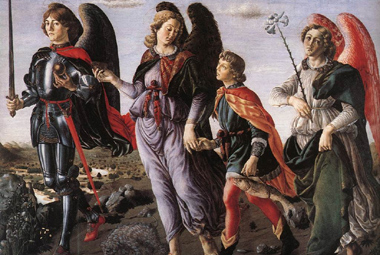
Autumn, with its temperature changes, plant senescence, calm blue skies, the ongoing harvest and the beginning of school is one of my favorite seasonal transitions. Cooler weather increases my intellectual and spiritual energy, underscoring for me the upcoming holiday of St. Michael the Archangel on September 29th. I think it was Rudolf Steiner who referred to Michaelmas as the springtime of the soul. I know it was Tom Crane who introduced me to the idea.

I will be lucky enough to be in Minnesota in a week and a half. I’ll get a chance to visit that Midwestern fall, get pictures for the folks here in Colorado.


When the Frost Is On the Pumpkins and the Fodder’s in the Shock

Lugnasa                                                                   Harvest Moon

mother11Palisade, Colorado has had a bumper peach harvest. There is a small area on the Western Slope that has an ideal peach growing microclimate. They have other crops, too: lavender, apples, sweet corn, strawberries and vegetables. The newspapers have carried photo spreads of workers in the orchards with peach baskets gently picking and placing the delicate fruit into baskets. Back in Andover, this time of year, the honey harvest would be in, the raspberries just beginning. I would be out planting garlic and pulling the last plantings of carrots, beets, leeks and onions. This is the peak harvest season, when the land and its workers combine to feed millions, even billions of people.
Sitting up here on Shadow Mountain, with a heavy mist slowly creeping down the face of Black Mountain, the harvest season has little sway. A few folks have gardens, true, but there is no large commercial agriculture. The cattle company that raises grass fed beef, for example, has five cows, four angus and one hereford, grazing in a mountain meadow about half way down Shadow Mountain.

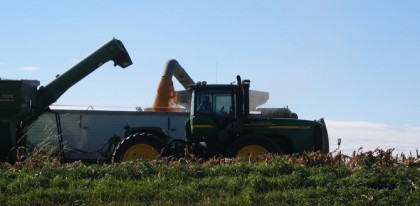
2010 10 04_0347Being so far removed from farms and large truck gardens feels strange to this former Midwestern lifer. No more so than in this long harvest season. Corn pickers and combines have begun to roll through fields. The state fairs have swept up 4-H’er raised cattle, pigs, sheep, chickens. The vegetable harvest has peaked. Self pick apple orchards have hayrides and cider stations set out. Not there, though.
In the mountains this season sees the first glints of gold across the evergreen forests of lodgepole pine. The aspen begin to turn. The nights cool down. Canadian blue skies dominate our days.

20151104_101553Labor Day does mark the winding down of one season long harvest up here: tourist dollars from Denver folks. July and August are the heaviest tourist months for our favorite mountain town, Evergreen. We’re not a winter tourist destination, at least not like the ski resorts, so the roads will have less traffic and fewer visitors in Evergreen’s restaurants.
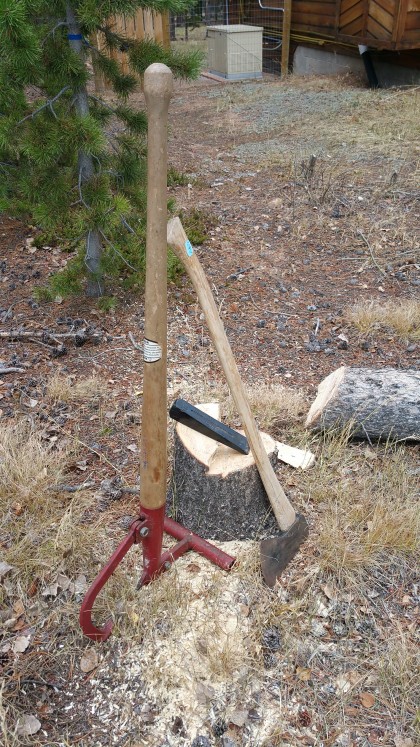
Soon it will be time to start splitting the logs I cut last fall in the first round of fire mitigation. Takes about a year for pine to season. The remaining logs in the back will be seasoned next spring. Log splitting is a seasonal activity both here and in the Midwest. Looking forward to it.

Time Like A (Slow) River

Lugnasa                                                              Superior Wolf Moon

Dazzle Bar
Dazzle Bar

A Sunday. Took almost all day to get my 750 words. Slow, slow day. We got home late (for us) after Dazzle Jazz on Saturday. That in itself slows things down. But the slighter thicker movement of time on the Christian sabbath is the real culprit. The Sunday paper. The nothing special going on usual Sunday schedule. On the one hand fewer neighbors going to work and on the other more motorcyclists, bicyclists and campers. The occasional chainsaw rattling to life somewhere. Folks out in their yards doing this or that. Slow.


Kate. Happy Birthday.

Lugnasa                                                                     Superior Wolf Moon

Mother's Day

20160814_161327Life has odd turns, none for me odder than renewing my season subscription at the St. Paul Chamber Orchestra in 1988 and finding my soul mate. As some of you know, we met there, dated for a couple of years, then got married in 1990.

We’ve traveled the world together, starting with Europe in March of 1990 as we followed spring north from Rome, all the way to Inverness, the capital of the Highlands in northern Scotland.

We’ve had three homes together, each one unique in its own way, but common in our commitment to make them places for family and for creativity.

Kate has been a nurse, a nurse anesthetist, a pediatrician and now a seamstress and quilter. She’s bright, obviously, completing the NYT crossword every morning, for example.

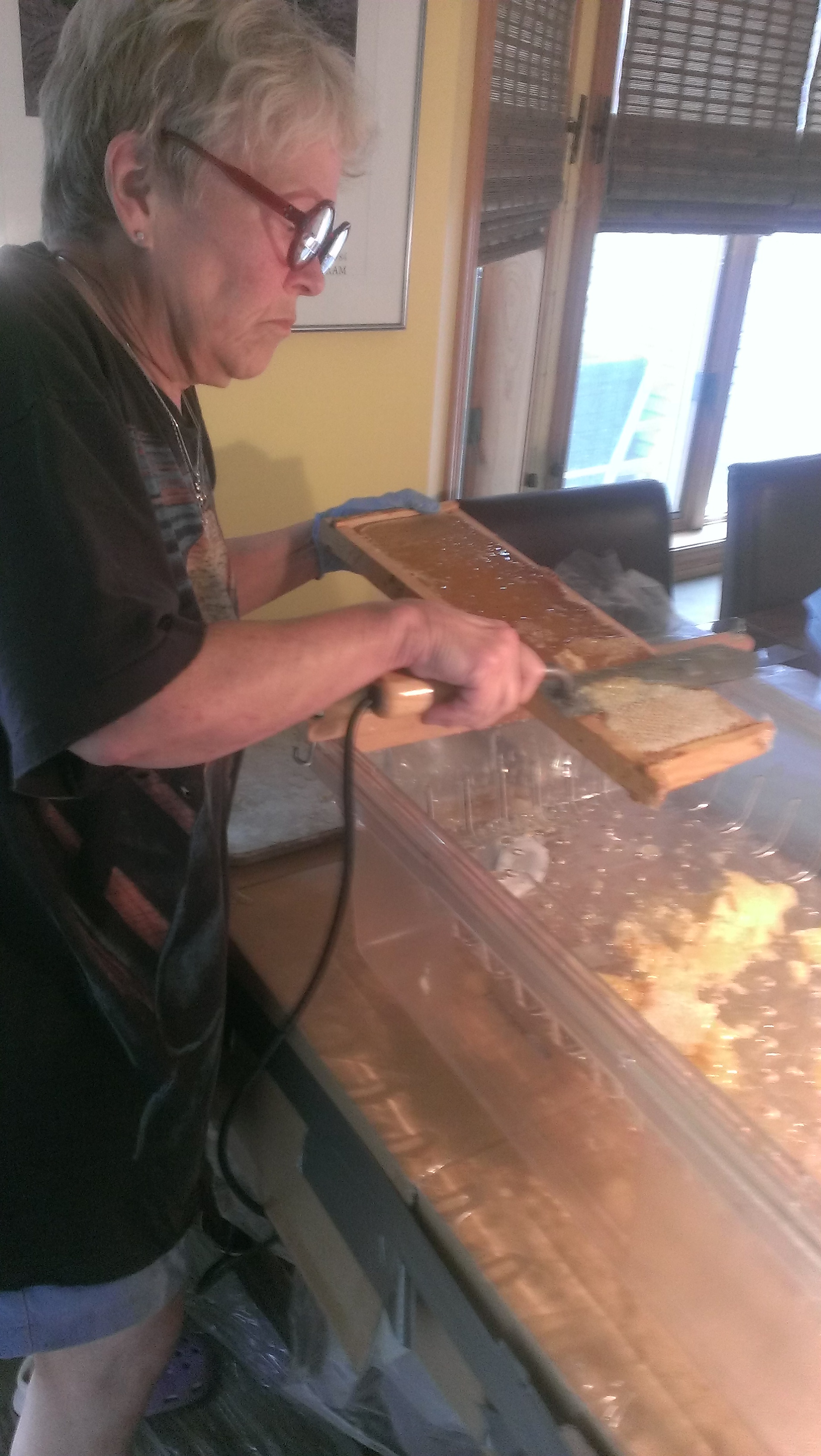
In our retirement we share a passion for dogs, gardening and bees, for jazz as well asIMAG0873 classical music. Kate cans, dries and freezes food. She’s a gourmet cook. Her grasp of numbers is impressive.

When Jon got married and had kids, part of our life turned toward the west, toward the mountains, toward Denver. That pull, grandkidtropic, eventually convinced us to leave over 40 years in Minnesota and move out here to Shadow Mountain. Now she’s grandma, enjoying the lives of Ruth and Gabe, teaching them what she knows, loving them.

Kate, the love of my life, the wife I needed but took some time to find, is 72 tomorrow. And living every day. Every day. Even the ones with staggering inertia.


Ellis Day

Lugnasa                                                                Superior Wolf Moon

OLYMPUS DIGITAL CAMERA

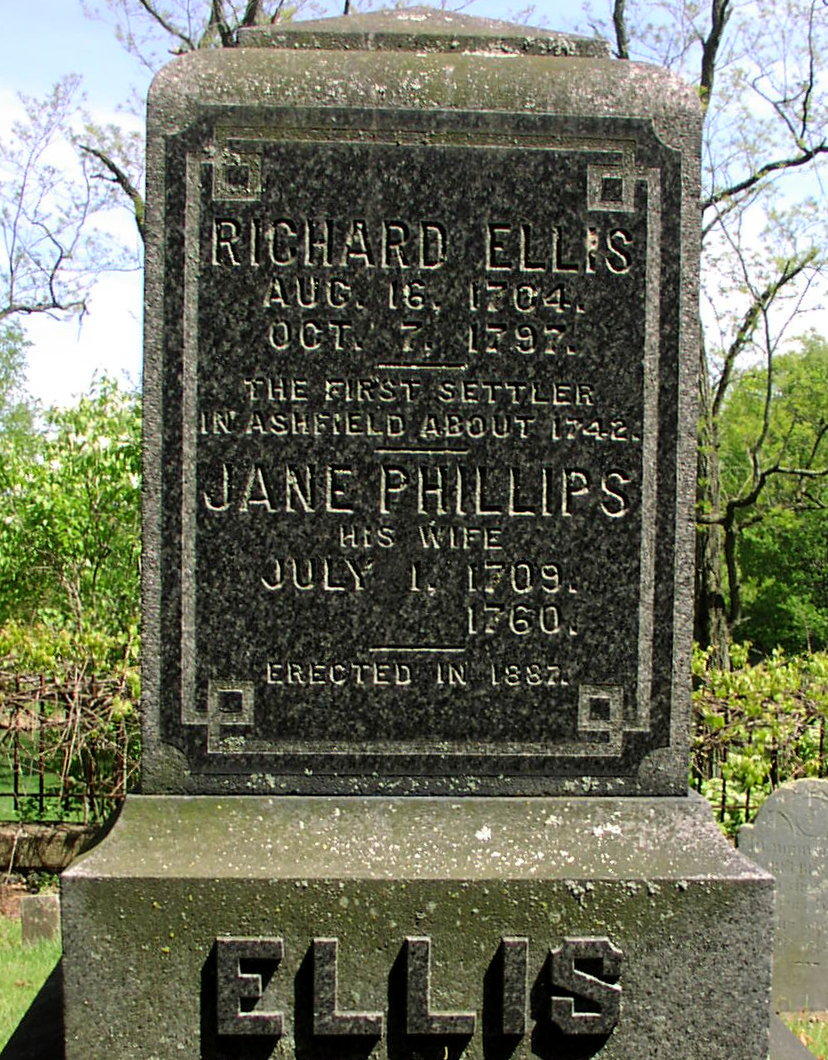
This is the birthday of Richard Ellis, the first of our Ellis clan to arrive in the U.S. He came as an indentured servant in 1707, arriving in Massachusetts instead of Virginia. He was supposed to become the heir to a relative there. However, ship captains in the time had few scruples and made money as they could, in this case a form of temporary slavery.

Richard worked out his indenture and went on to found the still existing town of Ashfield, Mass.  He also became a captain in the Revolutionary Army. His descendants have spread out across the U.S. now, and into Singapore and Saudi Arabia, too. I’m declaring this a family holiday in his honor.

Sunday Flow

Lugnasa                                                                        Superior Wolf Moon

Murakami, the novelist, says time flows differently on Sundays. Yes. After that powerful acculturation of Sundays at church with Mom and Dad, then weekends off from work followed by weekends in which I worked on Sunday, the day has accretions of unusual moments, moments when the ambition and the struggle of the day to day evaporated for a few hours: that picnic, a moving worship service, reading the Sunday paper over breakfast, movies, ham, scalloped potatoes and spinach.

Yesterday I took advantage of that different flow to get myself past a difficult place in my work on Superior Wolf. The deep background of the story begins at the very beginning when Chaos and Chronos  merge to bring some order to the new, emerging universe. I have a very specific reason for wanting the story rooted in the mythology of early Greek gods and goddesses, but I’m mindful of a critique I read about research. This novelist, I’m paraphrasing, obviously did a lot of research and she insists on using all of it. Ouch.

Even with that caveat I decided the story had to be told, so I spent Sunday finishing the section in which the key elements get laid out. This is a rough draft so I may not use much of this work, but I’m now past the somewhat didactic writing and back to the flow of the novel itself. A logjam broken up with a pike and spiked shoes.


Lughnasa 2016

Lughnasa                                                                        Superior Wolf (new) Moon

IMAG0882Lughnasa opens the harvest season, celebrating the Celtic God of arts and sciences, bright Lugh. Its emphasis on the harvest, however, comes in honor, not of Lugh himself, but of his foster mother, Tailtiu. (most of the information here comes from Myth*ing Links Lammas page.)

Tailtiu was, in a mythic rendering of Ireland’s ancient history, one of the Fir Bolg, the fourth of six peoples to invade and settle Ireland. The first three groups left the island or were eliminated, each one leaving an empty country for the next invasion. Tailtiu was a royal lady, a ruler among the Fir Bolg, captured when the Fir Bolg fell to the Tuatha de Danann, the fifth of the invaders. The Tuatha de Danann are a supernatural race who became the primary gods and goddesses of pre-Christian Ireland.

The conquering Tuatha de Danann forced Tailtiu to take on a decidedly unroyal task, the clearing of a great forest to create fields for agriculture. She succeeded, but in the process exhausted herself and died. Her body, buried beneath a hillock, the mound of Tailte, gave fertility to the newly made grain fields.

IMAG0718As the first year’s grain crops began to ripen, Tailtiu’s foster son, Lugh, decreed funeral games be held in her honor. They were held, in the beginning of August, at the mound of Tailte. Over time these games at the start of the harvest season became common throughout Ireland.  Market days and ceremonies that honored not only the grain harvest, but the work of those who farmed the earth, became part of Lugh’s original celebration of his foster mother.

Tailtiu might have been an earlier goddess of the earth. In this understanding, which makes mythic sense, Lughnasa gives prominence to the sacrifice of the soil, necessary for a crop to grow. Myth*ing links quotes an article by Mara Freeman on an earlier name for the festival, Brón Trogain, which refers to the painful labor of childbirth.

The funeral games for Tailtiu, and the subsequent extended festival known as Lughnasa, have continued life in the U.S. as county and state fairs. The early Irish and Scots immigrants to this country brought their harvest celebrations with them. The last of the three harvest celebrations, Samhain, the end of the harvest and summer’s end, we celebrate as Halloween.

The Harvest Season Is Nigh

Summer                                                                    Park County Fair Moon

Jon, Ruth, GabeInto Denver for the Denver County Fair today with Jon and the grandkids. Our county and state fairs, stocked with canned goods and quilts and wholesome teenagers with Guernseys and prize boars, are in the Lughnasa spirit. Lughnasa, starting on August 1st, is a Celtic holiday of first fruits. Also called Lammas in the Catholic tradition, villagers brought bread baked from the first wheat to mass.

Each of the cross quarter days in the Celtic calendar: Imbolc, Beltane, Lughnasa and Samhain were the occasion for weeklong market fairs. Goods were sold, contracts for marriage and work made and broken, dancing happened around bonfires, general merriment abounded as individuals tied to the grinding daily labor of subsistence agriculture found themselves with time free for fun.

In our hearts we are a rural country still and there is something deeply satisfying about seeing sheep, cows, chickens, rabbits in competition for some mysterious (to city dwellers, now the dominant fair goer type) prize. Yes the number of family farms is at its lowest point in the nation’s history, but we have a communal memory of the time when most of us lived on the small farms that used to dot the land. In fact that small farming culture was often subsistence farming, very similar to the sort of rural life in the Celtic countries of Ireland, Wales, Scotland, Breton, and Cornwall.

It is this underlying sensibility of lives lived close to the land that seems so absent from our political discourse in this election. We are a people of the plow, the barn, the hay rick. We masquerade as global sophisticates, but in truth the itch to grow tomatoes or to have a small herb garden is as American as, well, apple pie, which we will see on display at the Denver County Fair, I have no doubt.

Lughnasa begins the harvest season which continues through the feast of Mabon at the autumnal equinox and ends on Samhain, or Summer’s End. It is one of my favorite times of the year, only the dead of winter is better for my soul.


Slowly and Over Time

Summer                                                                 New (Park County Fair) Moon

Jamie and Steve's Deck

Kate and I went to a fourth of July party at a friend of hers. The view from their deck (above) includes Pikes Peak in the very far distance. The general rule of urbanists is that the poor live in the place of least convenience. Here in the mountains that rule reverses and the wealthiest live on the peaks, or near them. Getting to their homes entails driving up and up and up, often the latter part of the way on gravel roads, then having a long driveway that also goes up and up and up.

This house has 6,000 square feet, cathedral ceilings, a wrap around deck, tables custom made from beetle kill pine. Its driveway is a one-car wide ribbon of asphalt that winds up from Pine Country Lane to a turn-around with a three-car garage and a vaulted doorway with a cast iron handle. The three floors all face this view. The main floor is at this level, bedrooms above and a floor with a music room on the level below, a walkout onto the grounds seen here.

Steve, husband to Kate’s friend Jamie, calls this, “Our little slice of heaven. Especially for a boy from the Bronx.” He amplified that last by talking about walking through the tunnel into Yankee Stadium and seeing green on the playing field. “Where I lived, it was all concrete. The green was remarkable. And now this.”

Parties are not my natural habitat. This one was no exception. I met a couple of people, Steve (not Jamie’s husband and one of three Steves at this party, two of them, including Jamie’s husband, named Steve Bernstein), an actuary, and Lou, a software engineer, in addition to Jamie and Steve. That’s an effective outing for me. Many of the people at the party were members of Congregation Beth Evergreen, so we’ll see them again and again. That’s the way I make friends, slowly and over time.

This loft is my natural habitat, books and maps, a computer, a place and time to write and read, to work on my Latin. This loft and these mountains. Becoming native to this place is, it occurs to me, identical in process to the way I make friends, slowly and over time: hiking the trails, driving the roads, being present as the seasons change, seeing the wildlife. I’m in no hurry for either one.


A Holiday Sunday

Summer                                                      Moon of the Summer Solstice

Caught the dawn on Black Mountain while getting the Sunday paper. A red cast to the usually green mountainscape. Multiple shades of green brighten yards, trees, creek sides, valleys and mountain slopes.

It’s cool here, 48 degrees. The third day of cooler, wet weather. National Forest Service fire signs post the key information about all this, Fire Hazard: low.

Kate has declared the pine pollen season over, saying there was no yellow rime on the driveway after this latest rain. May it be so. This fine lodgepole reproductive matter puts a light yellow cast on everything it touches. And, in a time when the windows are open, it touches almost everything.

Pinecam.com has been abuzz with holiday traffic postings. The interesting word, citiot, gets flung around. It’s true that the city folks, who make up the majority of tourists on Hwy. 285, don’t understand mountain driving, going alternately too fast, then too slow. Their frustration once 285 goes two lane (just beyond Conifer) finds many passing on yellow lines, following too close or exhibiting the finer elements of road rage.

Bailey and Conifer residents recount the amount of time it took them to get home on Friday, July 1st. One person told of leaving Denver at 4 pm and getting home around 7:15 pm, a journey of less than an hour without holiday travelers. Part of the congestion follows wrecks: too fast, too slow, passing in the wrong place, bumper riding and over use of the middle digit.

Otherwise up here on Shadow Mountain it’s a quiet holiday Sunday with the 4th tomorrow.