Category Archives: Holidays

Thanksgiving Morning

Samain                                                                  Moving Moon

A holiday morning. This one with no pans clanking, oven sending out aromas. Not even the Macy’s parade. I never did connect our HD Comcast service. The HD delivers the basic cable channels we pay for to keep down the cost of the broadband. No Rosebowl later in the day either.

Dining this afternoon at the Capital Grille. Our last Thanksgiving here and we’re sharing it with Anne, Kate’s sister. A cold day, appropriate for the final major holiday of our Minnesota lives.

Holiseason hits its full stride with Thanksgiving. After this the holidays keep coming, up to and through Epiphany on January 6th. So many of them focus on getting.  The twin oxen of capitalism and marketing, goaded as they pull the treasure carts of mercantilism, strain to drag us off center in our lives. That’s why Thanksgiving and its focus on gratitude is so important for us right now.

But. Black Friday. Bleeding into Thanksgiving evening. Bah. Humbug. Marley’s ghost drags his chains around in delight.

As the lights go up, the songs come on the radio, I love the focus on illumination. Enlightenment, you might say, is the reason for the season.

And yet. I find myself, to quote Robert Frost, “one acquainted with the night.” This is the season of darkness, the approach to the longest night of the year. The dark is fertile, a place of creativity and the nurturing of life before it emerges into the day. Here in Andover and also on Black Mountain Drive the night brings with it silence, a quiet similar to holiday mornings, like the one around me now. I love the blackness and the light. Blessed be.

Snow Globe Snow

Samain                                                                       Moving Moon

A gentle snow falling, what Kate calls snow globe snow. It comes just in time to cover up the partly melted and sad looking snow cover, freshening it up for the holiday. Tomorrow’s Thanksgiving.

This will be a quiet Thanksgiving for us. Dinner at 4:oo pm at the Capitol Grille with Anne. Then home.

Today will see a bit more packing. That closet under the stairs, gathering up this and that left over from other packing moments. Then, a holiday. The long weekend should tidy up the last of our effort. The Bagster goes out on Sunday, clearing out space in the garage. Two weeks from Monday the A1 folks come to pack the garage and the kitchen plus whatever else we’ve not finished.

So Did the Divine Right of Kings

Samain                                                                                    New (Moving) Moon

Holiseason has begun to gain strength. Thanksgiving preparations are underway in millions of households across the country. Tickets have been bought; cars checked; phone calls and e-mails made. America’s festival of gratitude has a lot of momentum. Yes, the earliest Thanksgiving (at least the one projected back into the founding history of the English colonies) has a negative image. Perhaps deservedly so, I don’t know the history well enough.

Since Abraham Lincoln made Thanksgiving a national holiday though, the family focused day has united Americans of diverse backgrounds and religious orientations in a secular celebration of extended family and friendship. Whatever form of Thanksgiving works for you, it is a day to remember the blessings we each have in our lives. No matter how great or how small they may be.

Of course, there is the dark pall of Black Friday, a habit so twisted in its mercantile logic that Best Buy tried to come out the good guy by saying that they were letting their employees go home to sleep.  Not many sales, the spokesperson said, were made late at night anyhow.

Ursula Le Guin gave a wonderful speech at the national book awards last night. I heard it on NPR today. She made several striking points and I’m embedding her speech in the next post, but she took a cut at capitalism that sunk the knife in deep. We live, she said, in capitalism. Its power seems inescapable. So, she went on, did the divine right of kings.

Whatever your plans I hope they include gratitude for the gift of life and for the wonder of this earth on which we live. What a privilege it is to be alive now.


The Occult Sun

Samain                                                                              Closing Moon

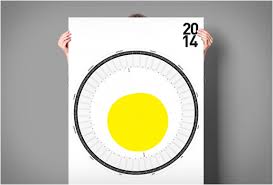
sun calendarOn my circular calendar the large egg yolk in the center has begun to pull further and further away from the inner circle that counts the days in the year. What that means is that the daylight hours have receded considerably since Mabon, the Autumnal Equinox. The season of Samain, now two weeks old, runs from October 31st to the Winter Solstice, falling this year on December 21st.

Over Samain the air grows colder, plants go fully dormant, and the skies become gray, gravid with snow. By the Winter Solstice, the bleak midwinter, cold has come in earnest and the sun spends most of its time in other climes. These are the seasons for those of us acquainted with the night.

No wonder the brave lights of Diwali, Hanukkah, Christmas and New Years try to push back against the darkness. Some find it intolerable, oppressive. Long. In ancient times there was the fear that the sun, once hidden for too long, might forget to rise again, or, even if it did rise again, that it might stay on this diminished course. Fear of darkness lies deep in the human psyche, probably literally at the base of the brain.

Yet some of us welcome the coming of the darkness. Some of us know that underneath the barren fields some plants and animals do not wink out, but merely slumber, gathering themselves for the spring, preserving the hard one fruits of the growing season in roots or through hibernation. Some of us remember that the womb is a dark and liquid place, that in it we were once swimmers, beings of fluid grace and that the light is a surprise, an alien medium to us then. Some of us know that darkness is the realm of the heart and the place where creative acts take place.

Some of us watch the receding yellow on the circular calendar and count down toward our favorite holiday, the Winter Solstice.

Holiseason Is Almost Upon Us

Fall                                                                                 Closing Moon

Fall is in its last days. Samain comes on Friday. The seasons of the year that speak most directly to my soul arrive back to back. Samain, then Winter. Guess that tells you what it’s like to live inside my skin.

The sky today glowered over the landscape, a November sky ahead of its month. It felt like a homecoming to me.

A long while back I chose to identify the period from Samain to Epiphany, as holiseason. It’s a whole season of special holidays, moments and weather. They are distinct, yes, from Diwali to Kwanzaa, Posada to Hanukkah, Christmas to the Winter Solstice, Thanksgiving to New Years, Samain to Epiphany, but their proximity, their charged valence in their particular cultures adds up not in simple sums, but in layered complexity.

Put, for example, Samain’s celebration of the thinning of the veil between this world and the Otherworld in dialogue with the holiday of gratitude and family we call Thanksgiving. To do so reminds me of a small object in the art of the Americas collection at the Minneapolis Institute of Arts, the Nayarit house.

This is a tomb object, excavated from a ninety foot deep shaft grave made by the Nayarit culture of what is now western Mexico. We have little firm information about this object but we can infer from its presence in a tomb that it might convey something about life and death.

It contains groups of people, probably relatives of the deceased, eating and drinking with each other. As groups of kids investigate this ceramic object made between 300 BCE and 400 ACE, they usually conclude that the group above is living and the group below the ancestors. The key thing they also note is that they are eating and drinking together.

Of course this brings up the Mexican celebration known as the day of the dead, also a holiday in holiseason. It could be seen as the living generation celebrating Thanksgiving with each other, yet intimately connected to their ancestors, who carry on their own celebration, one we acknowledge at Samain. Or, one we might acknowledge at Samain if we took seriously the Celtic imagery of the veil between the worlds grown thin, a very similar idea to the one celebrated throughout Latin America, but especially in Mexico as the Day of the Dead.

The most mythic and sacred period of the year approaches. I’m excited about it.


Something’s Happening Here

Fall                                                                                       Falling Leaves Moon

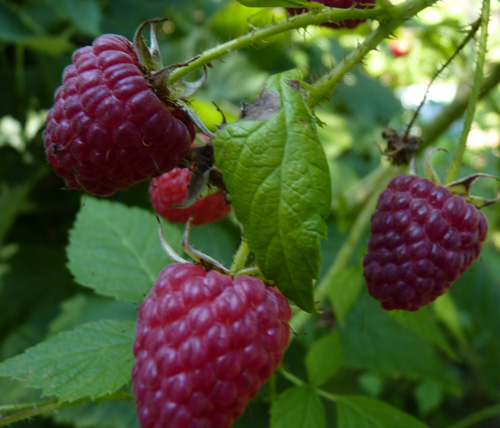
50008 28 10_late summer 2010_0199I’m having these flashes of insight, as if some larger realization lies not far from view, but still below the horizon of awareness.

Raspberries have something to do with it: wading into the thorny brambles, canes curved low with hanging fruit and picking off the sweetness. So do those blue skies and the chill in the air while I engage in the oldest human method of obtaining food-gathering it from plants.  That symbiotic trade between the food value of the fruit and our inadvertent willingness to bear its seeds to a new place places me there, so firmly there. No where else but picking raspberries.

I will say it with caution, because I don’t want to be confused for a transcendentalist, but I do look into the raspberry when I pick it. But, I also look into myself. When I look into the raspberry, I see water siphoned up from the soil, having fallen in rain or come sprinkled in from the aquifer below our property. I see colors, beautiful and rich, each fruit a miniature, reminding me of those Persian paintings. The seed is evident there, encased in a small cell filled with water and nutrients, so that when it hits the ground it will have what’s necessary for a healthy transition from top of the plant to the soil which is its natural home.

The raspberry itself is the Great Wheel, all of it. It comes on the plant after Mabon, after Michaelmas and left on its own will fall to the ground, probably before Samain, where it will lie on or just under the soil through the cold months of Winter and the days of Imbolc. Sometime in Spring it will begin to move, to thrust a small green stalk toward the sky and another, darker filament into the ground, seeking stability and food for its above ground presence. Over the course of Spring and Beltane the stalk will grow and the root deepen and strength its grip on mother earth. In the heat of Summer the stalk will grow into a cane, thorns will pop out and leaves, all moving fast toward the sky, the sun. Then it will reach Lughnasa and the strength of the cane and the roots will be at their optimum, ready to press out on tiny branches, flimsy and delicate, heavy dark-red fruits which will, once Mabon is past, once again droop toward the ground.

And so in the raspberry is millions of years of evolution, an evolutionary path older even than the one we humans have made, an ancientrail indeed. When I see the raspberry, this is what I see. When I look through the raspberry, I do not find revealed another metaphysical layer, a layer transcending the mundane and making it somehow special. No, I find the story of this stuff, these elements, this reality, a story which spans billions of years for this universe (and who is to say how many universes there are?), a story which spans millions of light years of space (and who can say how many miles there are in places we cannot see?).

If I wanted to introduce the religious into this conversation, I would tend toward the Hindu pantheon with Brahma the stretched out space in all its extensions and Shiva as the creator and destroyer of worlds and universes and maybe I would add in Vishnu so that this time in which I exist has an image of stability and permanence, even though such an image is an illusion. For which there is, of course, a wonderful Hindu idea, Maya.

I find Brahma, Shiva and Vishnu only useful as metaphor, as analogy but I do find them valuable in that way-as stand-ins, avatars, for the mystery that is what all this is.

These flashes, just out of sight. Something’s coming. And I’m satisfied to wait on its arrival.

Nocturne

Fall Equinox                                                                   New (Falling Leaves) Moon

For those of us who love the night, this is a fulcrum holiday. We enter the long period that starts with the final harvests and does not end completely until the vernal equinox. From today, till then, the night will gain dominance, peaking at the winter solstice, but not relinquishing its grip until the sun hits 0 declination in the east next March.

It’s not that I do not love the light, I do. It is rather that I prefer the dark, the quiet, the solitary. I’m also entranced, quite literally, by what I call Holiseason, that period beginning at Samhain and running through Epiphany. As we move into the dark, we also move into our fears, our paleolithic uneasiness with the reliability of the heavens.

These fears have driven humanity across time and across the globe to create brave holidays that feature the light. Yes, you could say that the emphasis on them really underscores our fears, rather than challenges them, but I choose to go with the perspective that they hit the fear directly. No, night, you cannot have us, not for all the day, never, and surely not for all the year. In the words of Battlestar Galatica, so say we all.

From late October to early January a parade of festivals bring us lights and gifts and warmth and family celebrations. What a delight. Good music, too. And theater.

It all starts tonight.

Mabon 2014 and the Springtime of the Soul

Fall Equinox                                                                      Leaf Change Moon

Today the earth’s celestial equator (the earth’s equator projected into space) passes through the sun’s ecliptic (the sun’s apparent path throughout the year, actually caused by earth’s orbit.) You usually hear this put the other way around; that is, as the sun passing through the earth’s celestial equator, but that represents the stuckness of paleolithic astronomy that assumed the earth was the center of the solar system. From the diagram above you can see the sun’s declination (degree above or below the celestial equator) is 0 on the vernal and autumnal equinoxes.

This same diagram is very clear about the solstices, too. You can see that when the earth’s orbit tilts the northern latitudes toward the sun, the sun is highest in the sky-the summer solstice.  When the sun is lowest in the northern sky-the earth tilts away from the sun and gives us the winter solstice.

Since the summer solstice day time has exceeded night time. In theory the autumnal equinox is the point of equilibrium between light and dark, but at our latitude that day actually occurs on September 25th this year. This is, however, the day the Great Wheel celebrates and it does so because of the sun’s zero declination at earth’s celestial equator.

This week then the victory of the sun, made complete on the summer solstice, begins to wane. The dark god of deep winter gains greater and greater authority as the sun’s rays spread out over a larger area of earth, thus weakening them, and the number of hours that the sun is in our sky, even in its weakened condition relative to the soil, decrease steadily until the night of the winter solstice. Thus comes the fallow, cold time.

It is no accident that the harvest season is now. Over the 475 million years (give or take a hundred million) since plants made it out of the oceans and onto land, plants have adapted themselves to the conditions that work with their particular genetics. Key aspects of a plant’s life include carbon dioxide, soil nutrients, available fresh water, adequate sunlight and temperatures adequate for all these to work with the plant’s life cycle.

Thus, as the earth’s orbit carries it to different relationships with solar strength, temperatures change along with it.  At its maximum when the earth tilts toward the sun and the sun is highest in the sky, the sun’s rays fall on a smaller area of land. Here’s an excellent simulation. University of Nebraska-Lincoln.

Plants have had the past 475 million years to refine their growing season so that it takes maximum benefit of the sun’s strength. In a very real sense the growing season is a clock, or an astronomical observatory directly correlated to the earth’s orbit around the sun–The Great Wheel.

On a spiritual level, if we follow the ancient calendar of the plants, the season of external growth, flowering and seed making, is waning now. Just as the plant either dies out and anticipates its rejuvenation from scattered seed or goes dormant and waits with stored energy below ground in roots or corms or bulbs, so we might consider this season as the one where we shift inward, away from the external demands upon us and the expectations put on us there.

Now we shift toward the interior life, the Self becomes more of a focus, our spiritual life can deepen. We can see this shift in the human life cycle if we compare the second phase of life with its emphasis on family creation and nurture and career, to the third, with its pulling back from those external expectations. The third phase is a post growing season time of life, not in the sense that growth ends, but that its focus is more down and in rather than up and out. The third phase is the fallow time.  Michaelmas on the 29th of this month is known by followers of Rudolf Steiner as the springtime of the soul.

The third phase marks the beginning of the springtime of the soul for the individual.
A Serging We Will Go

Lughnasa                                                              Lughnasa Moon

Love is a funny thing. Made me enter my first bid on E-Bay for a machine I didn’t understand. Still don’t. And I won! Strange how much fun it can be to get somebody to take your money.

What was it? A serger. In this case a Bernina 1300 MDC with overlock stitches. I did enough research to know that having an overlock stitch was good. And that the price was more than reasonable.

The body of the serger came last Friday and its accessories came today. All to the receiving dock formerly known as “front porch.”  The arrival of the accessories occasioned a birthday week outing to the St. Cloud Sewing Center where the serger goes to the sergery for a spruce up and professional review.  Looked fine to me, but what do I know from serging?

On the way up to St. Cloud we ate at Russell’s in Big Lake, dining for the first time on dill pickle soup. It was very good. The entertainment was a young man trying to learn how to waterski slalom style and a gaggle of Canadian geese who paddled away from the shore in a straight line, maybe 10 birds altogether. From what I saw the geese knew what they were doing. The waterskier not so much.

The day was a northern summer ordinary miracle. On these days when the dewpoint is low, the clouds high and puffy, the sky blue and temperatures in the mid-seventies, each day feels as if it could go on forever, an Elysian field created just for those of us crazy enough to live Minnesota.


Three Score and Ten. And jazz.

Lughnasa                                                                   Lughnasa Moon

We celebrated Kate’s 70th tonight, 8 days ahead of her August 18th birthday. Down Bob Dylan’s Highway 61 is a town called Hastings with a new bridge over the Mississippi, two graceful arches painted orange and lit at night. Across the bridge and beyond Hastings is the Alexis Bailly vineyard, founded in 1973 by a Twin Cities’ attorney.

Tonight, as it has done for four years now, KBEM joined with Nan Bailly, daughter of Alexis, to sponsor an evening of jazz and locally sourced food. Nan’s vineyards are green, healthy appearing and the building her father built (picture below) houses a small store and a wine bar.

Behind the building is an area with carved boulder seats, contemporary metal sculpture scattered among native prairie and a spot where KBEM put up a large white tent and several long tables.

The chef for the event, Stan Patalonis, put together a Latin menu with beginners that featured Spanish flavors then moved onto Latin America. The food was good, the wine plentiful and the jazz mellow. A suite of clouds gave us a cooler evening, just right in the mid-70’s, and the rain held off until the meal was done.

Kate enjoyed the wine and her birthday celebration. We drove home along the river, then up 280 and 35E and 10 to Round Lake Boulevard. 70 is a landmark birthday and so was this evening.