Category Archives: Holidays

Fireworks at home

Summer                                                            Most Heat Moon

Turns out old fireworks, kept dry, work just fine. We sent up fountains and pyramids and sparklers and butterflies. It was a magnesium fueled fun fest made safe by the wettest June ever.

Ruth had a couple of good interchanges. When her Dad told her she knew so much he wouldn’t have to tell her anything, she said, “Dad, just because I know things doesn’t meant that’s bad.”  uh, hmmm.

Then, when a particular firework did something dangerous, she said, “Oh, it’s more fun when they’re dangerous.” Every parents’ dream sentence from an 8 year old daughter.

The firepit got a good workout tonight. The dogs stayed up late and we all had a great time. Food from Famous Dave’s, a barbecue feast for four. Gunpowder thanks to the Chinese a really long time ago.


Light’s Victory, Dark’s Begun

Beltane                                                                      Summer Moon

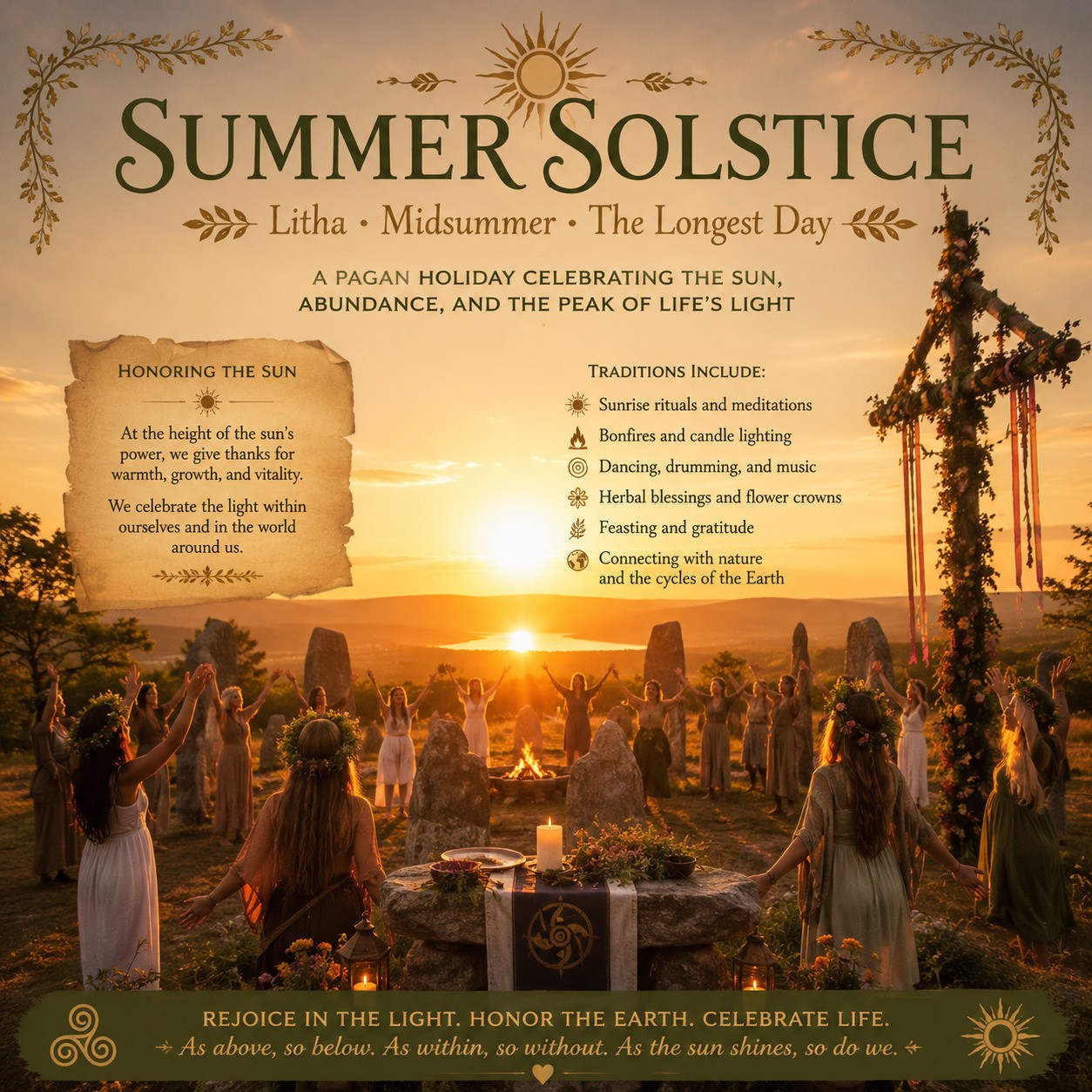
We’re close to the Summer Solstice. Those crazy Scandinavians are getting ready to get naked and dance around bonfires. I figure it’s all those long cold dark days in winter. I wouldn’t want to try it here. Imagine all those mosquitoes biting you in places no mosquito had ever found on you before. Still. I admire the abandon, the ecstasy these rites release. Dancing sky clad (as the Wiccans have it) honors the bond between earth and fire, person and sun, light and dark.

The Solstice celebration is an astronomical holiday, not one legislated in the halls of Congress or Parliament or the Diet, nor is it a day celebrated solely for a religious or cultural reason. No, it marks an actual celestial event, one with consequences here on earth. Since the Solstice marks the moment when the sun is at its highest (69 degrees here) and therefore pouring down more energy on a given square yard of earth than at any other time, this is the moment of greatest solar strength throughout the year. Due to a lag in warming, June is the coolest of the summer months, but the increased solar energy will begin to demonstrate itself in July and early August.

I’ll comment more on the Solstice on Saturday, but here I want to note my contrary reaction to it. The signal moment of the Solstice for me is the beginning of the sun’s decline in height, heading toward its nadir on December 21st. Just as the Winter Solstice can be seen as the moment when the light begins to return after long months of increasing dark, so the Summer Solstice can be seen as the moment darkness begins to return after long months of increasing light.

If you’re a child of the dark half of the year, finding the cold and solitude of the winter months, especially on that sacred night, the Winter Solstice, inviting and nourishing to your soul, then you might join me in rejoicing at its return.


What Are Holidays For?

Beltane                                                           New (Summer) Moon

After reading Tom Crane’s comment on a post below, it occurred to me that the real purpose of holidays lies beneath their stated or claimed or even observed intent. A holiday keeps culturally important matters available to us, so that we may consider the deeper questions that they raise.

No matter that it may seem to have one purpose, in this case remembering those who die in warfare, Memorial Day actually keeps vital the debate over war itself and the terrible price it exacts. Or July 4th. Celebration of the birth of the nation, a national festival for honoring our country. Yes, it has that intent. But it also keeps alive awareness of the nature of the nation state and affords an opportunity to examine that curious phenomenon, so important to public affairs of the last 3 centuries.

Labor Day. Yes, today it seems to be little more than the transition from summer to fall, although the occasional parade, the more frequent speech will say laudatory things about working and workers. Yet, Labor Day also keeps before us the difficult question of the relationship of labor to capital. Its observance says yes, this is an important conversation about our commonweal.

Try out this way of thinking by considering MLK Day, President’s Day, Halloween, Christmas, Easter. They are all more than they seem.


Apostasy

Spring                                                                         Bee Hiving Moon

There are certain holidays when a former minister’s thoughts turn to apostasy. Easter is chief among them.  This is the true high holiday of the Christian liturgical year and it is such because it is the resurrection that marks Christianity off from other faiths.  And, yes, I know about the dying and rising gods and how Jesus fits that paradigm. I agree it matters.  Nonetheless, when you put Christianity on the stage with Islam, Judaism, Buddhism, Taoism, Shintoism, the various faiths counted as the Hindu religion, Sikhism, Jainism and whatever I might have forgotten, Christianity distinguishes itself by claiming a man/god who died, then rose from the dead.

It is that unique characteristic that Christians all over the world celebrate on Easter.  The resurrection is not only distinctive, it is central theologically to the Christian claim. Christianity moves on from Judaism at the empty tomb.  But not before.  Until the risen Jesus, Christianity’s story was not remarkable.  There were other would-be messiahs.  Others had followers and claimed miracles.  The teachings of Jesus largely conform to Jewish thought. Even the crucifixion was not remarkable. Other Jews died on the cross, too. This was a common form of capital punishment for the occupying Roman empire.

(George Frederick Watts – Orphée et Eurydice)

No, it is the dying and rising that makes Jesus unique and transformed him into Jesus the Messiah, Jesus Christ.  So, to set this claim aside, at least in its ontological sense, is the worst of apostasies.  And yet that is what I have done. Am I sure it never happened? No. That’s as impossible as being certain that it did. The shift for me came when I realized whether it had happened or not no longer mattered to me.

What do I mean by that? As one trained in Christian history, biblical scholarship, ethics and theology, I began to find Christianity, in all its forms, even its most liberal, simply too narrow. In my years in the Presbyterian Church I had many good friends, participated in many activities that moved justice forward, but I also struggled with church members and congregations over gay lifestyles and rights, the Vietnam War, income inequality and the privileges of white america.

In itself, of course, that back and forth is not unusual.  There were, at the time of my ministry, some 75,000 Presbyterians in the Presbytery of the Twin Cities for which I worked.  The Presbytery went as far north as Pine City, as far west as Buffalo, south to the Minnesota border and east a county or so into Wisconsin.  That there would be widespreads on matters of public policy is not at all surprising.  There were urban/rural differences, liberal/conservative differences, evangelical and liberal theological differences.  All quite normal sociologically.

What became clear over time, at least to me, was that the conversation and disputes happened in a sealed dome, a sort of osmotic barrier that surrounded those 75,000 people when they gathered as the church.  The barrier filtered out those who could not believe in the resurrection, yes, but it also filtered out, and this is more crucial to me, those who would not conform to the various ideological accretions adhering to denominational institutional life.

(Frederic Leighton-The Return of Perspephone (1891))

Here’s an example.  Presbyterians, as Calvinists, were long known for their adherence to predestination, even double predestination. Predestination is a theological form of materialist determinism (a current favorite among some practitioners of hard science) that posits God has determined every thing that happens.  Double predestination so-called took this belief to its logical, yet absurd conclusion. God had determined in advance who would be saved and who would not. This particular barnacle had been unstuck from the goodship Presbyterianism by liberal theologians quite a while back though certain branches of the denomination continue to hold the view.

My former boss, Bob Lucas, a great and good man, often warned against “majoring in the minors.” Within the ambit of the church this means don’t fuss with matters not essential, don’t get into conflict over things that are incidental to salvation, the primary purpose of the church. I think another version of this idea goes: In essentials unity, in all else, tolerance.

My position became that Christianity itself, as a movement, was majoring in the minors. It focused on conforming belief, ethics, morality and culture to the idiosyncrasies of a long gone time.  That is the effect of seeing biblical material as inspired and the church’s early days as somehow foundational, like the American Constitution.  Christianity has expended so much time, wealth, intellectual power and even violence to achieve this conformity, yet a casual step outside that dome, outside the osmotic barrier shows us that the great majority of people need food, medicine, work, public health.  Those are the majors.

(The Osiris-bed, where he renews the harvest cycle in Egypt.)

The minors are matters like the crucifixion and the resurrection.  Why? Not least because their truth or falsity get trapped within human institutions that use them not for the intrinsic wonder and awe they represent, but as chits in the distribution of power.  They simply are not the world altering events they claim to be.

(inanna sumerian goddess annunaki   clawed feet is an ancient way to depict the fact she visited the Underworld.)


Heart Shaped Cakes

Imbolc                                                                  Valentine Moon

Back in the far away long ago my mother used to bake heart shaped cakes, devil’s food, for my birthday.  This Valentine holiday birthday has always been one of the semi-secret joys of my life.  I get to celebrate my annual pilgrimage, my odometer turns over, on a day now celebrated for love; special enough to remember, not so special that it overpowers my birthday, like I always imagine Christmas would or July 4th.

It did make those elementary school rituals, often laden with important messages not quite understood, hoped for, but more often missed than received, even more fraught.

Now that I know it’s the mid-day of the ides of February, 13-15th, and that Lupercalia followed it in Roman times, it makes this whole approaching time more special.  February was the Roman December, the last month of the year and the ides, those mid-month days sacred to Jupiter, usually had festivals and celebrations.  On this last month of the Roman year the Romans took care to purify themselves and offer sacrifices to absolve themselves of whatever needed to be left behind in the old year.

We could approach Valentine’s Day as a day for clearing up any uncertainties or unpleasantnesses built up over the previous year.  Seek a way to resolve them, then go out for a meal to seal them off, leave them behind.

Ecce Homo

Imbolc                                                             Valentine Moon

Scott got reservations at David Fong’s, a long time Chinese restaurant in Bloomington. David Fong, Yin’s brother, started a chow mein takeout on the same location about 50 years ago.  This was eating in a Chinese restaurant on Chinese New Year’s, not eating a New Year meal.  The food was very good, especially since Scott came complete with recommendations from Yin as to what we would like.  Handy.

Frank, Warren, Tom, Scott and I were there.  We shared our steak kow, mongolian beef, lo mein, honey crusted walnut shrimp, pot stickers and a crumbly chicken dish whose name I can’t recall.  You put the chicken in a lettuce leaf, sort of like a taco.  All of them were tasty.

We spent a lot of time talking about grandkids.  Scott and I had a similar experience of five-year old grand-daughters who decided we were not “real” grandpop’s because we were not the biological father of their parent.  As with Ruth, this has passed in Scott’s case, too.

Tom has set up an intriguing question for our February 17th meeting:   What does it mean to be a male in our culture?  He has also asked that we bring three images of men that will start off our conversation.  I’ve got a few posted here, but as I’ve gone hunting for images it made me wonder if there is a book called the male image in art.  Lots of such books for females, many of nudes, but of men?  A quick google search in the books section shows none.  Probably are some, but that they’re not obvious says something.

Another thought that occurred to me, and it relates to third phase life for men, is this, what is our image of a man at home?  That is, beyond the guy with the fly-rod, golf club, barca-lounger, or woodshop.  And these are based on the silly, even pernicious idea of third phase life for men as the replacement of work hours with a favorite leisure activity.

With no positive image of a man at home it’s difficult to understand how to be at home when one has left traditional work life behind.

The Time of Unfolding

Winter                                                            Seed Catalog Moon

The holiseason has come and gone.  We’re now into what I call ordinary time, after the Catholic liturgical calendar.  We are though still in season and the season is winter.  No reason to doubt that in Minnesota this year.

We’re in the time of unfolding.  All the dreamy times, the hopeful moments, the gifts and resolutions of the holiseason must now become potent, active forces in our regular, our ordinary lives.

Whatever it was that caused your heart to leap, even just a little, in the holiday times, can now integrate itself into your ongoing.  Maybe you wanted to read more.  Unplug some times.  See the kids or the parents more.  Take time to play with your pets.  Go dancing.  Listen to more live music.  Meditate.  Now is the time for those things to take root, prepare for the quickening of Imbolc and the resurrection of Easter.

Be kind to yourself as you include new forces, new opportunities.  Sometimes the old ones won’t want to let go.  That’s ok.  Acknowledge them, say you won’t forget them, but their time is over for now.  Take the offered hand of the you you imagined not long ago, take that hand and let it lead you into this fresh year, all green with promise.

A Couple of New Things for this Next Year

Winter                                                      Seed Catalog Moon

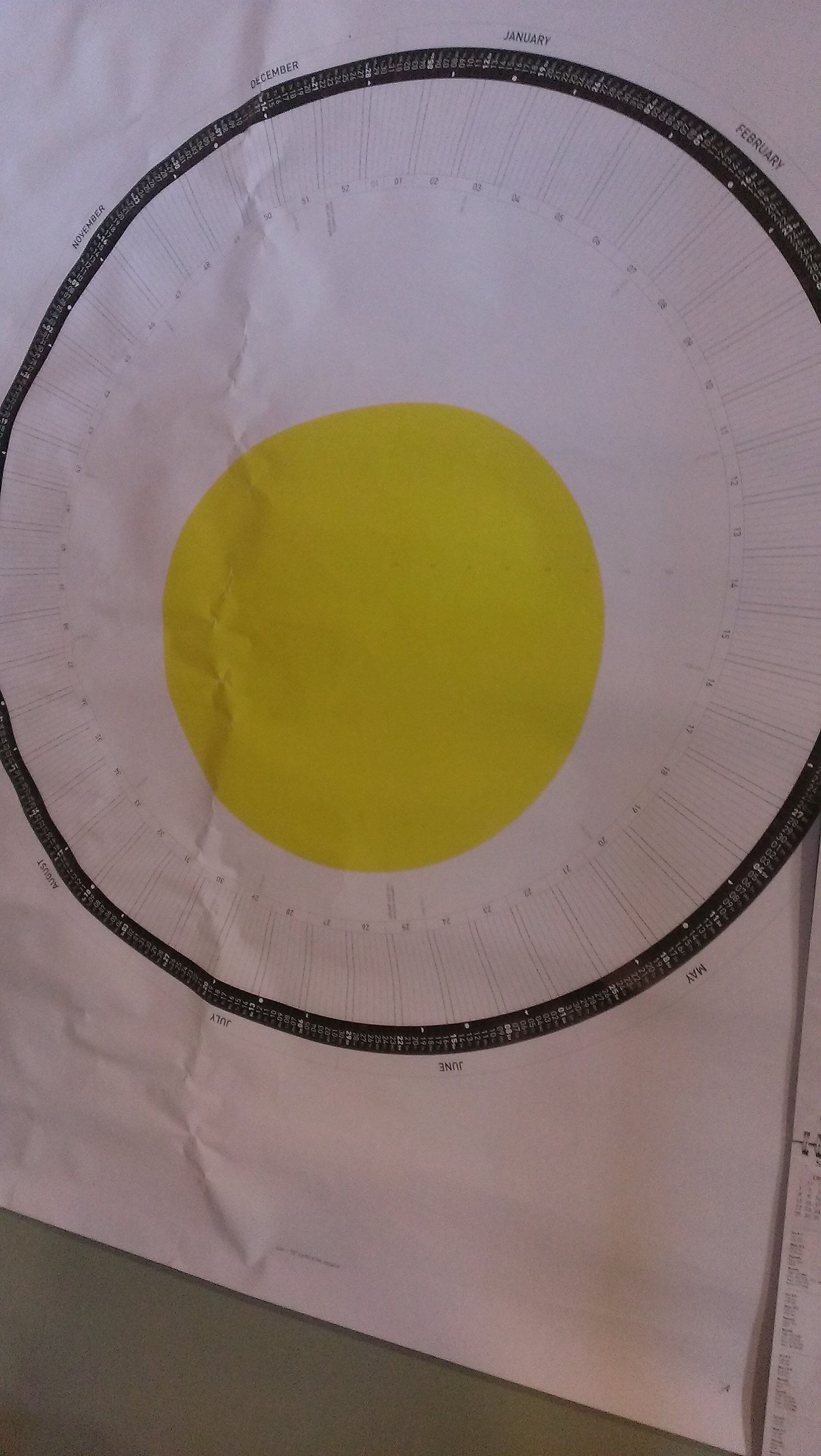
A couple of new things for 2014.  First, a circular calendar, which I like for reasons explained often here, and one I like even more for its clean design and it’s simple graphic showing the amount of sunshine on any given day in the year.  The inside of the circle has concentric rings that go from 16 hours of sunlight a day on the outside ring, down to 2 hours of sunlight in the center.  The yellow follows the curve of daytime around the calendar, or, another way of conceiving it, around the earth’s solar orbit.  (at 50 degrees N latitude, which is 5 degrees north of us, passing through Germany and Canada, for instance)

You’ll notice it’s pretty beat up.  The mailing tube from Germany got smooshed.  Soren, the designer, and I corresponded, first about how much I liked the design and then about the calendar.  He refunded my money and put me on a discount list for next year.  A nice guy.

IMAG1314


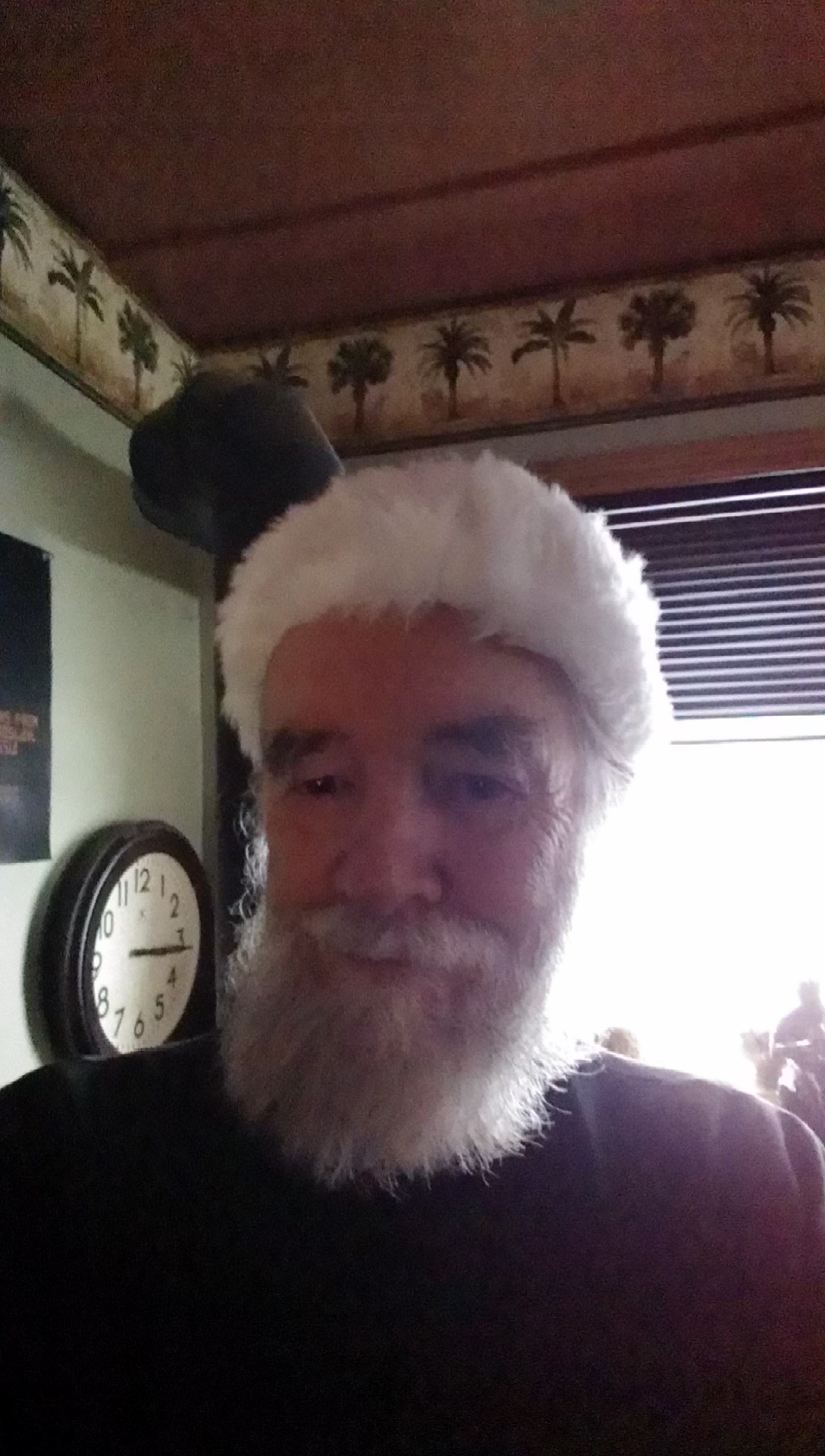
The second item is a gift from Kate.  I have to work on the presentation, but you’ll get the drift.

IMAG1318Ho, ho, ho,  ho, ho.


A Good Idea Failed

Winter                                                             Seed Catalog Moon

Kate and I drove in to Minneapolis today, to the Smack Shack.  The Smack Shack is not, as you might justifiably think, a boutique heroin market, but a food truck doing a transformer move into a very large seafood restaurant.  The featured menu item is boiled lunch complete with your choice of a 1.5 or a 2.0 pound lobster.

This was a holiday lunch with Anne, Kate’s sister, who lives in Waconia.  A smattering of west suburban upper class types were there and the prices wouldn’t shock any of them, but if any of our neighbors showed up they’d grimace.  The food is o.k., but not worth quite the bite it takes out of the wallet.  Still, for the purpose, it was great.

Kate and I shared a boiled lunch and Anne had one to herself.  We both had plenty to take home.  The lobsters are red and look very much like their coastal nickname, bug.  On the plate were several grade b skin on red potatoes, two links of polish sausage, two fresh ears of corn, a half lemon wrapped in cloth, two small metal containers of cole slaw and a pot of melted butter.

Bibs in place we dug into the meal.  Both Kate and I remember the days when, at least in the midwest, surf and turf was about as fancy as food got.  Lobster was the pinnacle of haute cuisine, even one step higher.  Surf without the turf.  Now I find lobster ok, but usually tough and not as flavorful as I remember from days gone by.  Of course, that could be my taste buds.

The sisters compared arthritis in their hands, spoke of sewing and retirement.  Anne turns 62 this year and finally, as a result, rotates onto the day shift at a metro County Jail.  She commented on the increasing number of drunks, mentally ill and generally decompensating people that show up in our culture’s catch basin, the county hoosegow.

Just the other day five of the 11 women in her charge had serious mental health issues, one screaming and another lacerating her arm with her fingernails.  It made me recall those days in the late 60’s and early 70’s when deinstitutionalization had reached its moment.

They were exciting times.  People were to be freed from the Victorian confines of state hospitals for the retarded and the insane, places with institutionalized violence and clients aberrant adaptations to an aberrant, abnormal living situation.  The watchword was normalization.

Normalization meant re-introducing these populations to society, helping them in the process through community based services, residential for those who needed them, supportive services for those who didn’t.  Community Involvement Programs employed me for 8 years in its residential training program for developmentally disabled adults.

C.I.P. was an example of the best of the community based services.  We took folks straight out of Fairbault and Cambridge State Hospitals, put them in their own apartments in a 32 unit building we ran and trained them in budgeting, cleaning, cooking, shopping, making appointments and integrating into the community.  It was good and important work.

What happened though a confirmed cynic would have foreseen, but we didn’t see it back then.  As states cut funding to their large state hospital systems, the money was supposed to flow into the community based treatment programs.  And some of it did.  But not anywhere near enough.  This was the root cause of the first wave of homelessness, developmentally disabled and mentally ill citizens released from state hospitals to the streets our major cities.

This is one of the great tragedies of our time, but it has gone largely untalked about. The people who suffer are the marginalized among the marginalized, the folks whose disabilities render them vulnerable to shifts in income, housing, treatment.  The answer, of course, is not more state hospitals, but increased funding for community based treatment.

But in an era of Republican budget cutting, which has largely dominated the political scene since the early 80’s when Reagan came into the Whitehouse, this kind of state and federal funding has proved easy to slash.  The result was–to use an overused but apt metaphor–a perfect storm of liberal policy releasing thousands of our society’s least able to cope into cities where prevailing political realities made them largely unhelpable.

This is a big reason that our county jails have now become our community based treatment centers.  They resemble in many ways small outposts of the old state hospital system, run by authoritarian hierarchies that respond to the needs of bureaucracy first, not inmates.

And Anne, in her role, sees the results and has to deal with them.  Surely we can do better.


How Much Is Enough?

Winter                                                   Winter Moon

Kate and I both read a zine called the Tablet.  It’s a hip Jew commentary on whatever.  It contained this today:  “The Hebrew year is 5774 and the Chinese year is 4710. That must mean, the joke goes, that against all odds the Jews went without Chinese food for 1,064 years.”  We follow, as I wrote before, Jewish tradition by going to movies and eating Chinese on Christmas.

Today we stayed close to home, eating lunch at the Mandarin Buffet, greeted by r challenged waiters and waitresses who greeted with holiday cheer anyhow.  After that we saw the Desolation of Smaug, the second of the Hobbit trilogy.  It’s a non-stop action flik with Evangeline Lilly as an action elfess, as beautiful here as she was all those seasons on Lost.  The time went fast as the dwarves escaped the Wood Elves in barrels, road coal and metal carriers to escape Smaug and Gandalf seemed to be defeated by Sauron.  If you haven’t seen it, it’s a lot of fun.

This was at the Andover Cinema and our second choice, Hunger Games II, had just ended its run and we didn’t know that.  So, we had to decide on a second movie on the spur of the moment.  We chose Wolf of Wall Street. This is a more difficult movie to parse.  First, it’s too long.  Could have stood 45 minutes worth of cutting.  It’s a Martin Scorsese movie so he apparently got the cut he wanted.  Second, I hope, as Kate imagines, it’s broadly drawn.  I’ll explain that in a bit.

Wolf’s great strength is its unflinching look at what happens to people who cannot answer the question, what is enough?  If you make money and power the focus of your life, they will become your center of value, what H. Richard Niebuhr called your God.   With them in the center of your ethical system your value choices will not be about people or beauty or justice or the natural world, but how about how you can get more.  More money.  More power.

You will not be able to answer the question, how much is enough, because the amount of money and power you need will always be just a bit more than you have.  This is ambition. This is greed.  This is eagerness to have positional authority.  This ultimate honey trap gets strokes by the culture.  We lionize billionaires and barely recognize the teachers, doctors, mechanics, nurses, clerks, postal workers who do the important work in our culture.

I’m not, this time, trying to make a political point, but a theological one.  What you place at your center, your center of value, shapes all the decisions that you make.  It’s a critical decision and it is just that, a decision.  You can choose to have other people, the natural world, beauty, health or justice as your center; you can also choose money and power.

In Wolf we see the terrible personal and social cost of choosing money and power.  Other people are tools.  Stocks are, as Matthew McConaughey’s character, Mark Hanna says, “Fairy dust…they exist for one reason.  To take money out of the clients pocket and put it our pocket.”  The only yardstick for success is money and the conspicuous consumption of luxury goods:  Armani suits, Ferrari’s, yachts, estates, drugs, whores, planes.

Kate saw it as drawn broadly.  That may be, but the motive force, the need for more and the sense that life has no moral limits characterize so many striving folks.  Not just Americans.  Chinese, too.  Singapore.  Mumbai.  This movie is, at bottom, about seduction and shows what few people ever realize.  We don’t need the devil.  We seduce ourselves.