
Lughnasa Waning Summer Moon
Sandy came yesterday. She’s now four weeks or so out from the last of the radiation treatments for her brain tumor. A difficult medical story with an unsatisfying partial resolution. They couldn’t remove the tumor all at once, left much of it in place after the first surgery, then nerves grew into the tumor meaning it couldn’t be removed at all. Hence, radiation to shrink it. It’s benign, stretching the meaning of that word, but it has knocked out her hearing in one ear and seems to have left her in a permanent state of slight dizziness. She’s young, late forties I imagine, so a lot of her life is ahead.

Gabe’s been watching cute baby videos. His words. I asked him if he might want a baby of his own someday (he’s 10). He said, “I don’t know. Maybe.” We’re going to a movie today.We can do that because Kate wisely decided to skip needleworkers today.
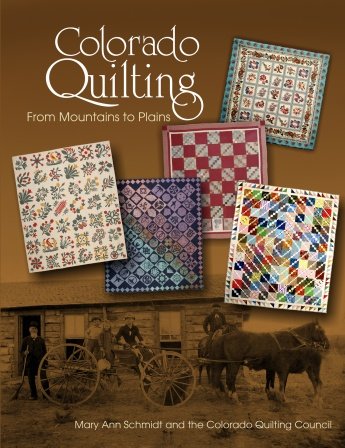
On her 74th birthday, this Saturday, she’s organizing food for an interesting event. The Rocky Mountain Quilt Museum in Golden offers a documentation service for quilts. They have teams that go to quilt clubs (and other venues, too, I suppose). The teams collect archival data like maker, history, description and photograph the quilts. Those records become part of the ongoing collection of the museum. The Quilt museum folks are coming to the Bailey Patchworkers meeting place, the Catholic church in Bailey. It’s before Crow Hill, the steep decline that goes into Bailey proper.
Her stamina seems to be decreasing, too. I really hope the ultrasound for her gall bladder and the new upper GI look find something. She needs to be able to gain weight. Soonest.
Thunderstorm yesterday. Nice rain. Lots of noise. Wildfire fears have eased for this year. This article in my favorite publication about the West, the High Country News, explores the angst that many of us who live out here feel. “One truism about the future is that climate change will spare no place. Still, I suspect the threat of warming feels more existential in New Mexico than it does in Minnesota, the land of 10,000 lakes. Drought has gripped the Southwest for 19 years, more than half my life.” In this rapaciously dry year, a quiet question grows louder: What are we doing here? HCN, Aug. 6, 2018
 California fire seasons, which have grown longer and longer, producing worse fires, the Mendocino Complex Fire is now the largest ever in the state’s history, keep us always aware that what’s happening there can certainly happen here. Damocles. Closer to Shadow Mountain there are, too, the 416, the Spring Creek, the Buffalo Pass fires now out, but active this year in Colorado.
I agree with Cally Carswell, the author of the article, that our experience, our Western experience, is a foretaste of what is to come for most if not all of the planet. Her article says out loud what lurks just below the surface for Westerners. When might the fire or the water shortages be too much? When might the increasing heat dry us out or burn us down?
As the Donald might say, sad.
 Listening to some music on youtube while cleaning/rearranging. One clip leads to another. I’d started out on the Band’s “Long Black Veil” and youtube ratcheted me along to a guy named Blake Shelton. He’s a country guy, well known in areas where he’s well known, I gather. The song was, “Kiss My Country Ass.”
 Then it hit me. Much of country music is protest music. It’s the protest music of the blue collar worker, the southern working class, and the white supremacist (these are not conflatable categories though they may cross over.) You may have noticed this a long time ago, but I hadn’t.


 Sad. Mad. Incredulous. Shocked. Mystified. Hurt.
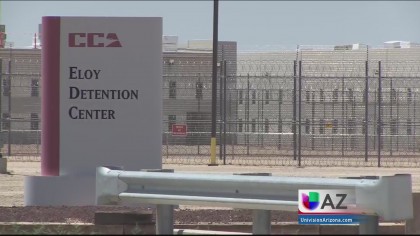
  Ms. Montoya became too emotional to talk. Several times. She answered question after question from this audience of maybe 75 people, all outraged, most wanting to do something. Kate stood up and asked what kind of medical care did these children receive? Ms. Montoya said no particular medical care was available. That means diabetes goes untreated. Other chronic conditions, too. Another asked what kind of education the kids were getting? Ms. Montoya said, “The kids speak Spanish; all the guards and caretakers speak English.”
 Part of the problem for legal projects like Florence and
  *Valentina Restrepo Montoya was born in Boston to Colombian-immigrant parents. She earned her J.D. from Berkeley Law, where she advocated on behalf of asylum seekers, latinx workers, latinx tenants, and indigent defendants in criminal cases. Valentina clerked for The Southern Center for Human Rights, where she investigated language access to adult and juvenile courts. After law school, she joined The Southern Poverty Law Center, dedicating herself to litigation against The Alabama Department of Corrections for providing constitutionally inadequate medical and mental health care to prisoners, and not complying with The Americans with Disabilities Act. Prior to joining The Florence Project, Valentina was an assistant public defender in Birmingham, Alabama. She enjoys playing soccer, reading The New Yorker, practicing intersectional feminism, and rooting for The New England Patriots.
 Why are we so reluctant to recognize that racism, sexism, homelessness, income inequality, white fear are the result of decisions we’ve made collectively and individually? I think the answer lies in ideas Arthur Brooks identifies as the bedrocks of conservative thought. Below is a portion of that article,
  But, to sacralize that unique reality, “…conservatives have always placed tremendous emphasis on the sacred space where individuals are formed.” says Brooks, serves to deny its perniciousness, its damning of so many to lives of desperation, marginalized from both economic and cultural blessings. Once we emerge in the era, the family, the town or neighborhood or rural place, the religious or areligious space gifted to us, the nation of our birth, once we are over being thrown into circumstances beyond our volition, we gain the power of choice.


 I slept last night with the patio door open, screen closed. I could hear the Animas, the river of souls, running. When I woke up this morning, it was raining. My ear was eager for the sound, found it soothing, familiar in a humid East, Midwestern way.
 On the ground in South Korea a vital and energetic economy has created a vibrant country with feet both in the world of Samsung and the past. Riding on buses or trains through the country side, ancient tombs dot the hillsides. We visited this palace/fort in a city near Seoul. The procession of women in hanbuk at the international airport in Incheon, with the Bottega Veneta and a moving walkway in the foreground brings the two worlds together.
 Probably won’t be going back to Chainsaw Bob’s. Went yesterday to get my chain sharpened. They have a new deal, smart, where you leave your old chain and they put an already sharpened one on your saw. Supposed to save time. And it would if the guy putting the chain back on wasn’t trying to sell another guy a saw.
 Sexism is still raw and unvarnished in many places, like racism on public display in Charlottesville, Virginia. Murica.
 I’ve been reading a book by
  It reminded me, the reason I liked it, of Paul Ricoeur’s notion of second naiveté in which a scholar of religion first distances him or her self from his faith as a result of academic work, then returns to the texts after that distancing with a second naiveté, an embrace of the former belief now informed by reasoned analysis. The result, in both cases, is something new, neither level 1 nor level 2, but an amalgam.
 Washington, Jefferson, Lincoln, FDR and LBJ would be my top five Presidents, no particular order. Yes, Teddy Roosevelt and maybe Eisenhower are in a close second tier. I disagree with historians who rank Truman and Reagan above LBJ. And JFK is overblown. LBJ gave a damn about those in the U.S. who had less. In a commencement speech at the University of Michigan on May 22nd, 1964, he “… called on the nation to move not only toward “the rich society and the powerful society, but upward to the Great Society,” which he defined as one that would “end poverty and racial injustice.”