Category Archives: US History

Pioneers

Spring                                                                        Planting Moon

Finally, my activities and the turning of the Great Wheel will synch up.  Gonna plant cold weather crops today.  The soil’s still cold though the air will warm this week, only to cool down again next.  It’s important to remember that our average last frost date is the beginning of the second week of May and we haven’t gotten there yet.  No transplants outside yet.

Except.  The leek and onion I got in the mail Thursday and Friday.

Kate and I will be a pair out there today, trying to figure out which of us should do what to lessen the likelihood of pain.

As the planting has approached, I’ve pondered, as I have often, the fate of pioneers* who wrenched a back, had disc problems, sprained an ankle, broke an arm at the wrong time of year.  Not that there’s a right time of year, but some times are worse than others.  Planting and harvesting would be terrible times to have a significant physical impairment.  Can you imagine?  Your life and perhaps your family’s depends on planting this year’s crop.

What is today a nuisance, a bother, something to wait out, could have been literally fatal, and not just for one.  I’m sure everybody pitched in, did what they could, but sexual dimorphism and physical development from child to adult would often mean some work simply couldn’t be done.

A bleak prospect.

I can load up on Ultram, lace up the backbrace and then, if necessary, go to the grocery store and buy my vegetables.  The options are better today.


*And, yes, I recognize the irony between the pioneers and the Native Americans, the latter  having developed their styles of living off the land in accordance with the way the land provided, at least for the most part.  The pioneers, most of them anyhow, were usually poor folks hunting for a place to live and raise a family.  This phenomenon of the poor spreading out to the places of least convenience continues in our day.

I no longer know how to easily understand the right and wrong of it all.  Yes, the Indian Wars were wrong.  Of course.  And the associated Indian schools and all of it.  Wrong.

The pioneers, though?  They don’t seem wrong to me, perhaps not right in a larger, probably undiscernible sense (for them), but not wrong.  At least not most.  Most were Okies.  Cox’s army.  Peasant class folks hungering for a chance.  For them, I have a lot of empathy.

The question today is not how to go back and redo the past. Rather, it is how to discern the lines that will allow us all to walk into the future together, as friends and allies.
The God of War

Spring                                                                         Planting Moon

Gun control derailed two days after the Boston bombing.  Say again?  So violence wins.  Ares is the god of our time, not Yahweh, although in a fight Yahweh never put away the slingshot.

The god of war has built temples in many places over the long centuries, here is one located in Fairfax, Virginia.  NRA HQ.

It features a headquarters range with the following offerings:

The 15-position NRA Range is open to the public and offers:

  • Shooting Events and Activities!
  • Shooting Distances up to 50 yards!
  • Automatic target retrieval system that allows the shooter to edge and face the target for time intervals programmed by the shooter!
  • Wheelchair Accessible!
  • All pistol calibers and rifle up to .460 Weatherby Magnum!
  • A professional staff of NRA Certified Range Safety Officers!

Where does the propensity for violence leave us?  It leaves us with domestic cooking utensils, producers of pot roasts and swiss steak by my mother for example, as weapons of cruel destruction, ripping body and bone apart rather than building it at the supper table.

It leaves us with the twisted irony of the United States Senate turning away minimalist gun control legislation with the taste of cordite still in the air, with shrapnel still in victim’s bodies.

Wish I could dial up Zeus and tell him to call off his boy.  Tell him to stand down.  Enough.


Mystic Chords of Memory

Spring                                                                     Planting Moon

Monday afternoon around 5:45 pm I turned on NPR as I drove on 694 headed toward Bill Schmidt’s home.  It was mid-report on something that had happened in Boston, something important, so I stayed with the news.  At a recap I learned of the bombings during the 4 hour plus mark of the Boston Marathon.

I hollowed out and a sense of deep sadness raced in to fill the void.  The feelings from 9/11, not the event, but the feelings joined these.  Not anger.  Not bitterness.  Sadness and emptiness, a sudden vacuum in my interior world.

(Summer Evening, Hopper)

Then there was the ritual of repetitive reporting, the redundant witnesses, the guesses, the breathless commentary by this person and that one.  A reporter for Boston public radio said the Marathon would be forever marred.  And I thought, no.  No.  This will come to mind and it will be known as the work of an other and will not be allowed to mar the race, rather it will become part of the race’s history, its collective memory.

The most intense part of my initial reaction came when I realized what those feelings meant, the emptiness and the sadness and the vacuum.  They meant I am an American.  That this event was about us, was done to us.  Here, on a highway in the northern central part of our large country I felt violated and hit.  It makes me think of Lincoln’s line about the mystic chords of memory.  It was those chords that bomb caused to resonate.  It’s important, I think, to say out loud that those bonds make us strong and that it is good that we feel them.

It comes from the close of his 1st inaugural address:

“The mystic chords of memory, stretching from every battle-field, and patriot grave, to every living heart and hearthstone, all over this broad land, will yet swell the chorus of the Union, when again touched, as surely they will be, by the better angels of our nature.”

Another Country

Spring                                                               Bloodroot Moon

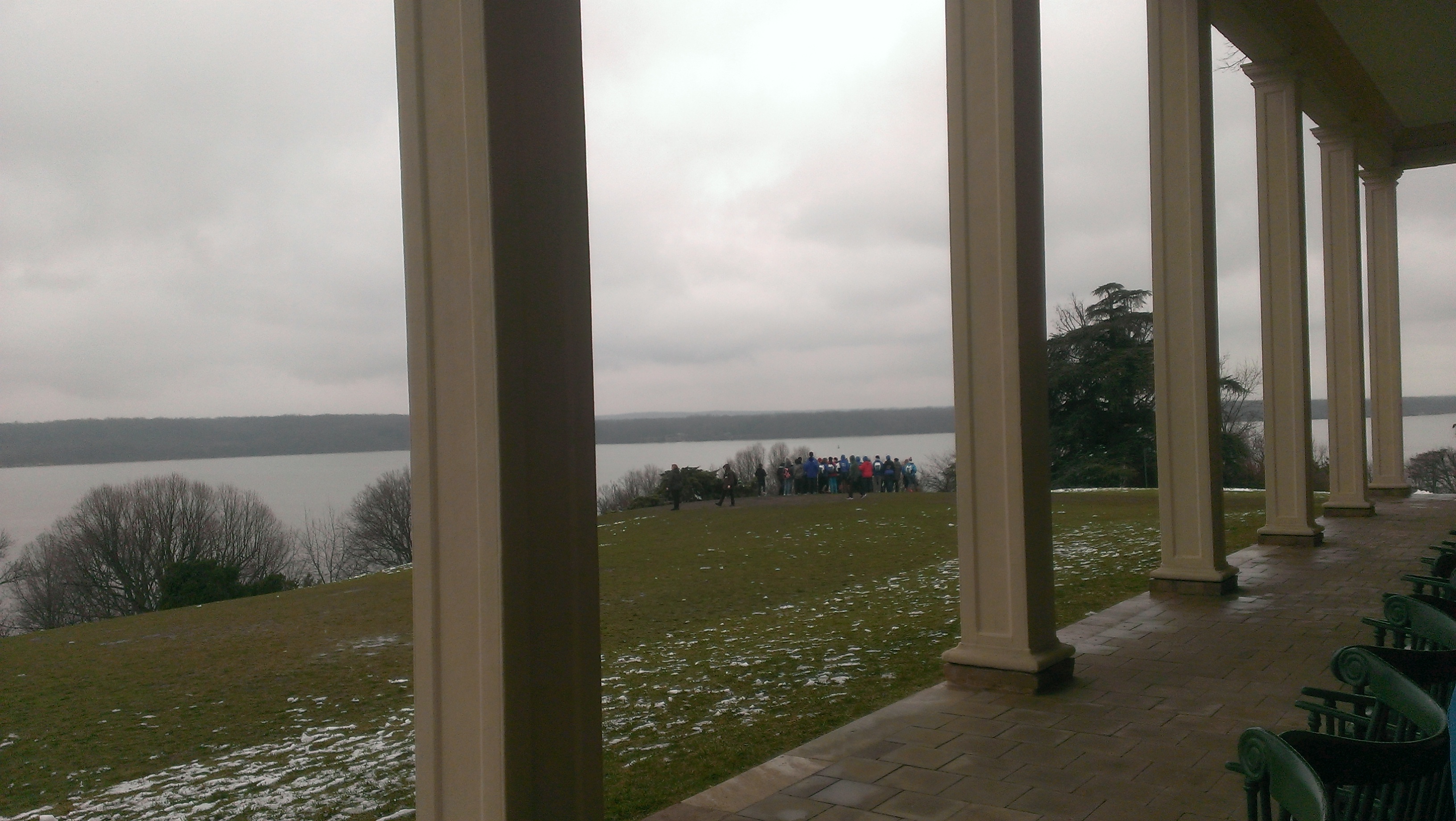
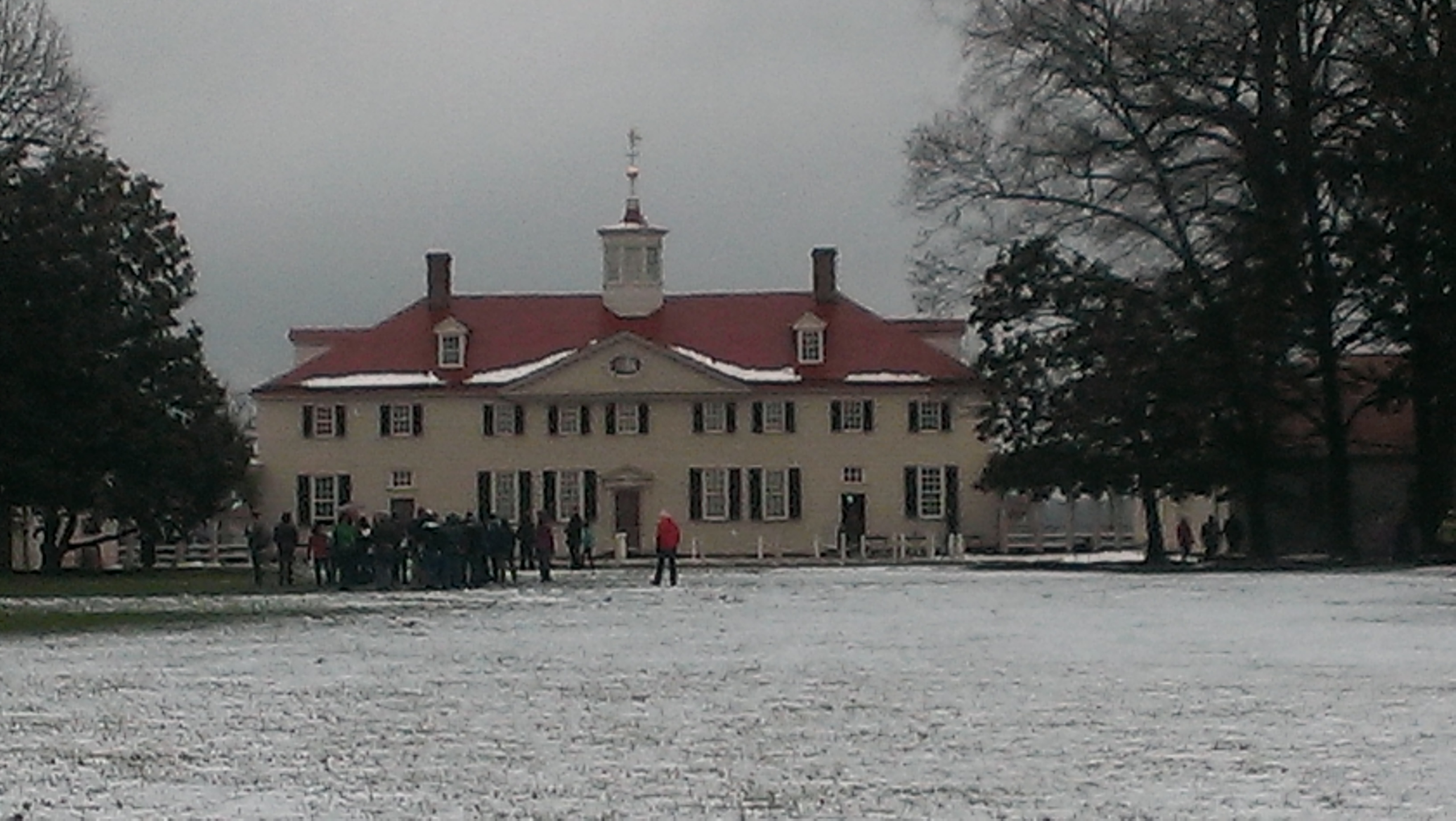
A few pictures from my trip to Mt. Vernon.

Before the pictures though.  Here in Washington and at Mt. Vernon the early history of our nation has a presence on the street, among the documents, in the traditions, and by shaping the forms of architecture from government buildings to residential homes: the brick homes, the limestone greco-roman revival government buildings and monuments and the cobblestone street in Alexandria, Virginia.  The constitution and the declaration of independence lie entombed in the Archives not far from where I write this.

Each place you go some element of our history peeks around the corner, waves. Says, “Psst, want to see some history, kid?”  I remember the same sense when I was on the Capitol, the sleeper train that runs between Chicago and Washington.  Once we got into central Pennsylvania the architecture changed.  We passed places I knew mostly from history books.

Here’s the thing.  I’m a Midwestern guy born, raised and never left.  A heartlander.  This does not feel like my country here on the east coast.  When I think of Minnesota from here, it feels far away, up north and filled with pine trees and lakes.  Which, of course, as most of you know who read this, it is.  Pine trees and lakes are in a large part of the state and they do define our identity as Minnesotans.

This feels like the old world, Europe to our heartland new world.  A place so built up and fought over and crusted up with money and power that it has a different tone entirely from the one at home.

Sure, we’re all subject to the same government and fly the same flag, speak the same language and send our kids off to the same military.  True.  But the east coast, like the south, the West and the Left Coast are different enough to be different countries in Europe or Southeast Asia or Africa.  You know this, I’m sure, but I’m experiencing it right now and it unsettles me in some way.

Here are the pictures.

All in a Morning’s Jaunt

Spring                                                      Bloodroot Moon

Today is the much nicer day of the next three.  Tomorrow the high will be 46 and windy, Monday 41 with ice and snow. Today it is 53 and sunny. I chose walking over museums today.

Before leaving I ate my first and last breakfast at the hotel.  Their main breakfast is a buffet, served for the  many students staying here.  The coffee was weak and served in tired blue plastic mugs.  Jack Reacher would have scored the coffee very low.  A group of 18 students from Germany didn’t seem to mind the coffee though.

Outside the wind was mild, though the temperature in the morning was in the high 30’s.  I saw people in shirt sleeves but I stuck with my hat, Chilean fjord special muffler and my Ecuadorian coat.  There were a number of people out enjoying the sunshine when I passed the Willard Hotel.

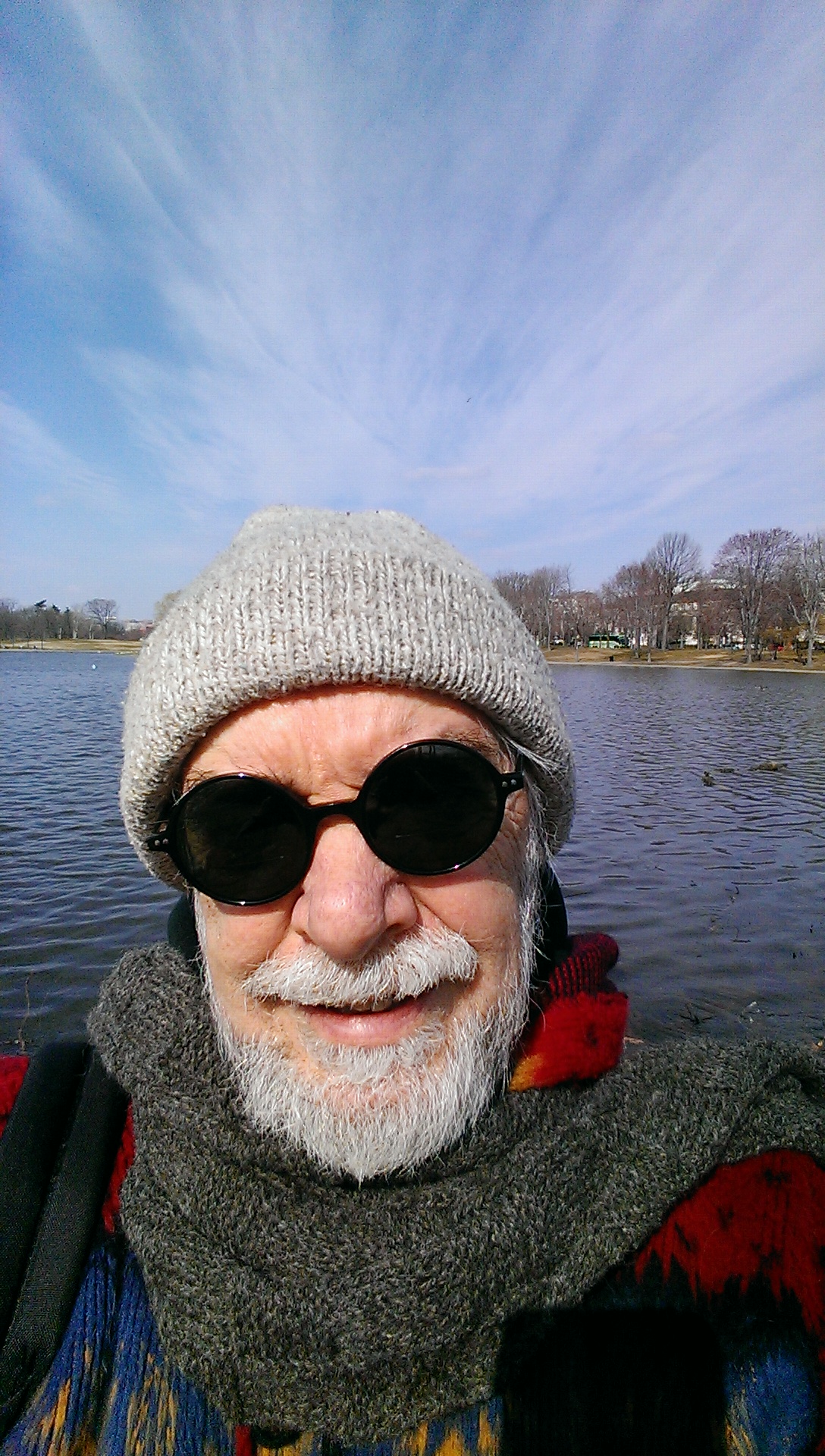
(apparently my Android takes self-portraits.  This one showed up in my pics today.)

Those of you who watched House of Cards would recognize the Willard from the scene where Clean Water held its fund-raiser on the steps, then crossed the streets with trays of food for the striking teachers.  Up close it looks like money and power compressed into architecture.

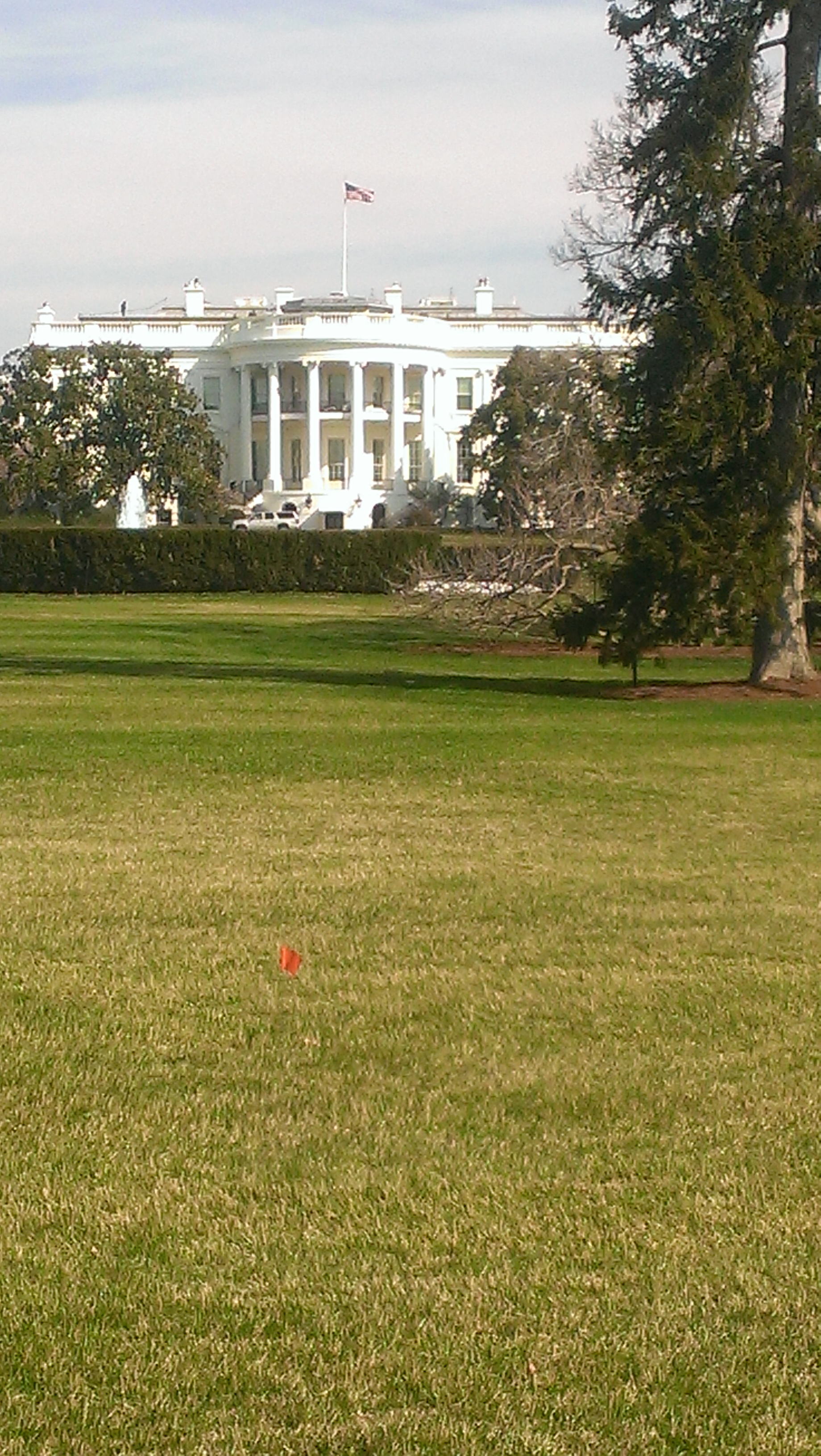
About a block from the Willard and right next to the Whitehouse–how did I not remember this?–is the department of the Treasury.  Keep the nation’s finances right close by the Oval Office, I guess.

Michelle’s garden is on the south lawn and visible from the fence where we all gathered, gobsmacked by the presence of this icon of politics and American might.  The Whitehouse has been the home of all U.S. presidents except for George Washington though Truman vacated for four years while it got a top to bottom rebuilding.

Onward to the Mall, entering the green west of the still not open Washington Monument.  It’s having repairs and rejiggering of its foundations due to a 2011 5.8 earthquake whose epicenter was in Virginia.

Walking along the reflecting pool on my way to the Lincoln Monument I saw a very large Irish Wolfhound, gray and stately, walking its people, unfortunately too far away to meet.

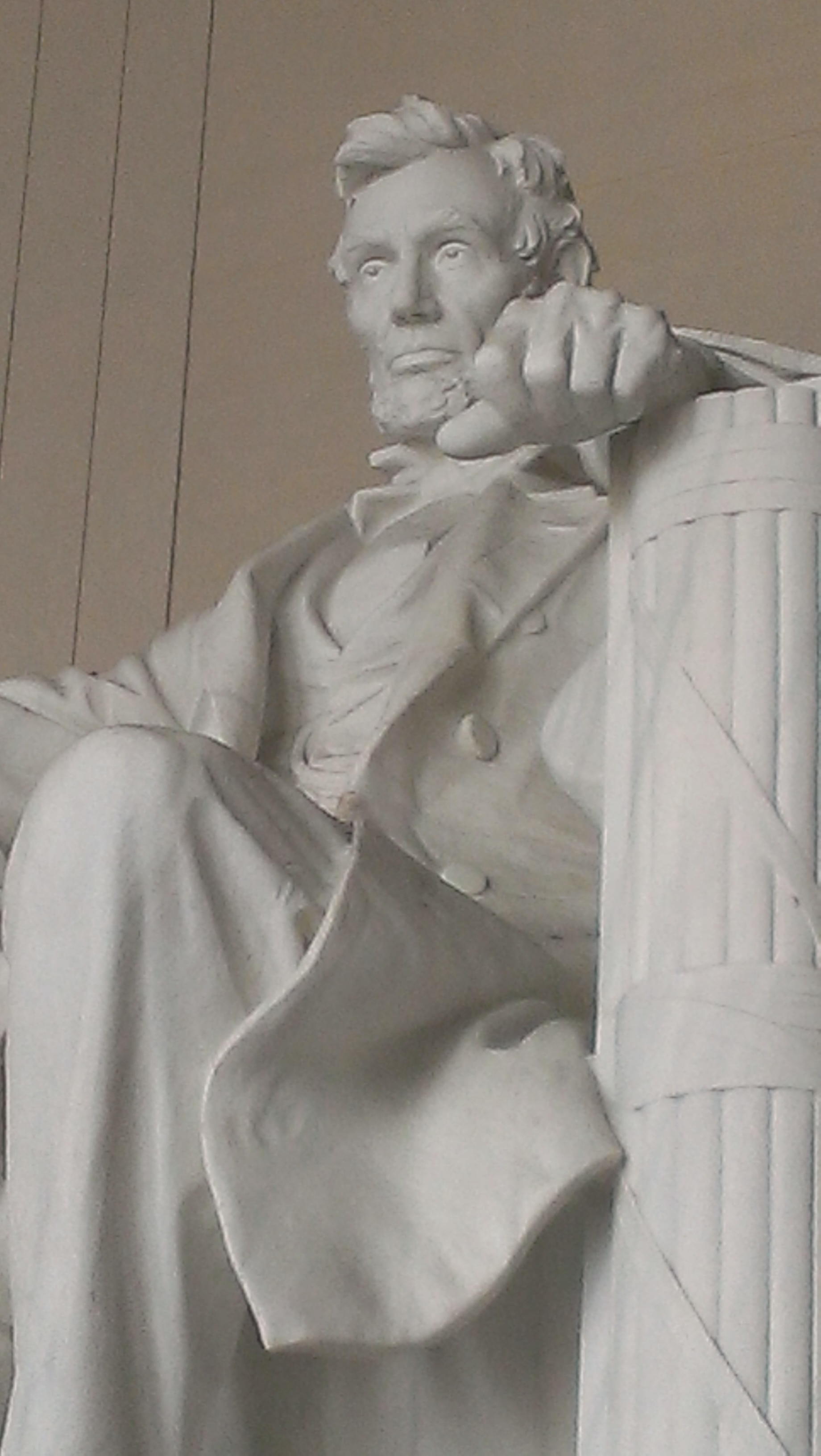
At the monument there were a lot of people though not the crush I’ve  experienced at other times.  This is a moving place as I’m sure you already know.  It is, as it says right over Lincoln’s head, a temple.  Immersed as I am right now in Greek and Roman mythology it’s easy to see the architect and sculptor’s reach back to those ancient worlds for adequate ceremonial features.  He was and is a giant in our history and this haunting building makes that place clear.

A brief thought passed through my head that this was a monument for the ages, then Ozymandias came in its wake and I realized I was a citizen of Rome at Rome’s peak.  London at the height of the British Empire.  Xi’an during the T’ang empire.  Edo during the Tokugawa era.  And the glory of those cities now lies in the past, a memory, not a present fact.  So it will be with Lincoln and Washington, D.C. itself.

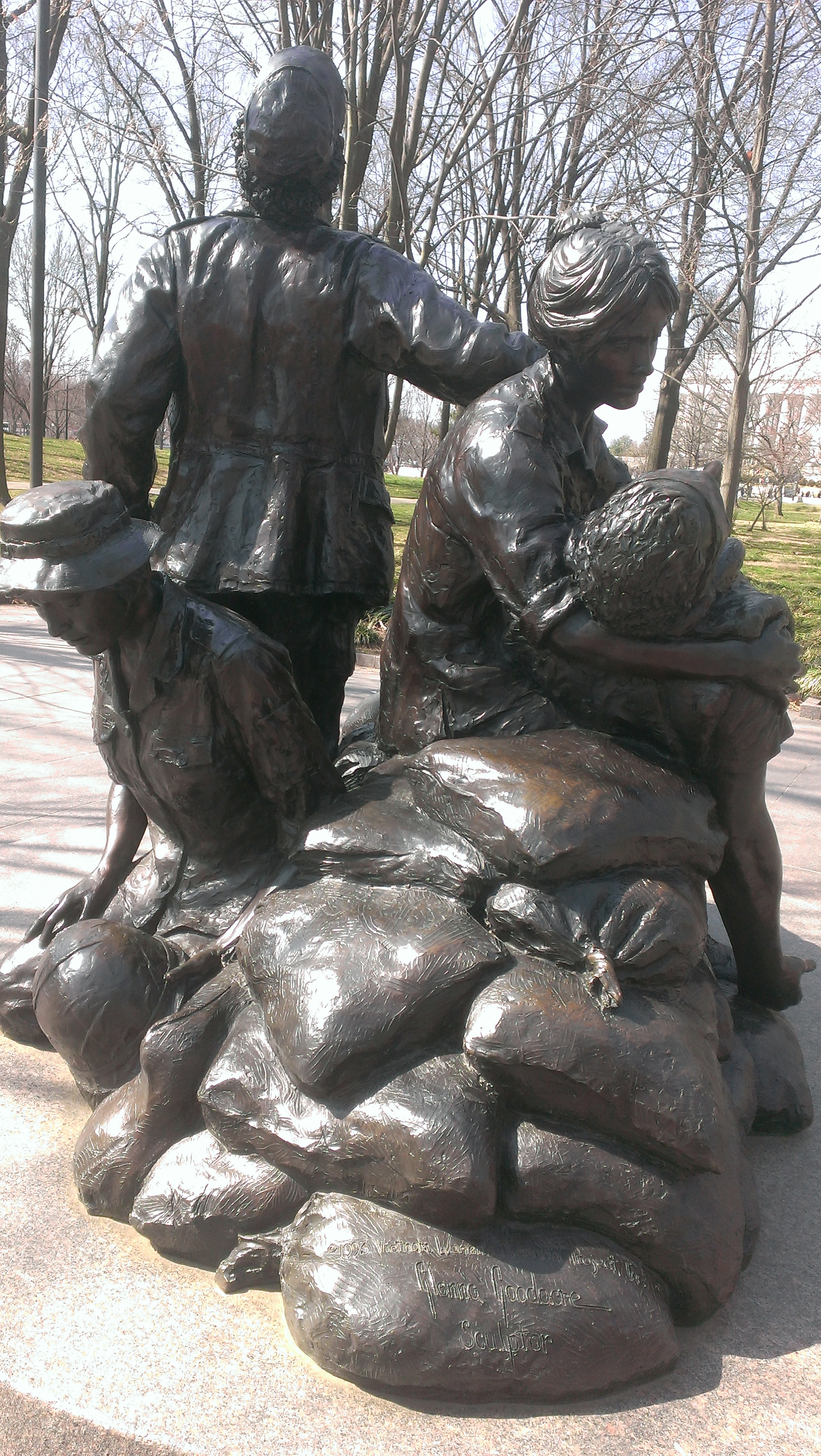
After the Lincoln Monument I went by the additions to the Vietnam Memorial, two statuary groups, one three men, the other three women, and wandered on to come upon what must be the most jingoistic of all our monuments and one built under the reign of George II, George W. Bush.  Nothing against the vets of WWII, among them were both my parents and an uncle, but this monument reeks of American exceptionalism and the projection of US power.  With George W.’s name on it it will forever be linked, as I’m sure he intended, with his misguided efforts in Iraq.

This is an example of the unintended consequences of the use of power.  No one can or should compare the US WWII effort, the last ‘good’ war’, with the ill-advised and deceitfully sold war against the Iraqi people.  This monument will itself stand as stone and metal irony on just this point.

In case, though, all these monumental treatments of liberty and freedom seem ill-advised, I found this on the back of a truck parked on the corner of Constitution and 15th, just two blocks from the Whitehouse.  There is always someone who would take freedoms away.

By the time I trudged my way back–I figure 4 to 5 miles round trip–this guy had exhausted himself.  A lunch at the Elephant and Castle then a long nap.  Woke up refreshed and ready to go back to the PRB show tomorrow.

Taking Advantage of Good Weather

Spring                                                 Bloodroot Moon

Of the next three days here in DC today will have middlin temps and modest winds.  That means today is a good day to walk past the Whitehouse, out onto the mall and onward to the Lincoln Memorial.  I haven’t been there in a long time.

In my focus on the pre-Raphaelites and my upcoming shift away from the MIA I forgot I was coming to DC.  Oh, I’d thought about going to the Supreme Court and/or the Library of Congress, yes, but only vaguely.

When I got here, I saw the Capitol building from afar.  Oh.  That Washington, D.C.  This is the nation’s capitol, the historic and present locus of US power.  And I haven’t been here for any length of time in a long while, since our family honeymoon back in 92 or 93.

In Penn Quarter, the name some urban planner cum tourism official has given the neighborhood of the Harrington Hotel, there is quite a bit of history within 2 or three blocks.  2 blocks away is the Ford Theatre.  Up another couple of blocks is the National Portrait Gallery.  In the other direction is the Old Post Office and the Navy Heritage Center.  3 blocks west is the Whitehouse.

The revolutionary era is a time period on which I’m weak, having spent my US history reading largely on the Civil War, the West and the period of the Transcendentalists. As a result the early history of D.C. is fuzzy for me. Someday I hope Kate and I can do a driving tour of Revolutionary War sites and, at the same time, visit the Hudson River school of artists along their namesake river.


The Contenda

Spring                                                       Bloodroot Moon

First day, tired.  Ate.  Walked.  Got too chilly.  25 mph winds and 37 degree temps.  Came back to the Harrington after getting a sight of the US Capitol, white and domed at the far end of Pennsylvania Avenue.

When I began to scout D.C. on the web, I got on a Washington Post website that featured restaurant critiques.  It wasn’t the restaurants that caught my eye though, it was a helpful graphic the Post staff had created to help you find “the homicides in your neighborhood.”

That night I didn’t click through since I didn’t have a neighborhood, so imagine my surprise as I sat in Harriet’s, the Harrington’s restaurant and saw, on the now cliched plasma screen, “Murder by the Whitehouse.”  Sure enough, within two blocks of the restaurant and hotel somebody had shot a football player and killed him.

The Whitehouse is only a hop, skip and a drive-by from here.

Whitehouse, in fact, is the Harrington’s passcode for its wi-fi.  A  natural.

Too weary to do sight-seeing with a wind-chill I went back to my quiet room, wondering what was happening on floors 2 thru 9, and flicked through the channels, reconfirming our decision to cancel our Comcast TV.

But.  I did find a middle weight boxing match, a world championship in the WBA between Macklin, the contenda, and Felix Sturm, the champ. I haven’t watched boxing since they were sponsored by Gillette Razors and that was in the fifties, but I watched this one.

No knock-out punches, but a lot of gamy attacking by the contenda and a lot of backing up by the champ.  There was blood, some.  Shots of faces crushed by left and right hand jabs.  Uppercuts.  The occasional clinch, but mostly strategic holding up of gloves followed by flurries of punches.  Boxing seems almost quaint with mixed martial arts, Ultimate Fighting, now enjoying popularity.

The bout had a Hemingwayesque aura, perhaps a bit of the 1940’s.    The referees were all Latino one from the U.S., one from Puerto Rico and one from Spain.  They went with the German though the Irishman, Macklin, could have won it, too.  At least that’s what the announcer said.

It was Hemingway and contestants bloodying each other up and the Spanish referee that led me to bull fighting.  There is, in both boxing and bull-fighting, a suspicion that you shouldn’t really be watching.  Two adults pounding each other with their fists?  A whole raft of folks against one bull whose only way to leave the contest is dead? (Yes, there are the rare exceptions where the crowd saves the bull, but most of the time the bull dies.)

This wasn’t the I planned my first evening of this pre-Raphaelite immersion, but there you are anyhow.

The Second Inaugural Address

Winter                                                                      Cold Moon

Read the text of Obama’s second inaugural address today.  I’m a words guy, that should be clear by now for those who read this.  Words matter.  Yes, actions matter, too, but I’ve never been a fan of what I consider the false dichotomy between thought and action.  Acting and thinking, words and deeds, run together in life, preceding the other, and effecting the other in turn.

This is an important speech and it seems, from what I’ve read, that Republicans caught its importance more than the Democrats.  This is an unabashed hymn to the America I love.  The one where the founding documents inspire us to move towards more inclusion, a broader and deeper sweep of justice and to embrace the collective as well as the individual.

Like words and deeds, the individual and the collective are not in opposition, rather they are in dynamic tension.  When the creative work of the people is done, it helps the collective, but it does that by helping individuals.  Freedom is not a zero sum game.  As I gain more and more freedom, you don’t lose yours, your freedom grows along with mine.  We both test the limits of our individual destinies and in so doing increase the available free space for all.  Individual action breeds collective health and collective health breeds individual freedom.

An inaugural address is not policy, or executive order or legislation or federal rule, but neither was the Declaration of Independence.  It was a call to a fractured people, join together and together we will become more than a colony.  This second inaugural underscores the common action that has traditionally made us strong and renews the call of the Declaration.  I’m proud to have a President who speaks these words.

About time.

One Person, One Dot

Winter                                                        Moon of the Winter Solstice

You can see this map in a usable form at Census Dotmap.  On it are no geographical or political objects, no boundaries no rivers no lakes.  Only one dot per person.  Just the map at this size says so many interesting things about our vast country.  A lot of open space out there to the west.

Woolly Mammoth Paul Strickland has moved to the northeastern coast of Maine, a ghostly presence on this map.  If you go to Census Dotmap and click in on Minnesota, you will find our north as empty as much of the west.


Lincoln

Winter (Christmas Day)                                             Moon of the Winter Solstice

Worked on Jason and Medea in the morning.  Kate and I went to see Lincoln in the afternoon.  A powerful movie.  The most realistic depiction of legislative politics I can recall seeing in a long time, maybe since Advise and Consent, which was a long time ago.

A gritty, dark movie about democracy in a moment of extreme crisis, of a strange but good man tested, the colorful figures in and around Lincoln and in the U.S. House of Representatives at the time.  A costume drama and I like costume dramas.  But this one has substance.

It brought me to tears several times in the closing minutes, not only around Lincoln’s assassination, but also around the political issue of passing the 13th amendment.  An awareness of the difficult, unpretty work necessary to make it happen layered on a contemporary realization of the work undone.

It also made me reflect on how different things might have been had Lincoln not died.  I mean reconstruction.  Yes, we fought for the freedom of the enslaved, but we also allowed Jim Crow to create new peculiar institutions, delaying that longed for trip to the mountaintop, a trip not yet fully taken thanks to the struggles of the Northern diaspora.

After we ate dinner at Explore China.  Mooshu Pork, wonton soup, hot tea.