Category Archives: GeekWorld

Feel the Rain On Our Face

Lughnasa                                                                    Recovery Moon

There are many ways of becoming native to this place. The one that worked for me involved a combination of following an ancient liturgical calendar based on seasonal changes in temperate latitudes: the Great Wheel and gardening. There are many other paths. Chado: the Way of Tea integrates the tea ceremony with a finely divided sensibility to Japanese seasons, some only two weeks long. Hunter/gatherers have to be native to the place where they are or they will not survive. Followers of the Tao, the way, lean into the rhythms of the natural world rather than away from them, flowing through the world as water does in a stream. Hiking and camping and canoeing. Forestry with an emphasis on forest health. Conservation biology.

Oddly though practitioners of modern agriculture are often as estranged from their place as residents of vast urban enclaves. And I recently read, in Foreign Policy magazine’s July/August edition, an intriguing explanation as to what lead current, often corporate, agriculture astray. When the population explosion gained prominence in the mid-1960’s, think Paul Ehrlich’s “The Population Bomb,” a concentrated focus on methods of improving agricultural productivity resulted. And it worked. More acres went under the plow, more chemicals went into the soil and onto crops, antibiotics filled food animals, food production became more sophisticated though not more nutritious, fast cheap restaurants bought and sold fast cheap food. There are real dangers in letting ourselves become strangers to our home world.

Becoming native to this place is analogous to being born again, revivified for the act of belonging to, being part of this planet. Second naiveté, Paul Ricoeur’s wonderful notion, can follow a state of critical distance:

“According to Ricoeur, the rational forces brought to our civilization through modernity have made it difficult to accept religion or scripture in the “first naïveté” sense. Once subjected to rational inspection, the literal meanings of religion really do not hold up…”  exploring spiritual development

Modernity has put the fruits of enlightenment reason and modern technology forward as more significant, more important than the growth of a tomato, than the beauty of a wilderness lake. It has substituted the grace of a soaring condor with the stiff, hard brilliance of an airplane. That tomato, grown soft and juicy on the plant, got replaced by a hard-skinned, pre-ripe picked fruit designed for machine harvesting and long distance transport. Distances that used to require human feet and legs, or the same of horses, now demand only that we sit and wait.

Before you resist this. This is not a screed against airplanes, cars, computers, telephones or grocery stores. It is a recognition of the rupture, the critical distance, modernity has created between our lives and the world that sustains them. Food comes from soil and plants and the animals that eat the plants. Oxygen from the plants at work. Water used to be purified by the very wetlands we fill in or drain to build subdivisions or to plant more acreage of chemically injected crops.

Life, in other words, exists in a delicate balance with the inanimate; that balance is literally billions of years old and one we cannot afford to ignore. Yet we do. And so we must make an effort to again become native to this place, this place which in its wonder gave life a chance.

Following the seasons as they change and following within those changes emergence, growth, life and death became easier for me when I overlaid on spring/summer/fall/winter the four big solar events of equinoxes and solstices, then put between those the cross-quarter holidays of my Celtic ancestors:  Samhain (summer’s end), Imbolc (in the belly), Beltane (the beginning of the growing season) and Lughnasa (the first harvest holiday). When I write the season at the top of this blog, I remember, for example, that we are now in the season of first harvests. And sure enough Kate brought home some wonderful heirloom tomatoes today.

The extensive gardens, both flower and vegetable, plus the orchard that Kate and I installed and nurtured in Andover reinforced the lessons of the Great Wheel. At Halloween, Samhain’s paler descendant, our garden would be finished, the beds covered, foods in jars in the basement, garlic hanging from rafters, onions and apples spread out. We were part of the turning wheel and the turning wheel shaped what we could and could not do. We lived then with the rhythms of the temperate latitudes, in some harmony with them.

Now we are in a new place, a more arid, less fertile place and the way of becoming native to it is still in process. But it will come.

We cannot all go back to the land. Cities dominate the living patterns for most of the world. But we must find ways, whether through community supported agriculture or urban hydroponics or organized trips to the countryside, to help us all feel the rain on our face. We all need to wonder at the slender green shoots that brave their way through the late snows of winter. Or, at the tropical lushness of equatorial jungles. Or the marvel of lives lived fully in the world ocean. Our lives and the lives of our grandchildren depend on our becoming, again, native to this place. To know our spot with a second naiveté so that we will care for, love this rocky, watery wonderful earth.


Becoming Native to This Place

Lughnasa                                                                Recovery Moon

The most ancientrail of all is becoming native to this place.

But, why must we become native to mother Earth? Aren’t we native simply because we are thrown onto the planet’s surface at birth? Yes and no. Yes, in that we are an organism designed to live in this gravity, breathe this concentration of oxygen, use plant matter and other animals as food. No, in that those of us thrown into a complex industrial/technology culture are native not to the planet itself, but to adaptations made over centuries by economies and governments. This includes the U.S., Europe, most of Asia, the Middle East and Latin America, as well as residents of urban areas on every continent.

In the U.S.A. we are native to electricity as Kate and I learned just this Monday.  Our typical life ground to a halt along with 4600 others when the power went out. We are native to a night lit not by fire, but by bulbs. We are native to warm houses in winter, cool ones in summer. Our hunting and gathering takes place at King Sooper, Safeway, Lunds, Byerlys. We are native to antibiotics, surgery, dental care.

When we climb the additional 3,600 feet in altitude from Denver to our home on Black Mountain Drive, we sit comfortably in a moving chair powered by the ancient remains of dinosaurs and forests. We are native to telephones, computers, text messages. We are native to machines and carpenters and plumbers. We are, in short, native to almost anything but this planet where we live.

You could reasonably ask whether this matters. Our future lies in the stars anyhow, doesn’t it? Maybe so. Especially if we render the earth uninhabitable for humans. Which, with climate changing drivers still dominant in our world economies, we’re working hard to accomplish.

I believe it matters. Why? The short answer is that becoming native to this planet, again, is our best hope for throttling back those climate change drivers. We can escape to the stars while having a beautiful homeworld as our base of exploration.

The longer answer has to do with the nature of our humanity. Technological and industrial estrangement from the rhythms of the natural world is almost a canard, a cliche. We expect tomatoes in winter. We expect access to any part of the planet within hours. Even the colors of our sunrises and sunsets often have chemical pollutants to thank for their vibrancy.

We need to awaken ourselves to the essential, everyday miracles: photosynthetic conversion of sunlight into food, the transpiration of that same process, oxygen, being a gas we need to survive. And this consciousness that we have. How about that. Or the intricate and interdependent web of living things. The changing of seasons in the temperate zones. Water’s strange characteristics.

In the next post I’ll suggest one way of becoming native to this place.

Bibliotherapy

Lughnasa                                                             Recovery Moon

Bibliotherapy session with Nina from Melbourne this morning. Mostly I want another perspective on my reading, a possible way to organize and focus. It’s not so much that I need this; I can find books on my own and have done for years; but, I want to think through, with someone else, a way of concentrating my effort. Time is not infinite for us finite beings, at least not with the books available on this planet.

Skype has a magical quality. The old videophone of the bright cartoon illustrations of the future made real. Like space travel, landing on the moon. How it performs with no time lag in the conversation is still a mystery to me. This morning it will take me half-way around the world, to a continent I’ve never visited, to speak with a person I’ve never met. Nina comes as a referral from Simona in London where I connected with the School of Life.

Think of that. The colonies communicating with the old homeland for connection. In real time.

Well, about time to start. More later.


Singularity Already Here?

Summer                                                                  Healing Moon

On the way to a new breakfast place in Evergreen this morning our Garmin, Ophelia, lost the plot. We were hunting for the Lakeshore Cafe on Upper Bear Creek Drive. Ophelia took us over 5 miles on Upper Bear Creek Drive, which winds past some of the most expensive homes I’ve seen out here. Lots of stone and timbers and glass, a rushing Bear creek, wide expanses of stupid lawn and horses. Ophelia took us past Winter Gulch road, up a dead end road, then directed us up Yankee Drive, which was a dirt road winding uphill. Finally, at the end of Yankee Drive we came to a gate and that was that. We had to turn around, reverse field.

Turns out the Lakeshore Cafe, which we did find no thanks to Ophelia, was less than a thousand feet off Highway 74 on Upper Bear Creek Drive. In  hindsight I guess we should have suspected something when Evergreen Lake was far behind us, since a lakeshore cafe would probably have a lake view. But we trusted in Ophelia. Doesn’t bode well for the human versus machine wars predicted by the Singularity folks.


Summertime

Beltane                                                               Closing Moon

Summer. A time long ago sealed in our collective memories as special. School ends and a long, delicious emptiness opens up, one filled with spontaneous play, vacations, reading in cool corners of a yard or home. Granddaughter Ruth is here for an overnight after she and Grandma spent the afternoon at the Maker Faire held at the Denver Museum of Science. She built a tool box out of sheet metal, a catapult out of sticks and rubber bands, a musical robot, and a cardboard skyscraper among other things. Just right for summer.

Summer is also the time for family reunions and I’m missing both the Ellis reunion held in Texas and the Keaton reunion held this year at the family farm just outside Morristown, Indiana. The Keatons were my primary extended family since we lived in Indiana, not Oklahoma where most of my Ellis relatives reside. I was born in Oklahoma though Mom, Dad and I moved to Indiana when I was not quite 2 years old.Grandpa and Mabel Keaton

My sister, who is attending the Keaton reunion this year, sent this photograph of my grandfather, Charlie Keaton (after whom I’m named) and grandma Mabel in the hat, the couple on the left. My sister commented on grandma’s hat and the fact that I look like grandpa. Guess I do.

Summer is also a time, for me, when U.S. history seems to dominate my interests. This year, once I get past the interesting literature on my prostate, I’m going to focus on reading about the West and mountains. Before July 8th, my surgery date, I also plan to do some exploring of Park County, southwest on Highway 285.

My hope for you is that you have a summer filled with ice cream, fireworks, family and travel.

Minnesota Gneiss

Beltane                                                                Beltane Moon

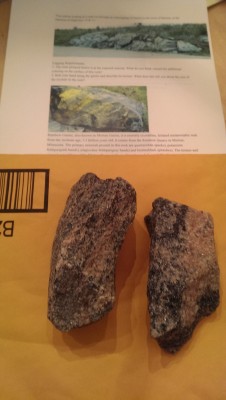
IMAG1496There’s history, pre-history, then there’s a really, really long time ago. Friend Tom Crane sent these two chunks of Morton gneiss.* I think he wanted me to have a marker stone for the oldest rock in the U.S. Thanks, Tom. They’ve gone on the rock wall before the Ely greenstone** we collected last week.

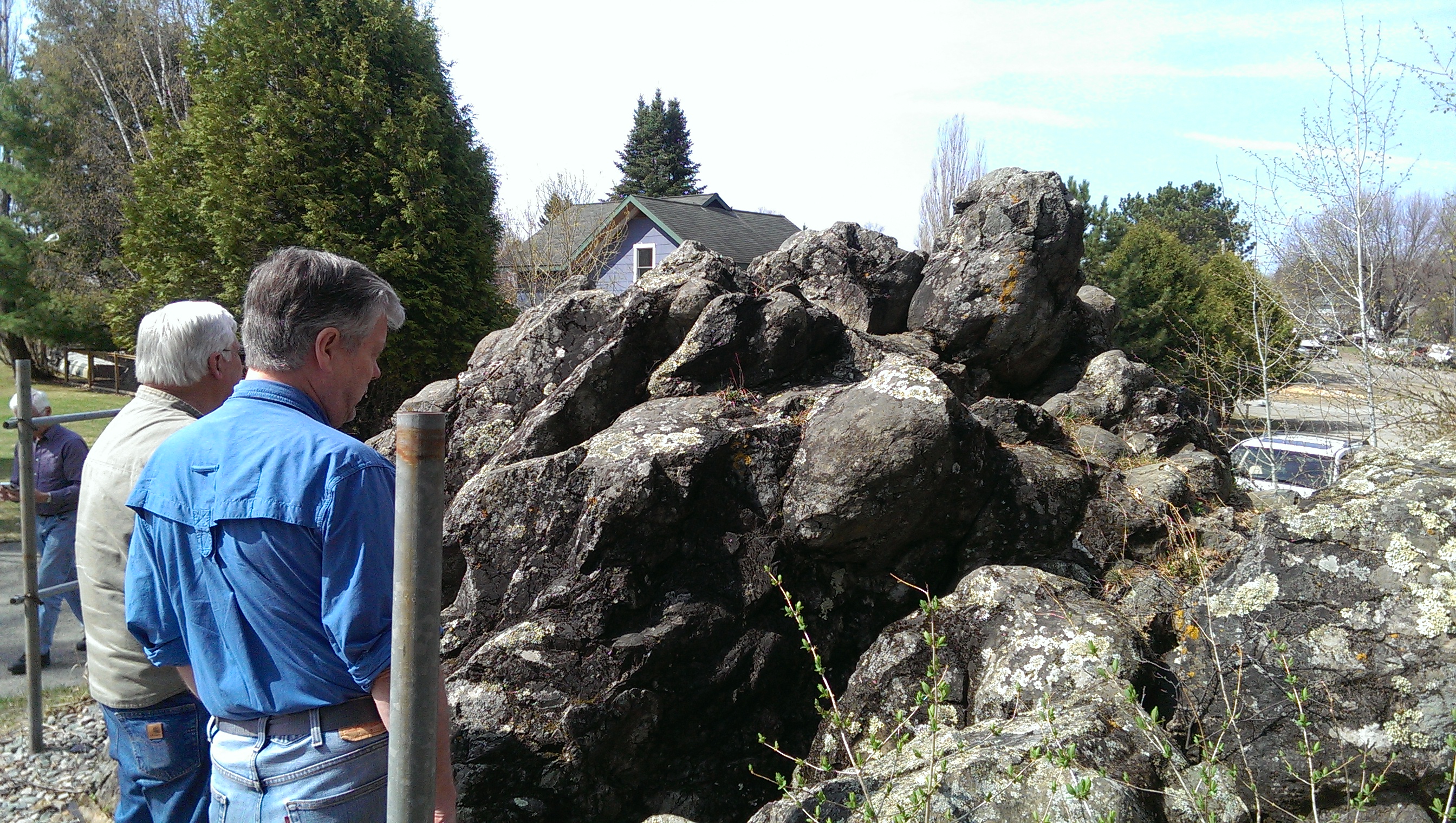
We visited the Ely greenstone outflow in Ely together last Sunday after the Woolly retreat.

The ability to touch this hardened time is a remarkable opportunity. The past is always with us.

Our body is the Morton gneiss of our deep past. It carries in itself memories of formative events we have long forgotten. There is a debate about the continuity of the self, one side seeing it as a narrative stitched together to explain our existence, but non-essential. The other side, my side, sees the self as a current manifestation of all the moments that have shaped us, plus an ineffable emergent quality that makes us more than the sum of our parts.

The dense, hard bones of mother earth support the efflorescence that is the biosphere. This living, breathing outer layer is, likewise, an emergent property. It is not, said another way, predictable from the original constituent elements of planet formation. Thus, the entirety of earth’s vital children evidence the earth’s own selfhood.

This is not the gaia hypothesis which sees the earth as an interdependent system of systems. It is, rather, an attempt to position the evolution of our planet from Hadean times, the earliest period of earth’s formation, as a mystery, yet one with known parts.

The mystery is that these parts formed at all from the detritus of the big bang. The mystery only deepens as evolution proceeds and creates a wanderer that follows a repetitive path. As geologic changes shaped the early continents and reshaped them, another, profoundly deeper mystery occurred. Somehow, life. From inert gneiss and greenstone and all the other truly ancient bones, came a quickening in the vast waters that covered most of the surface.

In my opinion the revealed self of this particular cosmic location manifests in this most peculiar change, one in which the earth begins to move, root, swim, run, think. I am not trying to anthropomorphize the earth. It doesn’t need it. It is as it has become, a thing sui generis, unique in our solar system, maybe in our galaxy. Who knows?

Old Mammoths stare at 2.7 billion year old rock formation, Ely Greenstone

*”Archean crystalline basement rocks are exposed at several places along the Minnesota River valley in south-central Minnesota. These rocks are mostly gneisses of various compositions along with other igneous and metamorphic rocks.

Left: exposure of mafic gneiss at Granite Falls beside the Minnesota River. Right: closeup view of pegmatite vein within the gneiss at Granite Falls.

Among these ancient rocks, the Morton and Montevideo gneisses are the oldest whole-rock continental crust in the United States. Many attempts to date these rocks using various radiometric techniques have yielded an age ~3.5 billion years old (Goldich, Hedge and Stern 1970; Bickford Wooden and Bauer 2009).”   Morton gneiss

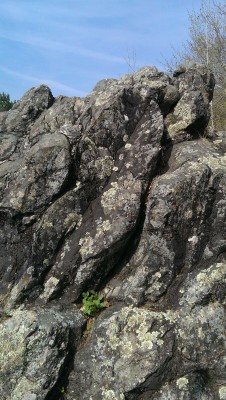
pillow rock (lava extruded under water) Ely greenstone, Ely, Minnesota


**”The lakes of the BWCA were carved from Precambrian bedrock of the Canadian Shield by advances of ice sheets during a succession of ice ages during the past two million years. Many varieties of this ancient bedrock are exposed, including granite, basalt, greenstone, gneiss, as well as metamorphic rocks derived from Precambrian volcanic and sedimentary rocks. Greenstone located near Ely, Minnesota is up to 2.7 billion years old. The size and shape of most lakes in the BWCA are dictated by the bedrock, due to the ability of glacial ice to erode softer and weaker rocks more easily, creating depressions later filled with water.”  canoetrip.com

Tires, Wood, Art and Dog Bites

Beltane                                                                        Beltane Moon

Into Denver today to pick up four Michelin Latitude Tours. Saved $300 over my mechanic’s quote for the same tire. Tire Rack.com you rock!

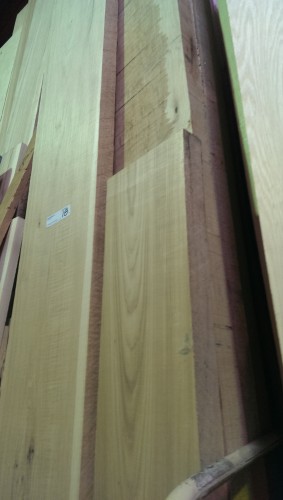
On the way back I stopped at Paxton Lumber Company just off Colorado Avenue near I-IMAG147070. Actor Bill Paxton is a member of this family. Jon recommended it. They have wood for wood workers. I’m looking for wood to make a new top for some Ikea cabinets I have.

Woods they had, often 10-12 foot boards, many 3 inches thick: chestnut, yellowheart, padauk, wenge, pecan hickory, mahogany, teak, brown ash, walnut, alder, white ash, cherry, red oak, white oak, european beech, aromatic cedar (smelled so good) plus other, softer woods like pines, basswood, poplar. What a great place. Finishing the book shelves, getting a new top for my cabinets will mean I can organize and then use all my resources. Excited about that.

When I got back into the mountains, I made a stop in Indian Hills, a small town just off Hwy. 285. The Mirada Art Gallery there has a good reputation, the best in the Denver metro in spite of being in a relatively out of the way spot. It had a show of contemporary artists focused on the West that will close Friday.

The art, most of it, did not attract my eye. Too loose, too colorful, not enough depth. Expensive art to match your couch. However, sculpture Jennifer Stratman and painter Alvin Gill-Tapia would look good in any museum or home.

These were places I’d wanted to see for some time, but the opportunity hadn’t presented itself. Today, it did.

While I was gone, the dogs tripped over into predator behavior. They are neither pliable, nor sensible in that state. Gertie has a wound just below her left eye. She looks like a prize fighter. Vega, who had attacked both Gertie and Kepler earlier in the morning, got bitten by Kepler. The e-collar he’s in didn’t bother him. Kate said he clamped on and wouldn’t let go. It’s not a terrible wound, but it’s a puncture wound through the dermis, so she’s back on antibiotics.

Vega, in a happier moment, with her sister, Rigel

When they’re in a predatory frenzy, fights and biting occur at the door. Doorways are places where doggy status becomes critical, top dogs through first, omegas go last. In the frantic scrums like the one this morning everybody tries to get through the door at once. Havoc can, and did this morning, ensue.

The Well-Watered House

Spring                                                             Beltane Moon

Wildfire mitigation. That was on my mind when we went to the Conifer/Evergreen home and garden show. And, in a booth for a product that costs between $20,000 and $30,000 I got an idea that will help us a lot, an external fire sprinkler system.

The concept can be implemented far more simply than the battery maintained, 500 gallon reservoir system Waterguard offers. It’s automated and assumes loss of power to the house soon after the fire becomes a problem. Loss of power is a problem unless  you have a stand-alone, gas fueled generator. Which we do. It’s the first block in our system and needs to get installed soon.

After it’s in, we’ll review the various sprinkler systems available, I’m leaning toward one that is plumbed and covers the house, the garage and the defensible space. Defensible space is about 30 feet out from the house. This space needs special, intensive and unsentimental approaches to any fuel source: shrubs, grass, trees. The two together, a solid defensible space and an external sprinkler system, will bring over 90% of homes through a direct burn.

It will take a while to price and get bids for the system we choose, but we should be able to have it in place before the worst part of the wildfire season in late summer, early fall. I get sprinkler systems, having managed a twelve zone system in Andover for many years, and this makes sense to me.

Becoming Native to This Place. More.

Imbolc                                         Black Mountain Drive

Four Native Plant Master classes educate new learners in Colorado’s fauna: one for the high plains, one for the foothills and one for the montane eco-system where we live. The fourth, plant sketching, will support the nature journal I’m starting this week.  The Friends of the Colorado Geology Museum offers lectures and field trips that focus on Colorado’s physical features. Geology Underfoot, an excellent geology primer on the Front Range, suggests 20 self-guided field trips to see instances of particular developments over geological time. Wild Food Girl presents opportunities to hunt food in the Rockies.

How to saturate myself with the Old West, the mining and ranching histories here, that’s a challenge that lies ahead though History Colorado provides opportunities.

It’s an exciting time, full of information. Lots to do.


The Weather

Imbolc                                  Black Mountain Moon

                                                                            Syntax: Physic Opera


The bar at Syntax: Physic Opera. This is a bar for working artists on South Broadway in Denver. A physic opera is a medicine show and Syntax says that everything in the place is medicine. This includes a rye whiskey, cinnamon and other spices drink called Tornado Juice and homemade Cucumber Gin. Other specialty drinks of the house are Pop Skull, Taos Lightning, Snake Oil and Brain Salt.

The guns you can see in the case to the right are works of art made by a graphic artist/welder who enjoyed making unique guns. They have a distinctly steampunk look to them. There are works by other Denver artists hanging on the walls.

The Weather5280 blog brought me to Syntax. It was a meetup of folks interested in the weather, meeting to talk weather then listen to three presentations by some of the folks responsible for the blog. I had an easy 30 years on everybody there. This was a young, hipster crowd with knit hats, blue jeans and retro dresses.

During the conversation before the presentations one guy said, “My wife and I have 5 or 6 quarters just over the line in Texas.” That’s as in 5 or 6 quarters of land, each quarter defined as a mile square or section has 640 acres. “We rent it out to our cousins. They run a few cattle, some sheep. We also just put up some wind towers.” A Chinese professor talked about the inadequacy of certain weather models. A tall blonde, beautiful, was eloquent on troughs and ridges.

Mostly I was out of my depth. These were weather geeks, many of whom had studied meteorology with Sam, the professor, and Matt, Brian and Brendan, the meteorologists who write Weather5280. Sam gave a mostly incomprehensible 20 minutes on snow banding, focusing on instabilities that cause it. Incomprehensible to me, that is. Others were nodding.

The most accessible presentation of the night was Brian, the longrange forecaster for Weather5280. He used analog years and maps focused on the Pacific Decadal Oscillation (PD) and the ENSO regions where El Nino and La Nina come into being. One thing he said had me nodding. “This is not a historic drought in California. Show me a drought that stretches 65 years, then I’ll call it historic. This is weather. It’s cyclical. The real problem is the number of people using the water. That’s what’s historic.”

(PDO is the blue blob between Japan and the US. The ENSO region stretches from Melanesia toward South America, most of it here is in orange.)

It was, overall, an interesting evening. After it was over, I headed out into the snow and navigated snowy roads all the way back to Shadow Mountain.