Category Archives: Memories

Selfies

Samhain                                                                         Winter Moon

Great warmup yesterday, eh?  I think we saw 33 here for an hour.  Take that nosnowbirds.

Off to downtown Minneapolis again today.  Third time this week.  I often go a month IMAG1188without getting there.  My first physical with Cornelia Massie, M.D.  No real concerns, just another benchmark on the road to the big check-up.  That’s the one when check-ups are no longer necessary.

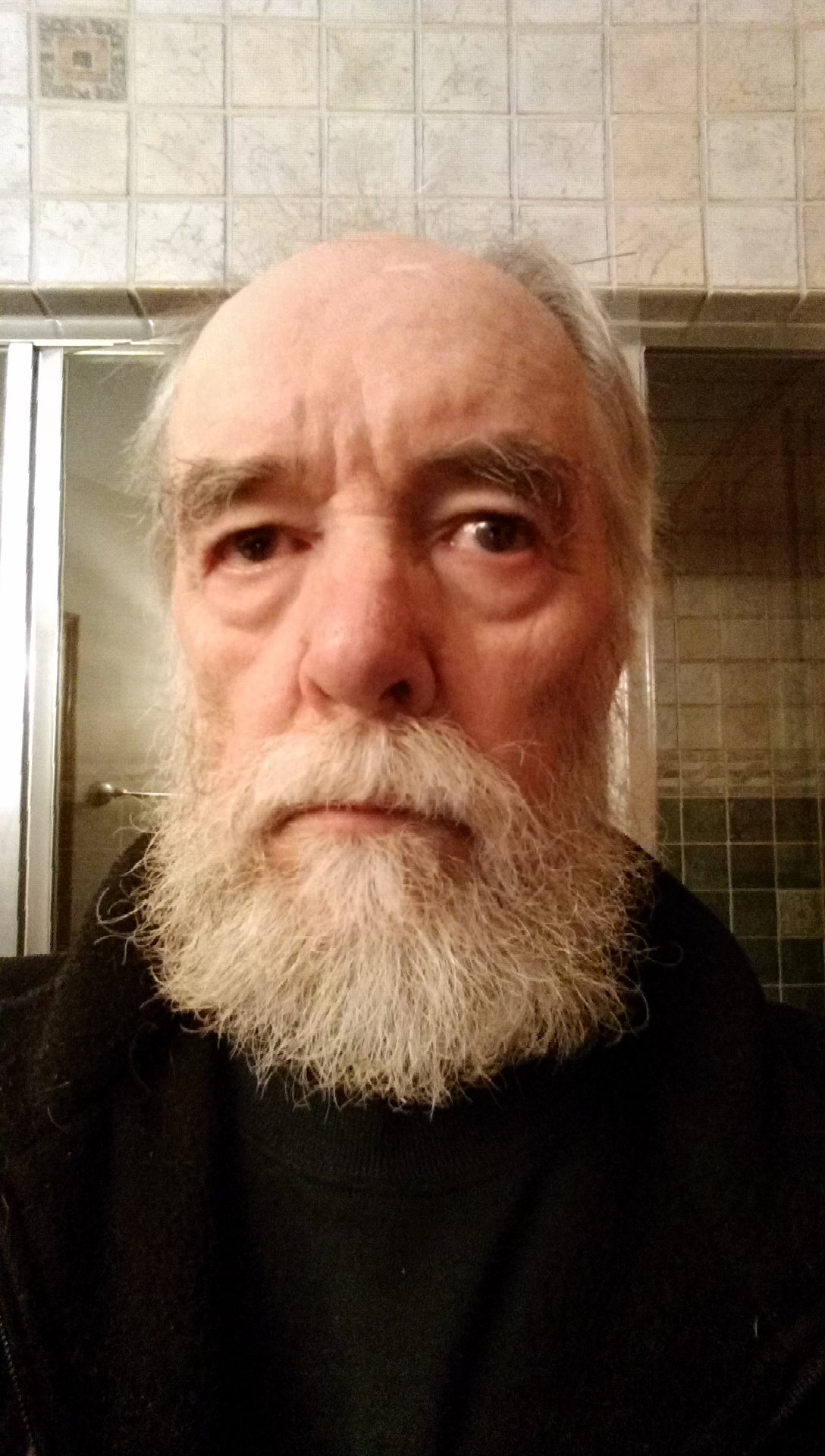
(who’s in there?)

Listening to a lecture by Alan Watts yesterday had me wondering about the self.  As you may know, I’ve been an advocate of the Self, the unique bundle of experiences, gifts, body/mind and personal history that is you.  In my way of thinking, Self=Soul.

But.  I think I may have to balance that with the Eastern view of no-self.  Watts described each of us as the universe being conscious of itself, a game the universe plays.  We float along on the flesh bag that contains us, taking in sensation as it comes, changing, always, with it.

In addition to the high Western individualist Self I can see the Eastern argument, too. When I consider the young boy who ran up the concrete slope of a neighbor’s fence to walk higher than his mom for the length of their lot, I wonder how we can share memories.  We do, I know that.  But his reality, his experience of the world is so different from mine today that it makes him as alien to me as a stranger.  Or, an intimate for that matter.

And, if the child, then what about the adolescent?  Well, there, too.  That guy with the runny nose, a wet handkerchief in his pocket, going from class to class, working hard to keep up his status as the brain.  How about that 60’s radical with a placard in one hand, a joint in the other?  Geez, who was that guy?

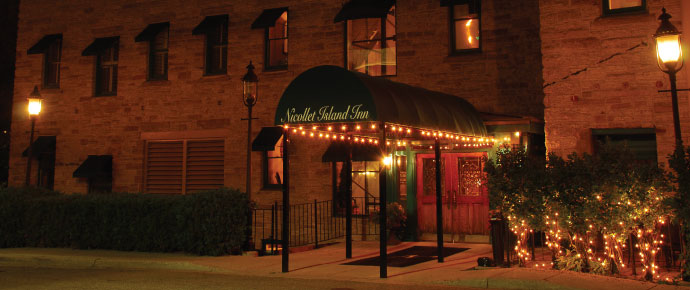
And so it would go in a chain up until, well, when?  What about the man who sat with his brothers at the Nicollet Island Inn on Monday?  His time has come and gone, replaced with the one who types now.

Yet, I’m also dragging this ever changing body to the doctor because I feel a duty to it, to make it last as long as possible.  Why?  Well, I’m interested in seeing what the Self becomes.


Absence

Samhain                                                    Thanksgiving Moon

Driving home from the grocery store today I went past the street down which Dick Mestrich used to live.  Used to live in the sense that he died a couple of years ago.  It felt like there was a hole there at the end of the street, a place where my knowing went and came back with a false report, an absence.

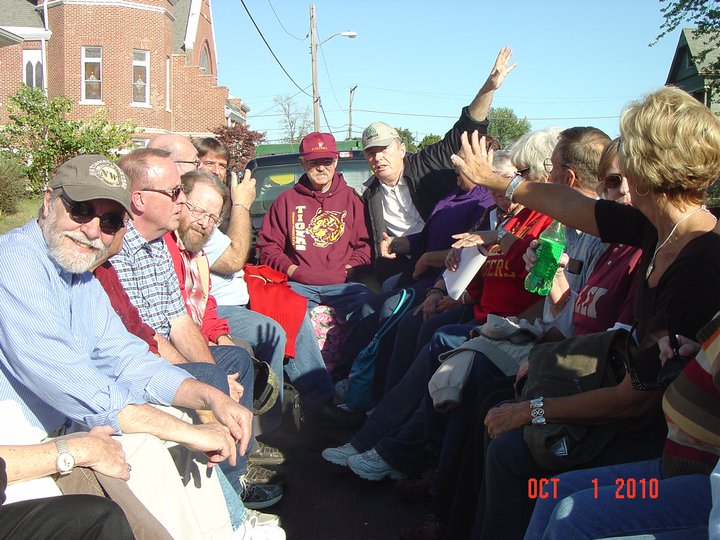
It led me to think what it would be like if I still lived in my hometown of Alexandria, a town of around 5,000.  I knew people on most streets, classmates, friends of classmates, friends of my parents, business owners, people from church.  By now, at age 66, I can drive past many homes where my knowing would report an absence.  Jim Ragsdale out on Harrison Street.  Pancreatic Cancer.  Richard Lawson and Richard Porter out south on Harrison, Alexandria’s main street.  Richard Lawson from injuries sustained in Vietnam, Richard Porter from a fast-moving disease.  Sherry Basset.  Dennis Sizelove, diedClass of 1965 Float (2) in Vietnam.  Even Karl Kyle the owner of the funeral home that sat diagonally from our house and where my mom’s funeral was held.  Mom and Dad, of course.

As we get older the list gets longer, places where our knowing no longer functions, a hole in our social fabric.

Regina Schmidt, too.  Here.  Moon.  I’m aware that this is how it has been and how it will be.  Death changes life even for the living.  Why this came up for me today, I don’t know. But it did.

One more thing.  It feels ok.  Death taught me its deeply personal lesson long, long ago when my mother died.  I’ve known since then that life is a precious gift, one that can be lost with no forewarning.  This life, this unexplainable awareness and mobility and love, is ours on loan.  The universe wants its elements back, has another use for them.

This holiday I’m thankful for their organization in myself and the people I know, and in the people I’ve known.  A deeply weird opportunity, life.

Holiseason Begins to Put the Pedal Down

Samhain                                                              Thanksgiving Moon

We’re in that pre-holiday time when the air begins to take on a certain quality.  It’s part hope for a Thanksgiving (this time) that we both recall and imagine, a desire for an ideal time with family, with busyness, with good food and good memories made.

There are those other times, the times before, when the magazines had turkeys in their ads and the Whitehouse spared a turkey.  This year it will be a Minnesota turkey.  The times when we all had to put on our Sunday clothes even though it was Thursday and drive to an Aunt’s or to Grandma’s or to a friends.  Football and stuffing, a browned turkey and mashed potatoes.  Too many people around a too small table.  That drowsy, sleepy feeling, a tryptophan haze.  The turkey drug.

Those times mesh with hope, give it a flavor, a scent, a sound, a cast.  Those are, for me at least, good memories.  They give the time, this time, a pleasant before hand buzz, a family inflected smile.

This is holiseason.  It has these moments one after the other.  Times when others and the world of commerce and the world of religion and the world of small children all begin to bang into each other, making the world merry.  Yes, it’s chaotic and capitalistic. No doubt of that.  But it’s also fun, filled with good songs and lights.  Gifts and cold weather.  At least here.  Not so much in Singapore and Muyhail.

To all of you headed over the hills and through the woods.  Have fun.  Eat too much.  Laugh a lot.  Drive safely.


The Unreliable Narrator–You

Samhain                                                           Thanksgiving Moon

Beginning to play with the post-modern idea of the unreliable narrator, a staple of certain literary fictions and now understandable to me.  The most unreliable narrator of all may be our Self, or, rather, the work done by our mind to create a self.  As we attempt to weave a coherent notion of our story–how this, what, let’s use Heidegger’s idea of dasein–this dasein came to be here now, we impose on our memories a logic, a sequence, a string of cause and effects that explain, as best the dasein can, how it came to be in this moment.

There are many problems here, but the one I want to focus on is the fungibility of our memory and what Kant called the a prioris of thinking:  space and time.  Our memory changes as we access it, as we put it into new contexts, as our understanding grows and that changes happens to a quanta that was shaped by the context in which we first had the experience, the understandings we had then and by the fog created by our senses, which, by design and necessity, edit our lived experience so we can utilize it.

On top of this string of memory altering inevitables are the a priori categories of space and time, mental constructs which our reason uses to make what William James called “the blooming, buzzing confusion” worthwhile to us.  We see objects in four dimensions, in a space time matrix that changes as we perceive an object, event, feeling, moment, idea.

(Henry and William James)

What this means to us is that our Self has the demanding and ultimately futile task of seeing the plot in our life, its why and its meaning.  Why futile?  Because we change as we touch it, not Heisenberg, no, more than that we change more than the spin or the location of memory when we touch it, we change its content and thereby change our narrative, which, as a result changes our Self.  This is always happening, every moment of every day of our lives.   Modernist literature like Ulysses and Remembrance of Times Past was an attempt to give to us in written form this mutability at the heart of the internal project that is us.

As I said a few posts back, this is descriptive, not proscriptive and certainly not prescriptive, and it does contain one kernel of great importance. Since we actively construct our own narrative from the experiences we can recall, we can enter into that stream and actively construct our future.  In fact, unless we enter that stream with purpose, Heraclitus’s famous river, it will carry us along without our intention.

So, buckle up, strap on that orange life-preserver and take your seat in the raft that is your Self navigating the flood of your life.  It’s a thrilling ride no matter where it takes you.


Destabilizing. And That’s OK.

Samhain                                                              Thanksgiving Moon

A further extrapolation on the narrative fallacy and the self.  (see post below)  This notion, destabilizing as it is, makes sense to me. Which is ironic if you get the gist here.

It helps explain the existential panic I sometimes feel when my mood darkens, sometimes with a known trigger, sometimes not.  Yesterday was such a time for me.  When I have conversations about my work, Missing in this case, the potential for a seismic tremor heightens.  Of course, these tremors, unlike earth bound temblors, can produce good shakes and bad shakes.

Stefan’s careful analysis of what he felt worked and what didn’t, which I appreciated, especially in the detail and clarity which he offered so freely, unsettled me.  Geez, if this much still needs to happen and this is the 4th draft, what’s wrong with me?  WRONG.  OH.  I’VE FELT WRONG BEFORE. AND AHA THIS PROVES THIS OTHER TIMES RIGHT.  WHAT WERE THE OTHER TIMES?  UHH.  CAN’T REMEMBER EXACTLY, BUT THE FEELING, THE FEELING’S THE SAME.  ISN’T IT?

This went on as I drove away from his house.  I would remember the tell yourself this is a good workout, that you’re not tired article I read in the New York Times yesterday so I would tell myself that this was temporary, not anchored, that it was good to get feedback, that I was having a good day.  I had a friend who cared enough to be straight with me.  oops.  felt bad.  I’m having a good day, driving in the city.  There’s Knox Presbyterian, “living the obedient life”, yep, still conservative.  Need some tea, Verdant’s all the way over in Seward, but, hey.  The Teashop is just ahead on Lyndale.  Oh, good, I’ve never followed through on my writing, never got published, never tried hard.  Never. Never.  Never.  Never.  Here I am 66 and I’ve bounced from this to that.  Bad.  Wrong. Not followed through.  Old now and not ever going to follow through.  Always bad, wrong.  Wait.  There’s the Teashop.  I’ll buy tea here, not drive all the way over to Seward then have to loop back to Kramarczuk’s.  After the teashop.  Bought a half an ounce of tea for $25.  Stupid.  Hey, I can just loop around, no cars in the lane going the other way on Lyndale.  Oh.  Didn’t look behind me in my own lane, guy lets me go.  Maybe I’m too old to drive.  How will I know?  Bad.  Wrong.  

Finally, I talked myself into the moment.  Cut the loop.  The wind drove the golden leaves, the maple leaves, they are golden.  They swirl up in the air, blown high, come down.  Fall.  This is fall and it’s happening right before my eyes, as I eat this Italian sausage, which is not so hot, still I’m right in the middle of this wonderful seasonal transition.  I’m in this moment now, neither bad nor good, just here.  Part of another fall.  It’s come again, as it has come before and will come again.  And I will be in it, part of it.  Neither bad nor good.  Right nor wrong.  I calmed down, my center returned and the jaggedy feelings left my body, those tensed muscles relaxing.  

The feeling tone remained, like a bad taste, and tried to reassert itself, grind itself into the wormhole that is a certain narrative arc about my self. Finally, the arc I prefer, the one that lets me move forward, not get stuck, took hold.  I had woven my narrative around this temporary dis-ease and let it be.  Part of my life, yes, but not all of it.  Whew.


The Narrative Fallacy

Samhain                                                             Thanksgiving Moon

Narrative fallacy.  I read about it first last night in a book on Amazon.com called “The Everything Store.”  Jeff Bezos refers to it as a construct he read in the book, “The Black Swan.”  It struck me as very post modern.

Here’s how I understand it.  The narrative fallacy occurs when we use our logical, cause and effect seeking mental habits to place often chaotic events in a series that we can understand.  This means leaving out details, rearranging troublesome sequences, condensing complex interactions.  We make a story out of the data available to us.

I haven’t read the Black Swan but I imagine this is how Black Swans (big problems that seem to come out of nowhere) slip under the perceptions of people trying to evaluate risks.

This squares with an especially nettlesome idea in current neuroscience (the author may have gotten it from that source) that suggests our self is a narrative fallacy.  That is, our self is a story we construct out of certain pieces of our life, knitting this into the fabric and leaving that out.  In this view the self is not solid and unchanging, it’s not even relatively solid but changing slowly over time.  No, the self is fluid from beginning to end, a long long novel with ourselves in a starring role, but the script keeps getting handed to us, marked up with changes.

This partly comes from the plasticity of memory and the proven unreliability of human memory.  We now know eye witnesses, once the gold standard of detective fiction and fact, are the least likely to portray events accurately.  Not because the eye witnesses lie, but because our capacity to remember events as they happened is poor.  Emotions skew them, bias skews them, our senses feed us less than reliable data.  We’re a walking hodge podge of experiences.

(sarah fishburn)

The narrative fallacy neatly explains the role of story.  As Bill Schmidt’s Tom Clancy quote says, “Fiction is not like reality.  Fiction has to make sense.”  A key role of fiction is to reassure us of the intelligibility of the world.  The world is not, in fact, intelligible.  There’s just too much going on.  We have to edit our experience to have any hope of using it to our advantage.

Why is it post modern?  Because post modernism (I’m not convinced this is a very good term.) insists on the unreliability of any narrative. [think about this idea in relation to the photograph below of a Traditional Catholic service in Kitchener, Ontario] As a direct corollary of this, though, there is the role of agency, the role of narrative creator.  That gives all of us a key role in constructing the future we want.  We can claim neither fundamentals from so-called foundational documents or ideas, nor can we rely on history as other than story; but, we can rely on the necessity of our role in creating a new story, one constructed in a way that seems to us true, just and fair.  Even beautiful.  Knowing that none of these categories are more than markers for working or not working.

Wood and Leeks

Fall                                                                   Samhain Moon

Split wood from the two cedars and the ironwood stacked.  Plenty of kindling sized wood, some paper, smaller sized chunks of wood, plus two pallets to break up and split.  Then, out there, lying yet in the woods, the tapering trunk of the ironwood plus two thick branches, waiting to be cut into true bonfire sized logs for the outside of the fire.  Thought I might have to buy some wood, but no.  All I need right here.

All the leeks harvested, the tops trimmed off and waiting in the hod for the hoses to thaw out so I can wash the roots outside.  It’s chicken pot pie day here at Artemis Hives and Gardens.  After, that is, a visit to the city to see Audacious Eye and have lunch.

There will be three pots, a chicken in every pot, boiling away with garlic and onions, celery and carrots sauteed first, then the water, then the chicken.  The leeks in another pot, also boiling.  After some time, corn and peas and pearl onions into the chicken pots.  At that point the chickens come out and get plopped onto cookie sheets where the flesh comes off and gets cut up into smaller chunks.  Which get put back into the pots, again one chicken each.

Get out the pie tins with pie dough in them and the box of Pappy’s dough so it can soften.

Add the leeks to the pots and thicken with corn starch or Wondra.  Tricky step, probably will do it in smaller bowls.  The thickened chicken broth with chicken, peas, corn, leeks, pearl onions, carrots and celery spread out in the pie tins.

Flatten that Pappy’s with a rolling pin, always flouring the surface, make it big enough to cover the pie tin, put it on like a night cap, crimp the edges, make marks in it to let the steam out.  Toss in the oven.  Wait a while.

Chicken pot pies.  Most will be frozen, probably all but one.

Into the Weeds

Fall                                                                               Samhain Moon

Additional on post just below.  There is a tendency in quasi-religious, new agey thought to condemn doing and promote being, especially being here now.  Nothing wrong with being here now, of course.  Especially since we really have no other choice.  This seems like a false dichotomy to me however.

Even in our doing we are being and in our being we are doing.  This is only to say that doing entails presence to the world and to ourselves, albeit in a different way from the semi-mystical state of being here now.  If you’re a fan of Zeno and his paradox, then you might craft an argument about never changing out of the now, but in other ways of explaining reality, even being here now is impossible.  Why?  Oh, the earth moves around its poles, through the sky and your body digests food, engages in symbiotic exchanges, responds to changes in temperature and light, shifts nourishment into cells and waste out. Change, that old black magic, has its hooks so deep into the universe we often never notice it, even when it moves with the speed of light.

However, if you go back to the observations I’ve been making about circular time, the repetitive nature of change, how it loops back on itself in predictable patterns, perhaps, yes, in more of a spiral than a bicycle wheel, but still Fall then again Fall, and Winter then again Winter, and Birth then again Birth, and Death then again Death, well, if you consider them, then the cycle from one now to the next is Now then again Now.  We’re never ever out of the now, yet we experience movement.

These paradoxes point to being and doing as a false dialectic, not poles resonating with each other like, say liberal and conservative or life and death or true and false, but as alternating ways to explain the same thing, our hereness.  As Heidegger points out, we are thrown into the world at a particular place, to particular parents and in a particular time. I would push that one step further and say we are thrown into each moment in a particular place, in a particular time, with the unique, particular body/mind that is you.

In each moment our particular response to the now has doing characteristics and being characteristics.  Perhaps another way to say this is that part of us is at rest while other parts are engaged with the now, acting on it or being acted upon by it. We do both at the same time, being and doing.

So what’s all the fuss?  It’s about attention.  When all of our very valuable attention focuses on the action or work or active play of  a moment, then we draw ourselves from the beingness of that moment.  When we focus on the beingness, we draw ourselves away from the doing.  But both states co-exist, no matter on which we focus.

The key move here is about attention.  We can and do shift our attention from different aspects of our life to others, from ourselves to the world or moment into which we are thrown.  If we spend all of our attention on doing, then we neglect the deeper, more reflective aspect of our selves.  Conversely, if we spend all of our attention on being, then we neglect matters necessary for our survival.

In the rhythm of your day, your year, your life, you can choose to attend to the activity, the work, the “what you do.”  This might entail lists or calendar marking or goals and objectives or satisfying layers of cloth or manuscript pages.  Likewise you can choose to attend to the beingness, the what you are.  This might entail meditation, silence, counting breaths, noticing plant and animal life at a close, intimate level.

The point?  What do you do, is a valid question.  So is who are you?  They might have the same answer.

Let the Bells Begin to Ring

Lughnasa                                                                Honey Moon

The end of August is less than a week away.  Labor Day is the next holiday.  Once again a year has progressed from spring to growing season to the beginning of harvest.  Do you remember that feeling you had, as a kid, when summer vacation was in its last moments? You got in one more baseball game, one more forbidden trip to the pit, one more search through the alleys for pop bottles to sell at the grocery store.  You may have gone to a county fair or the state fair, had cotton candy and looked at the pigs, seen the new car models.

Then the supply list for the new school year would show up.  Those lists were, for me anyhow, like the reading of marriage bans, the announcement that something wonderful was about to happen.  Yes, I loved school and I loved the paste and the number 2 lead pencils and the watercolors and the rounded scissors.  Shopping for school supplies was a joyful time.  I know it wasn’t for everybody, but all I could see ahead was another year of learning, of time away from home, of lunches and recesses with friends.

In fact, I still love it and the little frisson of something amazing just around the corner still tickles me as the weather begins to cool (I know, we’ll skip this year right now) and Back to School flyers start showing up with the newspaper. (I know, lots of folks don’t read the newspaper anymore.)  I’m feeling it now and this year it seems to run in tandem with the harvest, as it used to in the days of agriculture’s direct influence on our school year.

As the harvest has peaked, the fallow time has begun to insert its presence, a golden leaf here or there, plants dying back like the sugar snap peas and garden beds emptied of their onions, garlic, beets and carrots now mulched.  These are clues, just like the changing of the sun’s position in the sky, that stir up that old hunger, the part of me that thirsts for new learning, new ideas, new facts, new ways of looking at the world.

I’m ready.  Let the bells begin to ring.

Back Then in Nowthen

Lughnasa                                                                   Honey Moon

800IMAG0839

nowthenlogoThe Nowthen Threshing Show.  I’ve seen the notices for this event since we moved up here 20 years ago, but never got around to going.  This year Kate and I drove over.  It’s only a few miles away.  I imagined a few steam driven machines, maybe some old tractors.  Boy was I off.  This event had acres of cars parked east of a huge exhibit area with a track for the Parade of Power that ran around a circular railroad track for the small gauge Nowthen Railroad.  On the south side of the tracks sat food trucks with “walking IMAG0826tacos” and “BLT tacos.”  Behind them, further south, was a large flea market.  I remarked to Kate that it would have been interesting in Ecuador, here not so much.

On the north side of the tracks was a small depot for the Nowthen Railroad and behind it, across the track for the Parade of Power (any older farm machinery that moved on its own) was a blacksmith’s shop with three forges and older men with younger apprentices working metal.  This building also had a woman spinning thread.  A craft building had hooked rugs, quilts, knick-knacks and a bit of pottery.

There was a letterpress building with an old Heidelberg letterpress, a small press versionIMAG0831 of the giant Heidelberg that printed the Alexandria Times-Tribune in my youth.  Behind the press was a building labeled Steam Machines.  In it were several steam pumps, all working, a large piston driven wheel that worked a generator in a long ago electricity generating plant and a crowded table about 10 feet long full of miniature steam engines powering miniature machines.

As Kate and I wandered among the buildings, the Parade of Power was underway on the 800IMAG0821track which ran between two rows of buildings.  The announcer would give the name of the equipment, its age and the owner who had restored it and, probably, drove it.  I say probably because as you can see in this photo one of the traditions of farm life was underway on this old tractor, a young girl drives it.

My favorite exhibit was the old saw mill which had this huge mobile engine driving it. 800IMAG0833The tree trunks passed through the saw shown here.  This was dangerous work, as you can see by the open saw blade, but equally dangerous were the power belts that connected the steam engines to the threshers, sawmills, silage grinders, or hay balers.

800IMAG0835

These, too, are my people.  Political radicals, docents, environmentalists, scholars, poets and writers, and farm folk are the milieus where I feel comfortable.  As we left the parking lot later in the day, a man signaled I could come into the exit lane with the familiar flick of the right index finger above the steering wheel.  I signaled thanks the same way.

Of course, these kind of things have to interest you, but if they do, every third week of August tiny Nowthen becomes a happening place for motorheads, old farmers and folks curious about how things used to be done.