Category Archives: Minnesota

Deep in Memory

Fall                                                                                                  Closing Moon

On the ladder taking down the angelic weather vane I noticed the poplar, ironwood, elm and oak still gave some color to our woods. Bare branches mostly, but a few lingering leaves held on. I’ve found myself wistful this fall, realizing that with this move to the arid west, and reinforcing that, a move to 8,800 feet, we’re going to an alpine eco-system from an oak savannah. All my life (with the exception of 1.5 years in Oklahoma at the very beginning) I’ve lived in the remnants of the big woods or near the boreal forest. You can say I’m a mammal adapted to the ways of deciduous forests and their near cousin the northern forests.

The blue skies of autumn with the cirrus clouds providing white slashes for expression seem wedded, to me, to the falling of birch leaves and maple leaves, oaks and elms, ironwood and black locust. The cooler winds that these skies accompany smell of humus, fresh water and carry just a hint of the polar ice caps. This is what fall is, deep into my memory, deep into the formation of my self.

Last week at Black Mountain Drive I stood on pine needles, duff and granite, saw a few small alpine plants, some moss and had seen on the drive up there a few ash leaves, golden, on the browning grasses. The blue skies there have the cirrus high above them, but the falling leaves are golden, ash being by far the dominate deciduous tree in the mountains and up at 8800 feet far behind the conifers.

Folks I know often name fall as their favorite season here. I know it’s mine. Wonder what it will be out West? Unknown for now.


Losses

Fall                                                                                   Falling Leaves Moon

The Wing Joint. It’s a symbol of the loss.

Let me explain. In 1975 I began a year long internship at Bethlehem-Steward Presbyterian Church at the corner of 26th St. and Pleasant Ave. The focus of this work was neighborhood ministry, finding out what the needs of the area were and responding to them in some concrete fashion. This was work I could do and did not involve me in the more philosophically ambiguous (for me) worship, educational and pastoral life of a local congregation.

Over the course of those years, which included a good deal of time at South Central Ministry, based out of the old Stewart Presbyterian building which sits three blocks south of Lake Street on Stevens Avenue right next to the freeway sound barriers, my work at South Central was even more politically and neighborhood focused than at Bethlehem-Stewart.

That was when I found the Wings Joint. It was run by a Chinese guy and sat on Nicollet, maybe 8 blocks south of Lake Street. These were the best wings I’d ever had. Crispy, always moist on the inside and just a bit of zing, which could be amped up with the hot sauce. At the end of my day (often after 10 pm) at South Central, I’d stop by the wings joint, pick up some wings, then buy a six-pack of beer and get started on both on my way home. This was one of those urban equivalents of a special bay on a lake or a place with rare plant species in a forest, a unique haven, a place with qualities you could find no where else.

Then, I moved away from South Central and away from every week visits to the Wing Joint, though I would still, on occasion, go back to it.

When we moved to Andover, it seemed that all those unique finds, gathered over many years of wandering the streets and inner city neighborhoods of Minneapolis and St. Paul, would disappear.

Imagine my surprise when I read in a newspaper article that the Wings Joint had moved to Blaine. Blaine! I knew where that was now. So, I hunted down the the Wings Joints new spot. It’s in a strip mall with little presence, concrete block buildings with a Subway, an Asian grocery store and a Nail joint. But it was the same place. The same wings.

So on occasion, as I did Friday after dropping Kate at the airport, I take off Highway 610 at University and drive north, well into what used to be the heart of Blaine, stopped at the Wings Joint and enjoyed their atmosphere, unchanged from the Lake Street days. At least in my memory.

When we move to the mountains, to a state far away, all these special places: urban havens, Scientific and Natural Areas, places along Lake Superior will be lost. Not disappeared, of course not, but there will be no equivalent surprise of finding that unique Denver spot all of a sudden taken up residence in Idaho Springs. I don’t have the memories.

Making those equivalent memories in Colorado is something I look forward to, that slow accumulation of local knowledge, but the utility of all that Minnesota knowledge will fade away, useful only for the very occasional trip back.


Memories

Fall                                                                                     Falling Leaves Moon

Tom Crane, Bill Schmidt, Scott Simpson, Mark Odegard and Frank Broderick and I gathered at the Black Forest for the Woolly Mammoth first Monday restaurant meeting. We had gone to the Black Forest regularly for many years, then, partly at my urging, had moved onto other cuisines and other locales. Now, though, as my time here has become limited I find myself wanting to return to familiar places.

The Whittier Neighborhood was the site of my year-long internship while in seminary-part at Bethlehem-Stewart Presbyterian (only two blocks west of the Black Forest on 26th) and part at South Central Ministry just across Lake Street from Whittier in the Longfellow Neighborhood. In 1976 the Presbyterian church ordained me to the ministry of word and sacrament at Bethlehem-Stewart, an ordination I held until 1996 when, in Phoenix, Arizona at the Unitarian-Universalist General Assembly, I entered the U-U ministry.

So a lot of person history intersects at the corner of 26th and Nicollet, where the Black Forest is. Not far from there toward the north and east three blocks, too, is the Minneapolis Institute of Arts. A nexus for me in many ways.

Frank’s back from Ireland, looking much better and feeling no pain in his legs. Tom’s hand has mostly healed. Mark and Elizabeth have decided to spend three months  or so in southern France, staring mid-January. Scott admitted he had spent time in his youth a mail-man substitute. And worked as a Lamplighter while sleeping in People’s Park in Vancouver, B.C. Bill Schmidt’s becoming Spinozified and finding this Dutch Jew a very compatible thinker.

On the drive home, a drive I’ve made more or less regularly from Minneapolis or St. Paul to Andover for the last 20 years, I realized that though I spent 20 years in the city and consider myself an urban guy, I’ve really only spent 20 years in cities. The other 47 years have been in smaller to medium sized towns or the far burbs. Interesting how a place can impress itself into our sense of who we are.

When did this happen?

Fall                                                                                     Falling Leaves Moon

Cultural immersion today at Spyhouse Coffee at the intersection of Broadway and Central in Minneapolis. I suggested it for a meeting because it was a coffee house. Quiet, right? Farthest thing from. Every table and most of the nooks and crannies were filled with twenty and thirty somethings, laptops up, heads over keyboards or deep in conversation with someone, hands gripping smartphones. Loud rock played from the timbered rafters. The password code for today, jackiebrown, scrawled on a chalkboard by the register.

This was today, Friday, at 11:00 a.m. When Michelle came in, I was a bit sheepish, “I didn’t realize this place was so. Popular.” She laughed. “It’s fine.” And it was. We got down to work. And, guess what. Michelle had her laptop open and we gazed at its screen. Occasionally I would check some material on my cell phone.

Full disclosure. I didn’t bring my laptop only because I couldn’t remember the password. Which I could reset it said. But only if I was on the internet. Which was where? Behind my password. Which I couldn’t remember. Ouroboros.

Vive la difference!

Lughnasa                                                                  College Moon

How different we are from Europe. Scotland has a population of 5.3 million, Ireland about 4.6 million, England 53 million. California alone has 38.3 million people. Texas 26.5. New York, 19.6 with New York City 8.3 million. Of course, we’re all tiny compared to the behemoths of India and China, but I’m interested right now in Scotland’s vote, underway right now, for its own independence as a nation.

It’s as if Minnesota were a dependency of Caltex and wanted to break away, put up its own borders and start issuing passports. My point here, heightened by our upcoming move to Colorado, is that we move between states often equivalent in size to many of the storied nations of Europe: Netherlands-16M, Greece 10.6M, Sweden 9.5M, Denmark-5.6M. Iceland-324,000.

Think of the history of Greece. Greece! The wine-dark sea. Homer. Zeus. the 300. Or, the Netherlands, home of Spinoza, holding back the sea, pot-friendly, deeply anti-semitic. Or, Denmark, Hans Christian Andersen, Copenhagen. Places redolent with backstory, filled with the architecture and the palmprints of genius.

Minnesota and Colorado sit next to each other on the population chart: Minnesota at 5.4M and Colorado at 5.2M. We could be moving from Denmark 5.6M to Norway 5M.

Imagine crossing borders, having to register as a resident alien or the equivalent, learn a different language, be aware of a different deep history. And in that imaginary case only moving 375 miles. While we will go 966 miles, almost 3 times as far to arrive in another “nation”, where the natives speak our language, share our currency and most of our habits and customs. We are a big country and our relative unity is a wonder. It might even be a miracle, albeit a very human one and no less miraculous for that. Too, we’ll have remained roughly within the center of the nation, with hundred of miles to go to an ocean from either place.

We’re so young to be so strong. And yet the world looks to us, perhaps less so now, but still…é

A Man, A Monument

Lughnasa                                                            College Moon

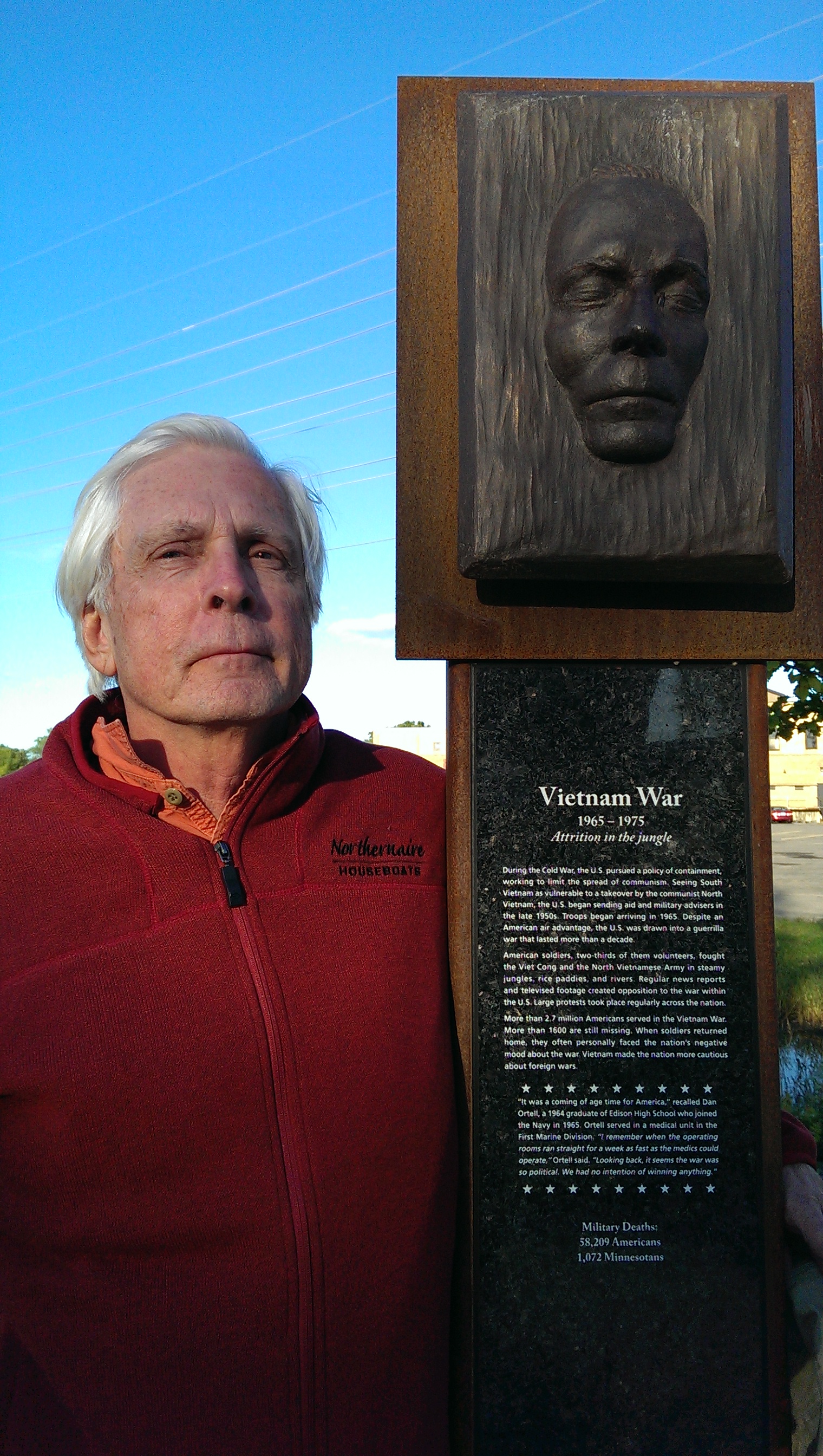
IMAG0657Third Monday of the month. It’s been the Woolly meeting night for years, over 25. Bill Schmidt suggested we visit a memorial related to war, a memorial in a neighborhood park in northeast Minneapolis, right on the Mississippi behind the old Grain Belt Brewery and its wonderful castles of yellow brick. The memorial is in an odd, very out of the way location, almost as if its hidden. And it is a monument to the effect one man can have on history.

That one man is Woolly Mark Odegard, a Vietnam War Veteran, who became part of this project and as part of it shaped its content in important ways. When the group gathered to consider it began, all the veterans wanted to honor the war and their service. This is after all the public script about how to notice veterans. We honor the historical event, the war, and their participation in the war. But Mark knew there was more beneath the public script.

When probed, the veterans admitted that war was ugly, painful and often confusing. Mark said the monument should show that side of war, too. He got this element added by interviewing veterans from various wars and putting their quotes on marble stelae along with historical facts about the war. Commenting on the Spanish-American War one man said, when the fighting against the Filipino’s began he realized the war “was about greed.” Unusual and telling language at a war memorial.

Each stelae is a slab of black granite with text acid etched into it and a face above it IMAG0661bronzed from living subjects, when possible veterans from the wars memorialized. Mark suggested that the monument start with the Dakota war in 1862 since that was the first war with Minnesotans serving. To particularize it further Mark suggested that the stelae have the number of Americans who died and the number of Minnesotans.

(Mark next to the Vietnam War stelae topped by his face in bronze.)

This monument will be in place for a long, long time and Mark’s effort to personalize war through the words of veterans will bring an element of realism to a too often romanticized human endeavor.


A Minor Leftie Memoir

Lughnasa                                                                   College Moon

Groveland UU has asked me to speak on December 14th. Their theme for the year is social justice. They wanted me to talk about restorative justice, a topic about which I know little. Instead I suggested this:

Social Justice: Reflections       Looking back at work for affordable housing, neighborhood organizing and neighborhood economic development, against corporate control of neighborhoods, organizing for jobs, for equity in philanthropy, for a sustainable human presence on the earth, for undocumented immigrants, for progressive politicians like Wellstone, Karen Clark and Peter McLaughlin, against the Vietnam War, for women’s rights, against the draft.

Looking forward at work necessary to retain and expand gains made.

When looking at it again, I realized it had the character of a summing up about my political work over the years, mostly in Minnesota. Sort of a minor leftie memoir, but not for the purpose of the memories, or not mostly for them, but mostly for teasing out the themes, the underlying rationales, the whys. What worked, what didn’t. What might work now, what might not.

This topic came to me because I realized it would be my last time at Groveland, with whom I’ve shared a two decade plus relationship and possibly my last time speaking in Minnesota, maybe ever. I don’t, at least right now, intend to find a religious community in Colorado since such institutions no longer interest me.

There is a modest bolus of energy in reviewing a body of political work that arose mostly in response to individual issues and moments of time, that never followed a straight path and that, like most serious political work, had some successes and many failures.

Where I wondered, did all this energy and effort come from? It wasn’t a good career move, yet the political path was the one I followed anyhow, pushing away more logical trajectories. There was, of course, my father’s role as a newspaper editor and his often weekly airing of his Rooseveltian liberal opinions, basically pro-social welfare and anti-communist, pro strong defense. That may have shaped my willingness to be seen publicly as a representative of unpopular points of view.

Also important was the nature of my hometown’s work force, the parents of my friends. With few exceptions, my parents being among those exceptions, my friend’s parents were either factory workers or stay-at-home moms. It was the 1950’s after all. As factory workers, a very high percentage worked for General Motors, others often in suppliers to the auto industry or other vehicle related manufacturers like Allison-Chalmers. They were members of the UAW.

These folks, the majority by far from the hills of West Virginia, Tennessee, Arkansas and other southern states, usually had not finished high school, but had jobs in General Motors, jobs that, thanks to the UAW, had health care, pensions, regular vacations, good wages and decent working conditions. As a result, Alexandria, Indiana hummed. When the auto industry went into decline and the UAW with it, Alexandria crashed into a ghost town.

A third factor was my mother’s unwavering compassion all people, no matter their condition in life or the color of their skin. Her example shaped me profoundly in that way.

The final ingredient came when the U.S. went full force into Vietnam. I started college in 1965 and would be in higher education for the duration of the war. The struggle against the war radicalized many students and I was one of them.

Ropes Slacken More

Lughnasa                                                               College Moon

At the State Fair yesterday. Realized, as with the garden, how much my thoughts of next year and the year after were tied up in what I did today. I no longer went through the Agriculture building with a keen eye for new information, stuff I wouldn’t have found otherwise. Say, a new apple. Maybe a new way to compost or treat troublesome weeds. A different method for keeping bees healthy.

Also, that building where local groups like the Sierra Club present information, help you connect to networks in state. Didn’t even visit it.

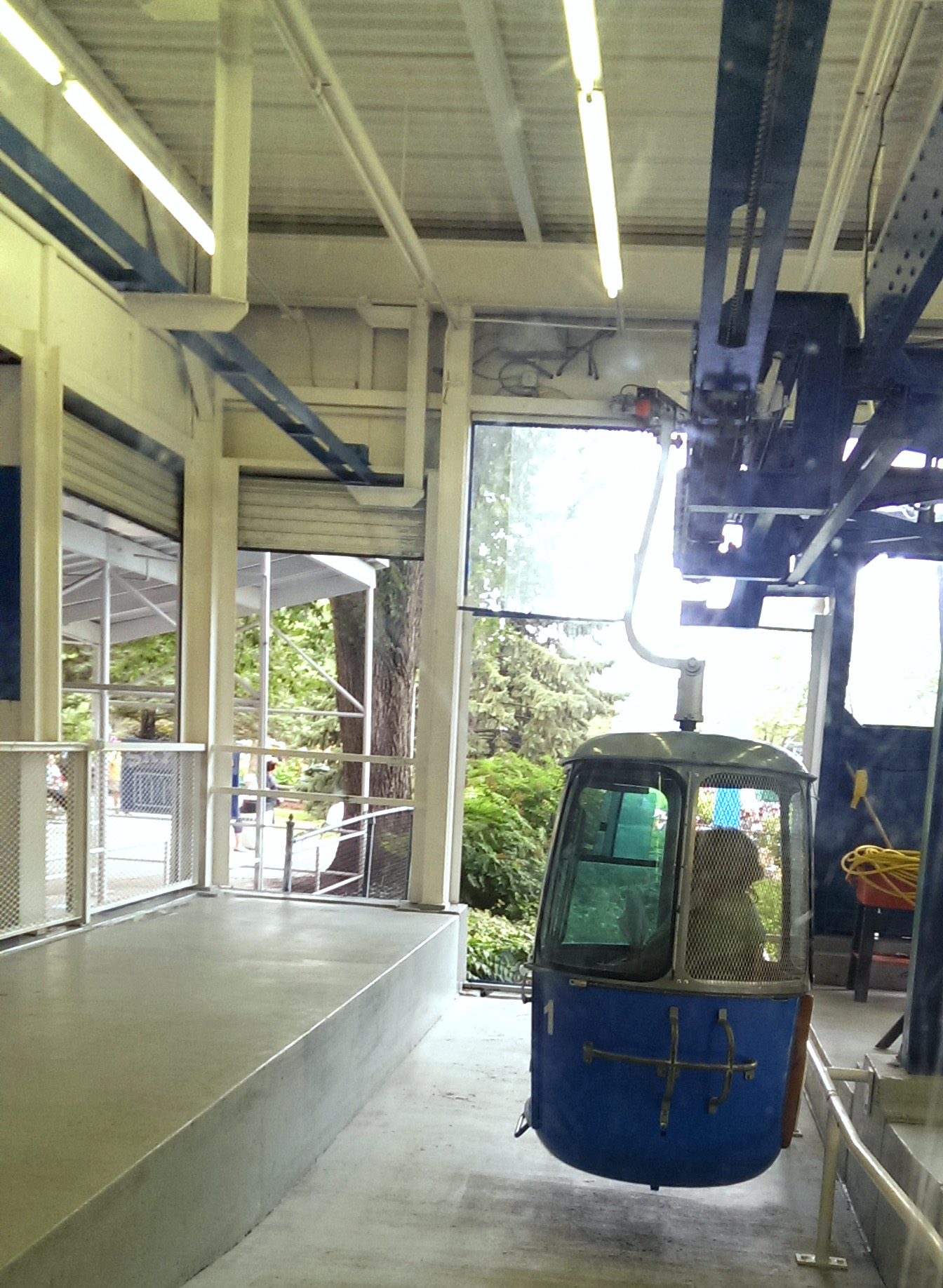
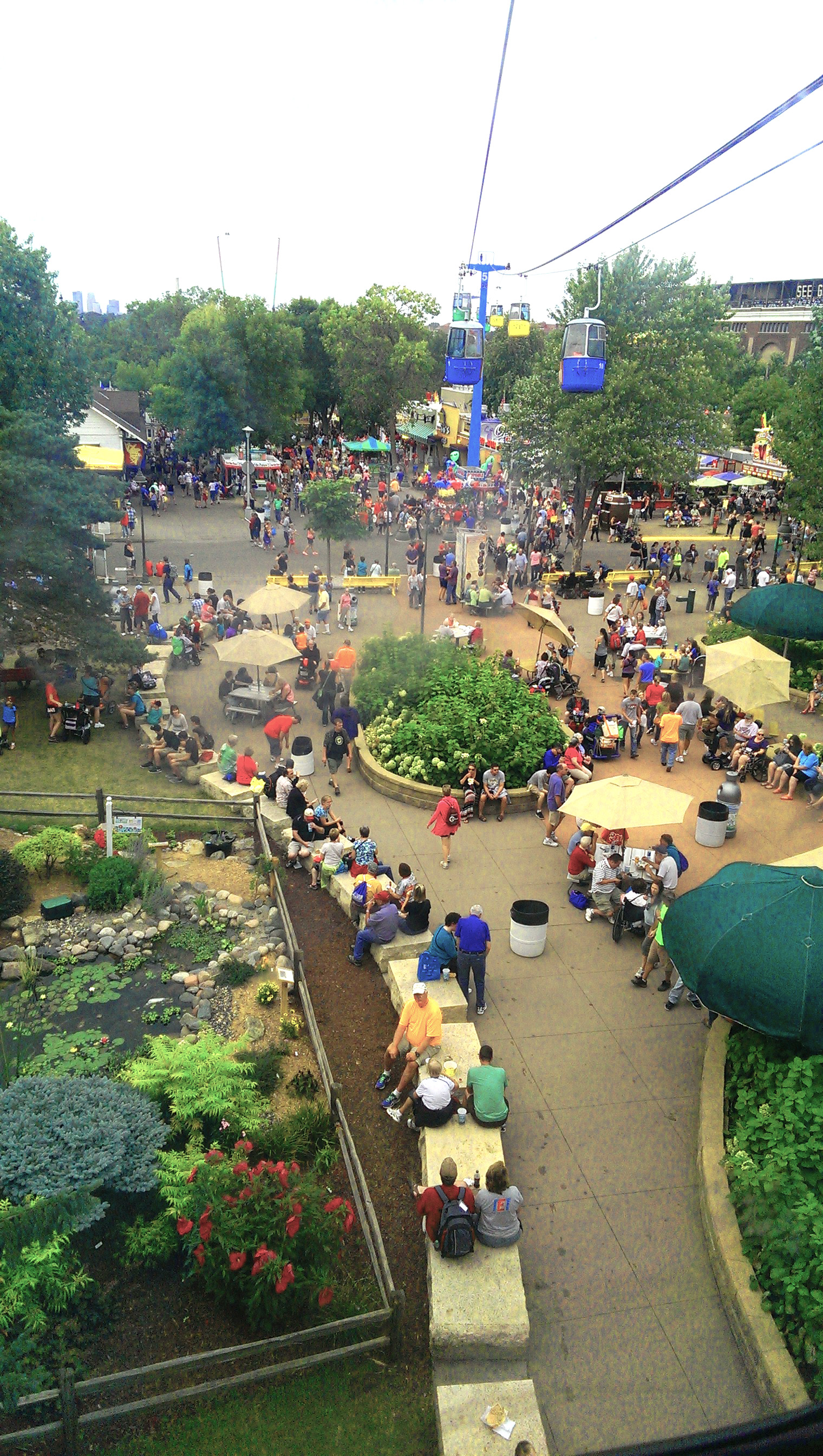
That’s why, when Kate and I both realized we’d gone as far our legs were going to carry us, we hit the skyride for a trip over the fairgrounds and back to the express bus lot.

Still, there were memories there, of years volunteering at the DFL booth or the Sierra Club booth or, long ago, as a State Fair chaplain (mostly monitoring lost kids. though, come to think of it, I wonder how folks would feel about that these days?). Cheese curds. Foot long hot dogs. I can even remember drinking beer at the fair. That’s reaching pretty far back into my Minnesota past.

The sense of pulling back, pulling away, of not-quite any longer a full Minnesotan took something from the fair for me. It was not mine in the same sense it had been before. Not as much a shared experience, like the weather, that helps define Minnesota. Not shared fully because part of me has gone ahead to the mountains. To the Great Western National Stockshow.

The circus tent has considerable slack in the ropes. The rings and the bleachers have been packed. The moment when the elephants are called to strike the big tent? Not yet. Not for a while. But we don’t want to let them wander too far away. They will be needed.

Back to the packing. The end of book packing for right now (the bookshelf immediately beside the desk will remain loaded until this room has to be vacated for staging.) is in sight. Perhaps today. Then there are files and art objects, office supplies, novel manuscripts. Still a lot to do, but a lot less than existed three months ago.

At the Fair

Lughnasa                                                                            College Moon

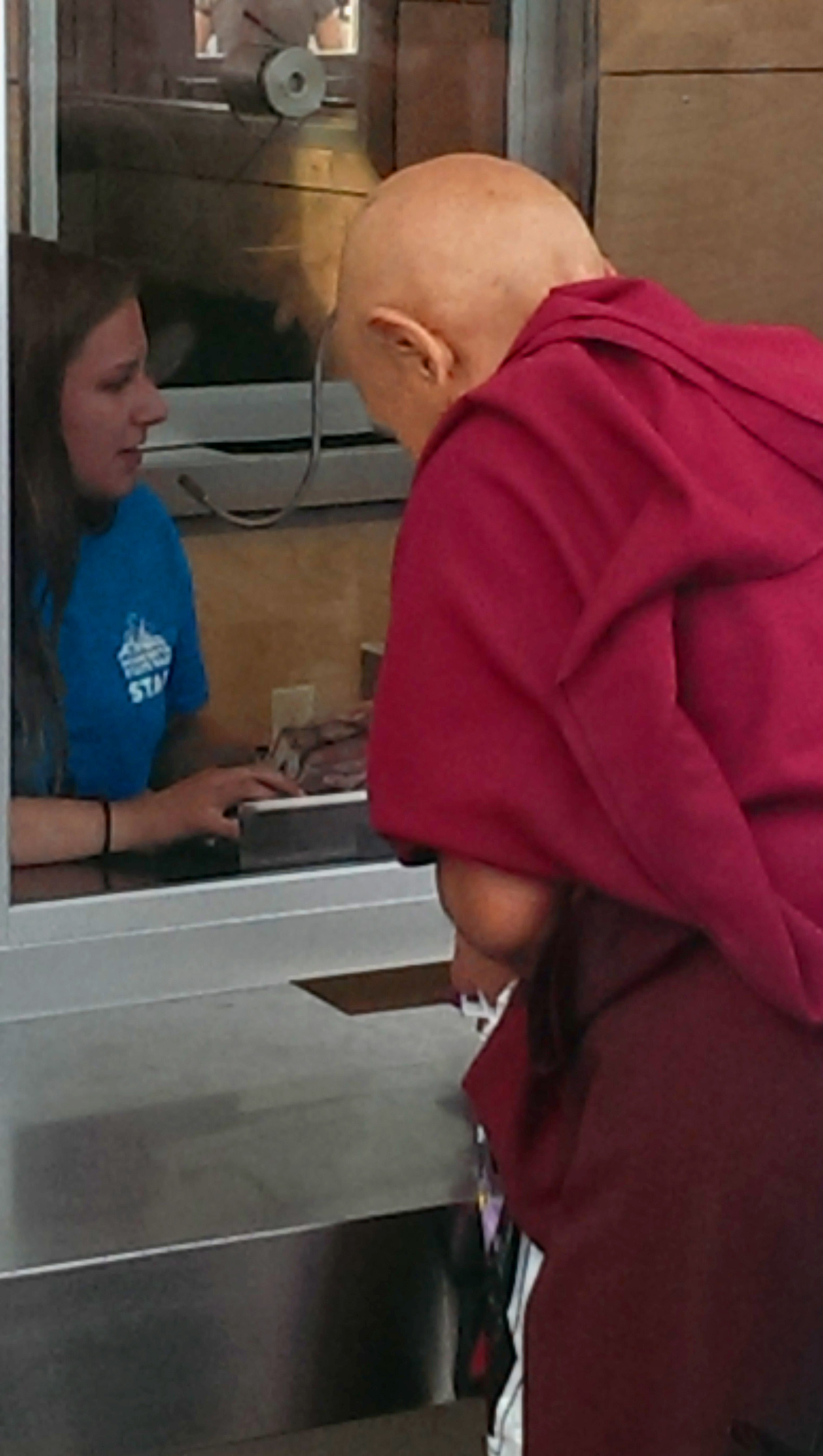
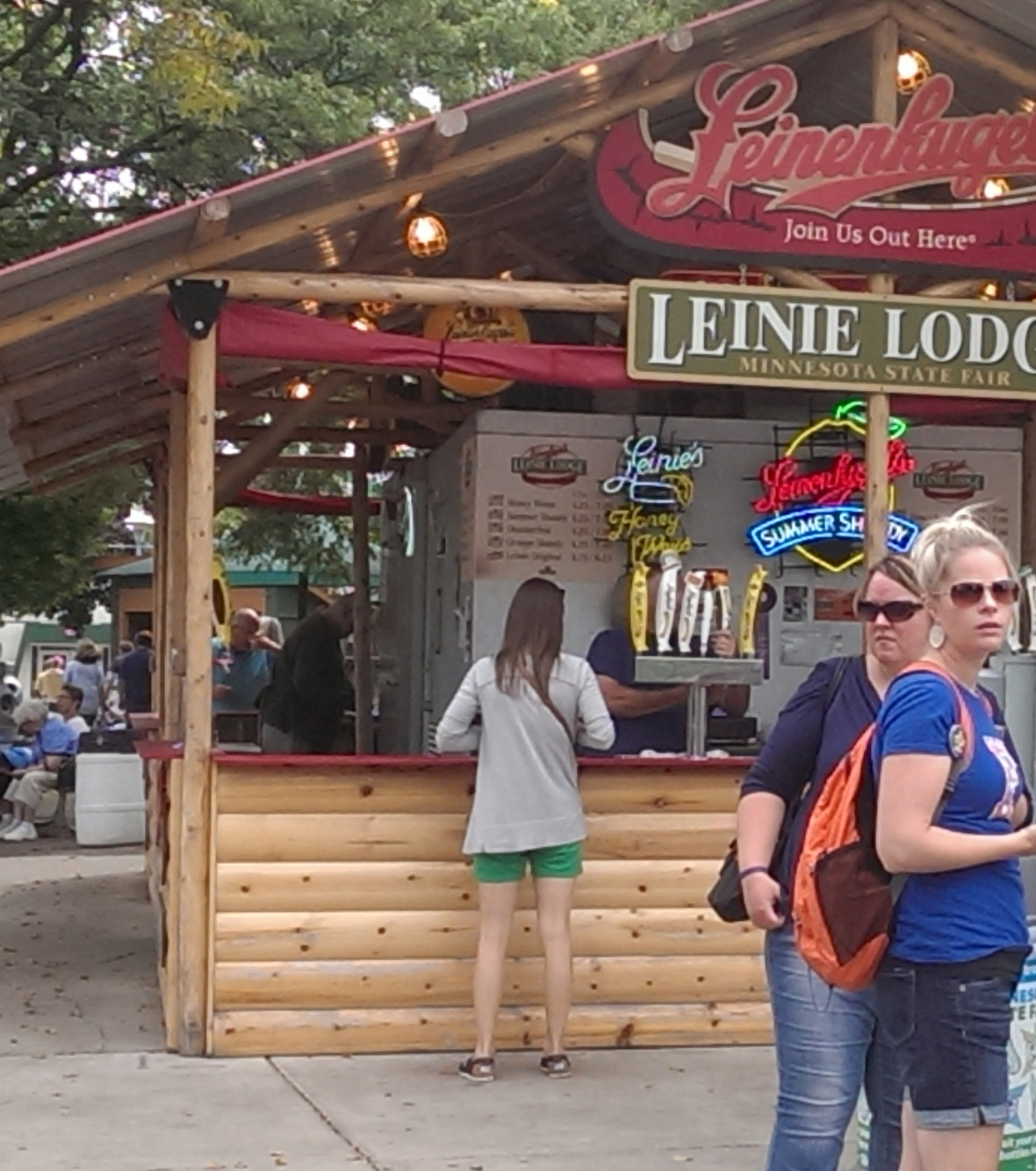
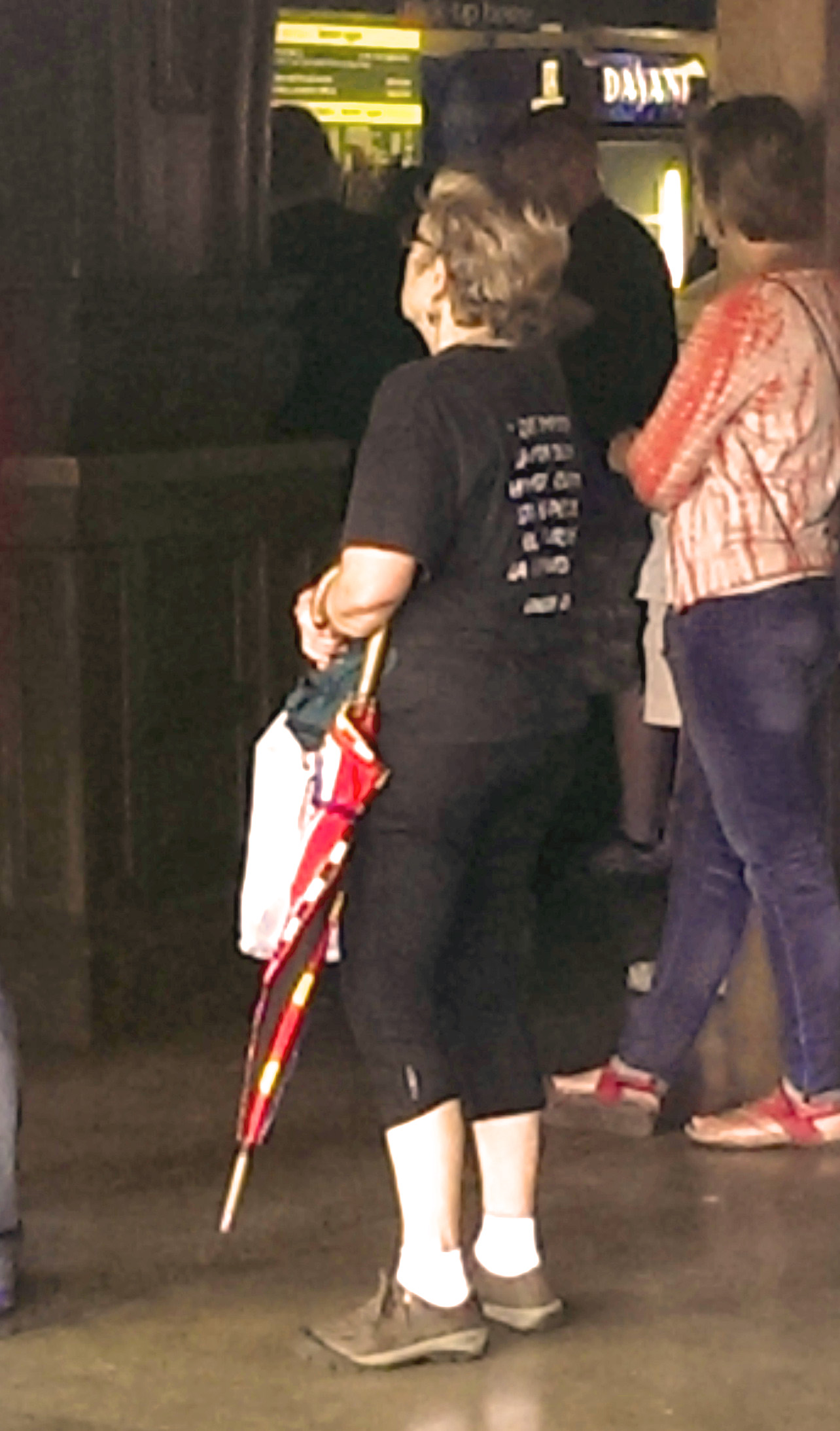
This guy was in line ahead of me for a discounted senior ticket:

fiddledIMAG0580


Samsara

fiddledIMAG0589


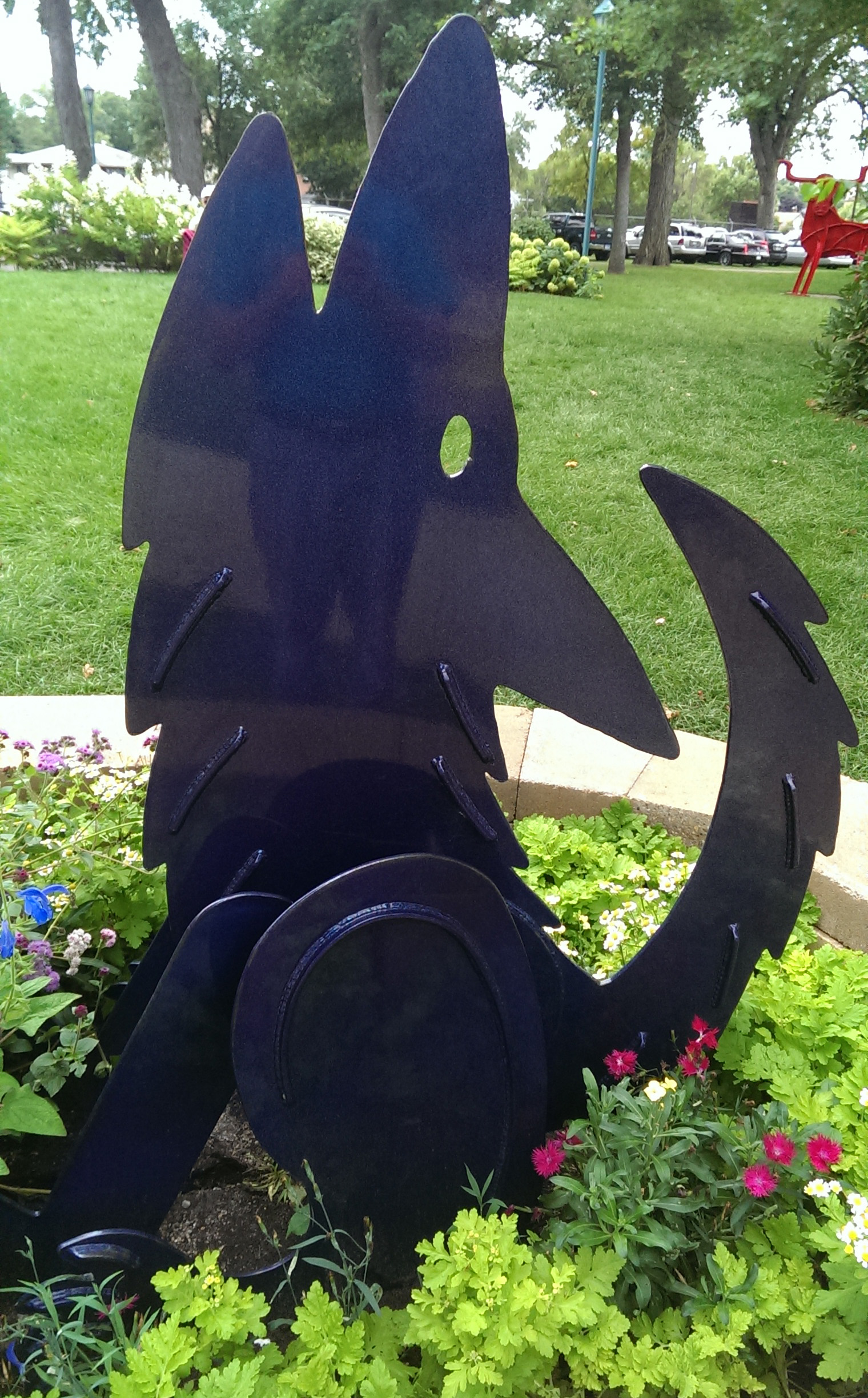
A howl from the West. Our future.


croppedIMAG0600


More of samsara.

fiddledIMAG0591


Dulling the pain of samsara.


croppedIMAG0592


fiddledIMAG0601Kate chooses her way.

fiddledIMAG0603Leaving the earth behind

fiddledIMAG0605

Mortals

croppedIMAG0612


What we become if we remain at the State Fair too long.


Midwest Lughnasa Festival

Lughnasa                                                                      College Moon

We’re off to the fair today. The last hurrah as residents of Minnesota. I’ve gone many times over the years, probably a bit more than half of the years I’ve lived here, say 25. As I’ve gotten older, stamina has become a modest issue, but a bigger one is sameness. Even with the amazing number of new food products and the changing line-up in the 4-H buildings and the animal barns there is a regularity, a predictability. On-a-stick! Blue ribbon! Necessary kitchen gadget!

Of course, that very predictability is one of the fair’s charms, too. It will always have that slightly wacky, down-home feel. The Midway will have lights; machinery hill will have tractors and the GOP/DFL booths will have politicians racing their engines for an upcoming election. And, there will be cheese curds.

For a guy trying to figure out how to connect Americans with the land, with what I think of as a kami-faith for this land is our land, the state fair is a huge ritual moment. Too often an opportunity lost to take our head out of the work-a-day cubicle world and go outside, to look down, to see the amazing, miraculous things happening in the soil and among the plants. And cows. pigs. llamas. rabbits. horses. In that sense it’s the ur-moment in the year for effecting change.