Snowtires off and away. Oil changed. A/C an issue that took all day yesterday with no joy on finding a leak. Frustrating. Rear brakes had to be replaced, too. That’s fine. Tires and brakes in good operating order are a must for mountain driving. The A/C is also a must with my Nordic Goddess always eager to have the temperature regime of her genetic homeland. Hopefully all will be finished by noon or so today.
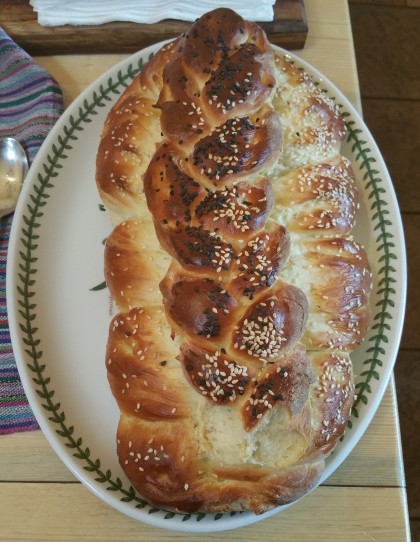
Ruth and Kate made this. Kate’s from yesterday looks as good.
Kate continues to gain stamina and increase range of motion for her right shoulder. She made challah yesterday, and challah rolls. With some tweaking thanks to a high altitude info sheet from King Arthur Flour she’s really got it going on. This is beautiful challah and rolls. She gave one to Tara yesterday and we’ll give the rolls to Sally today when we visit her in Golden.
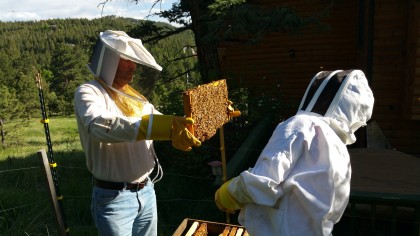
Yesterday late afternoon we went over Tara and Arjan’s home for a session with their bees. Like Rabbi Jamie and Dan, they’re first year beekeepers. They’ve got the derigeur, for the Front Range, electric fence. Bear strength. Bears really like honey. And we’ve got bears.It was fun seeing their enthusiasm and a healthy hive.
Tara, Arjan and bees
Their Italians are much more docile than my Minnesota Hygienics. The four built out frames I gave them were filling up with pollen, honey and brood. They’re queen right and the colony is growing. They moved slowly, did a hive check looking at each frame while I stood off to the side and examined them, too.
Their home is on Kilimanjaro Drive. You’ll get the naming convention when you know we passed Jungfrau, Annapurna and Zugspitz drives as well. Kilimanjaro is long and winds way back into the mountains east of Evergreen. The views are wonderful with the continental divide just visible to the northeast. Still snowpacked. It was a clement mountain evening with blue sky, lots of rock and pine trees. And friends.
Trying my hand at a short story in the style of Robert Aickman. If you appreciate strange fiction with a literary style, then you’ll love Aickman. His work is as distinctive as Kafka and some use the term Aikmanesque to reference it, as the word Kafkaesque references Kafka’s unique style. Aickman uses dense description of place and characters to lull the reader into a sense of the narrative, but he subtly tweaks certain aspects that color a character’s mood or personality and the apparently normal world in which they live. At some point in the story, a line gets crossed between this world and a surreal one that you then notice lurked behind even the first few paragraphs.
Kate and I went in early to the Denver Museum of Nature and Science so we could see the IMAX 3-D show, Jerusalem. This is an astonishing piece of film-making, packing in lots of history, contemporary scenes and with an emotional charge gained by using three young women, a Jew, a Christian, and a Muslim as narrators for much of the film. If it’s near you, I recommend it highly. Here’s the trailer.
Probably won’t be going back to Chainsaw Bob’s. Went yesterday to get my chain sharpened. They have a new deal, smart, where you leave your old chain and they put an already sharpened one on your saw. Supposed to save time. And it would if the guy putting the chain back on wasn’t trying to sell another guy a saw.
Gave me plenty of opportunity to peruse the new signs hung over the desk between the shop and the front. A picture of Hillary Clinton had these remarks. Hillary Chicken. 2 fat legs, 2 small breasts and lots of left wings. Next to it was a sign that read. Startling news! 25% of women in the U.S. are being treated for mental illness. You know what means? 75% are untreated! Under these signs a woman whom I assumed was Chainsaw Bob’s wife met customers, organized service and took money.
Sexism is still raw and unvarnished in many places, like racism on public display in Charlottesville, Virginia. Murica.
We live in our bubbles. The Big Sort, published in 2009, had the subtitle, Why the Clustering of Like-Minded America is Tearing Us Apart. Yesterday the Denver Post reported that the population of downtown Denver had increased by 3 times since 2000 to twenty-six thousand with 81% single, white and with an average age of 34. This is just a single instance of folks choosing to live among those similar to themselves in race, wealth and educational level.
This from Richard Florida and his excellent website, Citylab: “Americans have not only grown more ideologically polarized over the past couple of decades, Republicans and Democrats are drawn to very different kind of places. Back in 2004, Bill Bishop dubbed the self-segregation of Americans into like-minded communities, “The Big Sort.”” Oct. 25, 2016
When I grew up in Alexandria, Indiana, during the 1950’s it was segregated by race, one black family in the town of 5,000, yet there were college educated folks living next door to factory workers who had, at best, graduated from high school. As a result, I have a blue collar sensibility that sets as deep in my character as the college-educated one I gained at home. Even this modest class diversity is rarer and rarer as suburbs and city neighborhoods, cities and rural areas grow more and more homogeneous.
With a pussy-grabber in chief who sees good folks on both sides in Charlottesville, this sorted and ideological reinforcing America is ripe for a wave of extremism even more shocking than we’ve already seen. Trump’s approval rating is growing, still dismal, but moving up. The 30% or so of the U.S. who are his base may not seem like much, 70% are not his base, but Mao noted that only 3% of a country needed to be active revolutionaries for a rebellion to succeed. And he proved it.
What does this augur for our future as a nation? At a minimum it means a large percentage of the population will be unhappy with the government. At its maximum it could mean a white male populist revolt favoring Chainsaw Bob’s tilt to American politics. That’s close to where we are right now.
Forgot how exhausting real studying can be. My goal was to finish Rovell’s book, The Order of Time, before qabbalah last night. I did it. But I had to read and ponder for several hours over the last two days. Much of the work is clear, even if challenging to understand. Some of it, especially about the quantum world, was damned difficult. Some of it I didn’t get. That’s o.k. Confusion is the sweat of the intellect. A lot of sweat in that small text.
My reward? At kabbalah last night I found the discussion needed the insights Rovelli offers. But I didn’t understand them well enough to add them to the discussion. Result? Cognitive dissonance. The question last night was, does the future exist? Rovelli answer: at the quantum level, no. No past, no present, no future. No time. Just events occurring in no particular order. Kabbalists answer, no. The past and the future only exist in the present. Sounds similar, but it’s not. No time is no time.
And, Rovelli established to my satisfaction that there is no present, even at the Newtonian level. The easiest example is a moment, A, happening on earth. Is it in the same present, a universal present we assume exists for the whole universe, as an event on Proxima, three light years away? No. It is in the same moment as an action on Proxima three years from now. In this example, thanks to distance we can see that our present does not match up to Proxima’s.
Here’s the real trick in Rovelli’s book though. The present is highly local. The present is a construct meaningful only within the part of the universe with which we are in direct relation. So my present here on Shadow Mountain is different than the one down the hill in Aspen Park or down the hill even further in Denver.
We can only know the present through direct relationship. Why? Well, consider this. Let’s say I want to know what’s happening right now in Aspen Park. How can I do that? I’m not there. I could call, but dialing takes time, so by the time I’ve connected with Aspen Park, the moment I’m reaching is no longer the present about which I wondered a moment ago. Even a reply takes time to reach me from Aspen Park over the phone. It’s the same problem as Proxima, just on a different scale.
Picky? I don’t think so. The present is just that. Now. But I can discover no other present without encountering it after mine has already disappeared. This highly local nature of the present unhinges our assumption of time as a constant, the same everywhere. No, in fact it’s exactly not the same everywhere. You have to let that trickle in, at least I did.
And, there’s more! But I need to re-read the book to get it. Not right now. Not enough energy.
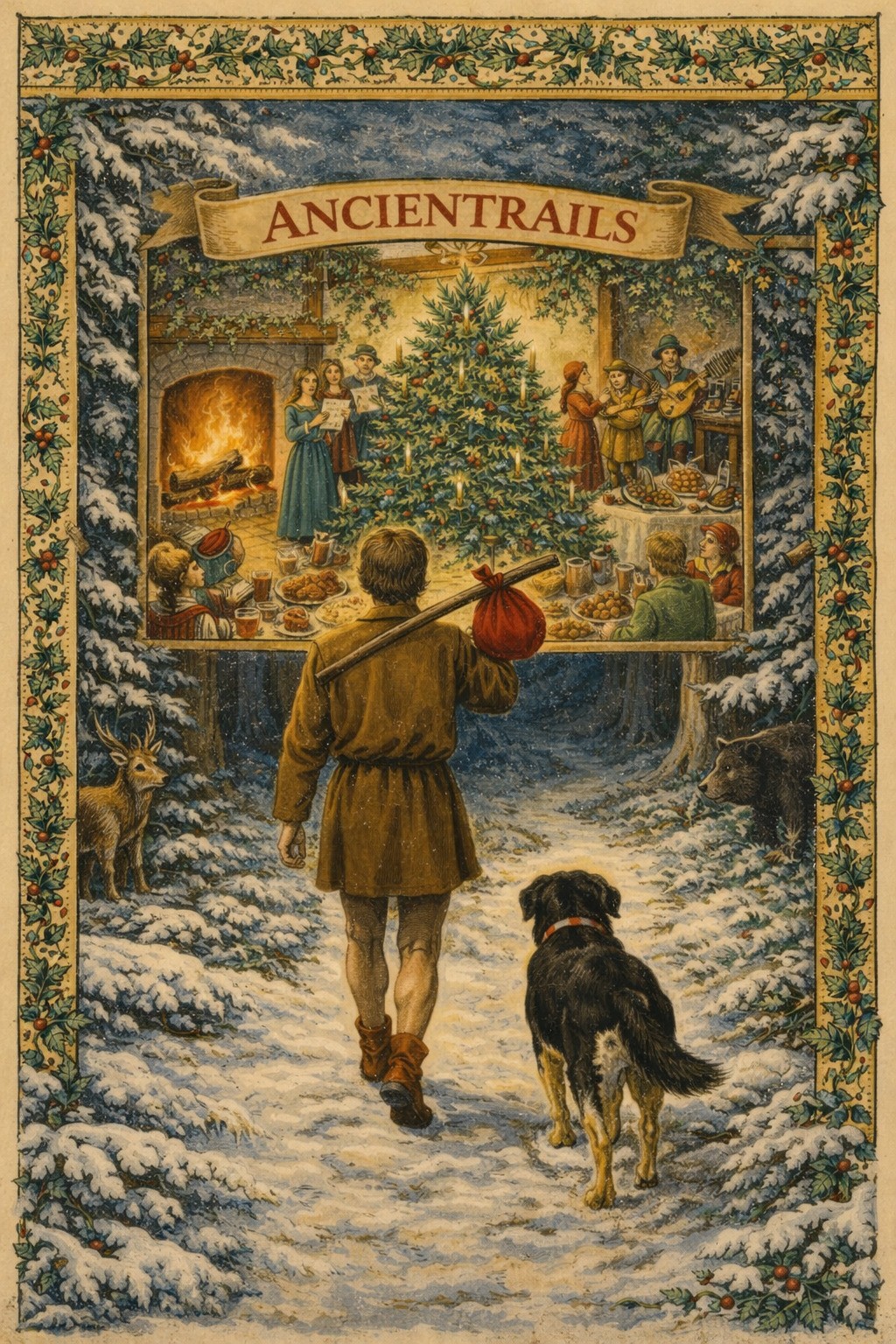
Started a long project yesterday. I’m printing out all of Ancientrails. Been wanting to do a total backup and I will at some point, but if it’s going to be useful to my ongoing work, hard copy is better. Besides, think how satisfying it will be to hold a copy of all this. Then, I got to thinking. Oh, but a fire! I’m going to make a copy of the copy when it’s done, then make copies of all my hard copies of my novels. I’m going to ask Jon if I can store those copies in his garage in Aurora. Yes, all the novels are on flashdrives (and in a safety deposit box, all except my work on Jennie’s Dead and Rocky Mountain Vampire) and all of Ancientrails is in the cloud, but the hard copies are important, too. The things that come up before we fall asleep.
Haven’t mentioned the dishwasher in a while, certainly not the Samsung of late and unlamented memory, but that’s because the Kitchenaid works. It has eased a burden. Dishwasher, clothes washer and dryer, gas/electric stove and refrigerator. All really are labor saving appliances. No ice delivery. No need to fell trees and split wood. No hand washing of dishes and dirty clothes. No hanging clothes out on the line and bringing them back in. We don’t think about these wonders unless one ceases to work, but they do free us up for other more important matters like facebook and texting. Ha.
similar to the one I used back in 1974
I have felled trees and split wood to use a wood cook stove and to heat a house with an airtight wood stove. I have washed dishes by hand as a matter of course. No scrub board and clothes line in my past though. Laundromats. I’ve never had an ice box though that was the go to word for the refrigerator when I was a kid. My grandmother called all cars, the machine.
As always we live in a time between this moment and the past, between this moment and the future, never fully leaving behind the ways and memories of the past and never fully engaged in the ways and possibilities of the future. It is in precisely this sense that the present is both past and future, at least in the only useful understanding of them.
By the qabbalah class this evening I’ll have finished Carlo Rovelli’s book, The Order of Time. I rarely read books twice, too much to read, but I will definitely read this again. A lot of it is clear, understandable, but so counter-intuitive that it’s hard to recall, hard to assimilate. For instance, according to Rovelli, whose field is quantum loop theory, time is not a dimension at the quantum level. It’s not necessary for the equations that explain quantum mechanics.
If I’m understanding his primary argument, time at the Newtonian level is a result of blurring. This may seem like an odd idea, and it is, but it’s not so hard to grasp if you think about the blurring that is necessary for us to perceive the world around us. Example. If you shrank to the atomic level and tried to walk across a table top, you’d fall in. It’s blurring of the quantum world that makes the table seem solid to us. Time is a result, again if I’m getting this, of the blurring of the transitions from event to event which, at the quantum level have no prescribed order.
Anyhow, to really comprehend Rovelli’s work, I’ll need to go through it again having the whole as context for the parts.
Rabbi Rami Shapiro spoke to Beth Evergreen parents on how to talk about god to their kids. You can see on the board four terms and a fifth, panentheism, finishes it. (That’s Rami to the left standing and Rabbi Jamie to his right.) I think the first four are well known, panentheism perhaps not so much so. While pantheism says god is everything and everything is god, (all-god), panentheism says nature is part of god but god is more than that, too, perhaps even beyond time and space. The most well known panentheist, at least when I was in sem, admittedly 45 years or so ago, was Alfred North Whitehead, proponent of process theology.
My brother Mark asked me recently whether I was a theist or a deist. I wrote back, sort of tongue in cheek, polytheist atheist. This morning I thought, polyatheist. I like the contradiction, the tension between these two words. All the words on Rami’s sheet assume a monotheistic stance in which one believes, does not believe, doubts, makes coincident with nature or inclusive of nature but not limited by it. None of them describe my location in the world of god thought.
Perhaps better, polytheist agnostic. Even that doesn’t carry quite the right emphasis. What was it they said on the x-files? I want to believe? When I graduated from college, yes, it was 1969, 49 years ago, I decided to revisit Christianity. I chose to use Soren Kierkegaard’s leap of faith as a model. After reading his Fear and Trembling, I decided I would live as if the Christian god were real and that the gospel stories were true. That’s how I ended up in seminary in 1971.
It was not a perfect reenchantment of my world. A lot of Christianity, even then, I just ignored. Nothing would have made me predeterminist or even one interested in salvation beyond this life. The God and the Jesus I believed in were guarantors of a just world, a world where evil could be fought successfully and where evil denied our essential oneness as a species, allowing certain people to feel privileged due to race, gender, wealth, nationality, sexual preference. “Let justice roll down waters, righteousness like an everflowing stream.” Micah 5:24 Or, Luke 4:18-19: “The Spirit of the Lord is upon me, because he has anointed me to preach good news to the poor. He has sent me to proclaim release to the captives and recovering of sight to the blind, to set at liberty those who are oppressed, 19 to proclaim the acceptable year of the Lord.”
Martin Luther King, liberation theology, Jesus as a revolutionary those were my touchstones. Yes, I meditated, prayed, interpreted scripture, very occasionally served the sacraments, but the core of my shift from college non-belief to Christian clergy lay in the political implications of Christianity. This was a thin rationale for a metaphysical commitment. And, it broke apart. By the time I left the Presbyterian ministry in 1991, the scaffolding of bible, god, jesus, prayer had long ago collapsed.
When my then spiritual director, John Ackerman, said, “Charlie, you might be a druid,” I laughed. Then, I thought, hmmm. No, not a druid, but yes one whose religious instincts lead him to the garden, not for a last prayer before crucifixion, but as a participant in the web of life, hands in the soil. This was reinforced when Kate suggested I look for a particular focus for my writing. Since part of leaving the ministry meant novels, I took her suggestion seriously.
Duncan, John; The Riders of the Sidhe; Dundee Art Galleries and Museums Collection
I have two broad genealogic streams in my dna, Irish and Welsh, and German. Ellis and Correll for the Celtic side, Spitler and Zike for the Germanic. I chose the Celtic side first, exploring the realm of Celtic religion. The Celtic Faery Faith, a book by W.Y. Evans Wentz, who went on to translate and make popular, the Tibetan Book of the Dead, was an early influence. As I got deeper and deeper into crafting novels, always fantasy, always with an ancient religion at their heart, I began to entertain strange thoughts.
What if Cernunnos, the horned god of nature in Celtic myth, was real? Tailte, a Celtic goddess of the earth, came from a euhemerized Welsh woman. Euhemerus, a Greek mythologist, lived in the late 4th century B.C.E., and proposed that myth was an exaggerated account of the lives and deeds of real people. Thus, euhemerization might suppose that behind Zeus there was a strong, dominant man who ruled imperiously over his people. Or, that a certain Welsh woman, a gardener and farmer, one with a remarkable ability to make things grow and to find useful plants and animals in the wild, might become an Earth goddess. So euhemerization blurs the line between the real and the mythical. Had Cernunnos been a hunter so in touch with his prey that his success seemed super-human?
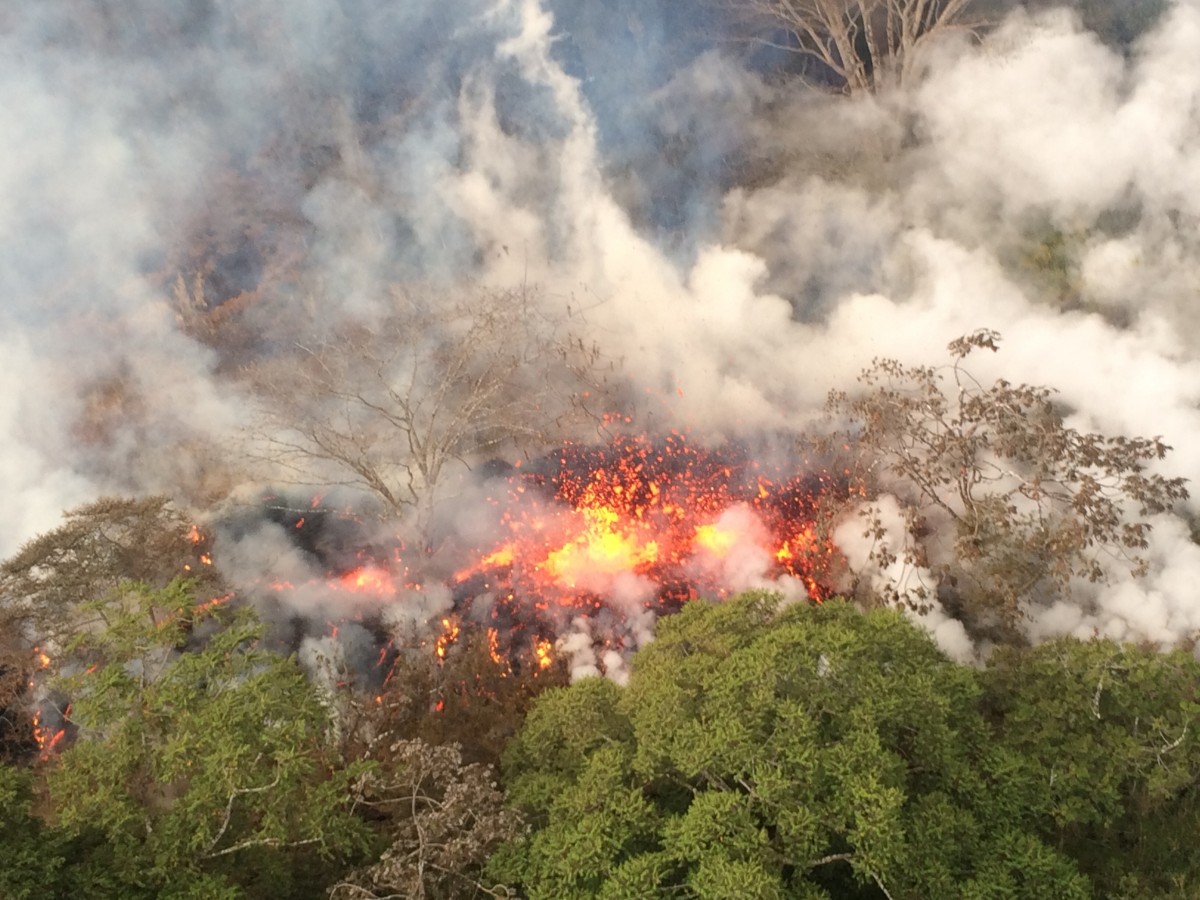
A more recent and accessible example of another myth-making process is Pele on the Big Island. Perhaps Pele was a strong, fiery Hawai’ian woman of long ago, one drawn to the vulcanism of her homeland. Perhaps she danced with the lava, foretold eruptions, protected people from the ravages of sulphuric gases. She may have come to hold the role of goddess of fire, goddess of the vital forces beneath the Hawai’ian archipelago, through repeated tales of her amazing feats. Or, it might be that ancient Hawai’ians personified the enigmatic and brutal forces of Mauna Kea, Kilauea, and Mauna Loa just as the residents of Leilani Estates have done since the eruptions began last week.
William-Adolphe Bouguereau (1825-1905) – The Youth of Bacchus (1884)
In my own post-Christian world these sorts of gods and goddesses resonate. The notion of one deity behind it all, a wizard or sorceress of creation, seems silly. That certain groups might confuse the god they hold closest with a monotheistic deity makes sense to me; that others might actually agree with them makes no sense to me. There cannot be more than one, one god. Simple logic.
When two groups assert that their god is The One, one of them has to be wrong and in my opinion, both are. Which leaves us where? Well, the assertion of two all-powerful deities makes sense to anyone with a polytheistic bent. Why is Allah any more sensible than Athena? Why is Yahweh any more divine than the triple-goddess Brigit? Why is Brahma more explanatory of cosmic matters than Ahura Mazda and Angra Mainyu?
So, I have become a polyagnostic. I doubt the existence of all the gods and goddesses ever imagined. I do not chose Yahweh to doubt anymore than I choose faeries and Odin to doubt. Yet. I want to believe. I want to see Pele at work in the now 18 fissures breaking through the human hubris of Leilani Estates. I want to find the god and the goddess, Cernunnos and the Maid, frolicking naked in the fields of Beltane. I want to see the Wild Hunt cross the sky. And, yes, I’d like to see Yahweh deliver the tablets or speak from the bush. Hell, I’d even like to watch Allah send Mohammad by horse to the temple mount, through the sky. I could stand in the Mithraeum and be doused by blood or water. It’s not hard to imagine, for me, diving into a holy well and ending up in the Otherworld.
What I’m trying to say here is that my doubt is not tied to the monotheistic faiths, rather it is tied to the polytheistic nature of global religious thought. Polyagnostic. I doubt and embrace all gods and goddesses, all nymphs, daiads, faeries, banshees, rashis, and chupacabras.
If we were to divide polyagnosticism into two camps, one leaning toward belief and one leaning toward polyatheism, I would be in the leaning toward belief group. I suppose that’s what keeps me a friend of all sorts of religious belief systems, all sorts though not all. I believe in the numinous, in the unseen mystery, in the still small voice that comes from the rock, the mountain top, the flowing river, the growing grass, the blooming flower. I believe it’s no accident that these forces have been named sacred, called divine. I think it’s appropriate to anthropomorphize them, to find in the wind Boreas, to find in the magma chamber, Pele, to find on Mt. Sinai, Yahweh. These are sources of wonder for me and ones I cherish.
I just don’t know which ones are more real than the others, or, if they’re all real in some way. I’m not even sure I know what real means or could mean here.
The mountain moon will disappear over the next few days; but, its impact, like that of the new shoulder moon, will continue. I’m now picking up mountain facts, art, poetry, science, including a lot of vulcanology. The mountains that I see everyday speak to me in new ways. See what you’re looking at.
Here’s an example. While on our way to Evergreen the other day, Kate said, “Oh, look. Leaves on the aspens!” This was near the entrance to the Cub Creek trailhead. Sure enough, a grove of aspen (clones of each other) had small bright green leaves. But. As we went further down Brook Forest Drive, the aspens were not leafed out. Their leaves were still furled, mostly colorless. Why? What about the soil, water, location with other trees made that one batch of aspen leaf out earlier than almost all the others we saw further down? Still don’t know.
Another. The last few days have been rainy and foggy. As we passed rock faces bare of trees, the fog and mist on them gave a perfect simulacrum of the Song dynasty paintings that I love, mountains seeming to emerge from and disappear into the clouds.
Another and ongoing aspect of becoming native to this place.
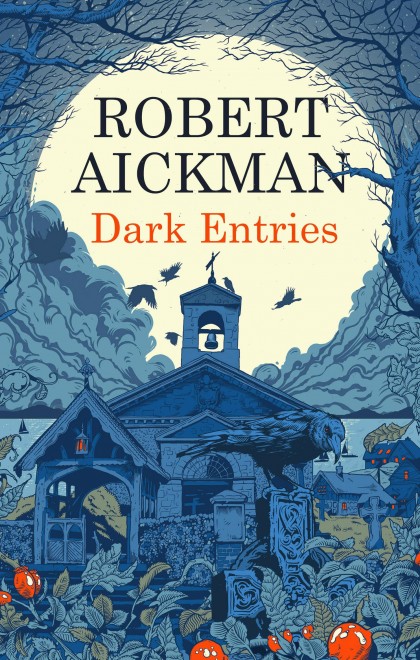 Trying my hand at a short story in the style of Robert Aickman. If you appreciate strange fiction with a literary style, then you’ll love Aickman. His work is as distinctive as Kafka and some use the term Aikmanesque to reference it, as the word Kafkaesque references Kafka’s unique style. Aickman uses dense description of place and characters to lull the reader into a sense of the narrative, but he subtly tweaks certain aspects that color a character’s mood or personality and the apparently normal world in which they live. At some point in the story, a line gets crossed between this world and a surreal one that you then notice lurked behind even the first few paragraphs.
 Probably won’t be going back to Chainsaw Bob’s. Went yesterday to get my chain sharpened. They have a new deal, smart, where you leave your old chain and they put an already sharpened one on your saw. Supposed to save time. And it would if the guy putting the chain back on wasn’t trying to sell another guy a saw.
 Sexism is still raw and unvarnished in many places, like racism on public display in Charlottesville, Virginia. Murica.

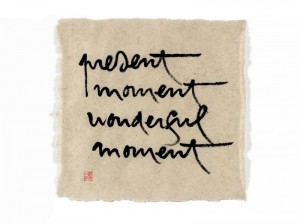 Here’s the real trick in Rovelli’s book though. The present is highly local. The present is a construct meaningful only within the part of the universe with which we are in direct relation. So my present here on Shadow Mountain is different than the one down the hill in Aspen Park or down the hill even further in Denver.
 Picky? I don’t think so. The present is just that. Now. But I can discover no other present without encountering it after mine has already disappeared. This highly local nature of the present unhinges our assumption of time as a constant, the same everywhere. No, in fact it’s exactly not the same everywhere. You have to let that trickle in, at least I did.
 Started a long project yesterday. I’m printing out all of Ancientrails. Been wanting to do a total backup and I will at some point, but if it’s going to be useful to my ongoing work, hard copy is better. Besides, think how satisfying it will be to hold a copy of all this. Then, I got to thinking. Oh, but a fire! I’m going to make a copy of the copy when it’s done, then make copies of all my hard copies of my novels. I’m going to ask Jon if I can store those copies in his garage in Aurora. Yes, all the novels are on flashdrives (and in a safety deposit box, all except my work on Jennie’s Dead and Rocky Mountain Vampire) and all of Ancientrails is in the cloud, but the hard copies are important, too. The things that come up before we fall asleep.
 If I’m understanding his primary argument, time at the Newtonian level is a result of blurring. This may seem like an odd idea, and it is, but it’s not so hard to grasp if you think about the blurring that is necessary for us to perceive the world around us. Example. If you shrank to the atomic level and tried to walk across a table top, you’d fall in. It’s blurring of the quantum world that makes the table seem solid to us. Time is a result, again if I’m getting this, of the blurring of the transitions from event to event which, at the quantum level have no prescribed order.
 You can see on the board four terms and a fifth, panentheism, finishes it. (That’s Rami to the left standing and Rabbi Jamie to his right.) I think the first four are well known, panentheism perhaps not so much so. While pantheism says god is everything and everything is god, (all-god), panentheism says nature is part of god but god is more than that, too, perhaps even beyond time and space. The most well known panentheist, at least when I was in sem, admittedly 45 years or so ago, was Alfred North Whitehead, proponent of process theology.
 Perhaps better, polytheist agnostic. Even that doesn’t carry quite the right emphasis. What was it they said on the x-files? I want to believe? When I graduated from college, yes, it was 1969, 49 years ago, I decided to revisit Christianity. I chose to use Soren Kierkegaard’s leap of faith as a model. After reading his Fear and Trembling, I decided I would live as if the Christian god were real and that the gospel stories were true. That’s how I ended up in seminary in 1971.
 Martin Luther King, liberation theology, Jesus as a revolutionary those were my touchstones. Yes, I meditated, prayed, interpreted scripture, very occasionally served the sacraments, but the core of my shift from college non-belief to Christian clergy lay in the political implications of Christianity. This was a thin rationale for a metaphysical commitment. And, it broke apart. By the time I left the Presbyterian ministry in 1991, the scaffolding of bible, god, jesus, prayer had long ago collapsed.
 What if Cernunnos, the horned god of nature in Celtic myth, was real? Tailte, a Celtic goddess of the earth, came from a euhemerized Welsh woman.
 So, I have become a polyagnostic. I doubt the existence of all the gods and goddesses ever imagined. I do not chose Yahweh to doubt anymore than I choose faeries and Odin to doubt. Yet. I want to believe. I want to see Pele at work in the now 18 fissures breaking through the human hubris of Leilani Estates. I want to find the god and the goddess, Cernunnos and the Maid, frolicking naked in the fields of Beltane. I want to see the Wild Hunt cross the sky. And, yes, I’d like to see Yahweh deliver the tablets or speak from the bush. Hell, I’d even like to watch Allah send Mohammad by horse to the temple mount, through the sky. I could stand in the Mithraeum and be doused by blood or water. It’s not hard to imagine, for me, diving into a holy well and ending up in the Otherworld.
 If we were to divide polyagnosticism into two camps, one leaning toward belief and one leaning toward polyatheism, I would be in the leaning toward belief group. I suppose that’s what keeps me a friend of all sorts of religious belief systems, all sorts though not all. I believe in the numinous, in the unseen mystery, in the still small voice that comes from the rock, the mountain top, the flowing river, the growing grass, the blooming flower. I believe it’s no accident that these forces have been named sacred, called divine. I think it’s appropriate to anthropomorphize them, to find in the wind Boreas, to find in the magma chamber, Pele, to find on Mt. Sinai, Yahweh. These are sources of wonder for me and ones I cherish.