Category Archives: Cooking

Thick

Fall                                                                    Samhain Moon

Spent most of the day making chicken-leek pot pies.  Reading a French scholar named Bruno Latour today, for Modern and Post Modern His notion of thick description, of “gathering” the society of meanings and matters necessary to fully engage any thing, has got me excited.

(Latour)

So, just to try it out on chicken-leek pot pies, let’s play with the idea.

Leeks and Wales have a close association, like the thistle and Scotland, the shamrock and Ireland.  In war Welsh soldiers would wear leeks in their bonnets, as a Lakota might an eagle feather.  When this partly Welsh man genetically and Welsh named man, Ellis being Welsh and the family from Denbigh in northern Wales, sets out to make a leek pie, it is not merely a culinary but a cultural matter as well.

Perhaps it was that cultural matter that accreted years back, back when the same man decided to plant a garden.  A garden.  Well, there’s a thick matter.  Of course there’s the obvious garden of Eden, but in order to have an idea like the garden of Eden, the ne plus ultra of gardens, we had to have the idea of garden itself.

(“The Garden of Eden” by Lucas Cranach der Ältere, a 16th-century German depiction of Eden.”

Garden is, of course, over against the life ways of the hunter-gatherers, who, in a sense, saw the whole world, or at least the part they could reach on foot, as their garden.  But not exactly.  Yes, they saw it as their garden, a physical place which produced food for their consumption; but no, not a garden in the horticultural meaning, that is, a cultivated (cultured) place where plants no longer grew as they would, but as a gardener wanted them to grow.

It was this horticultural understanding of garden that split us off from those early nomads and found us more or less rooted to a particular place so we could, as Voltaire recommended, tend our garden.  It’s that sense of a place chosen and planted, rather than one identified and harvested, that is behind the garden on our property.

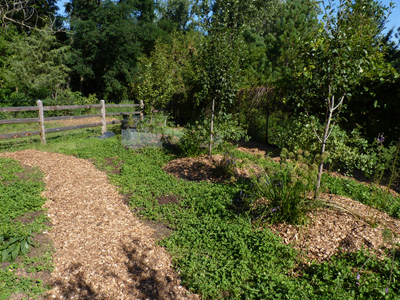
In that garden, a human defined and cared for instance of the earth’s most basic life 400_late summer 2010_0175sustaining work, the growing of food, this Welsh descended man chose a plant regarded by his genetic ancestors as central somehow to their identity.  “According to legend, Saint David (the patron saint of Wales[2]) ordered his Welsh soldiers to identify themselves by wearing the vegetable on their helmets in an ancient battle against the Saxons that took place in a leek field.”  Wikipedia
Cooking too is a marker of one era of human evolution from another.  Levi Strauss, the French anthropologist wrote a famous book, “The Raw and the Cooked,” which explored this binary.  Cooking helps detoxify food, makes it more flavorful and allows for the mixing of ingredients.  We don’t bring the leeks in, chop them up and eat them.  Most of the allium family shallots, onions, garlic, leeks aren’t considered raw vegetables (except in salads and on sandwiches) by most Westerners, but here again we enter the domain of culture, choosing which food will be eaten in which way.

And the chicken.  Well.  Once the gardens got going, the domestication of animals was not far behind, probably led by the dog, but followed later by fowl, hogs, cattle, sheep and all the others that now find their place primarily in human defined environments. Early folks gathered a few scrawny birds and enclosed them somehow, perhaps initially for their eggs.  Later, they ate them.  Or, the reverse.  I don’t know.

(Gallus_gallus ancestor of the domestic chicken)

In Wales, and I imagine in other Celtic countries, poverty made chicken a primary meat, if any meat was available at all.  In Wales it’s perhaps no surprise that someone decided to cook chicken and leeks together.  Tasty.  Just when that combination became a pie, again, I don’t know.  But I do know that 8 instances of its most recent incarnation are on the counter upstairs, one of which will be cut open tonight for supper.

Lots more could be added here to a thick description of chicken-leek pie.  We could, for example, explore gender roles, the chicken industry, the Viking stove folks, the domestic natural gas industry, the lights that allowed the cooking to go on after the sun went down. There’s flour milling and grain cultivation, too.  Not to mention the corn and peas, frozen, in this instance which brings up refrigeration. This idea has some legs, I think.
Those Leeks

Fall                                                                              Samhain Moon

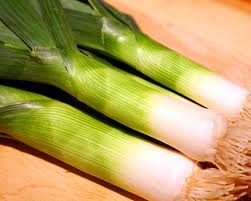
Those leeks.  Just cut’em up, trimming the hairy white afro of their root system from the leeksstem and cutting back to where the white ends and the green begins.  We want white with leeks.  A dirty job because leeks like to hold on to the soil, keep it close, even after getting pulled from the ground.

Chopped carrots, onions, celery and sauteed them in olive oil along with some dried garlic. Three pots going, me from one to the other with a wooden spoon, stirring stirring.  Watching that one with the thinner bottom more closely cause the veggies could burn.  Did burn a bit.  Till the onions and the celery become translucent.  Then I throw in white wine to deglaze, add a base note.  Let it simmer a minute.  After that water.

The chicken, a golden plump, parachuter chicken, Helgeson family heirloom chicken, green money to their clan, just meat to me, into the pot.  More water.  Salt, pepper, Paul Prudhomme’s poultry seasoning.  That last ingredient is a secret.  Don’t tell.

While they simmer for an hour and a half, I’m returning to Lucretius.  See what else is going on in the introduction to this work of Roman Epicurean science.  After I’ll go back to the chickens.  Have to cook the leeks.  Add the peas and some time.  Get the dough ready.

This is a lengthy process.  Into the afternoon before the pies themselves are done.

Wood and Leeks

Fall                                                                   Samhain Moon

Split wood from the two cedars and the ironwood stacked.  Plenty of kindling sized wood, some paper, smaller sized chunks of wood, plus two pallets to break up and split.  Then, out there, lying yet in the woods, the tapering trunk of the ironwood plus two thick branches, waiting to be cut into true bonfire sized logs for the outside of the fire.  Thought I might have to buy some wood, but no.  All I need right here.

All the leeks harvested, the tops trimmed off and waiting in the hod for the hoses to thaw out so I can wash the roots outside.  It’s chicken pot pie day here at Artemis Hives and Gardens.  After, that is, a visit to the city to see Audacious Eye and have lunch.

There will be three pots, a chicken in every pot, boiling away with garlic and onions, celery and carrots sauteed first, then the water, then the chicken.  The leeks in another pot, also boiling.  After some time, corn and peas and pearl onions into the chicken pots.  At that point the chickens come out and get plopped onto cookie sheets where the flesh comes off and gets cut up into smaller chunks.  Which get put back into the pots, again one chicken each.

Get out the pie tins with pie dough in them and the box of Pappy’s dough so it can soften.

Add the leeks to the pots and thicken with corn starch or Wondra.  Tricky step, probably will do it in smaller bowls.  The thickened chicken broth with chicken, peas, corn, leeks, pearl onions, carrots and celery spread out in the pie tins.

Flatten that Pappy’s with a rolling pin, always flouring the surface, make it big enough to cover the pie tin, put it on like a night cap, crimp the edges, make marks in it to let the steam out.  Toss in the oven.  Wait a while.

Chicken pot pies.  Most will be frozen, probably all but one.

Far Out

Fall                                                                           Samhain Moon

Jazz at Barbette.  Kate and I have begun to go, every once in a while, to the jazz and dinner combinations co-ordinated by Kevin Barnes of KBEM.  Tonight the meal was at Barbette and the music, jazz guitar, by his brother, Brian Barnes.

If you’ve not been to Barbette, it’s a stainglass lights, art of many qualities on the walls kind of place coupled with the sort of small, but beautiful presentations that mean you’ve just paid a lot for the meal. Tables are set somewhat close together and there was, at least tonight, a genuine air of bonhomie.  The wait staff are quick, delicate and attentive.

Each course had a different craft or Belgian beer associated with it so I passed mine to Kate.  The first, a Duvel, came with the pretzel course.  Never have I seen pretzels so daintily and prettily presented and accompanied by a hot mustard sauce, a shallot marmalade and a wonderful gouda cheese sauce.  Tasty.

The second, a Maredsous, came with gravlax, collard greens and small discs of grits. Sounds weird, but it was pretty good.  The third, a Chouffe, graced a strange and new food experience for me, pork belly.  Now when I say pork belly you may think of bacon but in this case I believe they cut a square section out of a pork belly and cooked it.  I have a very broad palate, more gourmand than gourmet, and I like most things, but this had way too much fat for my taste.  And, of course, I didn’t have the Chouffe to wash it down with. Quel domage.

The final dish was a deconstructed smore with a square of marshmallow topped by a scatter of broken nuts, a tablespoon size and shape piece of ice cream all on a swoosh of chocolate. Outside my low to no carb emphasis, as was the pretzel, but I went ahead anyway.  Pretty good.

We had a university lecturer and her husband, a businessman and his wife, and two militant atheists, one of whom worked for the health insurance industry at our table.

In these settings I find listening to conversation can be a challenge though Barbette wasn’t terrible.

A fun evening.  Oh, and every one said oh! when they asked where we were from and we said Andover.  “So far.”  “That’s a ways.”


Outdoors

Fall                                                                              Samhain Moon

The mid-point of October and we’re almost done with gardening.  We broadcast under the cherry and plum trees today, removing the mulch, taking up the landscape cloth, laying down the fertilizer and spraying the biotill, then replacing the landscape cloth.  After the nap I helped Kate get the landscape cloth back down, then while she rejoined it with staples to the ground, I sprayed biotill on the vegetable garden beds and mulched all of them but the herb spiral.

(Persephone and Hades)

The raspberries, which I picked this morning, are still producing and the leeks await a cooking day when I will make chicken leek pot pies, next week probably.   The leek bed will get fertilized, sprayed and mulched when they are inside while cutting down the raspberry canes, then spraying and fertilizing has to wait until they quit bearing.

This was significant manual labor and we’re both in the weary phase.  A quiet evening leaf tea bowlahead.  Some Latin right now for me.

My new teaware came, a clay bamboo holder for my tea utensils, a new pitcher made of yixing clay with a white ceramic glaze inside and a rosewood tea scoop.  All of this from a shop in Vancouver that has excellent products, The Chinese Teashop.

Friends

Lughnasa                                                                  Harvest Moon

Woolly meeting tonight.  Kate baked a ground cherry pie and a raspberry pie.  Big hits.  “All hail, Kate!”  There was applause near the end for the desert.  Yin served her wonderful variations on Chinese originals, tonight a noodle and pork and vegetable dish.

Scott introduced the topic of the Singularity and we talked about technology and change for the rest of the evening.  Mark Odegard brought up a good point about advances in technology contributing to a digital divide with digital haves and digital have nots.  This divide will tend to reinforce class and racial divisions.  He said this in reaction to me saying I wasn’t particularly worried about the Singularity.  His point was that the rapid advances in technology can and will have unintended social consequences.  He’s right.

In this argument I find myself on the conservative side, that is, I believe there are so many fundamental activities that make us human from painting to poetry, music to novels, athletics and theatre.  They are not reducible to code nor products artificial intelligence can reasonably be expected to create. There are also the incredible complexities of life itself, human relationships, the intricate interlocking webs of ecology systems that will always, I believe, outstrip any technological advance.

And I love technology, gadgets, the new.  Just don’t see them hanging out with me at a Woolly meeting as full participants.  Ever.


For Me and My Kate

Lughnasa                                                                         New (Harvest) Moon

The harvest moon is traditionally the full moon closest to the fall equinox, so that’s the moon dark now but waxing soon.  Here in the 4 seasons 45th latitudes the harvest moon shines on much of the harvest, at least from the garden perspective, already long in the house and canned or dried or frozen, stored one way or another.  By Mabon, the fall equinox holiday, we will have only leeks and apples, perhaps some raspberries left.  Still, I have a curious attraction to tradition; as long as I can choose whether or not to observe it, so harvest moon it is.

Kate just came down with purple hands.  She’s processing the wild grapes I harvested this morning.  She said she looked like she’d been stomping grapes with her hands.  Now there’s an image.  Grandma doing handstands in a wine press.  The grandkids would love it.


Midwest Grimoires

Lughnasa                                                                  Honey Moon

Finished spraying.  As the crops come in, the amount of spray needed diminishes.  Today I really only needed the reproductive spray because the remaining vegetables are mostly in that category:  tomatoes, ground cherries, egg plants, cucumbers, peppers, carrots. Granted there are a few beets, some chard and the leeks yet to harvest but they seem substantial already.  They also benefit from the showtime, nutrient drenches and the enthuse that I will spray on Saturday morning.

Kate roasted the broccoli and froze it.  She’s also making pickles today, cucumber and onion.  She’s in back to the land, earth mother mode and has been for several weeks.  She consults her canning, pickling, drying, freezing books like grimoires from calico clad wise women of the rural Midwest.  And does likewise, tweaking the recipes when she wants.

Putting Food By

Lughnasa                                                        Moon of the First Harvests

Finished turning much of our garlic crop and all of three boxes of farmer’s market garlic into thin shavings, put them in the dryer and turned it on.  We discovered last year that a very effective way to keep garlic is to dry it, thin.  The crop this year itself was thin necessitating purchase of some to get up to a quantity that we think will sustain us through the winter.  We like garlic.

Picked carrots, tomatillos and the first roma tomatoes.  Kate’s made pico de gallo and corn relish today and will make pickled carrots and daikon radish tomorrow.  This is the time when summer’s profligacy gets pickled or canned or dried or frozen since the plant world has little care for the distribution of its fruits beyond the spreading of seed.  Humans have had to overcome the plants long established plans for propagation in order to benefit optimally from the growing season.  It came in fits and starts, I’m sure, this storing of calories and nutrition, but the basics are the same now as they have been for a very long time.

When doing this work, blowing snow, howling winds and fire in the fireplace are ever present, the time when this work will make sense.  Right now it just leaves a pain in my already sore left shoulder.  That will pass.

Family Day

Summer                                                                              Solstice Moon

Kate fixed another great meal.  The salmon was wonderful, a diced salad combined several different vegetables, and there were beets and Iowa corn relish, too.  One of Jon’s Breck friends came by, Thomas Thorpe and his wife Allison.  It was fun to see Jon with a high school friend.  He seemed lighter, younger.

The conversation was interesting and the solstice bonfire tradition got underway, though I  didn’t create a true bonfire.  We did have fire enough to make smores and the conversation around the fire pit lasted until twilight fell.


Tomorrow we’re going to Running Aces.  It’s family day at the track.  Free beer and a $2 bet for all the kiddies!  No, not really.

This is the real deal:

  • $20 Family Pack: 4 Hotdogs, 4 Sodas, 4 Chips, & Mini Cookies
  • $12 Snack Pack: 2 Pretzels or 2 Popcorns, 2 Sodas, & Mini Cookies
  • $3.50 Coors Light
  • $3 Malibu

Specials available 1 hour before post to 9pm at Trotters Canteen, Atrium Bar, or Outdoor Bar.

Mom’s side of the family, the Keatons, have a long track record (gee, now I know where that came from) in harness racing, dating back to my grandpa, Charlie Keaton.  He had harness horses and so did his son, my Uncle Riley, and after his death my first cousin Richard.  Richard drove for many years as well as owning harness horses, but had a terrible wreck and now handles horses and serves on some harness racing boards.