Category Archives: Mountains

A Mountain Spring

Spring                                         Mountain Spring Moon
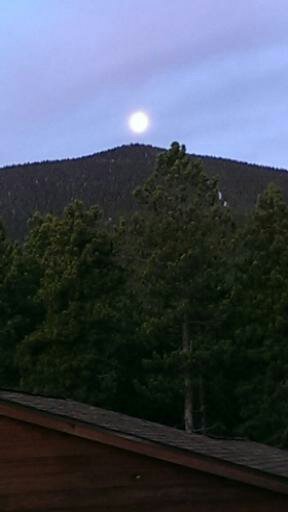
This morning, as I walked up the stairs to the loft, the full Mountain Spring Moon sat atop Black Mountain. It’s silvered white contrasted with the bulky green of the mountain. Birds chirruped, a cool breeze blew through the Ponderosas. And it was otherwise quiet here on Shadow Mountain.

The snow has uncovered emerald patches of moss against the tan-pink rocky soil underneath the pines. Small tufts of grass have begun to green and the Bearberry, an evergreen groundcover, has toned up its color. All around us the Rockies announce, in ways still subtle and nuanced, that wonder of the temperate zones, spring.

Yes, there are the more metaphorical announcements, pesach (Friday and Saturday) and Easter (today), and they do remind us, in their convoluted way, of new life, life saved by the turning of the Great Wheel and the power of the true god, Sol.

This is the moment promised in the barren days of deep cold when the Winter Solstice gave notice that once again light would triumph over darkness. Then the days began their gradual lengthening, a process about halfway done at the equinox, but done enough that Sol’s waxing power shakes the slumbering plants and animals. Grow, move, live.

The Great Wheel turns, turns, turns. It will keep on rolling through the sky until at the Summer Solstice, when light reaches its moment of greatest advance, the balance will change again, the days growing shorter, the night beginning to expand.

Getting There

Spring                                             Mountain Spring Moon

To get to the seder we left Conifer at about 3:30 and drove into Denver, ignoring I-70 traffic, “that I-70 mess” as our mortgage banker called, we stayed on Hwy 285 to Monaco and drove up through the city from south to north. This has the additional advantage–to my sensibilities–of seeing the city as it changes from southern suburbs to its northern most neighborhoods, passing on the way through an area with streets named Harvard, Yale, Bates, Vassar, then Wesley and Iliff. This last is also the name of a Methodist seminary located on the campus of Denver University.

Going further north Monaco bisects the Cherry Hill neighborhood, a 1% enclave. Further on housing changes from low rise apartment complexes and condominiums to ranch style, one story smaller homes, but with big yards. Then Monaco becomes a four-lane boulevard with a park-like central strip and brick homes, some resembling small castles, others futuristic. Here the flowers bloom. Finally, we get to Martin Luther King, which extends to the eastern edge of Denver through the Stapleton new urbanism development. But we’ll turn on Pontiac, well before that.

On Pontiac we enter a predominantly African-American neighborhood, a couple of blocks west of Quebec, formerly a boundary street for the old Stapleton Airport and along which hotels were built to accommodate air travelers. Behind the hotels grew up a community filled with one story homes with little square feet and often desperate looking lawns, sometimes littered. It includes, too, the same homes with neatly groomed topiary, lush grass and, on Jon and Jen’s block, some older two-story homes, residue of an era before the airport was built, probably of an era before Denver reached this far toward Kansas and Nebraska.

Jon and Jen’s home was, according to house lore, originally a residence for a local farmer. Could be. They’ve done a lot of rehabilitation, adding on a new kitchen and dining area, plus a bedroom for themselves above. Jon’s done the bulk of the finishing work including tiling and plumbing two bathrooms. Outside Jon has several garden beds, fruit trees, a grape arbor, a tree house and a work shed where he produces hand-built skis.


Tourists

Spring                                   Mountain Spring Moon

IMAG1001Gabe and I had an adventure yesterday. We went to the Agro Mine Tour, ate lunch at Beau Jo’s Pizza in Idaho Springs and finished off the day with a soporific soak at the Indian Hot Springs, also in Idaho Springs.

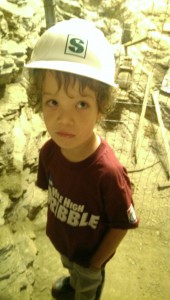
The mine tour itself is a cheesy, tourist-trappy thing with a clunky video, corny presentations and a self-guided tour after that. Still, the Double Eagle Mine, Gage is at its face (end) in this photo is remarkable in that it was dug by hand, by two men over the course of one year. About three hundred feet long, maybe five and a half feet tall and about 4 feet or so in width, it’s a monument to persistence, if nothing else.

The rest of the tour focuses not on a mine, but on the Agro mill, which in its prime, produced $100,000,000 worth of gold when gold was at $18-35 an ounce. It was fed by the Agro tunnel, a 4.5 mile tunnel dug through solid rock to remove waste water from various mines and to create a small railroad to deliver ore buckets to the Agro mill.

The Agro mill closed in 1943 when, on the last blast of the day, four unlucky miners IMAG1000dynamited a wall holding back water filling up an abandoned silver mine. The resulting flood geysered water from the tunnel for 9 hours. In addition to killing the miners the flood weakened walls and caused cave-ins along the tunnels length making the railroad tracks no longer usable.
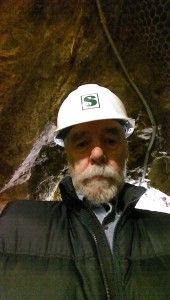
The mill itself went down in stairstep like levels since most of the work proceeded through the aid of gravity. The Agro tunnel fed ore in from the top of the mill and the processing went in stages toward the bottom. A structure made of wood it looked like an unsafe place to have worked.

Idaho Springs is about 30 minutes outside of Denver to the west and well into the mountains. The Colorado Mineral Belt, which begins in the San Juan Mountains in the far southern part of the state, makes an arc up through Leadville and finds its terminus just a bit further north from Idaho Springs. Along this arc lie most of the mines in Colorado, many of them producing, like the mines the Agro Mill serviced gold, silver, copper, lead and zinc. Some have molybdenum and other metals. There’s a big, working molybdenum mine outside of Leadville.

Idaho Springs is a tourist town, primarily, located on either side of a long main street paralleling I-70. It has some residential housing, but not much. Service stations, inexpensive motels, restaurants, curio shops, a knife shop, a hardware store which sells gold panning supplies, that sort of thing.

And the Indian Hot Springs. The facilities, both the main building and the adjoining motel, saw their better days many years ago. The springs, though, deliver. Gabe and I swam in a large pool of water, 100 degrees +. There are, too, hot springs caves, a men’s and a women’s cave where clothing is optional.  Kids under 16 are not allowed in the caves.

After all that, it was back to Denver and a quick exit so Grandpop could beat the rush hour traffic on the way home.


Born To Be Wild

Spring                                 Mountain Spring Moon

In late April, early May I will attend my 27th retreat with the Woolly Mammoths, this year in Ely at the YMCA’s Camp du Nord. Often we have a theme and I suggested the following:

Been thinking about topic and theme. Seems like Ely area cries out for considering the wilderness, the wild within and without. What does it mean to be wild? In your life? In your heart? In and with your passions? Does wildness have anything to say to the third phase? How does wilderness feed us, heal us? Why? Another aspect of the same idea. What is to be human and wild? How do humans fit into the wild? Do we? Can we? It seems to me this is much of what Will Steger has dealt with.

As I’ve begun to consider these questions, take them into my heart, my civilized and my wild heart, they’ve begun to pull information out of the surrounding atmosphere. As often happens once we focus on something.

One source that has been prodding me over the last week is a book, The Great Divide: A Biography of the Rocky Mountains, by Gary Ferguson. In the first chapter on Mountain Men comes this observation. Richard Slotkin, an American studies professor at Wesleyan University suggests that a main theme of early America was the shredding of conventional European mythology and getting to a more primary source, the “blood knowledge” of the wilderness. Since was the time of Emerson and Thoreau, too, both of whom were instrumental in the turn away from European influence and toward development of American letters, American thought, American literature and who were, again both, focused on the natural world as a source of inspiration, it seems this tendency to turn our back on “civilization,” whether European then, or decadent American late-stage capitalism now, and look to the wilderness for guidance is an integral aspect of the American character.

It may be less so now than then, but nonetheless, it endures. Look at the heritage of John Muir, Aldo Leopold, the outdoors ethos of Minnesota, Colorado and Alaska (to name state cultures I know), the idea of the West.

In this same chapter Ferguson counterpoises the Easterners romanticization of the mountain men as true individuals living with unfettered freedom with the civilized and European inflected culture of the East Coast. This was true, he says, throughout the 19th century. In fact, many of the mountain men worked in companies of 20-30, with some trapping, some hunting, some cooking, some taking care of supplies and pelts. They also tended to travel with their families and were surprisingly well-educated. About 1/5 of the mountain men left memoirs and many were fluent in both Latin and Greek.

I mention this because when our gaze turns toward the Boundary Waters Wilderness, the Rocky Mountains, the Sierra Nevada range or the expanses of wilderness in Alaska, to mention only a few of the wild areas in the U.S. alone, we often look toward them as places of healing, zones where civilization can be shed, as mystical bounded lands within which magic of a sort is still possible.

In fact though these are simply places where the hand of civilization has been light-though not absent. Witness acid rain, the extinction or near extinction of apex predators, and now the slow creep of climate change. And the need for a word like wilderness, the notion of wild occurs only when its dialectical opponent, civilization, has become ascendant.

So, to consider the wild in our hearts, in our lives, in our country we need also look at how civilized we are. What being civilized means. What needs civilization meets that wilderness does not and the reverse. We must also consider that the dynamics of these questions are bound up, in a particular way, with the American experience, with our sense of who we are as a people and a nation. It is not enough, in other words, to imagine the wild heart, but we must also attend to its gilded cage. It is not enough to seek the blood knowledge of the wilderness, but we must also attend to the context, our everyday home, where that knowledge has been lost.

Mountain Weather

Spring                                    Mountain Spring Moon

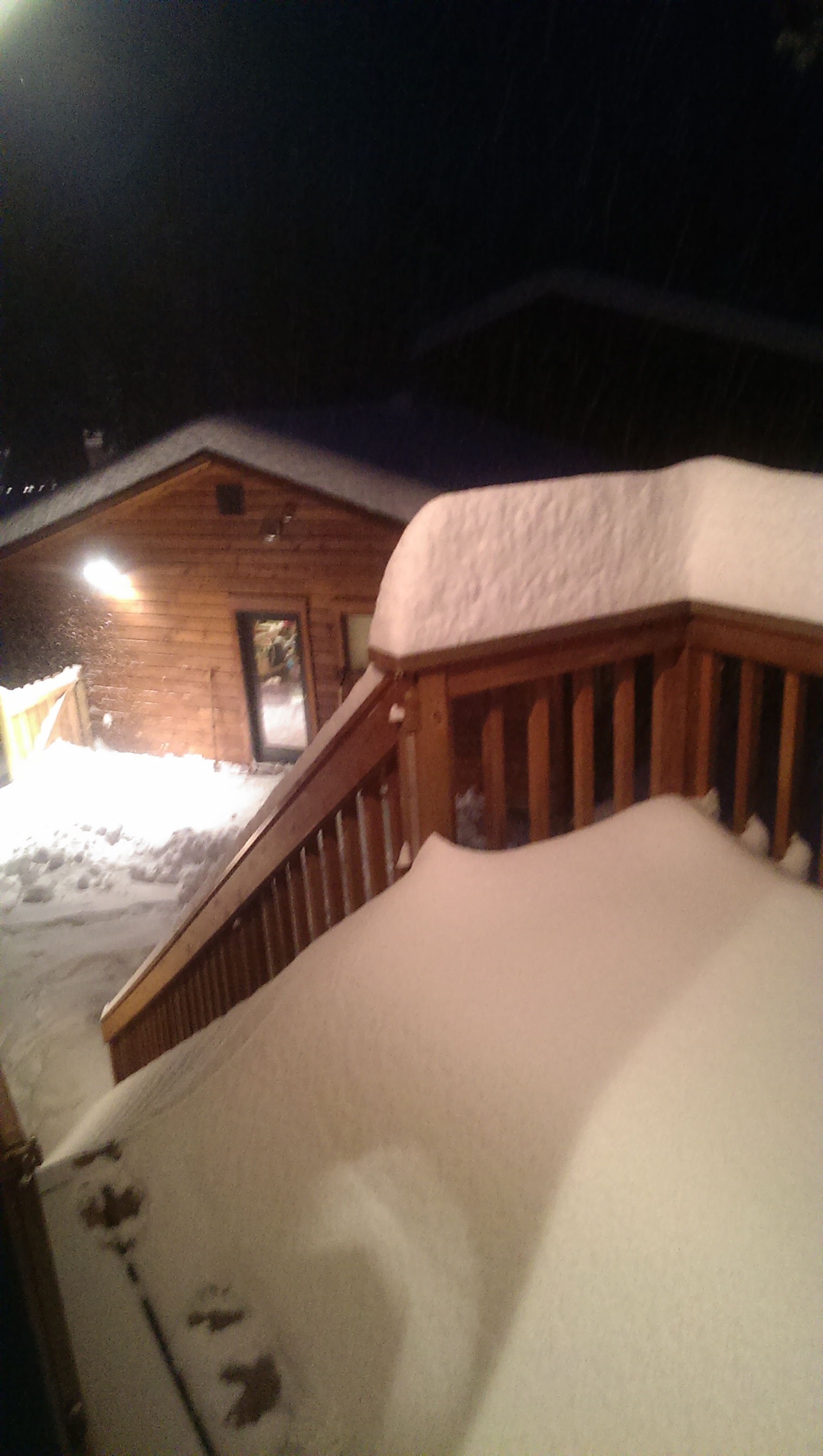
This weather. When I came up to the loft at 6 am, it was cool, but clear. When I went downstairs for breakfast at about 7:15, there was about an inch of snow on the deck. It’s thick, white light flakes falling now, coating the branches of the Ponderosas and collecting, again, on the deck. I cleared it about 15 minutes ago.

Whatever happens will not be a problem because the temps will rebound into the 50’s and 60’s starting tomorrow. When I asked Kate what were the things she liked most about living here so far, among them she said, “The weather.” The weather, which I also like, has surprised me the most.

In Flight

Spring, Mountain Spring Moon.

The Latin work has begun to change, moving toward more careful, yet faster translation, a new novel is underway and my exercise program has altered. So, too, is this blog undergoing change. I don’t anticipate much difference in the work I do here, but the form needs to reflect a new reality, Colorado home.

The mountains, the plants, the animals of this Western state press increasingly into our minds: scissor-tailed flycatchers, the fat fox, mule deer, mountain lions, Ponderosa and Lodgepole pine, Shadow Mountain, Black Mountain, Mt. Evans, Conifer Mountain. The drives into Denver, to Evergreen, to Aspen Park, toward the Kenosha Pass.

When the travelers have settled, the way will appear.

Mountain Weather

Imbolc                                                Mountain Spring Moon

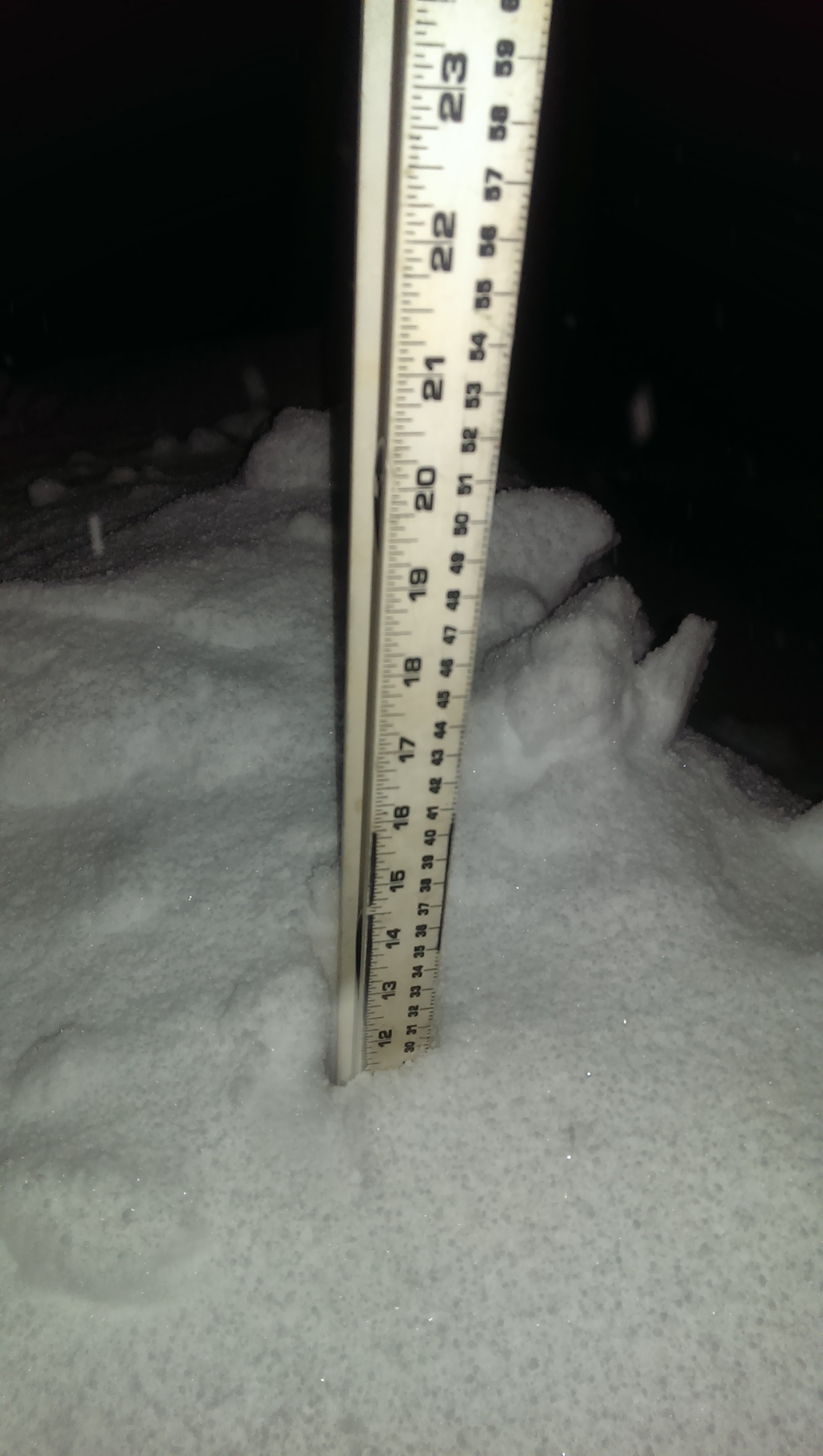
5-8 inches of snow for elevations in the front range above 8000 feet. That’s us. One way they tailor weather forecasts out here is by elevation. Often we get a forecast for 6,000 to 9,000 feet. That’s basically foothills, but includes those of us who live further back and higher than most of the foothills. The forecasts then get further segmented by north, central and south. We’re in the central Front Range, and at 8,800 feet on a 9,000 plus mountain and in the company of others that are 10,000 plus we’re in the mountains.

Weather forecasting out here, especially when it concerns snow and other water related events, is a matter of tremendous moment. The weather impacts ski areas, a significant part of the state’s tourism budget, but more importantly it determines, in winter, the depth of the snowpack. Not only does the Colorado snowpack directly affect the state’s regional water availability, but it also decides the fate of the Colorado River which provides water to the thirsty southwest and southern California, especially L.A.

If we’re gonna get our 5-8 inches though it’s gonna have to scramble. The morning’s snow has already melted.


Ponderosa

Imbolc                            Black Mountain Moon


OK. About those lodgepole pines. Turns out they’re actually ponderosas. Ponderosas split at the top while lodgepoles go up straight like a lodgepole. So Black Mountain Drive is also Ponderosa. Cue the theme music. The bulk of the pine beetle infestation has been among lodgepole pines though Holly said yesterday that they have begun to jump to Ponderosas, too.

As Goya says in his etching, Anco impari. Still learning.


Off to the Wildflower Cafe

Imbolc                                             Black Mountain Moon

Drove down Shadow Mountain on Brook Forest Drive. We wondered what it will look like with the snow melted, gone. The mountain scenes change much more often than I would have thought with snow, ice, hoar frost, melting, fog, early morning mists and evening. We have three quarters of a year yet, the Great Wheel yet to turn through spring, summer and fall. There will be green, flowers, dry dusty days with fear of fire and times of aspened yellow.

On to the Wildflower Cafe where we learned that Christa, the tall blond who now recognizes us and brings us coffee right away (we’re their first Saturday morning customers), worked as a bartender at Lord Fletchers for a couple of years while her sister lived in Waconia. The sister moved to Colorado and so did Christa. Minnesota connections abound here: the park ranger for the Pike National Forest from Hastings, a neighbor here from the ‘burbs of Minneapolis. Others whose particulars I don’t recall.

Back up Brook Forest Drive in the oncoming morning, a fierce sun appearing every so often through a notch in a mountain or a small valley, then back into the shade, driving through the Arapaho National Forest.

Make Choices. Live Them.

Imbolc                                            Black Mountain Moon

P1020952750Selling the house in Andover. We’ve put our best effort into this sale and so far? No offers. Lots of lookers, but no buyers. It’s been four months since we closed on Black Mountain Drive which means for those four months and now a fifth, March, we’ve been paying two mortgage payments. Warren and Sheryl did it for several years and we can sustain it, but we don’t want to.

The longer it lingers, since it has a certain amount of our assets tied up, the leaner and tighter our budget becomes. Not unexpected, but not pleasant either.

There was risk in buying here before we sold the Minnesota house, but it was one we took with our eyes open. I’m glad we made the choice. This house fits us so well. Kate did a great job in finding it. Moving first simplified, by a lot, the whole process of exiting 153rd Ave. NW. And, we got to start our new life here in Colorado.ruthandgabe 86

An interstate move is expensive under any circumstances, especially when you have 20 years of belongings to move. Though we reduced by about a third, we still had a lot to move. The final tally, of course, is not in yet, but even when we add it all up, it will have been worth it.

Why? This was the time to move in terms of our health. We’re still healthy enough to establish a new life. And, moving to Colorado allowed us to accomplish two goals with one move. The first, being closer to the grandkids, was both about seeing them more often and their ages, Ruth, 8, and Gabe, 6.  As with our health, this was the time to move to be part of their lives while they still tune into grandparents.

IMAG0977The second goal we accomplished was to move into a place of great natural beauty with space for our four dogs and our mutual creative work. Living in the Front Range of the Rocky Mountains means we have a home where the eco-systems vary by altitude and the altitude varies a lot. It also means spectacular vistas, interesting weather and wildlife.

So, we chose and now we live with the choice. Happily.