Category Archives: Humanities

Kairos

Imbolc                                                      Hare Moon

A bit more on an old topic, inspired by thinking about Jenkinson’s remarks that appear below.

The humanities are important as just that, the human forming portion of our educational deposit.  Over the millennia, stretching back to the time of gods emerging from the deserts of the Middle East and continuing right through the poetry and literature and painting and sculpture, the movies and television and games, the sports and horticulture and domestic arts of our day, we have had to grow into our lives, into our identity as human beings. It is not easy, but it is the most important task we have and the one which the family, the schools, our societies and cultures exist to engage.

This is not an argument for the humanities over science, technology and mathematics.  Far from it.  We have needed and will continue to need the valuable insights that come from deep thinking about the atomic structure of things, the hard rock science of the earth, the softer touches of the biological inquiries and the neuroscientific and all the other forms of scientific endeavor with which we humans engage.  But consider the difference in importance between raising a boy or a girl and lifting a rocket ship to the moon.  Which matters more?

It is not in the theory of evolution or in the biological sciences or in matters astronomical that we find the answer to such a question.  Even though we often pretend it is in this insecure age the answer is not in the psychological studies.  No, the answer to a question of value, of significance, of which is more than this lies only in the realm of culture.

The most important task of our time is said simply and defined humanistically, but requires the sciences in all their potency to finish:  create a sustainable human presence on this earth.

Why is this most important?  Because if it is not accomplished, the earth, no matter our scientific prowess, will scour us from her face.  She will make the thin layer of our habitation, from maybe 6 inches below the surface of the soil, to maybe 12 miles or so above the earth-the troposphere where most weather occurs-outside the parameters necessary for our existence.  That is, as the biologists are found of saying, an extinction level event.

So we are at a moment of kairos, a greek word meaning the opportune time.  Paul Tillich a theologian of the last century saw kairotic moments as “…crises in history which create an opportunity for, and indeed demand, an existential decision by the human subject.” Wiki His clearest example from the mid-point of that bloody hundred years was World War II, but even WW II and WW I put together do not equal the crisis we face now, a kairotic moment which, as Tillich said, demands an existential decision by us all.

(damaged relief of the Greek god Kairos of 4 century. BC)

The will and the skill to make that decision, a decision for or against our children and our grandchildren’s future, lies not in the sciences, but in the humanities.  It is in our sense of who we are as a species, as a being with a history, that we will find what we need to decide.  And, contrary to many, I am now convinced that the biggest barriers confounding our ability to make a non-suicidal decision lie in the realm of governance, a thoroughly humanistic endeavor.

Strip away those disciplines that force us to consider our humanity and we will be left with the calculus of Malthus.


Coming Up in March

Imbolc                                                                      Hare Moon

Looking down the month toward our 24th anniversary (Monday) and the date I’m wheels 1000Kate and Charlie in Edenon the road for Tucson (the 18th).  24 years with Kate and our relationship improves like fine wine, gaining more nuance and depth, more body with each passing year.  This year we return to the Nicollet Island Inn for dinner, the spot from which we launched our honeymoon.  As spring rolled forward in March of 1990 those three weeks in Europe were as good a beginning as the marriage itself. Next year we’ll celebrate our 25th anniversary at Mama’s Fish House on Maui.

The Tucson trip grows closer.  These rolling retreats, as I like to think of alone time behind the wheel, are really just road trips.  Road trips are part of the American way, peregrinatio updated for the age of the internal combustion engine.

This one of course has its focus self discovery, focus, personal deepening so it will have a more spiritual note, but it will also include my usual visits to spots of natural and historic interest.  Among the possibilities are Carlsbad Caverns, the Saguaro forests, a state park or two in Arizona, the Sonoran Desert Museum, Mt. Kitt, Chaco Canyon, Joshua Tree National Park (probably not, but it’s within reach) and a second visit to the Arbor Day lodge and farm in Nebraska City, Nebraska.

Chaff

Imbolc                                                              Valentine Moon

Greg had to shift our work tomorrow to next Friday.  This morning I plowed through 7 verses in 40 minutes.  That’s getting closer to the pace I want.  13-16 a day.  In fact, with that pace, two sessions the same day would get me there.

This is all chaff.  I know that.  Who cares whether an amateur succeeds in making what will probably be a poor translation of the Metamorphoses? Nobody. I care. And that’s what matters to me, but I’m not ignorant of the global insignificance of this work.

Same with the novel.  Suppose it sells, does well.  More chaff.  If it doesn’t.  Chaff. Working on climate change.  Closer to wheat, less chaff.  Still, my single contribution?  Mostly chaff.

Why keep at any of this?  Because it is what I’ve chosen to define my ancientrail.  I don’t believe any of us have another path open to us.  It’s either choose or have it chosen for you.

(Eleusinian mysteries)

Oh. Yeah. I Remember That.

Imbolc                                                                    Valentine Moon

A few days back I wrote this post.  In it I admitted my yearning for the mystical, the mysterious, the contemplative; but, the metaphysical superstructure for them had been stripped away. (by me.  and for the most part happily so.)  Those impulses, partly stirred by the long, cold winter and its isolation, welcome, but draining at the same time, have been niggling away at me for some time.

(Progoff)

Then, I remembered.  I know how to get those elements back in my life.  The Ira Progoff Journal Workshops. I’ve done two of these, the three part series.  I’ve included some introductory material on them below.  Progoff was a Jungian analyst who worked over his career to develop a means of self-work rooted in Jungian method.  His efforts produced the Intensive Journal ,Process Meditation and these workshops.

Here’s what I like.  The work is yours, for you and reviewed by no one.  It’s a method, which I’ve used off and on, for many years.  As some of you know, I was in Jungian analysis, also off and on, for many years.  That means the worldview behind Progoff’s method reaches into deep work I’ve already done.

There are no guru’s here, no dogma, no path other than the ancientrail of self-wisdom. There’s no follow up, no encouraging you to do more.  Yet, there is a deep passion for the work individuals do on their own through Progoff’s methods.  It fits me and I’m glad I remembered it.

In fact, I’m headed off to Tucson, Arizona in late March for a six-day retreat to do all three workshops.  There will be, too, side trips to Carlsbad Caverns, Chaco Canyon and grandaughter Ruth just before her 8th–no longer required to ride in the car seat–birthday.  Ah.


Introduction to the Intensive Journal Program

Experience a life-changing process to give your life greater direction, vitality and purpose. Developed in 1966 by Dr. Ira Progoff, our nationally-recognized program has helped 175,000 people lead more fulfilling lives. Discover resources and possibilities you could not have imagined. The Intensive Journal method can be your honest friend in the creative process of shaping your life.

Article 1: The Intensive Journal Process: A Path to Self-Discovery
by Kathy Juline
Article 2: The Write to Fulfilling Life: An Interview with Ira Progoff
by The New Times
Article 3: The Way of the Journal

How can you benefit from this method?

  • By using an integrated system of writing exercises. It’s much more than a diary.
  • Gain insights about many different areas including personal relationships, career and special interests, body and health, dreams and imagery, and meaning in life.
  • Apply fresh approaches to access your creative capacities and untapped possibilities.
  • Work in total privacy. Neither you nor anyone else will judge or analyze your life.
  • Use a method that is without dogma. The Intensive Journal method is a process that can be used by people of all different backgrounds, interests and faiths.
  • Attend workshops at leading centers for reasonable prices.
  • You do not have to like to write or be a good writer. You are the only one who reads what you write.

Part I: Life Context (LC) Workshop: Gaining a Perspective on Life

Develop an inner perspective on the movement of your unfolding life process. Gain greater awareness of the continuity and direction of your life as it reveals what it is trying to become.

Generate insights about major areas of your life, including personal relationships, career and special interests, and body and health. The dialogue process provides a unique way to gain feedback and momentum as you deepen your understanding of these areas.

Part II: Depth Contact (DC) Workshop: Symbolic Images and Meaning in Life

Deepen your experience as you focus on the exercises in the second half of the Intensive Journal workbook. Learn how to use Progoff’s unique non-analytical method to draw forth messages from you inner symbolic experiences which can provide important leads in your unfolding life process.

Using Process Meditation™ techniques provides specific ways of developing your spiritual process in the context of your entire life. Explore experiences of connection that had significant meaning, gain insights about your ultimate concerns, and explore major themes in your life. Progoff’s advanced meditation techniques provide an avenue for greater reflection.

Part III: Life Integration (LI) Workshop/Journal Feedback™ Process: Integrating the Life Process

Progoff said the Journal Feedback process is the “essence of the Intensive Journal method and one of my main contributions.”

Experience the cumulative dynamic process created from working with material in one workbook section and how it can lead to entries in other related areas. This progressively deepening process generates an inner momentum and energy as you apply Progoff’s non-analytical Journal Feedback techniques. Your workbook becomes an active instrument as you approach situations from different perspectives.

New awareness and growth become possible as you realize connections between diverse areas. You are drawing your unfolding life process forward as you move toward greater wholeness and integration.
Passing Another Mile Post: 39,195,000,001

Imbolc                                                                Valentine Moon

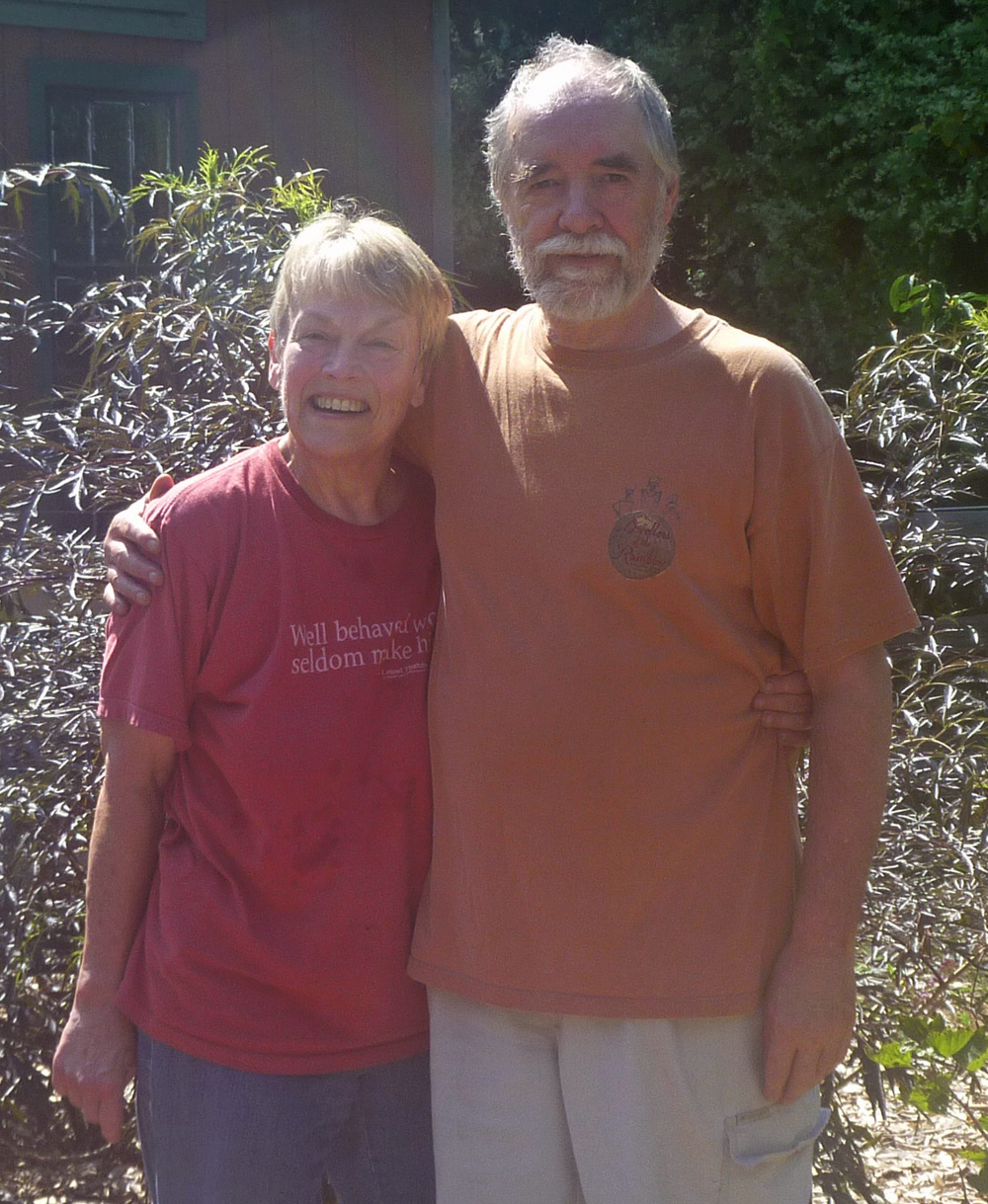
Tomorrow night Kate and I head over to the Heartland Restaurant, a place I’ve wanted to IMAG1288try for some time.  The occasion is my 67th birthday.  The odometer clicks over then to 39,195,000,000 miles. Getting to be a high mileage vehicle.  Won’t get much at trade-in.

(aging man shoots selfie.  kicked off facebook.)

When I posted about Sid Caesar’s death yesterday, I referenced live black and white television as a generational barrier.  Made me wonder what others I’m on the other side of.  Dial telephones.  Telephones with wires.  Telephone poles, too, I suppose.  Gas prices under twenty-five cents.  In loco parentis.  The draft.  Legally segregated schools.  Cars without air bags, computers, cruise control.  Organic food.  Genetically Modified Crops.  Round Up.  The moon landing.  Kennedy, King and Malcolm X.  Drive-in movies. Available abortions.  Housewives.  Small town newspapers.  A total closet for gays.  Pre Super Bowl. Home milk delivery. I’m sure any of you could add more.

And yet.  There is still infancy, childhood, adulthood and old age.  We still breathe and procreate and eat, just as humans have done since the first homo sapiens emerged from the hominid line.  We still love, experience joy, delight, anger.  Injustice frustrates us, just as it has humans in community in all times.

The most essential, the most fundamental parts of our humanity remain regardless of time or culture.  Yes, their expression and their understanding have particular nuances shaped by era and culture, but the fundamentals remain.  In no time have we been immortal, remained children or been passionless.

We have never lived in any but the present moment.  We have never been other than on our own in our inner lives.  We have never been able to know the real inner life of another, so our lives have always included depth and mystery.  We have never been other than a part of the natural world and we have never been other than dependent on it.

So my birthday, any birthday, wraps all this up and celebrates it, one person at a time.  I’m almost past the 39,195,000,000 mile post and tomorrow morning at 9:30 am or so, I’ll tick over to 39,195,000,001.


Why Write

Winter                                                                 New (Seed Catalog) Moon

Chronicles and manuscripts were given due consideration during Mughal reign in India. Here is an excerpt from Ain-i- Akbari, book by Abu’l Fazl, courteir of Mughal King Akbar*, on importance of writing:

The written word may embody the wisdom of bygone ages and may become a means to intellectual progress
The spoken word goes to the heart of those who are present to hear it .
The written word gives wisdom to those who are near and far
If it was not for the written word, the spoken word would soon die, and no keepsake would be left us from those who are passed away.
Superficial observers see in the letter a dark figure, but the deep-sighted see in it a lamp of wisdom(chirag e shinsai)
The written word looks black, not withstanding the thousand rays within it, or it is a light with a mole on it that wards off the evil eye.

*Akbar (IPA: [əkbər]; 14 October 1542 – 27 October 1605), known as Akbar the Great, wasMughal Emperor from 1556 until his death. He was the third and greatest ruler of the Mughal Dynasty in India.  Wiki

Hannah Arendt

Winter                                                                       Winter Moon

Hannah Arendt.  Here’s a movie that will challenge you.  It takes a particular moment in the life of this famous philosopher, the moment when she reported on the trial of Adolf Eichmann for the New Yorker, and opens it out into the massive controversy that followed.

It was in her coverage of the Eichmann trial that she coined the term “the banality of evil” based on her observations of Eichmann as an ordinary man.  The controversy that embroiled her ensued with the publication of the New Yorker Article.  It contained 10 pages in which she points to Jewish leadership as implicated, by omission, in the Holocaust.  She was damned as a self-hating Jew and a blamer of victims.

This movie shows her as a courageous, thoughtful and brave intellectual, unafraid to speak her own truth and unflinching in her analysis.

A difficult movie in some ways and certainly not thrilling, but important.  I recommend it.

Out of Eden

Samhain                                                             Winter Moon

Friend Mark Odegard mentioned the website Out of Eden Walk.  It is now listed among my links under the category Ancient of Trails.  Here’s the map showing the route for this seven year jaunt.  The website is worth seeing.

“If you want to walk fast, walk alone. If you want to walk far, walk together.” — African proverb


A New Beard Model (I caught Darwin.)

Samhain                                                            Winter Moon

“…the Penn survey found that in the United States and developing countries alike, most Coursera students were well educated, employed, young and male.”  NYT

(Whitman.  My new beard model.)

I have it half right.  If you’re retired, a self-guided learner and expect challenge and high quality, then MOOC’s are perfect.  In addition the cost is favorable.  They’re free and can be taken with no driving on your own schedule.  Yes, there may be some expense for books, but if you’re a self-guided learner already, what’s another book or two or three?

As the quote above shows, the learning communities, usually in the tens of thousands have a predominantly young makeup.  This is invigorating to me.  Let’s me see what the next generation’s up to.  O.K.  Maybe it’s the generation after the next generation.

Of course, you have to enjoy structured education.  I don’t always, but when I’m taking only courses that address my interests, as opposed to those of a curricula, I find the upside of considered readings and condensed material in lectures suits me.

If my dream were to manifest in this realm, there would be enough variety of courses to allow a college major’s depth and breadth in a particular discipline.  Right now they’re very hit and miss.  Greek Mythology, ModPo, Modern-Post Modern and History for a New China, the MOOC’s I’ve taken, are humanities courses, but there is no way to follow any of them with narrowers courses, say in Homeric Epic, or Whitman, or the Industrial Revolution or Early Dynasties of China.  In this sense the MOOC experience is less than satisfying.

That only amounts, however, to wishing that a very good thing was better rather than a true critique.  Keep’em coming, Coursera and EdX.  My computer’s on.


In the Palace of Forgotten Memories

Samhain                                                        Winter Moon
Reading a good book about memory, one that Mark Odegard, Ode, recommended, Moonwalking with Einstein.  It’s an excursion into the world of memory champions, or Mental Athletes as they call themselves.

It has brought me back again to the notion of the memory palace.  I first encountered this idea in The Memory Palace of Matteo Ricci, a story about the first Jesuit in China by Jonathan Spence.  It struck me then as important, worth pursuing, but I didn’t do it.  Don’t recall why.

Now I’m thinking I may apply some of these techniques to Latin and poetry, two areas of great interest to me where memorization could make some difference.

In very brief a memory palace is any visual structure you use to “store” items you wish to remember.  A memory coach in the book suggests spending several weeks developing your cache of palaces making them as gritty and as visual as you can.

In my case I chose first 419 N. Canal in Alexandria, where I lived from age 12 til age 17.  I’ve gone on to recall First Methodist Church, the MIA, the Times-Tribune offices, our current home, the Walker, the streets of Alexandria, the Nicollet Mall, the Stevens Square Neighborhood and the West Bank.  Any structure (doesn’t have to be a building) will work.  Vegetable garden, orchard, mountains…all would work.  311 E. Monroe Street will be in there, too, as well as that neighborhood.  I’ve not gotten very far along on this part, but I will.