Category Archives: Garden

Outdoors

Fall                                                                              Samhain Moon

The mid-point of October and we’re almost done with gardening.  We broadcast under the cherry and plum trees today, removing the mulch, taking up the landscape cloth, laying down the fertilizer and spraying the biotill, then replacing the landscape cloth.  After the nap I helped Kate get the landscape cloth back down, then while she rejoined it with staples to the ground, I sprayed biotill on the vegetable garden beds and mulched all of them but the herb spiral.

(Persephone and Hades)

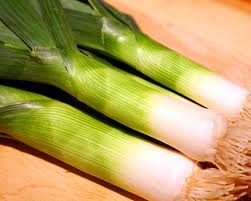
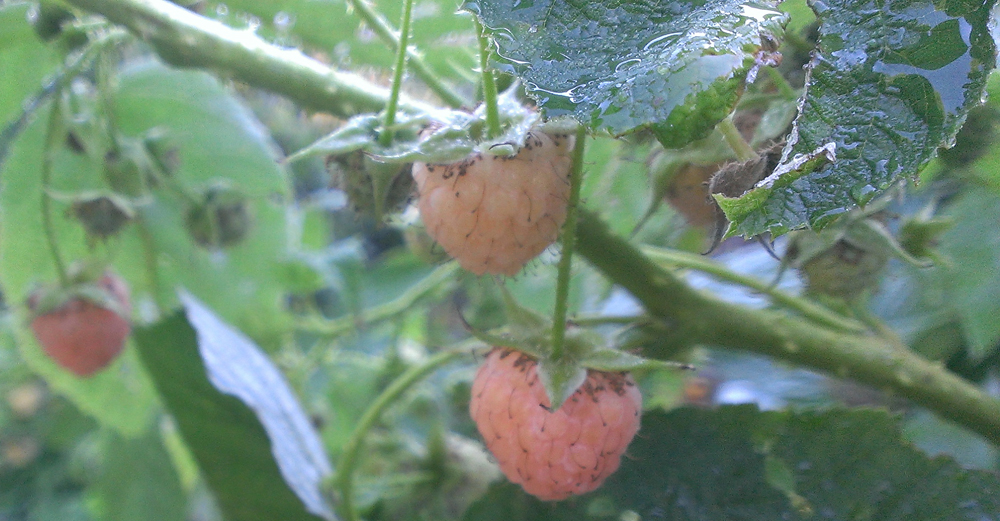
The raspberries, which I picked this morning, are still producing and the leeks await a cooking day when I will make chicken leek pot pies, next week probably.   The leek bed will get fertilized, sprayed and mulched when they are inside while cutting down the raspberry canes, then spraying and fertilizing has to wait until they quit bearing.

This was significant manual labor and we’re both in the weary phase.  A quiet evening leaf tea bowlahead.  Some Latin right now for me.

My new teaware came, a clay bamboo holder for my tea utensils, a new pitcher made of yixing clay with a white ceramic glaze inside and a rosewood tea scoop.  All of this from a shop in Vancouver that has excellent products, The Chinese Teashop.

Leaning Toward the Fallow Time

Fall                                                                        Samhain Moon

Kate got several bales of hay (6) and pumpkins today at Green Barn, up near Isanti.  She saw Louis, who introduced us to his brother, Javier.  Javier has done a lot of work for us and will do more.  The hay will, next spring, go down as mulch over the landscape cloth around the fruit trees.  The seeds in the bales need to sprout and then die back before we can use it, otherwise we spread unwanted plants.

We’ll lift the landscape cloth when we broadcast fertilizer around the trees and spray them with biotill.  It will go back down to continue its function as a weed barrier.  Once we’ve finished this and I’ve sprayed and mulched the vegetable beds yet bare (with leaves from our trees), the produce gardens will be at rest.  With one exception.  The bed in which I plant next year’s garlic crop.

After that attention will turn to bulb planting in the perennial beds.  When that’s done, we’ll celebrate around a Samhain bonfire, welcoming the fallow time to our land and turn our work inside.  Like cleaning up and decluttering the garage.

That will be a big task because it entails dismantling our five stall dog feeding station, used when we had our maximum number of dogs, 7, 5 Irish Wolfhounds and 2 Whippets.

Learning Curves

Fall                                                            Samhain Moon

Gardening has become more straight forward, better results over the last couple of years.  Now, it’s time to turn attention to the orchard.  Here, the trees have just reached their bearing years and began producing multiple fruits.  Up to now, aside from the guild of plants around their base, installed by ecological gardens as a permaculture method for caring for them, I’ve done little except bag the apples.

The permaculture stuff, which has worked well in the vegetable garden, for whatever set of reasons has not worked so well in the orchard.  To get better results I turned this year to International Ag Labs, doing a soil test for the orchard separate from the vegetable garden. I have recommendations.  And today we began the work of implementing.

Only thing is, I had this bright idea last year, lay down landscape cloth, the really good kind, put mulch on top and keep down the grass and weeds that drove Kate nuts over the last couple of years.  Worked great for that purpose.  Turns out though that when I lay down fertilizer and soil drenches for the trees I have to work where their root system extends.  Makes sense, right?

(this graph looks about right to me.  In the orchard I’m at comprehension.)

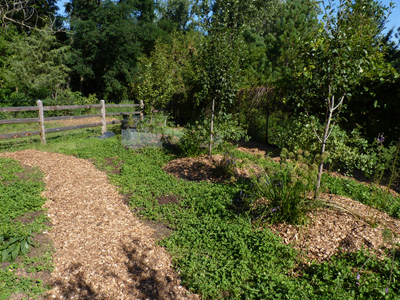
Tree’s root systems extend out about as far as its canopy is wide.  Javier did not lay landscape cloth on the mounds around each tree, but he did put it down under the canopy proper.  I asked him to do that.  Oops.  Now I have to rake the mulch off, back to the canopy’s edge and figure out a way to suppress weeds and grass while leaving open space for the treatments of the soil that I will do throughout the year.  Sigh.

Still not sure what I’m going to do in that exposed ground, but I have a season to consider it.

Samhain for the Vegetable Garden

Fall                                                                                Samhain Moon

While picking raspberries this afternoon, I looked at the garden beds we cleared this week.potatopatch670 There is the suntrap where we had all those tiny tomatoes and the two plants of huge heirloom Brandywines and Cherokee Purples.  The asparagus bed, the little mound still tufted with the green of asparagus stalks, got over taken this year by the exuberant ground cherries that grew and grew and grew and would still be growing if we hadn’t decided enough and pulled them.

South of the suntrap is the first bed in the vegetable garden, one made of logs, made long enough ago by Jon that I’ve had to replace the logs around it already at least once.  This year it had sugar snap peas, cucumbers, egg plants, broccoli, and hot peppers.  It’s had many crops over the 16 or so years its been in place.

Next to it is a bed that we’d given over to dicentra and bugbane because of the wonderful ash tree we allowed to grow large in the garden.  They’re shade lovers.  This year, with the emerald ash borer coming and a long standing desire to open up more sun in the garden, we had the ash taken down and planted this bed with its first vegetable crop in years:  yellow tomatoes and yellow peppers.  They thrived.

When Jon originally built the raised beds, I asked him to be creative, mix up the shapes and the materials.  The first one he tried was made of tin roofing.  It worked ok, but he preferred working with 2×4’s after that.  Now it’s half daisy.  The other half this year had a productive small tomato plant and couple of so-so pepper plants.  I made one obvious mistake.  I planted a pepper to the west of the tomato plant and it never thrived.

The long bed, the extra large bed, this year had beets and carrots, a couple of crops.  It also has a persistent asian lily crop that comes from the short time I used the beds as cutting gardens.  After treating the lilies as weeds (a plant out of place), they have become confined (mostly) to the extreme south end of the bed.

To the east of the extra large bed are two similar sized beds.  The north one this year hadIMAG0955cropped1000 onions and garlic and the southern bed had beets (didn’t do well) and greens (which did).  The leeks are in the long mound west of the extra large bed, doing well, still growing.

Our raspberry patch is up against the fence and behind the wisteria.  Its growth has shaded out a small bed that this year had only a crop of asian lilies.  North of it is the strawberry bed and north of that the herb spiral.

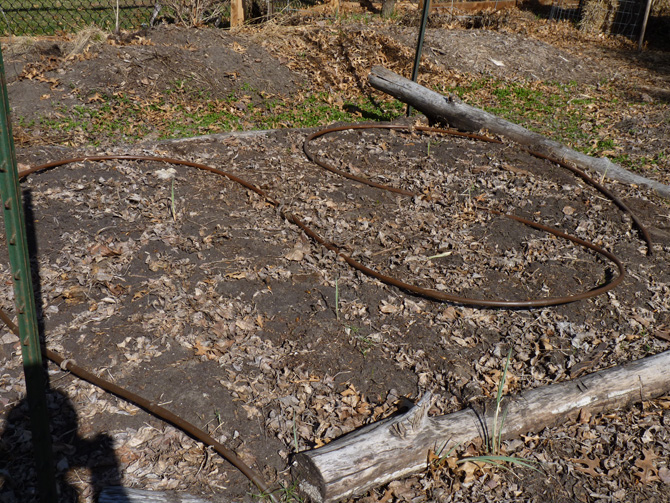
The beds we cleared are the ones on which I broadcast fertilizer last week and they’re now mulched, extra large and two similar sized ones, or awaiting mulch from this year’s leaf fall.  These beds are brown, bare of plant material for the first time since May.  They look bereft, but they’re not.  In the top six inches of soil small colonies of microbes, bacteria, fungi, worms and insects are busy, working together to create a fertile spot for next year’s garden.  It’ll be the best one ever.

Broadcast News

Fall                                                             New (Samhain) Moon

Out this morning early, before the rains come, laying down broadcast in the remaining vegetable beds.  Now all but the leeks, raspberries, strawberries and herb spiral have fertilizer already at work, nourishing the soil critters and spreading into the upper soil layers.  Those remaining are still active beds and will remain so until a heavy frost.  Then, I’ll cut the raspberry canes to the ground, pull the leeks for potpies and Kate will finish the herb spiral.  The strawberry plants will die back and I’ll be able to get the fertilizer into the top soil.

Planting garlic will finish the gardening season.  We still have fertilizer to lay down in the orchard, more ambitious undertaking as I said earlier this week, but I’m sure we’ll get it done in the next few days.  After that the bulbs go in the ground and with the exception of closing up the bee hive, we’ll be set for winter.  Bring it on.

Gotta Get Back to the Garden

Fall                                                                          Harvest Moon

A full day with the garden, spreading fertilizer, working it into the soil, mulching the beds. Also pulled out the tomatoes, ground cherries and peppers while Kate removed the cucumbers, hot peppers and marigolds.  The compost pile looks colorful.

As I worked, I wondered about the significance of our garden for our lives, for the questions around reimagining faith.  At one level it feels like aesthetic statement.  A claim about the beauty of productive land and its products.  At another it embodies our relationship as a joint work, a family project that yields food and time together.  Going against the grain of the modern emphasis on surface and the phenomenal it places us in touch with the under ground, the chthonic and its rich resources.  Too, it puts the natural world into our lives, integrates our life with the seasonal rhythms.  This goes against the modern emphasis on the new and making things new.  Growing food goes back 10,000 years in human history and eating from plants back to the first proto-human.

I wondered today if the post-modern might be a more eclectic era, a time with a willingness to look back into the human past and ahead into the human future with no need for the ideology of reason, fragmentation, the new, yet not being afraid to acknowledge the fruits of scientific reasoning, manufacturing, globalization.  Just putzing as I raked.

Plato

Fall                                                                    Harvest Moon

Kate and I drove out to Plato, Minnesota today.  Picked up broadcast fertilizer for both the vegetable garden and the orchard, plus the concentrated liquids for sprays and drenches. The broadcast fertilizer goes down now, worked into the soil.  Tomorrow.  The rest will be next year, including the nitrogen in the vegetable garden.  Different vegetables, different sorts of nitrogen.

Luke has a building up on the concrete slab Bill and I saw when we were out there in June.  He’s running a small business right now from a crumbling concrete block building. It’s stacked full of barrels and bins, weights and mixing apparatus.  A bare bones operation.  He mails all over the U.S. from Plato.

They missed a shot there in Plato.  Should have Aristotle Avenue, Diogenes Boulevard, Zeno and Anaxamander and Thales Streets.  But no.  Main Street.  2nd. 3rd. Coulda been good.

The fields of corn are dry, most not harvested though there was a cleared field or two.  Orange and green in the landscape.  There were, too, shallow lakes with wind rippled water, a bright deep blue, one with an egret pointing toward the west, white on blue, beautiful.

It takes an hour plus to get to Plato from Andover, a journey from the northern ex-burbs to the far south-western boundary of the metro area.  Each time I hop in the car, drive to someplace like Plato to pick up something, I remember how far away Indianapolis was from Alexandria.  Less than 60 miles.  Planning involved.  Rarely if never done.  Now, to pick up some fertilizer we get in the car and drive further than a trip to Indianapolis.  Because, you see, it’s all part of our area.  Our metropolis.  Our urbanized region.  Strange.

Yet Another Late Learning

Fall                                                                        Harvest Moon

Another late lesson.  Or, perhaps better, a lesson only incompletely grasped, now more fully understood.

Learning, difficult learning, excites me and keeps me motivated.  But.  The brain only has so much patience for stuffing new things in before it tires, eyes glaze over and a slight headache develops.  At least for me.

(Peasants harvesting crops, by Flemish artist Pieter Brueghel)

Over this growing season I’ve discovered that taking a work outside break, a work with my hands or my back break, releases the tension and I can come back to my work refreshed.  I have also found that I enjoy the work outside much more when I understand its value in the total rhythm of my day.  So there’s a virtuous circle here.  Work hard at the desk, then get up and accomplish something manual garden work or changing light bulbs or organizing the garage.


The Garden Nears the End

Fall                                                                               Harvest Moon

Another half gallon or so of red and golden raspberries, the last carrots, the last greens, most of the last beets.  A few tomatoes, mostly yellow and a pepper.  The raspberries keep going, producing new berries faster than I pick them.  The leeks have thickened up and are ready for making into chicken pot pies when I pull them in October.

The sky has that fresh, rain washed look, bright and filled with sun.  Golden and red flecks have begun to show up.  The birch, the euonymus have begun to turn.  The Norwegian maple across the street lit up a week ago.

Our old harvesting baskets, woven reed from Vietnam, have worn out and gotten lost so we bought some garden hods, a U-shape of thick green 1/2″ mesh with a wooden handle and two wooden ends.  This shape and configuration makes it easy to hose off the vegetable.  That’s handy for root crops like beets, carrots and leeks.   It worked as advertised and will see many more harvest seasons.

I Like Getting Old. Patti Smith

Fall                                                                     Harvest Moon

Something’s happening here.  What it is is not exactly clear.  At the end of this gardening year I feel like I’ve finally gotten it.  That is, I believe I now understand how to grow fruits and vegetables in quantity and of high food value. As Kate said, moving her hand in a low but upward swoop,  “Sometimes the learning curve is long.”  And it has been.  Over 20+ years.  Today though I feel good about my gardening skill.

On the writing front I’ve rounded up several agents to query when Missing comes back from its beta readers and has gone through the copy editing process.  I’m deep in the research phase for Loki’s Children, focused right now on the text, Loki in Scandinavian Mythology.  No matter how all this turns out in the matter of publication, I’ve let the inner and outer censors go.  I don’t know how or why, but I freed them and they left.  So now the process is all good.  Research.  Critique.  Feedback.  Submission.  Writing.  All good.

The MOOC’s have retaught me a valuable lesson.  When I’m engaged in scholarship, I’m happy, in my element.  I hit flow most often while learning.  That means the work with Ovid, which begins again on October 4th, is another chunk of the same.  Happiness is a warm book.

Last night I had a dream in which a person ridiculed me for not being spontaneous, being disciplined to a fault.  It bothered me as I slowly rose to consciousness this morning.  Am I so focused on a few things that I’m missing life?  Has my willingness to change directions, chart a new path receded?  Been suppressed by all this?

No.  I don’t think so.  But I’m open to other perspectives.  To me my life is full, rich.  There are friends and family whom I see or communicate with regularly.  There is a creative life partnership with Kate here.  The dogs alone provide many spontaneous moments because dogs live only in the now.  In the past I have initiated change in the world through political action.  Now the action is more at home and in the family.  Seems just right for the third phase.