Oh, My.

Spring                                                                   Bee Hiving Moon

What happened here, this post-easter, post-christian rush of words

The heart does not know itself too well, at least not in words and ideas, especially ideas strung together with a rationale intruding its way among them. As the mind opens itself to the heart’s song, it speaks and in speaking, filters. The filters are syntax, available images, understood and misunderstood concepts, personal and collective history, not as it happened, but as it is remembered. This is the only way the heart can speak its intent, though of course hardly the only way it can show it.

So when the words splash down on paper, or the bits coalesce in the form of letters and words on a computer screen, they are messengers from a kingdom foreign to this culture. Which is not to say that this culture of words and thoughts will necessarily be untrue to the heart, only that this culture is in effect a translation from another form of communication.

It also means that the words and ideas struggle in the mind of the writer, trying on this outfit and then another, wanting to look right, give the true appearance, in clothes authentic to the moment. And, since this is translation, the heart’s voice can surprise the translator, in fact often surprises him. Did my heart really have this frank a brush off of the resurrection? Yes, as it turns out, it did. And had had it for awhile. Just waiting for the right season.

What I’m saying, what we’re saying here, my mind and heart working together, is that most often I have no idea what will be on the page when I begin. Why? Because what you see is an act of translation, of two intimate partners working hard to understand and inflect each other, then create a sentence, a paragraph that gives it all away to any who might happen on it. And I almost never know where that process will take me.

Not Hope, Grief and Agency

Spring                                                                    Bee Hiving Moon

Wanted to say a bit about Paul Kingsnorth, the environmental activist who has given up on activism. If you want to read the NYT article about him, follow the link.

You might be tempted to dismiss his analysis, or you might not want to hear what he’s saying and deny it. But from what I learned in the climate change course recently completed he’s right in an important sense.

The goal identified at Copenhagen is to limit warming to 2 degrees centigrade or between 3.6 and 4 degrees Fahrenheit.* This amount of warming is baked in already.  That is, we’ve already loaded enough CO2 into the atmosphere to ensure it. So, the Copenhagen goal will be exceeded.  The question at issue now is by how much.  See below for a definition of RCP.**

The year to pay attention to is 2050.  That’s the year that the pathways begin to diverge, representing the amount of emissions in that year. RCP2.6 assumes a successful reduction in emissions worldwide of 80% by 2050 and 100% by 2100. This can be done. There are several different pathways that get us there. The problem is the politics of carbon emission control.

Most of the lecturers in the climate change course thought this was not going to happen. That puts us into the range of RCP4.5 to RCP8.5.  4.5C=8F and 8.5C=15.3F. I don’t agree with Kingsnorth’s word ecocide because the plant and animal world will adjust to all of these temperature ranges.  Yes, many species will not be able to adapt, but many will.

Still, and I think this is where Kingsnorth is right, the world as we know it is beyond saving. We will have to adapt and adjust to a dramatically changed reality, a new climate reality that may cause the death of billions of people from starvation, dehydration or heat exhaustion.

I also believe he’s right in saying that we need to accept dramatic change as inevitable and that we need to grieve the loss of our familiar world. Only in grieving will we touch the new reality.

Here’s where I think he’s wrong. There is still time and there are workable strategies that can limit the magnitude of the changes we face. With no action, the up ramp of CO2 that continues to pump into the atmosphere will ensure the RCP8.5 scenario.  Somehow we must combine working through our grief over a lost world that may seem like paradise in another 100 years with our determination to moderate the degree of change as much as possible.

If we stick to the 2C goal of Copenhagen, the world will see failure and failure cuts the nerve of political agency. We need to accept that goal as simply wrong and work now to do what’s possible. The future demands that we do everything we can, only much later will we know how well we did.


*”Fahrenheit (symbol°F) is a temperature scale based on one proposed in 1724 by the physicist Daniel Gabriel Fahrenheit (1686–1736)”… wiki.  Just occurred to me that I didn’t know the origin of the word.

** Representative Concentration Pathways (RCPs) are four greenhouse gasconcentration (not emissions) trajectories adopted by the IPCC for its fifth Assessment Report (AR5).[1]

The pathways are used for climate modeling and research. They describe four possible climate futures, all of which are considered possible depending on how much greenhouse gases are emitted in the years to come. The four RCPs, RCP2.6, RCP4.5, RCP6, and RCP8.5, are named after a possible range of radiative forcing values in the year 2100 relative to pre-industrial values (+2.6, +4.5, +6.0, and +8.5 W/m2, respectively).[2]

Significant People Update

Spring                                                                                 Bee Hiving Moon

Update on the unusual spate of hospitalizations I noted a couple of weeks ago.Gabe at 6

Woollies recovering:  Tom, thumb.  Frank, back. Bill’s good after his day of needles and scans. Granddaughter Ruth who smashed her foot under a teeter-totter, mending.

Today is Grandson Gabe’s 6th birthday.  He’s an earthday kid. We’re going to see him for his birthday party which is this Saturday. I’m looking forward to traveling with Kate.


Hope Dashed

Spring                                                                Bee Hiving Moon

Ovid, Heroides 2. 9 ff (trans. Showerman) :
“Spes (Hope), too, has been slow to leave me; we are tardy in believing, when belief brings hurt.”

Ah. Hope. They were honey robbers, not residents of last year’s colony, my best, my strongest ever. Instead I uncovered an empty hive, all the honey stores eaten, evidence that the colony had lived on a long time, but no bees.  Not in the honey super I’d left on top. Not in the third hive box. Not in the second. Not in the bottom one either. Only foraging bees attracted by the minimal honey that remained.

(Assistants_and_George_Frederic_Watts_-_Hope_ 1886)

I let myself hope yesterday. Dreamed of dividing the colony, setting up my new beeyard with the divide, leaving the parent colony alone in the orchard. But no. I’m sad, feeling a bit defeated. I did everything I knew: mite control, extra honey stores, the cardboard sleeve and the barrier to vermin.  This latter got pulled out and there was some evidence of rodent invasion, but only a bit.

On the other hand, I was tired last year at the end of the bee season. The harvest was taxing. Lifting the heavy honey supers and maneuvering the even heavier hive boxes in the late summer heat had exhausted me. There are things I could have done better, maybe they would have made a difference.  Maybe not.

The feeling tone I have right now is very similar to those two articles I wrote about below. Bees, like the climate and the search for extra-terrestrial intelligence, are under significant pressure and the efforts in recent years don’t seem to have stemmed the problem, in fact it has gotten demonstrably worse.

My analyst, John Desteian, often said, “Don’t get me started on hope.”  The story of Pandora had it wrong after all in giving a patina of good will to the last thing to escape from her box. It may not be all that different from the others.

It’s Beginning in Earnest

Spring                                                                         Bee Hiving Moon

Scraping the mulch off the bulbs today, that scent, you know the one, decayed leaf matter mixed with the soil came up.  It says life is at work here, even in the midst of death. That smell alone brings me out in the early days of gardening. It was there when I raked off the mulch over the beds where I planted the carrots and the beets.

Then, under the leaves are pale green stalks emerging, starved for direct sun, happy to have their cover removed.  They’ll get a deeper green in just a day or two. We’re past the time for freezes of any serious sort now though frost is not only still possible, it’s still likely until around May 10, May 15.

The whole garden will gradually come back into full life.  The spring ephemerals shoot up now and will bloom soon. The carrots and beets will germinate and then in mid-May we’ll drop in the tomatoes, peppers, beans, chard, kale, melons, cucumbers and eggplants.  Meanwhile the fruit trees will bud, then flower, as will the currants and the elderberries and the gooseberries and the blueberries.

If the bees are alive, and I hope they are, they’ll be getting busy.  I’ll have a divide this year instead of a package, which means I’ll have to buy a queen for the divide. If they’re really going.  I’ll find out tomorrow.

The Leaf In Place of The Cross

Spring                                                                      Bee Hiving Moon

Final post on this series.  If you need a symbol of eternal life, let me refer you to the tree leaf and not the cross.  In this 74 degree day I just finished scraping the mulch from bulbs I planted last fall.  The mulch is tree leaves gathered in the same season.

The leaf works hard from early spring until fall capturing sunlight, drawing up water from the tree’s roots and combining them with CO2 in a true transubstantiation, photosynthesis. When the seasonal change indicates to the tree that conditions will no longer be good for photosynthesis, the leaf detaches from the tree’s vascular system and in so doing, its chlorophyll returns to the tree. This is the moment when the leaf changes color, revealing its other pigments.

As it withers from loss of water, the leaf changes color again and eventually detaches from the tree itself. That’s when I pick it up as a mulch. When I apply the leaf to the newly planted beds, the leaves perform two functions.  First, they insulate the bed, retaining the cold into the early days of spring so the earth won’t heave and throw the newly planted bulbs out. Second, they begin to decay and transfer their remaining stores of nutrients and fiber into the soil itself.

In this way the engine of transubstantiation, the leaf, even after it produces oxygen for us to breathe and glucose for the plant to use in its growth, gives up all of itself to the plant community in general, enriching the soil for the next generation.

So the leaf, a most ordinary miracle doer, does in fact what Christian’s claim Jesus can do, that is, give life through their death. You might say that in focusing on the cross Christian’s chose the wrong part of the tree.

All It Requires Is Some Love

Spring                                                             Bee Hiving Moon

Having said all that. (see post below) Reclaiming, celebrating the power of spring’s wonder is an important part of the Great Wheel’s message.  What the motif of the dying and rising god suggests (there is legitimate debate around this idea, but it’s not critical to my point here.) is the obvious. Death is a central fact of the human experience, yet it is a fact shrouded in mystery and pain. What exactly is death?  Not physiologically, but psychologically, spiritually. What does it mean? If anything. What happens after death to the person who dies?

We just don’t know the answers.  This black box characteristic of death makes it so upsetting. Without further knowledge we have to assume that extinction is the basic result. Having had a man die and come to back life with the message that, hey, you, too, can die and still have everlasting life is compelling.  The story alone has carried itself into millions, probably billions of heart, easing the mystery for them.

As I said earlier, I can’t see that it matters much.  Look at it another way, either Jesus did or did not rise from the dead. If he didn’t, well, we’re back where we started. If he did, and it’s the true sign of a loving God, then that same God will not build a doctrinal fence around the afterlife.  It’ll more likely be a heavenly version of y’all come.  We did say he/she was a loving god, didn’t we?

So, I’ll pass on all the paperwork and skip straight to the flowers emerging in my garden. Or, perhaps more germane to the story of rising from the dead, I’ll also tend to what I believe is a living bee colony.  Yes, I went out today and bees were buzzing all around the hive I thought was dead.  Surprised the hell out of me.

Could be honey robbers, but I don’t think so.  I’ll have to suit up tomorrow morning and see. Afternoons are not a great time to check bees.  They’re coming home and pretty protective.

Yes, I claim in my own soul the emergent joy of each daffodil, each tulip, each crocus, each lily, each iris, each fern, each hosta, each pachysandra, each apple, cherry, plum and pear tree, the magnolia, the gooseberries, the elderberries, the currants, the quince, the strawberries and the garlic, all those members of our family here at Artemis Gardens and Hives. I will rise with each of them, spreading out, greeting the sun, creating new energy from the sun, the soil and the water, bursting with a new season’s vitality.

The virtue for me in this celebration is that it requires no dusty tomes of medieval logic, no interminable meetings to decide the color of the altar banners, no envelopes chucked in a metal plate, no weighty hands pressing down in ordination.  All it requires is some love.  Shoulda been enough for the church, too.

Apostasy

Spring                                                                         Bee Hiving Moon

There are certain holidays when a former minister’s thoughts turn to apostasy. Easter is chief among them.  This is the true high holiday of the Christian liturgical year and it is such because it is the resurrection that marks Christianity off from other faiths.  And, yes, I know about the dying and rising gods and how Jesus fits that paradigm. I agree it matters.  Nonetheless, when you put Christianity on the stage with Islam, Judaism, Buddhism, Taoism, Shintoism, the various faiths counted as the Hindu religion, Sikhism, Jainism and whatever I might have forgotten, Christianity distinguishes itself by claiming a man/god who died, then rose from the dead.

It is that unique characteristic that Christians all over the world celebrate on Easter.  The resurrection is not only distinctive, it is central theologically to the Christian claim. Christianity moves on from Judaism at the empty tomb.  But not before.  Until the risen Jesus, Christianity’s story was not remarkable.  There were other would-be messiahs.  Others had followers and claimed miracles.  The teachings of Jesus largely conform to Jewish thought. Even the crucifixion was not remarkable. Other Jews died on the cross, too. This was a common form of capital punishment for the occupying Roman empire.

(George Frederick Watts – Orphée et Eurydice)

No, it is the dying and rising that makes Jesus unique and transformed him into Jesus the Messiah, Jesus Christ.  So, to set this claim aside, at least in its ontological sense, is the worst of apostasies.  And yet that is what I have done. Am I sure it never happened? No. That’s as impossible as being certain that it did. The shift for me came when I realized whether it had happened or not no longer mattered to me.

What do I mean by that? As one trained in Christian history, biblical scholarship, ethics and theology, I began to find Christianity, in all its forms, even its most liberal, simply too narrow. In my years in the Presbyterian Church I had many good friends, participated in many activities that moved justice forward, but I also struggled with church members and congregations over gay lifestyles and rights, the Vietnam War, income inequality and the privileges of white america.

In itself, of course, that back and forth is not unusual.  There were, at the time of my ministry, some 75,000 Presbyterians in the Presbytery of the Twin Cities for which I worked.  The Presbytery went as far north as Pine City, as far west as Buffalo, south to the Minnesota border and east a county or so into Wisconsin.  That there would be widespreads on matters of public policy is not at all surprising.  There were urban/rural differences, liberal/conservative differences, evangelical and liberal theological differences.  All quite normal sociologically.

What became clear over time, at least to me, was that the conversation and disputes happened in a sealed dome, a sort of osmotic barrier that surrounded those 75,000 people when they gathered as the church.  The barrier filtered out those who could not believe in the resurrection, yes, but it also filtered out, and this is more crucial to me, those who would not conform to the various ideological accretions adhering to denominational institutional life.

(Frederic Leighton-The Return of Perspephone (1891))

Here’s an example.  Presbyterians, as Calvinists, were long known for their adherence to predestination, even double predestination. Predestination is a theological form of materialist determinism (a current favorite among some practitioners of hard science) that posits God has determined every thing that happens.  Double predestination so-called took this belief to its logical, yet absurd conclusion. God had determined in advance who would be saved and who would not. This particular barnacle had been unstuck from the goodship Presbyterianism by liberal theologians quite a while back though certain branches of the denomination continue to hold the view.

My former boss, Bob Lucas, a great and good man, often warned against “majoring in the minors.” Within the ambit of the church this means don’t fuss with matters not essential, don’t get into conflict over things that are incidental to salvation, the primary purpose of the church. I think another version of this idea goes: In essentials unity, in all else, tolerance.

My position became that Christianity itself, as a movement, was majoring in the minors. It focused on conforming belief, ethics, morality and culture to the idiosyncrasies of a long gone time.  That is the effect of seeing biblical material as inspired and the church’s early days as somehow foundational, like the American Constitution.  Christianity has expended so much time, wealth, intellectual power and even violence to achieve this conformity, yet a casual step outside that dome, outside the osmotic barrier shows us that the great majority of people need food, medicine, work, public health.  Those are the majors.

(The Osiris-bed, where he renews the harvest cycle in Egypt.)

The minors are matters like the crucifixion and the resurrection.  Why? Not least because their truth or falsity get trapped within human institutions that use them not for the intrinsic wonder and awe they represent, but as chits in the distribution of power.  They simply are not the world altering events they claim to be.

(inanna sumerian goddess annunaki   clawed feet is an ancient way to depict the fact she visited the Underworld.)


Fencing Off Spring

Spring (Ostara)                                                       Bee Hiving Moon

Friend Bill Schmidt found a helpful exposition on Ostara, an early fertility goddess, and her regular appearance in Christian households (among others) at this time of year. Here’s a link to this short, but well-researched piece.  After reading it, an odd thought occurred to me, perhaps because I also read this NYT piece this morning:  Saving Minds, Along With Souls.

The odd thought is this.  The church captured the renewal and invigorating power of spring as a metaphor for the resurrection, then demonized (quite literally) and punished pagan observances of the season, like those related in the linked piece Bill found.  The effect was to put a theological fence around the power of spring in Western culture, confining it within the garden of Christian orthodoxy.

By making church membership and belief a prerequisite for experience its power-through the Easter holiday-the natural celebration of a Great Wheel holiday, a real and joyous one, became dangerous, sanctioned as blasphemy.  The church accomplished this in fact through the burning of witches and the intentional extinguishing of earth focused traditions wherever it spread its missionary power. It accomplished it in theory through making spring only a metaphor for the resurrection.

Enough of that.  A temperate latitude Spring is a wonder, a life renewing, hopeful time when the earth shows that life comes again, and triumphs over the fallow time.  And more.  In doing so it assures life for the human race and all the animal kingdom that absolutely depends on its gentle, but unyielding power. It is an animal’s birthright to gambol when the grass greens and the trees leave out.  The joy is innate.

Business cycles come and go.  History rises and falls. Nations become great and then wither.  Religions prosper and die away. Note this, though. If even one spring failed to happen, it would cause a worldwide catastrophe more damaging than the failure of any of these. If two springs failed to happen in a row, there would be no need for business cycles or nations and history would record a near apocalypse.  Three springs? Well, just imagine.

(A Vision of Spring – Thomas Millie Dow)

So give me a bunny rabbit and some colored eggs. Let’s take off our shoes  and walk barefoot on the soil as it warms the seeds. I’ll dance with you as the shoots come up and starvation is banished once again.


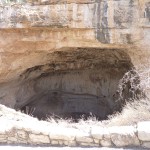
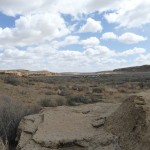
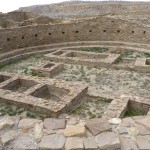
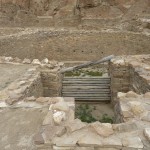
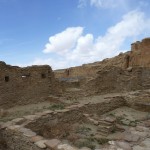
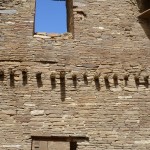
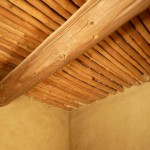
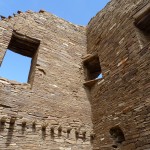
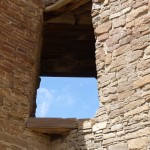
Carlsbad, Saguaro and Chaco Canyon Belated Photo Gallery (&Ruth)

Spring                                                              Bee Hiving Moon

Due to technical difficulties (I lost the dongle that connected my camera to the computer.) I’ve only this week gotten pictures from the Tucson trip loaded.  Here a few just to give you a flavor of the journey.  Click on the photograph to see the whole, this presentation crops them a bit.