Learning’s Limits

Beltane                                                                    Emergence Moon

In the basement, next to the softwater tank, is a blue pressure cylinder that holds water from our well as it waits distribution to the rest of the house. Coming out of it is a copper pipe that goes straight up for about six feet, has an elbow, then penetrates the envelope of the house to connect our well to the irrigation system. This pipe has a small butterfly valve, often locked with a lead seal though not this year. After screwing in a bolt that prevents water from bypassing the irrigation system and landing in our orchard, used for fall blow out, I hopefully opened both blue butterfly valves.

Then I plugged in the irrigation clock and hit run on an overhead water zone for our one half of our vegetable garden, the north half where I’ve planted tomatoes, bush beans, egg plants, swiss chard, cucumbers, collard greens and peppers. Waiting expectantly, my contrarian thrill ready to exult, I. Waited. Nothing. Hmmm. Let’s see, water on. Yes. Clock running. Yes. What was I missing?

I went to the valve outside and turned one butterfly valve in the opposite direction, imagining I had turned them off instead of on. Water gushed out against the siding. So. The water has gotten from the well to the valve itself. I turned that off and noted that it meant I had in fact turned the water to the system off with the other valve that gates the water from the well to the system itself. This must be it. I turned that one to the open position and went back to the clock.

Punched manual start on zone 1 which is in the front. Waited for the spume of water to arc out. Nope. OK. RTFM. I got on the web and discovered I’d missed pressurizing the lines. Sigh. At that point I decided my self-education in all things sprinkler start-up had exceeded my willingness to learn.

sprinklerThat was when the hose came out, three hoses really, and, connected to a house spigot, the yellow, three-armed irrigation spinner began to twirl in the vegetable beds. I have no need to learn how to start up the irrigation system, I just wanted my plants to get water and I thought the startup would be simpler than it was. Something I could learn, no doubt, but with probably only one more spring to practice my knowledge, I’d rather spend the time on my Latin.

Home Alone?

Beltane                                                           Emergence Moon

Yesterday morning, while planting cucumbers in hills, making rows of bush beans to cover their base, fanning the collard greens out along the north side of the bed, the swiss chard to the east and the eggplants to the west, leaving room for marigolds in the center where it’s hard to reach, I called Mickman’s, our irrigation company.

We pay Mickman’s a yearly fee to come out and start up our irrigation system, checking for heads damaged over the winter and making sure everything works correctly. They also close it down in the fall, bringing an air compressor to blow out the lines so no water remains in them to freeze and burst the pcv pipes and the plastic heads. This year I realized I had had no word from them about the spring service.

When I called them, yes they had my service contract, yes they would get to me, no they hadn’t tried to contact me yet because they were far behind due to the cold weather. When I told them I had plants (vegetables just planted) that needed water, the earliest they could get out here was next Wednesday. With full sun and some heat projected for today and tomorrow I pressed them. “What are you asking for?” Water for my plants.

After I hung up, settling for a late Tuesday appointment, a strain of contrarian thought streaked through my head. Who needs them? I’ll start it up myself. I’ve never done it, still haven’t, but I’m going to try today because my vegetables need to be watered in. We’ve had them do this start up for the last 20 years and in all that time starting up the system never occurred to me. Strange. It made me wonder how much else I have done for me that I could do myself.

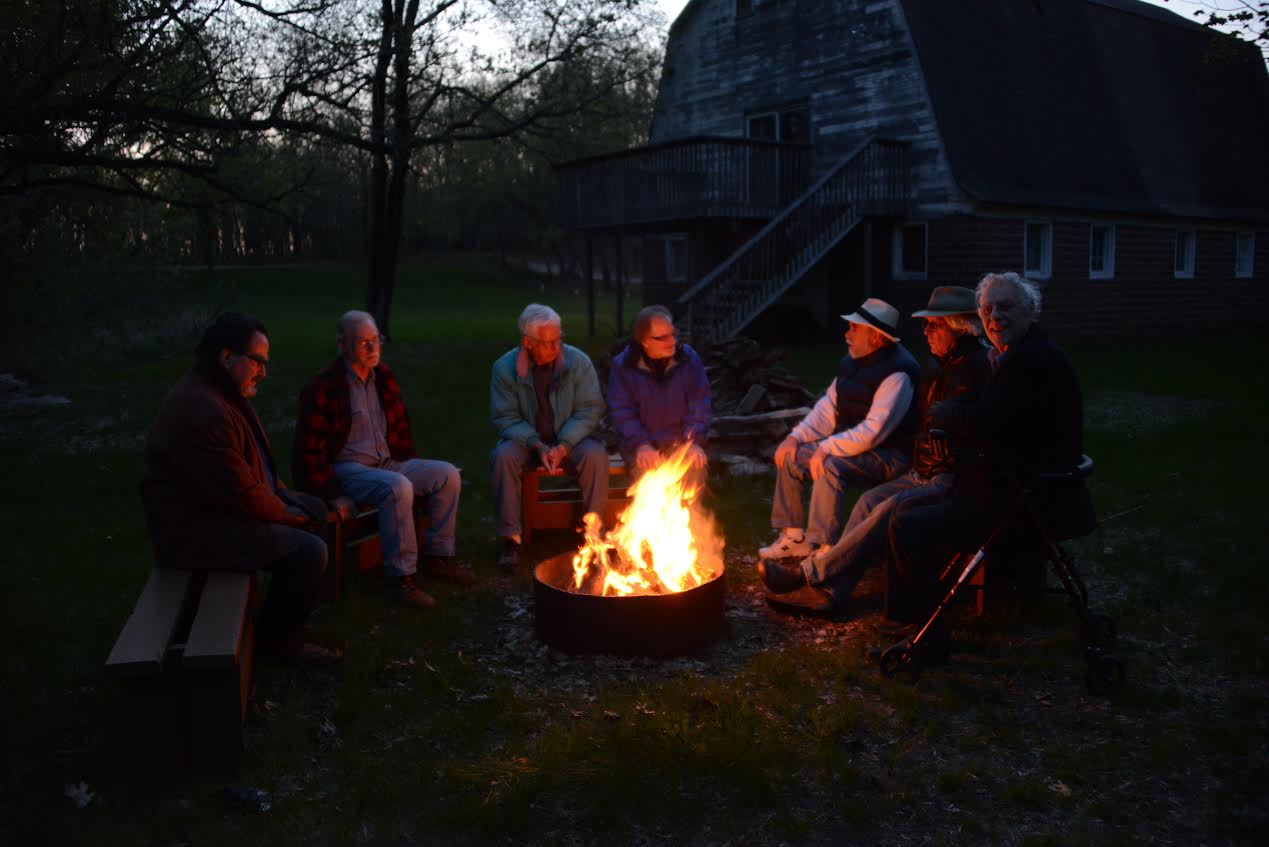
This loops me back to a thought that comes to me, often about this time of year, that I am lord of the manor. In an odd way we have replaced the old English manor house. No baize doors. No downstairs and upstairs. Yet we have a cleaning lady, lawn care service, irrigation specialists, arborists, electricians, septic cleaners, window washers, a handyman, roof and siding replacers, generator maintenance guy, painters and a contractor for home remodeling.

This list does not include, but can, the washing machine and the dryer, the refrigerator, the television, the fitness equipment, a lawn tractor, the microwave, the electric sewing machine, several computers, cell phones, a landline, a freezer and a horseless carriage. These last are all labor saving devices. Yes, they replace actual laborers who at one time would have been employed for laundry, bringing in ice, cooking, lawn care, message delivery and transportation outside the home.

This means that though we have the patina of a single family living in their own home, alone, the reality is much more complex and all of it requires management of one sort or another. Relationships have to be built, skills assessed, work evaluated, checks written, needs for service monitored. None of this is, in itself, remarkable, but when looked at in the aggregate it shows how a family serves as the nexus of a complex web of services, some engaged by humans who live outside the home in their own home, some by machines, but often machines far too complicated for a home owner to service, which requires appliance repair and/or replacement people.

I guess it’s not odd that starting up the irrigation system never occurred to me.


Get To Colorado Happy About the Move

Beltane                                                              Emergence Moon

In move. This is the space where I live these days, with matters to attend to at home, in the garden, with service providers and in Colorado. There are more pieces to juggle for the next year or so, but I’m looking forward to each one of them.

Gentle Transitions was not the service I imagined, but SortTossPack just might be. Thanks to Bill Schmidt for pointing me to a website where I found them.

Kate and I know how to work together, how to get things done, so we’ll manage this. She’s good at the details; I can keep perspective on the big picture. In my mind we have three large tasks. The first is to establish a realistic budget which includes an estimated cost of the move itself and the amount of home we can afford to purchase in Colorado. We have sessions with Ruth Hayden and RJ, our financial consultants, that will push that task forward. The second big task is to downsize/declutter, not so much to move into a smaller space, though we probably will, but to simplify our life and make sure we move only things we love.  William Morris, the famous arts and crafts designer said, “Have nothing in your house that you do not know to be useful or believe to be beautiful.” The third task is put this house on the market and sell it.

Within the limits of what we can afford I want to do as little of this as possible, but as much as I need to. Only I can downsize my library by half. Only I can sort through items of a lifetime and send many (most?) to a new life apart from me. In other instances, well, let the mover/organizer/realtor do it.

My overall goal is to get to Colorado happy about the move, the process and our home there. That translates into doing this work at a reasonable pace, spread out over time, utilizing money and personal muscle in appropriate amounts and finding humor in it all.

On Us

Beltane                                                             Emergence Moon

Planting finished. Next comes weeding, watering and thinning. Then mulching.


Gentle Transitions was a bit disappointing, though I think that’s on me rather than them. I imagined them as helping us set up a process for moving, a schedule with milestones, things like that, but instead they handle the moving chores right up to loading the truck. If we were moving in state, they would also help unpack. They’re a good service to know about but it leaves us with the (daunting) task of downsizing our stuff. Their service can help us donate items and we got a list of folks who do estate sales, so there are pre-move services, but not quite what I wanted.

So. We do it ourselves. That means a schedule, room by room in some cases, by items (in the matter of things to sell or donate). I’ll start putting one together over the next couple of days.

Superbowl. Wow.

Beltane                                                           Emergence Moon

It’s taking me two days instead of one to finish the planting. I have to distribute nitrogen sources in two beds before I can plant the remaining collard greens, chard, egg plant, cucumber, bush beans, green beans and sugar snap peas. Gonna do that in just a few moments, then finish up.

Hard not to notice the grins and cheers of Minneapolis boosters after the announcement about the 2018 Superbowl being played here. To get the millions from the Superbowl we only had to spend one billion dollars on a new stadium and I don’t know how much more on Stadium East projects. Which reminds me of Kierkegard’s parable about the brewer who made beer that sold for ten dollars a barrel. “Even though it costs me eleven dollars a barrel, I plan to make up the difference in volume.” BTW: Zygi Wolf looked demonic in his Star-Tribune picture. We’ll be settled somewhere in Colorado by then.

Is it just me or does the new stadium look like a Lutheran church designed by a 1960’s architect?

Time to get out there and finish up the planting before the Gentle Transitions’ movemanager comes.


Earth Bound

Beltane                                                               Emergence Moon

That Kate and Charlie gardening team have begun another year of plant wrangling. Kate planted the herb spiral, cut a space so we can more easily harvest raspberries in the fall and mended the flower bed wounded by Rigel. Meanwhile tomatoes, peppers, chard, collard greens and ground cherries found themselves spots for the growing season.1000Kate and Charlie in Eden

There is nothing more literally grounding than planting.  We move the soil aside, add some nutrients and water. All the time we have to consider the type of plant, what it needs, how the soil is (though that process here is largely over) and what its requirements for sun are. Most vegetables need full sun and we had the big ash in the midst of our garden cut down last year to open up more areas of full sun.  A seed (its package) or a plant (its plastic container) leaves a temporary home for a place it can flourish, reach its optimum.

Caring for a garden together is so much like raising a family, caring for dogs. Nurture. It helps us stay in touch with our home and as a by product we get nutritious food. A pretty good deal.

Beltane                                                   Emergence Moon

Tomorrow we meet the move manager from Gentle Transitions. I’m excited about hearing what she has to say. Getting ourselves on a schedule of some sort, one that has some experience behind it, should ease the mechanics of moving, the part that daunts me the most right now. (after the altering of friendships) With an overall scheme I will be able to inhabit the place Move, rather than feel stuck between being fully here and trying to be there.

Tender Planting

Beltane                                                                   Emergence Moon

Finally the temperature regime has begun to warm, making it safe for the tomatoes, peppers, egg plant, beans, cucumber and tomatillos. We drove to Green Barn this morning to pick up egg plant, tomatillos, blue berry plants, chard and collard greens. They’re already out of kale.

After getting my head straight about the international ag labs recommendations, I put together a batch of transplant water, 3 gallons. Then I poured Jubilate, a microbial inoculant into an old dog dish, tossed the urea in its jar on top and carried all this out to the vegetable garden. To get into the garden I had to step over the copper bird feeder pole I inserted just below the gate’s bottom to keep Rigel out.

Setting those things down I retrieved the tomato and pepper plants from the deck where they have been sitting since coming last Tuesday. Kate’s been taking them out and bringing them in at night since the weather was too chilly for them. Now it’s all good.

Putting two tablespoons of urea (small white pellets) and two tablespoons of Jubilate (a 670_0299brownish thick powder) into each hole, I put the midgets, the romas and the Cherokee Purples in their places atop the sun trap. Then, using an old Tide measuring cap, I spooned a pint of transplant water onto each tomato plant.

The peppers went into a raised bed and they received identical treatment except the amounts were one and a half tablespoons instead of two. Then the transplant water.

By that time the sun had come out. It was noon. Having just seen the dermatologist yesterday I decided to stop and return later in the afternoon, when the sun’s angle is more gentle. I want to get all the tender plants, including the beans and peas, planted today. Then we’ll be into maintenance mode for the next two and a half to three months.

Of course, with the international ag lab’s system, maintenance is more intensive than in the past, but that’s fine. The results are worth it.

Sinners in the Hands of an Angry Climate

Beltane                                                                            Emergence Moon

A word about religious language. Though rooted in a metaphysics with which I no longer agree, much of the language developed by Christian theologians has earthly application.

Here are some examples. Atonement describes the process of reconciliation between one estranged and the one from whom they are estranged. Atonement is just what we need for a species estranged from its home, no longer aware of the rich and intimate love only footsteps away from most doors.

(Antonio Palomino. Saint Michael Vanquishing the Devil, 1700-14)

It is, I suppose you could say, the story of the prodigal son, the wastrel who fled parental care and set out wandering far from home. Only atonement, the return of the prodigal to his home, can overcome the estrangement.

But, before atonement comes repentance. That is, the estranged must come awake to the hamartia* that creates their current condition. Most of us know only vaguely (we see through a glass darkly) of our implication in the reduction in Arctic sea ice, the acidification of the oceans, the gradual warming of the temperate latitudes. We are even mostly ignorant of the web of decisions we make daily to draw more oil from the sands of Arabia or the fracking fields of North Dakotas, decisions that also push the coal trains out of the Powder River Coal Fields in Wyoming, snaking like a plague along our nations railroads.

(Peasant family returns home paint by the Belgian artist Eugène Laermans (1864-1940) – Boekarest:National Museum of Art of Romania (Romania)

Hamartia, in its classical understanding, results in tragedy. It is often related to hubris, that overweening pride that causes blindness. There is little doubt that our estrangement from mother earth is reinforced by our hubris and that the result of that hubris is humanity’s fatal flaw. The end will be not a triumphant Christ hurling sinners into hell but the sinners themselves creating hell above ground as temperatures and sea levels and extreme weather events rise.

The Great Work for our generation, as Thomas Berry describes it, is to create a sustainable path for humans on this planet. In religious language this means we must guide each other back home, to a home where we will be received by a loving mother and father (the earth and the sun). We prodigals must prostrate ourselves before our parents and end our estrangement. And, of course, the curious, paradoxical truth is that in doing so we will save ourselves, not the planet.


*Hamartia is a concept used by Aristotle to describe tragedy. Hamartia leads to the fall of a noble man caused by some excess or mistake in behavior, not because of a willful violation of the gods’ laws. Hamartia is related to hubris, which was also more an action than attitude.