Cruel and Too Usual

Beltane                                                                        Emergence Moon

How about those Okies?  Hey, even though we’re not sure, let’s just try an experiment! Yes, it was stupid, heartless and reckless. It was those things. And cruel. And, as the Sack cartoon said in the Star-Tribune this morning, not so unusual. (full disclosure: I was born in Duncan, Oklahoma and still have many relatives in the state.) But. It is also true that regardless of the case law, regardless of the Supreme Court decisions and the capacity of states to make their own laws, killing a killer for killing other people is immoral. Not to say at least contradictory.

A good outcome of the Oklahoma execution of Clayton Lockett would be the final elimination of this barbarity altogether. In the newspapers today is an article that suggests one reason to eliminate it in addition to its morally contradictory nature, at least 4.1% of individuals on death row are innocent. NYT article.

Kate and Anne and I watched “12 Years a Slave” tonight. Capital punishment belongs with slavery as one of humanity’s reviled institutions. The state says that if you commit certain acts you may be incarcerated and, if the acts are serious enough, killed. This reminded me of the whipping scene of Pat in the movie. “I can do anything I want with my property,” says Edwin Epps, the plantation owner played by Michael Fassbinder.

The awful juxtaposition of Solomon Northrup’s enslavement with his status as a freeman made his situation seem so much worse than that of the other slaves. But in reality Northrup’s enslavement and desire to be free was identical with those enslaved from birth. His status as a freeman in the state of New York made clear the tremendous burden of all the other slaves among whom he worked.

Crime and punishment is a conundrum faced by all complex cultures and I’m not denying the right of state as my representative to punish those convicted of violating our laws. What I am denying is the right of the state to deprive any one of their life on my behalf. (We’ll not go into here the disproportionate impact of punishment on persons of color, though it’s a vital issue, too.)

addendum. This is a list of states which have no death penalty. It’s interesting to me that the earliest three states to prohibit it are Michigan, Wisconsin and Minnesota.

Alaska (1957)
Connecticut** (2012)
Hawaii (1957)
Illinois (2011)
Iowa (1965)
Maine (1887)
Maryland*** (2013)
Massachusetts (1984)
Michigan (1846)
Minnesota (1911)
New Jersey (2007)
New Mexico* (2009)
New York (2007)#
North Dakota (1973)
Rhode Island (1984)^
Vermont (1964)
West Virginia (1965)
Wisconsin (1853

Beltane: 2014

Beltane                                                                   Emergence Moon


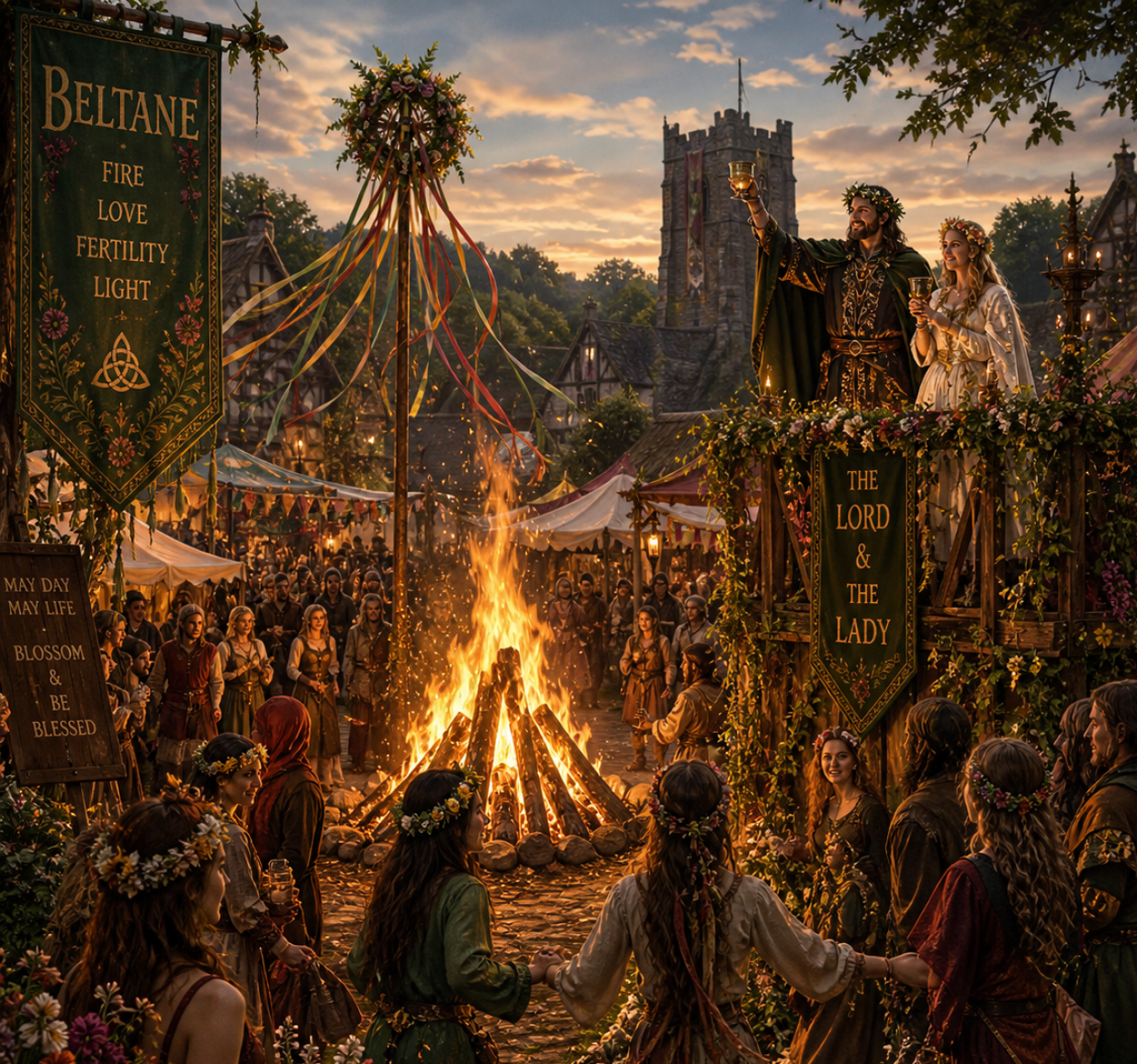
Turn. The Wheel has turned again and Beltane is at the top. Beltane, a fire festival, was one of the two original demarcations of the Celtic year. It marks the beginning of the growing season and Samhain, the other, marks the end of Summer, or the growing season.

In the Celtic year Beltane and Samhain are equivalent in significance to Christmas and Easter.  At Beltane fertility plays the central role in the festivities while at Samhain both the final physical harvest and the already harvested dead are the focus.

Beltane has had a long half life in American culture though it has faded away considerably in recent years, unlike Samhain which seems firmly rooted with its faint echo in Halloween. I don’t know about you, but I remember making May baskets out of construction paper and Maypoles were still occasionally present in my youth in the late 1950’s.

The Maypole in particular hearkens directly back to Beltane. It was some sort of fertility dance, likely an opportunity for young maidens to display themselves in a vigorous manner to watching young men. There is another, more Germanic explanation for the Maypole, which sees an axis mundi, a world tree, as its symbolism. Whatever is behind the Maypole, it has now winked out for the most part in the U.S., but the tradition lives on in Great Britain and Europe.

In the Celtic world bonfires were important to this celebration of the return of the power of the sun. Two bonfires were lit and cattle driven through it to ensure their health. Cattle were the indicators of wealth to the early Celts. Young women would leap over bonfires to increase their fertility. Other bonfires were lit for dances, often done today in the nude.

There is, especially in Scotland, a vibrant revival of the Beltane and Samhain festivities, managed now by the Beltanefiresociety based in Edinburgh. Click on their website to see many photographs of their work. I find the free and joyful expressions of the dancers, both the choreographed and attendee, moving. They stir something deep in me, like an ancestral memory, a thrill. On the surface it comes out like, “These are my people.”

The body can express what sings in the heart often better than the mind or mouth. Beltane’s spontaneous, eager, fiery essence jumps out of the arms and legs, breasts and heads in these photographs.

I have no interest in resurrecting the ancient faith of a pastoral people now long dead. None at all. But I respect it and honor its impulse. I believe that its reverence to the rhythms of the year need to be included in our time. The particulars of their time can inform us, certainly, but the more important point is to let those rhythms have their song among us today.

As we wait here in a cold, wet Minnesota, I have no trouble accessing the anticipation of the growing season evident in Beltane. It is a dance, too, one done around the bonfire of the sun, which heats us all, which gives us the energy we need to live. Yes, it gives us the energy to live. Think about that. No, better yet, when there is sunshine again, go spread your arms outside, absorb the warmth and feel it. Then go into the kitchen and have a slice of bread, a tomato, perhaps a slice of salami. That same heat goes into your body, transformed initially by a plant, then perhaps again by an animal and now of use to the mitochrondria, ancient and mysterious, that fuel our cells.

Yes, Beltane is a rite right down to the cellular level. Embrace the sun and glory in your chance to live. It comes but once.

The Herd Thins

Beltane                                                              Emergence Moon

Jim Johnson began the Woolly diaspora by his cowboy pivot made on the plains of South Dakota. Paul Strickland returned for good to an often frequented spot in Maine. Mario Odegard is an episodic emigre’, spending months at a time in different places, usually warmer than Minnesota.

Now, probably around this time in 2016, Kate and I will join the Woolly dispersal with a move to Colorado. This was a difficult decision, one made over a period of several years and made at first with reluctance, but now with growing excitement and anticipation.

We both want to move while we’re still able to develop an independent life for ourselves in a new setting. We will begin hunting for a place within an hour or so of Denver, something with acreage enough for dogs, yet still in broadband realm.

I plan to attend Woolly retreats and to continue hosting a meeting at some point during the year, too. Getting back to Minnesota will be important to me because the Woolly’s are important. They have changed my life for the better and it is with deep regret that I will leave them behind for most of the year.

Still, life’s realities change as we age and the call of family is a strong call. To care for and perhaps be cared for, that’s a profound life commitment and one to which we’re responding.