The Song of the Earth, Herself

Summer                                                            New (Lughnasa) Moon
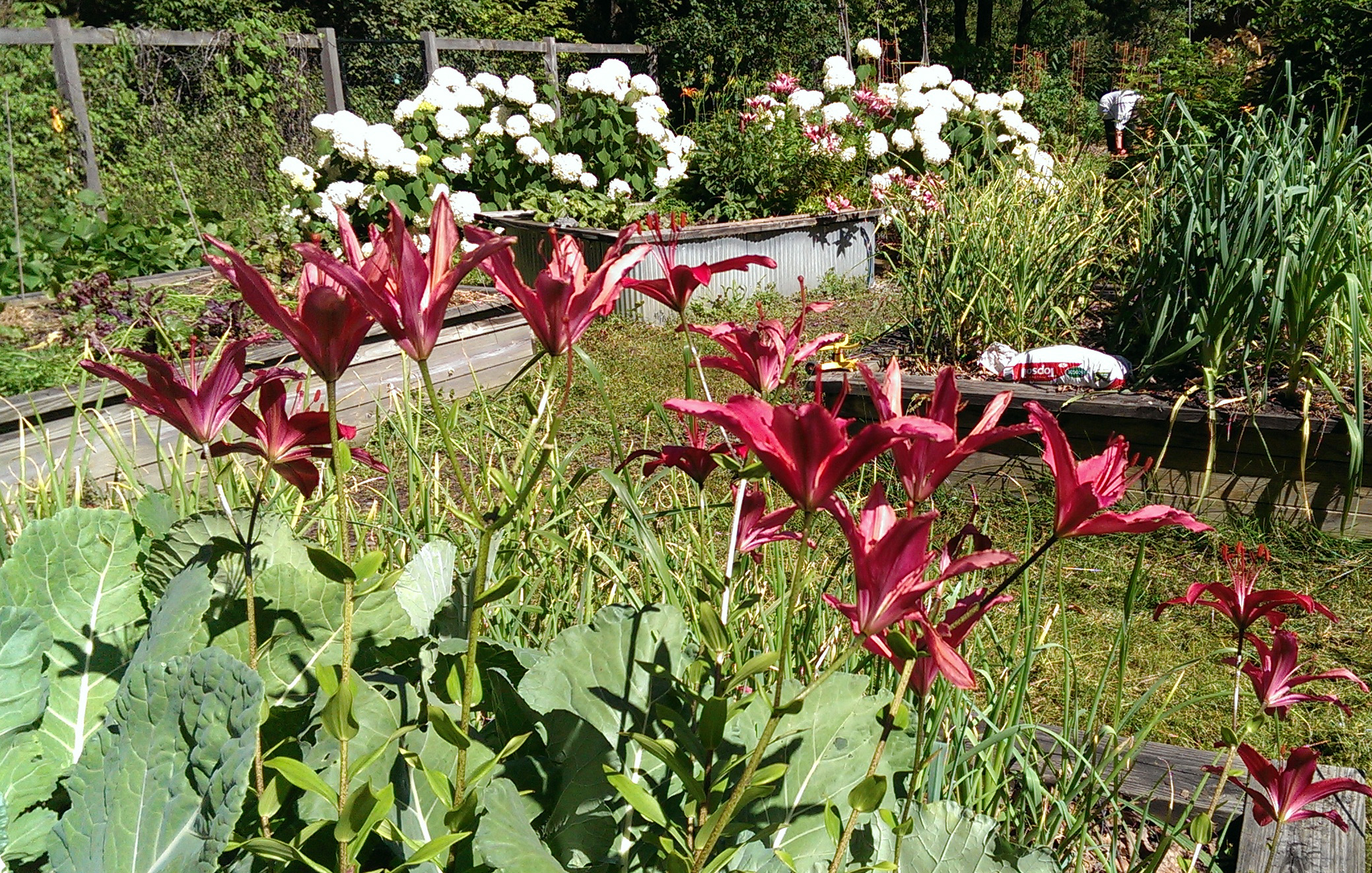
croppedZOE_0022At first, as I dug my way into a new faith, it was about a symphony: the early crocus, snowdrops, grape hyacinths followed by tulips, then iris and hosta and bleeding hearts, giving way in July to a the bold notes of the asiatic lilies until the daylilies and clematis, both bushy and climbing, the liguria and the snakeroot began to dominate followed by the soft crescendo of asters and chrysanthemums. This literal rising and falling, in palates of color always framed by many shades of green, played out in my mind, a curious analog to the mental images inspired by listening to Mozart or Haydn or Pachibel.

Then, with Kate’s guidance vegetables came to have more and more importance. They too come in their own season, following their own melodic lines, as do the fruits and the nuts. Even, I would later learn, so did honey and the concerto of the honey bee.

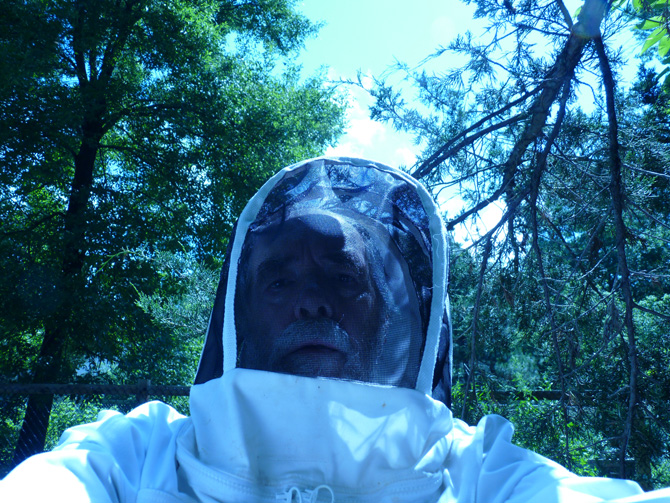
Amending the soil with compost and peat moss and decayed leaves and hay, finding the 06 27 10_beekeeperastronautheirloom seeds for the vegetables we grow and the beautiful varieties of perennials like the iris and the lily, made the whole a process laced with memory and filled with change.
It is no surprise that the Great Wheel, the ancient calendar of a people whose blood runs in my veins, came into this earthy process as a celebration, as a sacred abstraction of a very real lived experience. This was not systematic theology. This was neither dogma nor holy book. No, this was and is the song of the earth herself, composed in her own medium, the plants whom her body supplies with nutrients and her body which receives their dead bodies to replenish herself.

So this is a material spirituality, a spirituality that lives in the praxis between human awareness and the earth’s ordinary wonders, a paradoxical sacredness created by the essential, the necessary bond between the human body and the plant body and the earth’s body. It may be, probably is, that paradox exists here only when seen against the various gnosticisms of the world’s many religions. In fact, a faith rethought and reimagined without religion entering into the mix needs no spirituality other than that mysterious, miraculous link that binds the entire web of life into one interdependent whole.

Into This World We’re Thrown

Summer                                                             New (Lughnasa) Moon

Into this house we’re born
Into this world we’re thrown…
Riders on the storm             The Doors, “Riders on the Storm”

Reimagining faith. This has been a project of mine for over ten years. It started as an attempt to create a ge-ology as opposed to a theo-logy. (which, I just recalled, began long after a faith focus which saw me out in the woods and wild places of Anoka County for Celtic holidays.) My idea then was to put the earth in the place of God in a value system, a philosophical system for understanding life and its choices. In that vein I took a course on the systematic theologian Paul Tillich. If I could understand in close detail how a thinker like Tillich went about creating a theology, I might follow a similar path toward a ge-ology.

(Johann Wilhelm Cordes: Die Wilde Jagd” – Skizze zum Gemälde 1856/57)

The course was instructive, but not in the way I had imagined. Tillich’s work was too systematic, too neat and tied together with multiple logical bows. It was a product of the enlightenment, a philosophical system built on a clever and sensitive reading of the Christian theological tradition. It was not something I wanted to emulate, perhaps could not emulate. (Tillich was a really, really bright guy.)

After various fits and starts, I eventually set aside the ge-ology idea and turned toward reimagining faith. This idea came from feedback to a long ago post in Ancientrails where I referred to my spirituality as a tactile spirituality. Somebody appreciated this paradox, a material spirituality rather than an ethereal, post-Platonic soul based spirituality.

The starting point for both the idea of the ge-ology and reimagining faith is the Great Wheel. I’ve spoken elsewhere about how the Great Wheel has influenced my life and faith, but the short version is that following this ancient Celtic calendar through the seasons, and following through the season not as an intellectual abstraction but as a lived reality with flowers, vegetables, fruits and other plants subtly changed my understanding of faith.

I say subtly because it took me a long while to notice how deeply I had embraced it. Reimagining began as a second grand intellectual experiment like the ge-ology, but one focused on the Great Wheel. Not the Great Wheel as a pretty round calendar, nor as a neo-pagan liturgical calendar, though it is both of those things, but as experienced by the earth, through the changing seasons. It would not, in other words, proceed from the mind out, but from the ground up. Literally.

How was that going to happen? Didn’t know. Still not sure, but I did change the project a sun calendarthird time to reimagining my faith. Trying to be less grand, less global, more in a realm for which I have both responsibility and authority.

Then, recently, I came across an article in Foreign Policy magazine. It’s premise was a rethinking, a reimagining of the U.S. military. What if we designed a military for today’s reality, was the question it asked.

Aha. That’s the question at the root of my quest. What if we designed a faith for today’s reality? This is similar to Emerson’s notion of a religion of revelation to us, not to them, but it is not the same. I’m not necessarily interested in religion, especially religious institutions which serve to fossilize and deaden lived faith. A religious institution is anathema to a lived faith since lived realities change constantly and religious institutions live to fight change.

So, I’m not interested in revelation since revelation is a Christian idea. What I’m trying to do is rethink, reimagine what faith can look like in a world shorn of classical metaphysics, in a world moving toward a dystopian climactic future, in a world… Well, that’s just the point, I think. We’re rethinking now in a world context, not in a given ethnic enclave, not even within with the broad outlines of Western and Eastern, but on the rough and watery surface of our planet. All of us now, together. What can carry us forward, help us understand who we are and what we need to do, for each other and with each other? For the planet and for the future of all living things.

I’d love to think I could answer those questions. But the truth is I can only make my best effort at answering them for myself. That’s the project I’m engaging right now, reimagining, rethinking my faith for today’s reality and for the future toward which and for which we live.


Heading Toward the Festival of First Harvests, Lughnasa (August 1st)

Summer                                                           New (Lughnasa) Moon

The harvest now. Onions, more and more lying down. The batch from last week have had their curing in the sun and are now in the shed on the screen. The garlic has begun to mature as well, about half of it is in the sun now as are the onions newly ready. The garlic are not large, at least the ones I’ve pulled so far and last year’s were not either. Last year we got a garlic crop when many who farmed garlic got none. Not sure what the issue is but it’s cut into the bulb size for sure.

This next week’s cool temperatures do not favor the tomatoes, so their ripening might be delayed. More green beans, collard greens, chard are ready. Overall, an abundant harvest so far.