Summer Most Heat Moon
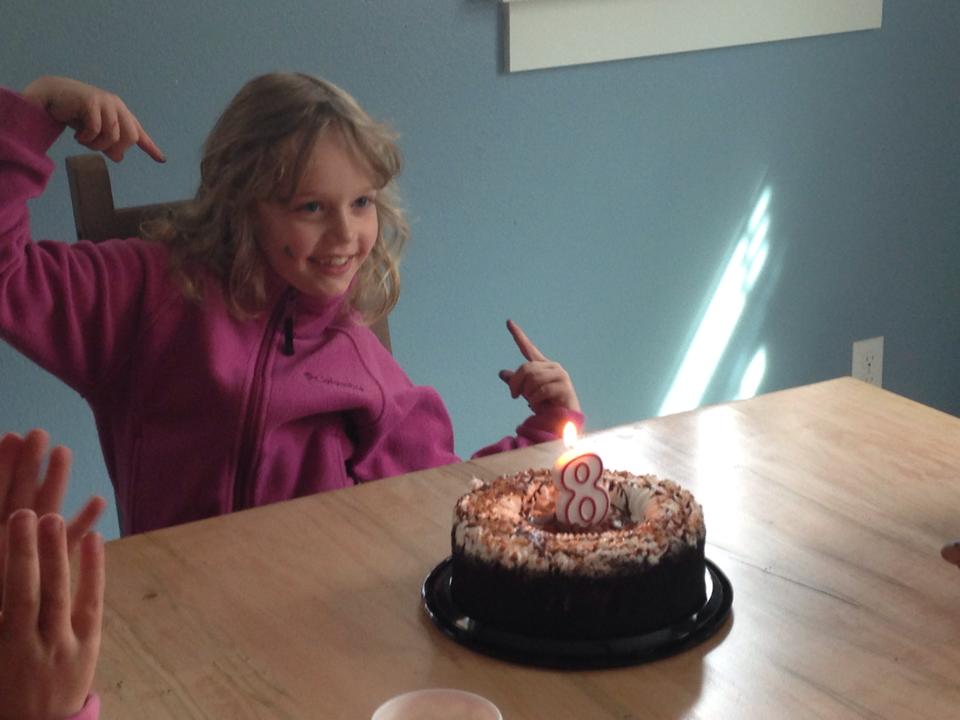
When asked last night if she wanted us to move to Colorado, Ruth nodded her blond head  and said, “I want you to.” She may go with Grandma to look at property, give the grandchild’s view. We’ll give Ruth and Gabe a chance to have their say since they’ll be very important visitors (V.I.V.s), but Grandpop and Grandma will make the final choice, of course.
The standing in the drive-way, waving as the van pulls away ritual has happened. The three generation of Olson’s Sienna transport to Colorado has left the building.
As Colorado came rushing into the foreground of our lives this week, it’s made me consider what new things I might want to do out there. The first thing that came to mind? Learning to ride a horse. Something I’ve never done and what better place than the west. I don’t want to learn dressage or steeple chasing or barrel racing, but I would like to learn enough to ride on a mountain trail, maybe camp out.
A second thing came while reading an interesting article in this month’s Wired, “How We Can Tame Overlooked Wild Plants to Feed the World.” This article gives a broad brush presentation to how horticulture and agriculture will respond to climate change. It starts by referencing work being done in Ames, Iowa on domesticating new food crops. The last creative work in domestication of new crop plants ended thousands of years ago.
Here’s the sentence that really jumped out at me: “Today, humans rely on fewer than 150 plants for nourishment, and just three cereal crops—wheat, rice, and corn—make up more than two-thirds of the world’s calories; along with barley, they own three-quarters of the global grain market.” op. cit.
The Land Institute outside Salina, Kansas has had my attention since I read founder Wes Jackson’s book, Becoming Native to This Place. This book along with the Great Work by Thomas Berry, The Sand County Almanac by Aldo Leopold and an excellent climate change conference Kate and I attended in Iowa City changed the direction of my political activism from economic and racial justice issues to environmental policy. They also affected my horticultural practices, turning me from perennial flowers to vegetables and fruit grown in a soil sensitive, heirloom-biased way.
So. When we finally settle down, I want to have a raised bed or two for kitchen vegetables, smaller than what we have here, but I also want to have at least one raised bed or plot devoted to advancing a new food crop. I’m not sure what this would entail, but if something useful can be done on a small plot in the Rocky Mountains, I want to devote the time necessary to it. Given the long time horizons on such projects, I may not hope to get too far; but, any distance toward a broader food palate and one capable of producing in hotter normal temperatures will be useful to my grandchildren and their children.