Border Towns

Lughnasa                                                Lughnasa Moon

My brother Mark is the most widely traveled of the three Ellis siblings. So when he makes a statement like this one, “I like border towns and the mixed energy of two nations that swirl around them.” it makes me realize I’ve not got a lot of experience with border towns. Detroit and Windsor. That’s about it.

(bill for an event in the State Farm Arena, Hidalgo, Texas)

Mark’s in Hidalgo, Texas right now as a medical tourist, getting dental work done in Reynosa, Mexico, just across the border. He walks to the border from his motel, pays one U.S. dollar to cross on a pedestrian bridge and bang he’s transnational traveler.

His comment about border towns makes me want to visit a few, just to see what he means. I know he has experience of border towns between Thailand and Cambodia, gained because every three months or so he had to do a visa run while living in Bangkok. Others, I don’t know.

The anthropologist in me says, aha, diffusion. And yes, it would be strongest where two cultures meet, but where they are supported by different political and cultural norms, that is, across national borders. U.S. culture could effect Reynosa and Mexican culture effect Hidalgo, safe within their own cultural envelopes.

(Pinatas in Reynosa, Mexico)
Leave Taking

Lughnasa                                                              Lughnasa Moon

Last night was a good example of what I’ll miss. Where will I learn about Flogging Molly? Who will want to play Rodrigo and the first movement of Appalachian Spring so I can appreciate their appreciation of them?

(Rodrigo monument in Aranjuez, Spain)

It was a sweet evening. And it started around a meat loaf, with ketchup squirted on top, ears of corn boiled and slathered with butter, roasted potatoes, a garden salad. This is Midwestern comfort food at its zenith, the ne plus ultra of small town supper tables. Cooked by Ode who said, “I like to cook. Have everything come out at the same time.”

These men. I’ve been with them so long. They know my stories and I know theirs. We want to know what each other listen to. Not to judge it, but to absorb it. It becomes part of our knowledge of each other, broadening our tastes as we deepen our understanding. Sort of like a book club only better.

These meetings are once a month and where once they stretched on to the horizon, now they have a terminus. Each one counts down, moving toward my last, at least my last as a Minnesota resident.

In more settled times, where moving on meant having the carpenter make a pine box, the preacher give a sermon and the gravedigger complete the work, this kind of leave taking most often happened unawares. One moment you were here and then either suddenly or after a brief illness, you were not. Unawares and remarked by rituals of leave taking, the pilgrim gone on ahead.

In this instance though the leave-taking stretches out and even after there will be the right of return. Not final, at least not yet.

Time-Shifted

Lughnasa                                                                 Lughnasa Moon

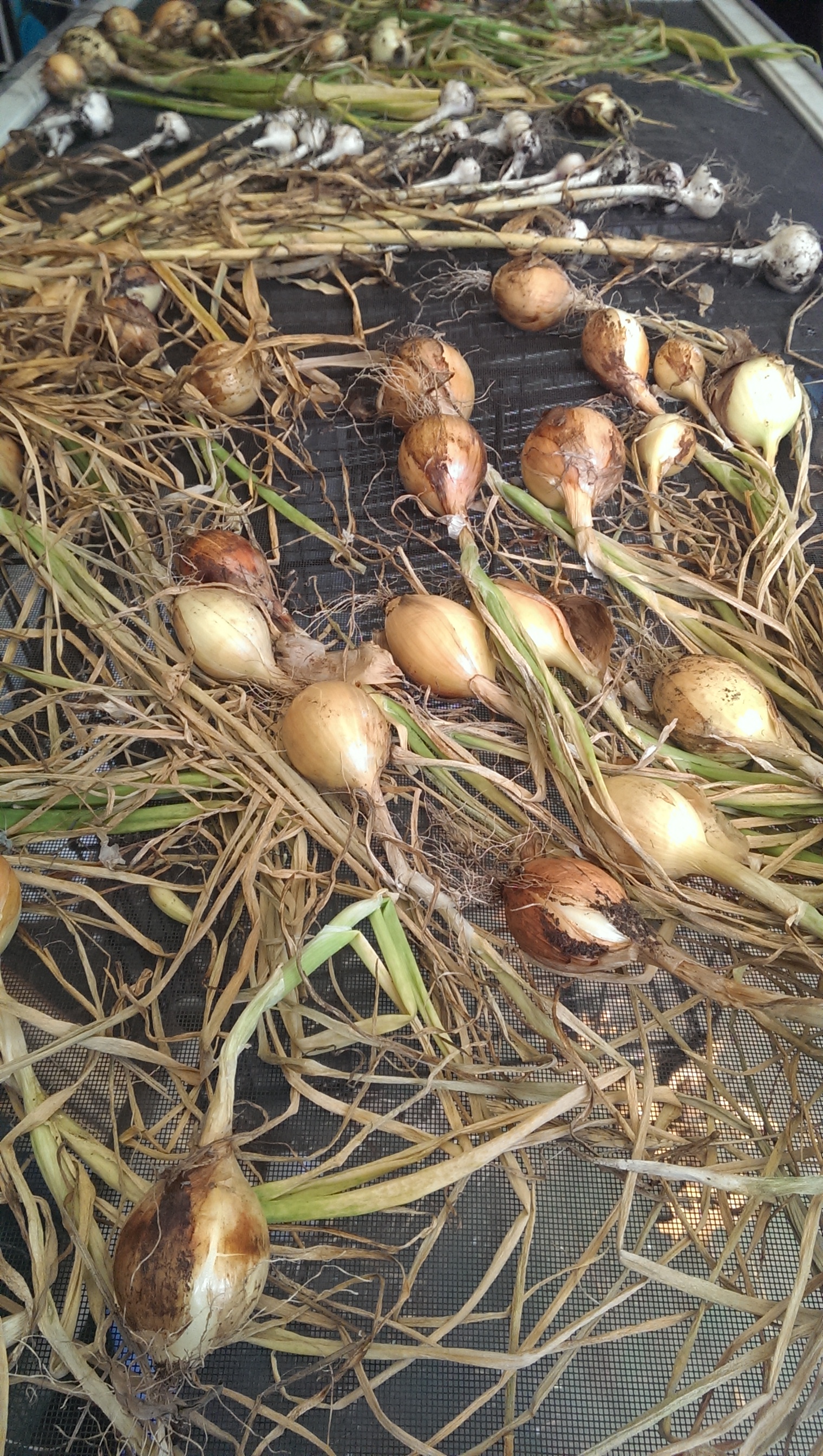
IMAG0382Went out to the garden this morning after a week plus of packing, focused on the move, head and heart already time-shifted to matters months away. Oops. Lotsa weeds. Lotsa ripe vegetables. I was ashamed to see the shape of our garden. We plugged away at it until the gnats got too ornery. Got most of the beds mostly weeded. All the vegetables that were ready picked. Gotta spend more time out there over the next month or so.

The second planting of beets, some of the first crop of carrots, giant garlic bulbs, more onions flopped over, green beans (some gnawed at by tiny teeth. chipmunks? mice?), cucumbers, tomatoes and basil. The leeks look well ahead of schedule, almost mature now in mid-August where I picked them last year in late September. Lots of chard and collard greens left, too. Some peppers growing large.

The raspberries have just begun to come. Some of the reds have turned red, but not yet the deeper shade closer to maroon or purple that signals ripeness. The goldens have the berries formed, but no color yet. We’re entering the period of rapid maturity, for the vegetables, fruits and the weeds. This is the other burst of activity that the garden requires and it started a week ago without us.

Nature, as I was reminded by a Science Friday program, abhors empty ground. The raw soil in between rows and plants quickly filled up with weedy ground covers, spikes of grass, hopeful elm saplings. This is why no till ag is so important, but also why it’s practiced rarely. No till controls this ground covering tendency by having agriculturally useful plants in place of weeds.

Anyhow, back at it. And just in time, too.

A Leader? No.

Lughnasa                                                    Lughnasa Moon

A commentary in the StarTribune today spoke to me. Titled “Do We Have A Leader? No.” this opinion piece makes a clear and important distinction often lost. Civil rights leaders in the mold of the MLK era do not speak for, to, or with the racial underclass. The peaceful protests, the calls for action, the analytics that pillory (with good reason) the policing of a largely black community by a largely white and militarized police force are beside the point for the hustlers, drug dealers, entrepreneurs and long term unemployed.

(pic: answercoalition)

This underclass is the focus of Alice Goffman’s On the Run, the book I mentioned here a week or so ago. Her closely and compassionately observed telling of life in a poor Philadelphia neighborhood reveals the twisted, gnarled relationship between young black men (and the women who love them) with the justice system. Their life resembles that of the citizenry in dystopian movies like Judge Dredd or Blade Runner. The threat of some form of summary judgment lies moments away, day or night, at home or on the street.


This split between the underclass which responds with raw rage and the older, more political civil rights leaders creates a dynamic rife with tension and exploitable by the racist public. The youth have no leader. They have only an anarchic energy expressed by rocks through windows, looting, angry confrontations with the police or the national guard or the highway patrol. These are the actions of people with no future, no present. No hope.

As these two streams within the black community flow in different directions, the legacy of enslavement continues to place its foot on the necks of African-Americans. A community with a large complement of its young men who can find no purchase in the civil society will find long term solutions difficult. This rift must be bridged if our nation, now emerging as a racially diverse people, is to fulfill its own promises.