Category Archives: Our Land and Home

Heat

Beltane                                                                              Solstice Moon

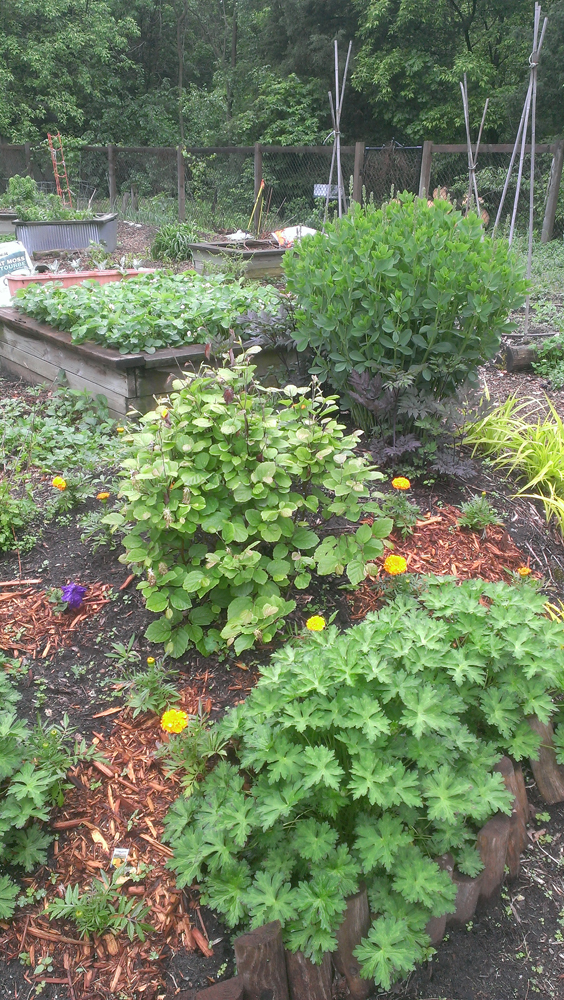
All beds but one mulched and that one I want to plant some carrots in tomorrow or Sunday.  Planted another row of carrots in the large raised bed today.  Put down jubilate and transplant water on the carrot seeds and on the leeks.  Having the heat is good, the tomatoes, peppers and egg plants need it.  Now this isn’t much heat, I know, if you’re reading this in, say, Riyadh or Singapore, but still it counts here.

The growing season has begun to rock on.  I thinned some early beets and onions today, the strawberries have fruit and all the orchard trees have fruit, too.  Kate’s already given away rhubarb and lilacs, plus tomato marmalade from crops awhile ago.

In just one week the sun will hit it’s peak height here in the northern hemisphere:  “The summer solstice occurs when the tilt of a planet’s semi-axis, in either the northern or the southern hemisphere, is most inclined toward the star (sun) that it orbits. Earth’s maximum axial tilt toward the sun is 23° 26′. This happens twice each year, at which times the sun reaches its highest position in the sky as seen from the north or the south pole.”(Tauʻolunga)

After that, as the maximal tilt gives way, slowly, the days grow shorter, the dark begins to dominate and I move into my favorite half of the year, the part headed toward the winter solstice.  Though I love the growing season, it doesn’t feed me in the same way the gradual darkening and cold does.

It’s great right now though, heat for the plants, which will, ironically, feed me when the dark season comes.
Gardens and Bees

Beltane                                                                 New (Solstice) Moon

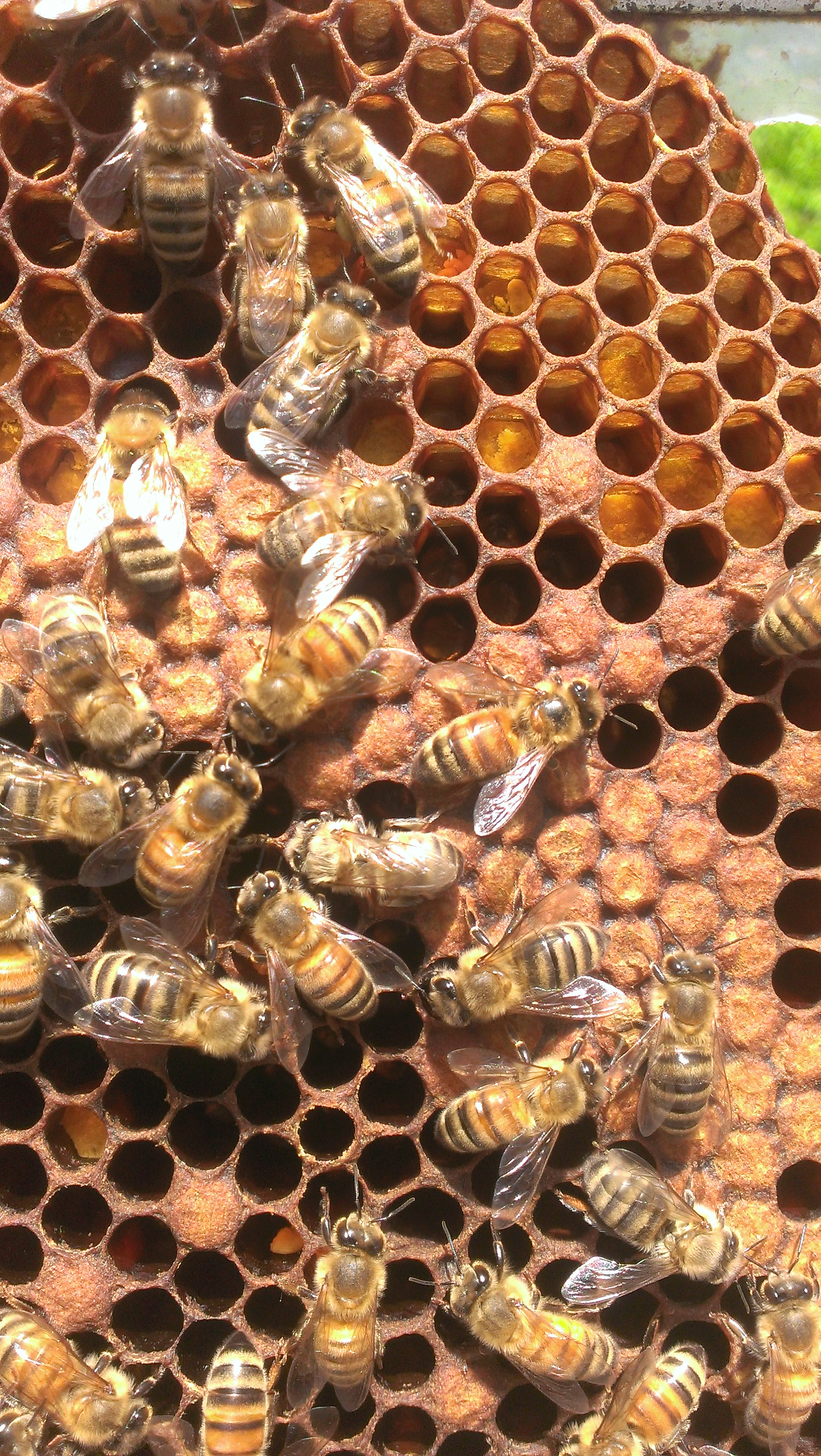
The day began with the bees, lively and growing, now well into the second box, already  filling two frames with brood, making honey and collecting pollen.  After the bees, more honeycrisp bagging.  Yes, this is a pain, but it’s a one and done pain.  That is, after you do it those apples are ok.  I may start a feeding program this year for the orchard,  but that’s separate from the immediate disease and predation prevention.

This is what horticulturists calls IMP or integrated pest management.  Basically you first support the plant because a strong plant can repel invaders.  Then you do physical things like picking the bugs off, bagging the apples.  Only after you’ve done these things–and there are many more than I’ve mentioned–do you consider a pesticide or fungicide.  I don’t resort to those, so my whole strategy comes on the first two legs of the stool.

After I got some bagging done, it was time to go pick up Bill Schimdt and head out to Plato, Minnesota to meet Luke Lemmer of High Brix Gardens.  Plato, Minnesota is about 5 miles west of Young America.  Luke is a husband and father trying to make a living selling bio-dynamic soil nutrients for gardens as an adjunct of International Ag Lab’s agricultural product line.

Luke had mixed the broadcast minerals and put our orders of drenches, foliar sprays and transplant aids in a box.  We spoke with him near the site of a new building he has planned.  He says this year his business has finally begun to take off.  His daughter came out, hugging him and looking down at the ground.  She had what sounded like a summer cold.  He explained the use of the various products and the schedule they require.

The site of his home used to house a hotel and beer garden back when Plato was more of a manufacturing hub.  It now has one factory and the grain elevator.  It’s on an east west railroad line.  A pretty little town, bucolic with all the green thanks to our rains of late.  300 souls.  A true small town.

Back home a nap, then I broadcast the minerals and dug them in on all of our beds and got most of the tomatoes, peppers, egg plants, kale and tomatillos treated with a transplant powder and water.  We’re really a bit behind the curve, since the broadcast will be done in the fall in the future and the transplant aids are made to use when putting the plants in the ground.  But we’re starting when we can.

First Fire

Beltane                                                                   New (Solstice) Moon

The old moon went to black and the new moon in waiting, the Solstice Moon, has not yet appeared.  The weather stayed on the cool and cloudy side today though it did get a bit warmer later.

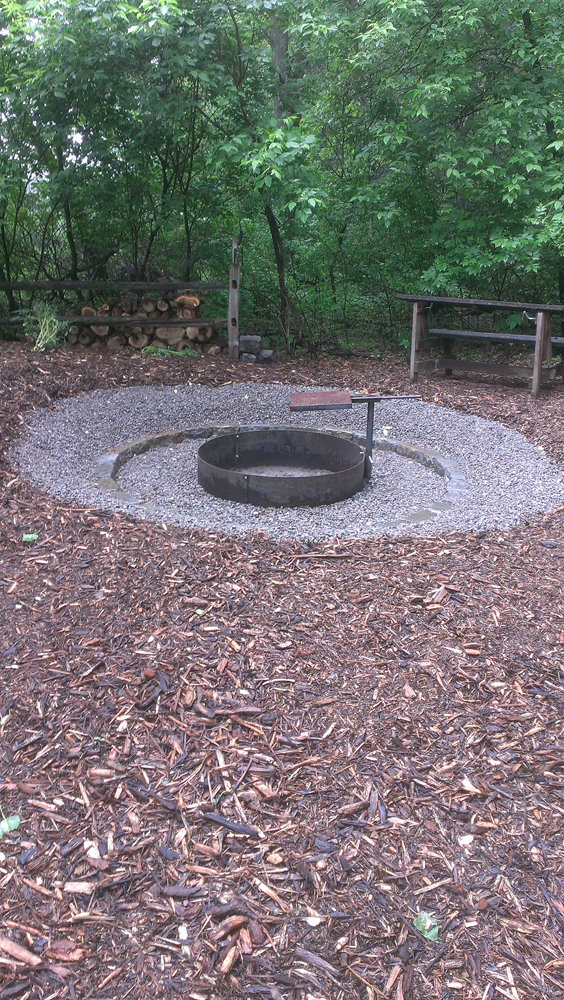
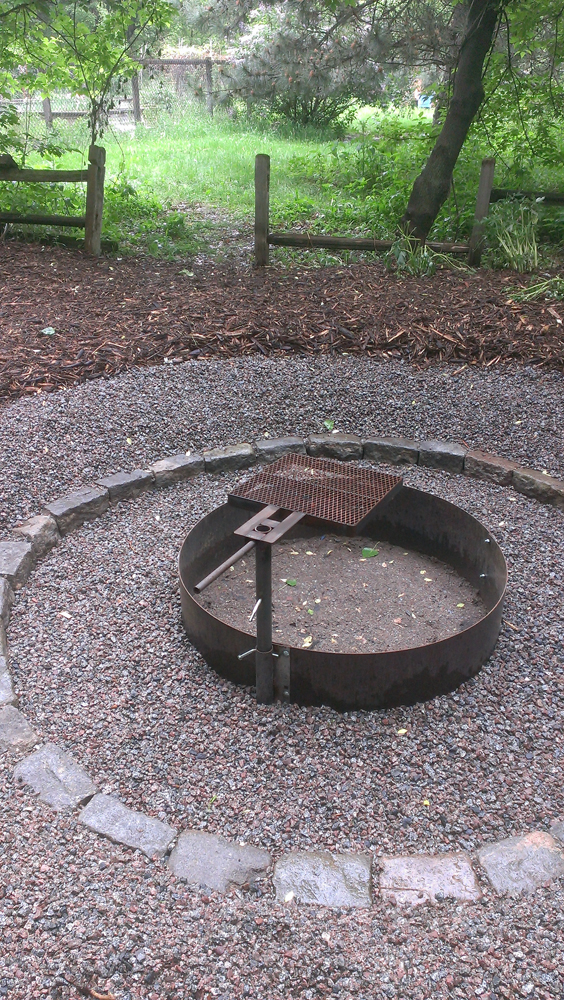
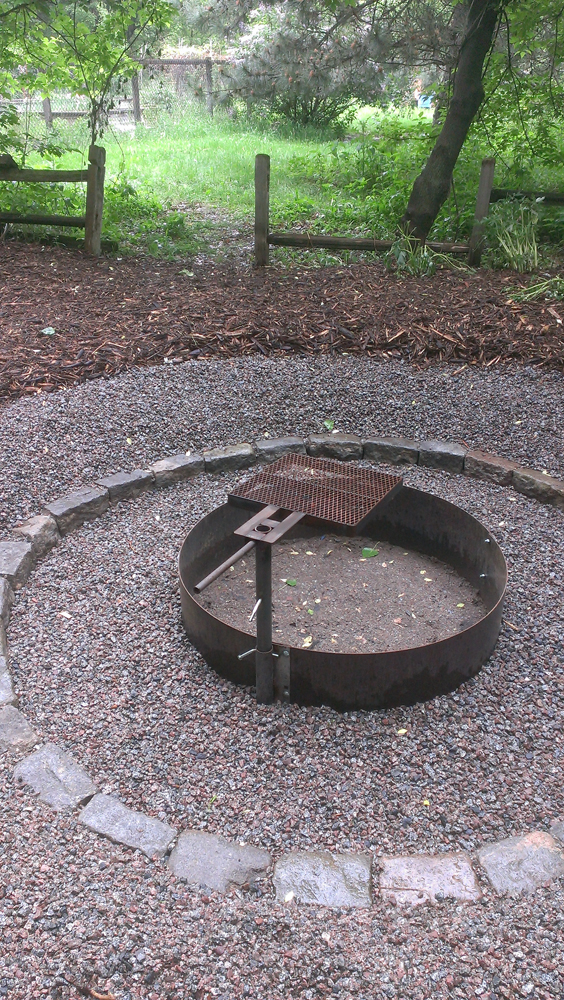
Kate and I had first fire in our new fire pit area, dining on a delicious dinner of cowboy caviar, chicken wings and a broccoli, bacon and raisin salad while part of a dead black locust tree burned.  The crushed gravel we had Javier put around it will have to be modified in some way since it tends to slough when walked upon.  Could have foreseen that but didn’t.

We sat there, watching the smoke rise among the ash trees around the border of what used to be a compost pile.  Our woods surrounds the area, in essence a new outdoor room tucked into the front edge of the trees near the grandkids playhouse.  Looking back into the woods I kept wondering what it would have been like, looking into woods like these and not knowing where they ended.  You can’t even see our property line, so the woods could be impenetrable for all that can be seen.

Afterward we watched two more episodes of the Swedish crime drama, Wallander, not the Branagh one, but the original.  I like the Swedish one better.  In it Wallander has more personality in it than the depressive, uncommunicative character portrayed by Branagh.

Don’t Get Too Comfortable

Beltane                                                          Early Growth Moon

Mark Seeley University of Minnesota & MPR

My MPR colleague Dr. Mark Seeley gave us some astounding benchmarks on just how rapidly Minnesota’s climate is shifting, and how extreme weather in Minnesota is becoming the new normal.

-Weather Whiplash: The record warmth of March 2012 was the “most anomalous month in Minnesota and USA climate history” Fast forward to spring of 2013, and Minnesota is living through one of the coldest and wettest springs on record. This kind of year to year “weather whiplash” is unprecedented in Minnesota’s climate record.

-On the need to adapt: Minnesota’s infrastructure is built upon older perceptions of climate behavior that no longer hold true. We need to adapt our infrastructure to the new climate reality…which include more heat waves, tropical humidity episodes (70F to 80F+ dew points) in summer and excessive rainfall events.

-On changing rainfall patterns: A greater percentage of Minnesota’s annual precipitation is coming from summer thunderstorms…and the extreme rainfall they produce. The gentle soaking rains of our youth are fewer and farther between. That is promoting a cycle of flood…and drought in Minnesota. Twice in the past 6 years several counties in Minnesota were declared in flood…and drought at the same moment in time.

The “new normal” in Minnesota’s changing climate includes an “amplified thunderstorm signature” meaning more of our rainfall is coming in the form of heavy downpours.

Ready.

Beltane                                                              Early Growth Moon

Got my soil test results back from International Ag. Labs.  I plan to follow their recommendations and have sent an order into their local supplier.  Our goal here continues to be the same:  sustainable gardens producing high quality food using no pesticides and only biologically justifiable soil amendments.  This is a different approach from either permaculture or organic growing.  On the one hand it emphasizes soil optimization, reaching that goal through amendments whether organic or non-organic that support that end.  The end is a soil that produces high quality food in a manner sustainable over the long run.  Makes a lot of sense to me and I’m eager to get my order and start using it.

Last night at the Woodfire Grill Mark Odegard talked about a mushroom hunter friend who said that as long at the lilacs bloom, the morels can be found.  Our lilacs are still in bloom, so I wandered back in our woods.  First thing I saw when I entered the path was a giant morel.  I scooped it up, went looking for others.  Couldn’t find any.

I didn’t do a thorough search though due to my recent switch to a lower carb diet.  In the process I’ve lost about 15 pounds and my jeans, conformed to a higher carb me, now slip around my waist with no belt.  Which I had left upstairs.  So, with Gertie and Kona racing around, I wandered a bit, looking at the ground, grabbing my pants, looking some more.  When it started to rain, I gave up and came back inside, promising myself that I’d get that belt and look more methodically when it was dry.

p.s. More on this later, but I heard a news report about Singapore yesterday relating to urban agriculture.  In this case it’s vertical, four-story ag with, they kept emphasizing, no soil.  I know this is possible because I have a hydroponic setup myself, but it flashed through me what a tragedy it would be for the human race if we lose that primal bond with mother earth.

Don’t get me wrong.  I think this is a great idea.  It uses the energy of a 60 watt bulb, they recycle all the water and grow fresh vegetables with a very short garden to consumer trip.  My concern is that its prevalence might make us forget the planet which gave us birth and which receives us after death.

Outside

Beltane                                                              Early Growth Moon

Trying to reconcile everyday writing (a creative need and best practice) with everyday gardening (a practical need and also best practice).  Decided in conversation with Kate to get up at 7 AM regularly, eat breakfast, work an hour outside until 9, then come in to write.  Today was the first day of that new schedule.

(Summer – Pierre Puvis de Chavannes)

Mostly I weeded this morning among vegetable rows where a stealthy clover had crept in and those damned prolific chives, bright green beautiful spears.  Along the way I observed the onions, the kale, the chard, the beets, lots of beets and the carrots.  Unlike my garlic, which had a very low germination rate, the carrots, often a problem, have responded with vigor, many of them up, almost a solid line of small green feathery stalks in each of three rows.

Due to the removal of the ash, and possibly the river birch pruning, we no longer have as much as shade as we had.  A major part of the point in both actions.  Yet.  We planted hostas and ferns and hydrangeas in both spots.  The ones under the ash will need to go elsewhere, way too much sun.  Those under the river birch, I’m not sure.  It’s an east facing side and the tree is still there, plus the seven oaks on our hill shade them, too.  I’ll watch them.

Javier and his crew finished the fire pit with crushed granite, extra thick landscape cloth and five cubic yards of shredded bark.  It’s ready for the grandkids, for the Woolly’s and for us, another outdoor room, this one away from the house at the edge of the woods.  There is a short path from the fire pit area to the grandkids play house.  It’s now a very spiffy area with a home for the imagination and a place to make smores nearby.


Better

Beltane                                                                    Early Growth Moon

The ash is gone from the garden.  A shame, from the tree’s perspective, since it was a healthy specimen, though the emerald ash borer invasion suggested its future didn’t look positive.  Its removal opens two beds to full sun and creates a spot where another bed could go.  Another bed and a couple of other garden areas, suntrap and asparagus patch, will benefit, too.

The ash’s trunk and thicker branch now rest in the spot where I used to have the bees.  After a year drying out, I’ll split them and use them in the fire-pit.  Based on a bid we’ll get this morning the fire-pit will be finished, possibly by the end of the day.  We need to surface the area in a manner that will hold down weeds and still be a good place for folks to gather.

The front beds have been edged and our maple pruned, at last, after 20 years.  The river birch, too, no longer dangling its branches in the way of anyone walking or mowing the front yard.  All this work required stronger and more professional hands than mine or Kate’s.  Louis, Javier’s brother, gave Kate their card when he helped her carry plants to the car at our favorite local nursery, the Green Barn.

It feels good to have folks who know what they’re doing and that we can rely on.

Work Around the House

Beltane                                                                                 Early Growth Moon

Today has been a Missing day.  I’m focusing on it now, trying to get most of the way through the third revision before the Loft class.  I’ll make substantial progress by then and I might finish.

Javier and his crew removed the ash tree, cut up its trunk and branches, put down a gravel and sand like mixture in the fire pit, centered the fire ring and reset all the granite pavers.  Right now they’re finishing up the edging and trimming the river birch.

Having people do work around the house both pleases me and sets me on edge.  I know they are getting work done that I either cannot do or will not do.  In that sense they make our home more pleasant.  The on edge part comes from a part of me that is uncomfortable asking others to do things for me, even they get paid.  This comes from a myth of self-sufficiency, a part of patriarchy that would, on the one hand, dominate and on the other do everything.  This is a contradiction of a sexist world view, rooted in my past and not entirely dislodged.


A Grounded Faith

Beltane                                                                         Early Growth Moon

I walked through the garden alone, while the dew was still on the beet seedlings and apple blossoms.  Oh, wait.  That was roses, wasn’t it, from the old gospel tune.

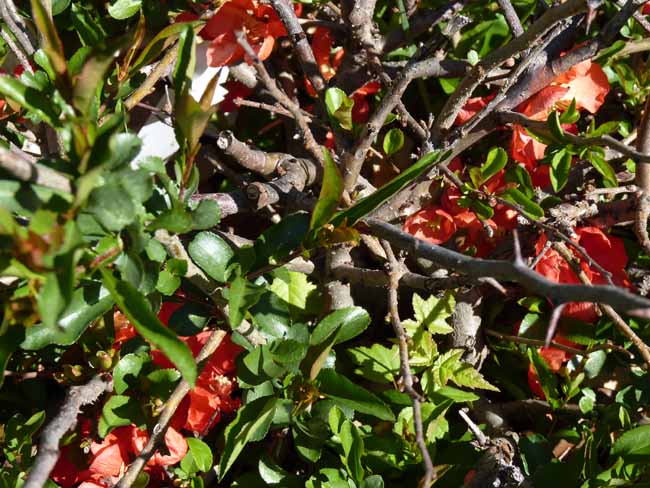
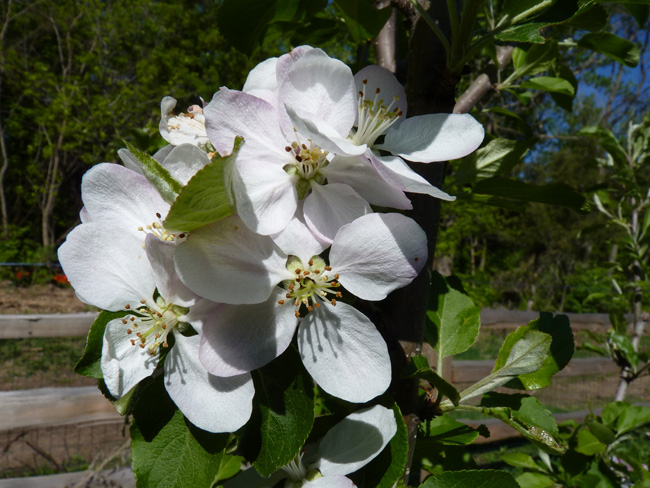
If you want a moment of intense spirituality, go out in the morning, after a big rain, heat just beginning to soak into the soil, smell the odor of sanctity, in this case fertility, coming up from the plants and their medium, see the beets and kale and carrots and cucumbers and sugar snap peas on the rise, look at the onions and garlic and leeks filling out, getting greener, taller and fatter.  Take a stroll past the cherry blossoms, the pear and plum blossoms, the apple blossoms that came out yesterday, past the bee colony hard at work, over to the blueberries and check out the new growth on the hard pruned wild grapes.   The sand cherries and quince and even the currants with their modest, tiny green flowerettes, all showing to the bees their best and sweetest offerings.  Each petal, each flower, each stalk, each leaf is a miracle, a wonder of the evolutionary path on which that particular organism travels, its genetic ancientrail.

(our quince)

That walk, by the way, is not the walk of an individual, self-reliant and independent, but of a dependent creature glorying in the symbiotic relationship between his cells and these plants.  This is a community enterprise, the humans here, Kate and I, in partnership with the vegetables, the flowers, the fruit, the bees.

(our honeycrisp tree in bloom)

Which reminds me of the other partners, or co-habitaters at least, all the wild animals that live in the soil here, the gophers and earth worms and grubs and snails and voles, those who use the trees the squirrels, the woodpeckers, pileated and red-tailed, crows, hawks, Great Horned owls, robins, chickadees, blue birds, those who live on the land, under buildings and in brush piles the rabbits, chipmunks, woodchucks, opossums, raccoons, mice, the interlopers the wild turkeys, the deer, the coyote.  And of course, the woods themselves the ironwood trees, the poplar, ash, cottonwood, red oak, burr oak, cedar, spruce, yes even the black locust and the buckthorn.  The grass, yes, the dogwood yes, the amur maples yes, the alicanthus yes.

(a baby opossum in a dead tree in our woods)

We all share this land, to which we have the deed, but so little else.  When Kate and I leave, as we will one way or the other, the rest will continue, unaffected, unmoved by our passing.  Land is not for owning, but for cohabitation.  We know this, if we bother to look.