Fall Harvest Moon
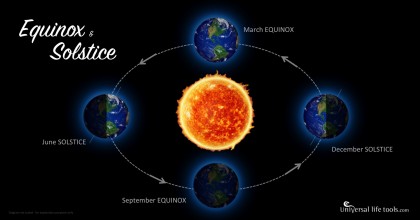
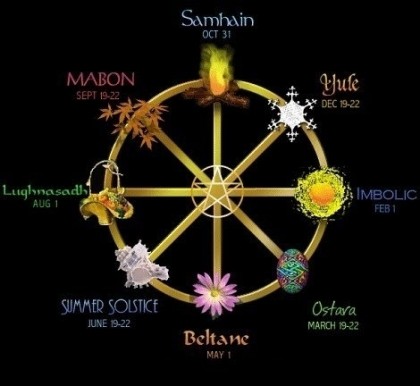
Today is the autumnal equinox. As the great wheel rolls on through the year, this is a day/night of balance, of night and day roughly equivalent. Here in the Rockies, on Mountain Time, the earth and sun are not, at the equator, tilted away or toward each other. The moment when this is true occurs at 2:02 p.m, MST. The day itself will be 12 hours and 9 minutes long. The 12 hours and 1 minute day doesn’t come until September 25th this year.
The notion of equinox though, equal day and night, reminds us that this astronomical event, sun and earth’s midpoint lining up, does mark a significant change. The light gradually increased from the vernal equinox to a maximum day on the summer solstice. Darkness gradually increases from September 25th to its maximum at the Winter Solstice, the longest night of the year.
For reasons I don’t fully understand, I prefer the six months of the year when darkness dominates. This period between autumnal and vernal equinoxes is my favorite half of the year. Here in the temperate latitudes-we’re 4 degrees north of the 35th latitude here in Conifer and temperate equals 35 – 55 degrees of latitude-this six months goes from the tail end of the growing season’s warmth to the slow release from winter’s cold that usually happens in late March.
 Here in the mountains the streams have long ago drained off last winter’s snowfall; the aspen have turned golden. The cervids have begun their annual procreational dance. Sex is in the air. We have snow in the forecast for Monday and night time temperatures are in the good sleeping weather range for Kate and me. In Minnesota we could hear the Andover marching band practicing and here the high school football season is already well underway. Coats become an item of consideration when leaving the house.
It’s a time to consider the balances in your life. Has anything gotten out of whack that needs adjustment? Working too much? Seeing too little of family and friends? Or, too much? How about the diet of your choosing? Too much or too little exercise? Television? Social media? What other dialectics in your life might you examine?
Consider taking a cup of coffee (beverage of your choice) on one of these days with a just right temperature and going somewhere quiet. Investigate your life, probing for parts of it that may not be nurturing you right now. What are they? How can you make gradual, not sudden, changes that will help you become the person you already are? It may be that some of that work involves cutting something back or increasing something else, just like the temperate latitudes do with their light menu.
We can learn from the rhythm of day and night over the course of a year that each one, light and dark, nurtures different things, sometimes drastically different. Summer grows our food while Michaelmas, September 29th, is known by some as the springtime of the soul.
What will you learn, this day?
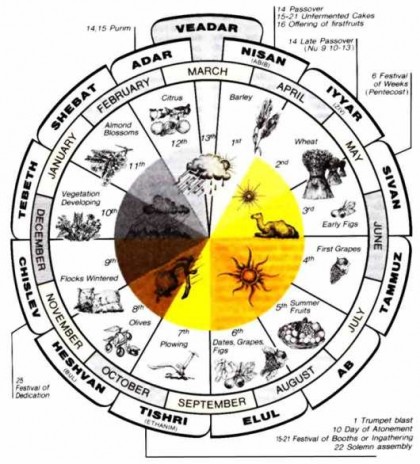
 “That’s us,” he said, sweeping his hand around the room. Of course, it’s not me, but I took the point. Israel, those Jews in the sanctuary at Beth Evergreen and in Rosh Hashanah services around the world last night, and those Jews not in the services, too, is a community which celebrates its most important memories every Sabbath with a parsha reading, a segment of the Torah.
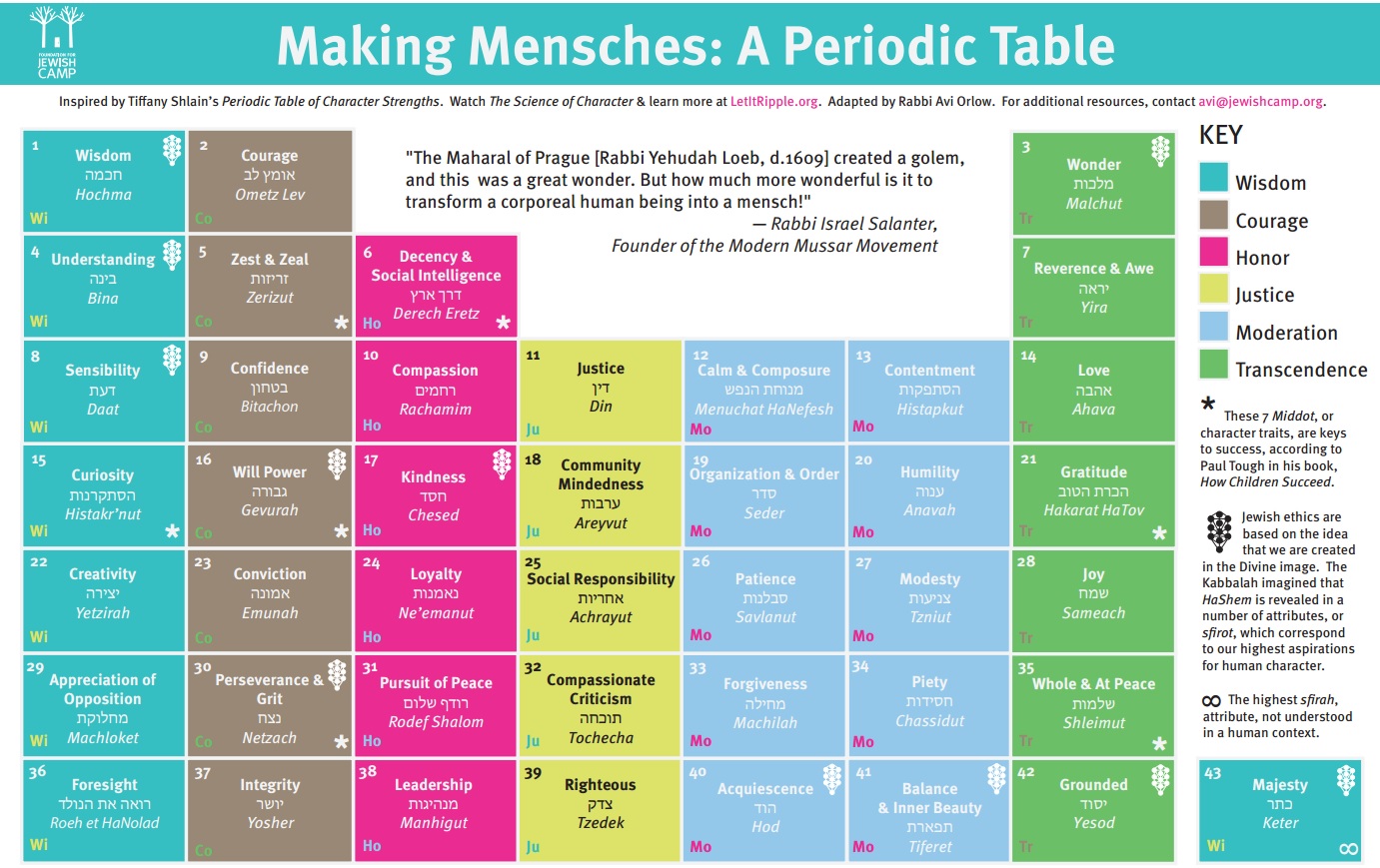
 This is reconstructionist Judaism, an explicitly non-supernatural religion that nonetheless adheres to the traditions and customs of Jewish civilization, including Torah study, sabbath observance, comforting mourners, repairing the world and doing acts of loving kindness.
 The last night of the Eclipse Moon, a disastrous month for North America from the eclipse to its waning moment. The wildfires are still burning in the West from the state of Washington to California, in Oregon and Montana and Idaho. Harvey and Irma related disaster cleanup has only begun. The same in southern Mexico for the victims of the 8.1 earthquake. Jose is still pounding around in the Atlantic and Maria, now a category 5, has just shattered Dominica, Guadeloupe, and is headed for Martinique and Puerto Rico. It’s not the apocalypse, no, but for those whose homes and forests are on fire, under water, battered by wind or destroyed by the movement of the earth, it may as well be.
 Yesterday I traced the funk back to an e-mail I sent out late Saturday night thanking all the main participants in the Evergreen Forum. Two folks responded quickly, thanking me, too, and I realized, as I searched for the source of the mood, that I wanted more of those and when they didn’t come, I wondered why not? It was that wondering that created the bad mood. In others words I had poisoned my own well, then drunk from it. Well, I realized, that’s silly. Take the compliments, move on. So, I did.

 Kate was nervous about her food, but it was received well, its disappearance a testimony to its yumminess. Especially the jack fruit. Kate found it at King Sooper this week. She bought a 20 pound one, then she and Ruth performed a fruitectomy on it to retrieve the sweet yellow flesh. This southeast Asian fruit is unfamiliar to most North Americans, but I had it for the first time when preparing to board a water taxi on the Chao Phraya in Bangkok. If you haven’t had it, really good.
 Albert Camus. One of my favorite theologians. It occurred to me that the abyss Camus mentions may be what gets crossed when we experience awe. Somehow we let the absurd in, or the mute world gives us a shout.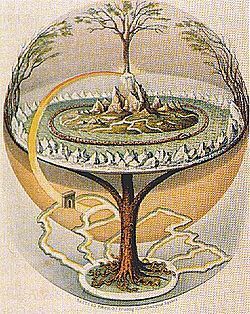
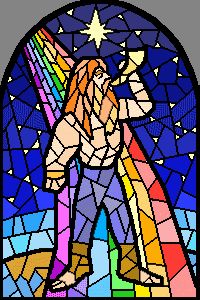 What all of these ideas suggest, I think, is that a gap exists between an individual and the really real. An important religious question is what is beyond that gap, or what constitutes the gap, or what is the significance of the hidden for our spiritual lives.
 The mind and heart, so wonderful, so necessary, so amazing, but also so fragile. Take mine for instance. Yesterday was a full day, beginning, as my days do, around 4:45 am. I got the dogs fed, ancientrails written, Jennie’s 750 words written and went downstairs to eat breakfast and make two sugar cream pies.
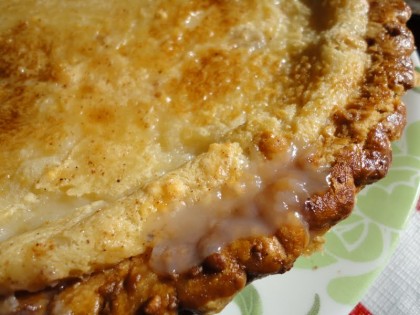 Today is a busy one. Once I’ve finished my writing, ancientrails and Jennie’s Dead’s 750 words, I’m going to make two sugar cream pies. One is for home, the other for the mussar leadership group that meets tonight. Sugar cream pies are a distinct cultural marker for the Hoosier state, but more than that, they’re really delicious. Why I don’t make them often.
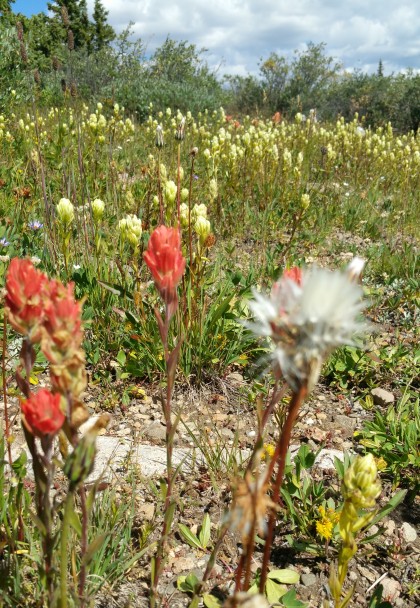
 Up here in the mountains the occasional aspen has begun to turn. The grasses in the mountain meadows have lost their intense green. The angle of the sun has already lessened, casting deeper shadows. Orion is visible in the dark, clear night sky. Moose, elk and deer bucks have begun to drop the velvet on their antlers, preparing for the quickening of the rut. The bears become more brazen as their need for calories, more calories, before hibernation makes them feel an urgency.
 The orchestra of life plays this symphony all year as it responds to the conductors spring, summer, fall and winter, each with their own favorite tempo. The elemental nature of the West makes the composition here often raw, sometimes going as far as dissonance during the chinooks, or a dry summer month, during a blizzard, yet it is usually majestic with soaring blue notes and the babbling background music of mountain streams and bugling elk.