Samain Thanksgiving Moon
 Happy to have some good news to report about Jon. Went to his court date yesterday. His inner attitude seems to be shifting away from anger about the divorce (understandable, but not helpful) toward getting on with his life, accepting the constraints of the restraining order (unreasonable, but legally enforceable, as he just discovered). He wants to get his art in a gallery or up for sale. This is big because it’s a key part of his identity that lay fallow during the twelve years of his marriage. He needs positive reinforcement and he’s had more than his share of negatives over the last few years.
 He’s a very talented, smart guy who can handle all the work necessary to remodel his home, replace an axle in his car, ski a great line down an A-basin bowl, teach elementary age kids how to express themselves. I hope he can organize his life so these thing line up, move him forward, and make him feel good about himself.
Kate had a nausea free day yesterday. She took the ativan and that seemed to help. A day without nausea is like a day with sunshine. It makes her feel good and makes me feel good. May it continue.
 I’m feeling a bit stressed, a lot going on. Religious school tonight. I’m taking pizza makings and teaching a unit on holidays, especially winter holidays. The kids will reimagine, reconstruct a new winter holiday. Tomorrow morning Kate has two imaging studies, looking for zebras. Tomorrow evening is Gabe’s winter concert in Stapleton. A sequelae of the hearing yesterday is that Jon can’t, for the moment, attend. The old protection order carved out an exception to the 100 yards rule for events with the kids, things like parent-teacher conferences, concerts, doctor visits, but the law is a blunt instrument. Yesterday by default it eliminated those exceptions. Jon wants me to go to represent our side of the family. Important for Gabe. I’ll go.
Stressed, yes, but not anxious. Still. Amazing myself right now. Following the water course way, going with the many changes, leveraging their energy, keeping my feet while wading in a fast flowing river. Not trying to dam it up, divert it, slow it. Finding the chi, aligning mine, taking each day on its own. Most of the time, and this is the part that amazes me, little of this is conscious. Means I’ve integrated something at a soul level, some amalgam of mindfulness, wu wei, and love of life.
 Got reinforced shortly after the move out here when I had to deal with prostate cancer. That shook me. I worked hard to keep myself upright and maybe, in the process, began to consolidate a lot of learning. A major part of that consolidation came from the support I got from family and friends. Oh. Life can be good, even when it’s bad. Weird. Since the move, it’s been one damned thing after another, or it feels that way right now. Those things forced a going deep, being honest, being grateful a lot. Now, four years later, our move anniversary is the Winter Solstice, my Colorado Self, the one born in the alembic of all those insults, has asserted itself.
And I like this guy. This mountain man, man of the West, embedded in family and friends and Congregation Beth Evergreen. Doing ok. Thanks to all of you and some random acts of life.
 Black Friday. Should be a dark observance like so-called Good Friday. But, no. It’s a flood the needy capitalists with your money by pretending to save money on deals that still allow them make even more money sorta day. I mean, geez, I guess it is a dark observance after all. Yeah. Black Friday.
 We rise from the tomb. Break out of captivity. Care for the memories of our dead. Do penance and reorient, return to our best selves. Celebrate a month of fasting and giving.
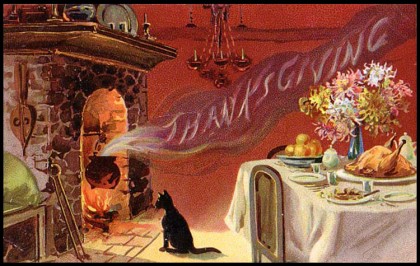 We put out our best aluminum tins from Tony’s. Mashed potatoes, sweet potatoes, sage stuffing, green beans almondine. I plunged the plastic bag of turkey gravy in boiling water. The turkey breast went in a shallow pan with a 1/2 cup of water. We have two ovens and the top one, the smaller of the two, did its job well for the potatoes and the stuffing.
 On the table sat our finest paper plates, a big turkey printed on them saying gobble, gobble, gobble. The napkins had pumpkins and vines and stuff. The meal was very good and aside from the now suspect ovens (I won’t mention that the other one went wonky, too.) exceeded my hopes.
 Kate’s two months from hell. A modest amount of this excellent meal sent her straight to bed. Not sure where we go from here. Smoothies and Korean food, maybe.
 Woke up this morning and did my gratitude practice. At night I consider all the gifts I got during that day, all the gifts I gave, and any trouble I caused. In the morning I start out with what I’m grateful for right now. Both practices seem to soothe me, put me in a place to receive and accept blessings. Life’s a hell of a lot better when I’m in that sorta space.
 Wonder what the stars (and the planets) have to say about reading my full chart for the first time today? We could look it up. I’m going to Golden, under Table Mesa, to the Bean Fosters coffee house. Elisa, a petroleum geologist, dean of academics at a consortium of community colleges and a member of Congregation Beth Evergreen has done whatever astrologists do with my birth information. She says the consult lasts as long as I have questions. She really doesn’t have that long, so I’ll restrain myself.
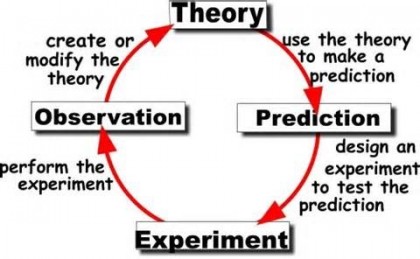
 Bacon also points out that the path of facts and induction may be slow, but it heads in the right direction. No matter how fast you go down a path without facts, you will never reach the truth.
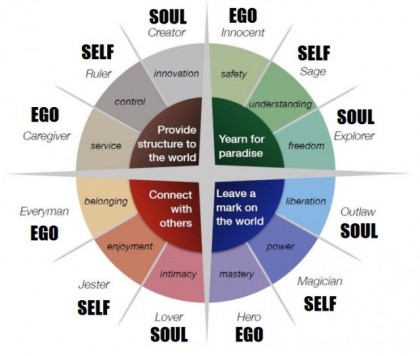
 His emphasis on depth psychology, in particular synchronicity and the collective unconscious, as partial evidence that the modern Self need not be wholly isolate makes sense to me. I had many years of Jungian analysis and find the non-pathological approach of Jungian thought very congenial. I’m not sure how many outside the world of depth psychology would agree with him on this point however. But, I do.
 Neither an obvious nor an easy matter. “I’m going to have my chart read this afternoon.” “I know.” “Yes, you know, but you don’t approve.” “Oh, I think it’s fine to read your chart. But, believing it?” She shrugged. Kate and I share a strong or high version of the modern Self, reason uber alles. I have flirted, however, for a very long time with a Romantic view carrying an aesthetic and spiritual seeker’s heart inside a rationalist’s body and mind. This is not a synthesis. It’s a carrying of opposites, learning from both, knowing the parallel, never touching rails down which they run.
 One more turn to Tarnas before my consultation with Elisa tomorrow. He made his move toward a synthesis of the modern mind and the Romantic–equivalent to the distinction between the self shaped by the Copernican disenchanted cosmos and the primal, ensouled (enchanted) universe that went before. His initial step came through depth psychology, tapping the collective unconscious and the idea of synchronicity to suggest a permeable self influenced by the cosmos and influencing it. Having opened the door between Self and cosmos with depth psychology, he turned toward astrology.
 His argument about skepticism as a tool, not an end, was a wakin’ up moment for me. Oh, duh! Of course. Only I hadn’t seen it that way. Skepticism was a way of life for me and I treated the world of ideas as you might expect. I embraced almost nothing, held every philosophical and religious claim at a skeptical arms length. Yes. And no. I had let the tool use me, rather me using the tool.
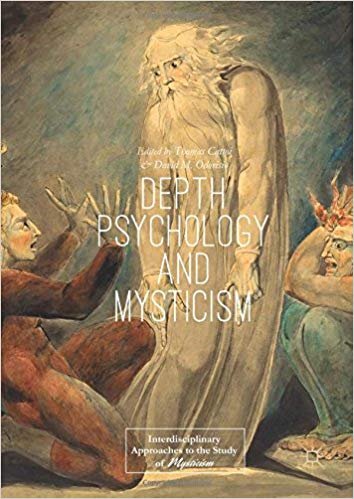 My only point here is that astrology, especially one linked as Tarnas does to the concept of archetypes, may provide us with aids to self-knowledge, aids that light up an enchanted universe, help it become visible. And if it does, I want to use it, include it in my tool kit. Right there alongside skepticism. But I don’t see it as the only, or even the most important, clue to an ensouled universe.
 When Orion rises, as he does each year, and I see him for the first time, it is the same feeling as seeing an old friend again. The same feeling. Orion has been with me and I with him since the guard shack in Muncie, Indiana where he graced my night shift attention. Orion is not merely starry objects far away, arranged in a distinctive pattern, though he is that. He is a part of the universe with which I have a personal relation. Is that relationship reciprocated? I don’t know. But, it feels like it.
 The current signature line on my e-mails is from John Muir, “You are not in the mountains, the mountains are in you.” Yes. In this discussion that includes depth psychology it’s appropriate to notice the synchronicity of living on Shadow Mountain, that massif within the psyche that contains all that we fear, that we reject, that we push away. How bout that? And beyond my study window is Black Mountain.
 As we try, some of us intuitively like me, some of us more systematically like Tarnas, to heal the rupture between the human and the living universe, we find a drag chute attached to our thought: 500 or so years of human autonomy, freedom, even liberation, 500 years of human probing, learning, knowing about the world seemingly disconnected from our Selves. The more classically educated you are, the more broad your learning, the more likely you are to feel something wrong with this line of thinking. It doesn’t add up. How can the universe have intention, consciousness? It’s the objective reality we probe with minds like Einstein, Bohr, Sagan, Darwin, Pasteur, Curie. We’ve found its regularities, its laws, its patterns, and we can use them to predict natural behavior and therefore exploit it.
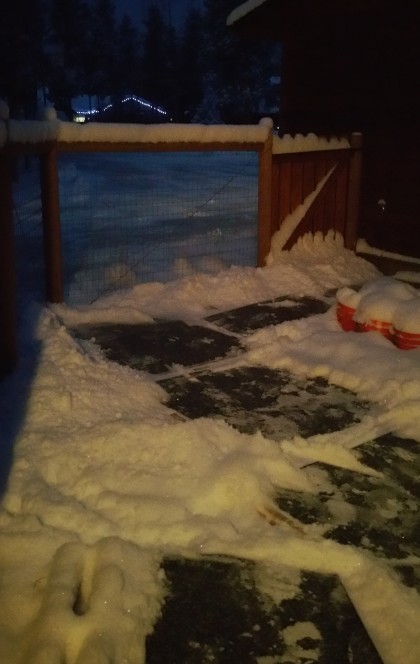 7 degrees this morning on Shadow Mountain. About 10 inches of fluffy powder since Saturday night. Fell yesterday clearing snow off our temporary decking, the palettes and stall mats I’ve shown before. Not hurt. Reminded, again, pay attention.
 But, as the human mind, using its sharpest tools, reason and skepticism, saw through this primitive perspective, and, as monotheistic religions posited a creator who made a special creature, humankind, in their God’s own image, a gap grew between the human and the universe. Now, in the modern era, we look out from within to a morally neutral cosmos, devoid of soul or spirit, moving with randomness according to physical laws that, since we have discerned them, reveal the trapped, the determined nature of, well, nature.
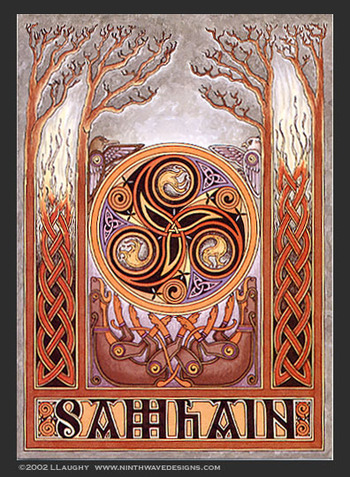 Samain. The end of summer. The end of fall. The end of the growing season. The time of quiet and darkness and cold. Ushered in here on Shadow Mountain with 6 or 7 inches of wet snow. Welcome. Winter has come.
 The wings of the angel of death hover, whirring. They brush the air past our souls. We feel it, a faint quiver. He is never far away, never at rest, never near the end of his duty. Murders, catastrophes like Tree of Life, Pulse, Columbine, 9/11 are not awful because people die. We all die. They are awful because these are lives ended too soon, with malice, through hatred and venality.
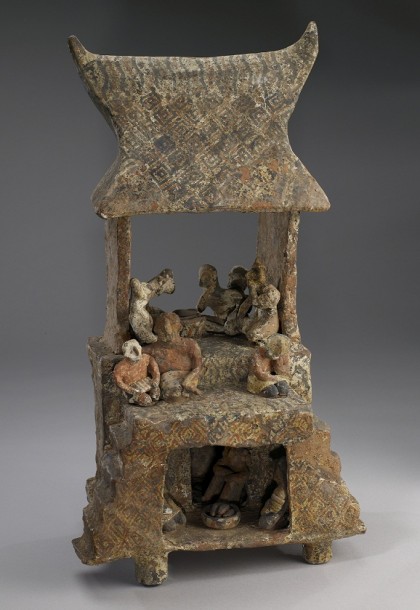 On this day, Samain, summer’s end, the season of vitality, growth, the season which replenishes those things we need to sustain life comes to a close for another cycle. As it does, we remember those whose vitality and presence shaped our own lives, just as later, after our deaths, others will remember us. I suppose this could sound grim, but I don’t experience it that way. I’m more of the Mexican, Latin American spirit in this regard.
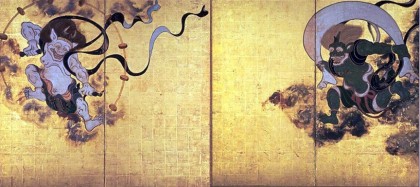 The weather gods have chosen an apt offering for the last day of fall, 8 inches of snow. In true Colorado fashion it will probably be here tonight and tomorrow, gone by Thursday if not late Wednesday. Looking forward to it. A difference between Colorado and Minnesota exists in forecasting snow. Here in Colorado people pant for the snow, welcome it, do celebratory dances. In Minnesota, not so much. It means work and slick roads in the Gopher State; here snow means beauty, tourist dollars, and will be gone conveniently.