Beltane Rushing Waters Moon
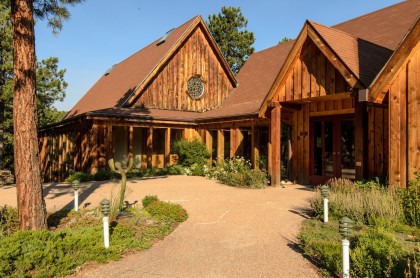 Irv Saltzman invited us to a performance by his singing group, the Renaissance Singers. It was held in a wooden Episcopal Church, St. Laurence’s, which is near our home. Directed by a Chinese national, Hannah Woo, who is finishing her Ph.D. in musicology, they were 8, four men and four women. As a group, they matched each other well. April, a soprano, had a lovely clear voice and a large range. Irv, formerly a tenor, has now transitioned into a bass/baritone role. Their performance was wonderful. At a meal afterwards we discovered April is our neighbor.
 Renaissance choral music and instrumental renaissance music has always captivated me. It’s easy to see courtiers in colorful costumes listening to this music in a palace, brown robed and cowled monks hearing it in a morning prayer service, or small groups performing at home for their own amusement. It’s also the music most often heard at Renaissance festivals. Sorta makes sense, eh?
The sanctuary had a vaulted ceiling with exposed beams and two large, clear windows that looked out to the east, toward Shadow, Evergreen and Bear mountains. It rained while we were there and the mountains were in mist, the windows covered with raindrops slowly moving from top to bottom. There were individual chairs, padded with kneelers, arranged in a three sided configuration, making the sanctuary a sort of thrust proscenium stage, an ideal arrangement for a small group of singers.
A church artist had painted the stations of the cross and they were around the sanctuary, set off by bent sheet metal frames. A copper baptistry, large, sat over a cinerarium where the congregation deposits cremation remains and memorializes the dead with small plaques.
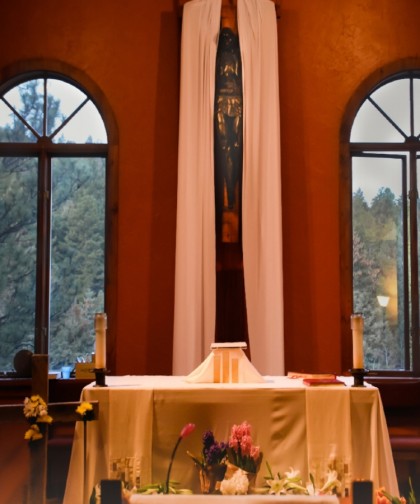 Between the two windows hung a large crucifix, a cross made of bare, light wood and a bronze Jesus hung by two nails. I had an odd sensation while listening to this music I’ve often heard in monastic settings on retreat. It carried me back into the spiritual space of an ascetic Christianity that often comforted me. This time though I came into the space as a peri-Jew, identifying more with Marilyn and Irv and Kate, with the still new to me spiritual space of Beth Evergreen, than the theological world represented by this spare, but beautiful sanctuary.
The crucifix stimulated the strongest, strangest and most unexpected feeling. I saw, instead of the Jesus of Christianity, a hung Jew, a member of the tribe. More than that, I felt the vast apparatus and historical punch created by his followers, followers of a man who shared much of the new faith world in which I now find myself. It was an odd feeling, as if this whole religion was an offshoot, a historical by-blow that somehow got way out of hand.
These feelings signaled to me how far I’d moved into the cultural world of reconstructionist Judaism. I see now with eyes and a heart shaped by the Torah and mussar and interaction with a rabbi and the congregants of Beth Evergreen.
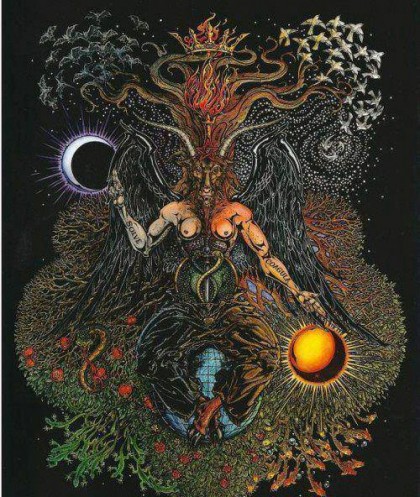 This was an afternoon filled with the metaphysical whiplash I’ve experienced often over the last year, a clashing of deep thought currents, spiritual longings. This process is a challenge to my more recent flat-earth humanism, a pagan faith grounded not in the next world, but in this one. Literally grounded.
What’s pushing me now is not a desire to change religious traditions, but to again look toward the unseen, the powerful forces just outside of the electromagnetic spectrum and incorporate them again into my ancientrail of faith. This makes me feel odd, as if I’m abandoning convictions hard won, but I don’t think that’s actually what’s going on. There is now an opening to press further into my paganism, to probe further into the mystery of life, of our place in the unfoldingness of the universe, to feel and know what lies beyond reason and the senses.
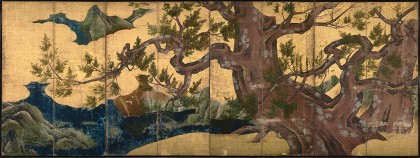
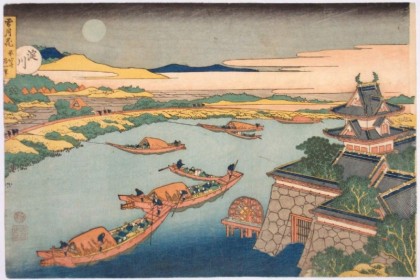
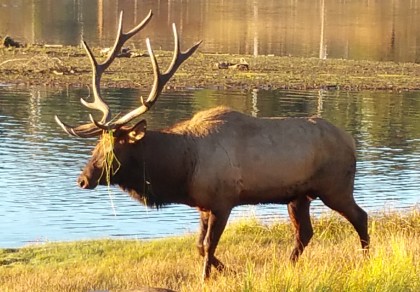
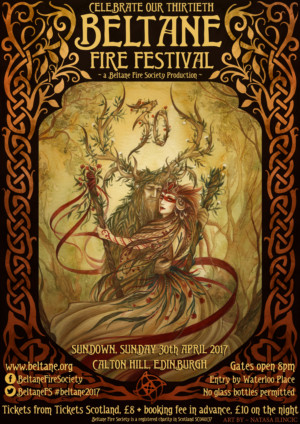 Cue the couples out in the fields doing their sympathetic magic for the fertility of the crops. Light the bonfires for leaping over and the bonfires for driving the cattle between. Gather the naked Scots outside of Edinburgh for the great fire festival. Dance in the streets because the growing season has finally come round again, the Great Wheel has turned and food will begin to appear from mother earth.
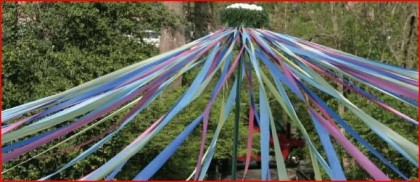 This is Beltane. Mayday. Collect women and men, girls and boys, give them streamers and ribbons, connect them to the tall pole and have everyone swirl, under and in and out and back again. Pick flowers for the table, for a basket, for your lover.
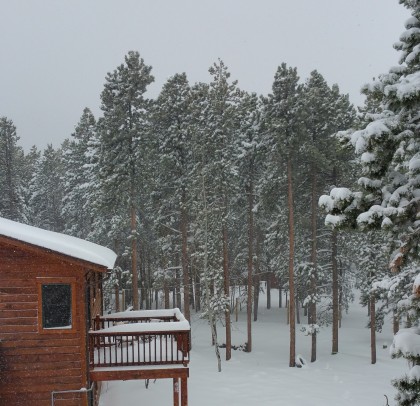 The last day of spring. Solar panels covered. Roof covered. Driveway plowed. 16-24 inches of new snow Friday night through yesterday. Delightful, but hardly springlike. In our spring fantasies, that is. The ones that have tulips and iris and crocus and lilacs and wisteria in them. For a mountain spring though, welcome and not unexpected.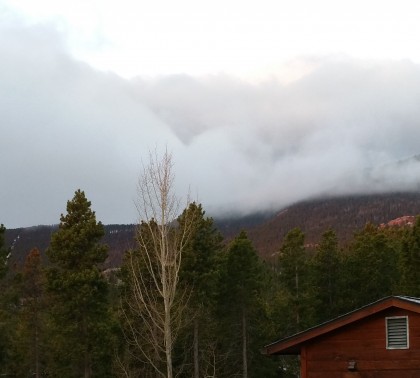
 The waning passover moon is behind a faint scrim of clouds giving it a moonlit halo. Each moon cycle repeats the past, yet is unique to itself. The slow orbit (relatively slow) of the moon around the earth produces the same phases each month and in that sense repeats. But the lunar month and the sidereal year do not quite match up*, as all cultures that depend on lunar months for their calendars have long known. Judaism is such a culture.
 When you consider the irregularities in the lunar position occasioned by the sidereal/synodic difference and the speed of our solar system both moving on its own toward Lambda Herculis and around the Milky Way and then throw in the speed of the Milky Way itself, it becomes clear that no one phase of the moon every occurs in even remotely the same location.
 Finally, the point. We are, each of us, unique and precious instances of over 2 billion years of evolution of life on Earth. We represent a moment in time, yet even our moment is not static. It finds us moving incredible distances.
 Think about it. Out of all the billions of years since the Big Bang, moving in all the various ways discussed above and at speeds that make Formula One look slothful in the extreme, you and I exist in this special time together. How remarkable! We are in fact made as the conscious image of this whole universe, with all its reckless momentum and we have been given the chance to know each other and through knowing each other to know the universe that gave birth to us.
 Easter morning. Sunrise services somewhere. The celebration of the resurrection and, by implication, the incarnation. As Passover defines Jews, Easter defines Christians. Whether you find the idea of resurrection absurd or inspiring, it heralds, as does Passover, the coming of spring. It’s not difficult, at least for me, to see the power of resurrection in the emergence of spring ephemerals: daffodils, crocus, grape hyacinth, early tulips, snowdrops, pasque flowers, bloodroot.
 Moses reminds the slaves, and God, of the covenant made with Abraham long ago. That covenant is the bulb planted in the hiddenness and darkness of bondage. When God finally forces Pharaoh to let the slaves go free, the bulb begins to push its stalk toward the surface. Though it takes forty years of wandering for the stalk to break the surface in the Promised Land, the beauty of freedom’s flower has dazzled those struggling with their own personal or political bondage ever since.
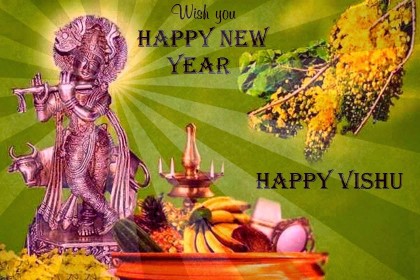 So on this great wakin’ up morn, I’m greeting the sun, the greening lodgepole pines, the daffodils, the pasque flowers and bloodroot with a religious fervor.
 “You need a rest day.” “Not for cardio.” This exchange with Kate has reverberated since we had it a couple of days ago. “You need a rest day.” I’d taken Sundays for many years, but recently began doing a longer cardio workout on that day.
 As many of you know, I began, not long after this time, to follow the Celtic sacred calendar, The Great Wheel, a practice now long embedded in my life as you can see each day on this blog in the upper left hand corner.
 Work is discouraged (forbidden, in the stricter applications). The discipline includes not even discussing work on the sabbath, no planning for the next week. It also emphasizes personal spiritual development, torah study, attending services, private meditation. This is a day, once a week, strictly for being. Being in the here and now.
 Writing can lay bare something hidden, perhaps something that needed excavation or something attached to a thread, even a flimsy thread, by which it can be pulled from the inner world. Things get lost in there, pushed behind stacks of unused memories or stored with a faulty label. Sometimes ideas once full and vibrant get partially severed from their context, crucial links of thought go missing and the idea fades away.
 Which, speaking of ideas, then links to the idea of the third phase. That quote comes from recent thoughts on the third phase. A primary wondering for me, I think for all third phasers, is this: what am I about in this last phase of my life?
 Part duty. For whatever reason I came out of Alexandria with fully formed political ideas about justice, equality, fairness. They were strong, rooted in the powerful union movement among my friend’s parents who worked for General Motors, reinforced by the liberal politics of my Roosevelt Democrat parents and then pushed toward action in the turmoil of the 60’s.