Samain Bare Aspen Moon
 The day after the day after. See, there’s the sneaky part of our language. This is the day after the day after Thanksgiving. Yet, really, this is another day, neither after nor before, just a day on its own. Yes, it’s a little further along the third planet’s track around the sun, but it’s a spot on the orbit, so different than yesterday and tomorrow, but no different as a day than either of them save for the slightly less light occasioned by the planet’s tilt, now away from the sun for those of us in the northern hemisphere.
OK. We’ll not flog the old time horse anymore right now. There is a case to be made for chronos, too, but it’s the assumption we share and it obscures other, equally important ways of understanding time.
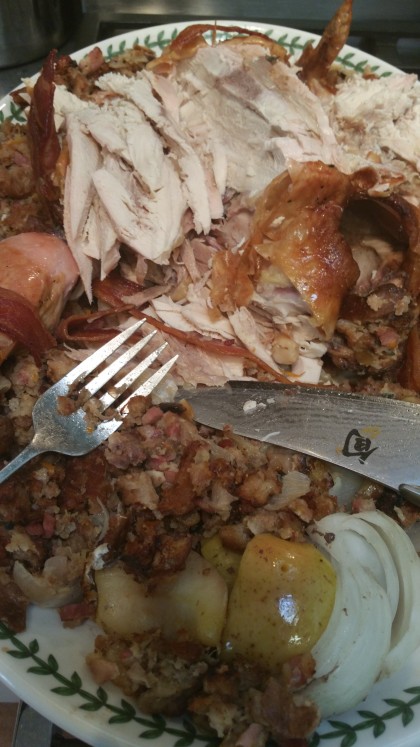 Anyhow leftover capon, pancetta and fig stuffing, green beans, mashed potatoes, sweet potato pie and caramelized sweet potatoes, pecan pie and deviled eggs rest in the fridge, awaiting their moment. The slow and the stuffed have gotten up off the couches, the beds, the chairs and started to move around again within their lives.
Yesterday (as my mind insists on designating it) I drove down the hill to Aurora. Jon has trees and shrubs on his fenceline that he wants removed. This is something I can do, so I wanted to get exact instructions. He showed me. It won’t take long to do and I plan to go down tomorrow (as my mind insists on designating a day/night cycle we’ll repeat as we return to this spot on our tilt-a-whirl ride of wandering space rock).
Yes, I’m having a little trouble letting go of thoughts about time. It’s just that the prepositional nature of our language is so larded with sequencing words that each time I start to use one, I jerk up short mentally, pulled on the leash of cyclical time. Henry Gustafson, my New Testament professor, talked about writing a prepositional theology. Prepositions and their less common linguistic sibling, postpositions, indicate relations between nouns. “Prepositions and postpositions, together called adpositions (or broadly, in English, simply prepositions),[1] are a part of speech (class of words) that express spatial or temporal relations (in, under, towards, before) or mark various semantic roles (of, for).” wiki
Ah, well, I’ve learned something here. It is exactly prepositions work in our language to indicate time and place. No wonder I keep bumping against them as the ship of cyclical time tries to stay at the dock and not drift away. We use prepositions because we cannot make sense of our reality without locating things in space or time. In using these words though, we reveal an underlying consensus that, while definitely shared, may well not be accurate. OK. I’m in the weeds again, apparently not yet done with the idea of cyclical time.
 Jon, Ruth and Gabe and I went to Katsu Ramen for lunch. It’s close to their house, sort of, and I’ve wanted to eat there for a while. Ramen places are a very typical Japanese restaurant, more common there, I imagine, than sushi ones, because ramen is food for the masses, a sort of fast food. “Tampopo”, a Japanese movie from the mid-1980’s, features two truck drivers who learn how to cook great noodles.
I drove them back and returned to the mountains. Yesterday was a rest day, so I kicked back and watched yet another Marvel TV series. I’m as captivated by them as I was by Marvel Comics when Atlas comics rebranded themselves in 1961 and introduced the X-Men, the Fantastic Four, Doctor Strange and the Hulk, among many others. One of my cheesy regrets about my childhood is that I, like most other kids, threw away my early collection of Marvel Comics, not realizing how much an X-Men number 1 would be worth in 2017. Hell, I’m not sure I believed in 2017 back then except as an indefinite location filled with flying cars, rocket ships, interstellar travel, huge skyscrapers and maybe a few aliens.
 Marvel has expanded its media presence to both movies and television. Spider Man, the Hulk, the X-Men, Guardians of the Galaxy, the Fantastic Four, Thor, Doctor Strange, Captain America, Iron Man all have at least one movie, some many more than that. Now on television Marvel has pulled off a rather stunning feat, populating streaming services like Netflix and Hulu with original made for television serials featuring many other Marvel characters. Right now you can watch (and I do) Daredevil, Jessica Jones, Luke Cage, Iron Fist, the Punisher, the Gifted, the Runaways, the Inhumans, Agents of S.H.I.E.L.D., the Defenders and Peggy Carter.
There is a link, which I’m not going to explore right now, between my affection for the Marvel stories and religion. I think they trigger the same impulse, the same capacity for wonder and speculation, just in different idioms.

 Just noticed a quirky reminder of Coco and the song that saves Hector, Remember Me. Each time I have to login into a site, I enter a username and a password. Then, just below the blanks for those is a small square to check or not. It says, remember me? It reminds me, too, of the posts of the dead on Facebook. I can’t think of anyone else right now, though I know there are others, but I still get the occasional reminder for Kathleen Donahue who died two years ago from lung cancer. In my instance there is the now quite long trail of bytes and bits that breadcrumb my life over the last decade plus. Perhaps we could create
  I’m thinking that an intentional celebration of Samain could reflect, in a Celtic idiom, the upbeat nature of Dia de los Muertos though Samain is a more somber, more dangerous holiday. It emphasizes the thinning of the veil between the living and the dead, the crossing over of loved ones, but also faery folk, those of the Other World. I guess in this sense it has more in common with the festival of Hungry Ghosts in the Chinese tradition, where the dead have to be placated.


 She wanted to know who my favorite authors were. Always a stumper for me since I’ve been reading much like Ruth for over 60 years. Lots of typeface over the eyeball transom, not all of it stuck in the memory banks. Yesterday I went with Herman Hesse, Tolstoy, Dostoevsky, and William Gibson. Asked today I would add Philip Kerr, Kim Stanley Robinson, Kafka. Tomorrow another group. Not to mention poets and classical authors, playwrights and non-fiction writers.
 She’s still very tender on matters related to the divorce, not yet ready to sort out how she feels about it. The more I see her on this side of it, the more I believe the negative effects of Jon and Jen’s explosive fighting were awful for her. She has an inquisitive spirit, is very observant, and, unfortunately, is not inclined to talk about her feelings. All of these facets of her personality have made processing the turmoil of the last few years difficult for her. In the extreme.
 The whole gathering in of items for pecan pies, Ruth made ours last night, and yams and green beans and potatoes is a simulacrum of growing it all, or hunting and gathering for the feast. And, yes, our finding a retailer with figs and capons is no match, but it did add uncertainty and joy in discovery.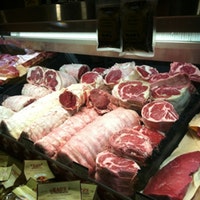
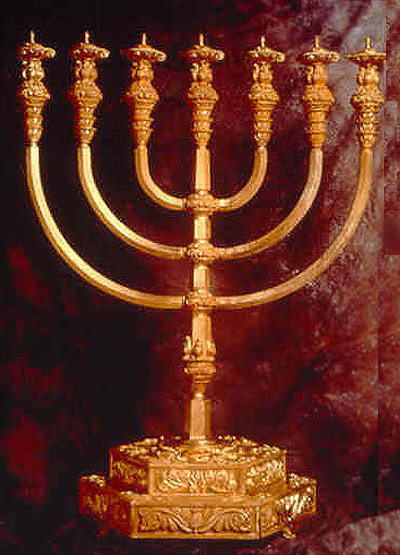
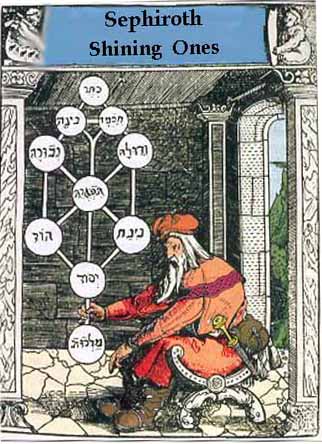 I spent time before the trip to Tony’s working on my kabbalah presentation for December 6th. This will take some doing since kabbalah is a quintessentially Jewish discipline and I want to focus, somehow, on the Great Wheel. According to the Tree of Life, the sephiroth (spheres) arranged as in this illustration reveal a path by which the sacred becomes actual and the actual becomes sacred. The bottom sephirot malkuth is the world which we experience daily, the place where all the power in this universe (there are many others), funnels out of the spiritual and into the ontological. It is also the realm of the shekinah, the feminine aspect of god. In kabbalistic terms malkuth is the place where the limits of things allow the pulsing, living energy of the other spheres to wink into existence.
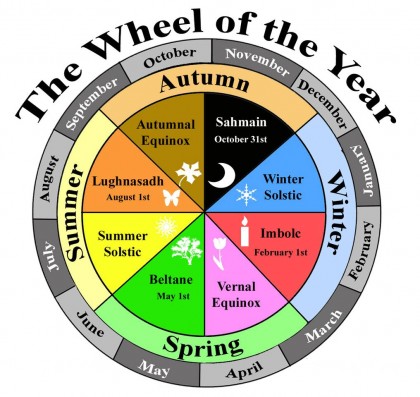 In one sense then the Great Wheel, focused as it is on this earth, can only be of malkuth, that is, of the sphere of the actual, the bottom circle below the hand of the kabbalist in the illustration. In another sense, since all sephiroth contain all others, what is of malkuth must also be of the others, the spiritual dna of the whole universe. So, if we take the Great Wheel as a metaphor for the creating, harvesting and ending of life, a cycle without end, then the Great Wheel is, too, a Tree of Life. That is, the inanimate becomes animate, the animate lives, then dies, returning its inanimate particulars to the universe which, through the power of ongoing creation, rearranges them in living form so the cycle can go on.
 I really like cooking, used to do a lot more. It requires mindfulness and produces a meal for others to enjoy. Just popping up from my days of anthropology:
  We’re not like dogs in that fundamental sense. As Emerson observed, “The days are gods.” Another binary opposition is the sacred and the profane, like the holy and the secular, ordinary time and sacred time. We imbue, out of our speculative capacity, the passing of time with certain significance. The day we were born. The yahrzeit notion in Judaism, celebrating the anniversary of a death. A day to celebrate the birth of a god, or to remember a long ago war against colonial masters. We identify certain days, a vast and vastly different number of them, as new year’s day, the beginning of another cycle marked by the return of our planet to a remembered spot on its journey.
 When we merge our speculative fantasies with the chemistry of changing raw food into a beautiful cooked meal, we can have extraordinary times. The natural poetics of wonder join the very earthy act of feeding ourselves to create special memories. Very often on those days we gather with our family, a unit that itself memorializes the most basic human purpose of all, procreation of the species. We don’t tend to think of these most elemental components, but they are there and are sine qua non’s of holidays.

 After carrying the two cushions and the remaining fabric, about 3 yards, out to the car, Kate and I drove off in a southeasterly direction toward the high plains town of Elizabeth. We turned east at Castle Rock on Colorado 86. 86 heads resolutely away from the mountains, which are in the rearview the whole way. Elizabeth is a small agricultural town, known to any Midwesterner in its general outline and types of stores and shops. That’s why I said not long after we moved that the Midwest washes up here against the solid reef of the Rocky Mountains and finally disappears. In Elizabeth Kate and I were on familiar turf.
 Cushions, a frozen beef quarter, groceries these are a few of the physical objects that we still use our truck to retrieve. I imagine at some point we’ll have an economy that divides itself between physical objects that have to be moved, including your own body to doctor’s appointments, for instance, and physical objects that can be purchased online and delivered. I know we’re already there with online sales, but I mean a situation where the economy consciously organizes itself by these categories. Right now we have a transitional situation between brick and mortar businesses built under the old, we have to go there to get it paradigm, and an online retail economy powered to our homes by the USPS, Fedex or UPS. It’s clumsy and not always transparent which is better, online or physical shopping. I think that will sort itself out over the next decade or so, maybe a bit more.
 Three nights in a row at Beth Evergreen. Challenging for this early to bed, early to rise guy. Though. Kabbalah fascinated me. I’m beginning to feel my way into the occult, again. The hidden wonders. This time around I may be able to actually hold at arm’s length the cultural vehicles and not resist the message because of the messengers. That is, kabbalah, in particular, has a poetic, evocative, confounding approach that speaks to my sense of absurdity. And, my in but not of relationship to Judaism also allows me a critical distance that I find very helpful.
 This story works for me. The imagery is something I can relate to because I’m human. Honor is so important and so often gotten wrong. Think, for example, about the instance of DJT honoring America First; just as Kim Jong Un honors himself and North Korea first. Or the gang member who feels dissed, disrespected, dishonored. A sense of kavod would have prevented the shooting in Las Vegas, the holocaust. It would prevent child abuse and domestic violence. Harming another whose dignity and respect is as worthy as your own is just not possible.
.jpg" title="Fair use of copyrighted material in the context of The Raw and the Cooked">Fair use</a>, <a href="https://en.wikipedia.org/w/index.php?curid=45649279">Link</a>)