Fall Harvest Moon

Been thinking about a new analogy for reimagining/reconstructing faith: the transition from representational to abstract art. I like the analogy because it reaches deep into prehistory to the cave art of Lascaux and Chauvet of 40,000 years ago. This tradition developed so powerfully that its underlying assumptions were simply not questioned. What would art be about but the reproduction of the human world in two-dimensions? Then, in 3, but still a man, or a god, or an animal. The introduction of perspective reinforced the representational, but did, I imagine, to the sensitive eye, give an inkling of the manipulation of space and color that really underlay art making.
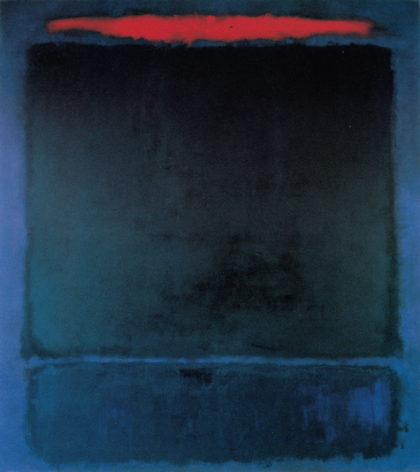
So called modern art was a radical break with this tradition. It happened as artists in many places looked at painting and sculpture with fresh eyes. They asked about the purpose of art, the purpose of paint on canvas, the purpose of reshaping wood and stone. What are the primary elements of the work? Color. Paint. Form. Space. Negative space. And perspective, did it have to be mathematical? Was there a perspective that developed simply through the use of color? (Cezanne) Did perspective have to be singular? (Picasso) Could a painting be nothing but color? (Morris Louis, Rothko, Kandinsky) What about painting or sculpting things that could not exist? (Man Ray, Dali, DuChamp)
As artists began to consider the fundamentals, the unexamined assumptions of making art that had shaped its global expression since humans began making marks, though, that other tradition, the old representational one, did not die out. There were still portraits, still landscapes, still still lifes, sculpted men and women and animals and mythical beings of all sorts. This reimagining, reconstructing of art itself seemed to displace the older way, but only because museums became so dominant. There were modern art museums like the Walker and the Guggenheim and the Modern and the Tate which seemed to position the older, encyclopedic museums like the MIA, the Metropolitan, the Kunsthistorisches, the Louvre as showplaces of what used to be. Even the development of ateliers, who imagine themselves as the heirs to the older tradition, seemed to be an admission that the reimaginers had swept the field.
 So what I’m proposing is not another religion with a different origin story, a different set of scriptures, different roots from, say, Hinduism, Zoroastrianism, Christianity, Islam. And what I’m definitely not proposing is a reductionistic attempt to find out what all religions have in common, nor am I proposing a sort of tolerance for all faiths, an attempt to learn from each of them (though this is a good thing to do) and out of that shape a new faith.
No, I want to play with the fundamentals of religion, those things that underlay the tradition of religious thought and practice. I say play advisedly because I think it was the playful aspect of the artists who questioned their tradition that made their work bearable. And, in making it bearable, made it accessible enough to thrive.
 So, what are some of those fundamentals? Prayer, worship, gods, ritual, art, revelation, congregations, sacred space, the notion of sacred, divinity, after life, morality and ethics. How might a radical approach take the long history of prayer, for example, and reshape it, reconfigure it, reuse it for the person who chooses to stand outside particular traditions, but still wants to paint? Or, what about gods? How does the notion of powerful, unseen entities with various agendas fit into the life of persons no longer monotheists, no longer willing or able to see many gods?
I don’t even want to do what Emerson proposed. That is, have a religion of revelation to us rather than the dry bones of theirs. I want to examine revelation itself. What is revealed? Why is hiddenness so important to religion? What is revelation in a quantum mechanical world? Where is revelation? How are things revealed? How have things been revealed all along, but we didn’t notice? And why do we care about a world beyond the one we experience effortlessly?
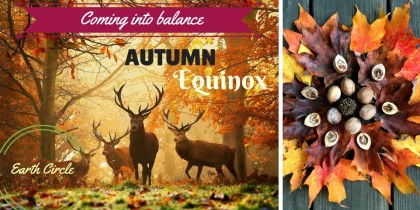
 Here in the mountains the streams have long ago drained off last winter’s snowfall; the aspen have turned golden. The cervids have begun their annual procreational dance. Sex is in the air. We have snow in the forecast for Monday and night time temperatures are in the good sleeping weather range for Kate and me. In Minnesota we could hear the Andover marching band practicing and here the high school football season is already well underway. Coats become an item of consideration when leaving the house.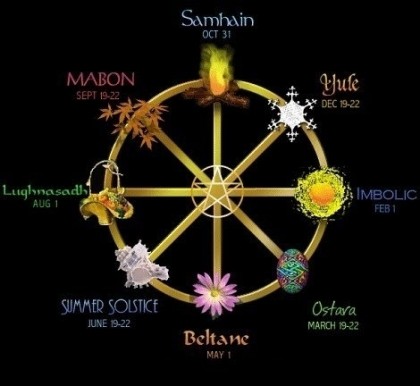
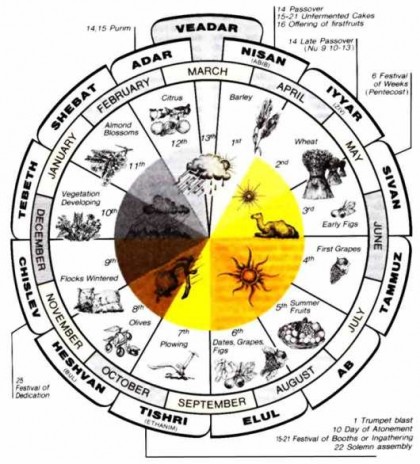
 “That’s us,” he said, sweeping his hand around the room. Of course, it’s not me, but I took the point. Israel, those Jews in the sanctuary at Beth Evergreen and in Rosh Hashanah services around the world last night, and those Jews not in the services, too, is a community which celebrates its most important memories every Sabbath with a parsha reading, a segment of the Torah.
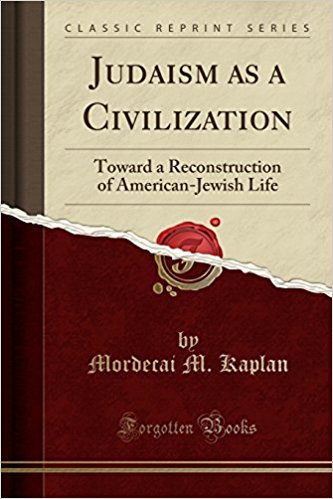 This is reconstructionist Judaism, an explicitly non-supernatural religion that nonetheless adheres to the traditions and customs of Jewish civilization, including Torah study, sabbath observance, comforting mourners, repairing the world and doing acts of loving kindness.
 Yesterday I traced the funk back to an e-mail I sent out late Saturday night thanking all the main participants in the Evergreen Forum. Two folks responded quickly, thanking me, too, and I realized, as I searched for the source of the mood, that I wanted more of those and when they didn’t come, I wondered why not? It was that wondering that created the bad mood. In others words I had poisoned my own well, then drunk from it. Well, I realized, that’s silly. Take the compliments, move on. So, I did.
 About 5:30 am this morning I left the house for the loft. The sky was clear, unusual over the past few monsoonal weeks. There in the southeast, still partially in the lodgepole pine, was Orion. His shoulder and belt were visible, his sword and feet/legs were not. But he was back. I waved to him.
 The dangers and pains of ice and snow are real, but manageable. Cold is a blessing as far I’m concerned. The pleasure of snow is real, too. Ice? Well, maybe not so much pleasure there. But the holidays, the beauty of fall and winter landscapes, the times of being isolated with a book to write, well, that’s my best time. And Orion’s emergence heralds its coming.
 The proselytizing Roman Catholics gathered in Lughnasa and turned it into Lammas, a sabbat name used often in Wiccan circles, but in fact part of a persistent and largely successful attempt by the Catholic church to eliminate the old Celtic faith. Parishioners baked loaves of bread (lammas means loaf mass) from the first harvested grains and brought them to mass.
 A glorious time of year when the crops were good, Lughnasa also kicked off a long succession of market days, actually weeks, when celebrations were common. The tradition of Lughnasa market days with their heaps of produce from gardens and fields came to the United States with the Celts who immigrated here, many into the Appalachian mountains where their culture fed folk music and crafts into the new country. Their Lughnasa celebrations, then known as fairs, are the genesis of county and state fairs.
 Kate has a garden remnant doing surprisingly well. She got this plant from a project at Beth Evergreen and had me transplant it. We will have a bit of Lughnasa sometime soon, if the fruits on it ripen. If they don’t, we plan to have fried green tomatoes. Kudos to Kate for accomplishing a difficult feat at 8,800 feet, growing tomatoes. She’s my Demeter.
 Yesterday was the fourth of July. Our September 16th, viewed from Mexico. Our July 1st, from the northerly perspective of Canada. A day to launch an almost-ICBM from Pyongyang. A day not long after our President, OUR PRESIDENT, released on Twitter a video of himself wrestling, during a WWF event, another person whose head had been replaced by the CNN logo. I can’t believe I just wrote that. I can’t believe I’ve seen the video. I can’t believe DJT is in the Whitehouse.
 We are more than our government. We are a nation of vast reaches, landscapes that fire imaginations around the world. We are a nation of immigrants, a nation to which immigrants from that same world still desire to come, even if the xenophobic, chauvinistic politicians infesting Washington try to make us undesirable. We are a nation of hopers and dreamers in spite of the dreamkillers on Pennsylvania Avenue.
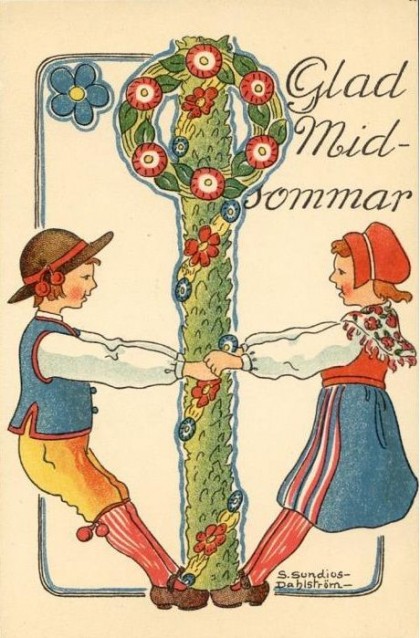 This is the last day of Beltane, the Celtic season marking the start of the growing season. Tomorrow is the Summer Solstice and in the way of the Celts, actually mid-summer. I plan to start calling the season midsommar, after its Swedish spelling since the Scandinavians do this season right: bonfires, family gatherings, great food, lots of naked dancing. Out here in the moisture starved West and up here on fuel rich Shadow Mountain, there’ll be no bonfires. Just too dangerous, but we’ll be with the Swedes in spirit tomorrow.
 I guess it’s time to admit it. I’m a deeply religious guy, whatever that means. It means at least that I find religion and religions fascinating, personally transformative. I have approached religion since high school with a mixture of deep skepticism and a willingness, no, a need to rethink, refeel, reexperience what I’m told.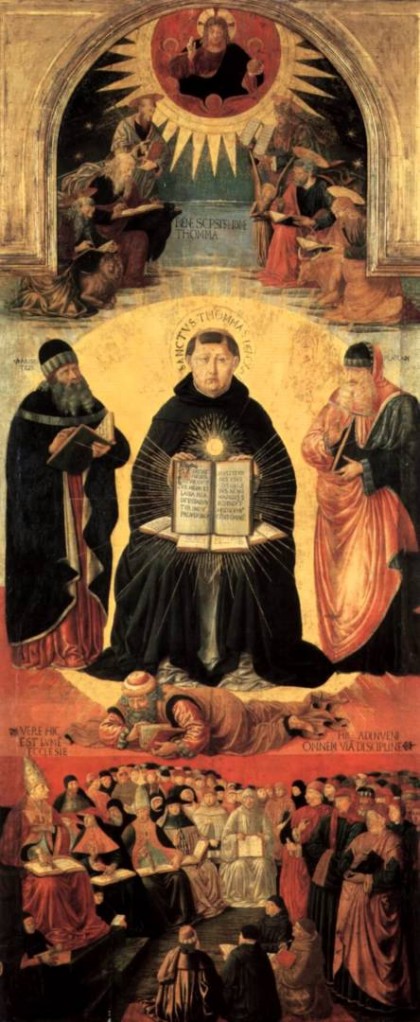
 Since that day until now my ancientrail has always wound its circuitous path back to the big questions. I’ve explored Christianity, Islam, now Judaism, Taoism, existentialism, various spiritual disciplines like lectio divina, meditation, morning and evening prayers, contemplative prayer, even some modest peaks into Tibetan buddhism occasioned by my friendship with Gyatsho Tshering. Though I am now and have been for a while an idiosyncratic version of Taoist/pagan, I’m finding the Reconstructionist path in Judaism a surprisingly familiar one.