Lugnasa Harvest Moon
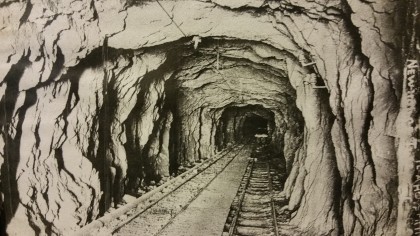
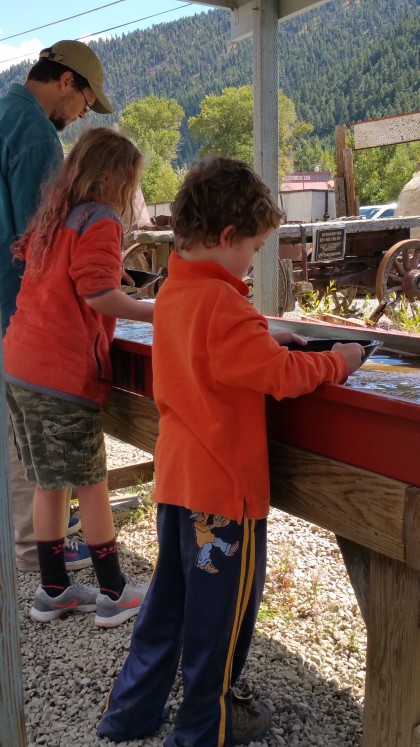
A trip to the Argo Gold Mine in Idaho Springs.

Lugnasa Harvest Moon
A trip to the Argo Gold Mine in Idaho Springs.
Lugnasa Harvest Moon
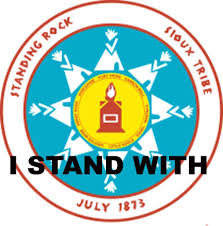 Standing Rock Pipeline. This reminds me, on a much larger scale, of the occupation of Wounded Knee back in 1973. Wounded Knee had the ever-present danger of violence. Radical veterans of the Vietnam War had brought their rifles and placed themselves between the Federal Marshals and the A.I.M. folks in Wounded Knee.
The action in 1973 involved only a few individuals, most of the Lakota and Anishinabe tribes. Today 280 plus tribes have come together with two messages: 1. Water is life. 2. Water and oil don’t mix. These are incredibly important ideas, simple yet profound.
It may turn out though that there is a meta-message here that is even more important. 280 communities, 280 nations, 280 tribes and their disparate traditions, customs and histories have come together to speak with one voice. This could change the politics of Indian Country forever. I hope it will.
Lugnasa Harvest Moon

Fellow traveler. Back when America was great, like the 1950’s or sometime, fellow traveler was an epithet that indicated a person with sympathies for the communists. To be a fellow traveler meant shared understandings if not complete agreement. The aim of communism, an egalitarian society with the basic needs of all met, is still my dream. But, how to achieve it is as muddy to me now as it has been all my political life. True: I voted for Gus Hall for President in several elections.
There is, though, another sense to this term. A fellow traveler can also be one who is with, but not of, a particular group or thought-world. It occurred to me this morning that being a fellow traveler is an important part of my life.
This may be a deep flaw, but it is and has been an ancientrail on which I have walked often in my life. Let me explain. The most salient example right now is my involvement with Congregation Beth Evergreen, or CBE as they often shorten it. Being a fellow traveler with Jews and Judaism has been a consistent thread in my life since early college. That is, I admire Judaism as a culture and have found many friends among observant and non-observant Jews-not to mention a wife. Jews tend to approach the world as curious, skeptical, engaged people, people embedded in history and tradition. That worldview has appealed to me since my first anthropology assignment took to me a synagogue in Muncie, Indiana.

Kate’s a converted Jew and feels herself part of this ancient tribe. I do not. But Judaism continues to speak to me in its ethics, its ability to withstand constant suffering and abuse, its tribalism and in its ritual and spiritual practices. I am gradually becoming in, but not of, Beth Evergreen.
Even in seminary, I felt more like a fellow traveler with Christianity. Though I did immerse myself in the Christian tradition and its beliefs, its intellectual and cultural practices, its political message was more important to me than its metaphysics. Let justice roll down like an everflowing stream. Do unto others as you would have them do unto you. Suffer the children to come unto me. What you do to the least of these, you do to me.
I tried to merge my political passion with a religious sensibility, but in the end it became clear that I had got the stick wrong end round. Political purpose preceded religious conviction. Within any religious way that’s backwards. As a result, over time I became more of a fellow traveler with my colleagues and friends in the Presbyterian Church than a true believer. Throughout my ministry after ordination in 1976 I felt in, but not of, the church. Eventually, the tension between my purpose and the church’s purpose became too strained and the link between the two broke.
 Politically I feel and have felt in, but not of, mainstream American politics. That is, political action has been another key ancientrail in my life, but I’ve had to engage it from a stance left of even the further edges of liberalism.
There are other examples, but you see the point. It is my habit to be with groups, but not of them. This is the deep flaw I referred to above. That same curious, skeptical, engaged, embedded in history (but not tradition) fellow feeling I have with Judaism keeps me just to the side of certainty, a seeker with little probability of arriving at his goal. By this point in my life I find this outsider role familiar and, for the most part, comfortable. But I wonder what it would be like to enter the world of the convinced, the believer? Am I missing out on an important element of life? I don’t know.
Lugnasa Harvest Moon
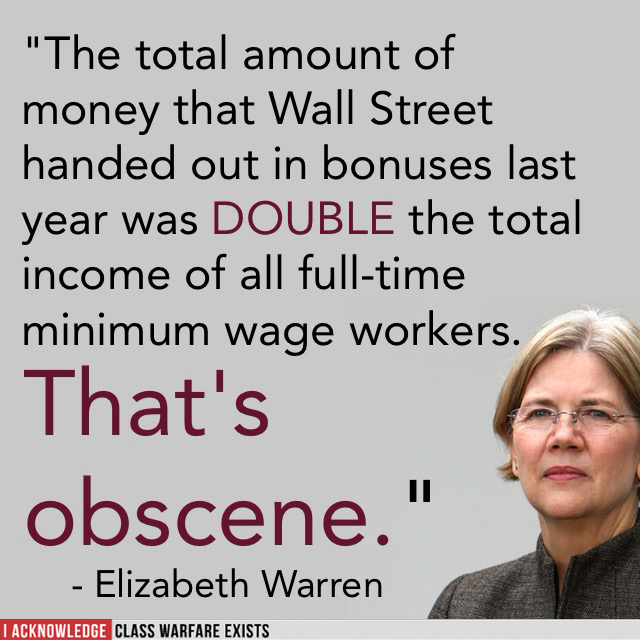 It’s just capitalism. Epi pens. Martin Shkreli. Hey, let’s corner a market on something a bunch of people need desperately, then raise the prices high, high, high. As Shkreli said, my shareholders expect me to make the most money possible for them. Or, as Heather Bresch, CEO of Mylan Pharmaceuticals said, “I am running a business. I am a for-profit business. I am not hiding from that.” NYT, Aug. 26, 2016
Clarity of ethical purpose makes decisions easy. If my highest ethical goal is, say, to make money, then I just do what it takes. No matter what. And I’ll sleep fine at night, thank you, all you poverty stricken doubters. I’ll laugh at you and your silly ideas about human welfare all the way to the bank.
If, on the other hand, my highest ethical goal is the well-being of fellow humans, then I’ll just do what it takes. If that means reasonably priced medication and less profit, so be it. That’s what we’ll do. If that means whacking down carbon based fuels because they put the whole human race at risk, then that’s what we’ll do.
With American capitalists like Shkreli and Besch hard at work while the Donald stumps up and down the U.S. for putting beaners back on the other side of a grate wall we need no further examples for American exceptionalism.
Seems like Wordsworth would work here, too: “The world is too much with us; late and soon, Getting and spending, we lay waste our powers…”
Lugnasa Superior Wolf Moon
 Political correctness. What a genius it was who invented that phrase. An oxymoron that sounds like a platitude while really functioning as a self-imposed conservative censor. Let’s be clear, there is no such as the politically correct. There are only those cultural observations and changing traditions that reflect a certain political perspective. So, in that sense, I agree with the conservatives.
(The danger in not knowing yourself and being willing to impose your perceptions. Taken to the extreme here.)
When I react negatively to a woman being called a girl, to a black man being called colored or nigger, to a lesbian or gay being called queer (although that community has embraced this epithet), it is precisely my point that the world has moved on. Find people who aren’t like your idea of normal as people nonetheless. Am I right, or correct, in this perspective. I certainly think so. Do you think so? Maybe not. If not, I’m interested in your rationale for your language.
Now, having said that, I find the University of Chicago letter to its incoming students both unobjectionable and positive. Trigger warnings, intellectual safe places and sanctioning speakers on campus are the precise opposite of what colleges and universities are about. If you go to college and don’t find yourself challenged, embarrassed, overwhelmed, exhilarated and scared, you’re not only not getting your money’s worth, you’re being actively cheated.
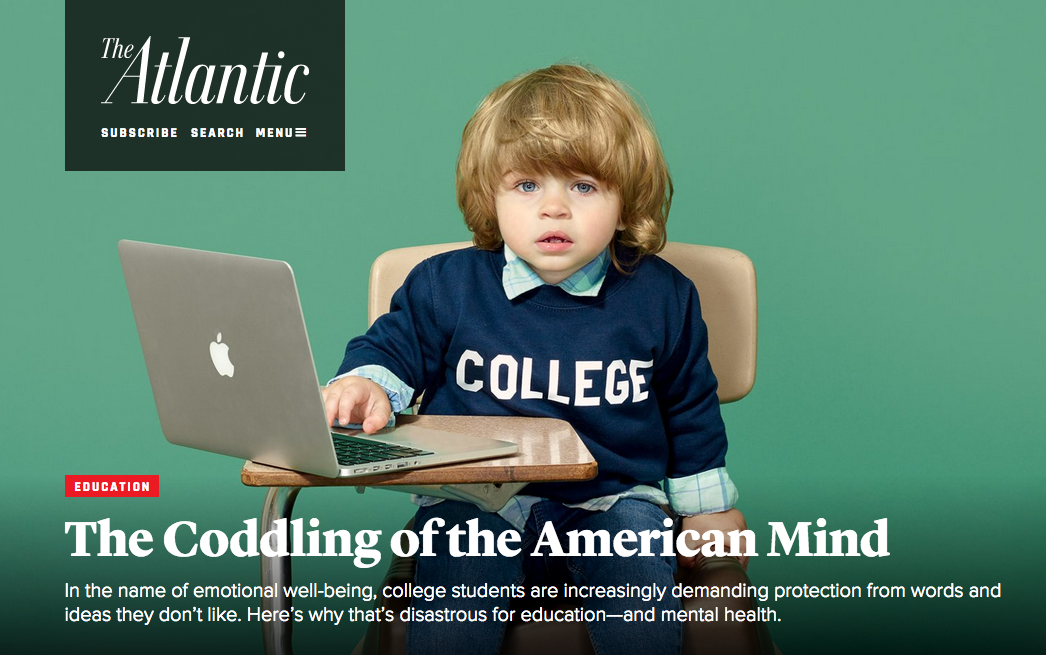 No matter where you come from you arrive at the beginning of a college education with a set of biases and conceptual short cuts framed by the world into which, as Heidegger put it, you were thrown. This is neither a negative or a positive, it just is. A university education is about pulling those blinders off so you can see the whole street. This is the moment when we learn that our way is not the only way, that our understanding about religion or agriculture or class or gender or race is not shared by 100% of earth’s population. In fact, it’s shared by only a tiny percentage of the seven billion or so alive right now. Again, that’s neither negative or positive, it just is.
We also learn that the perspectives and biases of everyone alive right now are not the end of it. Over time, that is both historically and pre-historically, humanity has entertained a plethora of forms of government, religious practice, kinship patterns, artistic conventions, military custom and all other forms of human activity that can be imagined.
The only way to enter the human experience fully is to learn a reflexive humility when confronted with difference. The only way to gain that humility is to learn yourself inside and out, to know why you view the world the way you do. And the only path to self-knowledge is a gauntlet of hits to your self-complacency.
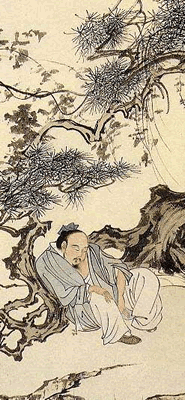 College is the safe space. It’s not safe in terms of no discomfort. It’s not safe in terms of reinforcement of your cherished beliefs. It’s safe in terms of its recognition that we all need to learn who and what we are within the context of the great body of human knowledge and within the vast sea of living humans. It’s safe in that it provides a place where that is the purpose of daily life.
This is, btw, the soundest argument I can make for the humanities. While science may challenge your understanding of the physical and natural world, it will not, except in rare instances, challenge your mores, your prejudices. It will also not train you in the vast number of options of how to be human, or the vast number of options of how we can be human together. No, for those learnings you need art, literature, philosophy, music, history, political history. Where do you find those? Yes, in a college space.
Lugnasa Superior Wolf Moon
 This morning Black Mountain has a shroud of gray white fog slumping down its eastern slope. Rain water puddles on the driveway and the overall feel is early fall. As we prefer it here on Shadow Mountain.
Could this election get weirder? I’d have said no, but the Donald keeps surprising me, all of us. As his polls slump like the fog on Black Mountain, certain Republicans have begun raising money for Hillary, admitting openly that they will vote for her, too. This group includes members of congress and a former primary candidate for President, Meg Whitman. That’s very strange.
But, wait! There’s more. Now the Dump Trump folks have begin wondering in interviews if he can be forced to drop out. Or, perhaps he’ll just choose to drop out, some hope. So, members of his own party are campaigning against him while others are trying for an unprecedented, geez I think I’ll just quit you. This all very new stuff in American politics, like seeing a rare bird and getting to add it to your life list.
He will not drop out. His self-image is of a fighter and a winner. Fighters don’t quit and winners don’t lose. From a political hobbyists point of view this is a most excellent campaign. Not the same old boring cereal we get every morning for breakfast.
Over the next decade plus the significance of this race will become clear. The most interesting analysis I’ve found so far links Trump to the rise of voters seeking an authoritarian leader. Read this Vox.com article: The Rise of American Authoritarianism. Research into the phenomenon of authoritarian leaders has its origins in the puzzling question of how Germany pivoted to Nazism in such a short period of time. There are now several well-regarded academic works that focus on answering that question. Some of them look at American culture, probing for similarities to post-Weimar Germany.
In this understanding, with which I agree, Trump is not the cause, but the effect. Another good article on the political roots of this new American authoritarianism comes from NYT columnist, Charles Blow: Trump Reflects White Male Fragility.
Summer Park County Fair Moon
 Into Denver for the Denver County Fair today with Jon and the grandkids. Our county and state fairs, stocked with canned goods and quilts and wholesome teenagers with Guernseys and prize boars, are in the Lughnasa spirit. Lughnasa, starting on August 1st, is a Celtic holiday of first fruits. Also called Lammas in the Catholic tradition, villagers brought bread baked from the first wheat to mass.
Each of the cross quarter days in the Celtic calendar: Imbolc, Beltane, Lughnasa and Samhain were the occasion for weeklong market fairs. Goods were sold, contracts for marriage and work made and broken, dancing happened around bonfires, general merriment abounded as individuals tied to the grinding daily labor of subsistence agriculture found themselves with time free for fun.
In our hearts we are a rural country still and there is something deeply satisfying about seeing sheep, cows, chickens, rabbits in competition for some mysterious (to city dwellers, now the dominant fair goer type) prize. Yes the number of family farms is at its lowest point in the nation’s history, but we have a communal memory of the time when most of us lived on the small farms that used to dot the land. In fact that small farming culture was often subsistence farming, very similar to the sort of rural life in the Celtic countries of Ireland, Wales, Scotland, Breton, and Cornwall.
It is this underlying sensibility of lives lived close to the land that seems so absent from our political discourse in this election. We are a people of the plow, the barn, the hay rick. We masquerade as global sophisticates, but in truth the itch to grow tomatoes or to have a small herb garden is as American as, well, apple pie, which we will see on display at the Denver County Fair, I have no doubt.
Lughnasa begins the harvest season which continues through the feast of Mabon at the autumnal equinox and ends on Samhain, or Summer’s End. It is one of my favorite times of the year, only the dead of winter is better for my soul.
Summer Park County Fair Moon
Right now I’m watching the polls, reading analysts, following stories of both campaigns. A political junkie since age 5, this is by far the strangest, the most bizarre Presidential election I’ve ever seen. It may also be one of the most profound.
Not for the candidates. Hardly. Hillary does not represent my politics, nor my vision of the Democratic party. I don’t find her untrustworthy so much as I do unlikable and too centrist. I will vote for her and happily though. Not because she’s not the Donald (sorry about the double negative), but because a Democrat in the Whitehouse is better than a Republican.
Trump represents a worrying trend in contemporary politics: the strong man, the anti-politician, the glib hand, the one whose supposed virtue is in having no political track record. Then there’s the not small matter of his character. He’s a blowhard, a know nothing, petty and mean. Aaaccchhh!
Why profound then, if not for the candidates? Because this election season has laid bare so many fundamentals of our polity, so many fundamentals that have lain unaddressed under Republican and Democrats alike. Wealth and wage inequality of a dimension unseen in decades. The shrinking middle class. The erosion of working class jobs, an erosion so severe that their jobs often no longer exist. The fear of white, uneducated men and women about their economic future. The awful rat-a-tat-tat of violence of all kinds, done by guns of all kinds, by homegrown terrorists, cops, angry African-Americans, garden variety punks and thugs. The still strong pressure to hold women out of real power. The role of immigrants in this land filled by immigrants.
These are not our only issues, but they are ones so stubborn, so apparently intractable that they have been ignored or stalemated. It may be morning in America, but the sunlight isn’t hitting every home. Many people remain in the shadows, their lives contracted and miserable.
As in medicine, if you can’t diagnose a problem, then you’ll have real difficulty trying to solve it. This election, by boiling these issues to the top, and, paradoxically, by handing us two candidates ill suited to the times, underlines the critical importance of the electorate as problem solvers. Now that we’ve seen the fractures in our common bond, we can begin to hunt for solutions and for politicians who can help us implement them.
Summer Park County Fair Moon
Politics is about so much more than elections and campaigns. It’s even about more than governing. Politics are about heart, about the deepest dreams we have for our common life. My political river has its headwaters in the Roosevelt liberalism of my parents, the hard-nosed politics of the labor movement of the 1950’s, especially the UAW, and in my childhood friends and their parents whose lives were the reality I knew affected by both of these.
Michelle Obama’s speech at the Democratic Convention last night, which I just watched in its entirety, brought me to tears. This articulate, eloquent black woman spoke of the true purpose of politics as the world we leave behind for our children. She spoke of Hillary Clinton as the woman we could entrust with that world. The first lady, a black woman, speaking on behalf of the first woman candidate for president and the likely winner, cheered on by Latinos and African-Americans and women and LGBT delegates, made me believe in the promise of our country. Still. Again.
That political river with its headwaters in Alexandria blue-collar Midwestern America altered its course during the heady politics of the late 60’s and early 1970’s. A powerful tributary which came down like a mountain stream in May carried with it a vision of an America which could actually collect on the promissory note long owed to the Indians and to the descendants of the enslaved. It was fed by the rhetoric and actions of such men as Martin Luther King and Malcolm X. It was fed by the consciousness changing politics of such women as Bella Abzug, Betty Friedan and Gloria Steinem. It was fed by the grape boycotts of Caesar Chavez. It was fed by the anger and dismay of all who thought the Vietnam War was a mistake, a mistake so costly in human lives and treasure that it represented a fundamental denial of the purpose of politics given voice last night by Michelle Obama.
In Michelle’s speech the early politics of the working classes and the Rooseveltian compact with the elderly and the veteran and the poor flowed into a mightier river, the one created by the confluence of mid-century liberalism with the radical analysis of the 1960’s. In this moment there is a chance, an opportunity to reawaken the labor movement, to reinforce the voice given by Barack and Michelle Obama to African-Americans, to lift the Latinos and Asian-Americans to full citizenship. And this chance comes with the voice of a woman, one whose own political agenda has been pushed to the left by the wonderful, quixotic campaign of a 74 year old Vermont democratic socialist.
This is the nation for which I have yearned and fought and worried all these years. Those were the tears that fell this morning as I watched her speech. Tears of realization, tears of hope coming to fruition. At 69 it feels good to see at least the possibility of a mighty, mighty river finding its way to the ocean of justice.
Summer Park County Fair Moon
What’s going on out there in this silly season turned mad?
Scared, angry white folks. Siding with the Donald. Promises have been made to them. Promises of rising tides and jobs if only the unions and the regulators would get out of the way. If only the death tax and the onerous corporate taxes and the capital gains taxes were lowered or eliminated, then capital would rejuvenate the economy. Unleash the entrepreneurs, unshackle the men of Wall Street. Return public lands to the states. (they weren’t the state’s to begin with, but, hey, what’s a fact in this election year?)
The Donald has revealed the lie behind these ideas. A Glass-Steagall freed banking system drove us all to the brink of ruin, set back wage growth for the middle and working classes, crashed the savings vehicles of those about to retire. The tax breaks for the wealthy have served to enrich the 1%, not tune up the engine of capitalism.
The gloom unveiled in the Trumpet blast as he received the GOP nomination reflects the fears of those whose unearned privilege has eroded. And fast. The racist and nativist elements of the Donald’s civil war with the very elite of which he is a part are wrong and must be battled by every decent American, Republican or Democrat. But. The woes of the white middle and working classes are real. They cannot be explained away or discounted because those subject to them hang on to myths about their origins.
African-Americans, whose promissory note cannot find a decent bill collector, see their children shot, jailed. Their communities are often without investment, services. Each African-American, no matter their level of achievement, is at risk on the street or on the highways. Every day. They have been promised much and had so little delivered. And even that must taste like ashes in their mouths. The dead cannot be lifted up by affirmative action.
Latinos have similar problems today, though the root of their life here in the U.S. is different. They are largely voluntary immigrants, forced out of their countries by lack of economic opportunity. Their numbers are increasing and the full weight of their cultural influence on the U.S. is not yet felt. Many Latinos are here without documents and many of those are children born in this country. Their lives are unpredictable because our government cannot solve the problem of their futures.
Native Americans continue in their struggle to overcome the Indian Wars, sequestration on reservations, Indian Schools run by the BIA. The direst poverty in this land of opportunity exists on the res.
LBGT folk have made progress, real progress, but the recent legislation in North Carolina about transgender bathroom use demonstrates the often thin veneer of hope that progress offers.
Women still get paid less for equal work. Women still are vulnerable to the male gaze and the male sense of privilege over their bodies. Yes means yes. No means no. Yes, a woman may sit in the oval office for the first time, but it’s not enough and it seems very, very late.
My point is that the major political parties have had decades to resolve these fundamental problems of our democracy and they have failed. There are legitimate grievances felt by a majority of the total U.S. population. Where are the statesmen and stateswomen who can rise above party and find workable answer? The Donald is too childish, too self-congratulatory, too ill-informed to do more than give voice. Though that contribution should not be diminished. The next-up Clinton has ideas, but her personality and her character make her unlikely to be the healer, the unifier, the move us forward person we need.
What we may have in this mad season is a loud, chaotic revelation about the need for a functioning government. Perhaps it is not this election. Perhaps it is the next one that will produce candidates alive not only to the problems of our nation, but to the need for solutions that bind us together rather than pull us apart.