Modulating the call and response occasioned by Trump era politics in my own head has proved daunting. I’m not going on a “news cleanse” or planning to ostrich myself in the several inches of snow we just got. (though that last one sounds sort of good)
I did uncouple from the Idiocy of Donald Trump facebook group. It became too much though the posts were really funny. I also changed the name of my Evernote file where I save material relating to the Trump presidency from Fighting Trump to just Trump. Felt like I was scraping a sharp blade across my soul each time I saved an article.
All that feels right for me, so far. Yet. There is reading the Denver Post and the New York Times, both morning rituals. Today I noticed Trump doomed the planet by weakening compliance with the Paris Accord’s goal to reduce carbon emissions in the U.S. by 30% by 2030. That’s a key number because a global reduction to 50% by 2050, then zero by 2100 is the main hope the world has to stave off dire temperature rises.
There’s also the recent attempt by the GOP, with Trump’s assist, to kill 43,000 Americans a year by denying them even mediocre healthcare. Of course, as a cartoon I saw pointed out, bad healthcare is no problem if the planet gets fried to a crisp.
The lesson for me is this. Shut down the barbed rhetoric, Fighting Trump and the Idiocy of Donald Trump. No need to scrape those sharp blades across my soul. But don’t ignore, don’t forget. Stay aware and be ready. The danger is ever present as the climate change policy reversal makes clear.
It was with sadness that I read of the fight at the MIA last week. No matter the apportionment of blame between the two groups, this kind of violence within the museum shocked me. It also underscores the danger of cynics and demagogues setting the tone for our national conversation. Fists and physical confrontations are a means of dialogue, a blunt means, but one nonetheless. When the Whitehouse itself makes racism, anti-semitism, misogyny, xenophobia, terraism (violence against mother earth) not only acceptable, but for some normative, then this country will descend into further acts of violence, often one on one or many on one.
When I first started volunteering at the Minneapolis Institute of Arts in 2000, continuing education events for docents and guides (I was a guide at the time.) were held on Mondays in the morning. An excellent speaker on some aspect of art, art history or museology would give us an hour to an hour and a half presentation. I have a three inch thick notebook filled with notes from those events.
After the lecture the museum was open, but closed to the public. That meant we could take as long as we wanted to wander the galleries, taking time with this work, then that one. No interference, no one walking in front of you or talking loudly. It was my favorite meditation, of all the ones I’ve tried.
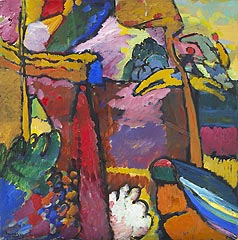
Study for Improvisation V-Kandinsky
I had certain favorites: the Bonnard with its wonderful colors, Dr. Arrieta by Francisco Goya, the Rug Merchant by Gerome, the tryptych Blind Man’s Buff by Beckman, Kandinsky’s wonderful painting in the same room, the Doryphoros. I also loved the ball game yoke, the Olmec jade mask once owned by John Huston, but the Asian art always occupied most of my time. The tea house, the tea bowls and implements, the tatami room with its beautiful screen of the Taoist Immortals, the seated Buddha, the Scholar’s room, the ferragana stallion in metal, the Song dynasty ceramics, pieces carved from jade, the Wu family reception hall, the sand mandala, I couldn’t spend enough time with them.
On those quiet Mondays these works all became my great friends, friends that stay with me now, even 17 years later and 900 miles away. Also, on those quiet Mondays I found an alternative spirituality, one not rooted in the earth nor in the world’s great religions, but in the inside out nature of creativity. All of these works, some in overt ways, some in the covert way of working within a certain tradition, reveal the inner worlds of the artist. Reverting to the language of the post below the art allowed me-and you-to dive into another’s holy well, to see their inner life. This is a rare and privileged thing which explains to my satisfaction the enduring power of all art.
It is also the diametric opposite of Trumpism/Bannonism. The museum is a place to see what a world without these men can be.
It’s been a month plus a little now. Little doubt about the direction of Trump’s administration in general terms: chaos and bluster. As to its direction over the long term? Impossible to tell. Neither markets nor foreign countries like an unpredictable U.S. Nor do I.
The only reliable impression I have about the future under Trump/Bannon is that it will be heavy weather. Those of us who view communal responsibility as a given, those of us who view the planet as one place important to all, those of us who see government as an instrument of support rather than the enemy, those of us who see taxes as a shared obligation will find much displeasure in that future, as we already have in the short, terrible time that has passed so far.
How much can he do? Unfortunately, far more than any of us would like. The bigger question is whether he can sink our experiment in self-governance. Admittedly, he’s only brought into obvious relief the oligarchic stranglehold that has dominated post-war U.S. policy, but he’s also trying to discredit critical pieces of our checks and balances: the press, the courts, even knowledge itself. If he can strengthen these attacks, then our nation will be in serious trouble.
And, no, we may not finish the struggle, but we are not at liberty to stop either. Tarfon.
Let’s call alt-facts what they are: propaganda. Psychological warfare against our own citizens. Though specific attacks on the environment, refugees, people of color and regulations keeping rapacious financiers at bay are horrible, an assault on the nature of truth is deadly.
How can we keep a political dialogue going if facts are subject to derision and distortion and obfuscation? The tobacco/cancer link deniers, the pesticide purveyors, the climate change deniers, the colorful and varied tweets of our Twitler, his outright lies about his inauguration crowd and the massive voter fraud and his distance from his businesses are all instances of outright deception, propaganda presented as fact.
Facts are, of course, subject to interpretation and reasonable people can disagree about their implications. That’s not the issue here. The issue here is changing the facts, ignoring them, hiding them (see the Whitehouse website, for example). Our democracy cannot survive a buffet attitude toward the truth.
I’m not sure that the Trump folks even know the difference between facts and lies. Their ideology or their venal natures may allow them to see only what they want to see. Whatever it is, I hope we can work as a nation to protect truth-sayers, fact-gatherers, lie confounders. Science is a conspiracy, yes, a conspiracy to understand the nature of reality.
So, hard as it is for many to fathom, are the humanities. In studying literature, philosophy, theater, language, cinema we gain the tools to separate fact from fiction. Critical thinking may be the most powerful tool we have in fighting the rise of a nationalist fascism. Critical thinking is taught in the humanities. In them we also learn the value of fiction, when it can enlighten us, when it can deceive us.
Right now facts and the truth they undergird need protection under the Endangered Species act.
I’ve been reading a lot. Still. Always. A lot of my recent reading has focused on politics. Surprise! There is no simple analysis, but certain outlines have become clearer to me.
First, the main struggle right now, in both Europe and here, is between globalists, people like me, and blood and soil nationalists, like Trump’s America First. It’s not an either/or, of course, but most of us tend to lean toward one end of a continuum, more concerned about home or more concerned about the world as a whole.
This split has a geographic manifestation. Globalists tend to live in highly populated metropolitan areas while nationalists tend to live in rural or small town settings. If you can recall the red and blue maps of the recent election, you saw this phenomena in color, lots and lots of red, not so much blue. But, if you put population numbers on the map, the blues exceed the red.
Second, this election and its current aftermath has laid bare a disturbing reality of contemporary America. There are former middle class and working class whites whose lives have been upended by globalization and automation and union busting. When today’s world is seen from within their perspective, it looks both bleak and punishing.
The bleakness is the lack of good-paying jobs for those with less education. The punishment comes from seeing others getting in line ahead of you for the American Dream. This line-jumping (Hochschild’s analysis), as it is perceived by white working class folks, has been created by the left’s very successful focus on identity politics: women’s rights, LGBT rights, civil rights. Put these two together, the bleakness and the punishment, and it’s no wonder we have a reactionary revolt underway, just look at your Facebook feed for proof.
Third, there is an abysmal chasm between the 1% and the 99% and the former methods for upward mobility, especially education, seem to be failing. I say this because much of the asset and income gap can be explained by examining the economic situations of those with college degrees and those without them. This education gap reinforces and sustains the growing imbalance in a world where 5 men have as much wealth as 50% of the world’s population.
Fourth, after reading Hochschild’s book, I’m no longer convinced that a focus on economic policies will adequately address the working class movement toward nationalism. I say this because Strangers in Their Own Land opened my eyes to the cultural values of much of the working class and the huge barrier they present to any kind of political conciliation. The barrier is large enough that Marilyn Saltzman, of Beth Evergreen, and I, discussing the book, wondered if this might lead to civil war.
If you can see the interlocking dynamics among all these points, then you understand the depth of the problem we face as a nation. How will all this playout? I don’t know. In the immediate future, at least four years, much of the work will of necessity be tactical, resisting the most egregious moves of Trump and his gang of mediocres; but, it cannot be only that or the electoral political situation will remain the same or worsen.
Woke thinking about the subtitle to the book Strangers in Their Own Land: Anger and Mourning on the Right. I realized I knew this one from personal experience.
In 1956 my family, then Mary, myself, Mom and Dad lived at 311 E. Monroe Street. I was nine. Diane Bailey lived next door, the Kildow kids and the Meyers kids lived about a block away as did Candace. The Carver boy, whose name I can’t recall, lived at the bottom of the hill, Ronnie Huffman lived a block back toward Lincoln.
311 E. Monroe
These were all modest homes, not Baltic Avenue, but maybe Tennessee, Virginia. Ours had an oil burning stove in the middle of the second room on the ground floor, a grate above it allowed the air to rise to two small bedrooms upstairs. A smallish living room and a kitchen completed the downstairs. In the living room, unusual for this time period, sat a small black and white television, a gift from the owner of the newspaper, The Times-Tribune, for which my Dad was editor.
Summer days and nights found all of us kids out, playing with each other, coming home at supper time or after dark. We had secret forts in the field, empty ground about two blocks away, a baseball diamond in the Carver’s side yard, a hill down which we rode bicycles and sleds, often putting up ramps for jumps. Once it got dark we’d play hide and go seek or kick the can. Sometimes we’d throw rocks up in the air to watch bats swoop down after them. It was not an unusual childhood, not for those times.
I like this frame for the work of the next four years. It’s important to remember that it’s the same work the Tea Party and the Trump have engaged. And they’re doing better right now than we are.
“…recent events, here and elsewhere, revive the worry, expressed by Plato, that populist democracy can readily pave the way to dictatorship. Resisting this threat (and this temptation) is the first duty of today’s patriots.
The Bill of Rights, sometimes taken as a definitive statement of what freedom means, was in fact a hasty appendix to the Constitution and provided only a rough starting point subject to further amendment and continuous interpretive disputes. Instead of a vision of freedom, the founders gave us a framework for an indefinite continuation of their revolutionary struggle over what freedom should mean to Americans.
My proposal is that this endless, rancorous struggle for the soul of America is precisely what we should love about this country. (my emphasis) Patriotism is not sharing with our fellow citizens some anemic idealization of what freedom means. It is a matter of engaging them — with everything short of physical violence, from compelling argument to deft political maneuvers — in the rough-and-tumble of political conflict over how we should understand freedom. This conflict remains our only way of working toward the “life, liberty and pursuit of happiness” our revolution sought. True patriotism now requires not reaching across the aisle; it demands mounting the political barricades.” Rethinking Our Patriotism, Gary Gutting, NYT
Just finished reading Strangers in their Own Land by Arlie Russell Hochschild. It’s subtitle is: Anger and Mourning on the American Right. I found the book by reading this article, Why We Need Empathy in the Age of Trump. Here’s an excerpt from near the end that points to part of the way forward, according to Hochschild’s research.*
After finishing the book, I’m not so sure there is a way forward for this particular work though I hope I’m wrong.
Here’s why. In my own analysis, shared by many on the left, we failed to address the economic situation of the working class over the last 40 years or so. As a result of that, it was easy for the right to cherry pick them by focusing on so-called “values politics.” Values here meant hot issues like abortion, gay marriage, affirmative action, climate change. By appealing to the baser elements, the fears and anger of the white working class, they were peeled off from their natural political home, the Democratic Party, and inserted, very clumsily, within the big tent of the Republican circus.
lewishine-nationalarchive
What this simplistic analysis (I’m calling myself out here.) misses is the genuine love of God, church and country that the white working class already had. When the Republicans convinced this constituency that they were the party of Christian (right-wing Christian) values and the only party consistently behind a flag-waving form of patriotism, many (most?) of this demographic switched allegiances, some as early as Nixon’s Moral Majority, some later first as Reagan Democrats, then transforming into Tea Party Republicans.
What I missed, and really shouldn’t have since I grew up in this exact milieux, was the sincerity, the authenticity of the religious and patriotic values of working class whites. These values are more important to them than economic self interest and Hochschild’s book makes this very clear. What happened in the late 20th century was a gradual shift away from economic self-interest voting to voting patterns based on cultural values as well.
The Christian right metaphysics mixed with flag/gun/anti-government passions, honestly held and sincerely believed, makes allying with secular globalists like myself and everyone else in the progressive movement seem most unlikely. I don’t like seeing it this way. It makes me sad and a bit fearful for the immediate future. Perhaps dialogue can help, but when what Hochschild calls the deep stories are so profoundly different, it means the assumptions with which we start the conversation may defeat the effort at its inception.
It still seems to me, however, that policies aimed at working class, high school education or less, Americans must be advanced. As we resist Trump and his gang of mediocres, we also have to stand for something. That something can be economic justice for those left behind by our educational system, by our economy, by big corporations and by automation. It’s important whether or not it convinces the working class white folks of Tea Party/Trump inclinations to shift allegiances. And I fear it won’t.
Still thinking about this, about what might come next. No real good ideas yet. You got any?
* “In fact, they are very friendly toward Bernie Sanders, these people on the far right. Bernie is standing back and asking some big questions. Now, they’ll say, “He’s a socialist. We’re Americans, we can’t be socialists.” But they sense him as a populist. There are possible connections we can make across class—and perhaps re-connect with people we have lost.
We are not looking at that loss. And we feel morally armed to not look at the reasons for that loss, because we are anti-racist, anti-sexist, and so on. Our moralism—our moral convictions—are getting in the way of really understanding people that are making the Democratic Party a shadow of its former self. I think we need to dig deep. That’s the hard thing. It doesn’t mean giving in to it. It’s just the opposite. It means looking at people who feel alien to you, and understanding how they think.
We have to reach out. We need school-to-school crossovers. We need church-to-church crossovers, union crossovers—people on different sides of the political divide learning to listen, and turning their own moral alarm system off, for a little while. They don’t need to turn into somebody else. It’s just listening, and getting smart about what you’ve learned.”
Don’t know why it took me so long, but I know how to make America great again. It will not require red baseball hats or xenophobic bluster. No, it only requires listening to the ideas of a Passionate priest, Thomas Berry. Berry wrote a small book, The Great Work. It influenced a turn in my political activity from economic justice to environmental concerns.
This 258 page book is a quick read and it introduces The Great Work. Civilizations, according to Berry, have a quintessential role that only they can perform. The one he identifies for our civilization is this: Creating a sustainable existence for humans on this earth. That is our Great Work. It is the way to make America Great again.
The phrase, the Great Work, comes from medieval alchemy. The primary, original material of the universe, the prima materia, in the alchemist’s lab can create the philosopher’s stone. The philosopher’s stone could turn base metals into gold or silver and extend the alchemist’s life.
We can take the prima materia of the U.S., its citizens and its land, put them in the alembic created by our need for survival and our need for economic justice, and turn up the heat until we have our philosopher’s stone. When we have it, we can use it to heal the earth and create good-paying jobs for all.
Then, then America will be great. Not only again, but still and not only still but into the future as well. May it be so.
I’m weary of politics, bet you are, too. A sports columnist compared Trump’s flurry of executive orders to a strategy in basketball where one team fouls the other so much in the first five minutes that referees are less careful the rest of the game. It turns, she said, into a very physical game after that. That’s why we need to stay angry, but stay cool. This is a long game and we need to stay in it.
It’s also why we need to point our anger at its source, not its symptom. The source is the cynical manipulation of fear and despair that Trump and his team of mediocres represent. The symptoms are those who feel fear and despair. Solutions to the current crisis, and it is one, lie in a two-pronged approach: 1. resistance to the actions of Trump and his team of mediocres and 2. finding policy solutions to those matters, principally economic, that drive the fear and despair he and his team exploit.
The resistance has begun. Organizing for Action-Conifer is a local example, but there are thousands, hundreds of thousands, millions participating. Again, and probably again, I will quote Rabbi Tarfon: “It is not your responsibility to complete the perfecting of the world, but you are not free to desist from it either.”
I do not see much evidence, yet, of people proposing policy solutions for the divide that seems most troublesome of all: the economic prospects of U.S. citizens with a high school education or less. Such policies exist, many of them are well known, but the ones that will not work are those that count on the free market. Rising tides do not lift all boats, especially those not seaworthy. Counting on the ocean that sank the smaller boats in the first place is not a plan, it’s a recipe for disaster.
Make no mistake. This time is the direct result of Democrats and liberals ignoring fundamental politics, the politics of financial well-being for those not in the 1%. The shift away from these fundamentals was done in a good cause, this change in focus away from the old union, working persons emphasis of the Democratic party of my youth. Here’s an excellent article that explains how the shift happened and why it’s been so problematic, while also accomplishing a lot of good things along the way: The Peculiar Populism of Donald Trump.
I know. The drumbeat of political war drums can rattle the best of us, make us want to hide until this is all over. I get it. I feel it. Why not just stay up here on Shadow Mountain and let the flood wash up against the foothills below us? Tempting. But not who I am and, I imagine, not who you are either.

 Modulating the call and response occasioned by Trump era politics in my own head has proved daunting. I’m not going on a “news cleanse” or planning to ostrich myself in the several inches of snow we just got. (though that last one sounds sort of good)


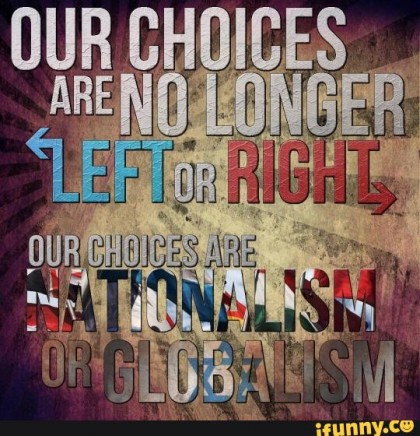 First, the main struggle right now, in both Europe and here, is between globalists, people like me, and blood and soil nationalists, like Trump’s America First. It’s not an either/or, of course, but most of us tend to lean toward one end of a continuum, more concerned about home or more concerned about the world as a whole.
 The bleakness is the lack of good-paying jobs for those with less education. The punishment comes from seeing others getting in line ahead of you for the American Dream. This line-jumping (Hochschild’s analysis), as it is perceived by white working class folks, has been created by the left’s very successful focus on identity politics: women’s rights, LGBT rights, civil rights. Put these two together, the bleakness and the punishment, and it’s no wonder we have a reactionary revolt underway, just look at your Facebook feed for proof.
 Fourth, after reading Hochschild’s book, I’m no longer convinced that a focus on economic policies will adequately address the working class movement toward nationalism. I say this because
 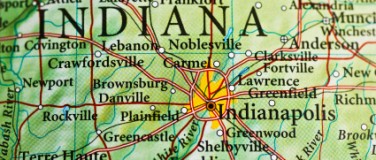 Woke thinking about the subtitle to the book Strangers in Their Own Land: Anger and Mourning on the Right. I realized I knew this one from personal experience.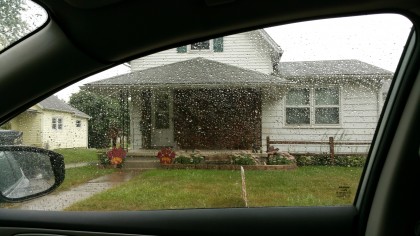
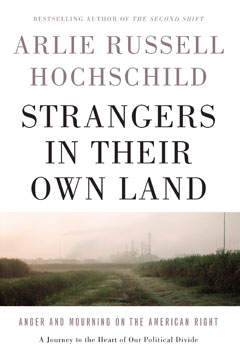 Just finished reading
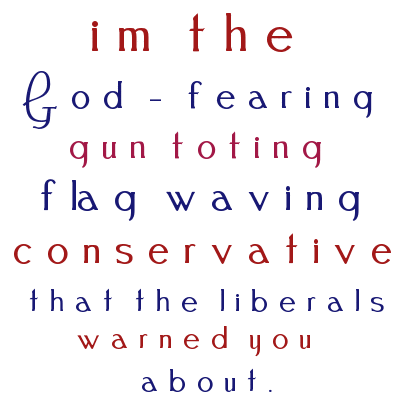 The Christian right metaphysics mixed with flag/gun/anti-government passions, honestly held and sincerely believed, makes allying with secular globalists like myself and everyone else in the progressive movement seem most unlikely. I don’t like seeing it this way. It makes me sad and a bit fearful for the immediate future. Perhaps dialogue can help, but when what Hochschild calls the deep stories are so profoundly different, it means the assumptions with which we start the conversation may defeat the effort at its inception.
 Don’t know why it took me so long, but I know how to make America great again. It will not require red baseball hats or xenophobic bluster. No, it only requires listening to the ideas of a Passionate priest, Thomas Berry. Berry wrote a small book,
  The phrase, the Great Work, comes from medieval alchemy. The primary, original material of the universe, the prima materia, in the alchemist’s lab can create the philosopher’s stone. The philosopher’s stone could turn base metals into gold or silver and extend the alchemist’s life.
 Make no mistake. This time is the direct result of Democrats and liberals ignoring fundamental politics, the politics of financial well-being for those not in the 1%. The shift away from these fundamentals was done in a good cause, this change in focus away from the old union, working persons emphasis of the Democratic party of my youth. Here’s an excellent article that explains how the shift happened and why it’s been so problematic, while also accomplishing a lot of good things along the way: