Category Archives: Memories

Cheese Curds

Lughnasa                                                           Lughnasa Moon

State Fair. A Lughnasa festival writ large. Texas and Minnesota, 1 & 2 in terms of state fair attendance. So Minnesota’s is big. And filled with the improbable from seed art to deep-fried pickles on a stick. Princess Kay of the Milky Way gets immortalized in butter, meaning there is an occupational niche for, yes, butter sculptor.

(Antrim, Ireland. Old Lammas Fair.)

The cows and the pigs and the horses and the chickens and the llamas and the rabbits and the pigeons and the sheep are all here in the city now, rooted out of their familiar stalls or sheds or fields, loaded in wagons and driven into the concrete jungle that is St. Paul, or Falcon Heights if you’re going to be picky.

The DNR has the great pond with Minnesota fish, right across from the giant slide where the gunny sacks serve as seats.  Along the street that runs to the main entrance and you hit cheese curds fried and politicians hoping to avoid being fried.

Then there’s machinery hill where, like the livestock, farm machinery comes into the city for a few days. The tractors seem at home there, a place they belong as much as in the field following the gps to the other end of the furrow.

And the people, walking arm in arm, carrying a WCCO bag, a bunch of colorful brochures and printed information from the DNR, colleges, that wonderful gizmo the hawker made seem magical. They might be eating honey ice cream, purchased at the bee exhibit run by members of the Minnesota Hobby Beekeepers Association.

Carried above the noise and crush of the crowds are ringing bells, flashing lights with their lustre lost in the daylight. The Fair’s id, the Midway. Riding, swooping, throwing, carrying big soft bears no one would buy. Where pointlessness is exactly the point.

It’s all underway right now, through Labor Day. This one will be our last as Minnesota residents and we’re going, probably on Monday. I’ll be headed for the cheese curds.
 

Nowthen

Lughnasa                                                                      Lughnasa Moon

Well. While at Osaka, our local sushi joint, Kate noticed a TV featuring nude bowlers. No, I don’t know why, but Kate went on to point the relation between sushi, raw fish, and nude bowlers, human flesh in the raw. There are more things in Heaven and Earth, Horatio, than can be counted for in your philosophy.

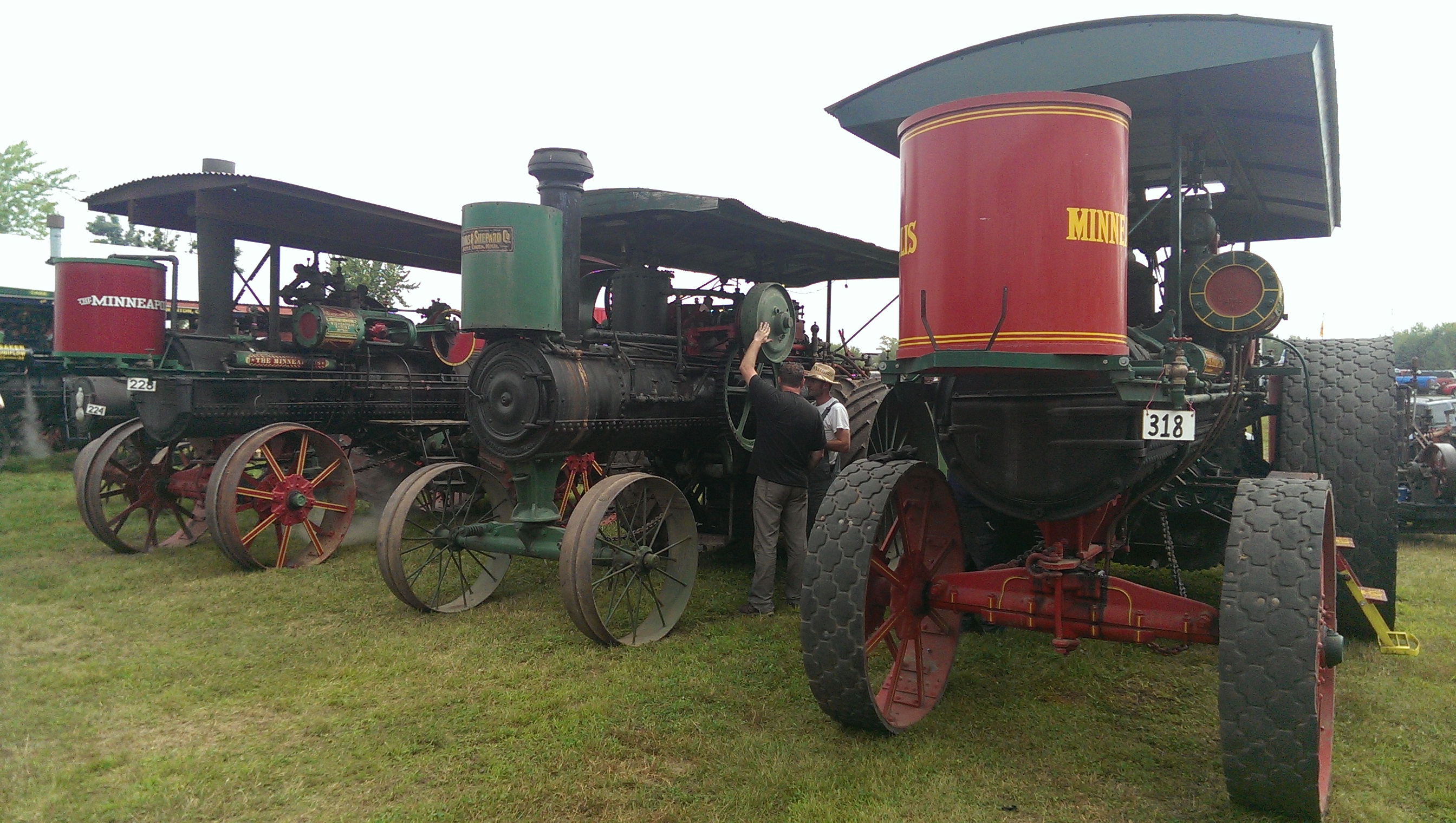
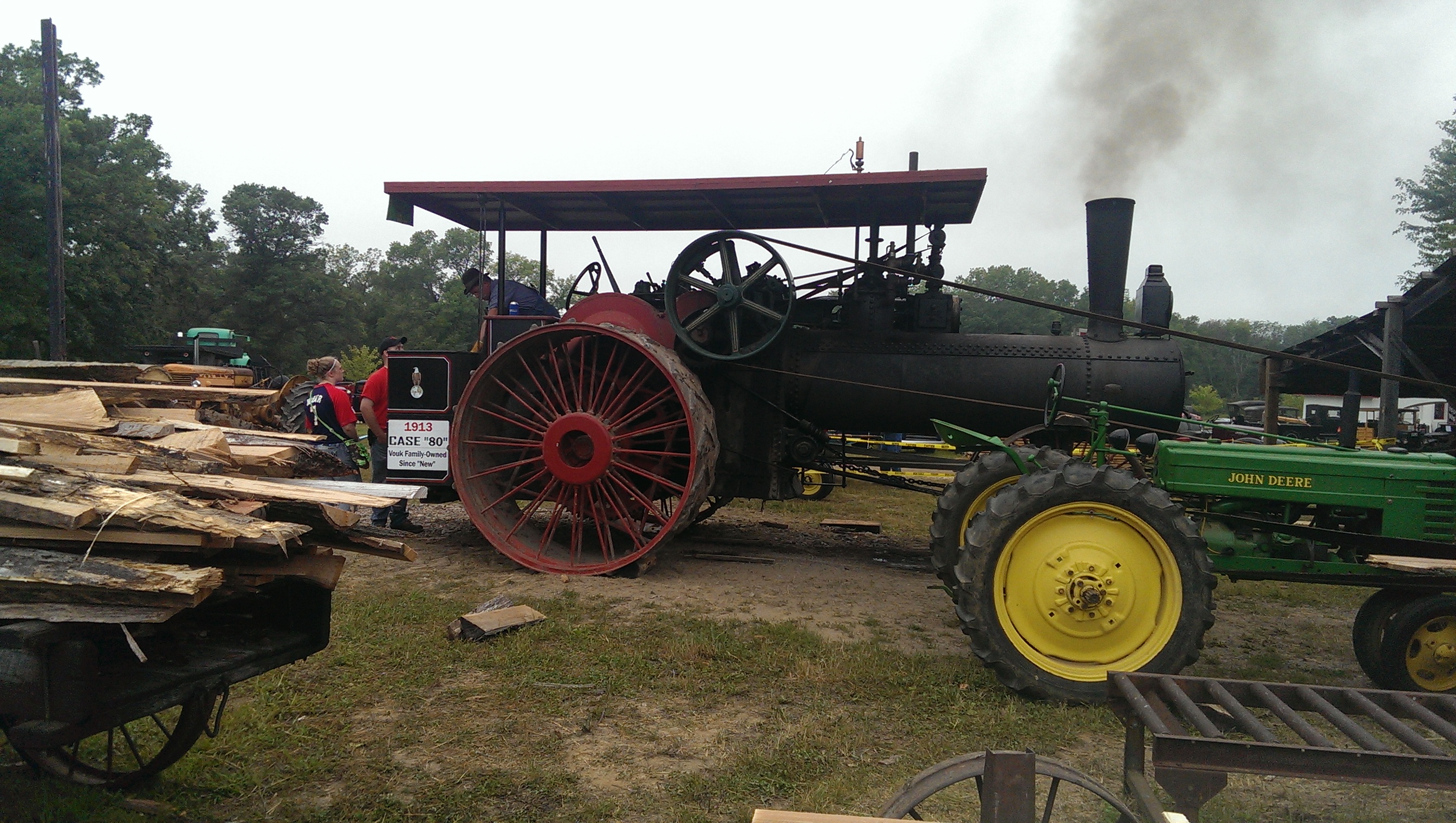
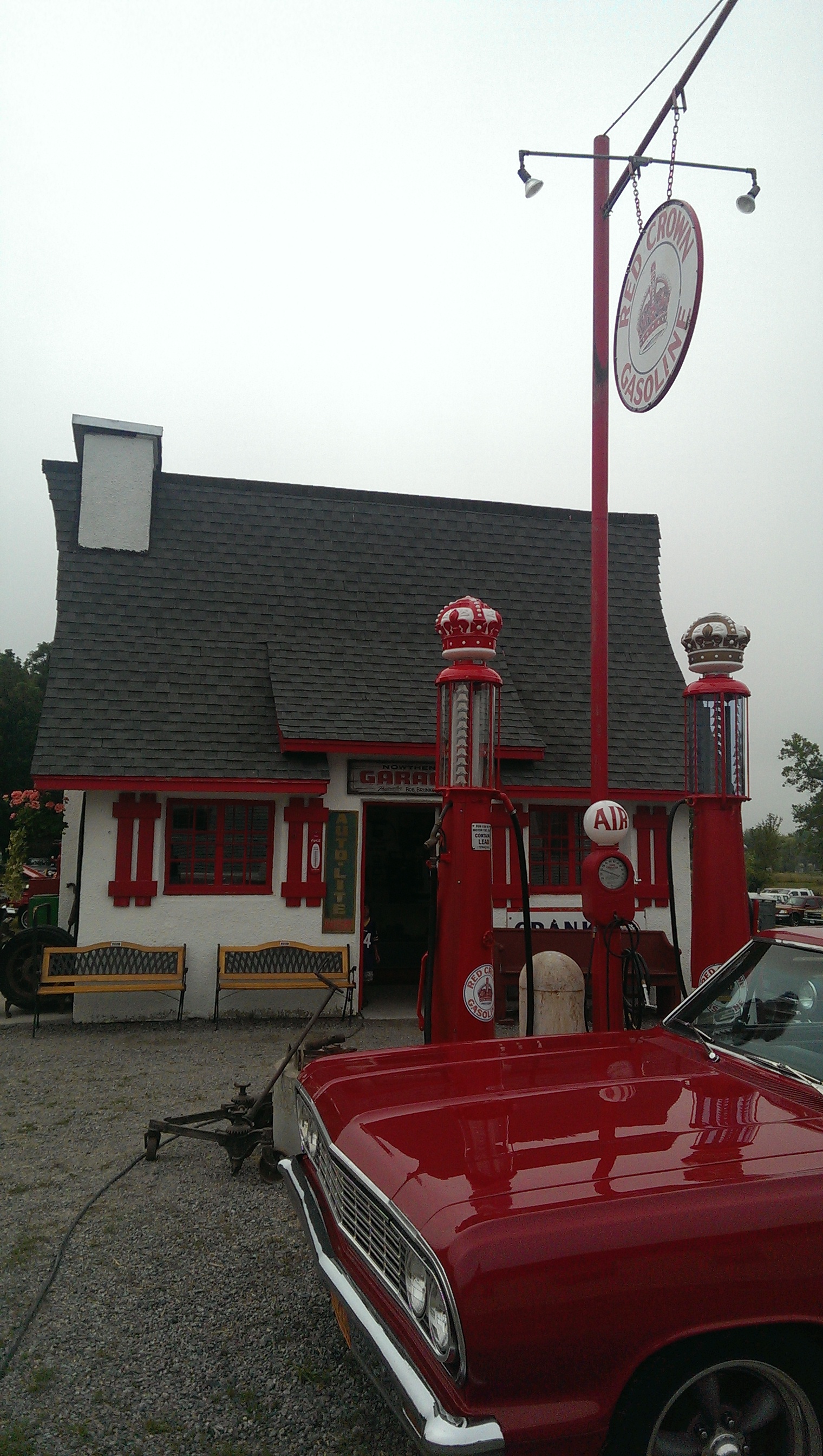
Before this nude experience, we attended, for the second year, the Nowthen Threshing Show. Here are a few photographs:

IMAG0512

Steam engine power take off running a rip saw and a planer at a temporary sawmill.

IMAG0520

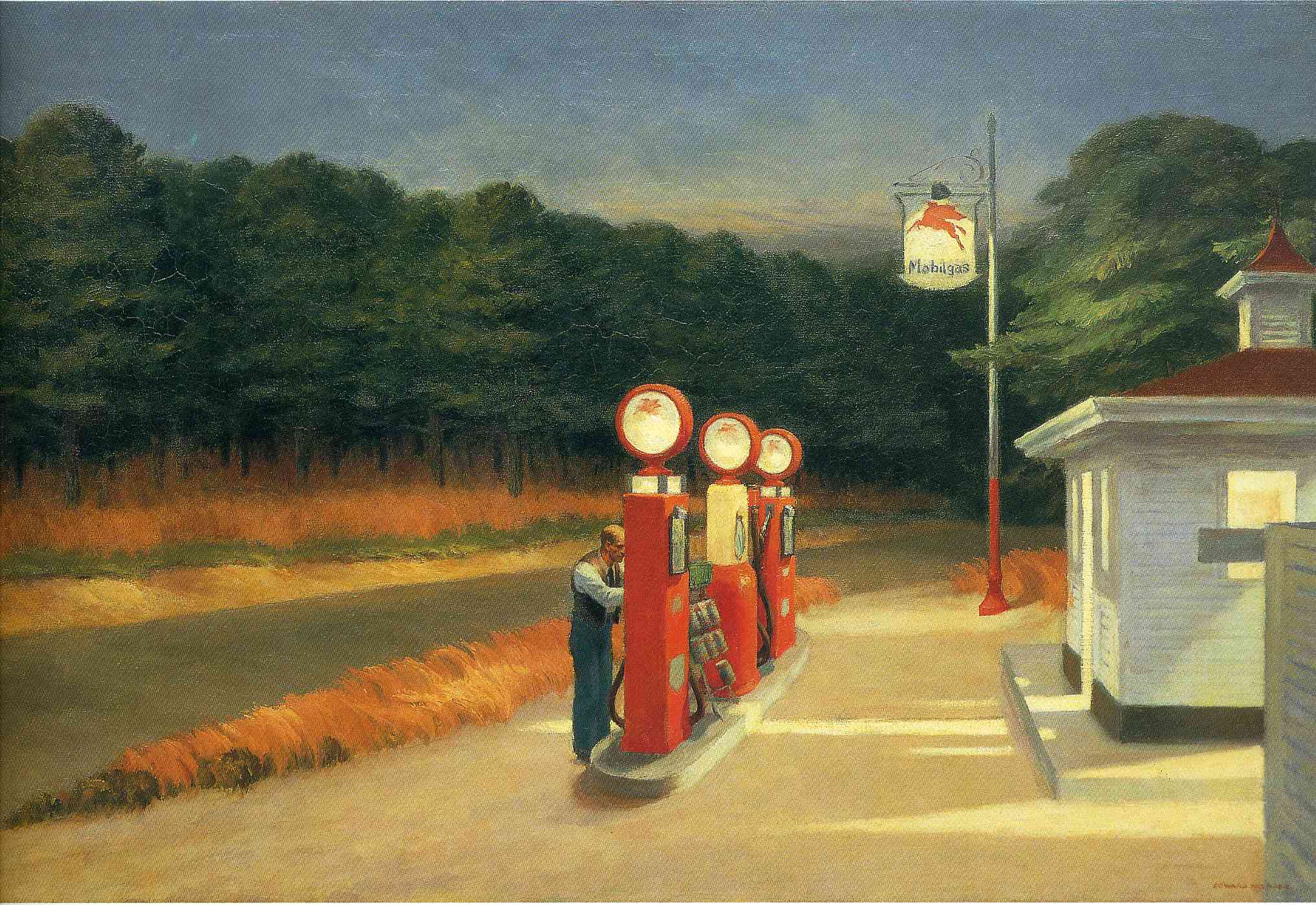
An old filling station. Compare to the Edward Hopper below.

gas  hopper

IMAG0536_BURST001

The theme this year was the world of steam.

IMAG0526


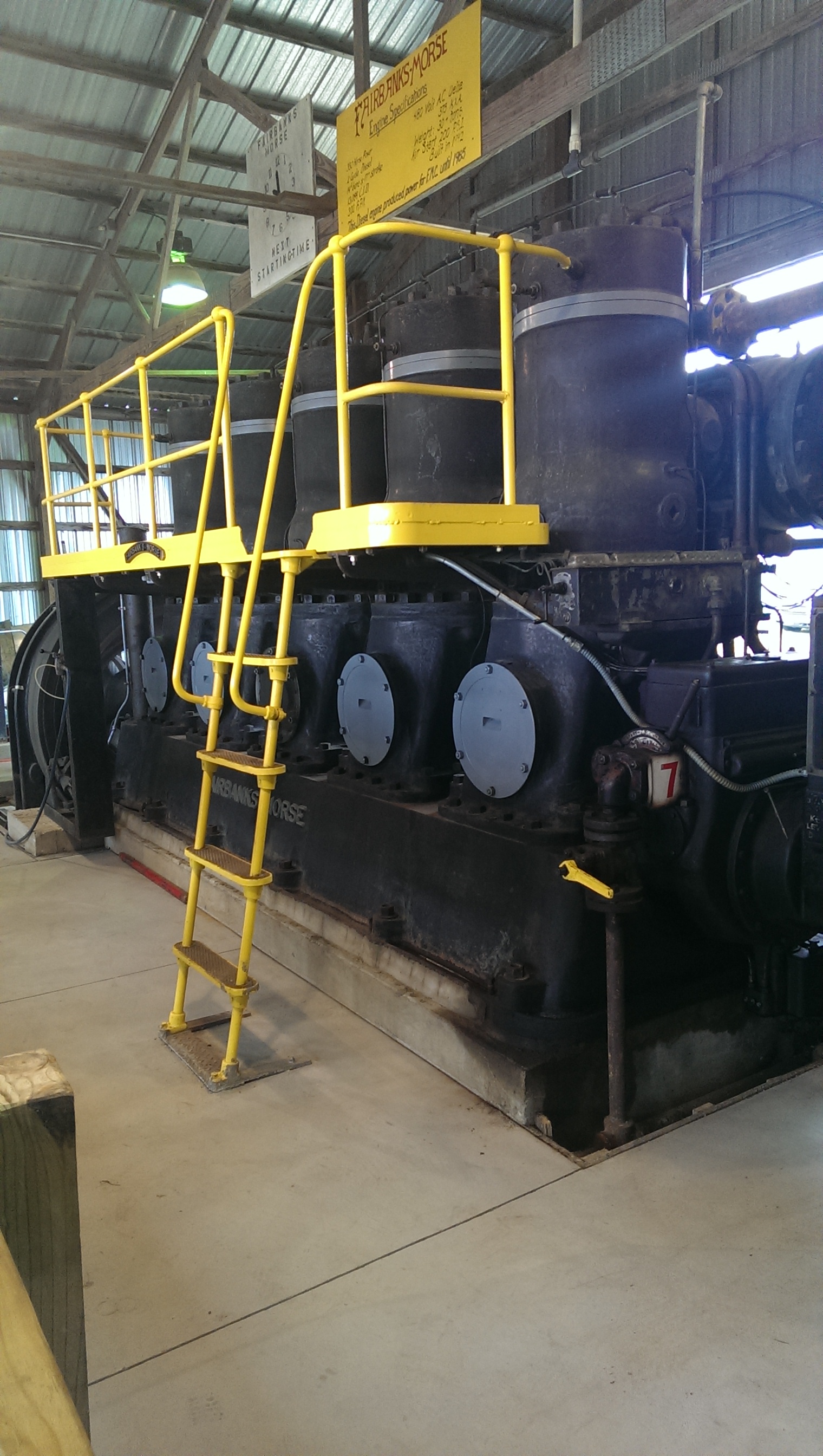
We watched the engineers bring this five piston diesel engine to life. It has a huge armature just out of the picture to the left.

IMAG0522


This was a surprise, but an artful one. Kate and her much admired red glasses.

What Lies Beneath?

Lughnasa                                                                 Lughnasa Moon

Clearing out files this morning. When I came to a group of dog related files, vet records, 1000P1030765pedigrees, lure coursing material, I got stopped for a while. In Sortia’s file, our second Irish Wolfhound, a black bitch that weighed 150 pounds, I found a letter from the University of Minnesota Veterinary Hospital. Sortia was euthanized there against our wishes during an overnight stay.

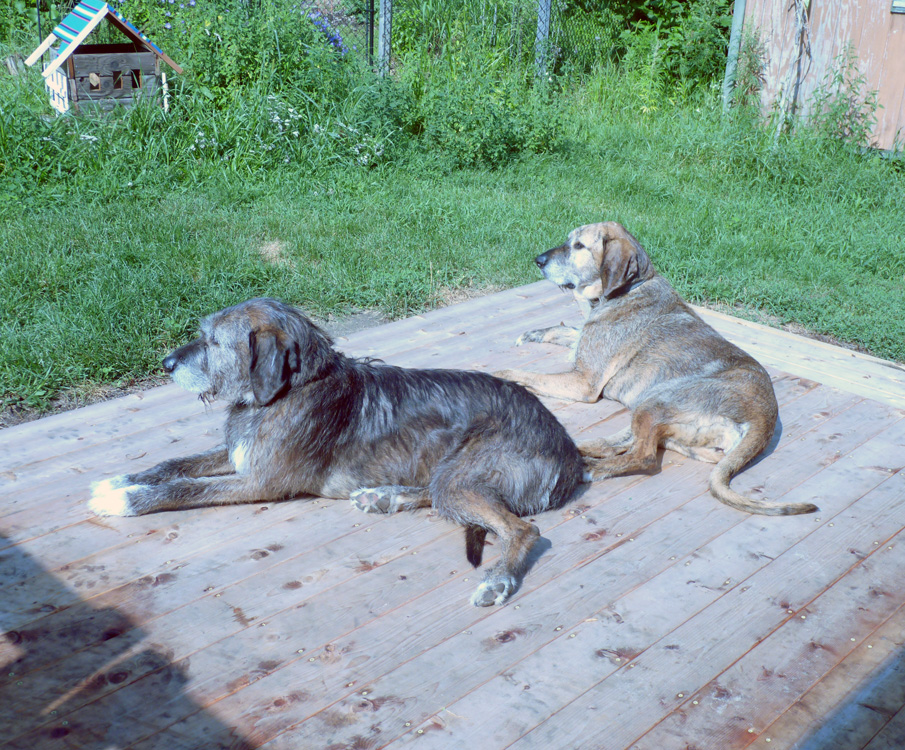
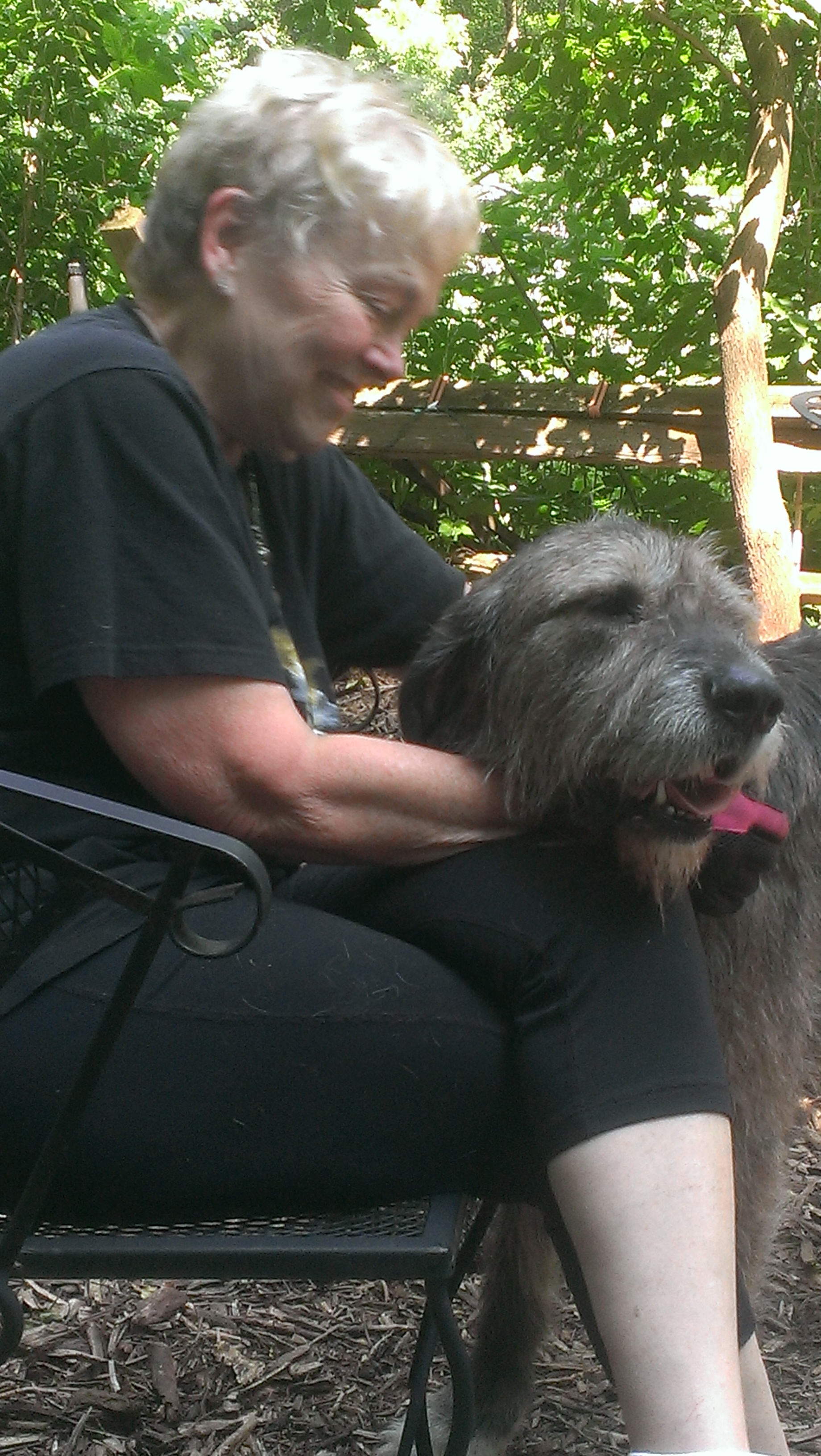
(Rigel and Vega taking the sun on our new deck)

Though the care our dogs have gotten at the U was usually exemplary, this event prevented us from saying good-bye to Sortia. Reading this letter about the incident brought it back to me in a flash. A wave of sudden sadness and deep grief gripped me for a moment, so strong that I had to put down the file and sit back while I stabilized. This feeling surprised me, came up strong from dead stop.

I also had an unexpected response a few weeks back while watching How To Train Your Dragon II.  In a reunion between the lead character, a young man, and his mother whom he thought dead, a wave of yearning swept through me. I wanted my mother to hug me. She’s been dead 50 years this year and I can not recall a feeling this strong about her in decades.

Here’s what I’m wondering. Do these strong feelings lie waiting for the right triggers, somewhat like PTSD? Or, do they swim around in the neural soup, always this strong, but engaged in another part of our psychic economy? How many of these knots of emotion exist within us, still tied to their original sources, and what significance do they have?

I may not be saying this well. As a general rule, I’m not in the grip of strong emotion unless something political is going on or I haven’t had enough sleep. Politics taps into something primal, as if a god within wakes and demands action. (I use this analogy with some reservation because I don’t believe my politics are divinely inspired, but it gives the right tone to the depth of my political feelings.) Being sleep deprived makes me irritable and far from my best self, so anger comes more easily then.

Now, maybe strong emotion could ride me more often.  Maybe I’m missing out on some part of life that flies those colors with some regularity.  But as a white middle-class guy, educated and with northern european ancestry, friends and spouse of the same, my emotional range is muted and these events, like the ones I describe, are rare.

No conclusion here. Only questions.


You Can’t Go Home Again

Summer                                                            New (Lughnasa) Moon

In the spirit of Heraclitus and Thomas Wolfe:

Clarification on hometown lost. It was I who lost the Alexandria I described. I lost it and so did many of those who lived there when I did, but those who live there today, who have chosen it as their home or remained through the changes I describe, may have a different view. They may not view it as lost, but as home.

Back Home Again, Upon the Wabash

Summer                                                            Most Heat Moon

Took my fellow Hoosier, sister Mary, out to International House of Pancakes, a chain redolent with Indiana memories. They even seem to hire Hoosier like waitresses, thin and cheerful, like blue-collar librarians. I had country fried steak and eggs, but Mary had a special, blueberry cannoli. An improbable breakfast item, but there it was and Mary liked it.

After IHOP, we drove through northern Anoka County, winding past wetlands, sod farms and older country homes to the Green Barn. There I picked up 6 bags of woodchips and loaded them in the RAV4 so I can complete the deck work today.

Northern Anoka County has that northwoods feel. In fact, the boreal forest reaches its southern most extension near here. This rural ambiance is not really found in Singapore, a modern city-state. Mary did say that there are farms in Singapore, farms raising organic vegetables for local grocers and restaurants.

Be the Change or Change the System?

Summer                                                                  Most Heat Moon

1968. Martin dies. Bobby dies. The Chicago riots at the Democratic National Convention. Local boy Hubert challenges Richard (enemy’s list) Nixon and Nixon wins with a knockout 301 electoral votes. This brought Spiro (nattering nabobs of negativism) Agnew into office, too. Oh, what a time it was.

On the outside, including certain rioters at the Chicago convention who would become famous as the Chicago 7, was a massive, incoherent largely college student uprising known as “the movement.” In those days there was a split within the movement about whether to engage the political system, the establishment (a term borrowed from American thinker Ralph Waldo Emerson), through protests and (usually) alternative candidates for election like Dick Gregory, or, to drop out.

Tune in, turn on, drop out was a favorite mantra of those who contended the establishment was too corrupt to change and instead must be ignored while a new culture was built. This was the time of communes and the back to the land movement. The split within the movement identified hippies who wanted to live together in a participatory democracy, often rural, but not always, and radicals, who thought protest and work in congress could bring an end to the Vietnam War and usher in an era of peaceful, socialist-style politics.

These two groups, the hippies and the radicals were, within the movement itself, seen as opposite, if not opposing camps. At its core it was a political equivalent of the debate within Western Christendom between quietist monastics who retired from the world into a life of prayer and contemplation and the engaged church which tried to influence the lives of people in their worldly home.

Today the camps divide less obviously but they cluster around, on the one hand, folk who might have a “Be the change you want to see in the world.” bumper sticker, and on the other, those who have a 99% button or a Sierra Club hiker on their car.

I never understood the conflict myself. I became a committed back to the lander, purchasing a farm in northern Minnesota while remaining, at the same time, committed to political action. It still seems to me that living the change and acting politically go together. They are points on a continuum of belief turned toward action, not dialectical opposites.


A House With A History

Summer                                                         Summer Moon

IMAG0531Why not write a history of this spot, this hectare? An ecological history. It can start with the glaciations, consider the flora and fauna since then, focusing in more tightly once the first nations began to arrive, then even more tightly as Minnesota began to emerge.

Another starting spot would be today, or from Kate and mine’s presence here. How we decided to be here, why. Go over decisions we made early on like hiring a landscape designer at the beginning. Recount our twenty years, the good decisions and the bad ones, the easy ones and the hard ones. The other historical and geological material could be worked in as backstory.

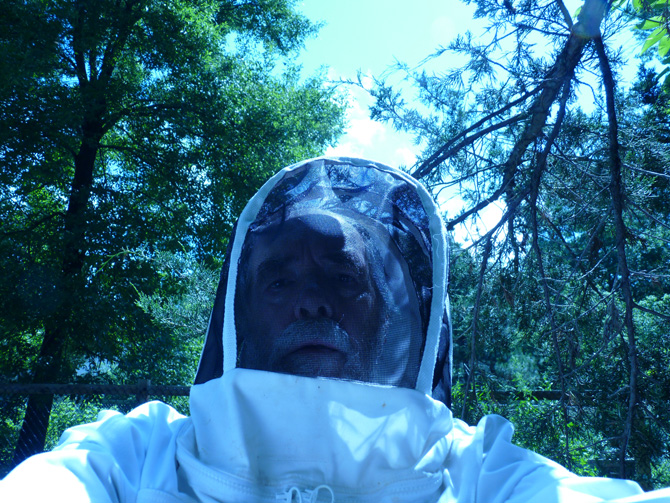
It would be good for people to view an average approach to the land, one which changed over time (though its roots were indeed in the back to the land movement) and which took advantage not of a particular approach, but of many. An approach that is dynamic, 06 27 10_beekeeperastronautchanging with new knowledge, the seasons, aging, new plants and new desire.

The flavor of “Return of the Secaucus 7” with some Scott and Helen Nearing, Wes Jackson and Wendell Berry thrown in, too. Ah, perhaps it could be a sort of third phase update of the movement years, an upper middle class idyll moving against the grain of upper middle class lifestyles.

Not sure whether to pursue this or not, but it could be interesting. Might even help sell the house. A house with a history.

A structure based on the Great Wheel might be interesting.

A Hole

Beltane                                                              Summer Moon

Sometimes these moments reach out, grab a part of you unexpectedly. Evoke a feeling long forgotten. In unusual places. Kate and I went to see How to Train Your Dragon 2, better than the first installment and worth seeing for any proud Scandinavian. It’s a touching story, dramatic and funny by turns with a quality of animation that shows how far we’ve come since Bugs Bunny and Woody Woodpecker. If you have a kid in your life, see it. If you have a kid left in your heart, see it.

Here’s what got me. Spoiler alert. Hiccup, the lead character, a boy just grown into young manhood (since his youth in the first picture) meets a mystery figure who loves and helps dragons, just like he does. The surprise is that she’s his mother, thought dead. There was a scene where this animated mother reached out and hugged her 20 year old boy for the first time since he was in the cradle.

A sudden wave of longing swept over me. For a second it was my mother, met again, reaching her hand out, a hug, the smell of her hair. The feeling rose from somewhere long forgotten. To be hugged by my mother. I miss it. Still. At 67 and her having been dead for IMAG016150 years this October. It reminded me of the hole I’ve lived around, never filled since her death and of the simple joys not possible for all those years.

It’s not regret nor nostalgia nor something I even wish for, just a hole, the hole that death leaves. And yet in its own way it was affirming. I loved my mother and I know she loved me. I know, if we found ourselves together, even over this long span of years, that she would hug me and caress my cheek. Kiss me. Tell me she was proud of me. That was her way. And, thankfully, I’m sure she would be proud of me.


Boards Darkened With Soil and Sand and Oil

Beltane                                                             New (Summer) Moon

Continued the deconstruction of the dog feeding stalls. Jon’s design was elegant and well executed. He put love into it for those dogs. That was in the time of the Irish Wolfhounds Morgana, Tira, Tully and for a brief while Scot (who died too young of hemangiosarcoma). It was also while the whippets Iris and Buck were still alive. (I think, my memory of the exact co-residence of our dogs is a bit fuzzy.)

As I removed the bones of the stalls and the doors into them, I stood inside the wooden structures, each about two and a half feet wide. It was then that memories began to surf my mood. The wood inside these crates has darkened, oil and sand and soil rubbed off on them while an eager animal ate their breakfast or their supper. There were, too, tooth marks on some of them, probably a dog frustrated with waiting for food or to be released back into the yard.

Their big furry heads would stick out of the sliding feeding doors, looking up with that quizzical where’s my food look that dogs have perfected through long years of living with humans. Those days the panting of the Wolfhounds filled the air with a sweet odor and the sound of them eating gladdened my heart. That time is long past, but the boards in the stalls look like stalls in barns, places where animals have been, pressing up against them and leaving the permanent record of their existence.

A Secular Sabbath

Spring                                                                Bee Hiving Moon

Sundays have a certain slowness to them, as if time itself moves languidly, the urgency of the workweek drained out.  Of course, that’s an inversion of the real phenomena which happens not on Sunday but in the mind when it finds itself in a Sunday way.

Back when I was a small town boy, Sunday meant shining my father’s shoes in the morning before church.  While complaining about it.  I mean, thirty-five cents for dipping my hands in black shoe polish?  Then, off to Sunday School with one teacher or another followed by the Sunday service sitting in the family pew (not reserved, but held for us anyhow by long tradition) under the watchful eye of Jesus praying, his hands on a large boulder, in the Garden of Gethsemane.  This was stage right from the pulpit on the west side of the sanctuary.

Afterward, at least for a long time, we would often get in the family sedan, Mary and I in the back, mom and dad up front, and drive over to Elwood (our most bitter athletic rivals, but that didn’t matter to mom and dad) and go to Mangas’ cafeteria.  It had those tubular rails with an upraised one at the back to hold your formica tray as you passed by the offerings in small dishes.  I remember most the swiss steak, which I loved, and mashed potatoes with butter pooling yellow in the middle.

We would eat, then go home where the rest of the day disappears from memory.

Later, as a city rat, church was a work related experience since my city time is almost exactly coterminous with seminary and my career as a minister.  So, I would head off to work on Sunday morning, usually in this church or that since I worked for the Presbytery (a geographical jurisdiction) and when I finished, again Sunday afternoon sort of disappears from memory.

As an exurbanite, I fell into the Sunday afternoon NFL maw for several years, but as of late the Viking’s have cured me of that experience.  That means now Sundays have neither church nor the cafeteria nor football and what is left is the residue of passivity Sunday represented in its small town and football eras.  No wonder my inner world moves more slowly on Sundays.

It’s my secular sabbath.  And I think that’s a good thing.