Category Archives: Reimagine. Reconstruct. Reenchant.

Spinning out

Beltane                                                                     Rushing Waters Moon

High Holidays at CBE, before the bleed

22 degrees. A thin layer of snow on the solar panels, Black Mountain’s lodgepoles topped in a floury white and the sky that Colorado western blue. Bright sun. Why we love the mountains.

Still spinning out, not working much, floating in caregiver world, distracted. It’s ok. I’m waiting intentionally now, Progoff workshop starts Sunday and I’ll go deep into this current version of me, self-guided, self-analysis, Jungian style. The week after it finishes I have my pet scan, then the meeting with the oncologist. Into the unknown, first my psyche, then my body. All in two weeks.

The Progoff method is a pet scan for the psyche, letting me see the things within that have been hidden by busyness, anxiety, stress, competing demands, looking away. Once I’ve seen them, like the pet scan’s images of my cancer, I can diagnose my situation and make a plan. That’s diagnose in its etymological sense: from Greek diagnōsis, from diagignōskein to distinguish, from dia- + gignōskein to know. Merriam-Webster

My suspicion is that I’ve entered a different moment in my life, one that began with two dramatic changes, the first being the move to Colorado. It took about a year to process. All the financial squirming of two houses, moving and pitching stuff, lots of stuff, removing ourselves from Minnesota and moving onto Shadow Mountain. The second change. Prostate cancer. In which I went from a normally healthy aging man to a cancer patient. The sudden push back into the space of a cancer patient, after thinking I’d put it in the past, been cured, has jarred me in ways I’ve barely begun to realize.

20180909_183444
September 9th, easing the SMA induced nausea and cramping

Kate’s slowly, but now surely, rebounding from her long ordeal. She’s able to take on the dog’s second feeding, a modest, but real return to pre-bleed life. Our visit to Dr. Gidday, a post the most recent hospitalization appointment, gave her situation much more clarity. Dr. Gidday agreed that if her hemoglobin numbers don’t stay up, she has labs drawn weekly for the tpn feedings, then she’ll go to iron infusions. That will resolve, or at least attenuate, her anemia. Continued weight gain will happen through the j-tube placement. (remember the j-tube?).

The final piece of the puzzle, her lung disease, awaits either a lung biopsy, which she does not want, or a close reading of the high-resolution CT scan she had on April 2nd. With a diagnosis and the resulting treatment for the interstitial lung disease all the presenting problems of the past year plus should be addressed. A long, long time coming. Just how far back toward her old life she can expect to come is unknown, but if she can get back to sewing, driving, going to CBE and to Bailey Patchworkers and the Needleworkers group I’ll count her better.

Then, maybe I can get back to more abstruse obfuscations here rather than this medico-journalese I’ve had to adopt over the past several months. The tincture of time, as Kate would say.
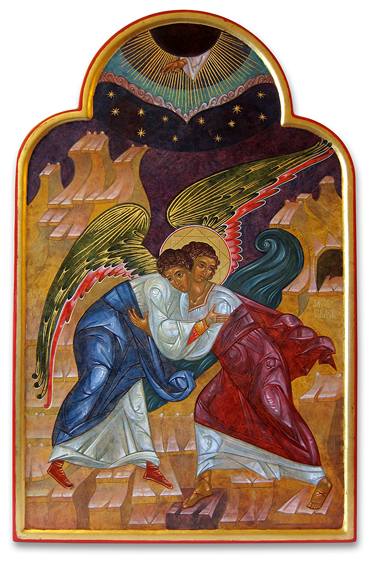
At the Jabbok Ford

Spring                                                                      Rushing Waters Moon

jacobPhone call today from buddy Tom Crane. In referring to the current kerfuffle within my body, those cancer cells, he said I was “wrestling with a dark angel.” That is so.
Yet what it called to mind was one of my favorite biblical passages, one I’ve written about here before and about which there are many wonderful works of art. Jacob at the Jabbok Ford.

Through the night Jacob wrestles with what the text refers to at first as a man. When the man, now revealed as an angel, sees he cannot best Jacob, he says, “Let me go, for dawn is breaking.” Jacob, strong enough to hold an angel fast through an entire night, is not willing to do that. “I will not let you go unless you have blessed me.” It is at this point that the angel, who had to dislocate Jacob’s hip to keep from losing the match, agrees: “Your name shall no longer be called Jacob, but Israel, because you have commanding power with [an angel of] God and with men, and you have prevailed.” Jacob (now Israel) continues to limp the rest of his life. He names the spot Peniel, (I) saw the face of God.

Wrestling with angels is a tricky business. Just ask the Egyptians. That one, the angel of death, sometimes called Azrael, passed over the lamb blood smeared doors of the Hebrew slaves and killed the firstborn of Egypt. What would have happened to Jacob if he’d been beaten by the angel? No blessing, I’m sure.

Wrestling with Azrael, cancer forces this struggle on the psyche in the same way Jacob’s angel blocked his passage across the ford, could be represented as happening at a ford of the river Styx. Lose a match to Azrael and, to mix mythological systems a bit, you can catch a ride with Charon.

As with Jacob’s angel, no contest with Azrael will result in victory, Azrael wins all struggles in the end. But in the interim, as with Jacob’s life after the Jabbok Ford, we can go away changed in heart, identity, and fate.

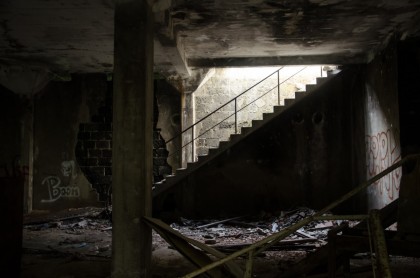
ruin_stairs_leave_destroyed_broken_dirty_building_factory-921666.jpg!dRecalled as I wrote this that I had a dream:
“I was in a non-descript house or building, bare of furniture. Someone, or something, was in the basement. I could hear gun shots. I hunted for entrances to the basement and found two, one a door and one a grate.

Down there were steel pillars covered in concrete.  Whoever or whatever down there wanted to bring the building down. The blue painted concrete had shattered on many of the pillars exposing steel beams. They still stood strong.

Somebody handed me a rifle. I readied myself, though frightened, to go down and save the building.”

Surely this is Azrael. I woke up before the contest could begin, so I’m going to imagine the rest.

I went down the stairs, grateful for the rifle, thankful for whoever handed it to me. But, could I use it? I’m not a man of peace exactly, but I’m not a man of violence either. Still, desperate times. The basement had a little light, enough to make shadows. Gunfire echoed more loudly as I got to the bottom. Whoever it was, was serious.

The gunfire stopped. “You shouldn’t be down here.” A voice cold and firm. From the depth of the shadows. “Leave now and I won’t destroy you. Not right now.”

OK, I thought, back up the stairs. This is too scary. However, I didn’t move. I lifted my rifle and aimed it toward the voice. When I pulled the trigger, it clicked. A rifle with no ammunition. Well, that settles it. Back up the stairs. Nope. Stayed. Scared, but unwilling to give up.

The gunfire did not resume. The air had faint patterns of blue dust from the pillars that had been shot up. The silence was complete. No voice. No evidence of another.

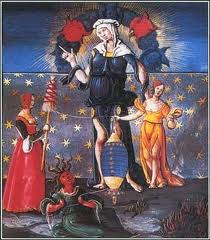
Fates
Fates

My feet began to move before my mind caught up. Whoa, I thought, feet where are you going? I knew, though. Straight toward the depth of the shadows. I heard what I imagined was a rifle clatter to the ground. Hmm. Even up, I guess.

“Come no further unless you want to meet your end.” Cold, firm. Closer.

My mind said, back up the stairs. My feet kept moving until I lost sight of them in the darkness of the deep shadow. Heart racing, adrenaline swimming through my bloodstream, setting me on fire. We closed.

How long we struggled, I no longer remember. He was strong. Much to my surprise, so was I. We went back and forth, pushing, straining legs and arms, trying to gain an advantage. This was all in the darkness of the shadow. I could not see him and I assumed he could not see me.

Oh. Wait. Not a he. At one point, arms locked together, we touched at the chest. Breasts. A woman! Didn’t change my situation. She was still there to bring down the foundations of my life.

This went on. And on. I grew weary. So did she. Panting, both of us. Our moves more feeble. She touched my left shoulder and my left hip. Pain. Agonizing pain. Giving up not possible, I hung on, endured the pain, chose it.

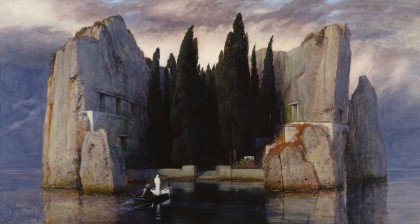
Isle of the Dead, Arnold Bocklin

“We must end this,” she said.

“Not until you stop. I need those pillars, I can’t let you wreck them.”

“If not tonight, later. You know that.”

“Of course. Yes. I know. And when it’s time I will not fight you, but come willingly.”

She dropped her hold on me. My shoulder and my hip blazed. The adrenaline was gone. I felt weak. “You must bless me and I will leave.”

Later, back up stairs, the door to the basement closed and locked, I sat at a small wooden table, drinking coffee. I had a new name. Just like Jacob.

A Difference Maker for My Heart

Spring                                                                              Rushing Waters Moon

20190420_173752Back to mussar yesterday. First time in quite a while. It was a gift, as was the minyan for Debra Copes’ mother’s memorial the night before.
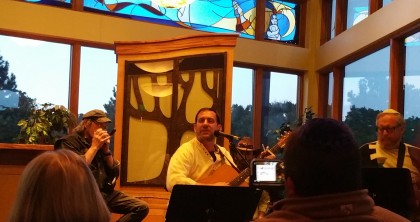
Odd though, in both instances. I find myself an insider and an outsider. There is no question that Beth Evergreen accepts both Kate and me. I’m of the community, not a Gentile pagan interloper. Yet when the prayers are said and the knee bending and bowing begins, I feel like an outsider. I don’t know the words, nor do I fully understand why we’re bending and bowing. I try to follow the person next to me, but I feel awkward and a bit inauthentic. Also, I don’t wear the kippah during services. Again, it doesn’t seem authentic for me since I’m not of the tribe.

When Alan Rubin and I went to lunch on Wednesday, for example, I ordered a reuben, a pannini. When Alan ordered a salad, I said, “Oh, on your diet, eh?” “Well, yes, but also we can’t eat bread during Passover.” Oh? Oops. Passover, it turns out, is 8 days and eating leavened anything during this time is out. Yet they trust me enough to teach in the religious school.

high holy daysBeing away for a while makes me more aware of these moments. Yet Debra wanted me at her mother’s minyan. She did a universal worship service which consists of lighting candles for Hinduism, Zoroastrianism, Christianity, Buddhism, Islam, Judaism, and a general candle for other witnesses to the divine. Rabbi Jamie said, at a meeting a couple of weeks ago, “This ex-Presbyterian understands Reconstruction better than anybody else around this table.” Around the table were key leaders of the synagogue.
Yesterday I offered what was for me a mussar interpretation of a table of virtues set out by Renee Brown, a favorite author of many in the congregation. Yes, to generosity. But, also, yes to retaining sufficient resources for yourself and your family. Yes, to freedom, but also yes to submission, to recognizing those times when serving others is more important. Yes, to accountability, but also yes to breaking the rules, to recognizing that not all instances of being held to account (even by ourselves) are equal or worthy.

20180316_191858The Jewish approach to death, too. Sitting shiva with someone after a death. Having those in mourning stand and be acknowledged during the mourner’s kaddish at every worship service. Celebrating each year the yahrzeit, the year anniversary of a loved ones death. Calling together a minyan as Debra did for honoring her mother. Those who knew it, repeated the mourner’s kaddish from memory. A vital and key part of maintaining community, acknowledging that the dead live on, not gone, just absent.

When I told Alan about my new reality with the axumin scan and oncologists, he said, “You know you’ve got the whole congregation behind you?” He meant it. Wow. Makes me feel like crying. Because I’ve always chosen an outsiders role, I’ve rarely known complete acceptance in a group; but, I feel it at CBE like I felt it in the Woollies. Profound. A difference maker for my heart.


No Cheffing Required

Spring                                                                         Rushing Waters Moon

Two favorite tools
Two favorite tools

Kate and I discussed ways to relieve my stress. One source of stress for me was the evening meal. Part of me, a very strong part, wants to be a chef every night. Something new, something remarkable. Understand the ingredients, bring out their best, try new techniques. Problem. That requires a lot of forethought. Buy the right ingredients. Have them to hand. Try to replicate things I barely understand. And, it results in duds. Failures. Sometimes. Unnecessary stress.

Kate’s solution? She’ll make a menu plan for a week and I’ll cook it. Oh. I can do that. That relieves me of the need to create and in this instance I’m happy to let it go. Last night I followed her suggestion: spaghetti and sauce, spinach. Straightforward. Tasty. And, no cheffing required. Doesn’t seem like it would be much, but I felt so much better when I saw that menu plan.

No word yet on the Progoff workshop. When I registered, there were only 4 of us and they require 7. Hope it happens. I need the clarity about this time that these workshops always give me. The Colorado years have been wonderful, filled with family as we wanted, saturated with mountains and wild life and blue sky, anchored by new friends and community at CBE. The Colorado years have been awful. Cancer. Sjogren’s. Knee and shoulder replacements. (which have helped us both) Kate’s bleed and the sequelae. Interstitial lung disease. Trips to the E.R. Hospital stays. Vega’s death.

alvarez-adventure-caving-spelunking-1So much here. The grit of my life over the past three and a half years. How has all this changed me? What direction does it suggest? How might I live into it with greater joy, greater passion, greater serenity? I also need a break from the every day. Not just because it’s been stressful as I said below, but because it’s been a long time between breaks. Tom and Mark’s visit was a nice respite, but too short.

The Progoff workshop is five days, morning and afternoon in a retreat center. I’ll be a commuter because of the dogs and Kate’s tpn, plus it’s cheaper. If it doesn’t happen, I’ll have to figure out some other way to get perspective and get a break.

Death, and given the date, Taxes

Spring                                                                        Rushing Waters Moon

This time the snow storm underperformed. Maybe 3 inches. Good news, really, since it means Colorado Pulmonary Intensivists won’t close and we’ll finally get to have a delayed visit there, pick up Kate’s ct reading and discuss her j-tube surgery.

fearGot my own thing going on, too. Second PSA showed a slight uptick from a month ago, from .12 to .13. As Kate said, probably in the lab’s margin of error. Still, it is cancer we’re talking about here. Any increase over .1 sends some sort of signal, just how serious a one I don’t know. Going in to see the urologist as soon as I can get an appointment.

Not the best judge of my anxiety about this. When I sent the note to Dr. Eigner, the surgeon who removed my prostate, I said my psa had gone up to 1.2. That’s a huge difference from .12. I misplaced the decimal point. Not at my calm best on that e-mail.

As I hear myself thinking, my self talk is like this. I need more information. I don’t know enough to  know whether this is bad or just something we’ll need to watch. Or, both. But wait. It’s cancer. You know, CANCER. I don’t want to have a sell-by date given to me, or worse an expiration date. This body no good after 13 years. Oh, come on. We all die. And, you’ve even referred to your eventual cause of death as your friend.

Yamantaka
Yamantaka

Death is not an enemy. It’s an inevitability. Yes, it takes my breath away when my inner conversation veers towards my absence, my annihilation. Sometimes. Other times, I take it in, embrace it. I take from the Tibetan Buddhists that being calm at the moment of your death is a spiritual goal. It is for me and that also means being calm about death since it always approaches, is never further away than your next breath.

We begin and we end. This much we know with certainty. If life, that time between a sleep and a sleep as the Mexica say, is filled with apprehension about the end, then this brief mayfly moment will be wasted. That’s why Yamantaka encourages us to consider our death in as realistic as a fashion as we can. See our dead body. Imagine it in a coffin. Feel the last breath leaving your body. Imagine the world without you.

Not sure about the notion of an afterlife. Reincarnation? The Buddhists think so. Heaven or hell? Very unlikely since I know the literary sources for both of them. Absorption back into the 10,000 things? Makes the most sense, but sense is an artifact of this life and in particular an artifact of human reason. All the data we have comes from our singular experience in this body, in this lifetime. We have no prebirth memories (I find past-life regressions difficult to believe. Which does not mean untrue.). We have no post-death returns save for those who have experienced death and been revived in some way. Even those experiences are brief and inevitably the product of a difficult moment.

death Osiris-nepraWhat about Jesus? There again, I know the literary sources. The earliest gospel, Mark, probably did not include a resurrection narrative. The dying and rising god is a motif of certain Middle Eastern belief systems, the story of Osiris for example.

Would we all like to have a definitive report back from beyond the pale? Not sure. What if it contradicts our hopes, our beliefs?

Here’s the nub of it. I know and love life. But it is, I admit, all I know for certain, except that it also ends. I’m not eager to trade a known good for an unknown. Most aren’t, I suppose. When a mortality signal like a possible return (or more like a reemergence) of cancer comes, part of me responds with fear, with anxiety. Another part of me responds with acceptance of my death.Which is, in any case, not  yet.

Charon and Psyche, John Roddam Spencer Stanhope. 1883

The older I get I realize carrying contradictory states is the norm, at least for me. It’s like pneumonia. I learned this February that you can have both viral and bacterial pneumonia, in fact, you can have different strains of both. At the same time. We’re more complex, less simple than our reductive thinking processes can usually entertain.

One thing I find odd is being given thirteen years to live (a possible prognosis if this is a reemergence), makes me more anxious than not having such a number. Which is silly from a rational perspective. All that’s being taken away, all he said, is the fantasy of immortality. Without such a prognosis I could continue to live, well, ongoingly. Which of course we know not to be true. Anyhow at 72 I’m already two years into the bonus range beyond three score and ten.

Consistency, Emerson said, is the hobgoblin of small minds. On the matter of death and cancer I’m not a small mind.

Legendary

Spring                                                                      Recovery Moon

IMG_0612

Tom Crane sent me this street poet’s work, found on Maui. I wrote him back after reading it and said we could go for an epic third phase. I meant legendary, but epic appeared anyhow. He wrote back, said he’d like that, too, but didn’t know how. I agreed. Beginner’s Mind, eh? We’d have to redefine epic, Tom replied. Yes.

And, we don’t want to get stuck in the success trap. That trap can consume the second phase, career and family, but it can be set aside in the third. So the question could be, what would a legendary third phase look like? Better than epic. Epic has that Hollywood feel, doesn’t it? Let’s forget I transmuted legendary into epic and go back to the poem.

Sadhu
Sadhu

What does an open spirit look like in the third phase? What risks might we take if we had one? What risks are particular to the third phase? To get an idea of where this might go, I looked up the Hindu sadhu. A sadhu intentionally creates a fourth phase of life.* Of course in a Minnesota winter like the last one the Jain option of wearing nothing would require modification unless the sadhu phase was to be short.

I wonder if other cultures have similar ideas? Don’t know. What I do take from the sadhu is that they have an open spirit, moving toward moksa means getting free from samsara, the worldly enmeshment that the second phase presses upon us with such vigor.

Part of a legendary third phase might involve letting go, leaving the old desires of life, shaped by education, work, and family behind. But, if they’re left behind we might be left wondering, what else is there? Those desires are the ones that motivated us, got us up in the morning, out the door coffee in hand, ready to do. The old finish line model of retirement pretended that this was as easy as buying a set of Pings, selling the house in Kenwood, and moving to a Del Webb village to drive, chip and putt. Or, head out to Margaritaville, collect umbrellas in the sand next to your beach chair. Doesn’t sound like a sadhu approach, does it?

Song dynasty
Song dynasty

Another image, similar to the sadhu, was the Chinese scholar who would retire from the bureaucratic life, paradigmatic of the second phase in that culture, and move into the mountains to write poetry and live amongst wildlife and forests. This is a Taoist vision, one that took over from the Confucian when either work was over or changes in the political life forced a scholar out of the court. I like this one a little better than the sadhu because I like clothes.

Wu wei: “a state of being in which our actions are…effortlessly in alignment with the ebb and flow of the elemental cycles of the natural world” is the Taoist principle these mountain hermits follow. And, a sound one, though as I’ve written before, I’m also a “take arms against a sea of troubles and by opposing end them” sort of guy. This may be the key attitude that prevents me from fully letting go of success, of my set of Pings, that beach chair.

I’m not talking here about monastics or hermits who take to those lives, as Thomas Merton did, in the midst of their second phase. These are escapist lives, profound in their way of course, but ones that set aside the second phase much earlier. What I want to consider is the legendary third phase possible after the more traditional transition from work and raising a family.

Look forward to any ideas you might have. This preliminary look suggests some things to me. Let go. Seek spiritual liberation. Attune life to the seasons, to the natural world. Live in some seclusion from the old, second phase world.


“The sādhu is solely dedicated to achieving mokṣa (liberation), the fourth and final aśrama (stage of life), through meditation and contemplation of Brahman. Sādhus often wear simple clothing, such saffron-coloured clothing in Hinduism, white or nothing in Jainism, symbolising their sannyāsa (renunciation of worldly possessions).” wiki


What Will I Do?

Spring                                                                              Recovery Moon

dreamsGo now, the illness has ended. Feeling 95%. Still something in my lungs, not much. So seven weeks after the molasses filled drive back from Denver, I feel able. Still got workouts and stamina to increase, but I enjoy that. Imagine me doing a little dance on the balcony of the loft, a dance of thanksgiving for a strong constitution and a return to the unremarkable state of health.

What’s next? Call a plumber to fix the toilet leaking from its seal to the floor. Get our hair done. An appointment for teeth cleaning. Mail the taxes. Send Mary the letter confirming her part ownership of that oil well in Canadian County, Oklahoma. Finally get to my trainer for a new workout. Follow up on that PSA increase. Kate’s hi-res ct and visit to the pulmonologist. Get back to regular cooking. You know, stuff. Stuff that we do when we’re not occluded by an internal war between our immune system and some inner space invader.

I also have a lunch with Alan Rubin on Wednesday. Slowly getting back to some contact with CBE. It’s been a long while, but I miss those folks. I was still besnotted during the chicken cook soup cook off and not fully there.

If you want, you can insert a youtube video of Leonard Cohen’s “Hallelujah” here.

satireRemember the Producers? Zero Mostel? In it was the classic hit, “It’s Springtime for Hitler”. Well, it’s springtime in the Rockies and all of Colorado. Here’s another pirouette for great comedies and a plié with arm extended for the beauty of Black Mountain.

Not to go too far with this but there is a certain element of resurrection here. I used the word occluded, another word could have been buried. During a long and severe illness we turn in on our selves, our world becomes a primal struggle over which we have little if any external control. By primal I mean just that, a fight waged between cellular creatures so small we cannot see them, entities that have more in common with that first molecule that wiggled in the primordial soup than they do with us. During this conflict the body focuses on the struggle, not on errands, to do lists, future dreams, present possibilities. We become buried by the constant back and forth of immune system versus virus, immune system versus bacteria.

Now, sometimes, but only once, our body doesn’t win. That’s true burial or cremation, or going green into the ground, whatever carcass disposal mode suits you or your survivors. However, most of the time we emerge, as if in a Hammer film, from our undead state to once again walk among the tribe of the still living.

abyssAnd, yes, in that state now, I feel resurrected, reborn, renewed. A little shaky perhaps but that fits such a state doesn’t it? What’s next? Not in the quotidian sense I mentioned above, but what’s next in the sense of  “Tell me, what is it you plan to do with your one wild and precious life?” Mary Oliver was the poet of our intimate relationship with mother earth. She listened, saw, felt what it meant to be embodied, to be embodied in this amazing natural state, this gift, this once in a lifetime reality that we are.

This one, my wild and precious life, my one wild and precious life, has been returned to me, or at least that’s how it feels. What, as the city planners say, is its highest and best use? I’ve had ideas before, but this is a chance to consider what that means now: 72, mortality signals falling like rain, yet invigorated and experienced, befriended and befriending, not alone, well read, ready. What will I do?

Ruach. Breath. Wind. Spirit.

Spring                                                                  Recovery Moon

breath ruachHead. Mostly clear. Lungs. Mostly clear. I’m beginning to feel the illness bidding me goodbye. So long, it was good to know ya. Nah, it wasn’t. And don’t come back, please.

Kate continues to show steady, if incremental, gains. She smiles more, laughs more. Until, that is, she opened the letter from Swedish Hospital advising us that our balance with them was $25,000. Oooff. Our insurance provider has not, for some reason, paid them. I get to chase that down today. Being sick in America. If the illness doesn’t get you, the debt collector will.

If we didn’t have resources, didn’t have enough education and chutzpah to front the insurance company about this, we might end up stuck with the bill. Kate’s experience since September has been long, invasive, and expensive. Without insurance we’d be eating away at our IRA. I don’t think this should be too hard to clear up; but the ominous nature of a letter like that creates an unpleasant frisson. To say the least.

I’m debating going to see my doc about o2 sats. They’re below normal, though not in a dangerous range. The high 80’s a good deal of the time. Normal is above 95, though above 90 nobody worries. Since we’ve gotten here, my sats have been around 90 most of the time. As Tom pointed out, we’ve lost 75% of our available oxygen just by being at 8,800 feet. That would make a normal reading 93 if I’m doing my math and physiology right.

breath in outI really don’t want to confuse Kate’s journey right now, especially since we see the same doc, so I may wait a bit, be sure the flight of respiratory illness I sampled over the last two months has actually ended. In time I would like to know if anything in my lungs compromises my breathing. It’s certainly possible. I smoked for 13 years. Not proud of it, but I did. I also worked in a couple of high particulate matter jobs in my younger days, cutting rags at a paper mill and moving completed asbestos ceiling tiles to pallets. And, Dad had severe asthma, using an inhaler virtually his whole life.

Ruach. The Hebrew word for breath, wind, and for spirit. The Greek word is pneuma. God breathed ruach into the lungs of Adam and he lived. Since the traditional test for death was holding a mirror or a hand up to the nostrils, no moisture on the mirror, no felt breath, it’s not a stretch to equate breath and breathing with life. No breath, no life. Many traditions, especially Hindu and Buddhist, have breathing related practices. So do the Sufi as my friend Debra Cope has taught me.

breath dive reflexWhat impedes breathing, impedes life itself. Impedes the spirit of all life that dwells within us. Like health breathing is unremarkable to most of us until its ease experiences an interruption. Water boarding, or extreme interrogation (not torture as our CIA likes to say), is horrific because it emulates drowning. Our body has reflexes built in, the diving reflex, for example, that protect us in the case of sudden immersion in water. This means that our DNA carries a history of dangers to our breathing.

The pulmonologist treats matters related to breathing. But the pulmonologist, no matter how skilled and learned, deals with the physical challenges to breathing, not the spiritual implications. No, that is up to us and our own way of understanding the body/mind/spirit links.

Breath jacob-wrestling-with-the-angelA breathing issue is not, then, solely the province of pulmonology. It is also the province of theology broadly understood. Theology, for me, is the way you identify, organize, and deal with matters of ultimate importance. Life itself is, of course, a matter of ultimate importance to an individual; therefore, life and how it is for us at any particular point is a directly theological matter. Breath, the spirit of life that fills our lungs, provides our cells with oxygen so that they can carry out the physiological functions that are life in the body, is also of ultimate importance.
Here’s a website devoted to breath meditation.* Note in the second sentence that prana, a Sanskrit word, means both breath and life. No breath. No life.

My journey right now forces me to investigate my breathing at both a physiological and a theological level. It’s all o.k., too. None of us get leave this ancientrail alive. Something takes our breath away. That something shows the fragile nature of even the most master of the universe sort of person. Right now I’m going to attend to my breathing, my o2 sats, the spirit and life they make possible within me. An ancientrail of the third phase, no doubt.


*Breath is the universal factor of life. We are born the first time we inspire, and we die the last time we expire. Breath is life itself. In Sanskrit the same word–prana–means both breath and life.

All that lives, breathes–even plants and the bacteria that make bread rise. The process of breath is identical in all, consisting of inhalation and exhalation. It is the most immaterial factor of our existence, being a link-manifestation of the mind/spirit that dwells in all. For this reason, the breath is the natural and logical basis for meditation, the attempt to “enter into life.” The breath is the key to the cultivation of pure consciousness.

The Velveteen Rabbit aspect of human identity

Spring                                                                            Recovery Moon

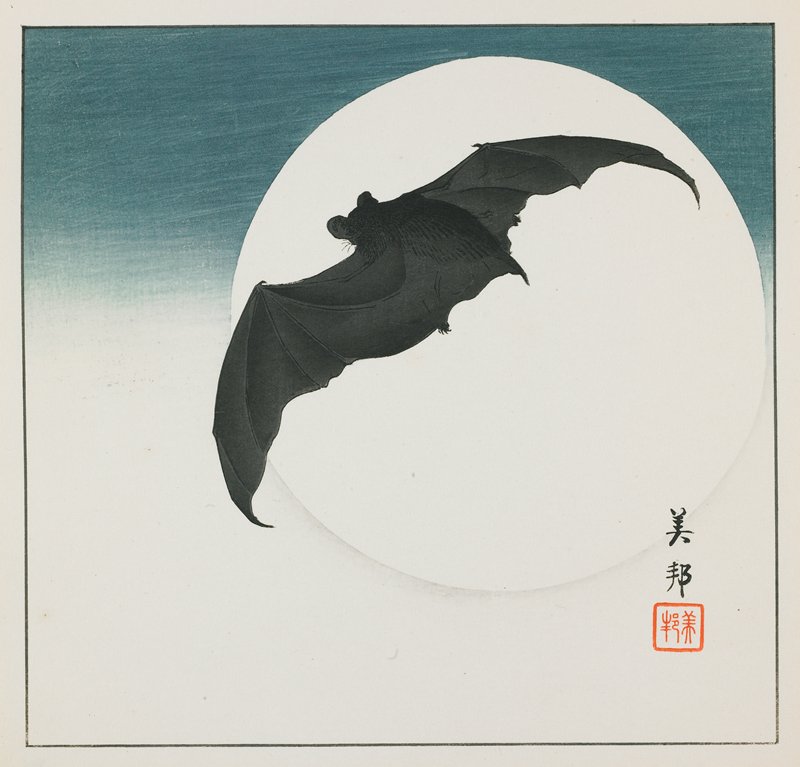
Bat and Moon, 1930s Takahashi Bihō. MIA
Bat and Moon, 1930s
Takahashi Bihō. MIA

The Recovery moon illuminates Black Mountain this morning. The ski runs carved out on the mountain are white strips reflecting back moon shine. A light breeze moves the lodgepoles and a thin dusting of snow covers the solar panels. Early spring in the Rockies.

Kate made a salad last night. We bumped into each other in our galley kitchen for the first time in months. She also tossed her friendship quilt from the Bailey Patchworkers into the washing machine. She’s beginning to emerge from a long time in the chrysalis of illness. Wow.

Since the recovery moon seems to find us both on the uptick, my doctor’s nurse called with lab results, actually a second call due to confusion there occasioned by a weeks long problem with their computer systems. The first call came when I was still pretty sick and I didn’t pay close attention. This time I did. My PSA has moved up from .o1 to .012. Doesn’t seem like much, but when your prostate’s gone, it’s supposed to stay at .1, which is effectively .0. A recurrence is defined, for those of us who had our prostate’s removed, when the PSA hits .2. Concerning, but not yet a problem. Further testing required.

Rabbi Jamie called last night, wondering how we were. We were both steady and frequent attenders of things at CBE up until Kate’s bleed on September 28th. I continued until my own illness which began in early February. Since then, I’ve only been back for the chicken soup cook-off. Our sudden disappearance from the synagogue’s life caused him to say last time he talked with Kate that the schul isn’t the same without us. Kate was on the board and I was teaching religious school. We both attended mussar on Thursdays. We went to services less frequently, but showed up at education and special events, too. We’ve woven ourselves into the fabric that is CBE.

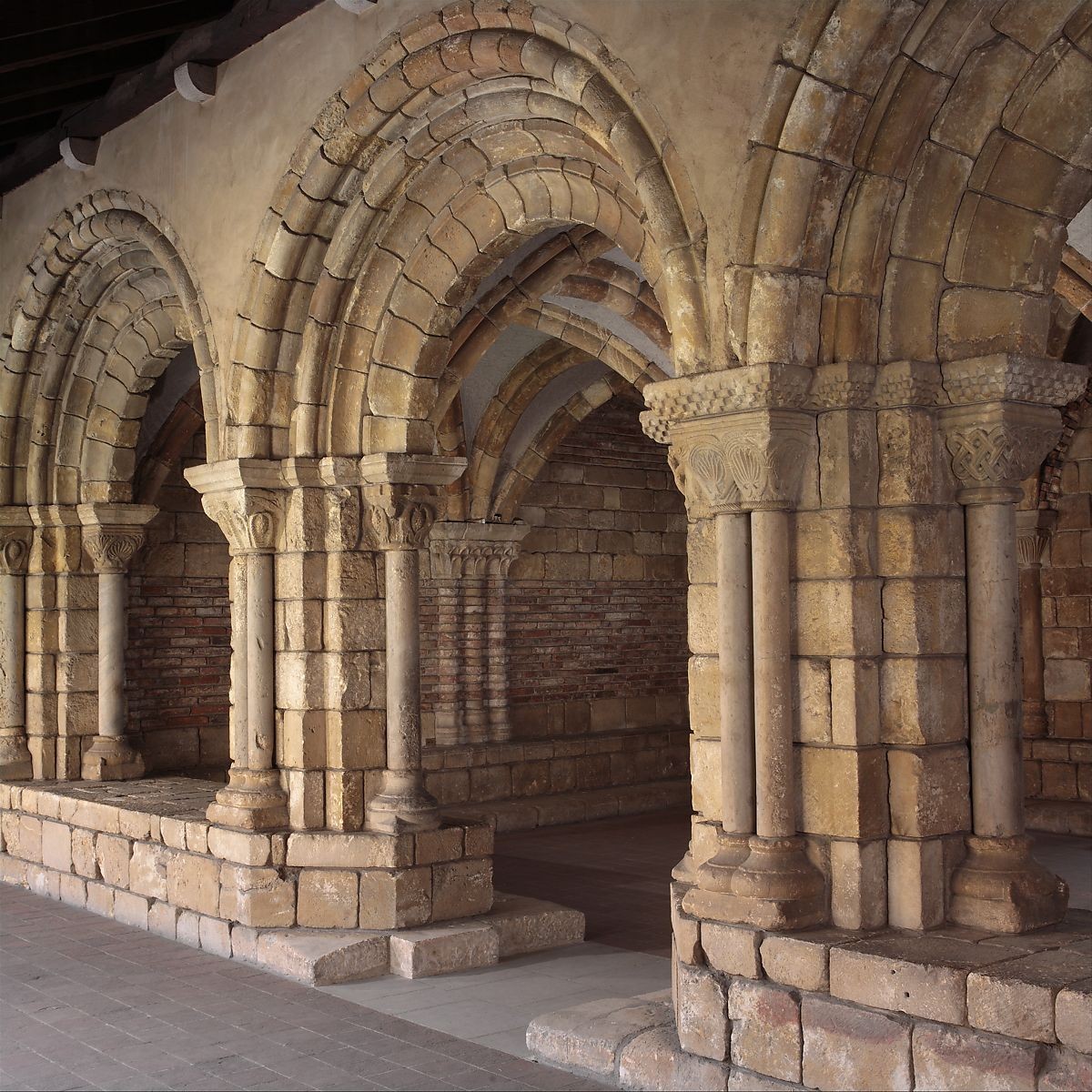
Chapter House from Notre-Dame-de-Pontaut,12th century French MMA

Community, like friendships, is reciprocal. You put your left foot in, then your right foot, then you shake it all about. With others doing the same thing. Over time we get to know each other, see each other, acknowledge each other. The line between thee and me is both more and less than we usually think. It’s more in that we don’t know our own selves well, our own depths eluding even the most introspective and life examining of us. How could others see into that, then? It’s less in that our perception of ourselves is constantly poked and prodded by interactions with others. In fact, much of our personhood gains definition as we sit down to coffee with someone, engage in critical thought, listen to music, sing with them. In community, in friendships, in family we become who we are.

At CBE, as with the Woolly’s, the docents, the political folks I’ve worked with, and our family, who I am has been in dialectical tension with both individuals and the collective. I’ve had to consider how Frank Broderick’s anti-Catholicism fits into my mostly positive assessment of religious life. I’ve offered ideas at CBE and had them put into action, changing myself and others in the process. As I got to know my fellow docents, I observed how they related to the art, to the art history we learned, to the museum visitors we guided on tours. And, how I was as a docent shaped itself in response.

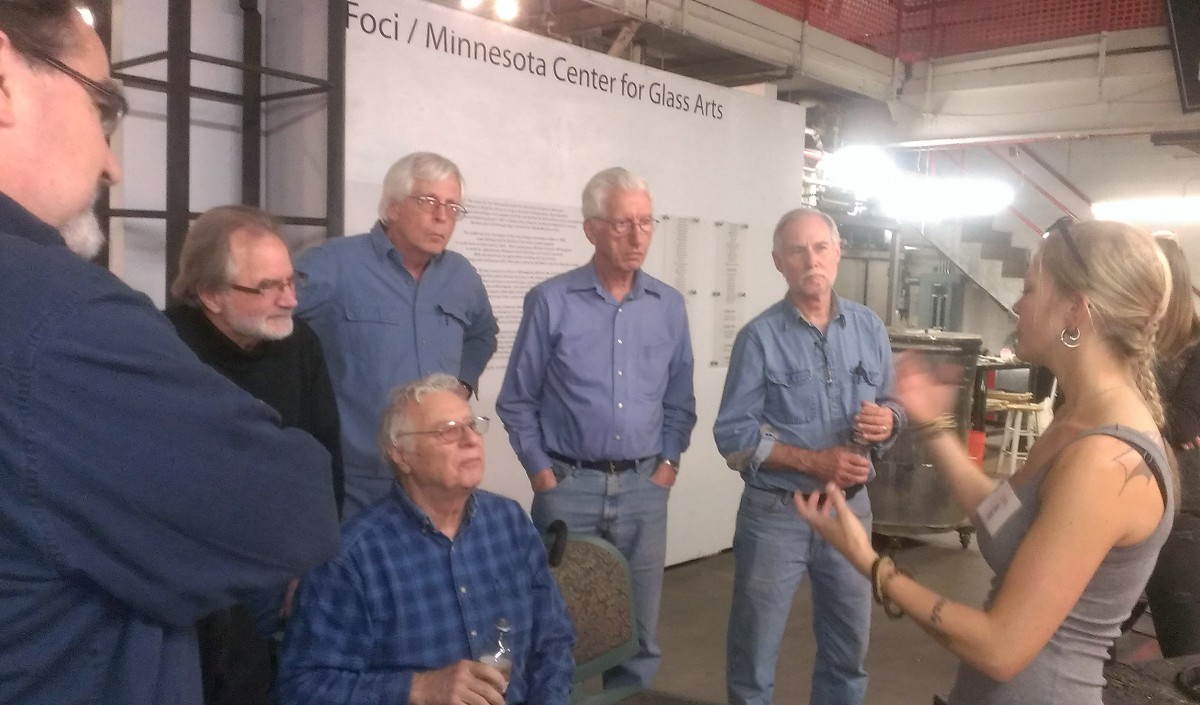
Woolly Mammoths instructed in glass blowing

In the instance of the Presbyterian ministry the two millennia plus history of Christianity was a body of thought and actions within which I had to find my particular place just like the thousands of year old history of art demanded I find a personal patch of ground on which to stand in relation to it. Both interactions shaped me and I, in turn, in small, individual ways reshaped both Christianity and the history of art. Not making a big, hubristic claim here, just observing that the dialectical tension affects both parties though not in equal ways.

This is, I suppose, the Velveteen Rabbit part of human identity formation. We rub ourselves up against people, animals, things and in the process we become real. And, we serve that same role for others. It’s an awesome responsibility. How do I, in my interactions, encourage the best in others? Or, do I? But that’s a question for another day.

Hail a New Creation

Imbolc                                                                         Valentine Moon

My life flows on in endless song;
above earth’s lamentation,
I catch the sweet, though far-off hymn
that hails a new creation.      “How can I keep from singing?”  Robert Lowry

When I opened this page, Robert Lowry’s hymn came to the surface. I could sing this verse with no pauses for personal editing. The rest of them? Not so much. But, no matter. This one has a powerful, here and now message and it came to me from my unconscious.

third phaseThe woes of the body, our lamentations here on Shadow Mountain, are of the tactile world, the one bound up in life and death; but, they are not of the soul, the spirit, the ohr, the imago dei. No. In my soul (a word I’ve come to use more freely of late, meaning that part of me that bows to the god in you, namaste.) I can hear the sweet, though often very far-off hymn. It hails a new creation coming into existence even now, one shaped by the lamentations, but not determined by them.

That new creation is a new sort of intimacy for Kate and me, one forged not in the upbeat, I did it, achievements of the family and career second phase, but in the existential reality of the third phase. In the third phase the body begins to let go of life, gradually, a bit here, a bit there. At the same time the fruits of a lifetime of meditation, awareness, thought, friendship ripens. The soul begins to unfold, ready.

Rudolf Steiner, the founder of Anthroposophy, said that September 29th, the Saint’s Day of the Archangel Michael, is the springtime of the soul. (odd coincidence. Kate’s bleed was on September 28th) What I’ve always liked about this idea is that it marks soul growth as occurring best in the fallow time. The fallow time, especially after Samain, Summer’s End, on October 31st, is that point when the growing season ends. An analogy to the third phase seems apt to me. The fallow time is a time for going within, going deep, finding nourishment in the eternal parts of ourselves, our soul.

That is what is happening for us. Our souls are flowering in the decay of the body. That flowering of the soul (I see a lotus.) is the new creation, perhaps not as far off as it seems.

Blessed be.