Winter Stent Moon

Happily in pain. 2016
 Not long after my December 1st, 2016, knee surgery, I had an odd moment. It was Hanukkah. Gabe and Ruth were plowing through their presents, and I sat on the couch, my leg up and some combination of pain meds circulating, morphine and oxycontin, I think. Ruth lit the menorah. A sudden, overwhelming (undoubtedly drug accelerated) sense of dislocation came over me. Sadness, too. What was I doing in this house? No Christmas tree. No decorations. This exotic holiday had pushed all that away and left me on the outside.
It was true nostalgia.* And it was painful. I swirled down, feeling a deep longing to get back to the seasons with which I was familiar. To push away this foreign intervention. To put myself under the Christmas tree on 419 N. Canal Street. All the way back. Not Colorado. Not Minnesota. Not Wisconsin. Indiana. An old fashioned, true to my culture Christmas.
Meanwhile Gabe was click-clacking a Rubik’s cube. Ruth held a money jar Kate had made for her. A fire crackled in the fire place and the menorah burned quietly on the dining table. No one knew I was somewhere else, sometime else. Here’s something from that day’s post:

2016
“The Christmas spirit that still flows around this secular, pagan heart saw them. (Hanukkah presents) And rejected the moment. What followed was a period of dislocation, the closest analogy I can give is culture shock.
What was I doing in this house with this holiday underway? Mom, Dad, Mary and Mark rose up. I missed them all, a lot. Further the friends from Minnesota. Why was I here in cold Colorado, in the mountains, when my family and friends were dead or far away?“
Having experience with the not so subtle influence of drugs on the mind, I knew this was both a false response and a true one. It was false in that I loved these kids, Kate, Jews all, and had begun to get more involved at Congregation Beth Evergreen. It was true in that Christmas spirit is a real thing, a tangible and mostly positive emotional state engendered by the church, by family, by memories of Christmas past, and, of course, by your favorite retail establishments. And at that moment I missed it.
Two years later the knee is fine, better than fine actually. I’m not using any drugs. (except at bedtime) And I’m much further along in the assimilation process I mentioned a few posts ago. My peri-Jewish identity has congealed around my membership at CBE. I’m part of a community I love, surrounded by people who love us and have shown that over and over again in the last few months. Love is a verb, after all.

Angelic host proclaiming the wonder of your birth
Last night was the night before Christmas. Today is Christmas day. The festive part of the day will be the big meal at noon and seeing Jon, Ruth, and Gabe at 2 pm. I’m ok with that. It feels like the right amount of celebration for us.
So. Christmas now has two components. One is much more tempered nostalgia than I felt in December, 2016, a warm spot from days now gone by. The second, and more important to me, is as a festival of incarnation, a celebration of the divine and human mixed inextricably together. As the bells ring out this Christmas day and churches the old familiar carols play, I’ll recall the folks I love, the animals I love. I’ll see past the mundane and look into their souls. There is the ohr. There is the divine. There is the sacred. And guess what? When I look in the mirror, I see the same thing.
*”…the term was coined by a 17th-century Swiss army physician who attributed the fragile mental and physical health of some troops to their longing to return home — nostos in Greek, and algos, the pain that attended thoughts of it.” The Guardian, Nov. 9, 2014
 On the drive over to Tony’s Market to pick up Christmas dinner I got to thinking about ohr, the shards of divine light kabbalists believe actually make up the known universe. When I bow to the divine light in you and you bow to the divine light in me, we say that makes sense in that framework. So there can be the ohr, the light of the divine blasted apart at the moment of creation; but, I thought, there’s also the more immediate light, that of the sun.
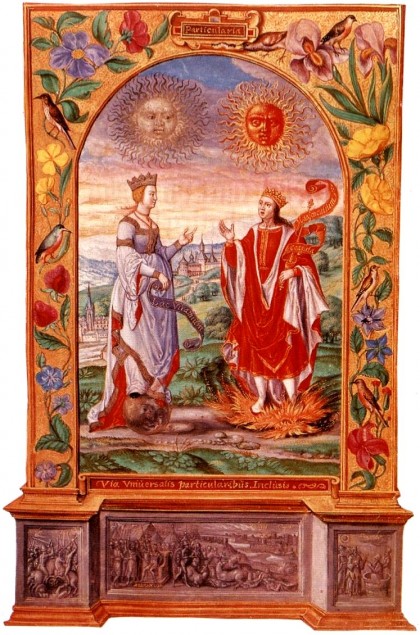 It is this dance, the days of the dancing star, that we are thrown into this world to execute. Sure, you could take this and conclude a scientistic flat-earth humanism, minus the divinity, but it seems to me you end up in the same place with a reductionistic refusal to see the simcha, the joy, of life as part of, not separate from. It is the bondedness we have with our star and our planet which is divinity, we are part of a dialectic between power and fertile elements, a fruit, in fact, of its creative tension.

 I’ve begun to assimilate into Jewish culture. Different from becoming a Jew, just like Jewish assimilation into American culture is different from no longer being a Jew, my identity is largely intact, but I find myself much more aware of living life through a Jewish lens. Their holidays are now mine. Their community, mine. Their marginal reality, also mine, though this last requires a full choice on my part, not just acquiescence. That is, I choose to stand with my new culture against all elements domestic and foreign and not to retire into privilege when things get hairy.

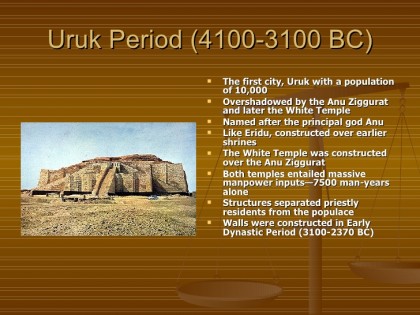 In ancient Uruk residents opened all city gates, lit bonfires and sang hymns timed to the rising and the setting of certain stars in the sky. This all night vigil honored many Sumerian deities, but most of all Anu, king of the gods, and special protector of the city. In the Congo the Mbuti hunters clap, sing, and dance around a fire at night, the Molimo Ceremony. This is not only a solstice observation, but for significant events. If there has been a death, they sing to the forest: “If darkness is, and the darkness is of the forest, then the darkness must be good.” from the Lapham Quarterly, Winter 2019
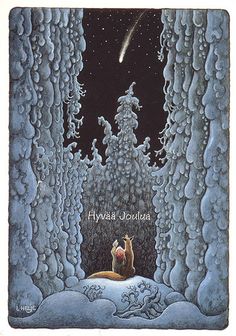 Then Kate can heal over the longest night of the year. Fecund darkness, calm and quiet night, holy night, sacred night. A 98% full moon. With all the energy of a still waxing moon, one very near fullness, she will receive the best energy this long night can offer. If you have a moment once the darkness falls, feel your way into it, perhaps in the moonlight, and remember Kate.
 Tomorrow is the winter solstice. I haven’t gotten yet to the six new rituals I found in Lapham’s, but I will either later today or tomorrow. The dark, the long night, to me symbolizes healing, fecundity, a depth experience for the Self, a soulful journey. It’s what I need right now, a time out of time, time with the ancientrail that winds in and down, following the shamans toward the center of the earth, the center of the soul.
 I’m continuing my experiments with oil painting, getting more experience, wondering about all the tricks and tools of the trade. Making it up as I go along right now. Playing. Yes, I’m playing with two shiny new disciplines right now, oil painting and astrology. When I use that word, playing, and it is accurate, what always comes to mind is
  The oil painting. So far I’m imitating, at least in a way, Rothko. Although. I did see some cloud formations that I tried to recreate, or at least evoke. Not in my power yet. Though what I produced I liked for what it was.
 Bought this ceramic container a few years back, probably during a Woolly Mammoth retreat at Valhelga, the Helgeson’s family retreat on a lake close to Collegeville, home of St. John’s Monastery. It reminds me of the modest clay cylinders that held the Dead Sea Scrolls and I loved the brown to black glaze, the whoosh.
 Been thinking about actions to fight climate change. The inversion of the Great Work championed by his Satanic Majesty, the orange tumor on our democracy, threatens human genocide. Intentional mass murder of potentially billions. Hitler and his crowd? Pikers.