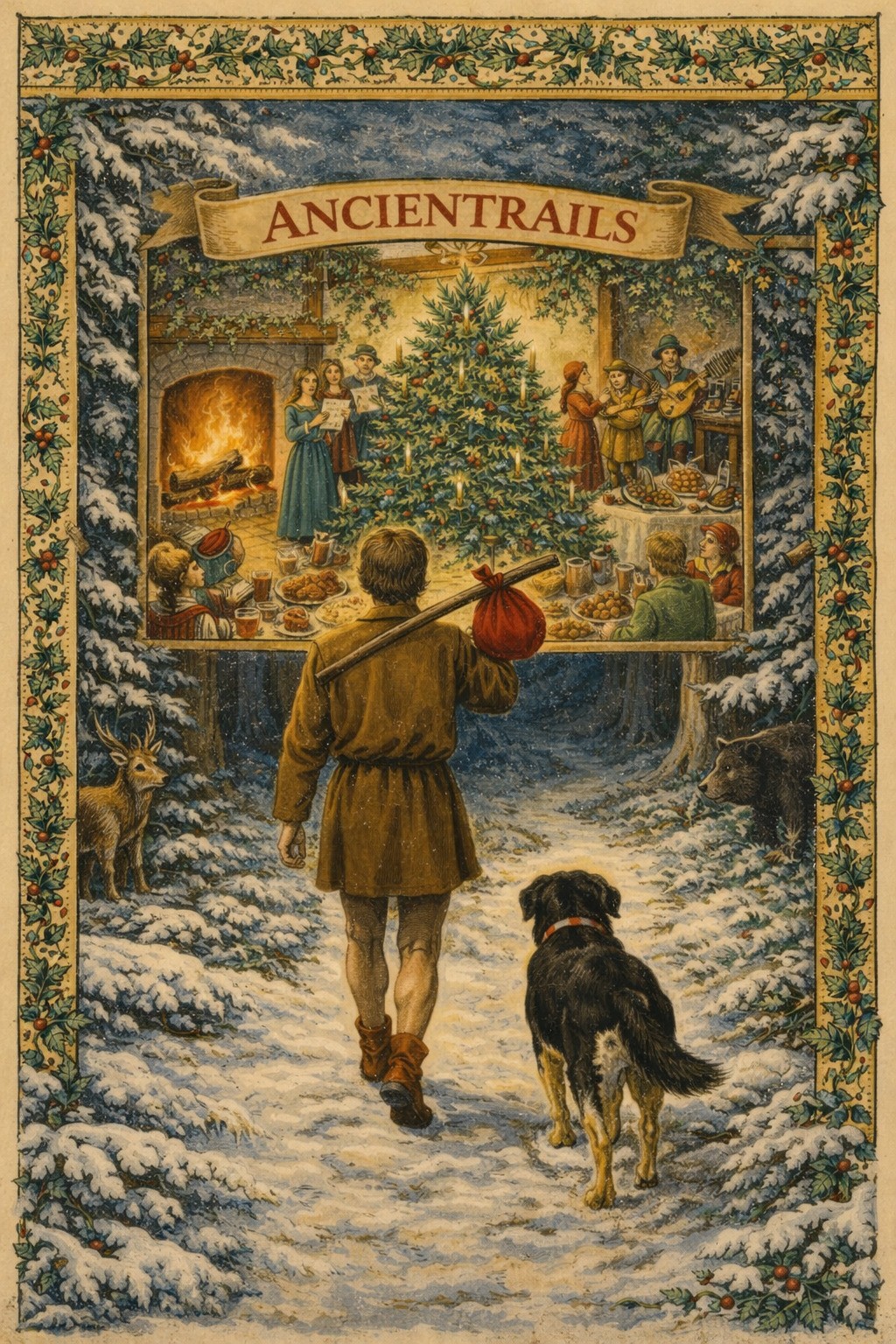
Behind the wilderness. Everett Fox is a Jewish scholar who did a translation of the Torah into English while preserving the Hebrew syntax. He made some startling word choices, too, such as in this verse: Exodus 3:2 “He (Moshe) led the flock behind the wilderness–and he came to the mountain of God, to Horev.” Behind is such an interesting choice.
As our discussion went on last night in the first night of the second Kabbalah class taught by Rabbi Jamie, he referenced the expulsion of Adam and Eve from the garden. When they were gone, having eaten from the tree of good and evil (language in this interpretation), God installed an angel with a flaming sword to protect the entrance to Eden and the tree of life. The very language which allowed Adam and Eve to discern good and evil, or, to create it (!), now guards the pathway back into Paradise.
Here’s a leap, and one I made last night. Behind the wilderness is Paradise. The wilderness itself is language, is the angel with the flaming sword, protecting the entrance to Paradise. How do we get behind the wilderness? Behind language? Language, in an uneasy marriage to our senses, conceals and reveals. It reveals our sensations, our thoughts, and functions as a river flowing from prehistory to today, carrying in its waters the sum of written human culture. But. That same uneasy marriage also conceals what lies behind the wilderness, what Kant called the dinge an sich, the thing-in-itself.
Behind the wilderness is the God who is, as Fox translates later in this passage: I-will-be-there howsoever I-will-be-there. It is this God whose messenger Moshe saw in the bush that burned without being consumed. This God’s name, a verbal noun composed of a mashup of past-present-future tenses for the verb to be, does not reveal. It conceals. It means, it does not describe. The messenger in the bush speaks for the vast whorling reality in which past, present and future are one, all experienced in the present and as part of which we are each integral, necessary and non-interchangeable.
We’ve had snow. Again yesterday. Modest accumulation since the ground is still too warm. These are the days when snow mixes with the golden aspen leaves, throwing white into the green and gold colors of Mountain High. Go, Shadows.
Yesterday I finished my work on kavod. Here’s the end of it:
Text #3 “Kavod is translated as honour/respect. Kavod is way beyond good manners and saying please and thank you. It’s seeing the spiritual value of a human being and yourself. The greater sense of my own value, the more I don’t need to search for the approval of others and the more I am able to honour other people and see a sense of their value. If I give genuine kavod to another person than they in turn will value and respect me. We say “kodosh, kodosh, kodosh, the entire world is filled with the Kavod/honour of Hashem”. http://www.shortvort.com/mussar/10450-kavod>
Rabbi Eliezer said: “Let the honor of your friend be as dear to you as your own.” Morinis, Everyday Holiness, p. 114
Before this text I added an image of Claude Monet’s:
Haystacks, (sunset), 1890–1891, Museum of Fine Arts, Boston
Monet, of course, was part of the Impressionist movement, committed to painting the colors as they were at particular moment in a particular place. They let the colors build the image rather than using color as a tool to build the image in a way that pleased their aesthetic.
This is similar, I think, to the notion of kavod. With kavod we look into the essence of ourselves and others, see that essence and let it build our image of ourselves and the other, rather than using our biases, our assumptions, our judgments. Just as the impressionists did, though, we have to know that our perceptions of that essence change from moment even though the essence, the imago dei, may remain the same. (I have some disagreement with the notion of soul, or essence, as a sort of Platonic archetype, constant and unchanging.)
Anyhow, I’m looking forward to this gathering of the MVP. I’ve done my awe work for the last month and am ready to get started on kavod.
Arthur Szyk (1894-1951). The holiday Series, Rosh Hashanah (1948), New Canaan, CT
This year I attended the first Rosh Hashanah service and both Yom Kippur services. More of the Hebrew has become familiar, at least the transliterations. More of the melodies and songs, too. There are still times when I feel awkward, out of place. At certain points, in certain prayers, for example, the congregation turns to face the east, takes a slight dip at the knee and bows. Not sure exactly what’s going on there. Not all men wear kippahs, a smattering of women do. Same with prayer shawls. Not wearing either one does not make me uncomfortable as it first did, but I’m still aware of it.
Especially at the High Holiday services there were many I did not know, since some Jews attend the High Holidays in a fashion like the Christmas and Easter alumi in Christian churches. 70% of Jews in the U.S. do not attend synagogues, but many come for certain liturgical high points, including Pesach and Purim.
Tree of Life. Painted by Beth Evergreen religious school
Even so, there are now more people whom I know and in turn know me or Kate. That makes going to the synagogue a place to be seen, seen in the same way the Woolly Mammoths saw each other. We’re still new to most of the relationships, a year plus for the people we’ve come to know best like Marilyn and Irv, Tara, Rabbi Jamie, Leah, Elizabeth, Sally, Fran, Lisa, Anshel, Rich, Allan, Ron, Jamie and Steve, but they’re developing. I’ve learned to be patient with the evolution of friendships and close acquaintances, letting them grow in a natural way.
In the mussar vaad practice group, MVP, Marilyn asked me to present on kavod, or the midot (character or soul trait) of honor, dignity and respect. This is even more intimidating than presenting to the Thursday mussar group because this group includes Tara, Marilyn, Rabbi Jamie and Ron, a former script writer in Hollywood, very bright, but, at the same time, more fun because it’s a challenge. I’ve found an important component of staying vigorous emotionally, intellectually and physically at 70 is taking on challenges, much like a decision some years ago to test my self-perception as a bad language learner with Latin.
Showing up to the MVP, the Thursday mussar group, taking kabbalah and Hebrew, going to some services, attending holiday events, and working on the adult education committee are all moments when relationships can grow and I really enjoy working with these folks. Beth Evergreen was a great find for us.
Been thinking about a new analogy for reimagining/reconstructing faith: the transition from representational to abstract art. I like the analogy because it reaches deep into prehistory to the cave art of Lascaux and Chauvet of 40,000 years ago. This tradition developed so powerfully that its underlying assumptions were simply not questioned. What would art be about but the reproduction of the human world in two-dimensions? Then, in 3, but still a man, or a god, or an animal. The introduction of perspective reinforced the representational, but did, I imagine, to the sensitive eye, give an inkling of the manipulation of space and color that really underlay art making.
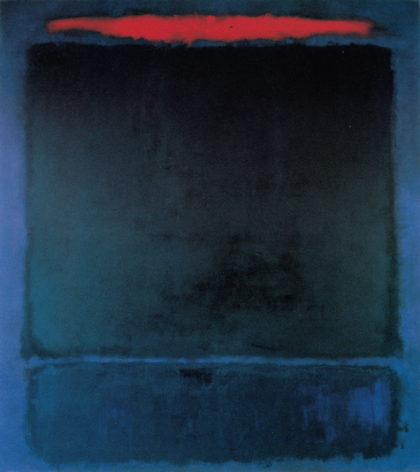
No. 118 1961 by Mark Rothko
So called modern art was a radical break with this tradition. It happened as artists in many places looked at painting and sculpture with fresh eyes. They asked about the purpose of art, the purpose of paint on canvas, the purpose of reshaping wood and stone. What are the primary elements of the work? Color. Paint. Form. Space. Negative space. And perspective, did it have to be mathematical? Was there a perspective that developed simply through the use of color? (Cezanne) Did perspective have to be singular? (Picasso) Could a painting be nothing but color? (Morris Louis, Rothko, Kandinsky) What about painting or sculpting things that could not exist? (Man Ray, Dali, DuChamp)
mao trach dong
As artists began to consider the fundamentals, the unexamined assumptions of making art that had shaped its global expression since humans began making marks, though, that other tradition, the old representational one, did not die out. There were still portraits, still landscapes, still still lifes, sculpted men and women and animals and mythical beings of all sorts. This reimagining, reconstructing of art itself seemed to displace the older way, but only because museums became so dominant. There were modern art museums like the Walker and the Guggenheim and the Modern and the Tate which seemed to position the older, encyclopedic museums like the MIA, the Metropolitan, the Kunsthistorisches, the Louvre as showplaces of what used to be. Even the development of ateliers, who imagine themselves as the heirs to the older tradition, seemed to be an admission that the reimaginers had swept the field.
So what I’m proposing is not another religion with a different origin story, a different set of scriptures, different roots from, say, Hinduism, Zoroastrianism, Christianity, Islam. And what I’m definitely not proposing is a reductionistic attempt to find out what all religions have in common, nor am I proposing a sort of tolerance for all faiths, an attempt to learn from each of them (though this is a good thing to do) and out of that shape a new faith.
No, I want to play with the fundamentals of religion, those things that underlay the tradition of religious thought and practice. I say play advisedly because I think it was the playful aspect of the artists who questioned their tradition that made their work bearable. And, in making it bearable, made it accessible enough to thrive.
So, what are some of those fundamentals? Prayer, worship, gods, ritual, art, revelation, congregations, sacred space, the notion of sacred, divinity, after life, morality and ethics. How might a radical approach take the long history of prayer, for example, and reshape it, reconfigure it, reuse it for the person who chooses to stand outside particular traditions, but still wants to paint? Or, what about gods? How does the notion of powerful, unseen entities with various agendas fit into the life of persons no longer monotheists, no longer willing or able to see many gods?
I don’t even want to do what Emerson proposed. That is, have a religion of revelation to us rather than the dry bones of theirs. I want to examine revelation itself. What is revealed? Why is hiddenness so important to religion? What is revelation in a quantum mechanical world? Where is revelation? How are things revealed? How have things been revealed all along, but we didn’t notice? And why do we care about a world beyond the one we experience effortlessly?
A couple of weeks ago I went in for cataract and glaucoma exams. Then, Wednesday, my hearing aid stopped working. I’ve also been a little short of breath, not unusual up here at 8,800 feet and my oxygen saturation is ok. The good news is that neither my cataracts nor my glaucoma have worsened and my hearing aid got unblocked by the folks at Hearing Rehab. And the shortness of breath does seem to be a response to altitude and not a failing heart.
These are what I call mortality signals. None of them, in themselves, are fatal; but, like my sudden hearing loss at 38 in my left ear, they are blinking yellow lights, caution, fatal error ahead. Birth is a mortality signal, too, of course.
Instead of pushing these signals into the background of my mind I like to embrace them, take the hint of life’s progress towards its entropic end. Nope, not gloomy or depressive, in fact, the opposite. Energizing, gratitude producing. I’m still here and functioning. Happy to have awakened this morning, happy to have a day ahead with Kate and the dogs, happy to have my loft, happy to be in the mountains. Joyful, even.
There’s a message about prayer here though I’m not clear yet on what it is. In response to Rabbi Jamie’s focus on prayer for the High Holy Days, I’m trying to reimagine prayer from a spot outside the Jewish tradition, reconstruct the concept of prayer without the Talmud, the Torah, the long history of Jewish prayer books.
Here’s where I am so far. Prayer is, at its most basic, communication. Important communication, significant to the prayer on the most critical matters in the life of the spirit. Prayer is also, at its most basic, the creation and sustaining of a relationship.
There are many sorts of prayer: supplication, petition, praise, anguished, thankful, angry, loving, contemplative, meditative, even constant. There are also communal and intercessory prayers, prayers of commitment and prayers of repentance.
So the question is prayer from whom to whom? Or, from whom to what? What is the relationship that prayer nurtures, why do I want to sustain it? Why is that relationship important? How is prayer different from other forms of communication, of other ways of creating and sustaining relationships? Or, is it different?
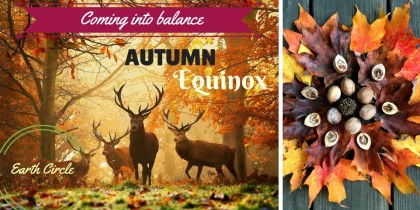
Today is the autumnal equinox. As the great wheel rolls on through the year, this is a day/night of balance, of night and day roughly equivalent. Here in the Rockies, on Mountain Time, the earth and sun are not, at the equator, tilted away or toward each other. The moment when this is true occurs at 2:02 p.m, MST. The day itself will be 12 hours and 9 minutes long. The 12 hours and 1 minute day doesn’t come until September 25th this year.
The notion of equinox though, equal day and night, reminds us that this astronomical event, sun and earth’s midpoint lining up, does mark a significant change. The light gradually increased from the vernal equinox to a maximum day on the summer solstice. Darkness gradually increases from September 25th to its maximum at the Winter Solstice, the longest night of the year.
For reasons I don’t fully understand, I prefer the six months of the year when darkness dominates. This period between autumnal and vernal equinoxes is my favorite half of the year. Here in the temperate latitudes-we’re 4 degrees north of the 35th latitude here in Conifer and temperate equals 35 – 55 degrees of latitude-this six months goes from the tail end of the growing season’s warmth to the slow release from winter’s cold that usually happens in late March.
Here in the mountains the streams have long ago drained off last winter’s snowfall; the aspen have turned golden. The cervids have begun their annual procreational dance. Sex is in the air. We have snow in the forecast for Monday and night time temperatures are in the good sleeping weather range for Kate and me. In Minnesota we could hear the Andover marching band practicing and here the high school football season is already well underway. Coats become an item of consideration when leaving the house.
It’s a time to consider the balances in your life. Has anything gotten out of whack that needs adjustment? Working too much? Seeing too little of family and friends? Or, too much? How about the diet of your choosing? Too much or too little exercise? Television? Social media? What other dialectics in your life might you examine?
Consider taking a cup of coffee (beverage of your choice) on one of these days with a just right temperature and going somewhere quiet. Investigate your life, probing for parts of it that may not be nurturing you right now. What are they? How can you make gradual, not sudden, changes that will help you become the person you already are? It may be that some of that work involves cutting something back or increasing something else, just like the temperate latitudes do with their light menu.
We can learn from the rhythm of day and night over the course of a year that each one, light and dark, nurtures different things, sometimes drastically different. Summer grows our food while Michaelmas, September 29th, is known by some as the springtime of the soul.
Rosh Hashanah service last night. Lots of Days of Awe alumni showing up at the synagogue. These are long services during the High Holydays, this one running almost two hours. There are, however, a lot of songs, readings, standing and sitting, so the time passes quickly.
The mahzor (prayer book for high holidays), has several interesting components. It includes, for example, poetry by Mary Oliver, Rainer Marie Rilke, and Y. Yeuvenshko. The Mary Oliver poem ends with a favorite Woolly Mammoth quote from her work: What will you do with your one wild and precious life? Which is apropos of the High Holydays since this is a time in the Jewish calendar for repentance, teshuvah (returning), closing off the last year and coming clean and free into the new one.
The mahzor also explains the High Holydays as a principle event for Jews as a community of memory. This really struck me last night, especially when Rabbi Jamie quoted from the Shema, “Hear, Israel, the Lord is our God, the Lord is One.”
“That’s us,” he said, sweeping his hand around the room. Of course, it’s not me, but I took the point. Israel, those Jews in the sanctuary at Beth Evergreen and in Rosh Hashanah services around the world last night, and those Jews not in the services, too, is a community which celebrates its most important memories every Sabbath with a parsha reading, a segment of the Torah.
I feel privileged, and grateful, for the chance to live out my religious life at Beth Evergreen, within, but not of, this community of memory. Rabbi Jamie also said last night that the Jewish calendar focuses on helping each Jew become a better human. I get it and I’m following it, too. I am, after all, a human. What better way to start a new year than to focus on repentance for missing the mark of your best self in the last one? Then, figuring out, through mussar, for example, how to work a little harder on finding your best self in the upcoming one.
This is reconstructionist Judaism, an explicitly non-supernatural religion that nonetheless adheres to the traditions and customs of Jewish civilization, including Torah study, sabbath observance, comforting mourners, repairing the world and doing acts of loving kindness.
Over the last week or so I’ve begun wondering if my reimagining faith project is really a reconstructing faith project? No, I don’t mean to use Judaism as a base, not at all, but it did occur to me that the methodology suggested by the idea of reconstruction might be stronger for my purposes than reimagining. Still thinking.
The last night of the Eclipse Moon, a disastrous month for North America from the eclipse to its waning moment. The wildfires are still burning in the West from the state of Washington to California, in Oregon and Montana and Idaho. Harvey and Irma related disaster cleanup has only begun. The same in southern Mexico for the victims of the 8.1 earthquake. Jose is still pounding around in the Atlantic and Maria, now a category 5, has just shattered Dominica, Guadeloupe, and is headed for Martinique and Puerto Rico. It’s not the apocalypse, no, but for those whose homes and forests are on fire, under water, battered by wind or destroyed by the movement of the earth, it may as well be.
Awe is not confined to the benign, the amazing and wonderful. Each of these disasters, both in their gestalt and in their particulars, and as a collection of events, is awesome. They show the limits of human preparation, of human intervention. We are not, even with our nuclear weapons and our space station and our icebreakers, more than bystanders when these acts of earth strike us. We even have a name for them, force majeure, enshrined in insurance policies.
Nations and civilizations rise and fall, but earth, air, fire and water continue in their eternal way, or, at least as long as the earth herself lasts, to do what they want, when they want, where they want.
We are, in the end, Ozymandias, look on our works, ye Mighty, and despair.
That old moon, the one that occulted our star, has two days left in its cycle. It will give way to the first moon of this new fall, this moon that oversaw the journeys of millions to watch it work in the daylight. It also presided over Hurricane’s Harvey, Irma, Jose and Katia, over the 8.1 earthquake in southern Mexico and the fiery end to many forests in the U.S. West. Earth, Air, Fire and Water. What will this next moon bring?
I’m still feeling a sense of exhaustion from Saturday night, not unusual I guess. Seventy after all. The burns I got on my right hand making the sugar cream pies last Tuesday are still healing. Again, seventy year old skin. This exhaustion feels ok, part of the third phase.
Went to bed last night in a mild funk, exhaustion will do that, allow negative moods to take hold, grip me. They’re like infections, sudden and pervasive; but usually, if I can find their source, a triggering event, then I can quiet the infection, let it dissipate. It takes brutal self-honesty.
Yesterday I traced the funk back to an e-mail I sent out late Saturday night thanking all the main participants in the Evergreen Forum. Two folks responded quickly, thanking me, too, and I realized, as I searched for the source of the mood, that I wanted more of those and when they didn’t come, I wondered why not? It was that wondering that created the bad mood. In others words I had poisoned my own well, then drunk from it. Well, I realized, that’s silly. Take the compliments, move on. So, I did.
Rosh Hashanah begins Wednesday evening, erev Rosh Hashanah. This is a pensive time in the Jewish calendar. As the old year ends, Tishrei 1 (Sept. 21st) ushers in the Jewish year 5778. Rosh Hashanah, according to Chabad.org, means head of the year and celebrates the birthday of the universe and in that process, the day of the creation of Adam and Eve.
After it there are then 10 days to complete a cycle of seeking forgiveness from others so God can be approached on Yom Kippur for forgiveness. At the end of Yom Kippur the book of life is sealed for 5777 and written in the book will be all those sins for which forgiveness has not been received.
This is a wonderful way because it encourages an annual cleaning of the slate, then beginning a new year ready to live fully, unburdened by baggage from the year before. Whether or not you accept the metaphysics, the practice itself is healthy.
The first Evergreen Forum has happened. Rabbi Jamie Arnold, Imam Mohammad Noorzai, Rev. Dr. Judy Morley, and Pastor Peter Hiett spoke about prayer to forty or so folks at Beth Evergreen. It was a lively evening with great food provided by my oneg Queen, Kate, setup and other help provided by members of the adult ed committee: Tara, Marilyn, Sally and Anshel. A couple of other Beth Evergreeners pitched in, too.
One thing, a happenstance in a way, stood out for me. We had the grandkids, Ruth and Gabe, with us. Mohammad brought his son and granddaughter, Lila. Lila, Ruth and Gabe played while the adults talked about prayer. A major aspect of the adult event was to increase interfaith understanding and comity. The kids did it naturally, punctuating the evening with occasional shrill cries of delight, crossing the Jewish/Muslim barrier with no problem at all. Might be a lesson here.
Kate was nervous about her food, but it was received well, its disappearance a testimony to its yumminess. Especially the jack fruit. Kate found it at King Sooper this week. She bought a 20 pound one, then she and Ruth performed a fruitectomy on it to retrieve the sweet yellow flesh. This southeast Asian fruit is unfamiliar to most North Americans, but I had it for the first time when preparing to board a water taxi on the Chao Phraya in Bangkok. If you haven’t had it, really good.
 Behind the wilderness. Everett Fox is a Jewish scholar who did a translation of the Torah into English while preserving the Hebrew syntax. He made some startling word choices, too, such as in this verse: Exodus 3:2 “He (Moshe) led the flock behind the wilderness–and he came to the mountain of God, to Horev.” Behind is such an interesting choice.
 Behind the wilderness is the God who is, as Fox translates later in this passage: I-will-be-there howsoever I-will-be-there. It is this God whose messenger Moshe saw in the bush that burned without being consumed. This God’s name, a verbal noun composed of a mashup of past-present-future tenses for the verb to be, does not reveal. It conceals. It means, it does not describe. The messenger in the bush speaks for the vast whorling reality in which past, present and future are one, all experienced in the present and as part of which we are each integral, necessary and non-interchangeable.


 So what I’m proposing is not another religion with a different origin story, a different set of scriptures, different roots from, say, Hinduism, Zoroastrianism, Christianity, Islam. And what I’m definitely not proposing is a reductionistic attempt to find out what all religions have in common, nor am I proposing a sort of tolerance for all faiths, an attempt to learn from each of them (though this is a good thing to do) and out of that shape a new faith.
 So, what are some of those fundamentals? Prayer, worship, gods, ritual, art, revelation, congregations, sacred space, the notion of sacred, divinity, after life, morality and ethics. How might a radical approach take the long history of prayer, for example, and reshape it, reconfigure it, reuse it for the person who chooses to stand outside particular traditions, but still wants to paint? Or, what about gods? How does the notion of powerful, unseen entities with various agendas fit into the life of persons no longer monotheists, no longer willing or able to see many gods?
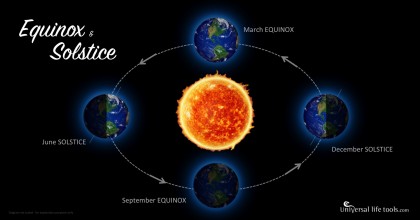 Here in the mountains the streams have long ago drained off last winter’s snowfall; the aspen have turned golden. The cervids have begun their annual procreational dance. Sex is in the air. We have snow in the forecast for Monday and night time temperatures are in the good sleeping weather range for Kate and me. In Minnesota we could hear the Andover marching band practicing and here the high school football season is already well underway. Coats become an item of consideration when leaving the house.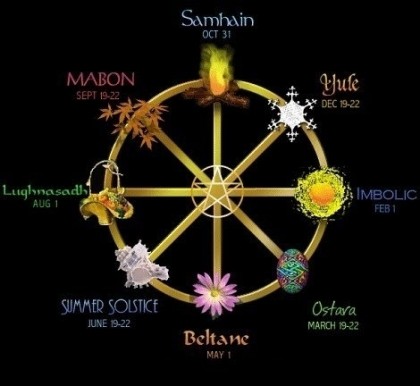
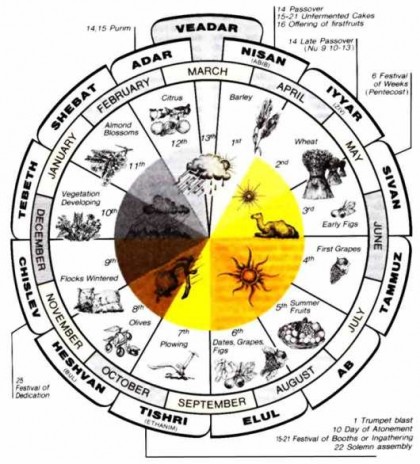
 “That’s us,” he said, sweeping his hand around the room. Of course, it’s not me, but I took the point. Israel, those Jews in the sanctuary at Beth Evergreen and in Rosh Hashanah services around the world last night, and those Jews not in the services, too, is a community which celebrates its most important memories every Sabbath with a parsha reading, a segment of the Torah.
 This is reconstructionist Judaism, an explicitly non-supernatural religion that nonetheless adheres to the traditions and customs of Jewish civilization, including Torah study, sabbath observance, comforting mourners, repairing the world and doing acts of loving kindness.
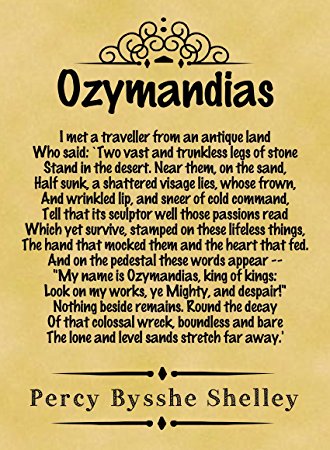 The last night of the Eclipse Moon, a disastrous month for North America from the eclipse to its waning moment. The wildfires are still burning in the West from the state of Washington to California, in Oregon and Montana and Idaho. Harvey and Irma related disaster cleanup has only begun. The same in southern Mexico for the victims of the 8.1 earthquake. Jose is still pounding around in the Atlantic and Maria, now a category 5, has just shattered Dominica, Guadeloupe, and is headed for Martinique and Puerto Rico. It’s not the apocalypse, no, but for those whose homes and forests are on fire, under water, battered by wind or destroyed by the movement of the earth, it may as well be.
 Yesterday I traced the funk back to an e-mail I sent out late Saturday night thanking all the main participants in the Evergreen Forum. Two folks responded quickly, thanking me, too, and I realized, as I searched for the source of the mood, that I wanted more of those and when they didn’t come, I wondered why not? It was that wondering that created the bad mood. In others words I had poisoned my own well, then drunk from it. Well, I realized, that’s silly. Take the compliments, move on. So, I did.

 Kate was nervous about her food, but it was received well, its disappearance a testimony to its yumminess. Especially the jack fruit. Kate found it at King Sooper this week. She bought a 20 pound one, then she and Ruth performed a fruitectomy on it to retrieve the sweet yellow flesh. This southeast Asian fruit is unfamiliar to most North Americans, but I had it for the first time when preparing to board a water taxi on the Chao Phraya in Bangkok. If you haven’t had it, really good.