Category Archives: Reimagine. Reconstruct. Reenchant.

Living in the present, surrounded by the past

Spring                                                         Wedding Moon

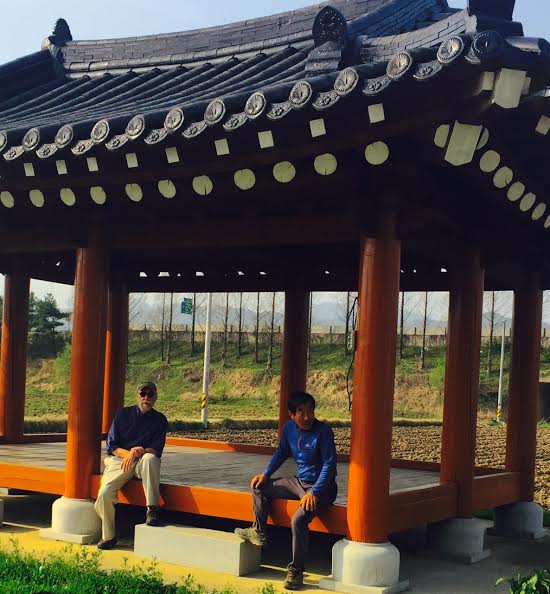
Ellis and Jang
Ellis and Jang (Mary’s photo)

Yesterday we took a trip to the past. To Seoah’s family home and the village of the Jang family for at least four generations. The neighbor women sat at a low table eating from dishes and dishes of food. They looked up curiously as we came in the small traditional house, then went back to their meal.

(Kate took all the rest of these photos.)kids
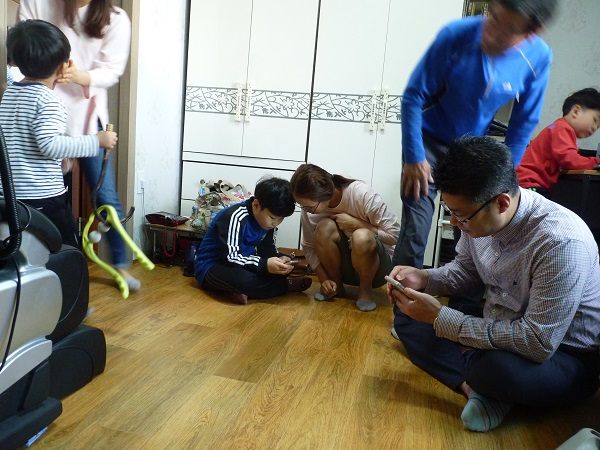
The house had little furniture, mostly low tables and one chair, a massaging recliner that Mary (my sister) says is common in Singaporean households. Often the only chair in the house.

We met many black-haired children who ran around, curious and a little uncertain, Seoah’s two sisters and her older brother. Seungpil, husband of her younger sister, has been our taxi driver in a sleek, well-maintained black Hyundai, a Grandeur.

finding conifer
finding conifer

Seoah’s mother had charge of a compliment of women in the kitchen which had food plates and bowls and pans on all of its surfaces. Her father, a trim man, 71 moved with the grace of a 30 year old. He farms a large number of plots, some vinyl greenhouses, a rice paddie and several fields. I asked to see it and we walked around it all.

He proudly pointed to a tractor and said, in clear English, “John Deere!” He had a combine, a grain drier and a second Massey-Ferguson, older. He grows vegetables, hay and some fruit. Like any good farmer in the spring, after we left his home for the Bamboo Museum, he headed back into the fields.
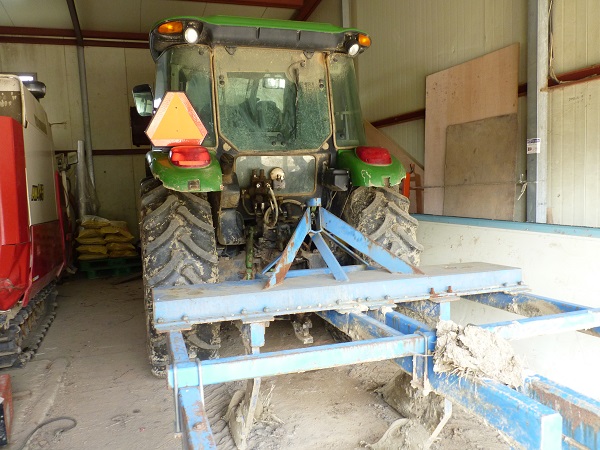
john deere

Seoah’s home village nestles among low mountains that look (and probably are) ancient. They’re very beautiful, often mist covered and extending in ranges for some ways. Sangkuk is well beyond the metro region of Gwangju, in the country. As nearly as I could tell, the area around Sangkuk is only agricultural, no folks living the country life and commuting into the city.
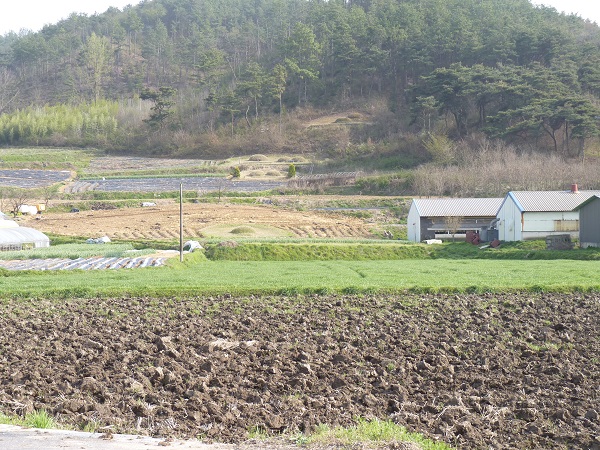
fields and tombs
Jang family fields. Note tombs in forest clearing toward the right


One Year Ago

Spring                                                                                   Maiden Moon

Had blood drawn yesterday for my third post surgery PSA. Right now they come every quarter, routine surveillance. The first two have showed .015 which is the clinical equivalent of none. Since the results have followed the best hoped for pattern, I’m experiencing no anxiety about them.

Today is my second annual physical with Dr. Lisa Gidday. This physical revisits a key moment from cancer season. The start of the season. It was last year at my first physical in Colorado when Dr. Gidday found a suspicious hardness in my prostate. I count cancer season as having begun with that physical on April 14th and ending in late September with my first follow up PSA.

It was a short time compared to my image of what cancer is typically like. It went: initial suspicion, see urologist who confirmed Gidday’s finding, biopsy, diagnosis, decision on treatment, surgery, recovery, first PSA after surgery. All this in six months.

There is the question of a cure. Does this mean I have no more prostate cancer? Did the end of cancer season mean the end of the cancer threat? No, it does not. Things look good, very good, but the clinical reality is that a few cancerous prostate cells could have escaped and are dormant right now. My gut says no, that is not the case. I feel rid of the traitorous bastards.

In fact, I feel very healthy right now. Yes, I have this damned knee, lower back and shoulder, but they’re nuisance level. Yes, I have chronic kidney disease, but it seems stable. In fact the numbers that gauge its severity actually improved in my last blood work done in October. Yes, I have insomnia, but it’s just one of those damned things.

My point here is that aging means an accumulation (for most of us) of chronic conditions. We can choose to focus on those as ongoing problems, become obsessive about them and drown ourselves in anxiety or we can recognize their inevitability and, if not embrace them, at least accept them with grace. Most of the time.

The anxiety is unnecessary. That is the point of Yama, the Tibetan deity. To worship Yama we envision our own death, see it coming, embrace its part in our story. When we can truly accept the reality of our own death, anxiety about what may deliver it to us becomes redundant. We may not know the particulars, but we do know the outcome of our life. It’s the same for all of us.


Still Pondering

Spring                                                                               Maiden Moon

New thoughts about old problems. My mind spins all day long, doesn’t stop at night. When I wake up, it’s not always monkey mind. Sometimes it’s just the one that wonders about reimagining faith, about what to do next in Jennie’s Dead or Superior Wolf, about the peculiar nature of this year’s primary season, about the nature of reality and life. Seems natural when I think about it this way, an extension into the night by what occupies me during the day. Of course, I still need sleep. But I get it in chunks rather than in a smooth 8 hours.

The friend problem. New information about friendship suggests that those of us who work on our own, on projects that matter to us-a lot-and especially those of us who work on creative or intellectual projects are happiest seeing friends occasionally. Most folks it seems are happiest when they see their friends often. I’ve always struggled with this idea, that I should have more friends, get out more, do more things with other people, but I’ve always gravitated to the quiet, the alone, the private.

In part this is because I am an introvert and I need private, quiet time to recharge and, conversely, find time with others enjoyable, but draining, not energizing. But, I’m also an introvert who has had, for as long as I can recall, various projects important to my own journey. Sometimes it was reading certain authors, other times researching topics like the Midwest, climate change, the Renaissance, the Enlightenment, Modernism, art history. More recently, the last 25 years or so, I’ve had specific creative projects: novels, essays, presentations for UU churches and two nonfiction works. The first non-fiction project, which is still in me, somewhere, was an ecological history of Lake Superior. The second, Reimagining Faith, remains active.


In retrospect I can see that the Woollies and the docents met my needs almost perfectly. I got to know others-in the case of the Woollies, deeply, and in the case of the docents, well. In both instances there were regular times for meeting, first and third Mondays with the Woollies plus an annual retreat and in the case of the docents, my touring day. Having these regular opportunities were just right for me.

Now that I’m here in Colorado, though I don’t have those regular opportunities, I still have the relationships, the friendships, from those times. So I need to make opportunities to nurture those relationships. And I have been doing that.

What I’m trying to say here is that I no longer feel less than because I’m not seeking new friends here. As I said yesterday, I imagine I’ll find some, at some point. But the bigger point is that I feel fine, happy, content as I am, at work and engaged with Kate, the dogs, family and those fine friends still in Minnesota.


Anchored

Spring                                                                                     Maiden Moon

Spoke by Skype with Bill Schmidt and Scott Simpson today. No reason, just catch up. It was good.

Friends. I don’t make friends easily and the almost 30 years of Woolly relationships and the 12 years for my docent friends will not be repeatable here. I’m making my peace with that, too. As long as my docent and Woolly friends will connect with me, I plan to maintain the relationships. There is an easiness, a knowingness, an intimacy that has taken years to develop with these folks.

Also, my work occupies my time, not in an escapist way, but in a fulfilling way. That’s why I don’t feel lonely here. Kate, the work, the dogs, family, casual relationships are plenty for now. And may be enough for the long haul. Even so, I imagine I will find new friends here at some point, but if I don’t, that’s ok, too.

In other words, I am flourishing as an intellectual and creative worker, lodged in a beautiful place, with family and canine companionship. I’m happy as well. A hard combination to beat.


something’s happening here

Imbolc                                                                           Maiden Moon

Diana Bass has written a book, Grounded, about what she believes is a revolution in religious thought. God’s no longer in the Holy Elevator business, press 2 for heaven, B for hell. No, God’s moved out of the three story universe and climbed into the world around you. Immanence, not transcendence. Bass finds God at the sea shore, in the clouds (no, not up there, the real clouds), in movements for social justice, in human relationships.

She seems very excited about all this, certain that a major inflection in Christian history has begun to unfold on her watch.

Here’s the problem I have with it. What does adding the word God to an experience of natural sublimity add? If God is found in human relationships, as Henry Nelson Wieman famously thought, again, what does adding the word GOD to a human relationship contribute?

I agree with Bass about the direction of what she and others call religious thought and practice. But I don’t believe an immanent God makes more sense, probably less in some ways, than the old boy with the beard in the sky where you go when you die. If you’re lucky.

Instead of moving the entirety of Christian history out of the heavenly and into the soil and peoples of this very mundane earth, why not imagine that a reenchantment of the world is well under way. That giant sucking sound you heard for the last 2,000 years or so was the Christian faith draining the spirit from nature, from human interactions and locating it in a transcendent realm. Sort of vampiric, taking the life force from the earth and its living beings and storing it far away in the care of one despotic ruler.

Well, it’s time to give it back. That’s what’s going on right now and the movement is not aided by reinterpreting the very theological systems that created the problem in the first place.

Anxiety

Imbolc                                                                        Maiden Moon

Palmer Hayden, a painter of the Harlem Renaissance, did a series of 12 paintings about the John Henry legend.  John Henry matched his muscle and steel-driving skill against a steam engine. When watching Alphago, the DeepMind computer program, play Go champion and legend himself, Lee Sedol, Michael Redmond, a Western go master at the 9-dan (highest level) said he really wanted to play the computer.

Here’s a quote from the only man who claimed to have seen the John Henry contest:  “When the agent for the steam drill company brought the drill here,” said Mr. Miller, “John Henry wanted to drive against it. He took a lot of pride in his work and he hated to see a machine take the work of men like him.” wiki, op cit


This is Lee Sedol and his daughter at Match 3. He lost, for the third game in a row, losing the match of 5 games to Alphago. Quite a different scene from Hayden’s imaging of John Henry’s loss, but still a human loss to a machine.

It occurs to me that both images evince a fundamental difference between humans and machines, love and concern for another. In Lee’s case, he and the Alphago team member are smiling, shaking hands. He has his arm around his daughter, another key distinction between  humans and machines, biological procreation. Parenting, the long task of raising a human child until they can take off on their own, is also a complex relational challenge, one well outside the current and possibly future capacity of artificial intelligence.


As John Henry lies dead, a heart attack brought on by the stress of the competition, others surround him. Their expressions vary from disbelief to sadness. One man has a ladle of water to offer, indicating that Henry must have just died. Too, the endurance of the legend and the song about John Henry show how deeply rooted are the questions. Is a human determined, defined by his or her capacity to defeat a machine? Ever?

Lee Sedol said, at the end of Match 3, “Lee Sedol lost. Not humankind.”

There is a fundamental anxiety about humanness revealed here. It is the question that Ray Kurzweil believes he has answered in his book, The Singularity Is Near. In Kurzweil’s mind, all of these human versus machine moments are stair steps toward the ultimate confrontation between humans and an artificial intelligence that is superior to us. The John Henry legend foreshadows what will happen. Like the steam drill a superior consciousness will simply eliminate the competition, not out of pique or malevolence, but because that is what happens when superior beings interact with inferior ones.


I don’t believe it. I believe the crowd around John Henry, the shaking hands at Match 3 with Alphago and the presence of Sedol’s daughter shows the true distance machines will have to travel to become superior to humans. And, when the contest is over love and compassion, the human characteristics on display in these two instances, then the machine will not want to eliminate us, but to embrace us.

The Goddess

Imbolc                                                                               New Maiden Moon

The goddess has moved back into her maiden form, having left the crone behind at Imbolc. She will remain a maid until Beltane when the earth becomes fecund. We are once again in the time of new beginnings, the temperate zones of mother earth readying themselves for a new growing season. This is a time to consider pruning those branches of your life that have died or no longer have the sort of energy you want to encourage.

While the antiquity of the triple goddess concept may be questioned, its archetypal power has moved it into a central position among contemporary pagans. Related both to the seasons of the year and the phases of the moon, the shifting from maiden to mother to crone offers us a regular opportunity to examine our life as a cyclical phenomenon of innocence, achievement and the gathering of wisdom.


The Sleep Tour: Hand Helds

Imbolc                                                                      New Maiden Moon

The post below introduces the MIA as a place I go to distract my monkey mind, to sooth myself as I try to sleep. It doesn’t sound like it should help, I know, but it does. Over various times through the collection, diverse sets of objects have presented themselves to me. This first set was a surprise, as they would not have been objects I would have used all together on a tour. I imagine that’s why they work for me. There are others and we’ll get to those eventually.

This first sleep tour emphasizes objects that would be satisfying to hold, that express their beauty through shape and material, through the finish applied. As I drift off to sleep, I imagine these objects in my hands.


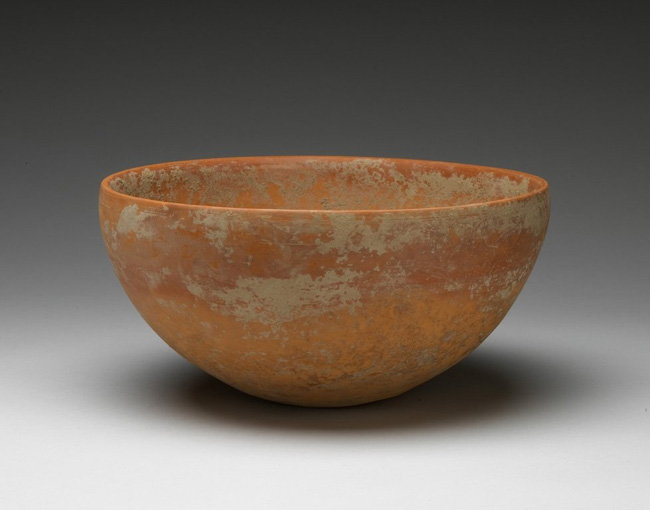
The first object, the one that started this set, gave it a theme, is this bowl. Over 6,500 years old it comes from the Yang shao culture along the Yellow River in what is now China. The theme here is sensual, beauty of form, grace, objects that would please the hand as well as the eye. I imagine holding it, tracing its edges and its sides. I imagine it filled with corn or grapes or berries. Mostly I see it as a pleasing shape, something of the earth that gets its beauty from the clay and its maker’s skill.

bowl650

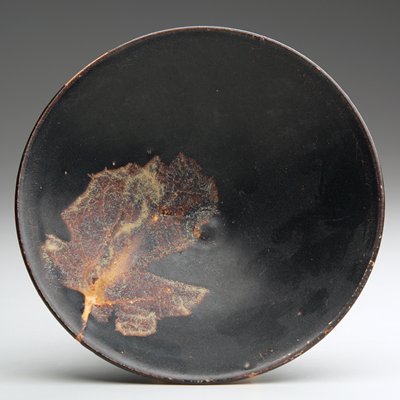
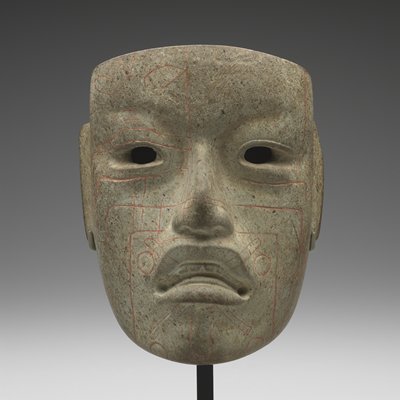
This tea cup comes from the Song Dynasty, the 12th or 13th century. It has long been my favorite object in the entire collection. “In the heat of the kiln, the natural chemicals in the leaf react with the glaze, rendering it nearly transparent.” Its aesthetic drew me in before I knew its origin. When I learned that these were favorites of Chan Buddhist monks, a movement peculiar to China that combined Taoist and Buddhist thought, it was a clue to me about my own reimagining project. Chan Buddhism became Zen when Japanese monks came to China in the 12th century and learned both about Chan Buddhism and tea drinking to stay awake during long meditation sessions.Tea Leaf tea bowl Song DynastyThis Olmec mask is 3,000 years old. The outline of a were jaguar in cinnabar lines covers the face carved from jadeite. It was once owned by the movie director John Huston.
olmec Mask

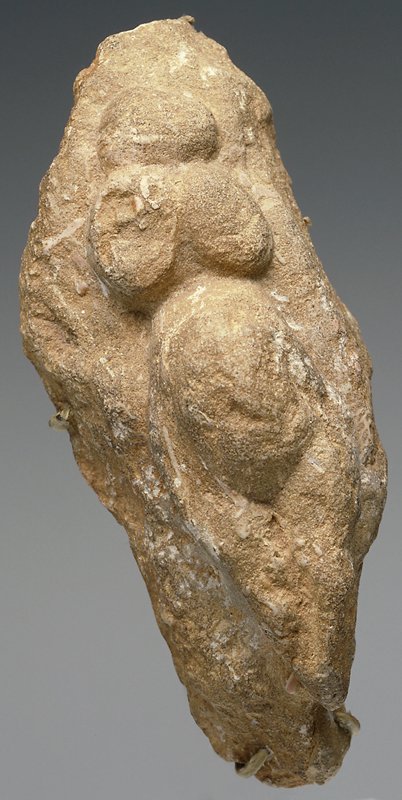
The oldest object in the museum’s collection, this image of a fertile woman, commonly called a venus figurine, has a creation date between 201 and 200 BCE, over 20,000 years ago. What I’ve always found remarkable about this object is how easy it is to tell what the artist made. We may not know precisely what it means, but that this is an image of a human woman transcends the thousands of years from its making.

Venus figurine

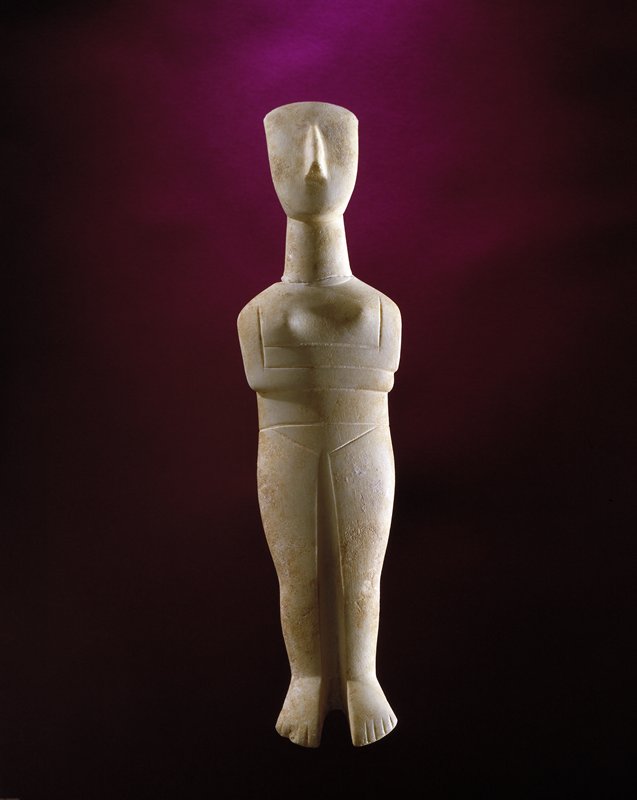
A Cyladic figure from either Naxos or Keros, two of the Cyclades’ Islands in the Aegean, this sculpture dates from 2,300 to 2,400 BCE. Maybe 4,400 years old. These abstract pieces share with the Venus figurine an instantly recognizable female form rendered in minimalist presentation.
cycladic figure

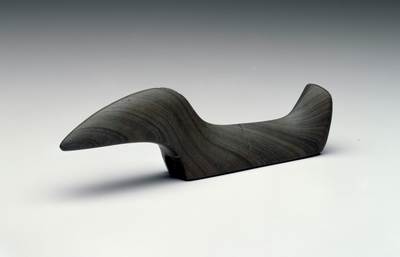
This birdstone was an object featured in a native American exhibition several years ago. It is an atlatl, a spear thrower. It comes from the Mississippian culture somewhere between the 26th and 25th centuries BCE.

birdstone

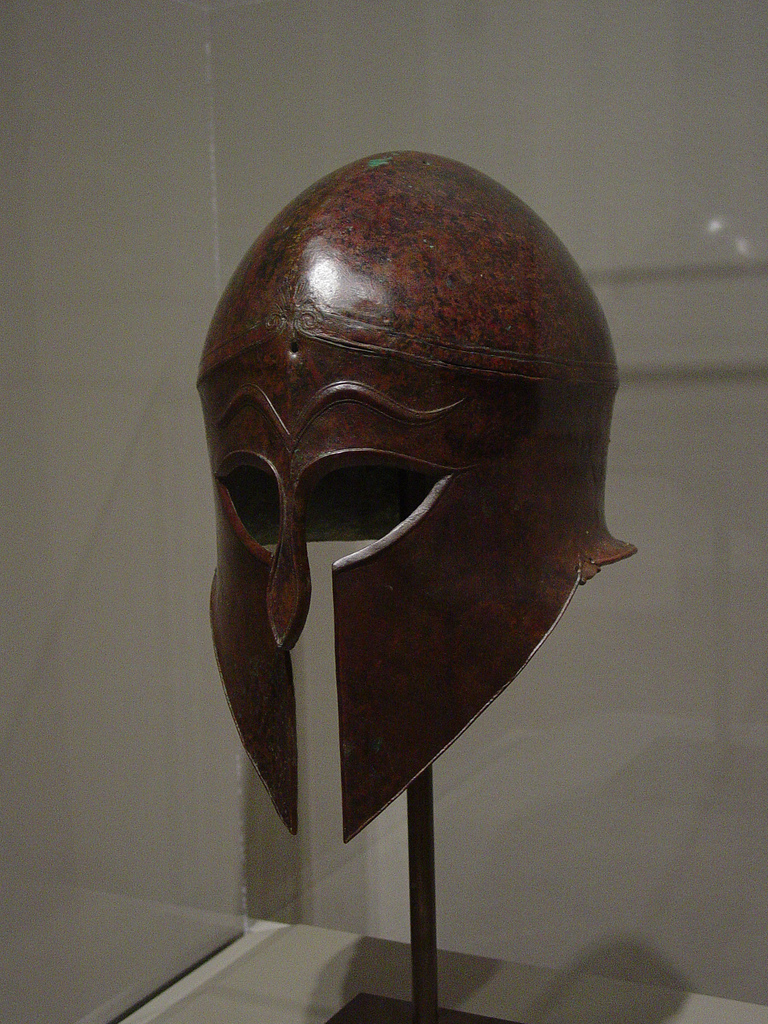
Corinthian helmet from 540 BCE. An elegant way to go to war, especially with the eyebrows. Seemed like it would be hot. Maybe pretty uncomfortable to wear, but that’s fashion.

corinthian helmet

Each of these are of a handheld scale, making them perfect as talismans for Morpheus. As I go through them, counting 1,2,3,4 and 5,6,7,8, they place me in a positive environment, occupy my senses and connect me to ancient artists.


Sabbath

Imbolc                                                                          Valentine Moon

Sunday’s occupy a different reality. Time slows down. Ambition flees. A good thing. In spite of my now long absence from the Christian faith the notion of a Sabbath, lifted from Judaism, has always appealed to me.  A seventh day when God rests. And us, too.

The notion of a divine creator soothing the chaos before speaking the world into being has faded from my belief system. The idea, however, of a time for setting aside work, domestic and otherwise for a reflective day every week still makes sense to me.

The sabbath can be seen as a form of radical hospitality for the self, a day when shaping our lives to the demands of others gives way. On a sabbath we could read, view art, listen to music, cook, play games, visit family.  The third phase of life, after we have set aside work and at home parenting, can be a sabbath phase, much like the last of the four Hindu life stages.

Something to consider.


Urban Art

Imbolc                                                                              Valentine Moon

Cities. In 2008 a global threshold found over 50% of the population in cities, a percentage calculated to be 70% by 2050. Cities have many charms, their bulging populations are testimony to that. I found an artful charm in Denver last night.

The Rocky Mountain Land Library had a pop-up evening at the Denver Architectural Collaborative on Santa Fe. The Collaborative is in in the middle of the Santa Fe Drive Arts District which holds, on the first Friday of every month, a gallery crawl. Last night was the first Friday.

So, while discovering what the Library planned for its Hartsel location in South Park, I also had the opportunity to experience the first Friday event. While the Library’s exhibits, books and people were interesting, the galleries and people and food trucks were exciting. As often happens, the temperature in Denver was higher than ours at home, 57 degrees to 35, so the night was warm, filled with people wandering from gallery to gallery.


The district runs for five blocks or so. There are museums like the Museo de Las Americas and Denver University’s Center for the Visual Arts, many galleries with a wide range of art, artist’s studios, funky restaurants and best of all food trucks with a wide variety of fare. Last night there were gyros, wild game burgers and steaks, barbecue, Mexican among many others. The crowd was mostly young, the fabled millennials of Denver out on the prowl.

This place made me feel alive, at home.  These are my people and there are a lot of them.