Category Archives: Reimagine. Reconstruct. Reenchant.

Liminal consciousness

Fall                                                                               Falling Leaves Moon
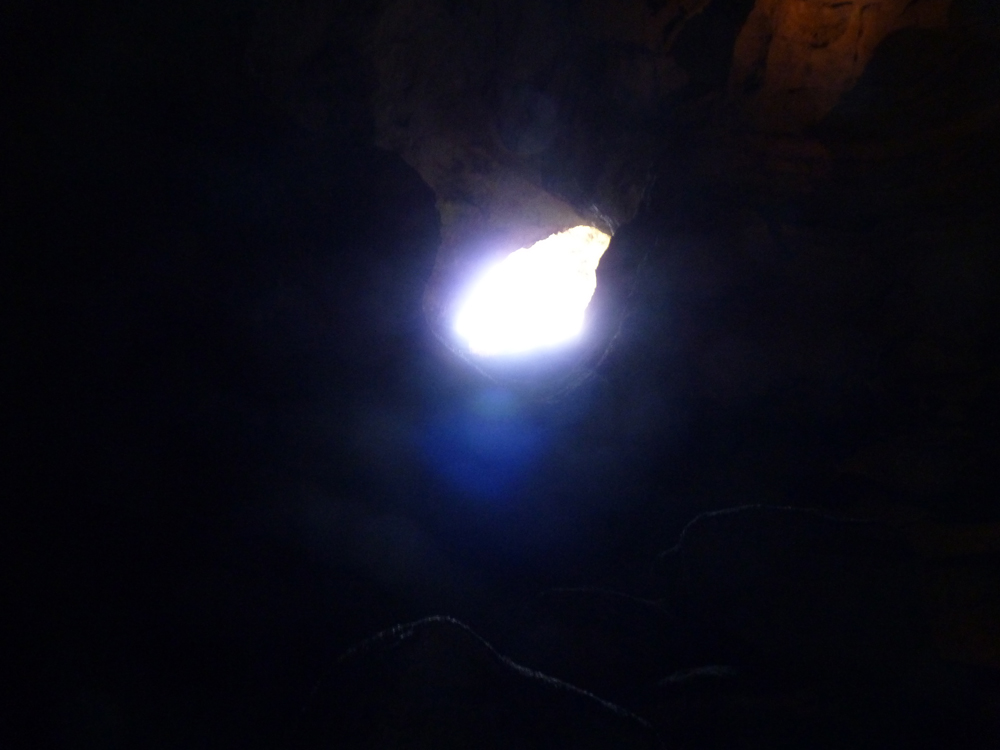
Carlsbad Entrance from the twilight zone. Beyond this point there is no natural light.

Stood tonight, arms on our mantel place, a fire crackling below me, wondering. What will I lean against this time next year? Will I hear wind coming down the mountain, the bugling of elks, the cough of a mountain lion? There might be frost on the plants outside and a chilly night ahead.

This is not I wish I would still be here kind of wondering, nor is it I wish I knew where we’ll be next year. It’s just curiosity, a sort of advance scouting. If all goes well, by this time next year-in the Great Wheel season of Mabon, a bit more than a week after the fall equinox-we should have been in our new place for over half a year. Strange to consider that.

Liminal consciousness. It arises when we know a transition is upon us, a time when we are no longer where we were, nor are we where we’re going. The weeks before a marriage. The summer after graduating from high school. Pregnancy. Interviewing for a new job. Getting ready to move to another place. In the broadest and most ultimate sense of course life is a liminal moment between birth and death. Liminal consciousness arises when we wake up to our condition.

Tonight, on our fire place mantel, I woke up again to the physical sense of moving and of

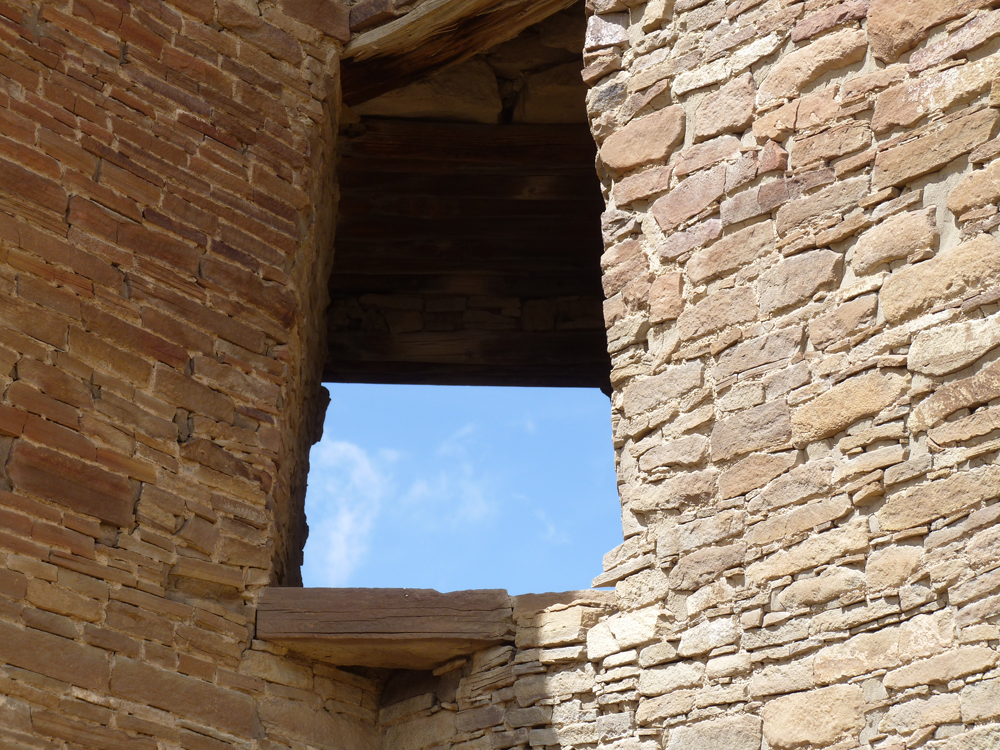
Angled window close up Chaco Canyon
Angled window close up
Chaco Canyon

having been moved. That awareness gripped me and I lived in it fully, not for long, not in a wistful way, but I was in it. Now that moment is in the past and I’m in Minnesota, with moving tasks and daily life here capturing and holding my attention. As is appropriate.

But stay aware for those moments of liminal consciousness. When they come, they have learnings for you.


Springtime of the Soul

Fall                                                                               Falling Leaves Moon

A brief interlude of high 70’s and 80’s disappears starting today. It’s 50 and rainy. Better, in my opinion. And more fitting for Michaelmas anyhow. The springtime of the soul.

St. Michael, the Archangel, is God’s general, the militant leader of the warrior angels, chief strategist in the war against the rebel angels and instrumental in ejecting Lucifer, the Morning Star, from heaven. His mass day, today, September 29th, honors him and the other archangels, Gabriel and Raphael, and often, Uriel.

Michaelmas was one of the four English quarter days which celebrated equinox and solstices on set days rather than on their astronomical occurrence. Thus, Michaelmas celebrates the autumnal equinox, which one author called the day of the “darkening.” It is the start of the English university first term and a day when rents were paid for the year, contracts settled and festivals held.

Michaelmas is the springtime of the soul because it presages the coming fallow time. It emphasizes the darkening aspect of the fall equinox when the hours of nighttime begin to exceed those of daylight. When the plant world faces the long dark cold, it turns inward,

goes down into the ground either as seed or as root and gathers its energy, readying itself for emergence in the spring when lightening begins and temperatures warm.

Just so with us. As a cold rain falls here today on Michaelmas in Andover, the joy of sitting inside with a book, or meditating, writing, sewing, quilting comes. Our inner life can begin to blossom, the richness in the soils of our souls feeds projects and dreams and meditations.

This springtime of the soul has only begun today and it will follow, over its time, the fallow season. I welcome you to this nurturing, deep time. Blessed be.


The Original Pentecostal

Fall                                                                                   Falling Leaves Moon

Listen to the languages calling out to you. From the lilac bushes, from the way vehicles move on the freeway, from the body movements of people in a crowd, of the clouds as they scud overhead or stop, gray and wet. Watch dogs as they wag their tales (tails, I meant, but I like this homophonic error) or smile or lean in or bark or whine. Watch their eyes move. Babies reaching, reaching. From the insects as they buzz the late season flowers, the wasps flying in and out of their nests, the birds high in the trees or walking across the road. The turtles when they walk miles to find a proper place to lay their eggs. So many tongues.

Mother earth is the original pentecostal, speaking in so many tongues. She also speaks in the movement of continental plates, the upwelling of magma, the process of evolution, the deep sea vents and their often alien seeming life forms. Or look up. Into the milky way and see the language of origins spread out before you on velvet, the most valuable jewels in all of creation. Each of these languages has a syntax, a grammar, meaning. The speakers of these languages want to reveal their purpose.

But we have to have ears to hear. Listen.

(Pentecost, El Greco, 1596)


Spinoza and Me

Fall                                                                                         New (Falling Leaves) Moon

The card gods were good to me tonight. Until I took over and started getting frisky. I tried to make a hand work where the force was not with me. Still, a good night with plenty of good conversation with men I’ve come to know well.

Bill Schmidt and I had dinner at Pad Thai, as we have for many of the evenings before the game. Bill’s reading a book about Spinoza and one by Spinoza. Spinoza’s an interesting guy in many ways. An apostate Jew. A monist, which is a hard position to defend. An optics maker, a lens grinder by trade.

Bill linked Spinoza’s work and mine, generous of him to think of the two of us in anyway linked. But the connection is fair, I think. When I left the Christian faith behind, I left behind a medieval approach to questions of metaphysics. That approach is text based rather than experience based. In the Christian instance experience is viewed first through the lens of scripture, and through the particular interpretative schema you bring to it. So by the time you get to reality, the gap is already pretty wide.

Christians are not the only ones with this inclination: Islam, Judaism, but, too, as the scholar Bill read points out, anyone who reads the texts of another as the first line of inquiry when faced with philosophical or theological or political or ethical questions.

Where Spinoza and I come together is in having rejected that text based, medieval model of scholarly inquiry. We both turn instead to nature, to lived experience, so the mediation is left to the senses rather than texts. This makes for a different sort of thought, with very different evidence for what we believe is the case.

Spinoza takes his inquiry deep into the nature of nature, building his thought systematically. I’ve never been able to hold myself to one line of inquiry long enough to work systematically, but I have had insights recently that seem to follow some of Spinoza’s. For example, in thinking just yesterday and today about the nature of political commitment, I’ve come to realize that ethics and political thought come after our political values, rather than from them deductively.

What I mean is that what you feel is fair, just, equitable, decent, honest, valuable for yourself and your community, comes first, informed by any of a number of inputs from personal history to family imprint to community of identification and place and era of birth. Only later do we seek out socialism or compassionate conservatism or democracy or autocracy as more systematic elaborations of our apriori sensibilities. We may then use them to enhance or inform nuances of our political beliefs, but they do not create them.

I’ll stop here with this thought. This is why political debate does so little to change minds and hearts.

A Crucifixion Moment…for the garden

Fall                                                                                    New (Falling Leaves) Moon

The river birch has begun to shed its golden leaves, small instances of light as matter falling toward the ground. The neighbor’s Norway maple has turned its autumn red, a reliable clue that the seasonal change is well underway.

Senescence becomes the word for gardens, vegetable and flower. Green turns to brown, then withers and falls onto the earth which has held it up so long. Tired, I suppose, from the long fight during the growing season to remain upright.

The water that fills out the cells flees back to the roots or out into the air through transvaporation, so leaves shrivel, stalks collapse. But this is not the field of ruins it appears to be. This is instead gathered nutrients ready to return to the soil following that

most necessary of almost hidden processes, decay.

We have arrived, from one perspective, at our crop’s crucifixion moment, when they give up their bodies on behalf of others. It is only an apparent crucifixion though because the dead will rise again, either from underground chambers where they lie dormant or from seeds. What a wonder. And it happens every year.

Rising

Fall                                                                                       New (Falling Leaves) Moon

The prototype of the evil doer, the mother of all James Bond’s enemies and role model for purist tyrants of all stripes, Adolf Hitler, still shines with a dark light, casting a pall of sickness over the future. Of course, even Hitler represents a distillation of a much deeper human problem, that of denigration based on secondary characteristics: racism, anti-semitism, misogyny, nativism.

In Hitler’s case a centuries old virus, a plague in the soil of Europe, a virulent stream of racism, anti-semitism, found its perfect host. Hitler glorified the notion of racial purity over against its worst violation, blood pollution, and found reason to kill Jews, gays, Gypsies and the mentally disabled.

This is not news. Except it is if you’re Jewish and living in Europe. Or, Jewish and living anywhere in the world, even here in the United States. Here’s a paragraph from a NYT article published today:

“From the immigrant enclaves of the Parisian suburbs to the drizzly bureaucratic city of Brussels to the industrial heartland of Germany, Europe’s old demon returned this summer. “Death to the Jews!” shouted protesters at pro-Palestinian rallies in Belgium and France. “Gas the Jews!” yelled marchers at a similar protest in Germany.”

Though not Jewish myself I count many Jews as my friends. My wife, my daughter-in-law and both grandchildren are Jewish. So, I ask all my fellow goyim to say, along with the Jews, “Never again.”

Nocturne

Fall Equinox                                                                   New (Falling Leaves) Moon

For those of us who love the night, this is a fulcrum holiday. We enter the long period that starts with the final harvests and does not end completely until the vernal equinox. From today, till then, the night will gain dominance, peaking at the winter solstice, but not relinquishing its grip until the sun hits 0 declination in the east next March.

It’s not that I do not love the light, I do. It is rather that I prefer the dark, the quiet, the solitary. I’m also entranced, quite literally, by what I call Holiseason, that period beginning at Samhain and running through Epiphany. As we move into the dark, we also move into our fears, our paleolithic uneasiness with the reliability of the heavens.

These fears have driven humanity across time and across the globe to create brave holidays that feature the light. Yes, you could say that the emphasis on them really underscores our fears, rather than challenges them, but I choose to go with the perspective that they hit the fear directly. No, night, you cannot have us, not for all the day, never, and surely not for all the year. In the words of Battlestar Galatica, so say we all.

From late October to early January a parade of festivals bring us lights and gifts and warmth and family celebrations. What a delight. Good music, too. And theater.

It all starts tonight.

Mabon 2014 and the Springtime of the Soul

Fall Equinox                                                                      Leaf Change Moon

Today the earth’s celestial equator (the earth’s equator projected into space) passes through the sun’s ecliptic (the sun’s apparent path throughout the year, actually caused by earth’s orbit.) You usually hear this put the other way around; that is, as the sun passing through the earth’s celestial equator, but that represents the stuckness of paleolithic astronomy that assumed the earth was the center of the solar system. From the diagram above you can see the sun’s declination (degree above or below the celestial equator) is 0 on the vernal and autumnal equinoxes.

This same diagram is very clear about the solstices, too. You can see that when the earth’s orbit tilts the northern latitudes toward the sun, the sun is highest in the sky-the summer solstice.  When the sun is lowest in the northern sky-the earth tilts away from the sun and gives us the winter solstice.

Since the summer solstice day time has exceeded night time. In theory the autumnal equinox is the point of equilibrium between light and dark, but at our latitude that day actually occurs on September 25th this year. This is, however, the day the Great Wheel celebrates and it does so because of the sun’s zero declination at earth’s celestial equator.

This week then the victory of the sun, made complete on the summer solstice, begins to wane. The dark god of deep winter gains greater and greater authority as the sun’s rays spread out over a larger area of earth, thus weakening them, and the number of hours that the sun is in our sky, even in its weakened condition relative to the soil, decrease steadily until the night of the winter solstice. Thus comes the fallow, cold time.

It is no accident that the harvest season is now. Over the 475 million years (give or take a hundred million) since plants made it out of the oceans and onto land, plants have adapted themselves to the conditions that work with their particular genetics. Key aspects of a plant’s life include carbon dioxide, soil nutrients, available fresh water, adequate sunlight and temperatures adequate for all these to work with the plant’s life cycle.

Thus, as the earth’s orbit carries it to different relationships with solar strength, temperatures change along with it.  At its maximum when the earth tilts toward the sun and the sun is highest in the sky, the sun’s rays fall on a smaller area of land. Here’s an excellent simulation. University of Nebraska-Lincoln.

Plants have had the past 475 million years to refine their growing season so that it takes maximum benefit of the sun’s strength. In a very real sense the growing season is a clock, or an astronomical observatory directly correlated to the earth’s orbit around the sun–The Great Wheel.

On a spiritual level, if we follow the ancient calendar of the plants, the season of external growth, flowering and seed making, is waning now. Just as the plant either dies out and anticipates its rejuvenation from scattered seed or goes dormant and waits with stored energy below ground in roots or corms or bulbs, so we might consider this season as the one where we shift inward, away from the external demands upon us and the expectations put on us there.

Now we shift toward the interior life, the Self becomes more of a focus, our spiritual life can deepen. We can see this shift in the human life cycle if we compare the second phase of life with its emphasis on family creation and nurture and career, to the third, with its pulling back from those external expectations. The third phase is a post growing season time of life, not in the sense that growth ends, but that its focus is more down and in rather than up and out. The third phase is the fallow time.  Michaelmas on the 29th of this month is known by followers of Rudolf Steiner as the springtime of the soul.

The third phase marks the beginning of the springtime of the soul for the individual.

Enough

Lughnasa (last day of 2014)                                               College Moon

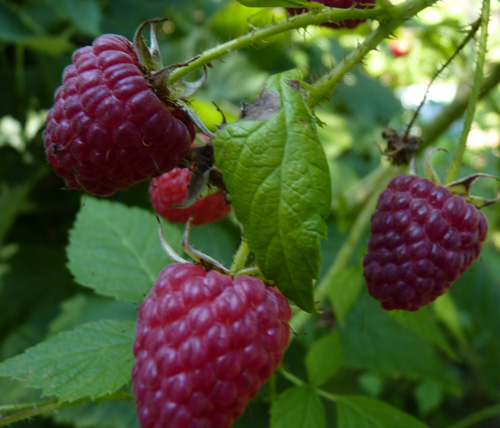
50008 28 10_late summer 2010_0198The raspberry plant. Source of the brambles, an imperial sort of plant that colonizes, then absorbs patches of land. Just realized today what an elegant form of evolutionary engineering it is.

In the spring it shoots up from last year’s cane or from seed. Then it grows up and up toward the sun, its spiny stalk with its thick, bark-like cover strong. During the summer months it spreads out its leaves, increases the size of its stalk, sinks its roots deeper into the soil. As the growing season begins to dwindle, it throws out small blossoms on thin, spindly branches. The resulting fruit at first weighs down the spindly branches just a bit, the whole still upright, able to drink in the sun.

As the fruit matures, however, it gains water weight and the spindly branches begin to IMAG1002bend toward the ground, overwhelmed by the cumulative mass of the maturing fruit. Once a large number of fruits are ripe, the weight of the whole may bend the tip and even the thinner part of the upper stalk toward the ground.

Think of it. At each stage of its presence during the growing season the raspberry has an optimal design. Firm and upright early to catch the sun, to get it above neighboring vegetation. As the fruits turn their soft golds or their beautiful magenta, the raspberry’s fruits gradually lower themselves so the seeds, which they exist to nourish, get closer to the ground. If a bird or animal doesn’t grab them for the taste of the fruit, they simply drop off and fruit and seed start more raspberry plants right there.

Picking raspberries in the cool of a sunny fall afternoon, the air sweet with the scent of snakeroot blooming nearby, the dogs waiting at the fence for fruits thrown over.  Enough. That’s all. Enough.

Powerful, Scary Ideas

Lughnasa                                                                                          College Moon

Reading an important document, a Stanford Encyclopedia of Philosophy essay on authenticity. Kierkegaard, the essay says, defines the self in relational terms: “The self is a relation that relates itself to itself…” A pioneer in the concept of authenticity Kierkegaard defines the purpose of life as “becoming what one is.”

This definition of self and of life’s purpose make sense to me. Heidegger, the inventor of the term authenticity, makes a similar point with his concept of dasein:  “…human being is a “relation of being”, a relation that obtains between what one is at any moment (the immediacy of the concrete present as it has evolved) and what one can and will be as the temporally extended unfolding or happening of life into an open realm of possibilities. To say that human being is a relation is to say that, in living out our lives, we always care about who and what we are.” from the same Stanford essay.

What both of these northern European thinkers suggest is that the idea of Self is dynamic and by definition relational, somehow linking our past with our present and our hope or anticipation for the future. This means that our notion of who we are-and therefore who we can hope to become-lies in a web of feelings and thoughts connecting experiences in the external world and our internal understanding of them, with those experiences occurring only in our interior world and their relations with those stimulated by the external world.

Thus, in Heidegger’s terminology, what we are is always at stake. The choices we make and the experiences we have and the past we carry with us are always in vibrant collision, shaping and reshaping our Selves, second by second. I suppose you could see this as daunting, but for me it is exciting, meaning that my Self is not fixed, not bound to the past or to any particular future, and not only not fixed, but malleable. That is, I can make choices now, right now, that affect my Self. I can even alter the past by recalibrating the frames through which I view it.

As we discussed in the Nietzschean conversations below, once we understand this fluid, vital nature of the Self, we cannot help but live dangerously. Why? Because in every action, in every moment of contemplation, even lurking in the past are events, experiences, thoughts that change who we are. And who we can become. Powerful, scary ideas.