So that happened. Ted of All Trades, a former Iowa handyman now living here, came over to install the 15,000 BTU air conditioner in the loft. The loft is 850 square feet so it has to be that big or it would run all the time. I researched this, found the right air conditioner, bought it and brought it home. Forgot one thing. “That’s a big box,” said Ted, a hyper masculine, shaved head, brawny guy. Oh. “You have 25″ of window and a 29 1/2″ air conditioner.” Oh. Right BTU, wrong size. 70 years old and I haven’t learned to measure things. So, back it goes. Not sure what I’m going to do to cool the loft now.
Ted does not impose a trip charge. “Nope, I don’t do that. I want to earn my money.” We then had a conversation about the mountain way when it came to trades. “I went to a customer’s house. Said I’d be there at 8 am, got there about 7:45. Knocked on the door.” He shook his head, “The guy came to the door and said, ‘Who are you?'” “Ted,” I said, “Ted of All Trades.” “Holy shit, I wasn’t expecting you until 9:30 or later.”
The Midwestern work ethic, especially one grounded in the agricultural ethos of Iowa, would chew up and spit out guys who don’t show up on time. Ted’s on time, start to finish attitude about his business has him booked until October in spite of having been in the mountains only a year.
We’re grieving. Kate visited her rheumatologist yesterday. She has both Sjogren’s Syndrome and rheumatoid arthritis. Eric told her that patients with Sjogren’s struggle in the arid west since it’s a disease that creates dryness in the mouth and the eyes. The low humidity here exaggerates and reinforces those symptoms. In addition both Sjogren’s and r.a. (rheumatoid arthritis) can sap energy, cause joint stiffness and generally make life difficult. “This is the new normal,” Kate said.
Jon also has multiple significant diseases: type 1 diabetes, hypothyroidism, Addison’s disease (low production of cortisol), r.a. and has managed them very well. He’s 48 now and shows none of the sequelae normally associated with a long history of type 1 diabetes. These chronic conditions take up money, time and a lot of attention, requiring daily, and often more frequent than that, self-care.
Life is different now and will remain that way, that’s what we’re grieving. We had hoped there would be some medicine, some procedure, some magic that would put these insults behind us, but no.
Most of us, by the time we reach our seventies have some cluster of physical irritations and annoyances: hearing loss, kidney disease, bad joints, high blood pressure, generalized anxiety disorder, for example. If we’re lucky, we can absorb these changes, mitigate their problems and live our lives in spite of them. There is, however, always a period of adjustment, of realization that, yes, this body or this psyche has a now permanent malfunction, a condition of dis-ease.
They are reminders, often not gentle, that someday, sometime, something will end it all. The grief involved in these lesser problems is a precursor to the larger grief, the loss not only of function, but of life itself. If we let them, these short of fatal conditions can teach us how to confront and absorb the larger grief.
If you’re an alcoholic like I am, you learn early in treatment that the geographical escape won’t work. Wherever you go, there you are is the saying. It’s true that the addictive part of my personality follows me from place to place as well as through time. Even so, this move to Colorado has awakened me to an unexpected benefit of leaving a place, especially ones invested with a lot of meaning.
I lived in Minnesota over 40 years, moving to New Brighton in 1971 for seminary. I also lived in Alexandria, Indiana until I was 18, so two long stays in particular places. In the instance of Alexandria, I was there for all of my childhood. In Minnesota I became an adult, a husband and father, a minister and a writer.
Here’s the benefit. (which is also a source of grief) The reinforcements for memories and their feelings, the embeddedness of social roles sustained by seeing friends and family, even enemies, the sense of a self’s continuity that accrues in a place long inhabited, all these get adumbrated. There is no longer a drive near Sargent Avenue to go play sheepshead. Raeone and I moved to Sargent shortly before we got divorced. Neither docent friends nor the Woolly Mammoths show up on my calendar anymore with rare exceptions. No route takes me past the Hazelden outpatient treatment center that changed my life so dramatically.
While it’s true, in the wherever you go there you are sense, that these memories and social roles, the feeling of a continuous self that lived outside Nevis, in Irvine Park, worked at the God Box on Franklin Avenue remain, they are no longer a thick web in which I move and live and have my being, they no longer reinforce themselves on a daily, minute by minute basis. And so their impact fades.
On the other hand, in Colorado, there were many fewer memories and those almost all related to Jon, Jen and the grandkids. When we came here, we had never driven on Highway 285, never lived in the mountains, never attended a synagogue together. We hadn’t experienced altitude on a continuous basis, hadn’t seen the aspen go gold in the fall, had the solar snow shovel clear our driveway.
This is obvious, yes, but its effect is not. This unexperienced territory leaves open the possibility of new aspects of the self emerging triggered by new relationships, new roles, new physical anchors for memories. Evergreen, for example, now plays a central part in our weekly life. We go over there for Beth Evergreen. We go there to eat. Jon and the grandkids are going there to play in the lake this morning.
Deer Creek Canyon now has a deep association with mortality for me since it was the path I drove home after my prostate cancer diagnosis. Its rocky sides taught me that my illness was a miniscule part of a mountain’s lifetime and that comforted me.
This new place, this Colorado, is a third phase home. Like Alexandria for childhood and Minnesota for adulthood, Colorado will shape the last phase of life. Already it has offered an ancient faith tradition’s insights about that journey. Already it has offered a magnificent, a beautiful setting for our final years. Already it has placed us firmly in the life of Jon, Ruth and Gabe as we’ve helped them all navigate through the wilderness of loss. These are what get reinforced for us by the drives we take, the shopping we do, the medical care we receive, the places we eat family meals. And we’re changing, as people, as we experience all these things.
Well over fifty years ago Harrison Street in Alexandria ceased to be my main street. The Madison County fair was no longer an annual event. Mom was no longer alive. Of course, those years of paper routes, classrooms, playing in the streets have shaped who I am today, but I am no longer a child just as I am longer the adult focused on family and career that I was in Minnesota.
Organ recital: Kate does not have throat cancer. Didn’t know that was what Dr. James Chain, an ENT, was thinking until he eliminated the idea yesterday. Nothing quite like dodging the metaphorical bullet you didn’t even hear fired. Her sense of smell, adumbrated, and her sense of taste, flattened, however, may not return. Tough for weight loss. If food doesn’t taste-bad or good, it’s not appealing. We’re working right now to figure out what she can taste so we can emphasize them in our menu choices and cooking.
My knee. Well, in short, nothing wrong. Dr. Peace, he of the elfin ears and round face, said, “Ligaments feel good, strength is good. You have more flexibility than 90% do at this point. You’re good.” Kate asked, “Can he kneel to weed?” “Oh, yes.” Me, “Oh, no.” This because I have significant pain when I kneel on my left knee. “For some reason,” Dr. Peace said, “50% of knee replacement patients report pain on kneeling. 50% don’t. We don’t know why.” Oh.
Dr. Peace says that short of blunt force trauma: ski accident, automobile crash, a bad fall I can’t hurt the prosthetic. “It’s designed for you to be active.” That’s good news because it means I can challenge it as much as I can stand.
Knee X-ray image after a total knee replacement operation. The diseased knee joint is replaced with artificial material (White parts). Frontal view and side-view.
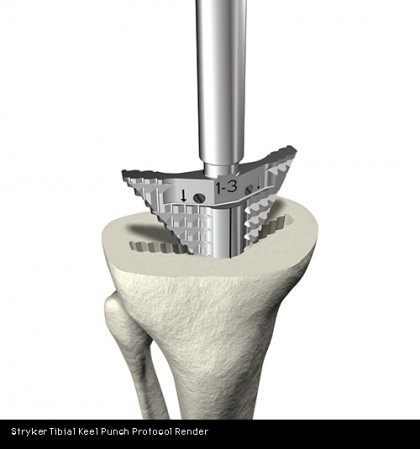
It was my knee prosthetic’s moment on the big screen. The x-ray screen. In scales of gray and white I could see the anchoring bolt dug deep into my tibia and the large lunette window shaped chunk attached somehow to my femur. Glue was mentioned. Say what? Most weird of all though, my knee cap floated free, a sort of slightly flattened disc which looked as if it wanted distance from the rest of this oh so necessary joint.
In short, good news all round. We celebrated with a meal at RICE Sushi and Bistro not far from Dr. Chain’s office. The temperature was a Minnesotan frying 95 degrees, but as we climbed the mountains of the Front Range we got down to a more bearable 77 at home.
We’re going to need a sign: A Scandinavian and former Minnesotans live here. It will hang below the window air conditioner we purchased yesterday in Evergreen. Nobody has air conditioning up here. At least not visible from the road. We moved here for the cooler average temperatures and Shadow Mountain has obliged, so that’s not surprising. But. In the summer, for a few weeks, it does get hot up here and the house heats up. So does the loft.
Kate and I kept our home in Andover at 63 degrees summer and winter. And were happy about it. The heat makes both of us sluggish, cranky. Beating it back, even for the few weeks when it’s a problem, has become important for us. We purchased one unit, will put it in today (which means Jon will put it in), and see how it works. If it works well, we’ll buy a slightly larger unit, 15,000 BTU’s, for the loft.
When we went into Home Depot (our choices for purchasing a unit were two: Walmart or Home Depot. Community busters or a CEO who loves and supports the Donald. Sigh.), I had to go up to Customer Service and say, “I want to buy an air conditioner, but I can’t lift it.” The woman behind the desk said, “All right. Where is it?” Then she came with me. I looked at her. If she can lift the damned thing, I should be able to. But, no. She had a trick. She tilted the box back while I moved the flat-bed cart underneath it, then she worked it onto the low orange bed.
Life is too short. Yes, it is and with both of us in our eighth decades it’s getting even shorter. Too short to spend weeks bothered by heat. Now, who can I get to make that sign?
Living at altitude in the arid West has its challenges. So far we’ve decided that the blessings outweigh the curses. Kate did come back from her 55th reunion trip to Iowa healthier. Part of that was a treatment for thrush she began before she left, but a part of it, too, was being much closer to sea level (better O2 stats) and much more humidity. We joked about taking the oximeter and the blood pressure monitor on a drive around Denver to find a place we could live that would be healthier for us. The oxygen concentrator is a better solution for us right now.
In other health news an x-ray of my left knee (total knee prosthetic imaging) raised a question. On Monday I see Dr. Peace, my orthopedic surgeon, for a follow up. Kate thinks and I hope he will say nothing’s wrong. I will use the time to ask again about how much I can challenge the knee. Can I, for example, kneel? It’s painful now, yes, but does it actually harm the prosthetic? Is hiking up a mountain trail too stressful for it? Why do I still have pain seven and a half months after surgery? Are my high intensity workouts too much? I don’t want to be too cautious, neither do I want to be cavalier.
Jon’s waiting on news about whether the seller of the house he’s purchasing will replace galvanized piping. Could be a deal breaker. Possible bummer alert.
Yesterday was hot. Hit 91 I think and the heat lasted through the night. At Marilyn’s birthday party we spoke with her son, Kevin. Kevin lives in Las Vegas and said, “105 is a relief. People say it’s over a hundred degrees, doesn’t matter. No. When it’s 117, that’s worse. 105 is better. 90 is really good.” Well, if he says so. Not a subtlety I want to become accustomed to.
The party was at the home of two of Marilyn’s friends, Jan and Claude. Their home, like the Bernstein’s, is up a long private road, but unlike the Bernsteins, their house sits near the end of a wide valley situated between two shorter mountains. The valley itself is open at the east, looking toward North Turkey Creek road and well beyond that, to Denver. In the distance were mountains, the furthest still carrying some snow, the closer ones, mountains that enclose Evergreen, green with their lodgepole pine contrasted against buff colored rock.
The sun in the mountains is brutal. There is less atmosphere to block out the UV rays and it was a clear, blue morning. Forgot my hat so this bald head needed shade. Jan and Claude’s house has a huge wrap around deck and yesterday it had maybe 20 folding tables setup end to end, the sort used in churches and synagogues across America, with paper tablecloths and silverware wrapped in cloth napkins. A small tent welcomed guests in the driveway with mimosas and orange juice. Nametags, too.
Marilyn turns 70 on July 12th. She and Irv have lived in Conifer for 45 years, all that time in the same house up King’s Valley road. Over that time she and Irv have made a large mass of friends, many of whom testified to the many mitzvahs she’s done over the years. Marilyn is energetic, “This year I’m doing a 7 mile hike each weekend just to show myself I still can.” She chairs the Adult Education Committee at Beth Evergreen and has done so for many years.
Many of the folks at the party were from Beth Evergreen, but there were also many who used to work with Marilyn in the Jeffco School District where she was the public relations director. One, Jennifer, was with Marilyn in that office at the time of the Columbine shootings. Marilyn handled public relations for the school district during and after the shooting. Columbine still has a big footprint on the Colorado psyche, the nation’s, too.
Yesterday was the fourth of July. Our September 16th, viewed from Mexico. Our July 1st, from the northerly perspective of Canada. A day to launch an almost-ICBM from Pyongyang. A day not long after our President, OUR PRESIDENT, released on Twitter a video of himself wrestling, during a WWF event, another person whose head had been replaced by the CNN logo. I can’t believe I just wrote that. I can’t believe I’ve seen the video. I can’t believe DJT is in the Whitehouse.
Sigh. Yes, I can. That’s worse, actually, than disbelief. Disbelief holds out hope that incredulity might synch up with reality. Belief, in fact not even belief, but empirical observation shows that DJT did in fact post such a video and I’ve seen it. He is, too, actually in the Whitehouse, in the Oval Office, behind the desk where President’s sit, his long red tie brushing the floor, his floppy comb over shedding wispy blond hair and flakes of orange self-tanning lotion falling with them. In our Whitehouse. In our Oval Office.
Declaration of Independence
On our Independence Day. Question. How do we get independence from him? And his minions. I know how. Elections. But, can the Democratic party pull off a win in the 2018 elections? Hell, I don’t know. And, more importantly, the 2020 election. Don’t know.
Sitting here on Shadow Mountain, with a beautiful blue sky framing Black Mountain, I’m far away from Washington, D.C. in miles and in altitude. And attitude. A benefit of this distance is no Beltway Fever. I can still see the United States from here, looking toward the humid east, the cold north, the hot dry south and the intermountain West. The mountains defy politics. They stand tall against the arrogance of politics, a granite wall solid, lasting. The cold drifts down from the pole, cooling the overheated rhetoric. The West retains its contradictory spirit of liberty, wide-open spaces and corporate overlords. The south. Well. Perhaps Trump could go unprotected by sunscreen to Arizona.
We are more than our government. We are a nation of vast reaches, landscapes that fire imaginations around the world. We are a nation of immigrants, a nation to which immigrants from that same world still desire to come, even if the xenophobic, chauvinistic politicians infesting Washington try to make us undesirable. We are a nation of hopers and dreamers in spite of the dreamkillers on Pennsylvania Avenue.
Yes, we can lose all this to demagogues and mean-spirited fundamentalist ideologues. But I don’t think we will. Perhaps that’s the nostalgia of an old man for the country of his youth. Perhaps. Except the country of his youth exuded sexual repression, feared communism, had sundown laws, treated women like chattel and children. This country, the one now dominated by fearful men who would like to return to just that time, has seen clear advances in the treatment of women, people of color, various sexual preferences. It is, too, a nation whose economy links it in trade to most nations of the world. So, change is not only possible, it has happened in my lifetime and will, I know, happen again in my lifetime.
Fourth of July party at Steve and Jamie Bernstein’s. We went to this last year. I knew nobody. Jamie is Kate’s friend from the Bailey Patchworkers and the needleworkers. Since then we’ve become more engaged at Congregation Beth Evergreen, Jamie and Steve are members there, too. They’re both in the kabbalah class I’m taking with Rabbi Jamie Arnold. So this time I knew the hosts, too.
Their home is down a private road, maintained by a resident’s association. It overlooks Pike’s Peak in the distance with many mountain peaks between their home and this famous piece of Colorado history.
Since we showed up very fashionably late, the party was winding down. This meant we had a chance to talk with Steve and Jamie. Their party is big and they are excellent hosts so they move from guest to guest with little chance for in depth conversation. We had a good chat with them, touching on matters Jewish, kabbalistic, Beth Evergreen. I referred to Rabbi Jamie as Jamie and realized I’d been too informal. Gonna have to stick to Rabbi, though it seems over done for me. But, in the Jewish world, the Rabbi is the Rabbi.
Gradually, slowly making friends here. A week from today we’ll attend Marilyn Saltzman’s 70th birthday brunch. Marilyn is the chair of the adult ed committee at Beth Evergreen. We had dinner at her house with Irv and two of their friends a few weeks back.
Danced the hora last night, mixing up my feet as I normally do while dancing, but enjoying myself anyway. Joy, it turns out, is a character trait in mussar. “It’s a mitzvah to be happy.” Rabbi Nachman. Judaism constantly challenges my Midwestern protestant ethos, not primarily intellectually, but emotionally. Last night was a good example.
I’d spent the day feeling punk, stomach a bit upset, tired, exercise was hard. Told Kate, “I feel like I can’t my motor started.” Didn’t really want to go to this once a month mussar havurah (fellowship), but I’d decided to make gazpacho for the meal and had finished it. So I went, pretty sure I’d feel better if I did. Which, if you think about it, is an interesting sign.
When we got to Beth Evergreen, it was a small group, seven. Becky was new and Lila, a friendly pug/boxer mix, Rabbi Jamie’s dog, strained at a yellow leash tied to a picnic table on the patio. Tara, the cantor/director of education, Rabbi Jamie, Judy, the social action chair, Mitch, a long haired man in his early 50s, Kate and me made up the rest.
We ate our meal together outside, all at one picnic table. Tara’s Hebrew school students had decorated it and it was colorful underneath our paper plates and plastic bowls. The evening was a perfect combination of cool warmth and low humidity. The grandmother ponderosa stood tall, lightning scarred against the blue black sky. Bergen mountain had already obscured the sun which still lit up the clouds from its hiding place.
While I ate my own soup, not feeling hungry since my dis-ease earlier, Rabbi Jamie got us started on the evening’s conversation, suggesting we focus on hope and joy in the present.
“When I read that tonight was about joy, I first thought about dogs. How unrestrained they are and how in the moment with their feelings.” Lila, I said, had greeted me fondly, showering me with kisses, a stranger. I like that about dogs.
We all laughed when Rabbi Jamie asked if I hoped (another middot, character trait, clustered with joy) to be able to greet strangers the same way. “Well, not by kissing them on the lips or licking them.” I was thinking, but yes, I hope I can add that level of uncalculated joy to my meetings with others.
Becky said she had problems with hope, naming the carelessness of humans and the destructive presence we are on the earth. “I think about how we might destroy ourselves, but after some time, the planet will be fine. That makes me feel better, oddly,” she said. Rabbi Jamie mentioned then something I’ve heard him voice before, a Talmudic argument over whether it would have been better if humans had not been created. Yes, the rabbis decided, it would have been better. But, since we are here, what will we do?
Judaism has that sort of no nonsense approach to heavy existential issues. Yes, we’ll die. So the question is, how will you live; not the understandable response, OMG, I’m gonna die!
In the remaining discussion it became clear to me that Judaism has joy at its core, an embrace of life even in the midst of struggles and despair, an embrace of life in community, with known others. Joy, one quote offered for the evening suggested, comes from deep connection.
Calvin
This is so qualitatively different from Presbyterianism. When Rabbi Jamie led us in song, then got us up to dance, I tried to imagine the same thing happening during a Presbytery meeting. Nope. Wouldn’t happen. It’s a cultural difference of substantial proportion.
I want to like this, I may even need to like it, but it’s hard. Being hesitant, reserved, especially physically, came with my Midwest protestant raising, reinforced by my Germanic father and the often dysfunctional nature of my mother’s extended family.
Still don’t want to be a Jew, but these challenges, to experience deep joy and hope rooted in community, are good for me. Necessary, even. When we came home through the darkening June night, driving up Black Mountain Drive, I no longer felt dis-eased. An odd sense of hopefulness had crept in. Maybe a bit of joy.


 We’re grieving. Kate visited her rheumatologist yesterday. She has both Sjogren’s Syndrome and rheumatoid arthritis. Eric told her that patients with Sjogren’s struggle in the arid west since it’s a disease that creates dryness in the mouth and the eyes. The low humidity here exaggerates and reinforces those symptoms. In addition both Sjogren’s and r.a. (rheumatoid arthritis) can sap energy, cause joint stiffness and generally make life difficult. “This is the new normal,” Kate said.
 Life is different now and will remain that way, that’s what we’re grieving. We had hoped there would be some medicine, some procedure, some magic that would put these insults behind us, but no.
 If you’re an alcoholic like I am, you learn early in treatment that the geographical escape won’t work. Wherever you go, there you are is the saying. It’s true that the addictive part of my personality follows me from place to place as well as through time. Even so, this move to Colorado has awakened me to an unexpected benefit of leaving a place, especially ones invested with a lot of meaning.
 While it’s true, in the wherever you go there you are sense, that these memories and social roles, the feeling of a continuous self that lived outside Nevis, in Irvine Park, worked at the God Box on Franklin Avenue remain, they are no longer a thick web in which I move and live and have my being, they no longer reinforce themselves on a daily, minute by minute basis. And so their impact fades.
 This is obvious, yes, but its effect is not. This unexperienced territory leaves open the possibility of new aspects of the self emerging triggered by new relationships, new roles, new physical anchors for memories. Evergreen, for example, now plays a central part in our weekly life. We go over there for Beth Evergreen. We go there to eat. Jon and the grandkids are going there to play in the lake this morning.
 Organ recital: Kate does not have throat cancer. Didn’t know that was what Dr. James Chain, an ENT, was thinking until he eliminated the idea yesterday. Nothing quite like dodging the metaphorical bullet you didn’t even hear fired. Her sense of smell, adumbrated, and her sense of taste, flattened, however, may not return. Tough for weight loss. If food doesn’t taste-bad or good, it’s not appealing. We’re working right now to figure out what she can taste so we can emphasize them in our menu choices and cooking.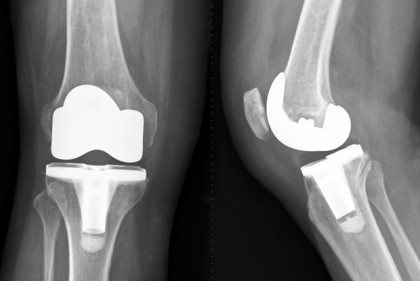
 We’re going to need a sign: A Scandinavian and former Minnesotans live here. It will hang below the window air conditioner we purchased yesterday in Evergreen. Nobody has air conditioning up here. At least not visible from the road. We moved here for the cooler average temperatures and Shadow Mountain has obliged, so that’s not surprising. But. In the summer, for a few weeks, it does get hot up here and the house heats up. So does the loft.
 When we went into Home Depot (our choices for purchasing a unit were two: Walmart or Home Depot. Community busters or a CEO who loves and supports the Donald. Sigh.), I had to go up to Customer Service and say, “I want to buy an air conditioner, but I can’t lift it.” The woman behind the desk said, “All right. Where is it?” Then she came with me. I looked at her. If she can lift the damned thing, I should be able to. But, no. She had a trick. She tilted the box back while I moved the flat-bed cart underneath it, then she worked it onto the low orange bed.
 In other health news an x-ray of my left knee (total knee prosthetic imaging) raised a question. On Monday I see Dr. Peace, my orthopedic surgeon, for a follow up. Kate thinks and I hope he will say nothing’s wrong. I will use the time to ask again about how much I can challenge the knee. Can I, for example, kneel? It’s painful now, yes, but does it actually harm the prosthetic? Is hiking up a mountain trail too stressful for it? Why do I still have pain seven and a half months after surgery? Are my high intensity workouts too much? I don’t want to be too cautious, neither do I want to be cavalier.
 Yesterday was the fourth of July. Our September 16th, viewed from Mexico. Our July 1st, from the northerly perspective of Canada. A day to launch an almost-ICBM from Pyongyang. A day not long after our President, OUR PRESIDENT, released on Twitter a video of himself wrestling, during a WWF event, another person whose head had been replaced by the CNN logo. I can’t believe I just wrote that. I can’t believe I’ve seen the video. I can’t believe DJT is in the Whitehouse.
 We are more than our government. We are a nation of vast reaches, landscapes that fire imaginations around the world. We are a nation of immigrants, a nation to which immigrants from that same world still desire to come, even if the xenophobic, chauvinistic politicians infesting Washington try to make us undesirable. We are a nation of hopers and dreamers in spite of the dreamkillers on Pennsylvania Avenue.
 Danced the hora last night, mixing up my feet as I normally do while dancing, but enjoying myself anyway. Joy, it turns out, is a character trait in mussar. “It’s a mitzvah to be happy.” Rabbi Nachman. Judaism constantly challenges my Midwestern protestant ethos, not primarily intellectually, but emotionally. Last night was a good example.
 We ate our meal together outside, all at one picnic table. Tara’s Hebrew school students had decorated it and it was colorful underneath our paper plates and plastic bowls. The evening was a perfect combination of cool warmth and low humidity. The grandmother ponderosa stood tall, lightning scarred against the blue black sky. Bergen mountain had already obscured the sun which still lit up the clouds from its hiding place.
 We all laughed when Rabbi Jamie asked if I hoped (another middot, character trait, clustered with joy) to be able to greet strangers the same way. “Well, not by kissing them on the lips or licking them.” I was thinking, but yes, I hope I can add that level of uncalculated joy to my meetings with others.