Wednesday, adult Hebrew at 4:30 with Rabbi Jamie. Then, kabbalah at 7 p.m. Thursday. Mussar at 1 pm. Then mussar leadership group at 6:30 p.m. Result? Both nights up past my bedtime and an 8 a.m. rising this morning. Oooffdah, as we would have said back in the land of the frozen mustache.
I’m in a graduate program in Jewish studies by immersion. The learning is constant and interesting. Beth Evergreen has made me a better person, calmer and even more introspective.
Judaism is humane and that aspect of it appeals to me. A lot. Example. Rich Levine, the lawyer who did our estate documents, attended the MVP meeting last night. He had, he said, with his brother just unveiled his father’s gravestone. Is this a common custom, I asked? Yes, he said, most if not all Jews follow it. A loved one is buried, then not more than a year later, a gravestone is erected. The wait considers a journey the deceased needs to make that can last as long as a year. But, Rich said, you don’t want to make them think that you think it would take them a whole year, so usually the gravestone goes up somewhere between 10 and 11 months after burial. Much less fraught then.
This morning I had to retrieve parts of my hearing aid, (my $3,200 aid) from Rigel’s depredations. Aaarrggh. Hippety hop to the hearing aid shop in Littleton. Still under warranty, so a shot at repair first; and, if repair’s not possible, then a loss and damage claim for a new hearing aid with a $250 deductible. About a week or so.
My sweetie took me out to lunch at Okinawa Sushi to soothe me. Rigel also ate the mustache trimmer I had received and unboxed only an hour before. So, double aarrggh. We may have to consider where we deposit things. It’s possible Rigel is a neat freak advocating for a clutter free home.
Today is now officially a rest day. No working out. No writing. Just naps and replacing ruined items. Tomorrow there’s a service at Beth Evergreen focused on sexual harassment. Kate and I will be there.
I got excited before my presentation at Beth Evergreen. It felt substantial and unique, so I was eager to see what others would think. There were three of us presenting last night. Anshel talked about the mezuzah and its correlation to the tree of life. CC presented Maslow’s hierarchy and laid it over the tree of life. It fits well. Seeing both of them wrestle with their material and its fit with the tree of life reinforced our learnings and gave us new insights.
Anshel, for example, explained that the placement of the mezuzah on the door post relates to the four worlds of the kabbalah and should be placed at the bottom of the top third of the doorway. The mezuzah protects against demons and will protect the whole house. It guards space and reminds us that the space about to be entered is holy.
CC’s work with Maslow sparked a conversation about the difference between human agency in moving up the pyramid as opposed to the necessity of God’s agency. Within my worldview this is a false dichotomy, but the conversation was fruitful. It’s a false dichotomy to me for two reasons. 1. How else would God move someone up the pyramid save through human agency? 2. Since I see energy moving up and down the tree of life, from the invisible to the visible and back through the visible to the invisible, this energy flow is the key agency involved, imh. I might call it chi, or prana, or l’chaim. Could also call it divine or vitality or consciousness. I don’t see that adding God to the conversation accomplishes much.
I got antsy during these two presentations, wanting to be sure I had enough time. I wanted the conversation over with. Not my finest hour. I’d gotten myself so enthused that I really wanted to see how people would react to my ideas. A teachable moment for me. I did reenter the moment during both presentations and was proud of myself for being able to.
When my turn came, it was past 8 pm and we usually end at 8:30. We quit around 8:45 or 8:50, so I ended up with plenty of time. The conversation was eager and engaged. Debra said the ideas “gave her chills” and Rabbi Jamie said it was fascinating. Because I didn’t outline my ideas, they flowed better, but I did leave out some key material.
In the end I felt heard and honored for my understanding of the relationship between the cyclical turn of the seasons and the meaning of the tree of the life to kabbalists.
This is a unique place, Beth Evergreen. I’m accepted as a full member of the community, in every meaningful sense, yet I’m on a divergent spiritual path from nearly every one else.
Reconstructionist Judaism and I approach religious matters in an oddly similar way, looking for the fit with real life, for the way to articulate ancient knowledge in a contemporary idiom. We share, in other words, a way of thinking about religion, though we do not share starting points. That’s tremendously exciting to me.
Add in, then, the kabbalist’s contention that all torah is metaphor and I find myself able to learn from the thousands of years of Jewish thought while maintaining my status as a fellow traveler.
Since I have long believed that the world’s religions are philosophy and poetry accessible to all, I remain eager to learn from them. Since I know their claims cannot all be true, I choose to remain outside them, yet to walk with them as part of my journey. During college, when fellow students were turning to Asian faiths: the hare krishnas, zen, tibetan mysticism, I believed that the religious traditions of the West were most culturally attuned to the American mind. I still believe that and find Judaism and its traditions and thoughts, like Christianity, trigger a depth of understanding I don’t get from the Asian faiths.
That’s not to say that zen, tibetan thought, and particularly for me, taoism, don’t have lessons and insights, too. Of course, they do. But, for me, acculturated in the Judaeo-Christian West, I find I learn best from within my cultural framework broadly defined.
Think I’ve figured out my kabbalah presentation. Still a bit rough around the edges but that’s going to be part of it. It’ll be a how to think with the tree of the life as a touchstone example, using the Great Wheel as an instance.
It’s been a difficult couple of weeks trying to figure out whether or not I’m trying to put the cliched square peg in a round hole. That is, can the Great Wheel be interpreted from within the tree of life’s basic framework? Or, vice versa.
My tentative conclusion right now? Yes, they both speak to the same essence, to a fundamental truth about the nature of reality as we humans experience it. Both abstractions focus us on the dynamic of life arising from the inanimate and returning the borrowed elements to the inanimate at the end of a cycle. We could call it entropy, but entropy does not have the revivifying element of both the tree of life and the Great Wheel.
This a crucial difference between a secular, scientific world view and a mystical one. Entropy posits, as I mentioned in a post not long ago, that all things die, including death, I suppose. The Great Wheel and the tree of life challenge that grim metaphysics with an alternative.
In the tree of life emanations from the keter, or crown, flow down through the ten sephirot, emerging after a journey through possibilities and limitations, into malchut, the realm of the Shekinah or the feminine aspect of the divine. This is the daily reality you and I experience. Rabbi Jamie uses the illustration of a fountain with metal leaves (the sephirot) that catch the emanations, then direct the flow downward toward malchut. This could be entropic. Divine emanations could flow down to malchut, exist there for awhile, then simply disintegrate, disappear. Or, they could all flow down to malchut until it was filled, then the flow would stop. The heat death of the universe could be seen as such a result for the big bang.
But this fountain flows both ways. Malchut, as Rabbi Jamie explains it, is also a pump and the fountain sends water (divine energy) back up the tree of the life, returning it to the ein sof, the infinite oneness. Repeat until God is repaired.
God became fractionated during the tzimtzum, the contraction of divine energy that made the finite possible. This idea is still difficult for me, but I’m just accepting it for the purposes of this presentation. During the tzimtzum the infinite light, ohr, tried to manifest in the finite, filling the space created by the contraction, but the vessel, things, (ein sof = no-things, infinity) could not hold it and shattered. That shattering created all the elements that now make up our universe. (and other universes, too) Trapped inside all of these elements is the ohr. The ascent and descent of divine energy, from the keter to malchut and backup through the sephirot to the keter from malchut, is the way the ohr will once again join with the infinite. How? No clue.
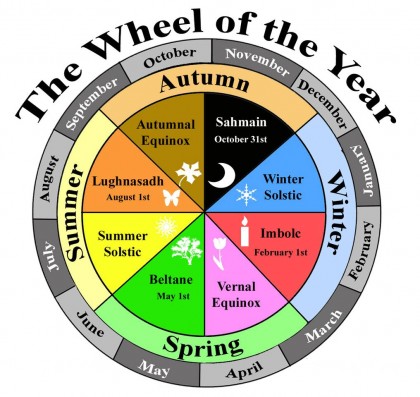
OK. So how does this correlate, if at all, with the Great Wheel? The Great Wheel divides into two halves, a fallow half beginning at Samain and ending at Beltane when the growing season begins. That’s roughly from October 31st to May 1st on the Gregorian calendar, but of course the reality varies by latitude and altitude. The key thing to consider here is a growing time, a time of vitality and, not only vitality, but vitality created from the inanimate materials of soil, air and sun followed by a fallow time when plants die back, when the animate returns to the inanimate.
This is a malchutian manifestation, I think, of the ascent and descent and ascent again of divine energy represented by the tree of life. Why? Well, until the divine energy passes through yesod and becomes real in malchut, it is hidden, invisible, just like the vivifying function of the soil and the air and the sun is hidden during the fallow time. Both represent the cyclical nature of things coming into existence from apparent no-thing, then returning themselves to the invisible, the hidden.
Whereas the summer solstice could be seen as a major holiday for malchut, so the winter solstice could be seen as a major holiday for the keter and the ein sof. The summer solstice is a celebration of growth and fertility, the winter solstice a celebration of darkness and hiddenness, the depth (or height) of the nine sephirot and their crown.
Now it could be said, and I have said, that the Great Wheel represents cyclical time and that the notion of time itself is a matter of mental organization for the human mind. It could also be said that the very nature of the Great Wheel limits it to malchut since it expresses the seasonal changes of our particular planet. I believe, at least right now, though, that the Great Wheel instead reveals the universal nature of life on our planet, in malchut, as a simulacrum of the energy paths of the tree of life.
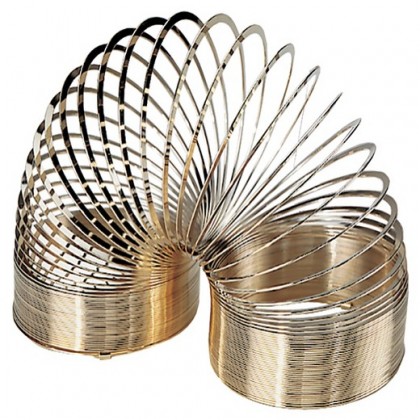
The slinkys I will hand out, tiny one-inch ones, illustrate what I mean. The Great Wheel turns through one year, one orbit around the sun, then repeats and is, in that, cyclical and not chronological. But, if you link this orbit to that one we get a spiral as our rapidly moving planet follows our solar system around the galaxy at unimaginable rates of speed. The Great Wheel then extends in space, in a spiral, this year’s revolution becoming another while the whole planet and its sun captive neighbors push further and further around the Milky Way. And, just to add complexity, as the whole galaxy moves, too.
Finished chapter 1 in the Hebrew text, about half way through chapter 2. My plan is to keep working on the chapters until I’ve finished. The Hebrew class itself is a bit chaotic, lots of great information, but they’re teaching Aleph and Bet, beginners and next level, together. I’m out to sea at least part of the time. OK. Most of the time. Still, I can now recognize shabbat in Hebrew and pronounce five letters. Slooooowwww. Next class with Joann Greenberg at 4:30. Two weeks ago Bill and Tom were here for the class.
Nut, similar to this
We hung some art in the guest room. Two batik pieces that Mary brought us from
Bali and an image on papyrus of Nut that I bought on the sidewalk outside the British Museum. Kate’s thinking a gray blue for the guest room. She’s beginning to get her interior designer on.
More Jennie’s Dead. Last two scenes were in Selma, Alabama and Denver. High intensity cardio yesterday, slow and long today. New workout tomorrow.
Centurylink comes today to install our new 60 Mbps service. This one requires some work between the box and the house, then a new modem, plus some inside changes at the jack, too. Faster is better and it’s much stronger wifi. That’s good because I bought the grandkids a tv for Hanukkah and it will get its reception with a Roku stick inserted into its USB port.
Kate and I have begun an ongoing effort to help her manage the fatigue which Sjogren’s, rheumatoid arthritis, sarcopenia and reduced available oxygen cause her. We have to be smarter about what mix of activities she does and what ones I do, yet we can’t set up a situation where she becomes housebound. Not good. A delicate balance. Right now we’re looking at the week ahead and trying to imagine how the week will challenge her, then planning for that. A transition to a new phase of life for us.
No more metaphysical presleep wanderings. Just to sleep, to dream, to wake again. Grateful each morning for that. Grateful too for the food in our fridge, the wonderful house Kate found, Kate, the dogs, friends near and far, Orion in the sky this morning, the bare aspen moon showing itself through a faint curtain of clouds last night.
Worked on middah summaries for Beth Evergreen’s newsletter, the Shofar. I’m honored to be asked to provide these but also a bit shy about it. A middah is a soul characteristic, an aspect of character itself. They can be identified, learned, then acted upon in measured ways. Here are the two unedited pieces I turned in yesterday.*
*Middah of the month Tevet (Dec. 19-Jan.16th
Zerizut=diligence, zeal, enthusiasm
Why focus on the character trait of enthusiasm? “The only thing necessary for the triumph of evil is for good men (sic) to do nothing.” Edmund Burke
Rabbi Luzzato in his Path of the Upright, studied by the Thursday mussar group for the past year, suggests a surprising antidote to the laziness which Burke adjures. Gratitude.
Alan Morinis, in the essay linked below says, “…recognizing the good in your life can dissolve the inner conditions that give rise to laziness. And when laziness falls away, the natural inclination of the heart is to be active and energetic can flow unimpeded.”
He suggests:
Spend five minutes writing down gifts received in the last few days
Keep a gratitude journal
Put insights in an Accounting of the Soul Diary
For more, follow this link: Mussar Institute Zerizut
Midah of the month Sh’vat (Jan 17 – Feb 15): Ometz Lev = Courage (courage of the heart)
“It was the result of God’s wisdom that the Israelites were led about in the wilderness until they acquired courage.” Moses Maimonedes, Guide to the Perplexed, part 3 32:2
Middah require cultivation, perhaps especially in situations where fear and uncertainty predominate. We might think it took ometz lev to leave Egypt, but Maimonedes suggests it was the wilderness where the former slaves acquired courage.
“Who is the mighty one? He who conquers his impulse, as it says, “slowness to anger is better than a mighty person and the ruler of his spirit than the conqueror of a city.”” (Proverbs 16:32). Pirkei Avot 4.1
Courage of the heart is an inner matter. “A man walking on the road saw a pack of dogs and felt afraid of them, so he sat down amongst them.” Genesis Rabbah 84:5
What fear could you face today?
Who do you know as an example of heart-courage?
Who do you know who needs ometz lev in their life right now? How might you encourage them? “Chesed is to ometz lev as rain is to a withering plant.” Rabbi Sid Schwartz in his sermon, Profiles in Courage.
Not trying to do this, but last night, before I fell asleep the subject was space. The first three kabbalah classes are titled: soul, space, time. The other night I got caught up in the concept of time. I realize my thinking on these matters is probably naive relative to, say, astrophysics, but I’m trying thought experiments to come to my own understanding. I’m trying to read the book of the universe on my own, pursuing what Emerson called original revelation to us.
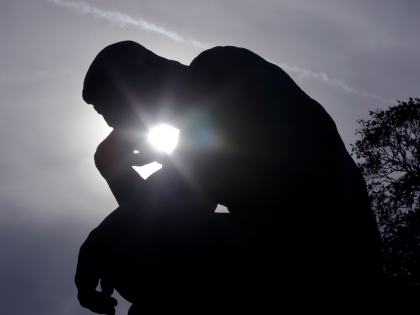
So here was the thought experiment on space. Imagine space as a large box. Or disc. Or sphere, whatever object. Now. Remove all the objects in it. All the galaxies. All the stars in the galaxies. All the planets. All the debris traveling anywhere. All the black holes. Everything. So now we have a large, empty universe. There is, I think, at this point, nothing but space. No thing.
Empty. No way to know where you are because there are no reference points. Only empty space. But. This amount of space is contained by the limits of the universe. (I’m pretty sure this experiment violates some way of understanding the universe. An edge to the universe seems difficult to comprehend, but let me have this small-ok, large-conceit.) Now we put back in all the stuff. The things. Right back where they were.
We still have the same amount of space. It was empty and now it’s filled, but the space itself did not increase or decrease. So, then space itself is not a property of the things, it is sui generis. In other words space itself is not the gap between objects, it has nothing to do with objects, since we had all of it still when the universe was emptied. So when we move objects further apart we are not creating more space, just as when we move objects closer together we are not closing off space. The amount of space is a constant.
This means, I think, that space as we use the term in day to day life is actually about relationship, not stillness and not emptiness. In other words the amount of space remains constant, yet we perceive space as relational, the gap between things. Space is used as a way of understanding relationships, actually, of perceiving other objects, because without space to differentiate objects everything would mush together to a somehow independent observer.
So try this, too. Imagine a square meter of space, imagine it in a place between galaxies. Now try to find it relative to another square meter of space. Nope. Can’t do that. Without objects to create points of reference space itself will not differentiate. That means that though space is vast and changeless, it can only come into conscious awareness when it is filled with objects, things. So no-thing can only be known in relation to some-thing. Space is relational, yet we don’t change it as we move through it. We can only understand, comprehend, perceive space as a gap between things. No-things, then, we might say, no space.
Does this mean that our original thought experiment fails? Does space exist sui generis or is it only about relationships, about perceiving? I’m inclined to say that space is not a thing at all because its most basic definition is undifferentiation, yet it is impossible for us to know space, anything really, if it cannot be differentiated from other things. Therefore space must not be a thing, but a matter of consciousness, some-thing that springs into existence when we see this in relation to that.
Oh, geez. I may have lost myself here. I’m going to post this and leave it for awhile. Come back to this at another point. I’m going to give this whole thought experiment some space.
And so. Thanksgiving 2017 has entered history. Though. Here’s what I thought about while falling asleep last night.
Working on my kabbalah presentation for December 6th, I’m trying to link up the Great Wheel and the Tree of Life. So, I got to thinking about time. The Great Wheel is a circle and marks cyclical time rather than linear. How to explain this to a chronos saturated worldview?
Here on Shadow Mountain the sun has risen again, Black Mountain is lit up and we can see easily. Daytime has come again, yet we’re in the same spot. Yes, this means that our spot traveled approximately 25,000 miles and has arrived back in the same position relative to the sun. That’s one day. That’s always one day. It’s not the “next” day; it’s the turning of a planet, very rapidly, around its axis. Today is a day just like what we call yesterday and what we’ll tomorrow, but in fact no time has “passed.” Instead we have experienced a physical phenomenon with illumination consequences.
Next. This month. A month marks itself out by the phases of the moon. Forget the calendar, which, confusingly, strings months together as if one month is different from the other. They’re not different. They’re simply the transit of our moon around its planet, changing its phase as presents different aspects to the sun and to our point on earth’s surface. That’s a month. And “next” month will be the same.
A year. Today, this morning, we are at the same point on earth’s orbit we were a year ago. This is true every moment of every day. A year is never completed, it is always underway, bringing us around and around the sun, always, as long as the sun remains its current size. (Yes, I know celestial mechanics can define all of these things much more precisely and that each day, month, year is also in transit as our solar system tracks along in its expanding orbit and our galaxy, and its local group and its super cluster also move at unbelievable speeds. This just ratchets up the thought experiment to cosmic levels, doesn’t change the point.)
In a year the amount of the sun’s energy shining on a particular, let’s say three meter, patch of land changes due to the earth’s current 23.5 degree tilt. This change in energy per three meter square alters the temperatures which in turn drive seasonal changes. The Great Wheel celebrates those seasonal changes, especially in the temperate latitudes, as we go, again and again, through the cycle of growth, harvest and fallow time. This is not a “new” fall; it’s the same season we had last year at this point on the earth’s track around the sun.
So. Each day, each month, each year, each season is not sequential to anything but the human mind. We think of history as in the past, we think of the future as somehow ahead of us, yet each historical occurrence happened on a day, in a month, in a year, not one in the past, but one just like the ones we’ve been through to get this Black Friday. The same will be true of the “future.” The sequencing, the marking of chronological time, is a trick of the mind, a need we have to organize space as if it passes along a linear track, one thing in front of the other, but no. We always only have this day, this time of the month, this point in earth’s orbit, all of which repeat and repeat and repeat and repeat.
I know, it took me awhile to fall asleep.
The tree of life, the kabbalist’s notion, posits a continuous act of creation with divine energy pulsing up and down the tree of life, from the crown, keter, to the physical world, malkuth, passing through the three triads of intellect, emotion and instinct. This understanding does not require chronos as the act of creation never ends and travels along a process of instantiation, into malkuth, and then back up toward the unity of the ein sof, up and down, up and down, until somehow God is repaired.
In the way I’m thinking about it now, the link between the Great Wheel and the Tree of Life goes like this. A day divides into light and dark, a month into new moon and full moon, a year into a fallow time and a time of vitality and growth. Likewise, a human life divides into a time of vitality and growth followed by a period of declining physical strength, then death. Each life not prematurely ended by trauma or disease, follows this path, not just human life.
Just so the seasons. Just so the month. Just so the day. Just so, I think, the flow of divine energy up and down the tree of life. As it becomes instantiated in malkuth, divine energy becomes actual and experiences a time of vitality, a time of being. Note that this applies to the inanimate as well as the animate. Our sun, our planet, Shadow Mountain all have ends, too, a period of existence in their current form that will, as changes occur, cause them to wink out, send their material essence back into the pool of material from which they started.
The Great Wheel is a metaphor for this cyclical reality, one built into the nature of our universe. Matter goes through a fallow time, then a time of growth and vitality, only to return to a fallow time where it can pass back into new forms. This is divine energy on its way up and down the tree of life, winking on, then off, traveling from the physical world which we know, back to the source of matter found in the crown of ongoing creation. Then, back down again.
Yes, that’s what I thought about on my way to dreamland last night, Thanksgiving night.
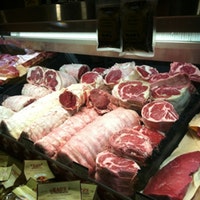
The capon is in the house, 7.8 pounds of frozen, atesticular rooster glory. Kate and I went to Tony’s Market yesterday, Gertie and Rigel in the back. Tony’s is the sort of grocery store where the pounds fly off the shelves and around your waist even before you check out. It’s a gourmet shop, full of Devon custard in a can, various pickled vegetables, cases filled with ahi quality tuna, plump white scallops, seasoning rubbed filet mignon, frozen bearnaise, hollandaise, au poivre sauces made in house, expensive salami, and puff pastries created with only filo dough and powdered sugar. One of those ten minute super market sweeps from the 1960’s would yield a cart full of scrumptious and clock in well north of a thousand dollars. A good place for holiday shopping.
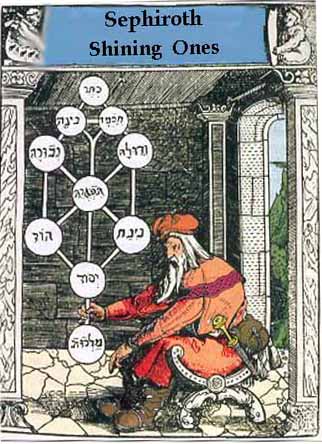
I spent time before the trip to Tony’s working on my kabbalah presentation for December 6th. This will take some doing since kabbalah is a quintessentially Jewish discipline and I want to focus, somehow, on the Great Wheel. According to the Tree of Life, the sephiroth (spheres) arranged as in this illustration reveal a path by which the sacred becomes actual and the actual becomes sacred. The bottom sephirot malkuth is the world which we experience daily, the place where all the power in this universe (there are many others), funnels out of the spiritual and into the ontological. It is also the realm of the shekinah, the feminine aspect of god. In kabbalistic terms malkuth is the place where the limits of things allow the pulsing, living energy of the other spheres to wink into existence.
In one sense then the Great Wheel, focused as it is on this earth, can only be of malkuth, that is, of the sphere of the actual, the bottom circle below the hand of the kabbalist in the illustration. In another sense, since all sephiroth contain all others, what is of malkuth must also be of the others, the spiritual dna of the whole universe. So, if we take the Great Wheel as a metaphor for the creating, harvesting and ending of life, a cycle without end, then the Great Wheel is, too, a Tree of Life. That is, the inanimate becomes animate, the animate lives, then dies, returning its inanimate particulars to the universe which, through the power of ongoing creation, rearranges them in living form so the cycle can go on.
The Great Wheel has a half circle for the growing season and a half circle for the fallow season. It can be seen as half day and half night. It can also be seen as the cycle of the virgin goddess who, impregnated by the god, gives birth to the growing season as the Great Mother and then, during and after the harvest becomes the crone. The life cycle of each of us.
Not sure yet how I’m going to articulate this for the class. Still in the gestation period.
After a very busy week, a good busy with friends and Hebrew, kabbalah and time with Kate, yesterday was a rest day. Wrote, did my workout (which takes a while), napped, had a wonderful lamb supper cooked by Kate, who’s a wizard with meat. Watched some more of the Punisher on Netflix. On seeing that on the TV as she went to bed Kate said, “I don’t like your choice of programs.” “I know,” I said. Eating red meat and watching TV are hangovers from my Indiana acculturation, neither of which would I recommend to my children or grandchildren, but which I also thoroughly enjoy. No excuses.
Admitting to liking television in the crowds in which I tend to run is like admitting you enjoy belching or farting in public. Declassé. And it is, I suppose. My rationale (or, perhaps, as is often the case with rationales, my rationalization) is relaxation, in particular relaxation from a day usually spent in intellectual and physical activity. I love stories and TV, especially right now, is full of good storytellers who use visuals to enhance their storytelling. I’m sure there’s a sophisticated psychology explanation for this habit, but TV serves a purpose in my life. So there.
Thanksgiving this week. I’ve got a Martha Stewart recipe for capon with pancetta and fig stuffing. Which, of course, requires finding a capon, a mystery meat, as I said yesterday, to Colorado butchers. Tony’s Market. I ordered one and I’m going to call them today just to make sure it’s really coming. I did try to find a capon on which to experiment, but the only one I could find was $63.00. Ouch. Thanksgiving will be the experiment.
I really like cooking, used to do a lot more. It requires mindfulness and produces a meal for others to enjoy. Just popping up from my days of anthropology: The Raw and the Cooked, by Claude Leví-Strauss. In this book the French anthropologist talks about the binary of raw food to cooked, prepared food, seeing the development of cooking as fundamental for the human species, a key movement leading toward civilization. (I’m not going to go into it here, too complex, but if you’re interested in dialectical thinking, the raw-cooked distinction is an example of binary opposition, a distinctively French version of dialectical thought which underlies Leví-Strauss’s idea of structuralism, a short introduction to it is here.)
My point in this last paragraph is that cooking is central to being human; so, engaging in it, at any level, links us directly to the story of human evolution. In that way we can look at Thanksgiving, or any big holiday meal, as linking a key step in our change from merely animal to animal with culture, to another key step, the abstraction of particular days, the elevation of particular moments in time, into holidays. The other night I realized that for dogs all days are the same no Tuesdays or passovers or superbowls, no Guy Fawkes or Mexican independence days, rather sequences of day and night, with food and friends, human contact.
We’re not like dogs in that fundamental sense. As Emerson observed, “The days are gods.” Another binary opposition is the sacred and the profane, like the holy and the secular, ordinary time and sacred time. We imbue, out of our speculative capacity, the passing of time with certain significance. The day we were born. The yahrzeit notion in Judaism, celebrating the anniversary of a death. A day to celebrate the birth of a god, or to remember a long ago war against colonial masters. We identify certain days, a vast and vastly different number of them, as new year’s day, the beginning of another cycle marked by the return of our planet to a remembered spot on its journey.
When we merge our speculative fantasies with the chemistry of changing raw food into a beautiful cooked meal, we can have extraordinary times. The natural poetics of wonder join the very earthy act of feeding ourselves to create special memories. Very often on those days we gather with our family, a unit that itself memorializes the most basic human purpose of all, procreation of the species. We don’t tend to think of these most elemental components, but they are there and are sine qua non’s of holidays.
So, cook, pray, celebrate. Laugh. With those you love. If you care to, take a moment to consider these amazing things, too. That we know how to transform a neutered rooster into something delicious, something that will undergo the true transubstantiation, the changing of soil chemicals, the bodies of animals and plants into a human body. That we have the idea of Thanksgiving, or the idea of Hanukkah, or the idea of Labor Day and mark out a chunk of the earth’s orbit as special for those ideas. That we choose to gather on them with our small unit of humanity’s long, long ancientrail of development and critical change and doing so honor all of these elementals.
 Wednesday, adult Hebrew at 4:30 with Rabbi Jamie. Then, kabbalah at 7 p.m. Thursday. Mussar at 1 pm. Then mussar leadership group at 6:30 p.m. Result? Both nights up past my bedtime and an 8 a.m. rising this morning. Oooffdah, as we would have said back in the land of the frozen mustache.
 Judaism is humane and that aspect of it appeals to me. A lot. Example. Rich Levine, the lawyer who did our estate documents, attended the MVP meeting last night. He had, he said, with his brother just unveiled his father’s gravestone. Is this a common custom, I asked? Yes, he said, most if not all Jews follow it. A loved one is buried, then not more than a year later, a gravestone is erected. The wait considers a journey the deceased needs to make that can last as long as a year. But, Rich said, you don’t want to make them think that you think it would take them a whole year, so usually the gravestone goes up somewhere between 10 and 11 months after burial. Much less fraught then.
 My sweetie took me out to lunch at Okinawa Sushi to soothe me. Rigel also ate the mustache trimmer I had received and unboxed only an hour before. So, double aarrggh. We may have to consider where we deposit things. It’s possible Rigel is a neat freak advocating for a clutter free home.
 CC’s work with Maslow sparked a conversation about the difference between human agency in moving up the pyramid as opposed to the necessity of God’s agency. Within my worldview this is a false dichotomy, but the conversation was fruitful. It’s a false dichotomy to me for two reasons. 1. How else would God move someone up the pyramid save through human agency? 2. Since I see energy moving up and down the tree of life, from the invisible to the visible and back through the visible to the invisible, this energy flow is the key agency involved, imh. I might call it chi, or prana, or l’chaim. Could also call it divine or vitality or consciousness. I don’t see that adding God to the conversation accomplishes much.
 In the end I felt heard and honored for my understanding of the relationship between the cyclical turn of the seasons and the meaning of the tree of the life to kabbalists.
 Since I have long believed that the world’s religions are philosophy and poetry accessible to all, I remain eager to learn from them. Since I know their claims cannot all be true, I choose to remain outside them, yet to walk with them as part of my journey. During college, when fellow students were turning to Asian faiths: the hare krishnas, zen, tibetan mysticism, I believed that the religious traditions of the West were most culturally attuned to the American mind. I still believe that and find Judaism and its traditions and thoughts, like Christianity, trigger a depth of understanding I don’t get from the Asian faiths.
 Think I’ve figured out my kabbalah presentation. Still a bit rough around the edges but that’s going to be part of it. It’ll be a how to think with the tree of the life as a touchstone example, using the Great Wheel as an instance.
 This a crucial difference between a secular, scientific world view and a mystical one. Entropy posits, as I mentioned in a post not long ago, that all things die, including death, I suppose. The Great Wheel and the tree of life challenge that grim metaphysics with an alternative.
 God became fractionated during the tzimtzum, the contraction of divine energy that made the finite possible. This idea is still difficult for me, but I’m just accepting it for the purposes of this presentation. During the tzimtzum the infinite light, ohr, tried to manifest in the finite, filling the space created by the contraction, but the vessel, things, (ein sof = no-things, infinity) could not hold it and shattered. That shattering created all the elements that now make up our universe. (and other universes, too) Trapped inside all of these elements is the ohr. The ascent and descent of divine energy, from the keter to malchut and backup through the sephirot to the keter from malchut, is the way the ohr will once again join with the infinite. How? No clue.
 This is a malchutian manifestation, I think, of the ascent and descent and ascent again of divine energy represented by the tree of life. Why? Well, until the divine energy passes through yesod and becomes real in malchut, it is hidden, invisible, just like the vivifying function of the soil and the air and the sun is hidden during the fallow time. Both represent the cyclical nature of things coming into existence from apparent no-thing, then returning themselves to the invisible, the hidden.
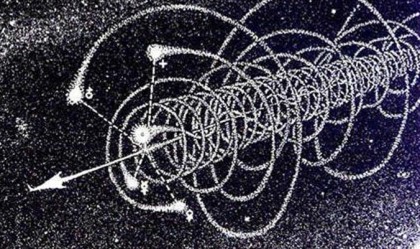 The slinkys I will hand out, tiny one-inch ones, illustrate what I mean. The Great Wheel turns through one year, one orbit around the sun, then repeats and is, in that, cyclical and not chronological. But, if you link this orbit to that one we get a spiral as our rapidly moving planet follows our solar system around the galaxy at unimaginable rates of speed. The Great Wheel then extends in space, in a spiral, this year’s revolution becoming another while the whole planet and its sun captive neighbors push further and further around the Milky Way. And, just to add complexity, as the whole galaxy moves, too.
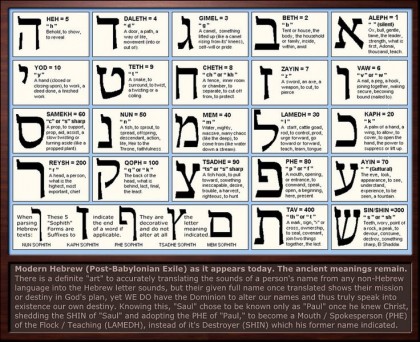 Finished chapter 1 in the Hebrew text, about half way through chapter 2. My plan is to keep working on the chapters until I’ve finished. The Hebrew class itself is a bit chaotic, lots of great information, but they’re teaching Aleph and Bet, beginners and next level, together. I’m out to sea at least part of the time. OK. Most of the time. Still, I can now recognize shabbat in Hebrew and pronounce five letters. Slooooowwww. Next class with Joann Greenberg at 4:30. Two weeks ago Bill and Tom were here for the class.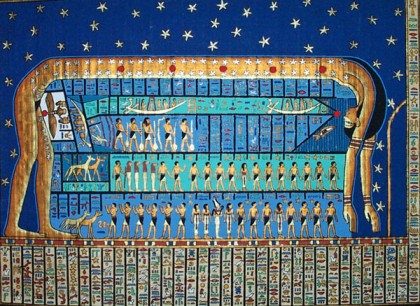
 Kate and I have begun an ongoing effort to help her manage the fatigue which Sjogren’s, rheumatoid arthritis, sarcopenia and reduced available oxygen cause her. We have to be smarter about what mix of activities she does and what ones I do, yet we can’t set up a situation where she becomes housebound. Not good. A delicate balance. Right now we’re looking at the week ahead and trying to imagine how the week will challenge her, then planning for that. A transition to a new phase of life for us.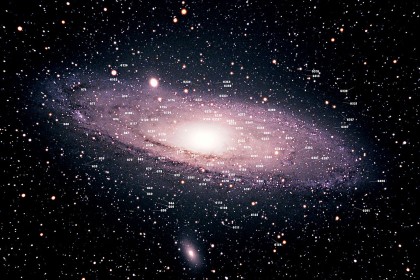
 Empty. No way to know where you are because there are no reference points. Only empty space. But. This amount of space is contained by the limits of the universe. (I’m pretty sure this experiment violates some way of understanding the universe. An edge to the universe seems difficult to comprehend, but let me have this small-ok, large-conceit.) Now we put back in all the stuff. The things. Right back where they were.
 This means, I think, that space as we use the term in day to day life is actually about relationship, not stillness and not emptiness. In other words the amount of space remains constant, yet we perceive space as relational, the gap between things. Space is used as a way of understanding relationships, actually, of perceiving other objects, because without space to differentiate objects everything would mush together to a somehow independent observer.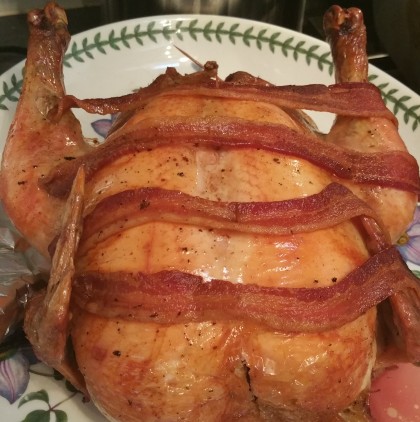
 In one sense then the Great Wheel, focused as it is on this earth, can only be of malkuth, that is, of the sphere of the actual, the bottom circle below the hand of the kabbalist in the illustration. In another sense, since all sephiroth contain all others, what is of malkuth must also be of the others, the spiritual dna of the whole universe. So, if we take the Great Wheel as a metaphor for the creating, harvesting and ending of life, a cycle without end, then the Great Wheel is, too, a Tree of Life. That is, the inanimate becomes animate, the animate lives, then dies, returning its inanimate particulars to the universe which, through the power of ongoing creation, rearranges them in living form so the cycle can go on.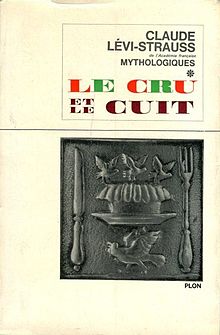
 I really like cooking, used to do a lot more. It requires mindfulness and produces a meal for others to enjoy. Just popping up from my days of anthropology:
  We’re not like dogs in that fundamental sense. As Emerson observed, “The days are gods.” Another binary opposition is the sacred and the profane, like the holy and the secular, ordinary time and sacred time. We imbue, out of our speculative capacity, the passing of time with certain significance. The day we were born. The yahrzeit notion in Judaism, celebrating the anniversary of a death. A day to celebrate the birth of a god, or to remember a long ago war against colonial masters. We identify certain days, a vast and vastly different number of them, as new year’s day, the beginning of another cycle marked by the return of our planet to a remembered spot on its journey.
 When we merge our speculative fantasies with the chemistry of changing raw food into a beautiful cooked meal, we can have extraordinary times. The natural poetics of wonder join the very earthy act of feeding ourselves to create special memories. Very often on those days we gather with our family, a unit that itself memorializes the most basic human purpose of all, procreation of the species. We don’t tend to think of these most elemental components, but they are there and are sine qua non’s of holidays.
.jpg" title="Fair use of copyrighted material in the context of The Raw and the Cooked">Fair use</a>, <a href="https://en.wikipedia.org/w/index.php?curid=45649279">Link</a>)