Category Archives: Dogs

Doubled Vision

8/11/2013   Lughnasa                                                             Honey Moon

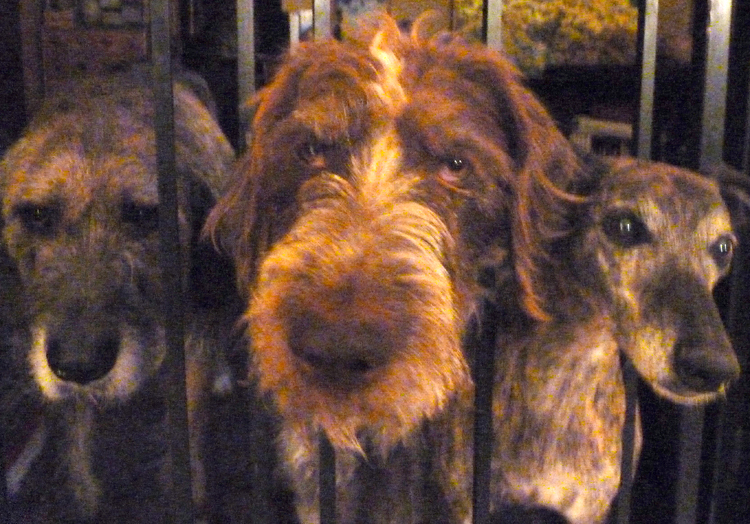
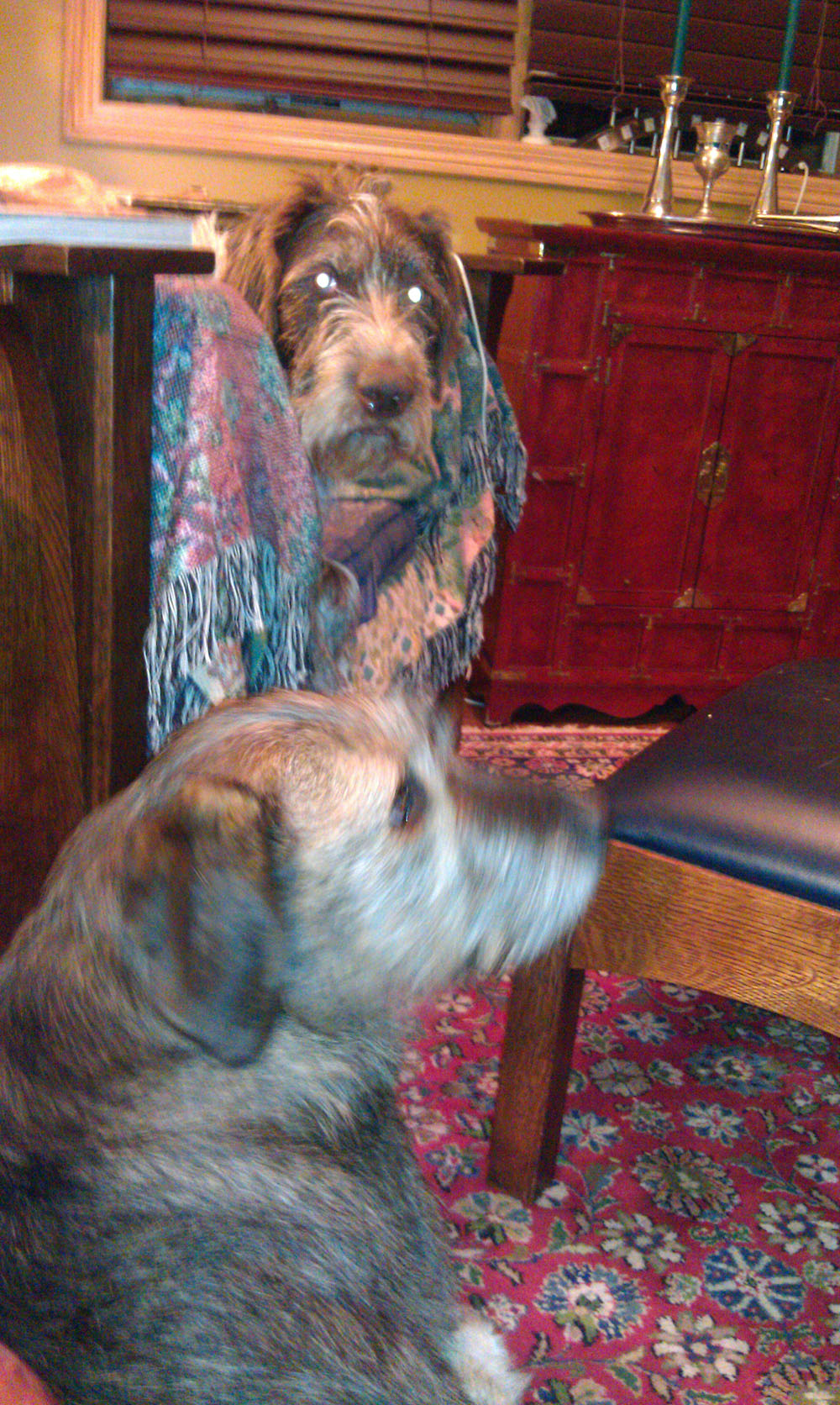
Rigel, who weighs about 120/130, likes to come up to my chair while I’m reading, then put first one leg, then another in my lap.  Her head, now close to my chest, looks up at 2012 05 01_4255me, then she rests it there.  Not long.  But for a bit.  How long she stays in my lap varies, usually not more than a minute, if that.
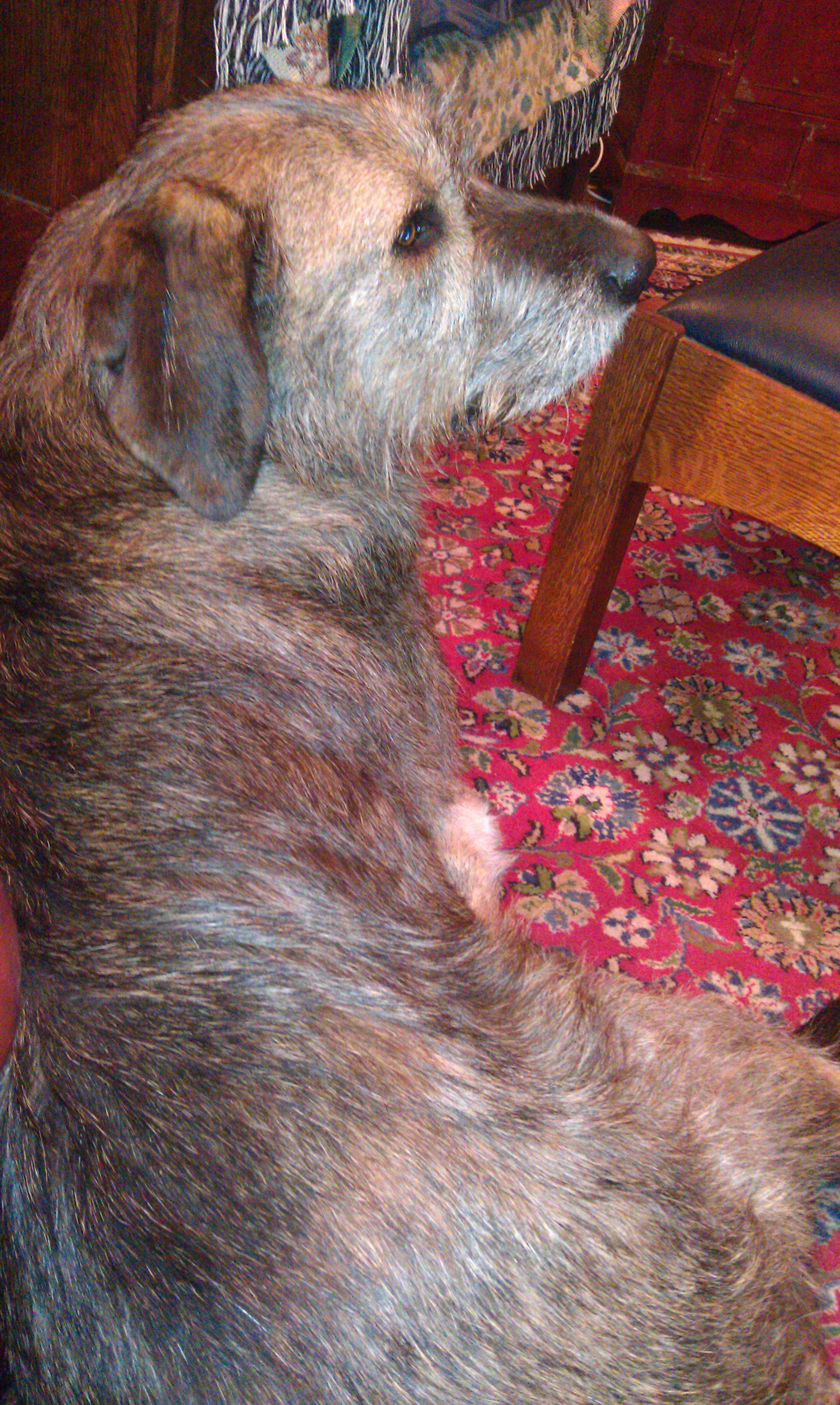
In years before I might have shrugged her away, wanted to get on with my reading, not realized the precious moment that was happening.  With Tor, our great yellow Irish Wolfhound, a true sweetheart, much like Vega, Rigel’s sister, I began to have a doubled vision. No, not double vision, but doubled.  I would see Tor, smiling at me from the carpet, and I would see Tor dead, lying stiff and lifeless.  This may seem gruesome, and perhaps it is, but it comes from having experienced the deaths of so many dogs.

The phrase, how terrible it is to love something that death can touch, had become a present reality for me.  This doubled vision, a long and painful lesson taught to me by so many dogs, has changed my life.  When Rigel comes to visit in my chair now, I see the moment for what it is.  A time that will never come again.  A time that means everything, all of it, right in that instance.

In the way of tea the Japanese tea-master takes unbelievable pains to ensure that the tea ceremony you attend is a once in a lifetime experience, ichigo ichie.  The tea-master chooses art, flowers, tea cups, fresh water vessels, waste water vessels, foods and candies all with you in mind.  The Japanese tea-ceremony reminds in an elegant way, that every moment has the potential to be a once in a lifetime moment.

With the giant breed dogs, whose lives are so short, each moment is so clearly once in a lifetime.  They have taught me to cherish those ordinary moments, a dog crawling in my lap, as a time of unique tenderness.  This doubled vision, though I don’t encourage it necessarily, has taught me that it is this moment, this time, right now that is the time we have together.  Much better to embrace it than wish for it after death has already come.
The First Harvests Continue

Lughnasa                                                                      Moon of the First Harvests

Jobs I would not want to have.  Commercial harvester of either currants or gooseberries. Currants bend you over and twist your arms and legs to get into position.  Gooseberries do all of that, plus the plant fights back with alien-simulating probes.  I’m going to find out what the evolutionary advantage of spines are.  We have raspberries, gooseberries and black locust, all spiny.  The gooseberries and the black locust put off humans and the raspberries are no fun.  What’s the point?  Ha, ha.

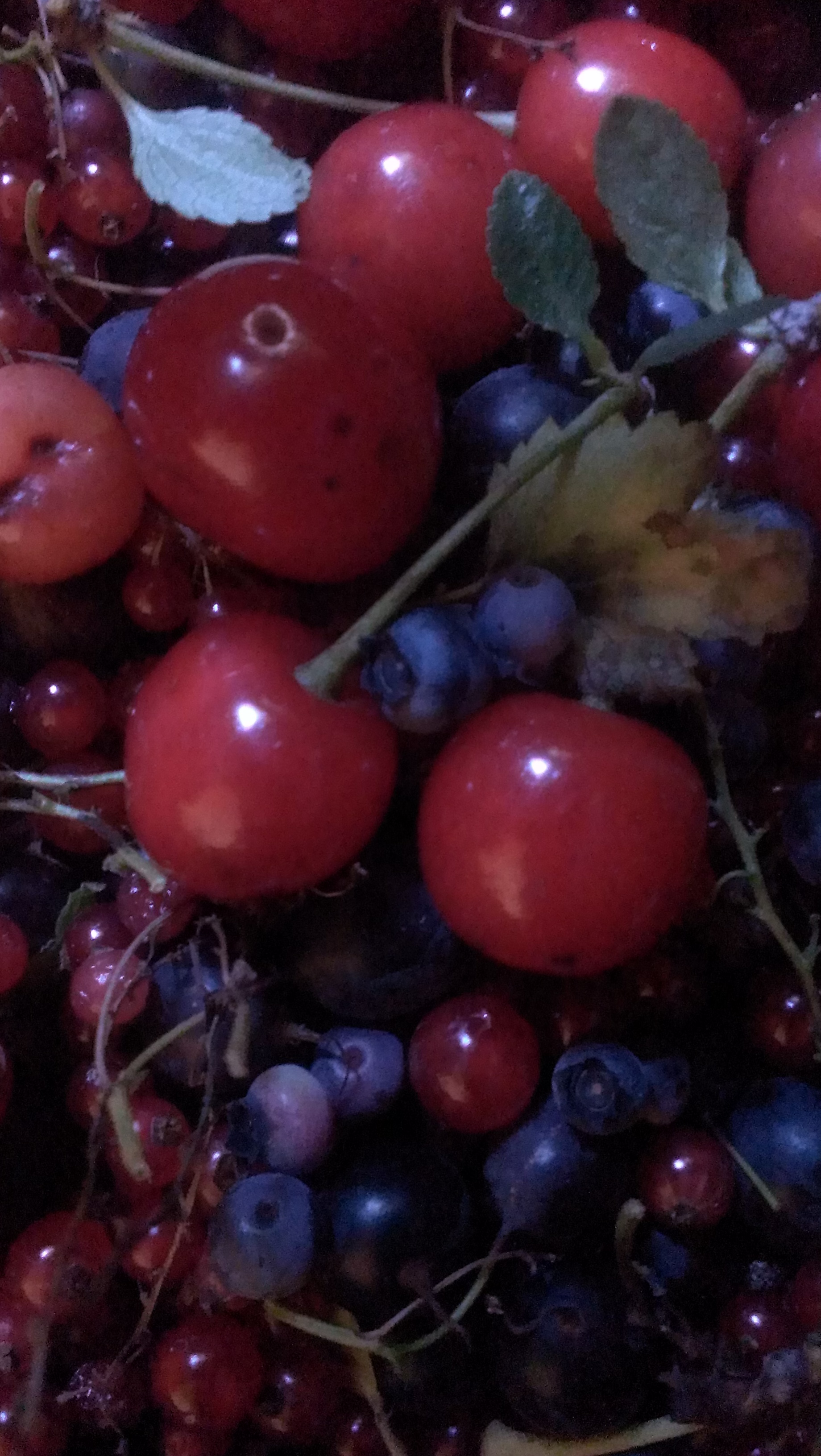
There were enough currants, gooseberries and the last of the cherries and blueberries for Kate to make what she calls tartlets.  These are carb light, much more so than pies and very tasty.

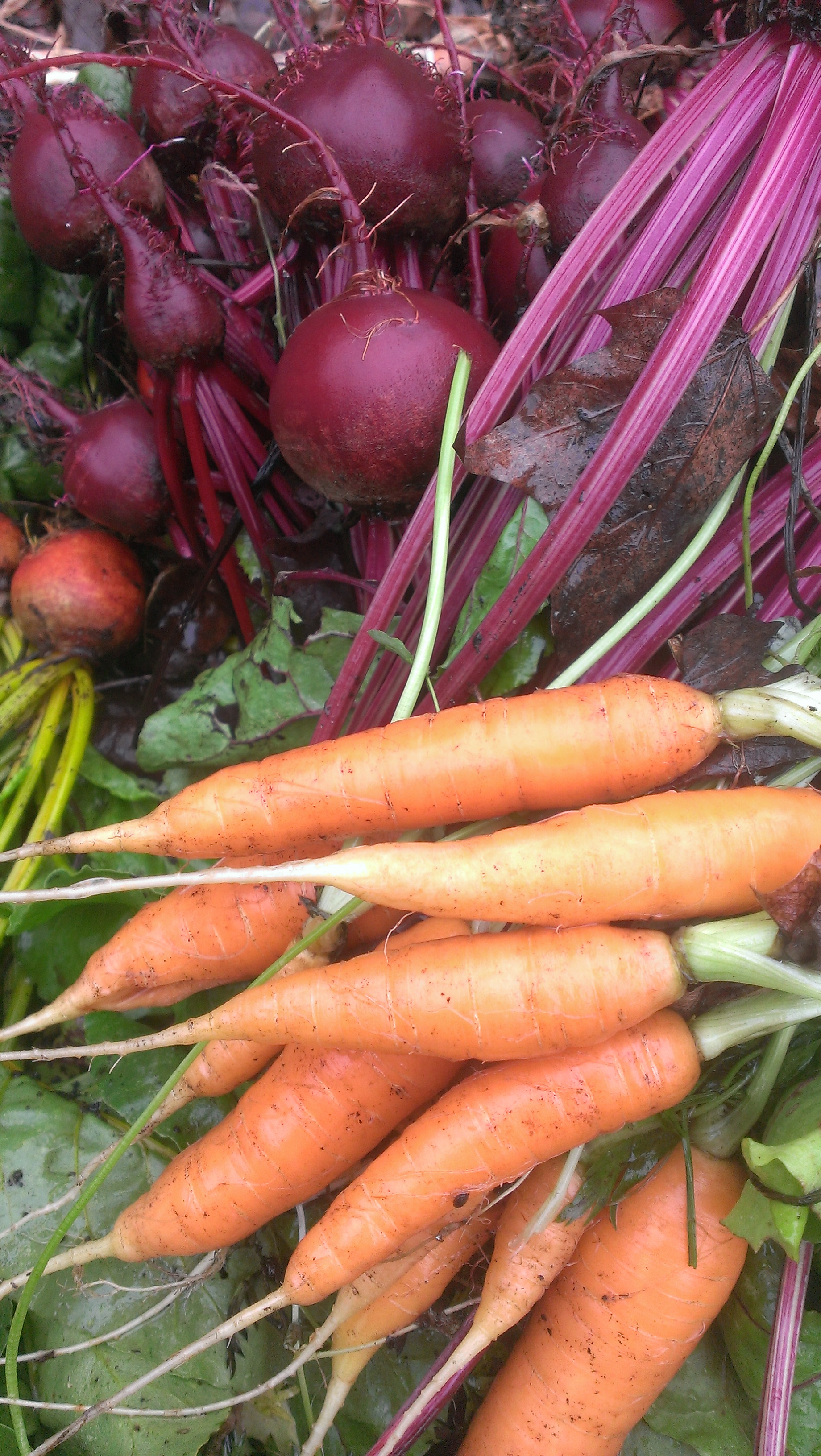
We’ll probably pull more carrots and beets today or tomorrow, too.  Today or tomorrow as well I’m going to check the honey supers, just to see where are and I may head out to Stillwater to get a mite treatment.  This is an organic method that is food quality so there’s no negative effect on the honey.  I’m hoping this will increase my chances of over-wintering this strong colony.

The new bee area will require some chain saw work, creating both space and wood for the fire pit.  I’m thinking, after writing up Lughnasa yesterday, that a harvest bonfire on the fall equinox (Mabon) would be fun.  I’ll talk to Kate and see what she thinks.  Meanwhile we adjust to a smaller house, a leaner pack.

One example, then I’m done.  When Kona was young, we had her tested by a cardiologist who found a heart murmur.  They prescribed vasotec twice a day.  We gave it to her wrapped in sliced turkey.  I’ve mentioned this here before.  Since dogs understand fairness, that means everybody gets a slice of turkey, before bedtime and after the morning feeding.  Kona is dead now so there is no longer a reason to continue the turkey aside from the fact, and a big deal, that all three dogs have never known any bedtime ritual that doesn’t include the turkey.  We’ll keep on with it.  A good example of how traditions get started.


Kona

Summer                                                                  Moon of the First Harvests

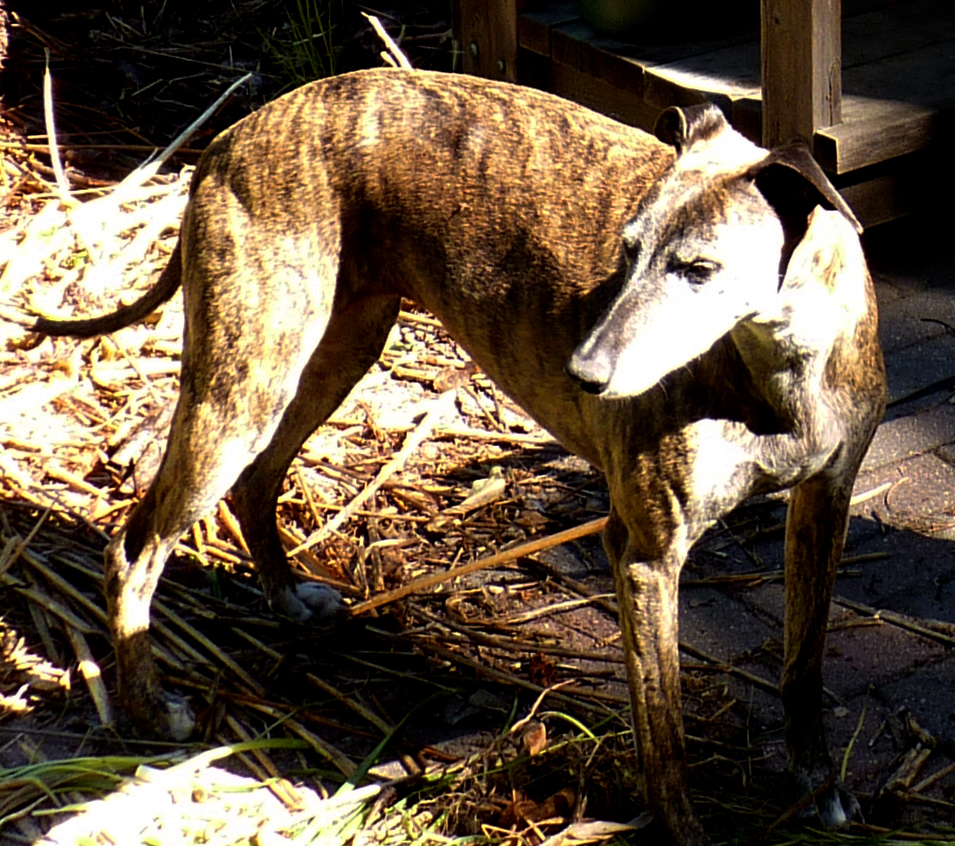
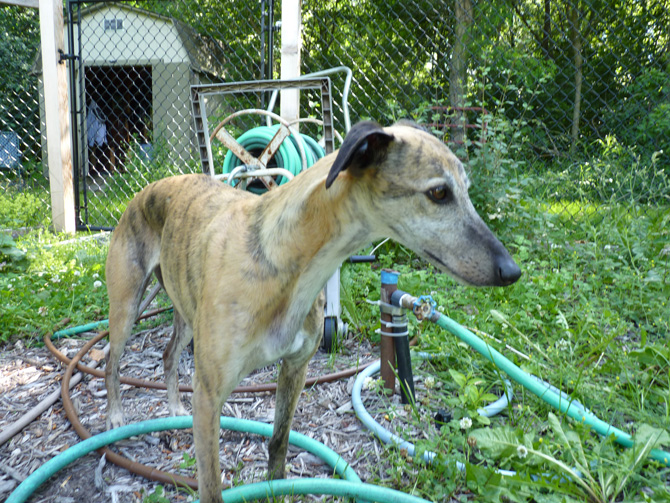
Kona died this morning.  Both Kate and I spent time with her just before she died.  She was alert and responsive to the end.  She died knowing we loved her and in the crate she knew as her safe place.

(Kona)

We cried, both of us.  Yes, in spite of an end obvious long ago, the actual loss still opens a chasm between the living dog and the dead one.  That chasm represents the never will agains.  And those made me cry.  I would never again feel her nuzzle into my hand.  Never again see her smile.  Never again see her run the trails in our woods.

Her corpse no longer retained her; it was a symbol now, not a reality.  This is a wonder to me.  When I spoke with her about a half hour before she died, she looked at me, put her nose in my palm, caressed me with her muzzle.  Kona was 100% there.  Then, she was gone.  The light left her eyes and her body no longer moved.

The wonder is this, that life has a magic about it, seen most clearly after it is lost.  That which was Kona was there, then not.  Yes, her memories live on, that’s true.  But Kona does not.  The personality, the somewhat aloof I’m living life as I intend to personality of the sighthound, has vanished.  Just like that.

(Rigel, Gertie, Kona)

Life is a miracle, ordinary in its profusion and ordinary as long it exists, yet when it has gone, then we know.  So, each death gives us a moment to reflect on the precious gift we have.  The one carrying us forward into tomorrow.  A gift others give to us, too.  Each death is an opportunity to affirm and celebrate life and living.

Kona’s father was a whippet champion named Drum.  When we picked up Hilo and Kona from the breeder, the puppies and the parents were watching Animal Planet.  We brought them home and they began a series of escapes from the property, going under the chain link fence in pursuit of prey or delight, often both.

We held them on our laps when they were young.  Hilo would squirm, sit up, stretch, jump down.  Kona, the much larger of the two, would lie quietly, happy to be there.  

In her early days Kona was a predator.  I remember one day Kona came up on the deck, dropped something there, then ran back out into the woods.  The something was the still warm and clear eyed head of an adult rabbit.  Why she brought it to the deck I don’t know.   Over a long period Kona would kill rabbits and we would pick up the dead rabbits, put them in a plastic bag and dispose of them.  This never deterred Kona.  She just kept at it.

Hilo died three years ago of kidney failure and was never much of a hunter.  She liked to be with her people.  Kona kept to her self, finding places to sit nearby, sometimes with us, often not.  She kept her own counsel and determined what her day would be like, pretty much independent of us.

After her death this morning, I went out into the garden and sat on one of the raised beds.  Gardens heal.  Surrounded by life and life producing food, the cycle of life was concrete.  Kona fit into this cycle.   It helped me remember that at some point the light in my eyes will go out, too.  And, more.  That will be fine, it will fit into this cycle.

(Vega and Kona)

Kona had privileges the other dogs didn’t.  She would go with me into the garden, mainly because we could count on her not to dig holes in the garden beds.  She would also be outside on our brick patio with us because we could count on her to stay around the house.

She has been part of our lives for 12 plus years, as real and regular a part of our lives as we are to each other.  True she was a dog, but as a companion and fellow traveler on this pilgrimage she was with us, part of our pack as we were part of hers.

We travel on now with one less pilgrim immediately in our presence, yet at the same time, the whole pack with us, all 17 dogs, two parents and two sons.  Amen.


Primal

Summer                                                                 Moon of the First Harvests

Kona lives though her mobility has been greatly diminished.  She is, however, alert and responsive.  We get down with her and talk to her on a regular basis, letting her know that we love her and are with her in this part of her journey, too.  It’s the light in her eyes, the Kona-ness of her presence in those eyes, I think, that forces me not to put it out.  At least that’s a big part of it.  Another part is not breaking trust.  She has trusted me to care for her all these years.  To care for her.  Not kill her.

If you differ with me on this, I understand.  I can see how caring might reach to euthanasia, the whole control around end of life debate has many testimonies to that effect, even in humans.  Why I feel so strongly on this is not clear.

It’s strength oddly enough reminds me of one other moment in my life, the one in which I knew I needed to be a parent.  It was a strong, primal feeling, dominant.  The need became overriding, pushing other concerns into the background.  It wasn’t compulsive, at least I don’t think it was, but it was so urgent.  The best word I can use to describe it is primal, that is, it came from a part of me so deep that it bypassed subconscious and conscious thought to arrive full borne in my psyche.

The same process has surfaced in me around euthanasia.  I have no reasons, no arguments, no explanations.  For me, it is forbidden.

Just to be clear, really really clear: there are no religious or political sentiments attached in either case.  This is something from the veldt or the cave.

Sew What

Summer                                                          Moon of the First Harvests

Kate’s in Anoka at an all day quilting retreat, sewing and talking.  She took along fat quarters with Halloween themes, so she’s feeling her way into the fall season, too.  Her sewing day friends come to these retreats as have a few people she knows from the now defunct Fat Quarter Quilting.  There’s skill building and a chance to get focused and make progress on a project.

The revision is on the last lap.  I’ll finish either this afternoon or tomorrow.  Then all those putzy things I mentioned a while back and I’ll be ready to move on for the time being.

Kona’s in serious decline now, most of what she eats feeds her tumor and she is listless.  This is when the vet advises euthanasia but I discovered with Buck, well over a decade ago, that euthanasia violates some primal norm in me.  So we keep our dogs comfortable, as comfortable as we can, hospice care or as near as we can replicate that, and wait with them as death comes.

Kona’s illness and decline has come when third phase issues are very present to me and at some point after her death, I plan to reflect on what she has taught me.  And all the others, too.

A Trip Into The City

Summer                                                             Moon of the First Harvests

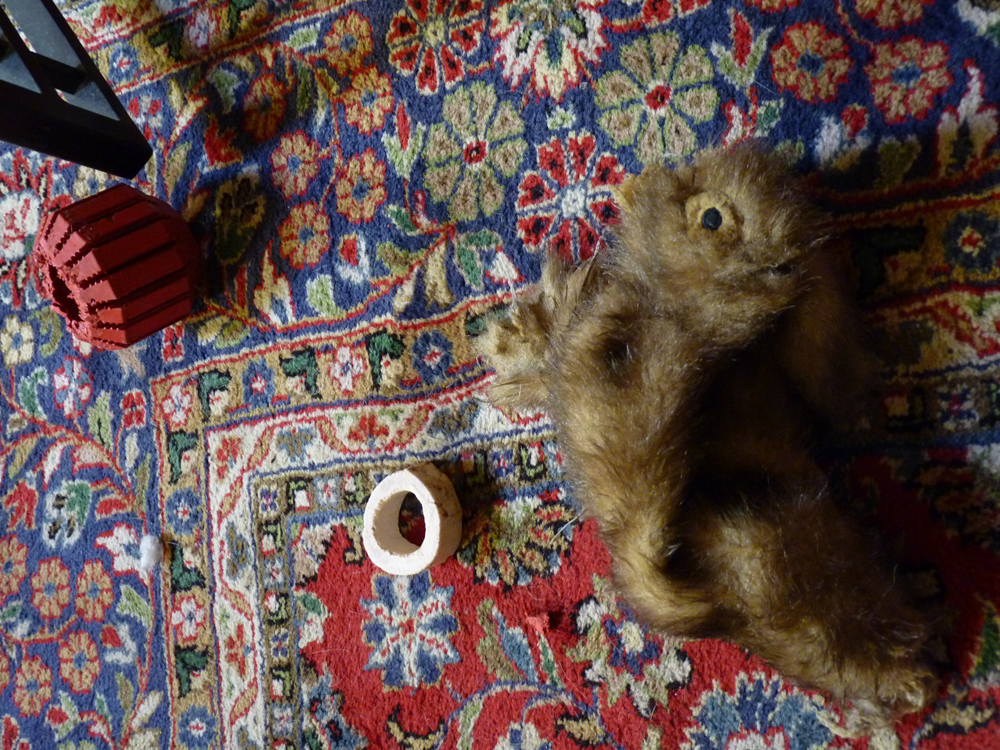
When I picked up our rug from American Rug Laundry, the guy said he couldn’t believe how much dirt he got out of it.  I told him, but I’m not sure it registered, that our dogs really, really like this rug.  All of them.  And they come in and lie down on it.  Roll on it.  Transfer the sand from the Great Anoka Sand Plain to it, deep in its fiber.  As he now knows.  Not many folks let dogs on their multiple thousands of dollars oriental rugs, I imagine.

(this rug.  with favorite dog objects.  the one to the far right is a stuffed squirrel.  a big hit.)

On the same trip I took a baby quilt in to Margaret Levin.  She’s due sometime in the next couple of weeks.  Says a lot about our society that she’s in her last term of pregnancy and still running the Northstar Chapter of the Sierra Club.  Kate makes lots of baby quilts. This one used cloth made from our neighbor’s mother’s stash.  When she died, it fell to Pam who gave it to Kate.  This particular cloth was from the 1930’s.

We talked about politics, of course.  That was my entré to the Sierra Club and what I did with them for 5 years or so.  I asked her if she has the same sense I do that a cultural shift has begun on global warming.  A positive one.  She said yes, but she also said the movement thought one was happening in the 1970’s, too.  Still, you add in a Democratic President and Senate, plus the changing demographics of the U.S. population and there could be real grounds for optimism.  Whether such a shift would happen soon enough to matter? Hard to tell.

Stopped by the Northern Clay Center as well.  It’s only a block from the Sierra Club. There are a lot of able potters represented there.  I’m in the market for another tea pot since I plan to return to brewing tea from tea leaves rather than tea bags when I start Loki’s Children.  A reward for finishing the third revision.  Didn’t find anything.  I plan to look on Sunday at a large pottery show, but if I don’t find anything I’ll head up to St. John’s and Richard Bresnahan.  I’ve wanted one of his teapots for some time.


Dogs

Summer                                                                    Moon of the First Harvests

OK.  Late July and the temp outside this am is 59 degrees.  And I approve this message.

Only one outside chore for this morning. Hardening the orchard fence against a Rigel invasion.  She periodically checks all the points where I’ve closed up the base of the fence. On occasion she finds one that has come undone.  Kate’s found her in the orchard twice in the last week.  I found the spot and wired a log across it, crude but reversible solutions.

(Rigel and Gertie)

She used to climb over the fence.  That’s when I added the electric fence.  She no longer does that.  Now her snooping follows the line where fence meets ground.  You might wonder why we want to keep her out of the orchard.  Both she and her sister Vega love to dig and when in the orchard they dig up soil mounded around the fruit trees.  Since this is where plant guilds beneficial to the trees live, we see the digging as unwanted behavior.

It’s been a bright full moon the last couple of nights and the dogs have been restless.  No, I don’t think moon rays make dogs crazy.  I do think they make navigating easier for night time critters and the dogs notice.  Then they whine to go outside.  Two nights ago in the wee hours for example.  We heard them bay in the woods not long after we let them go.

In other dog news Kona’s mass continues to grow.  We have her on two tramadols three times a day which seem to manage her pain very well.  She’s eating, moving around.  It’s hard to tell how long she has, but for now she seems mostly comfortable.

(Hilo)

Kate and I counted up the dogs we’ve had since our marriage in 1990.  17.  6 whippets:  Buck, Iris, Emma, Bridgit, Hilo and Kona.   8 Irish Wolfhounds:  Celt, Sorsha, Scott, Morgana, Tira, Tully, Orion and Tor.  Two Irish Wolfhound/Coyote Hound mixes:  Rigel and Vega.  1 German Shorthair:  Gertie.   The Wolfhounds are short lived, sadly.

Kate already had Buck and Iris when we married.  Buck, like Hilo and Bridgit, died early, around 10, while the others lived into their teens, as has Kona.

We don’t know yet the lifespan of Rigel and Vega, but since they’re hibreds I’m hoping for at least a few more years with them.  Gertie should live into her teens.

We’ve learned many things from having this many dogs as life companions, but the most telling one of all, to me, is the remarkable differentiation in personality.  Iris was a princess who didn’t like insects and chose to watch other animals rather than hunt them. Buck was a little daffy.  He loved to pick up somebody else’s kill and run around with it in his mouth, very proud.  Celt knew us, knew the pack and kept the other dogs in line.  He was our only true alpha, a regal dog who accepted all praise as his just due.

The others, all different, too.  Sweet Tully, who developed a predator/prey relationship with the whippets.  Tira, whose fear of thunderstorms led her into serious injuries more than once.  Sorsha, who took down a deer all by herself and loved to hunt.  Also stubborn.


Home

Summer                                                       Moon of the First Harvests

Home.  Back in the early 90’s when we lived on Edgcumbe Road in St. Paul, I felt a sense of homecoming when I crossed Ford Parkway.  I had crossed into home turf.  It’s taken a long while for a similar feeling to take hold here in Andover, but now, as I turn off Highway 10 onto Round Lake Boulevard, that sense of homecoming greets me.

Yes, it’s marked by Baker’s Square, Wendy’s, Conoco, Burger King and a Holiday station, but, they’re our franchises, there for our use.  The feeling gets even stronger going up Round Lake and begins to thicken at Round Lake itself where the water is on the left and the peat bog fields of Field’s Truck Farms are on the right.  Those fields are the remains of an old lake, eutrophied completely, a process that has advanced a good ways in Round Lake.

As I turn onto 153rd Ave NW, our property shows up about 1,000 feet in and I see the 6 foot chain link fence we had installed because Celt, our earliest Irish Wolfhound, climbed the four-foot fences to go greet passers-by on the street.  This particular fence was put in place after a derecho felled a large poplar and destroyed the one we had originally extended from four feet to six.  There is, too, the truck gate, 10 feet wide that we had installed because we wanted to get trucks from nurseries and our own trucks back onto our property.

The trees have grown up, grapevines have covered them, the prairie grass has morphed over time but has a pleasing current configuration.  On the six foot fence itself, the border of the prairie grass, grows our wild grapes.  Wild grapes that we pick in the fall for jams and jellies.

The driveway, the sloped driveway that creates its own stories in the winter, goes up to the three car garage that makes our house look as if we live as an adjunct to the garages.  On the right going up is a rusted and unused basketball hoop, an emblem, as at so many homes, of a boy, now gone.  In the garage itself we have a unique five stall dog feeding set up that we used when our pack was at its peak and we had five Irish Wolfhounds at once.

Do you see what I mean?  Home has an accretion of memories, memories attached to physical things like lakes and peat bogs, fences and basketball hoops.  This is not somebody else’s memories but our memories, our family’s memories.  It is those memories, those thick layers of past embraced constantly in the present, that make a home.

Inside the house are the same layers of memories, of guests and friends and immediate family, of dogs and workmen, nights and days, meals and passion.  It is the thickness, the particularity of it all, that makes this our home and not someone elses.  After 20 years, we have laid down many layers of smiles, tears, hard work and love.  That’s why this is home.

Nature and Nurture

Summer                                                                New (First Harvest) Moon

We just had a gully washer.  We called’em that back in Indiana though I didn’t know what
a gully was for a long time.  The rain was intense, coming down in sheets from a black sky.  Some thunder.  Looked like a hurricane.  Good for the crops.  We said that back in Indiana, too.

Kona, our oldest dog, now 12 years +, has begun a decline due to a cancer lodged in her right shoulder.  I looked outside today, watching the rain pound the orchard and our flower and vegetable gardens, and thought of the close bond between caring for animals and caring for plants.  They go together, and raising a family does, too.  Nurture is part of nature, not separate, as the false dichotomies of science and popular wisdom have it.

There is nature without nurture, but there is never nurture without nature.  And there is never good nurture that is not part of nature, that is, nurture that takes with total seriousness the lived way of another being and attempts to provide some guidance, some aid, some assistance so that that nature might be fulfilled.  At its best nurture leads the other to become the richest and most it can be on its own terms, that is, in its nature.

Kona, like all the sighthounds with whom we’ve shared our lives, has gone her own way, decided what suited her best, and she’s done it with our support:  annual physicals, regular medications, good food, shared naps and nights on the couch, a sister to grow up with (Hilo, who died three years ago) and other dogs to form a pack.  This is, or at least I like to think it is, nurture in support of nature.

When nurture opposes or distorts nature, then terrible things can result.  To stay in the dog world, look at Michael Vick and dog fighting.  In the human world think of the despair of all those students taught to the high stakes tests who fail.  Or, the soils burned and leached and flogged by agriculture methods that nurture only to destroy.

Another Species

Beltane                                                                            Solstice Moon

Rigel has a small pink abrasion on her right nostril.  Kate showed it to me this morning.  We both concluded it probably got there via snapping turtle.  Here’s the story.

(chelydra_serpentina)

Rigel’s job is to patrol the fence line and warn off any invaders, be they dog, human, cat or, in yesterday’s case, snapping turtle.  Usually we let her do her job without intervention, but while I took a shower, Rigel set up an alarm bark that agitated all the other dogs.  And, in the occasional assertion of her coyote hound genes, she wouldn’t stop.  Usually, she barks at something, then, after a bit, calms down.  Not this  time.

Kate got up from her nap to go investigate.  Rigel had found a snapping turtle just on the other side of our chain link fence and had already expended considerable energy telling it to stay there.  Do not come in here.  This is my yard.  Stay out.  Go away.

Rigel and Kate returned to the house.  After my shower, and unaware of all this excitement, I let the dogs out again.  And.  They found the turtle, this time inside our property and, Kate, again going to see what was up, discovered Rigel  on her belly, legs out in front, barking at the turtle, but this time from a distance.  Vega patrolled the rear, going back and forth around it.  The turtle had gotten about halfway through our woods from our fence line paralleling 153rd to the rear fence line, traveling on a diagonal to a spot that was well over two football fields away.

Kate, who has taken the turtle as her totem animal, recovered the turtle, holding its shell at the rear.  Even then, she said, the turtle’s long neck kept snaking around toward her hands.  She removed the turtle to a position outside our fence line and we’ve not heard any new alarms.

Based on reading the material* below I imagine this was a female hunting for a place to lay her eggs. (see the video)

*Group:

reptile

Class:

Chelonia

Order:

Cryptodeira

Family:

Chelydridae

Habitats:

Breeding takes place any time that the turtles are active, but occurs most frequently in the spring and fall. During June, females travel to open areas that are suitable for nesting, and may travel 1 km (0.62 mi.) or more from water. Suitable nesting areas must be open and sunny and contain moist but well-drained sand or soil. Nesting areas are commonly sandy banks and fields, but also include gravel roads and lawns. The female uses her hind feet to dig out a cavity, and then lays 10-100 (usually 25-50) eggs, using her hind feet to guide them into the nest. The eggs are 2.2-3.2 cm (.87-1.25 in.) in diameter, white, and have a leathery shell. Once the eggs are laid, the female covers the nest with sand or soil and returns to water. Depending on the weather, the eggs will hatch in 50-125 days. Incubation temperature affects the sex of the hatchling turtles, with more females hatching during warmer temperatures, and more males hatching during cooler temperatures. Hatchling turtles use their egg tooth and claws to break out of their shell, and then must dig their way out of the nest and find water. When they emerge, hatchlings are 2.5-3.2 cm (1-1.25 in.) in length. Young turtles are vulnerable to predation and desiccation. From any given clutch of eggs, 60%-100% of the young may be lost to predators. Primary nest predators include raccoons (Procyon lotor), skunks, foxes, and mink (Mustela vison). In addition to these animals, hatchlings are also preyed on by large fish, large frogs, northern water snakes (Nerodia sipedon), and some bird species. Common snapping turtles are slow to mature, reaching sexual maturity in 5-7 years.