Category Archives: Aging

Cancer in the morning, the numinous in the afternoon

Spring                                                                                 Planting Moon

Got up with the sun this morning, needing to pick up Kona between 7:00 and 7:30 am in Blaine.  Having the sun out and being up early both put my mood into high in spite of the significant cash outlay for Kona’s needed care.

Imagine my surprise when I looked at the weather report.  6-8 inches of new snow.  Tonight!  Then, maybe 70 by the weekend.  OMG!

Had Kona over at the vets by 9:40 am where I got the good news that her heart murmur has disappeared and the bad news that her tumor was cancerous.  Kate was in the room from Denver, Colorado via Verizon wireless and my Droid phone.  We discussed the options with Roger and decided to go ahead, as I wrote below, to have it removed.

Back home.  Nap.  A long nap since my back, unconvinced by the meds and the rests I’d taken, continued to ouch.  A lot.  Couldn’t take the best meds because I had to drive out to Stillwater, then into St. Paul and home after that.

Stillwater was the bee pickup.  My two pound package of Italian hygienics are now buzzing on top of the dryer in the basement.  I sprayed them with sugar water, will do so again before bed, once more in the morning, then again just before I hive them around 6 pm tomorrow.  That way they have full tummies when hived and are less likely to go adventuring. Which would serve no good purpose right now anyhow.  I had planned to hive them tonight, but the snow.  Comes down hard and wet right now.

St. Paul was to see John Desteian, my longtime Jungian analyst, I started to see him in 1986 or ’87 and saw him for a long time after my divorce from Raeone.  I’ve seen him off and on over the years, last in 2006.

I want to see what I’m trying to tell myself through my dreams of loss and being lost.  As I imagined, we headed in the general direction of faith, though not retrieving a lost faith so much as redefining faith, Reimagining Faith, in light of the pagan, existentialist, flat-earth metaphysics of my current world view.

As always, John asked the good questions.  Pointed me, this time, toward an essay by Heidegger called “The Last God” and understanding the essence of the numinous.  I’ll have a month to ponder that since my next appointment is on May 23rd.  He’s been a useful, valued guide and Jung my chief spiritual adviser.  Sounds like that run will continue.

Back home to an oxycodone, spraying the bees with the sugar water, crating the dogs and relaxing.  Quite the day.  Cancer in the morning, the numinous in the afternoon.  A lesson there.

Oh.  Had a vicarious feeling of pride when I learned John now runs an international training institute for Jungian analysts based in Zurich, the Mecca and Jerusalem of Jungian thought.  Here’s the link.


Help!

Spring                                                                             Planting Moon

Kona will have her tumor removed tomorrow.  Roger Barr, our vet, says it is cancerous, which surprised me because she’s been so sturdy and active in spite of the tumor.  A chest x-ray though showed no metastases, a good thing.  We’ve opted to remove though the emergency vet bill and the removal costs will debulk our capital reserves.  Which means we’ll have to find a way to build them back up again.

After our appointment with Dr. Barr, I tried to lift Kona up into the Rav4.  Usually, no problem.  I can lift her 40 pounds. However.  Last week I wrenched my back cleaning out the bee hives in readiness for the new package, which I will pick up today.  As I struggled with what would have been an easy task, a woman came along and asked me if I needed help, “Yes.  I do.”

Between us we got Kona up on the blanket in the back.

“Her and me, we’re doing it together.” I said, nodding toward Kona, “Thanks.”

“Bless you,” she said.

I recount this conversation because it reminded me of a third phase thought.  A thought important for an all men’s group like the Woollies.  We must learn how to recognize when we need help, how to ask for it and how to graciously receive it.  It’s not easy for me to ask for help and I imagine many of us are the same.  As we age, infirmity and illness will increase the probability, the likelihood that we will need the help of others.  Fellow Woollies.  Family.  Other friends.  Medical professionals and home health care assistants.

Third Phase: Woolly Report

Spring                                                                          Planting Moon

Kate reports in from Denver that 8″ of snow has fallen there with more on the way.

Woollies tonight at chez Schmidt.  A great beef stew, salad and pre dinner conversation.

We discussed the retreat, a topic often fraught with indecision and uncertainty.  We buzzed around some important areas for us all, among them:  elders (what does it mean and what does it mean for us?), the third phase (what are the Woollies in this new and substantially different aspect of our lives?), the differing realities of aging for men and women (wives and the relationship, how it might change), death (as Regina’s death brought right up close, this is a time when mortality is even more of a companion than before.  What does this suggest for how we live?).

In essence we agreed that since these topics are on our minds and hearts, present to us right now, that we will talk about them during the retreat without need of particular structure.  Some offered to bring movies, others suggested art galleries and other outings.

Sitting on the rocks by the lake seemed to have a part in everyone’s plan.


My Left Shoulder and How It Communicates

Spring                                                                       Bloodroot Moon

On Saturday the class with Scott Edelstein on marketing and selling books happened in a typical classroom setting, a meeting room of the Loft at their space at Open Book on Washington Avenue.  The room had a blackboard, a white board, exposed beams and brick walls, the usual rectangular tables and plastic chairs with backs.

In the morning, fresh and eager, I leaned in or sat up, entranced by Scott’s revelation of a new world, publishing in the high electronic age.  At breaks I stretched and at lunch I visited the small deli cum coffee shop downstairs for lunch.  Another plastic chair.

The time after lunch was long.  My nap went missing as the clock hit 1, then 2, then 3.  By 4 my shoulder had begun to ping me.  I don’t like this anymore.  Let’s leave.  Get outta here. Scram.

Since the last part of the class involved romancing the agent, my intentions overrode my bodies urgent signals.  I stayed through the last word.  But I left immediately after it, went downstairs and headed home.

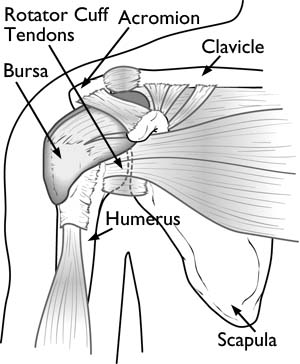
Back home the shoulder felt like a small knife had been inserted just below the clavicle, nestling up next to the shoulder joint and pressed through all the way through to my back. It didn’t hurt in  sharp, glancing away sort of pain, but more in a subdued ache with–small flames like you used to use to decorate the model cars of your youth– flickering around the knife.  It’s agony, a soft agony, spread throughout the body, inviting other muscles to tense up, join in the attempt to isolate the pain, make it stay up there.  Having, of course, the opposite effect.

Not fun.  Kate heated up a neck wrap and after two applications my shoulder settled down, rejoined the rest of the body and allowed as how I might go on with the rest of the evening.

And Now, Reverse Field and Head Home

Spring                                                          Bloodroot Moon

Everything’s rolled up and in the bag, ready to check out, then board the metro for Reagan International.

This was a trip where I had to confront some unpleasant truths about traveling.  For me.  My physical stamina, which I rate as pretty good, is still less than it was.  And that matters for my planning.

Also, not new, but apparent during this trip, too, was the easy slide into OMG, what am I doing?  This is a neurotic pattern that I recognize, having largely learned to slip its bonds, but in a foreign place, separated from my regular routine, wife, friends, dogs it can and does easily return.

On the up side I have learned that my new interaction with art will include embedding art history within the larger history of ideas, letting these two large disciplines bump into each other, suggest questions and directions for each other.  One place I know these streams will converge is in Reimagining Faith.

There is, too, a renewed interest in early American history, especially the Revolutionary war period and its immediate aftermath.  Not sure how strong this is, though it did occur to me that it might be a good journey to take with our Western raised grandkids.

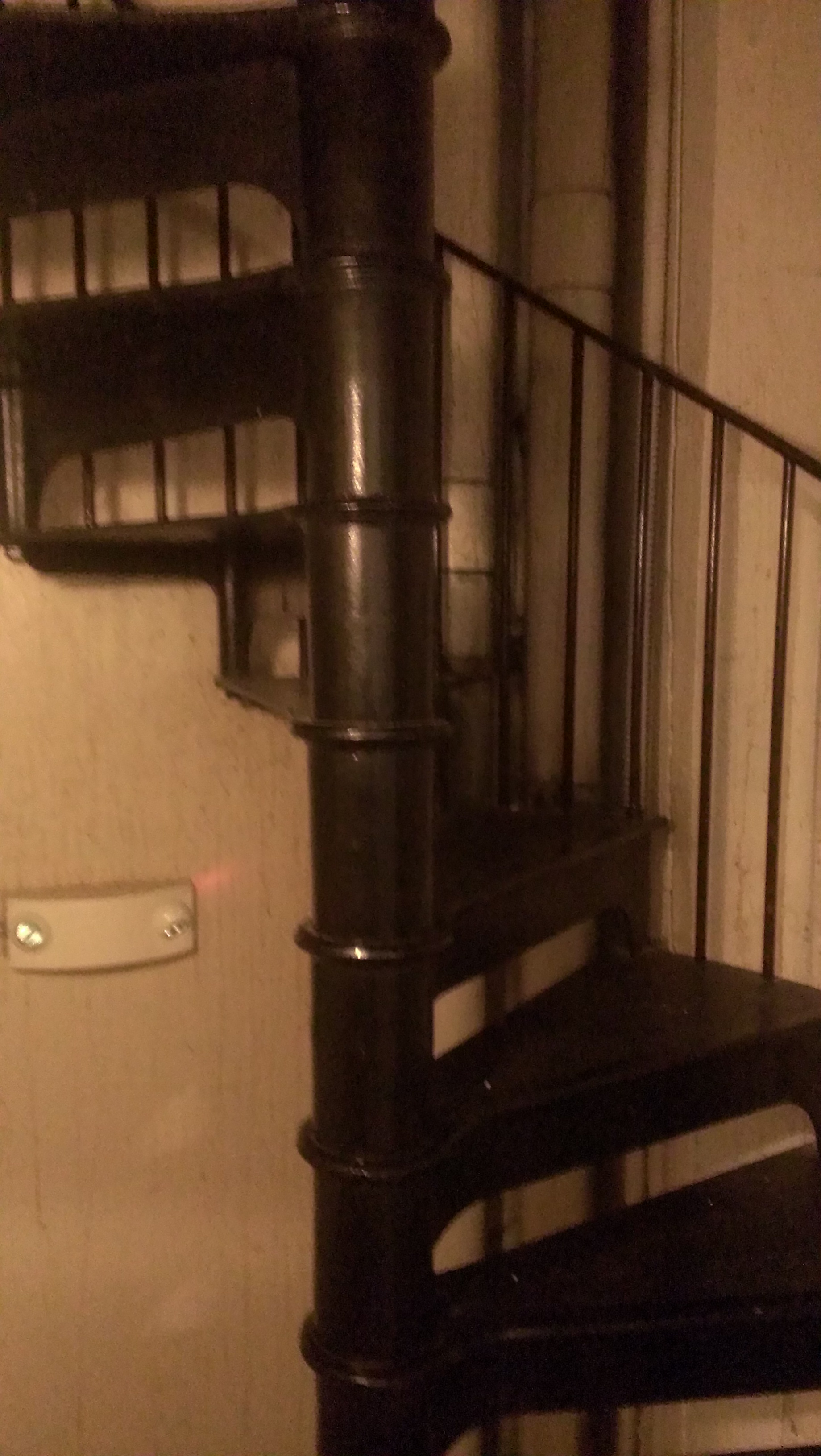
(Hotel fire stairs.  1910 vintage)

There is, as well, a definite sense of my own regional identity, an Upper Midwesterner, and the way that identity differs from and could inform the culture of national policy.  This is an odd phenomena since I feel very much a man of the North, of the continent more than the country; yet I feel more and more like a citizen of the planet, also more than the country.  Whether this is a personal experience or a more broadly shared one interests me.

Specifically I wonder if the internet intensifies globalization of perspective while reinforcing local identity.  I wonder if think global, act local and the whole locavore movement might feed this pattern, too, making the local the touchstone not for national identity, but for Terran identity.


Ancor Impari

Spring                                                                       Bloodroot Moon

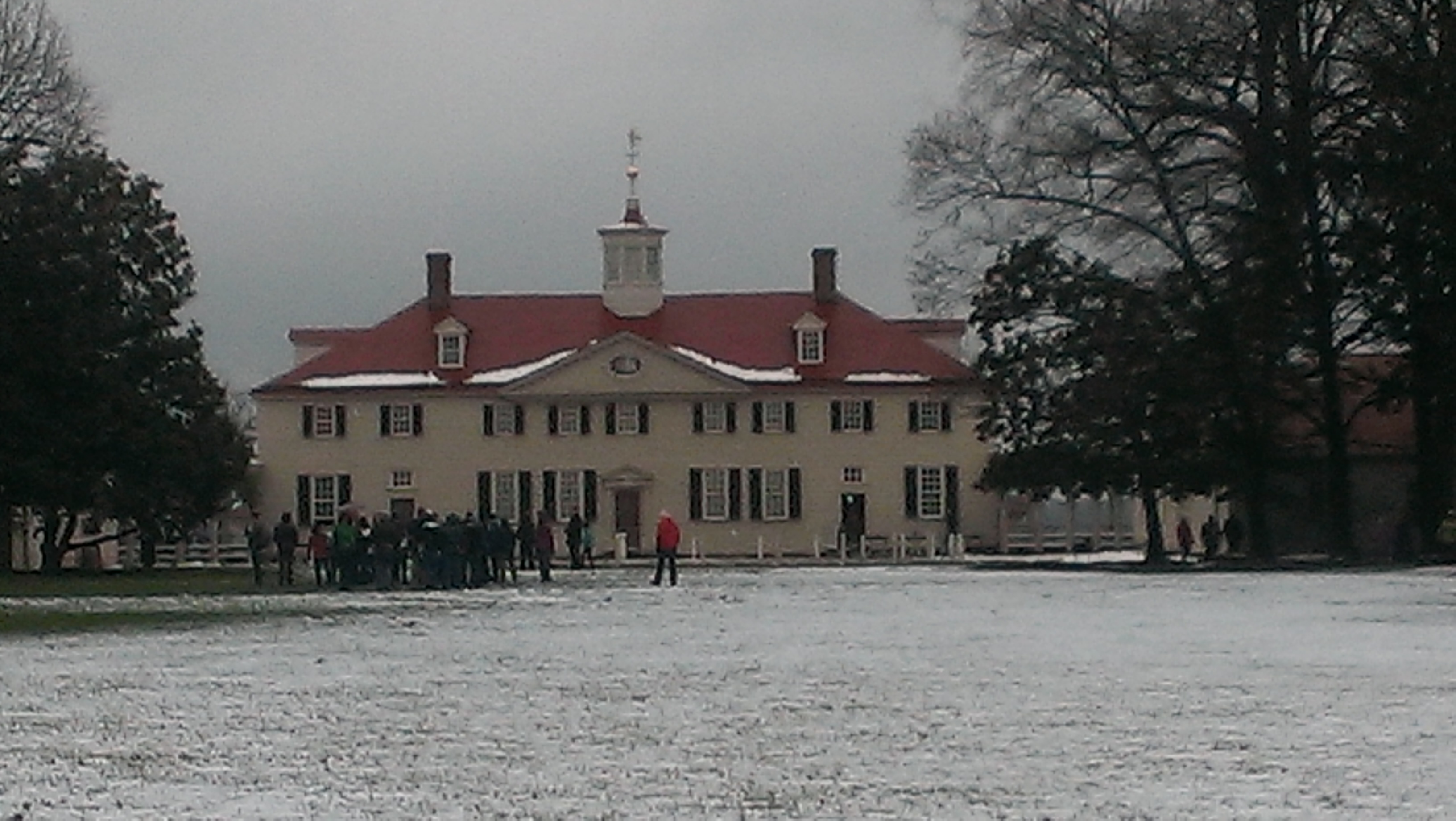
Ah.  Just back from Mt. Vernon.  Learned some things about traveling now.  Now, that is, in the third phase when I’m no longer as resilient as I used to be.

1.  Use a cab or public transportation to a location, then walk back.  Or, the reverse.  Don’t walk both ways, especially on concrete.  (An example this trip would have been the Lincoln Monument.  I could have walked back and seen the Whitehouse and the Willard on the way home.)

2.  If tired, stop.  Rest.  If hungry, eat.  (I have a tendency to want to keep going when I’m moving, wait until meal time if I’ve worked up a hunger.)

3.  When wool gathering about enough this or enough that get out and do something.  Don’t forget 1 & 2.

4. Take at least one vacation a year where the whole point is to relax.  I know this may seem obvious to many of you, perhaps most of you, but I typically have a goal, an intent.  This time, for instance, it was immersion in the pre-Raphaelites and learning about how to work with art post-MIA.  Did it.  But.  I kept needing to turn the hamster wheel one more time.  Stop that!

5.  Vacations are more fun with Kate along. (I knew this one already, but it never hurts to write things down.)


In Spite of the Evidence on the Ground, the Sky Says It’s Spring

Spring                                                                 Bloodroot Moon

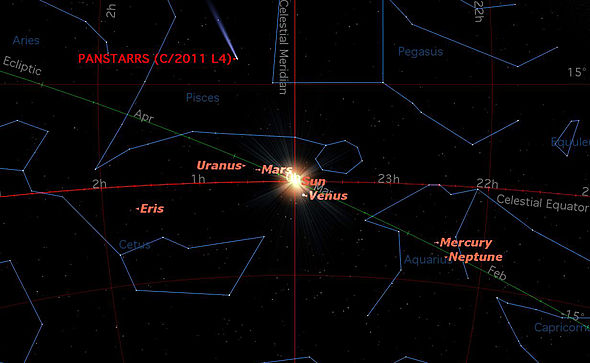
I’m beginning to wonder whether I misnamed this moon.  Not sure the bloodroot’s gonna bloom before it wanes.  16 degrees out now, headed down to 2 tonight.  Average daily high now 40 degrees.  But, in terms of astronomical events today is the day we shift past the  the celestial mid-point and the celestial equator. (see illustration)

That makes spring the formal designation.  Meteorological spring began on March 1st, but I follow the stars as does the Great Wheel.  The Vernal Equinox has a long tradition as not only the start of spring, but of the new year.  It lost its spot as the New Year in 18th century England, 1752 to be exact, when Lady Day, March 25th (a fixed date to celebrate the coming of spring and the new year and the feast of the annunciation), lost its New Year’s Day status to January 1st as the Gregorian calendar reforms began.

Today neither meteorological spring nor astronomical spring puts us in that season.  The weather is not co-operating with the calendar in either instance.  There’s a lesson here.  Rules, no matter how precise, or how ancient, no matter how usually reliable or hoaried with veneration, can never overcome, as the military says, the facts on the ground.

The lesson of the Great Wheel will, however, grind its way toward truth.  At some point the winds will shift.  The cold air will retreat back to the North Pole.  The snow will melt and the grass will green, flowers bloom and children ride their bikes in the streets.

Even though today doesn’t shout out verdant or shorts and t-shirts the vitality of Mother Earth is only delayed, not denied.  When we use the seasons as a metaphor for human life, we can imagine that we have passed the spring time of our lives.  This is not so.  Our bodies, yes, they continue on, hammered by entropy, drawn back toward the earth by the gravity of our years, but our soul, or whatever that mysterious piece of us is that hovers in and around that body, renews itself over and over.

Take down a new book.  Pick up a hammer, or a carving tool, or lines of computer code.  Perhaps a paint brush or a blank page.  Visit the grandkids or an old friend or make a new friend.  The sparks of love and creativity in our lives can rejuvenate us over and over again, turning a winter, even one that seems determined to stay too long, into a springtime.  Those seeds you planted when you were twenty, but forgot to water?  Remember them.  This is their season.  Wake them up.

Pain

Imbolc                                                                         Bloodroot Moon

Put your shoulder into it.  Increasingly difficult for me, at least on my left shoulder.  This is a post about pain, aging, the third phase.  Not because pain during aging is new or a surprise, not, rather the opposite, because its common.  Known.  Experienced.  But rarely discussed.

As the body changes, at any time, sure, but especially as we age and the terminus grows closer, we bring our personal history into our consideration, our weighing, our evaluation.

The shoulder pain, for example, pushes me back to a certain Madison County 4-H fair in August of 1949.  I’m young, very young, 2 1/2 years old, but I swear I remember the bare light bulbs strung on thin braided electrical cord, pink cotton candy, my blue blanket and my mother’s shoulder as she carried me.  I also remember a shiver, a full body shudder as I registered what I later came to believe was the onset of polio.

Whether this was the moment and whether the memory is even possible is uncertain.  That I would go on to contract bulbar polio and be paralyzed completely on my left side for over six months is not.

So, 63 some years later, when my left shoulder makes me wince as I lift my arm or move it  backwards or pains me especially if I try to lift an object, like a book, with my arm extended, as I’ve done many times in the last couple of weeks as I reordered my studies and eliminated books, my thoughts go to polio.  More specifically post-polio syndrome.

Probably not post-polio, a slippery diagnosis, not completely believed in by docs.  Probably not.  But that doesn’t make me stop considering it.

This pain has persisted, now maybe two months.  Not long, compared to someone like, say Kate, who has had persistent back, hip and neck pain for over 20 years.  But long enough to make me ready to see a doctor.  I want a diagnosis.

So Kate’s hunting for the best shoulder doc in the orthopedic community.  I’ll see whomever she finds and go from there.  In the meantime I waver between accepting the pain, avoiding the movements that exacerbate it, and medicating it.  I don’t like either of those choices.  If I can help it through exercise, or if I won’t make it worse by using it in spite of the pain, I’ll exercise and use it.  Just put up with it.  Maybe add some meds to help even things out.

If I can’t help it through exercise or if moving it creates more problems, then I’ll really need a doc because I’m in a bad place at that point.  I depend on exercise as part of my personal health regimen and having to back away from any part of it is not something I’m willing to do.  At least right now.

This will be a continuing series.  Part of the third phase.


Botox

Imbolc                                                                              Bloodroot Moon

Great line in a note from Tom Byfield, longtime docent at the MIA, recently resigned.  He writes:  For many years being a docent was the Botox I needed to ease my way into old age feeling good about myself.  This is third phase thinking, considering this next, long portion of our lives and deciding what’s necessary to keep feeling good.

We all need some reconstructive surgery as we move away from life’s second phase, the one of work/career and family.  That is, we have to reshape, reconfigure our presence in the world.  This is different, in my mind at least, from reinventing yourself.  Not sure I’d want to do that. Not sure I could do that. But discovering new parts of myself or neglected parts that could blossom with sufficient attention, now that’s important.  And doable.

Another way to think about this is that the first two phases of life, education and career/family are instrumental.  We see ourselves as in training for something to do, then doing it, often with a spouse and children.  Much of the angst of the first two phases of life comes in the tension between the (necessary) instrumental view of our self and the Self aching to discover its true purpose.  The lucky ones match the instrumental with Self discovery, but most aren’t so lucky.

In the third phase of life though the instrumental drops away and the Self emerges, perhaps as out of a cocoon, with wings and the ability to fly.  After all those years of crawling along the ground.  Wow.  But, it turns out, flying is scary and leaving the ground behind also means leaving behind a lifetime of habits and learnings for the unknown.  It’s not surprising that so many fail to even spread their wings during the third phase.

We humans often hold close pain in preference to change, being familiar with the outline and shape of our misery while ignorant of the other.  We fear those things we do not know and this is wise.  It lends that side note of caution that often keeps us safe.  But, it turns out, that same side note can keep us from growing, from spreading those new wings and heading off into the morning.

So this is a message of encouragement if you’re stuck right now, hanging on to the job, the career, the skills that made you successful.  They’re not you; they’re things you learned.  Now you have an opportunity to learn some more.  I hope you take the chance.  Crawl out of that chrysalis and find out what life has to offer today.


Legacy

Imbolc                                                            Valentine Moon

Writing.  Learning about the craft 20 years after devoting myself to it.  Yes, I admit it.  Kate was right.  Though I don’t recall, she says she urged me to go to the Loft way back, back in the days after I left the Presbytery.  Now I am.  To learn about publishing and about serious revision.  She’s often more clear about my vocation than I am.  Strange, but true.

The third phase continues to shimmer in front of me, a veiled space not yet known, the part of life that lies on boundary with the undiscovered country which doubles its resonance as if a great bronze tocsin tolls; though still faraway, its sound grows stronger with each passing day.

So. Legacy, then.  What will remain of mine when I cross the veil and enter that other world?  Of course there will be the vague collation of memories in children and grand-children, the sort of hazy recollection that fades with each passing generation.  Of course. There will be, too, the even gauzier remnants of actions taken:  those apartments and houses on the West Bank, a strengthened legislative program at the Sierra Club, work for non-profits and affordable housing through various groups, but in these my print lies barely visible, as it should be, but it means that connection will soon be lost.  If it has not been lost already.

Where I have most hope lies in the words I have written, like my father before me.  No wonder then that as the third phase beckons and the life of the past recedes writing becomes more important.  There is a sense in which legacy is a thing of vanity only and in that regard insignificant, after all most of us travel that last ancientrail unknown soon after we have set out.  There is, though, another sense in which legacy matters because it matters; that is, the legacy continues to entertain, to provoke, to evoke, to engage not in the world of the hereafter but in the world that is here after we are.

It is to this sort of legacy that I aspire and its persistence through time will depend on the quality of the work and thought I bring to it.  I know it seems perverse from some perspectives but I do not care about my legacy while I live.  Fame or money or recognition do not matter.  Only the work.  If any of them would come, I would choose money for the freedom it would give Kate and me to travel.  Recognition matters to me only as affirmation of labor’s worth.  But I value my work myself, so it is not needed.