Fall Waning Harvest Moon
Another morning of cool, wet weather. The beginning of October. No. Scratch that. The end of October. I recognize this fall weather actually; it comes to us courtesy of the climate that used to be Indiana’s. This is the weather pattern of my boyhood. Sunny, sometimes warm, sometimes not fall days, then rain drifting over into ice or snow with some cold, a January thaw that makes everything muddy and nasty, then a bit more cold and snow until March when the muddy, nasty part returns until spring. This weather pattern had a good deal to do with my move north, since I wanted stable seasons and in particular real winters. Now it seems the weather patterns I left have begun to follow me.
The Liberal Spirit is on Ancientrails now, just look on the left side, all the way at the bottom under Ge-ology. This presentation completed a six part exploration of, first, the movement West of Unitarian-Universalism, and then the nature and future of liberalism, especially as it applies to matters often called religious. I like working in three parts because it encourages me to think longer than the usually 5-7 page presentation, to take an idea further, develop it. Not sure what I might do next, but I do feel a need to begin what my old seminary theology professor would call the constructive task.
Constructive theology as an abstract idea involves the coherent development of ideas, ideas about the ultimate nature of reality, human existence and the forces that work on both of them. My notion of a Ge-ology, which continues to rattle around, make sense, but defy careful development is a significant part of where I want to go, but there’s a lot more to piece together. The whole notion has become a more and more pressing idea for me as I work in the Sierra Club legislative arena. It confirms what I have known now for some time. The representative democracy which serves our nation well at a conflict reduction level, does not work well when it comes to deep, systemic change. Its checks and balances, its partisan politics and its ephemeral nature make radical change not only unlikely, but almost impossible. This is by design and it does well at frustrating regional ambitions or the rise of a revolutionary faction, yet those same mechanisms also frustrate radical analysis, even in those instances in which it is so obviously needed.
Upstairs now to our business meeting, still massaging our way toward Kate’s retirement, getting comfortable with the financial side and with our new life. Not long now.
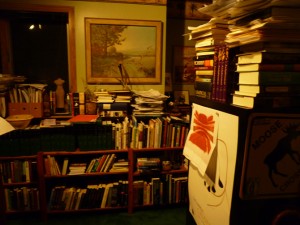 bookshelves are full and many have books piled on top of them. Each one I want to read. Some I want to use only as reference, but most I want to read cover to cover. The books range in topic from fairy tales and folklore to basic scientific texts on biology and geology, from philosophy to theology, art history to renaissance life, china, japan, india and cambodia to single dictionaries and the multiple volumes of the OED and the Dictionary of Art. Of course there is fiction, too, and poetry, works on historiography and works on the enlightenment. This doesn’t count the 90 books I now have on my kindle, many fiction, but many non-fiction, too.
 include the histories of Herodotus and substantial commentary. The Mahabharata. Several works on Asia art. A cabinet full of books on the enlightenment and liberalism. Another cabinet full on calendars and holidays. I will never do it. Why? Because I do have interests, obsessions maybe, that take me out into the garden or over to the State Capitol and the Minnesota Institute of Arts, the homes of the Woolly Mammoths and our children. Kate and I will, I imagine, resume at least some of our SPCO attending when she retires and there will be travel, too.