Beltane Mountain Moon
Kim Stanley Robinson: Red, Blue, Green Mars meet the proposal.
Beltane Mountain Moon
Kim Stanley Robinson: Red, Blue, Green Mars meet the proposal.
Imbolc New Shoulder Moon
 Mentioned The Third Plate a few posts ago. A book by chef Dan Barber, owner of the Blue Hill restaurant in Manhattan and a principle in the Stone Barns Center for Food and Agriculture in Westchester County.


He uses four big concept areas, pictured at the top: Soil, Land, Sea, Seed to tell a story about what he sees as the future of food. He’s trying to take the conversation about food beyond the now well known critiques of books like Hard Tomatoes, Hard Times, Michael Pollan’s The Omnivore’s Dilemma, Aldo Leopold’s The Sand County Almanac, and any number of books published in the late sixties like Eull Gibbons, Stalking the Wild Asparagus, Small is Beautiful by E.F. Schumacher. Throw in Wes Jackson’s Becoming Native to This Place, almost anything by Wendell Berry and the thought world championed by John Muir and Edward Abbey and you can see the big conceptual field Barber has tried to plow.
He seems on to something. Using examples like the dehesa in Spain that produces jambon iberico, The Bread Lab run by Washington State plant geneticist Stephen Jones, the farm of Klaas Martens who teaches him about reading the language of the soil, Veta La Palma, a Spanish aquaculture corporation set up in an estuary of the Gulf of Cadiz, and Anson Mills, a fascinating concept by Glenn Roberts who uses landrace farming to resurrect old grain crops and nurture new ones, he seems to propose a recursion to localized crops, that is, wheat, for example, that grows best in upstate New York. This recursion includes animals, too, where their rearing takes on the characteristics that oenologists call terroir in wines.

This recursion would have chefs take their cues, their menus, from what farmers can grow in their immediate area and from those sites with a focus on sustainability and ecosystem regeneration. The fascinating aquaculture experiment that is Veta La Palma uses the Guadalquivir River and the salt water of the Gulf of Cadiz to farm high quality sea bass. The focus does not have to be only local or regional but can include instances of food production with ecosystem supportive techniques.
This seems similar to the disaggregation idea in power production, local solar and wind and geothermal and hydro. Anything that deemphasizes the industrial and the corporate in favor of the local and ecological.

He talks about his idea in agriculture as middle agriculture, that is agriculture smaller than corporate, but larger than the small family farm or the boutique garden. He’s trying to get to scale sufficient that it could actually feed large numbers of people.
It makes me want to cook in the way he suggests. That is, find food grown here in the Rockies, use it along with food sourced from the Veta La Palmas, the dehesas or the Bread Labs, and build our menus at home around it, changing with the seasons. Right now that would take a good bit of work, but it might be possible and it would certainly be worth it.
A continuing theme.
Imbolc New Life Moon
As my melancholy continues to lift, new and old values push themselves forward, wanting to be included or excluded. I didn’t, for example, attend the Democratic caucus last night. Though I did want to be home for Kate, who uncharacteristically has anxiety about her upcoming surgery, Sjogren’s adds an unknown, I also didn’t want to go. Kate pushed back on this, saying the activist has been an important part of me, well, almost forever. True. And maybe, probably, I’ll alter course on this one, but right now I want to focus on other things.
 In addition to cooking, the sumi-e (ink brush painting), and working out, I mentioned the possibility of a greenhouse. Expensive, so we’ll see about that. But. I began reading a book I’ve had for a while, The Third Plate. It puts me back in the mental and very physical world of Andover. In fact, the feeling, while I was reading it, was so comfortable, a sort of ah, here I am at home feeling, that I recognized it as an old value pushing itself forward.
It’s more than just getting my hands in the soil, nurturing seeds. It’s about being part of the farm-to-table movement, about acting on eating better food, about staying connected, directly, with mother earth. While reading this, I realized horticulture was a deep part of me, one Kate and I spent a lot of time, energy and money on, not because we had to, but because it was significant and nourishing.
 Buddy Bill Schmidt will recognize the quote that begins the chapter on Soil: “See what you’re looking at.” Carey Reams, an unlikely looking radical, used to say this. He was the founder of the outfit from which I purchase soil additives, the High Brix Gardening folks in Farmington, Minnesota. He contended, as do many now in the farm-to-table world, that agriculture went astray long ago, moving toward products that fit mechanized food production rather than human nutrition.
There are too many examples that prove this, unfortunately. One is that the bulk of corn grown in the U.S. either goes for corn syrup or feeding cattle. Another is the development of tomatoes with skins hard enough to stand a mechanical picker.
 The vast wheat fields of the Great Plains grow an annual wheat, two varieties that work well in steel rolling mills. Not only have these annual crops destroyed the ten feet or more of top soil that buffalo and deeply rooted grasses developed there, but the steel mills which make this crop profitable separate the germ and bran from the kernel, leaving only fluffy white flour. What’s bad about that? Well, turns out the nutrition in wheat lies in the germ and the bran.
 I guess this is the native Midwesterner in me. I grew up driving past corn fields, pastures filled with Holsteins and Guernseys, pigs and beef cattle. The Andover gardens, the orchard and the bees, along with our small woods satisfied this part of my soul. I’m going to investigate local CSA’s, see if that’s a route back into this world. We have to buy groceries anyway, so why not from folks who share a philosophical position close to my own.
This is different, you see, than being attentive to the lodgepole pines and the aspen, the mule deer and the elk, the fox and the mountain lion. These are part of wild nature and beautiful, also important to my soul. But the world of horticulture, of growing and consuming food and flowers, fruits and honey is, too. A reemerging part of me. And I’m happy to see it, to feel it come.
Imbolc New Life Moon

The melancholy has done its work. Still listening, paying attention, but here’s what I’ve discovered this time. My life was out of balance. I needed more time working with my hands, using my body. Also, I had neglected reading of certain kinds, especially reading that advances my reconstruct, reimagine, reenchant project.
This latter work has gotten quite long in the tooth, has become more of a forever, at least until I die thing. And I don’t want that. I want to write at least some essays, preferably something book length.
 It was also time to slough off some of the Minnesota based, second phase lingering work. Especially the political. I am going to the caucus this Tuesday; however, I no longer see myself as a dedicated activist. But, and I consider this great news, Ruth told me she was walking out on April 9th, standing outside Mcauliffe, her middle school, for seventeen minutes, one minute for each of the Parkland victims. She’s doing it in spite of the fact that adults tell her no one will listen. Go, Ruth!
And writing. Not giving that up, yet I feel the need now to shift at least some of that energy to the three R’s. I’ve felt this way before, yes, but something feels different now. Not sure what exactly.
 The melancholy also uncovered a tension I’d been feeling between leaning in to the domestic, cooking, for example, and Kate and mine’s presence in the Beth Evergreen community, and what I consider my work. Recalibrating second phase expectations about work, which I have not yet fully done, feels like a task for this time. In fact, I enjoy the domestic part of our lives and it feels good to devote more energy to it.
Recalibrating. More on this as it continues.
Imbolc New Life Moon
 Life still trickling by. A bit of snow over the last few days, colder now, in the Colorado measure of that term. So relative. Saw a facebook meme with Texans in parkas at 70 degrees. Could have countered that with a Minnesotan in shorts at ten below. Meanwhile 11, last night, felt pretty cold after three years here. These gross physical acclimatizations are easy to spot, but what about the more subtle mental adjustments?
How does the mind change, for example, when it goes up and down mountains, around curves into canyons, rather than coasting across the flat lands of the Midwest? Or, what about looking up and seeing ovular lenticular clouds, high flying cirrus against blue sky? When fall comes and the changes are only in the aspen, a mass of gold variations, what happens to the heart used to deciduous colors?
Political colorations are different here, too. That thick vein of let me alone libertarianism too often gets mined for political results that would make even conservative Minnesotans cringe. Immigrants to the state, like Kate and me, drag along with us expectations that government should be of, by and most of all, for the people. This is a far from universal sentiment in the West. We’re adding new strata to the political geography, but the whole still feels very alien to me.
 This is all by way of becoming native to this place, a key element in my pagan creed borrowed from Wes Jackson at the Land Institute. Sounds like an oxymoron, right? That’s why I love it, the challenging notion that we can be of a new place in a very old, intimate way, through what Rabbi Jamie would call Torah study, close attention, close attention to details and to our own inner world, compassionate attention willing to be shaped by what we find.
 Kate and I did it on the Great Anoka Sand Plain. Over the Andover years we listened to the soil, to the rhythms of the growing season. We stuck our hands in the soil, partnered with it. We planted trees and fruit bearing shrubs. There was the open prairie we cultivated on either sides of the more traditional suburban lawn carpet. Bees, with whom we partnered, for honey. Dogs who used the woods as their home and hunting ground. By the time we left we were native to that place. Its rhythms shaped our own and together we created a place to live.
It’s happening here, too. A long and nuanced process, still in its early days, but one that has promise for the Great Work, creating a sustainable presence for humans on this planet.
Imbolc Imbolc Moon
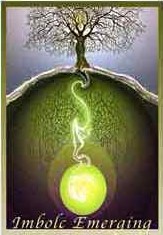 Imbolc, as long time readers of this blog probably recall, means in the belly. This cross-quarter holiday comes between the Winter Solstice and the Spring Equinox. It lies at the most desperate point of the year for an agricultural culture with no refrigeration. If it was a good harvest before the beginning of the fallow season at Samain, all right; but, if it was a poor or even mediocre harvest, then supplies might be running out.
This might mean awful choices must be made. Do you eat the seed grain, which you need to plant next year’s crop? Do you slaughter an animal which you need to breed, because you can’t feed it and your family?
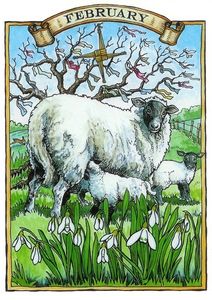
A potential salvation lay in the sheep. The ewes, now pregnant, a lamb in-the-belly, would begin to freshen, produce milk, a source of nourishment that might be enough to get the family, the village, through until spring. Even in good years the freshening of the ewes was a time of celebration. It meant the fallow time was drawing to a close. Spring was near and the growing season would commence.
The Great Wheel turns. The sabbath for the land continues through Imbolc, awaiting the warmer temperatures and rains around the equinox.
 An interesting annual spiritual practice I found at Heron’s Rook, but could not relocate even after searching there, begins at Samain. Heron, the witch who writes this blog, calls the annual focus, the great work. I’m going to reimagine it here. The general idea is hers, but the specifics are as I vaguely remember them or as my reimagining suggests they could be.
We go fallow at Samain, too, letting the last year’s work feed us as we consider what might make for a good crop in the coming year. On the Winter Solstice go deep into your own darkness, celebrate what roots in your soul, what is even now gathering nourishment from the soil of your inner garden.
On Imbolc, where we are right now, let the spiritual or creative elements of that which grows within you come to the surface, give you sustenance as you await the fullness of its birth.What you await is a purpose, a project, a great work strong enough to sustain focused energy over the growing season or several seasons. At Imbolc it’s still nascent, unformed, perhaps unrecognizable as what it will become. But its growth has already begun to feed you.
Around the vernal equinox let it out, bring it into the sunlight of the new spring. Let it gambol in the fields of your heart. Feed it. Embrace its newborn animal nature. You might see it as a puppy or a kitten, a lamb. It’s new in the world and must be fed, but just as much as physical needs it has a need to explore, to greet the new world in which it now lives.
 This is the moment to run like crazy with that potential new work, examine all the ways it can go, let it loose. See what it needs to explore, to learn. By Beltane, the beginning of the growing season, you will know the skeletal structure of your new work. You will have followed its maturation from the dark of the Winter Solstice through its puppy like eagerness, to the now formed project or direction.
Over the course of the growing season you will give this great work for the year what it needs to thrive. Plenty of sunshine, water. You’ll weed around it. Provide it food. If its completion coincides with Samain, then the process will begin again.
As I wrote this, I realized that for me, I’d probably flip it. That is, I’d start the incubation process at Beltane, let the new great work grow over the Summer Solstice, let its creative energy begin to emerge around Lughnasa, bring it into the world around Mabon, or the fall equinox, and get down to serious work on it at Samain. This is because I find the cold and the bleakness of the fallow time most conducive to creative work.
An interesting idea, I think.
Imbolc Imbolc Moon
 The Imbolc moon has had its night in earth’s shadow, its night as super and blue and red. Hey, up in the sky, it’s Supermoon! And last night it was wonderful again. High, full, behind a faint veil of clouds. Orion and the moon. My two favorite celestial objects. Well, ok, the sun, too, but I can never look at it.
Something in a full moon moves me to the depths of my soul. I can find myself tearing up, a catch in my throat at the sheer extravagance of its beauty. It’s offered over and over, available to all, free.
So, too, Orion. He rises. Greets any who bother to find him. He stands always ready astride the horizon, a hunter and his dog. I don’t know whether he remembers our nights in Muncie while I watched over the entrance gate at the factory, but I like to think he does.
The night sky, in its shorter versions and in its Winter Solstice maximum, offers solace to those of us who want it. The night is, to paraphrase LP Hartley, a foreign country. They do things different there.
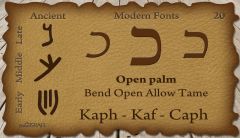 Last night I went back to Beth Evergreen, more kabbalah. Studying the kabbalah at night, especially under a full moon. Yes. Learning about more double letters: Pey, Caph, Reish, Tav.
I know this Jewish immersion of mine must seem odd to some of you who read this; but, it’s happened over many years, a sort of there and back again phenomenon. In this current instance Kate’s conversion long ago made us seek out a synagogue, just to see. We found Beth Evergreen, a special place, unique I imagine, even among Reconstructing congregations.
It was long ago though I read Isaac Bashevis Singer. Chaim Potok. Later, Rebecca Goldstein. It was long ago that I walked into the synagogue in Muncie for an anthropology assignment. It was long ago that I dated the jeweler’s daughter, Karen Singer, and found her father’s knowledge of philosophy astounding. Over the years many Jews have come into my life and I’ve always felt comfortable around them. As if we shared a common spirit. At Beth Evergreen that feeling surfaced immediately and has grown deeper over time.
 Being part of the tribe? No. Not for me. Walking along with the tribe as it wends its way through this moment in time? Yes.
Let me give you an example. The friend I mentioned yesterday, Bonnie Houghton, the green cemetery and burial, rabbi in training, Bonnie, got me going on the Recycle Me idea. It fits so well with my pagan sensibility and it’s something I can act on through this community.
Yesterday was Tu B’Shvat, the new year of the trees. It’s a part of the Jewish holiday year, just like Yom Kippur, Purim and Passover. Kate and I went to the celebration yesterday before kabbalah. Later, as I rested before returning for kabbalah, an image struck me: a Tu B’Shvat celebration in our yet-to-be green cemetery. We would be honoring trees, trees of all kinds yes, but especially, in this celebration, those trees growing from the graves of deceased members of Beth Evergreen.
Can you imagine? An ancient holiday celebrating trees and the gifts that they offer, now including trees with their roots literally in members of the congregation? How mystical, how wonderful would that be. Out there, on the mountain side, perhaps a mountain stream running nearby, a breeze rolling down the slope and my tree, the tree that is a tree and me, our leaves rustling as the gathered folks sing, pray. Yes.
Winter Imbolc Moon
 Instead of watching the state of the union Kate and I participated in a presentation on green burial and the possibility of creating a green cemetery. Beth Evergreen has been moving, slowly, toward a Jewish cemetery over the last six years, but Bonnie Houghton, a rabbi in training and former long time Forest Service employee has accelerated the process through her own efforts. In her current work with the Mountain Land Trust she sees properties presented for conservation easements. Some don’t qualify for that purpose, but would work well for green cemeteries, where burials eschew vaults, fancy caskets and backhoes for hand-dug graves, wicker/pine/cardboard/shroud coverings for the corpse, and small, usually flush with the ground grave markers.
Bonnie’s smart and skilled, also dogged. My sense is that her recent work might push this project over the threshold from possibility to actuality. What’s needed is some money, in the range of $250,000 to $350,000, a corporation of some sort, I suggested a co-op, and a plot of land. Bonnie and Rebecca, a CBE member and realtor, showed pictures of three properties ranging in size from 15 acres to 40+ acres.
 I found this conversation oddly energizing. Something about the cliched final resting place has more resonance as I move toward my 71st birthday. Having a cemetery which celebrates the natural order of life and death with decay rather than chemicals, concrete, and metal makes so much sense to me. Having a tree planted over my cremains, or in them, feels right. Too, we could bury the remains of our many dogs with us. That would make for a unique family plot.
Now, we could have spent yesterday evening listening to the Donald try to make up for a year of unending bullshit, but we chose something productive, something focused on life and death rather than forehead slapping, groans and despair. Odd, isn’t it, that a discussion of burials and cemeteries would have more life in it than a used-to-be important political moment? The times in which we live now. I wish they’d start to decay. Soonest.
Winter The Moon of the Long Nights

The full Moon of the Long Nights glows in the west this morning, roughly over Evergreen. Its gentle light blots out many stars, but makes up for that in its own silvery beauty.
The moon is a place alien to us in spite of its ubiquity. We see it most nights, know its facing terrain intimately, most of it visible through good binoculars. We’ve even sent a few humans to walk upon it, twelve all told, but that small number underscores rather than challenges its wildness. Even if humans settle on the moon, its surface will still be no place for unprotected human bodies. We were not made for that place even though it is our closest solar system neighbor. It is the first outpost of the wilderness, the strange and foreign place, that is everything else in the vastness of space.
There are still places on earth where we can experience wildness. High Country News, a magazine that focuses on issues effecting the contemporary West, has become a favorite read of mine; and, in its Christmas issue, featured an article by Outside writer and editor, Christopher Solomon, “In the Home of the Bear.”
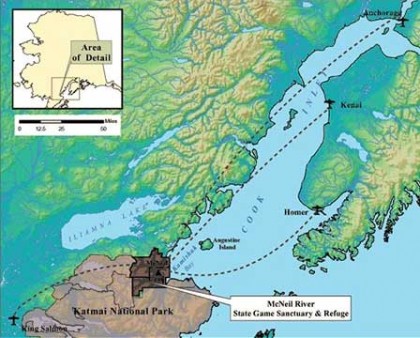 Solomon recounts a visit to the McNeil River Sanctuary. He won a chance to visit this protected spot for the Alaskan brown bear in an annual lottery. The fairly long quote below has rattled around in my mind since I read it a week or so ago. It reveals, at least to me, a path we could walk to accomplish Thomas Berry’s Great Work for our time, creating a sustainable human presence on this planet, our home in the wildness of space.
The he in the first sentence is Larry Aumiller, a manager of the sanctuary for three decades. He “spent three decades studying how humans could live in harmony with Ursus arctos on the landscape.”

“…over time, he learned how humans and bears could reside together.
And what works? First of all, restraint — not bulling into the landscape. Bears don’t like surprises. Moving slow and being predictable are good starts. That’s why humans walk the same trails, about the same times every day, and in the same group size. Over decades of such long and careful practice, the bears here have learned to see humans as another presence on the landscape — neither the source of a meal, nor the cause of pain or fear. They are “neutrally habituated,” in the argot of this place…
Almost everywhere else, the ability for humans and bears to move easily among each other has been lost. What is different at McNeil is that humans don’t try to dominate. We listen. We adjust. We find out how it all fits together, and where we fit in. “Here we learn that we can live among the great bears,” Fair writes. “Here we learn the human behaviors that allow this.”” In the Home of the Bear, High Country News
Humans don’t try to dominate. We listen. We adjust. We find out how it all fits together, and where we fit in. Oh, what a wonderful world it would be…
Samain Bare Aspen Moon
found in High Country News, by Gary Snyder:
I pledge allegiance to the soil
of Turtle Island
and to the beings who thereon dwell
one ecosystem
in diversity
under the sun
with joyful interpenetration for all
