Category Archives: Great Work

Reimagining Faith: Tree of Peace

Spring                                                              Bee Hiving Moon

The essence of the Peacemaker legend follows as told by Mohawk chief Jake Swamp at the planting of a Tree of Peace in Philadelphia in 1986. “In the beginning, when our Creator made humans, everything needed to survive was provided. Our Creator asked only one thing: Never forget to appreciate the gifts of Mother Earth. Our people were instructed how to be grateful and how to survive. But during a dark age in our history 1000 years ago, humans no longer listened to the original instructions. Our Creator became sad, because there was so much crime, dishonesty, injustice and war. So Creator sent a Peacemaker with a message to be righteous and just, and make a good future for our children seven generations to come. He called all warring people together and told them as long as there was killing there would be no peace of mind. There must be a concerted effort by humans for peace to prevail. Through logic, reasoning and spiritual means, he inspired the warriors to bury their weapons and planted atop a sacred Tree of Peace”

It is said that the Tree of Peace given by the Peacemaker symbolizes the Great Law of Peace. The symbol is a great white pine, and it is said to shelter all nations who commit themselves to Peace. Beneath the tree are buried the weapons of war of the original five nations. Above the tree is an eagle that sees far. Also, four long roots stretch out in the four sacred directions, and they are called the white roots of peace. The Peacemaker invited any man or nation desiring to commit to the Great Law of Peace to trace the roots to their source, and take refuge beneath the Tree of Peace. The Peacemaker’s teachings stressed the power of reason to assure righteousness, justice and health. Faithkeeper Oren Lyons, an Onondaga, states that the Great Law of Peace includes freedom of speech, freedom of religion, and the right of women to participate in government.

The seed-idea underlying all Iroquois philosophy is that peace is the will of the Creator, and it is the ultimate spiritual goal and natural order of things. The prayer below comes from the people of the Iroquois Confederacy. The prayer is based on the tradition of interconnectedness that the Iroquois or Haudenosaunee possess. This prayer is said to be the backbone of the Iroquois culture. The prayer expresses the belief that rather than take the world for granted, it must be respected, and that we must thank all living things in order to align our minds with creation and the Creator. Usually, a faithkeeper is selected to share the prayer of thanksgiving at the opening and closing of social, government, and ceremonial events. The prayer is comprised of three levels:


Spiritual Forces on the Earth, Spiritual Forces in the Sky, Spiritual Forces beyond the Sky

The Spiritual Forces on the Earth are:
the People, our Mother Earth, the Waters, the Fish, the Grasses, the Plants,
our Sustenance, the Animals, the Trees, and the Birds.
Throughout the year we bring our minds together as one
We give thanks to one another
All year long she gives us all that we need

We give thanks to our Mother Earth
Everyday it quenches our thirst
We give thanks to the waters In winter it replenishes the lakes.
We give thanks to the waters

During the year they purify the lakes
We give thanks to the fish
When the wind turns warm a green blanket appears
We give thanks to the grasses
In early summer the flowers turn sweet
We give thanks to the medicinal plants
In early summer they help us survive
We give thanks to the food plants
In midsummer we dance for the green corn
We give thanks to our sustenance
In midsummer we dance for the red beans
We give thanks to our sustenance
During the winter their pelts warm the soul
We give thanks to the animal creatures
Since early times they have been our companions
We give thanks to the animal creatures
In early spring we are glad they reappear
We give thanks to the animal creatures
At one point in time it became a symbol of peace
We give thanks to the trees
At the end of spring the sap will flow
We give thanks to the trees
In early morning they carry messages
We give thanks to the birds
In times of danger he warns the people
We give thanks to the birds
In the summer they sing sweet songs

We give thanks to the birds Spiritual Forces in the Sky are:
the Four Winds, our Grandfather Thunder, our Elder Brother Sun, our Grandmother Moon, and the Stars
Throughout the seasons they refresh the air
We give thanks to the Four Winds
In early summer they bring the falling drops
We give thanks to our Grandfather Thunder
Every morning he brings light and warmth
We give thanks to our Elder Brother Sun
Every night she watches over the arrival of children
We give thanks to our Grandmother Moon
In the night their sparkle guides us home
We give thanks to the stars
The Highest Spiritual Forces beyond the Sky are: our Protectors, Handsome Lake, and the Creator
All the time they remind us how to live
We give thanks to our protectors
At one point in time he brought back the words of the Creator
We give thanks to Handsome Lake
Everyday we will share with one another all of these good things
We give thanks to the Creator.
– Prayer of Thanksgiving, Iroquois Confederacy

Another Beautiful Day. Bah.

Imbolc                                                Woodpecker Moon

Another beautiful day. Yes.  But.  What dark forces work to push the boundaries of weather around like so many children’s blocks, a lego castle on wheels rolling north, careening over everything in its wake?  As I hope I’ve said here before, efforts to control global warming are NOT about saving the planet.  The planet will keep on whirling around the sun as long as gravity and spacetime remain.  Well, not quite, there is that whole red giant business, but it’s a really long time from now.

No, good ol’ h. sapiens will catch the fever.*  Of course, those with an eye to irony or just desserts might not see this a totally uncalled for solution; but, hell, I love our funny two-legged species, roaming around making babies, art, war, sport, roombas, nailguns and rainbow ponies.  What will the universe do for a laugh when we’re gone?

Fans of schadenfreude will rejoice.  Though whether one can be very schadenfreudie when you’re baking along with the ones responsible for delaying action, I don’t really know.

So, as a paid up member of the northern European gene pool, I’m tellin’ you it’s no wonder I’m melancholy.  The world is going to hell in a Hummer, not a handbasket.


*Scientific American

LONDON (Reuters) – Global greenhouse gas emissions could rise 50 percent by 2050 without more ambitious climate policies, as fossil fuels continue to dominate the energy mix, the Organization for Economic Cooperation and Development (OECD) said on Thursday.

“Unless the global energy mix changes, fossil fuels will supply about 85 percent of energy demand in 2050, implying a 50 percent increase in greenhouse gas emissions and worsening urban air pollution,” the OECD said in its environment outlook to 2050.

The global economy in 2050 will be four times larger than today and the world will use around 80 percent more energy.

But the global energy mix is not predicted to be very different from that of today, the report said

The Wise Old Wood Gods Laugh

Winter                                   Garden Planning Moon

Tom Crane sent out an e-mail that contained many different photographs of paths and trails.

Then Bill Schmidt sent out this poem.  I love it.  Not always great prosody, but the concept?  Wow. Read all the way to the last stanza.  It’s worth it.

by Sam Walter Foss  (a new hampshire librarian)
(NH 1858-1911)

The Calf-Path


One day, through the primeval wood,

A calf walked home, as good calves should;

But made a trail all bent askew,

A crooked trail as all calves do.

Since then three hundred years have fled,

And, I infer, the calf is dead.

But still he left behind his trail,

And thereby hangs my moral tale.

The trail was taken up next day,

By a lone dog that passed that way.

And then a wise bell-wether sheep,

Pursued the trail o’er vale and steep;

And drew the flock behind him too,

As good bell-wethers always do.

And from that day, o’er hill and glade.

Through those old woods a path was made.


And many men wound in and out,

And dodged, and turned, and bent about;

And uttered words of righteous wrath,

Because ’twas such a crooked path.

But still they followed – do not laugh –

The first migrations of that calf.

And through this winding wood-way stalked,

Because he wobbled when he walked.


This forest path became a lane,

that bent, and turned, and turned again.

This crooked lane became a road,

Where many a poor horse with his load,

Toiled on beneath the burning sun,

And traveled some three miles in one.

And thus a century and a half,

They trod the footsteps of that calf.


The years passed on in swiftness fleet,

The road became a village street;

And this, before men were aware,

A city’s crowded thoroughfare;

And soon the central street was this,

Of a renowned metropolis;

And men two centuries and a half,

Trod in the footsteps of that calf.


Each day a hundred thousand rout,

Followed the zigzag calf about;

And o’er his crooked journey went,

The traffic of a continent.

A Hundred thousand men were led,

By one calf near three centuries dead.

They followed still his crooked way,

And lost one hundred years a day;

For thus such reverence is lent,

To well established precedent.


A moral lesson this might teach,

Were I ordained and called to preach;

For men are prone to go it blind,

Along the calf-paths of the mind;

And work away from sun to sun,

To do what other men have done.

They follow in the beaten track,

And out and in, and forth and back,

And still their devious course pursue,

To keep the path that others do.

They keep the path a sacred groove,

Along which all their lives they move.

But how the wise old wood gods laugh,

Who saw the first primeval calf!

Ah! many things this tale might teach –

But I am not ordained to preach.


The Frigate Bird

Winter                                     First Moon of the New Year

The Frigate Bird

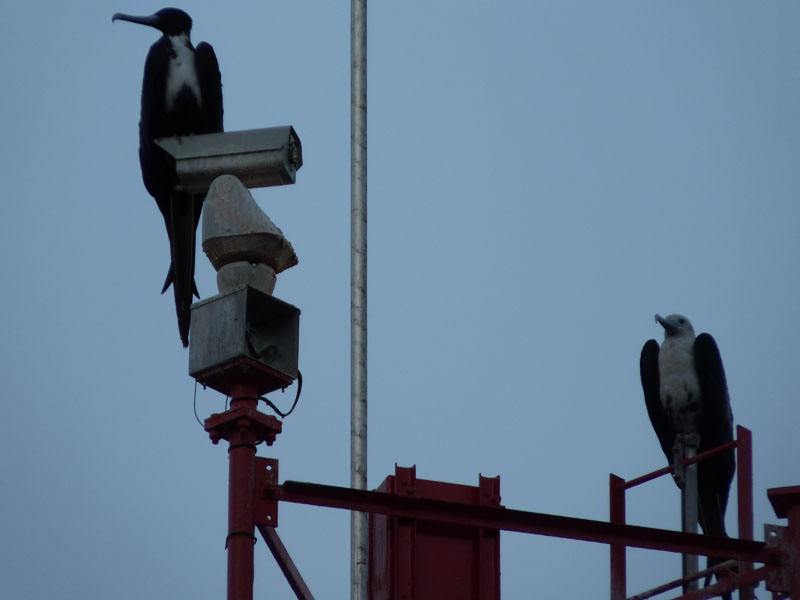
This photo comes from the series on the Panama Canal, but I connected with these birds in Rio.

Abundant all along the way these graceful animals love the liminal zone where land and ocean meet.

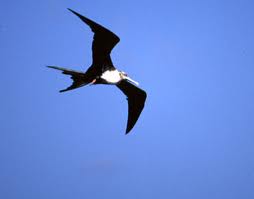
The Ipanema Plaza, our hotel in Rio, had 17 floors with a coffee shop, swimming pool and lounge area open to the air.  From that vantage point I watched these graceful birds sail the thermals created by the meeting of ocean air and the breezes coming off the land.  They swing up and down with casual, almost lazy movement of their wings.  Maybe once.  Twice.  Then the soaring continues.

Ipanema beach shines white in the mid-day sun and these birds flew in oval shaped patterns, watching the beach, the streets and whatever else can be seen from their height.  It was balletic, an aerial gavotte.  A composer could, I’m sure, develop a line of music from their regularity, floating up, then down, curving in a pass over the beach, then circling back, watching, always watching.

It was the purity of their line, the effortlessness of their flight, its calm, unhurried grace.  That’s what took my heart.


On Moving Toward Doing the Work Only I Can Do

Winter                              First Moon of the New Year

Spent yesterday shifting to my new work schedule.  A couple of hours on Ovid, plus analyzing some of Caesar’s Gallic Wars.  Edited three portions of the Tailte Mythos:  Book I and began clipping postings from Ancientrails to consult for my first essay in the Reimagining project.

Also learned that I can’t go to sustaining status at the MIA until I’ve had 8 years as a docent.  Sustaining would cut my tour requirements in half.

This means I’m going to have duck out of the Sierra Club sooner than I had planned.

No plant starts this year.  I’m going to buy already started plants and of those only those we decide to grow for particular, planned uses.  We’re going to shift our gardening now toward minimalism, toward those things we’ll preserve.  Two colonies of bees.  Emphasizing less maintenance everywhere, planting towards a time when the gardens will need even less, eventually very little care.

Life’s focus changes as our lives change and now I’ve become focused on those kind of things only I can do.  Only I can write the Tailte books.  Only I can set down my scattered thoughts about a sort 0f ur-faith, a common reverence all of us on the planet might share.  Others might/will translate Ovid, but only I will work toward a beginner’s level commentary, one similar to Pharr’s commentary on Vergil.

Not sure why now for this shift except to say that I know my time is finite.  Yes, it always has been, that’s true, but now it seems existential.  No, I’m not covering something up here, I’m not ill, in fact, I just got a set of labs that Kate says are typical of a 40 year old.

Long ago, in my 20’s, I read an article about when certain professions reach their maturity.  You know the material about mathematicians and scientists, early ripe, but certain other professions matured much later, writers and artists, for example, with the oldest age of maturation according to this reckoning being 50, for philosophers.

Factoring in my drinking and an early career emphasis on politics and the practical side of religion, I don’t find 65 to far out of range for me.  I feel mature in my thinking and writing skills now and I need to deploy them or my unique contribution will be lost.

How the New Year Might Look

Winter                                           First Moon of the New Year

At an inflection point with the Latin.  Either I keep the pace I currently follow, maybe 6 hours a week; or, I ramp up, say to 10 or 12, maybe a couple of hours each day.  Some analysis of other texts–maybe Caesar or Suetonius or Julian, I have all of these in Loeb Library volumes–plus more translating of the Metamorphoses.  My inclination is to ramp up, do more, focus on Latin and the novel.  That’s what my heart tells me.

That other project, too.  The one I’ve got slotted for 5,000 word essays each month next year.  Where I’m going to give voice to my whirling ideas about the earth, about ge-ology, about what would help us help our home planet.  That one, too.

When you add these things together, they constitute real work and I feel good about that, not trapped or bummed.  Now all I need is a way of allocating my time so I can work them all in and still manage the art, the garden, the bees and family.

That may be my new year’s work.  Pruning activities and creating a new schedule.


Wolf Travels Alone

Winter?                                  First Moon of the New Year

Lone wolf crosses into California from Oregon

This head line, reassuring and hopeful as it is, still seems sad.  An animal, an apex predator, that used to roam freely throughout the West now receives newspaper attention for returning, on its own, to the old habitat.

May these kind of experiences become common and unworthy of public attention by the time Gabe and Ruth grow up.  Make it so, Mr. Sulu.

(read full story in the LA Times here)

The young animal is the first wolf known to be at large in California since 1924. Wildlife authorities in both states have been monitoring the wolf since it set out from the Crater Lake area in September.


Solstice Celebrations. What Might They Mean?

Winter                                  Moon of the Winter Solstice

Something new seems to be happening.  Not sure if I’m reading the rustling in the ether of our culture right, but it feels like the Great Wheel may have begun to reemerge.  Not in a Wiccan or alt-pagan way, though that’s certainly there, but in a from the ground up way (so to speak).

A friend called me tonight to wish me a salubrious solstice.  Kate wants to do a fire tonight. First Universalist has a solstice celebration as do many UU congregations.  There has been, for a while now, solstice celebrations on the continent.  I’m most familiar with ones in Scotland and Sweden.

These celebrations, rituals whatever we might call them are not confined to the Winter Solstice though the spreading knowledge of Christmas’s relationship to the Saturnalia, itself a winter solstice holiday, has given the Winter Solstice a cultural leg up, as has a more general appreciation for the other festivals of light around this time:  Deepavali, Hanukkah, Christmas trees and home decorating–neither one of which has any obvious link with the Christian holiday.

I don’t know quite how to go about measuring the cultural penetration of solstice and equinox awareness, or the depth of its relation to individual’s religious yearnings, but my own sensibilities suggest the penetration has gone far past the surface and has, for some folks, like myself, reached the point of religious sentiment.

The Minneapolis Institute of Arts, in a somewhat ham-fisted way, changed its holiday traditions focus from a sort of Victorian dress up for Christmas to what is now called a Winter Lights celebration.

I’d be interested to know what you think, what you see from your standpoint.

Not With A Bang, But A Fever

Samain                                 Moon of the Winter Solstice

Durban.  On the somewhat binding, sort of advanced, might be effective at some point result of this latest climate summit.

On this point a very interesting column by a philosopher wondering how to make his discipline matter.  On climate science he suggested analyzing the thought and logic of so-called climate skeptics.  Given the weight and quantity of high quality data documenting climate change, climate skepticism is not skepticism, rather it’s the height of credulity.  That is, true skeptics, given the science, would doubt the doubters who somehow swallow, accept as credulous, the patent propaganda of those whose self-interest (as they short-sightedly see it) turns them against facts.

“The last-minute successful agreement at Durban puts pressure on what has been the world’s biggest obstacle to a climate agreement – the US Republican party.

For ten years or more, they have walked out of hearings on renewable energy or climate policy with “We won’t act on climate because China won’t!” – a petulant mirror image of the parental favorite: “Would you jump off a bridge, just cause your friend does?””

But now – China will

In terms of sheer global impact, there is nothing else within human control that matters more than reducing carbon emissions.  We insist on running our present in a way that commits our grandchildren to a difficult, if not downright dangerous, world.

Because this is global politics and because the big emitters, China #1 and US #2, have internal political problems on this issue, as does India, and because the world is in the midst of a very unsettled global economic mess, the odds of something substantive happening seems faraway, distant.

It may be that this is the way the world ends, not with a bang, but a fever.  But, maybe not.*

“So does the outcome in Durban truly represent a “remarkable new phase,”  as U.N. Climate Chief Christina Figueres put it? Does the Durban Platform really “set a new course for the global fight against climate change”  (the phrase from an Associated Press wire story that many media outlets have picked up)? Maybe, but it will require a whole lot of work by the likes of the United States and China to keep the world on that course. At the very least, perhaps one could say, in that regard, that in the Durban Platform two of the world’s biggest emitters have agreed to stop squabbling and have shaken hands.”