Winter Cold Moon
Existentialism is a philosophy for the third phase. No matter what other metaphysical overlays you may have the tick-tocking grows louder as you pass 65. When this clock finally strikes, it will take you out of the day to day. Forever. Strangely, I find this invigorating.
In case you don’t get it the occasional medical bomb will go off to make sure you pay attention. Last year, prostate cancer. This year, that arthritic left knee. Kate goes in for an endoscopy on January 3rd. She’s waiting approval for a biologic drug to help her rheumatoid arthritis. All these are true signs of the pending end times, but they are not the end itself. These medical footnotes to our lives press us to consider that last medical event.
I’ve followed, off and on, the Buddhist suggestion about contemplating your own corpse. I imagine myself in a coffin, or on a table somewhere prior to cremation. This is the work of Yamantaka, the destroyer of death, in Tibetan Buddhism. I’m not a Buddhist, nor do I play one on TV, but I became enamored of Yamantaka while learning about the art of Tibet and Nepal at the Minneapolis Institute of Art.
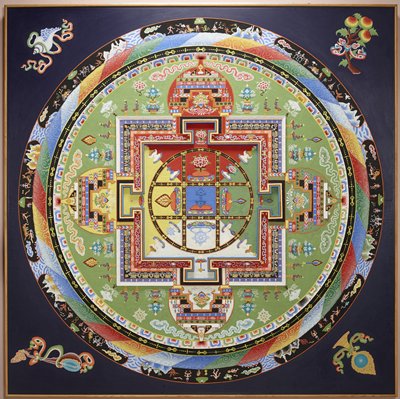
This mandala is a profound work of art on view in the South Asia gallery (G212). Adepts of Tibetan Buddhism use this mandala as a meditation aid to make the journey from samsara, the outer ring representing the snares that keep us bound to this world, and the innermost blue and orange rectangle where the meditator meets the god himself. The impact this work and the portrait of Yamantaka that hangs near it have had on me is as intimate and important as works of art can evoke.
Death is more usual, more understandable, more definitive than life. Life is an anomaly, a gathering of stardust into a moving, recreating entity. Death returns us to stardust. Yamantaka encourages us to embrace our death, to view it not as something to fear but as a friend, a punctuation point in what may be a longer journey, perhaps the most ancientrail of all. Whatever death is, aside from the removal of us from the daily pulse, is a mystery. A mystery that has served as muse to artists, musicians, religions and poets.
Yamantaka has helped me accept the vibration between this life and its end. That vibration can be either a strong motivating force for meaningful living (existentialism) or a depressive chord that drains life of its joy. I choose joy, meaningful living. Perhaps you do, too.
 We have entered the corporate zone. Black friday is a religious event in board rooms across this great land, accountants eagerly showing spreadsheets of how much money will be made from poor people desperate for a decent present to give loved ones. Yes, once we’ve put away the gravy boats, the extra large platters, the aluminum foil we can move on to the biggest revenue source-I mean, holiday-of all: Christmas.
 The notion of incarnation and its celebration hooked up with the Roman Saturnalia and the rest is Rudolph the Red Nosed Reindeer. I don’t know what percentage of annual retail sales occur post-Thanksgiving, but I’m sure it’s more than you’d think. According to
  My version though puts forward not an individual event in Bethlehem, not just incarnation in one child, but an incarnation in every child. Each babe is a true miracle, the universe creating and recreating creatures who can reflect on it. Life, as a random feature of development on this blessed planet, animates, literally, inanimate matter. Life is a godlike power, awesome and equal to any of the claims about the powers of Allah, G*d, Vishnu, Mithras, Ahura-Mazda.
 Holiseason. I find myself soothed and enriched by certain traditions. The holidays are among them. When I eased my psyche into holiseason yesterday, I realized that the holidays will help me survive the insults of Trump’s election.
 After Thanksgiving, or around it sometimes, the Wheel turns to the festivals of light like Diwali, Hannukah, Christmas. We decorate and illuminate. We sing songs, give and receive gifts, enter into traditions older, much older than our nation.
 He sits, early in the morning, while it is still dark outside, with his head in his hands. Orion, his longtime friend hangs in the sky visible to the southwest, Scorpio and Cassiopeia and the Drinking Gourd out there, too. A crescent Thanksgiving Moon, waxing toward its Super Moon event on November 25th, was visible last night.
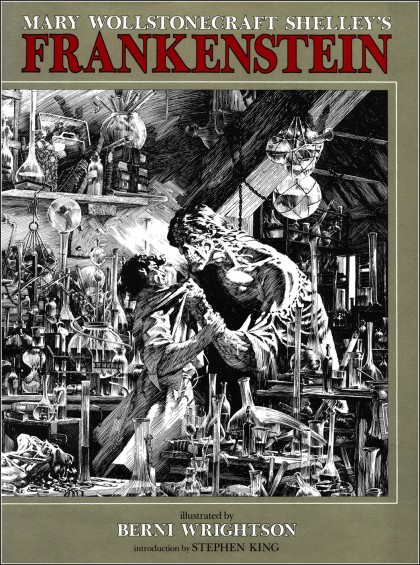 In this case Trumpism is the monster, a living candidacy patched together from a body of populist resentment, the brain of a nativist bigot, the nervous system of fearful white males and the legs of second-amendment worshipping other-phobic citizens. The arms, though, the arms are Trump’s, dangling like the tentacles of a squid, ready to grab, squeeze, embrace. Force. Trump is Frankenstein to this political moment in the Republican Party. The GOP provided the lightning that brought this monster to life and has paraded it with pride through this mockery of a campaign.
 Race relations are in a visibly violent phase. Police kill black folks with so steady a drumbeat that it has become like Trump’s long string of insults to America, dulling our capacity for outrage. Misogyny is at its peak in the Donald, powerful at the same time as our first serious female candidate.
 We have reached the end of another Celtic year. Summer’s End, Samain, marks both the end of the growing season, really, the harvest season and the beginning of a new year. Rosh Hashanah and the Gregorian New Year celebration on January 1st, like the Celtic New Year, put the marker down for a new trip around Sol either at the start of the fallow season or in its midst. In these three instances the New Year seems to suggest a season of reflection, of inner work, as the harvest ends or is well over, while fall and winter stretch ahead.
 So, what does my celebration of the Great Wheel mean? I began thinking about the Great Wheel when I chose to embrace my Celtic ancestry: Welsh and Irish. This was when I began writing novels a millennia ago in the 1990’s. As Kate and I began to garden seriously, joining our lives to the seasonal rhythms of the earth and its weather, the Great Wheel began to live. Time became, as it has remained for me, a spiral, a turning and returning to Beltane and the start of the growing season, to Samain, Summer’s End, and the end of the harvest.
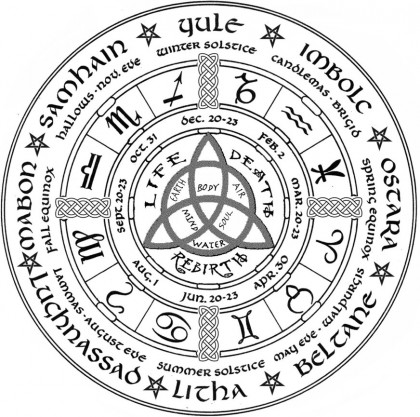 There is life and the spirit of the sun residing in every green thing on this planet. There is life and the spirit of the sun in every insect, mammal, protozoa, fish and flying creature. We are all more alike, much more, than we are different. Think of it. We share this planet, third from the sun, in the goldilocks zone. As living creatures on this one planet among billions of other solar systems, our home is a source of unity, a source of fellow feeling.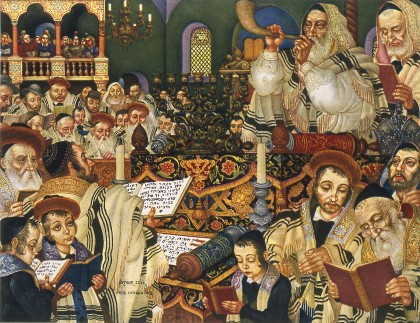
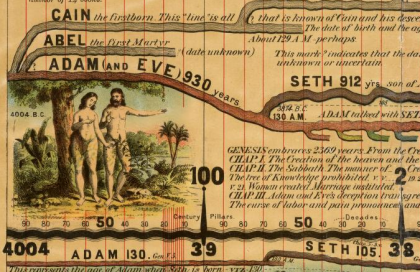 I now celebrate several distinct new years. The Jewish new year, just over, comes not long before the Celtic new year which begins on Samain eve, or All Hallow’s Eve, Halloween. The next one is the Western calendrical new year on January 1st and that is followed by the lunar Asian new year, which comes sometime in February. That’s at least four opportunities to assess the old year and make plans for the new one.
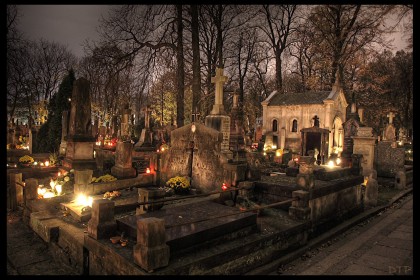 This fall season will end on Samain, the third of the three harvest holidays: Lughnasa, Mabon and Samain. The Celts began their new year with the end of the growing season, a last fruit’s festival, one marking the beginning of the fallow time. I like the specifically seasonal emphasis of Samain, tying the new year not to dogma or tradition or an arbitrary date like January 1, but to the cycle of life on earth, a cycle influenced by the sun.
 Yesterday included three separate trips into Evergreen. First, I took Kate in for the morning Rosh Hashanah service at Beth Evergreen. Then, I came back to answer questions, be available for the electrician and the painter. At noon I went back to pick up Kate and eat the after service lunch with her. All these trips included waits in two spots on Brook Forest Road for culvert repair. Stop. Slow. Stop. Slow.
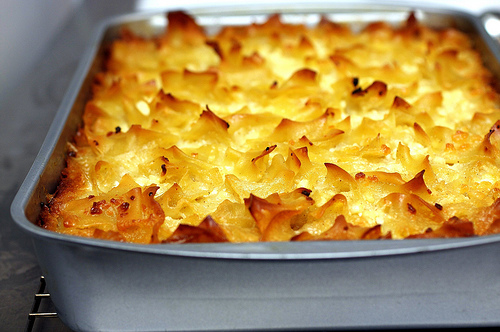 There were kugels in aluminum pans, bagels with lox and cream cheese or chopped egg, fresh cut vegetables, fruit. Paper plates and plastic forks. Lots of eating and greeting. Some very short skirts. Some men carried small cloth pouches containing prayer shawls and yarmulkes. Kids ran around,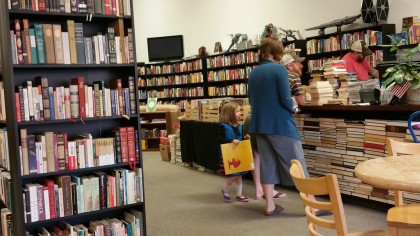
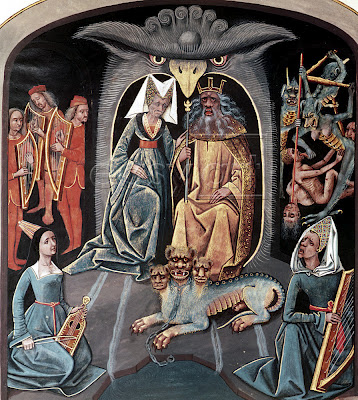
 This conforms to Michaelmas as the springtime of the soul. Sadness is a way we consolidate past experiences and sort them out, learning from them and choosing which aspects of the past to embrace and which to let go. When our tears are over, we are cleansed and renewed, ready for the next phase of life. Autumn gives us an annual opportunity for self-renewal. This Great Wheel, natural cycle phenomena matches up exactly with Rosh Hashanah and its climax, Yom Kippur.