
Winter Waxing Moon
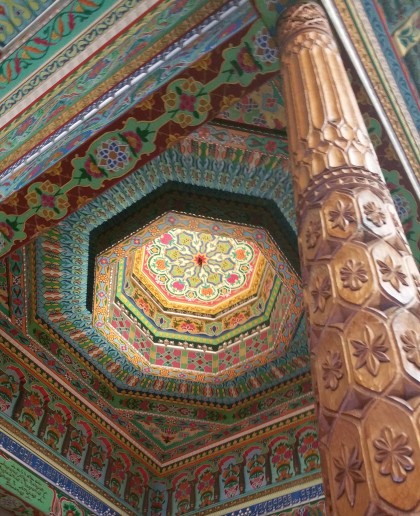 Quick geopolitical quiz. Where is Tajikistan? No googling, no globe, no world map. Where is it? If you know, you get the sister city of Boulder appellation, Friend of Dushanbe. Friend of what? Oh, you didn’t know that Dushanbe is the capital of Tajikistan? No, we’re not revoking your nametag. Not only are we not revoking your nametag, we’re inviting you over to tea at a traditional Tajikistan Tea House donated to Boulder by the citizens of Dushanbe. And, it’s a stunner.
The Boulder Dushanbe Teahouse was fabricated in Tajikistan and then reassembled in Boulder, much like the Teahouse exhibited in the Minneapolis Institute of Art’s Japanese galleries. The result puts you in another place. The intricate, colorful glazed tiles and the carefully hand carved wooden pillars lit by floor to ceiling windows makes the dining room seem both familiar and exotic, intimate, yet expansive. 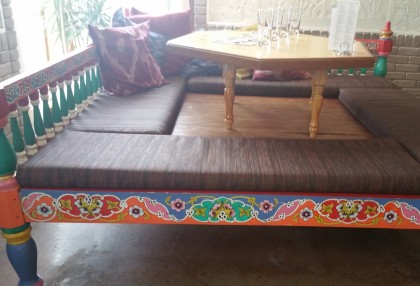 Though we didn’t sit on one of them, there were also raised platforms with cushions and short tables. Looked like fun to me.
The menu has an assortment of dishes ranging from Lapsang Souchong Bulgogi to a Russian Beet Salad. We spent a leisurely hour and a half eating hummus, samosas, and the Russian Beet Salad. The deserts were wonderful, too.
I picked up an ounce of white tea, Silver Needle. My disappointment with the physics of boiling water at 8,800 feet sorta knocked me out of the tea making habit I’d developed in Andover. The Teahouse inspired me to suck it up and get back to it. Starting today, I plan to add tea-making back into my daily routine.
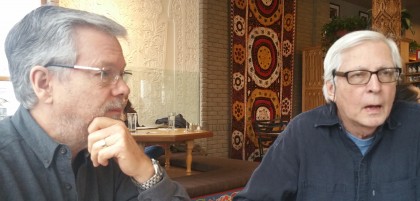
While we ate a gentle snow fell, visible through the large windows. Could have been a morning in Dushanbe. After our meal, we drove over to McGuckin’s. It’s a hardware store, but so much more. First, it’s the size of a big box retailer. It’s aisles have that distinctive hardware shelving and signage, but they include furniture, fly fishing equipment, art supplies, humidifiers, a dizzying range of power tools, garden tools. The atmosphere was laid back, many folks meandering around, like us, taking in its immensity. I found a large brush to paint backgrounds and some tape to use for outlining. A few sponges, too.
The drive back home, about an hour in normal conditions, took almost two. Tom did his usual masterful, calm job as helmsman. Unfortunately the timing meant that he and Mark dropped me off, then headed back down the mountain to make their 7:00 pm flight. DIA is far from our house and you have to traverse the whole of the Denver metro to get there. Not a fun drive.
Ram Dass sums it up: We’re all just walking each other home. Tom and Mark came out and we hiked another few miles toward that final destination, the most ancientrail of all. The precious value of knowing we’re not walking alone turns us into fellow pilgrims. Life without travel companions is a burden; with fellow pilgrims it’s a rich, exciting journey toward the unknown.




 Kate came to our MVP group after the religious school class. Marilyn Saltzman picked her up. She lasted a bit over an hour before she began to fade. She’s decided to challenge herself, get out more, see people, build her stamina. I’m so proud of her. It’s tough and in these early days it’s impossible to calibrate well, so she shows up and stays as long as she’s able. When people see her, they smile, come over, give her hugs. Important for healing. Slowly.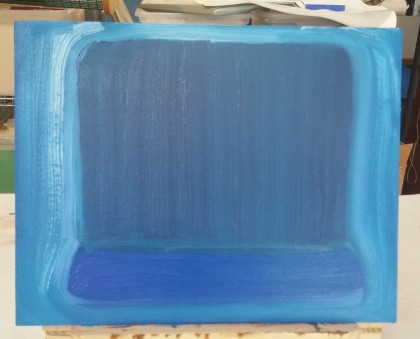

 I’m responsible for the next lesson, tomorrow, as I was last week, but with Alan as back up this time. Last week we worked with the middah, character trait in the Jewish ethical discipline of
 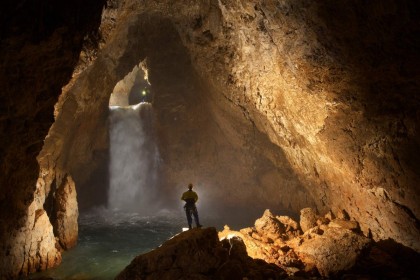 I have had many encounters of this kind and they vary in which characteristic of the Holy they emphasize. I’ve written before about my mystical experience on the quad at Ball State. Fascinans dominated. I wanted to be there, in a state of total linkage with all. I wanted to stay. In high school I attended a summer church camp at Epworth Forest in Indiana. We learned a lot about communion and in particular I took to the heart the idea that if we didn’t reconcile with others, we might “eat and drink our own damnation.” OK. I was an impressionable guy in that moment. But the fear occasioned by that idea made me find a young woman whom I’d teased and ask for her forgiveness. Stepping into the Sistine Chapel. Awe. Driving to Bailey and seeing the Continental Divide capped with snow. Awe. Contemplating my own death. Fear moving toward awe.
 Winter Waxing Moon
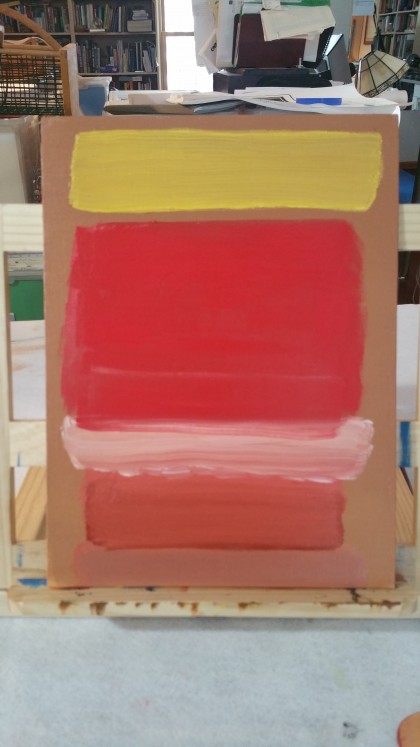
 When I went downstairs yesterday after a hard day at the easel (hah), I had my hearing aid in, but still didn’t hear something Kate said. I asked her to repeat it. She waved me off dismissively. Most of the time, I get it. It’s no fun having to repeat yourself. It can feel like I’m not paying attention or being respectful. Over and over. For some reason though, the dark vessel constructed in those first days of my deafness in my left ear, a vessel built to carry the notice that my body would someday fail me altogether, surfaced.
 In the wake of Kate’s dismissal 33 years of grief, of annoyance, of having to explain, of being handicapped-always, broke into consciousness. I felt overwhelmed by the accumulated sadness, anger, discomfort. Didn’t know I carried within me this complex. I’m imagining a black submarine navigating the seas of my inner world. When its bow first broke through the waters of my attention, it stunned me. Knocked me back. I took it out on Kate. Not good.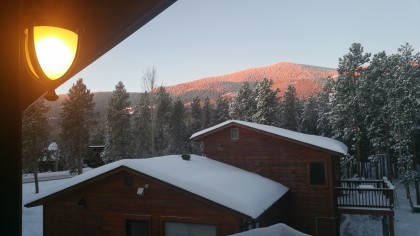

 Gonna look at material for the religious school class on the 16th. Alan will be back from Argentina. Our lesson theme is yirah, awe. Getting fifteen inches of snow over 36 hours creates yirah. We do not impact the weather, at least not directly. Yes, climate change is effecting the sorts of weather we get, but we don’t get to choose the diverse effects of our self-genocide. Fifteen inches of snow is like a volcanic eruption or a tsunami or a tornado, sudden, unpredictable except just before the fact, a natural act that changes the immediate environment dramatically. Though not as devastating as those violent manifestations, a great snow storm does show the power of the natural world, something to which we have to adapt rather than something we can manage.
 Yirah and kadosh, holy or sacred, go together. Rudolf Otto defines sacred as an experience of awe, yirah, and the mysterium tremendum et fascinans:
  Something experienced in ordinary life but also wholly other. I’ve been following a sailing race, the Golden Globe, in which several skippers competed against each other in solo jaunts around the world. Ask any sailor, solo or not, who’s navigated the roaring forties about yirah and mysterium. They’re manifesting every day, every hour in places most of us will never go; but, a few do. Wholly other, but also part of the same puzzling universe which coughed us up into life.


