Winter Garden Planning Moon
Found these on the old Pollster.com, now HuffPost/Pollster. As a texter might say, WTF?
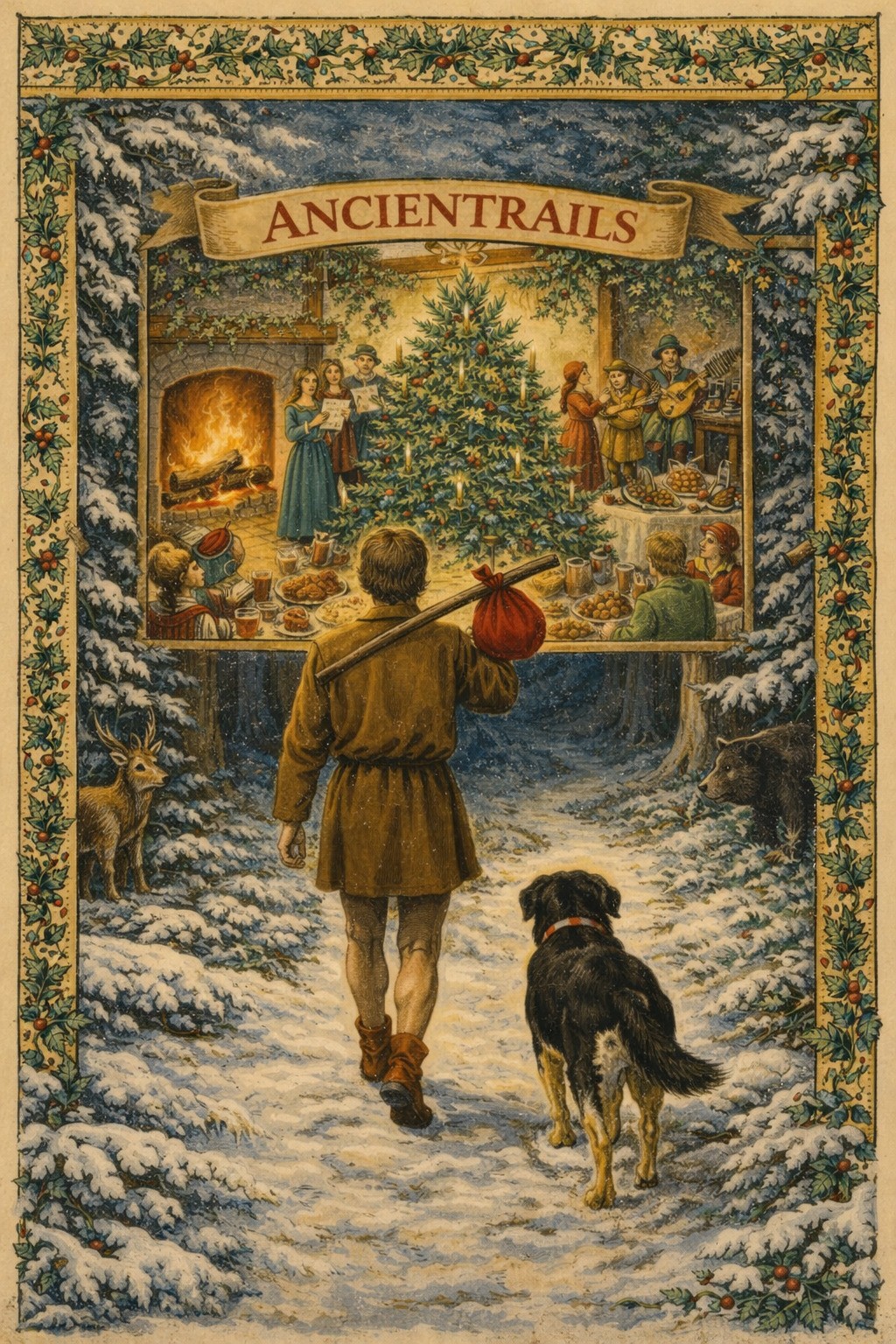
Found these on the old Pollster.com, now HuffPost/Pollster. As a texter might say, WTF?
Winter First Moon of the New Year
Gingrich wins. Romney won. Santorum won. The longer and more divisive the Republican primary season, the better. Let them shred each other. It could give Obama a chance he may not deserve, but one I hope he gets.
On the other hand. A sharply divided and ideologically splintered opposition can make governing a real headache, especially if the Republicans retain control of the House and take the Senate. This latter is possible, with seven Democratic seats up and only two Republican.
The partisan in me wants to watch the Republicans blow themselves up, weaken their party back to the special interest group it used to be, but I know that’s not a good way forward for our country. We need two parties, a more conservative, fiscally conscious and moderately bellicose one and one dedicated to justice, economic and social. These are two legitimate strains of thought when it comes to understanding and creating policy for our country. The best governance comes from these two impulses fighting it out in an atmosphere of mutual respect.
Given my druthers we would move toward the democratic socialism of Europe, covering health care, creating affordable housing, solid support and aid for those who cannot find work, seeing that everyone gets as much education as they can tolerate, and providing solid retirement benefits.
Martin Luther King said it best: “the arc of the moral universe is long but it bends toward justice.”
I believed that in 1964 and I believe it today. We must keep working, not become faint-hearted or victims of despair. Just when greed seems to have gained the high ground, just when hatred seems stronger than love, just when the 1% seem to obscure the 99, just then will the high ground transform to common ground, love embrace hatred and the 99% become seen and heard and felt.
Winter First Moon of the New Year
At an inflection point with the Latin. Either I keep the pace I currently follow, maybe 6 hours a week; or, I ramp up, say to 10 or 12, maybe a couple of hours each day. Some analysis of other texts–maybe Caesar or Suetonius or Julian, I have all of these in Loeb Library volumes–plus more translating of the Metamorphoses. My inclination is to ramp up, do more, focus on Latin and the novel. That’s what my heart tells me.
That other project, too. The one I’ve got slotted for 5,000 word essays each month next year. Where I’m going to give voice to my whirling ideas about the earth, about ge-ology, about what would help us help our home planet. That one, too.
When you add these things together, they constitute real work and I feel good about that, not trapped or bummed. Now all I need is a way of allocating my time so I can work them all in and still manage the art, the garden, the bees and family.
That may be my new year’s work. Pruning activities and creating a new schedule.
Winter? First Moon of the New Year
This head line, reassuring and hopeful as it is, still seems sad. An animal, an apex predator, that used to roam freely throughout the West now receives newspaper attention for returning, on its own, to the old habitat.
May these kind of experiences become common and unworthy of public attention by the time Gabe and Ruth grow up. Make it so, Mr. Sulu.
(read full story in the LA Times here)
The young animal is the first wolf known to be at large in California since 1924. Wildlife authorities in both states have been monitoring the wolf since it set out from the Crater Lake area in September.
Winter Moon of the Winter Solstice

System D economics. Never heard of it? Read Wired magazine’s print edition this month. System D economics, named by an economist who studies system D, are the economics of the gray and black markets.
“System D is a slang phrase pirated from French-speaking Africa and the Caribbean. The French have a word that they often use to describe particularly effective and motivated people. They call them débrouillards. To say a man is a débrouillard is to tell people how resourceful and ingenious he is. The former French colonies have sculpted this word to their own social and economic reality. They say that inventive, self-starting, entrepreneurial merchants who are doing business on their own, without registering or being regulated by the bureaucracy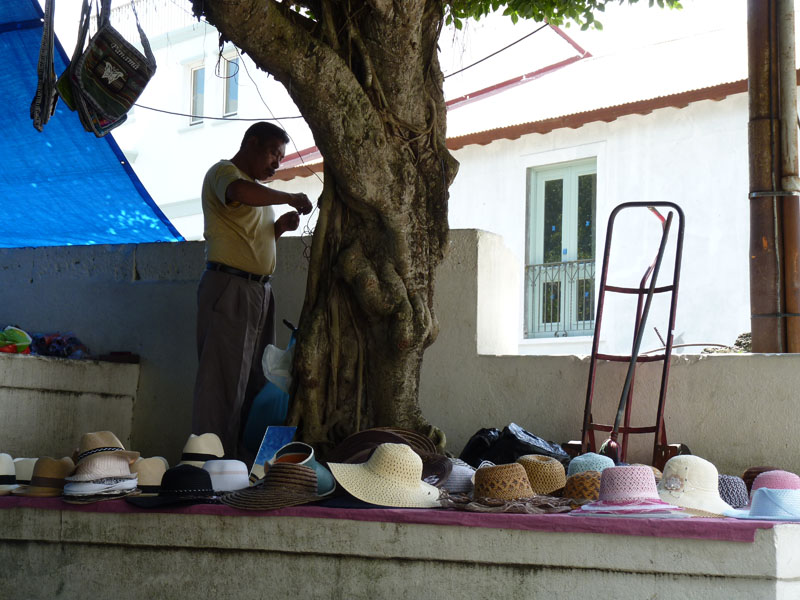 and, for the most part, without paying taxes, are part
of “l’economie de la débrouillardise.” Or, sweetened for street use, “Systeme D.” This essentially translates as the ingenuity economy, the economy of improvisation and self-reliance, the do-it-yourself, or DIY, economy…
The total value of System D as a global phenomenon is close to $10 trillion. Which makes for another astonishing revelation. If System D were an independent nation, united in a single political structure — call it the United Street Sellers Republic (USSR) or, perhaps, Bazaaristan — it would be an economic superpower, the second-largest economy in the world (the United States, with a GDP of $14 trillion, is numero uno).” Freakonomics, quoting the Wired article.
Visiting South America introduced us to System D economies, especially in Ecuador, Peru and Brazil. The most memorable instance was the shuttle service to the Rio International Airport. As soon as we began moving away from the beaches, vendors began to show up.
At a particularly valuable location, a small v of land jutting out into two streams of traffic, four lanes on one side, four on the other a man stood with cups and bottles of an orange drink. He sold cool liquid to drivers and passengers of vehicles slowed or stopped by rush hour traffic. He was doing very well.
As we moved further away from the city, the action got stranger. On the divided highway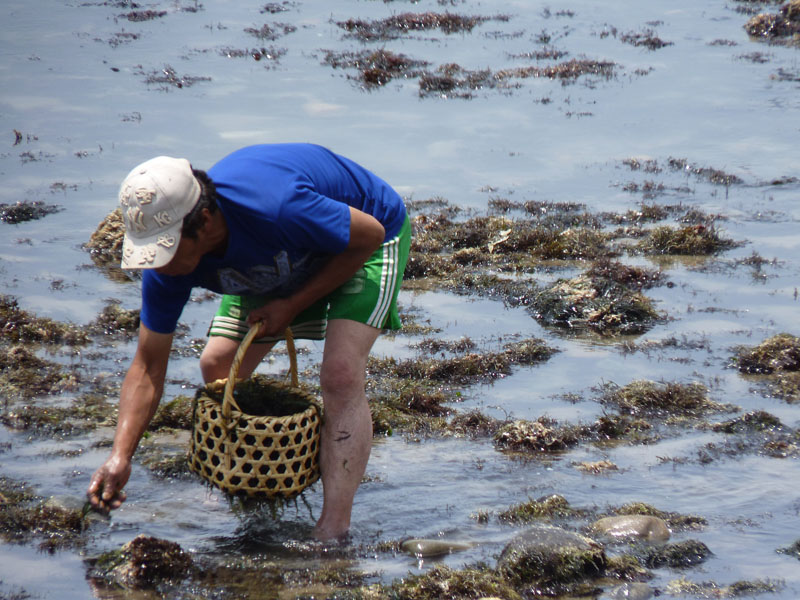
(seaweed collector, Trujillo, Peru. cbe)
(at least 4 lanes each way) leading directly to the airport, kids sold popcorn and nuts. They vended their goods by standing in the small shoulder between the lane closest to the concrete divider and the divider itself. As traffic came to a standstill from time to time, they would dart out into the traffic and sell a bag of colorful popped corn.
There weren’t just a few of them either. Perhaps the oddest part of this came when Kate leaned over and said, “Look, there’s a guy a wheel chair over there.” And, sure enough, there was, a vendor in a wheel chair.
Samain Moon of the Winter Solstice
Protesters as Person of the Year. Tyranny comes at a price, at first often with an invisible price. Who can see thwarted dreams, diminished freedom? An early reaction to tyranny may be to turn anger toward oneself, increasing domestic violence, suicide, anxiety, depression.
If tyranny has an effective enforcement arm, then the early reactions can change to despair and, worst of all, resignation. Eastern bloc countries under Soviet rule. Native Americans on reservations around the turn of the last century. Nanking under the Japanese.
Even despair, though, masks, does not eliminate, the human desire for liberty. Any tiny crack in the casing of despair or fear can bring outsized responses. Just ask Qaddafi, Mubarak, Assad, Wall Street.
Protest speaks the language of despair, gives visibility to the invisible. Protest changes our perceptual range so we can see into the infrared end of the political spectrum, the place where the oppressor’s hand lies heavy but hidden.
Some Occupy Wall Street folks say their time in the occupying camps are the highlight of their lives. Of course. Whenever we stand up, say enough, our lives themselves become visible, tangible, even to ourselves.
Samain Moon of the Winter Solstice
Christopher Hitchens died. An honest man, Diogenes would have stopped searching. He faced death as a non-believer, a man whose God Is Not Great made him a name in the theist–anti-theist debates of this millenia’s early days.
His angry anti-religious bias fit in well with the Richard Dawkin and Sam Harris crowd, agreeing with their totalizing, methinks-they-protest-too-much screed. If religion is so bad, why has it persisted for so long? A scathing atheist has backed himself into a metaphysical box, one much like the box he insists all religionists occupy.
To adamantly claim God’s non-existence is just as silly and unwarranted as the claim of God’s existence. Neither can have, by definition, empirical validation, so, in each case we enter the realm of faith, of conjecture believed because it feels right, true.
Faith in its purest forms is a beautiful aspect of human culture, allowing us to transcend the often bleak realities of the day-to-day, finding a blissful reality where others see only pain and boredom. Marriage, for example, requires faith in another human being, another human being as wonderful and amazing as yourself and as awful and horrible.
Monotheism as practiced in the dominant Western religious traditions is only one item on the menu of faith as offered by human culture and even it comes in three flavors: Christian, Jewish and Muslim. The ancient traditions of the West synch up better with the pluralist pantheons of India, Nepal, Tibet, Africa and the indigenous Americas.
Monotheism, rather than religion per se, seems the better target, since it makes definitive and often absolute claims, claims which sometimes pose as divine law, unbreachable and final. The nature of monotheism’s claims rather than its actual content or institutional form are the problem.
With one deity and one book the temptation to sure knowledge, certain dogma too often overwhelms these believers, though in all three traditions there are, too, the more measured, more humble ways. In fact, strange as it may seem given the all too charged dialogues of the past twenty years, the liberal orientation–former mainline Christianity, reform Judaism and the Sunni/Sufi mainstream Islam–is numerically dominant.
Samain Moon of the Winter Solstice
Republican presidential candidates. Gingrich writes alternative history fiction, some of which I understand is very good. As long he sticks to fiction, I’ll pay attention; when he blurs the line, taking the fictional world of alternative history into the day to day world of real politics, I shudder.
Mitt Romney has the charisma of a cheese cloth, but hey, we Democrats nominated Michael Dukakis, John Kerry and Al Gore. Combined they have the charismetrics of soggy diapers.
Michele sees Romney, Gingrich and Perry as the same. This might be one of those times when Michele and I agree. Problem is, I’d lump her in right in there with those three. Loony or boring. Quite a combination of attributes.
Right now, with the Iraq war ended, Osama dead, the economy showing signs of life and congress with a lower popularity rating than, than, well, than the Freshkills landfill, I can see a situation where Obama backs into a second term. Might happen.
Samain Moon of the Winter Solstice
As 65 nears there is one more physical left under the old, private insurance model. COBRA, which allows extension of private medical insurance for up to 18-24 months after loss of employment or retirement, if you can afford it, has kept the Health Partners plan in place until February 14th, when this baby boomer adds another droplet to the silver tsunami.
So, one last time under the private health care insurance model that has bankrupted and made more ill hundreds of thousands in this the wealthiest of all possible countries.
Tom Davis has seen me now for four years or so since Charlie Peterson took off for Colorado, Steamboat Springs. Tom collects native american pottery and hopes some day to become a docent at the MIA. He’s a good doc, a geriatrician in the mix.
Each year. Downtown to the Medical Arts Building. Park in the ramp, find the skyway. Take the elevator. Yes, nothing to eat or drink other than clear liquids since midnight. The blood pressure cuff, measuring my major health problem. Once by the nurse. Then again by Tom. Maybe yet again.
The ritual questions. Any difficulty swallowing? Any changes? And on. Probing with words while the eyes watch, looking for signs, fleeting symptoms. Diagnostics at work, the differential tree now second nature, honed by so many patients.
Disrobing. The paper gown. So cute. Poking, coughing. A reflex tested. Prostate checked. Prescriptions refilled. Blood work drawn. Urine sample.
After visit summary in hand, back out through the lobby. Others wait. For the blood pressure cuff. The ritual questions. The disrobing.
Next year though it will be socialized medicine and a local HMO taking care of the visit. Medicare is not the problem, it’s the solution.
The ritual question for solving the problem: for whom will you vote?
Samain Moon of the Winter Solstice
Durban. On the somewhat binding, sort of advanced, might be effective at some point result of this latest climate summit.
On this point a very interesting column by a philosopher wondering how to make his discipline matter. On climate science he suggested analyzing the thought and logic of so-called climate skeptics. Given the weight and quantity of high quality data documenting climate change, climate skepticism is not skepticism, rather it’s the height of credulity. That is, true skeptics, given the science, would doubt the doubters who somehow swallow, accept as credulous, the patent propaganda of those whose self-interest (as they short-sightedly see it) turns them against facts.
“The last-minute successful agreement at Durban puts pressure on what has been the world’s biggest obstacle to a climate agreement – the US Republican party.
For ten years or more, they have walked out of hearings on renewable energy or climate policy with “We won’t act on climate because China won’t!” – a petulant mirror image of the parental favorite: “Would you jump off a bridge, just cause your friend does?””
But now – China will.
In terms of sheer global impact, there is nothing else within human control that matters more than reducing carbon emissions. We insist on running our present in a way that commits our grandchildren to a difficult, if not downright dangerous, world.
Because this is global politics and because the big emitters, China #1 and US #2, have internal political problems on this issue, as does India, and because the world is in the midst of a very unsettled global economic mess, the odds of something substantive happening seems faraway, distant.
It may be that this is the way the world ends, not with a bang, but a fever. But, maybe not.*
“So does the outcome in Durban truly represent a “remarkable new phase,” as U.N. Climate Chief Christina Figueres put it? Does the Durban Platform really “set a new course for the global fight against climate change” (the phrase from an Associated Press wire story that many media outlets have picked up)? Maybe, but it will require a whole lot of work by the likes of the United States and China to keep the world on that course. At the very least, perhaps one could say, in that regard, that in the Durban Platform two of the world’s biggest emitters have agreed to stop squabbling and have shaken hands.”