Winter Cold Moon
Existentialism is a philosophy for the third phase. No matter what other metaphysical overlays you may have the tick-tocking grows louder as you pass 65. When this clock finally strikes, it will take you out of the day to day. Forever. Strangely, I find this invigorating.
In case you don’t get it the occasional medical bomb will go off to make sure you pay attention. Last year, prostate cancer. This year, that arthritic left knee. Kate goes in for an endoscopy on January 3rd. She’s waiting approval for a biologic drug to help her rheumatoid arthritis. All these are true signs of the pending end times, but they are not the end itself. These medical footnotes to our lives press us to consider that last medical event.
I’ve followed, off and on, the Buddhist suggestion about contemplating your own corpse. I imagine myself in a coffin, or on a table somewhere prior to cremation. This is the work of Yamantaka, the destroyer of death, in Tibetan Buddhism. I’m not a Buddhist, nor do I play one on TV, but I became enamored of Yamantaka while learning about the art of Tibet and Nepal at the Minneapolis Institute of Art.
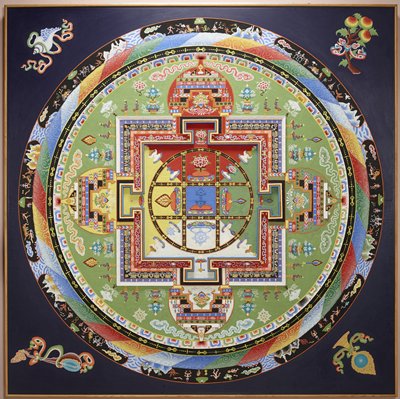
This mandala is a profound work of art on view in the South Asia gallery (G212). Adepts of Tibetan Buddhism use this mandala as a meditation aid to make the journey from samsara, the outer ring representing the snares that keep us bound to this world, and the innermost blue and orange rectangle where the meditator meets the god himself. The impact this work and the portrait of Yamantaka that hangs near it have had on me is as intimate and important as works of art can evoke.
Death is more usual, more understandable, more definitive than life. Life is an anomaly, a gathering of stardust into a moving, recreating entity. Death returns us to stardust. Yamantaka encourages us to embrace our death, to view it not as something to fear but as a friend, a punctuation point in what may be a longer journey, perhaps the most ancientrail of all. Whatever death is, aside from the removal of us from the daily pulse, is a mystery. A mystery that has served as muse to artists, musicians, religions and poets.
Yamantaka has helped me accept the vibration between this life and its end. That vibration can be either a strong motivating force for meaningful living (existentialism) or a depressive chord that drains life of its joy. I choose joy, meaningful living. Perhaps you do, too.
 Christmas. Today. Right now the electricity of children twirling in their beds after a sleepless night, the clatter of little feet racing down stairs, bleary eyed parents waking up, wondering why all of this has to happen so early in the morning cause psychic vibrations to pulse through the country, hitting even the top of Shadow Mountain. If they were lit, they would put the northern lights to shame.
 Winter Moon of the Winter Solstice
 My mother and my Aunt Virginia helped me. At the family farm in Morristown, Indiana I drug myself along the sofa, my head often collapsed on the floor, getting rug burns as I pulled it along with the rest of my body. They helped, but it was only that young boy who could move his legs, drag his body along. He did it. Since then, I have identified walking upright in the world as a major theme of my life.
 During holiseason many cultures celebrate holidays of light: hanukkah, diwali, christmas, for example. They are rituals that stand against the primal fear occasioned by the winter solstice; that the sun will never return, that the world will continue to grow dark. Even last night at mussar we spoke of the light of the candle, finding the light reflected in unusual places, the light that can get us through this period.
 The sabbath experiment. I liked it for the most part. There was a couple of hours + for reading. I reread the material on zeal in the Mussar text translated by Rabbi Mordecai Kaplan. I also read the Torah portion for this week, the story of Sarah ending with the death of Abraham. Finally got into
 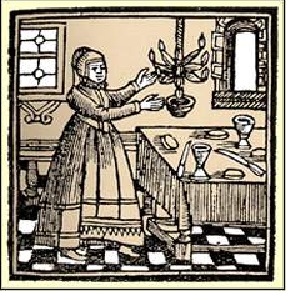 The sabbath as a day of rest fascinates me. It seems, in our ramped up and goal oriented culture, it’s easy to lose sight of truly important matters: family, inner work, reading in a spiritual or religious tradition that works for you, meditation.
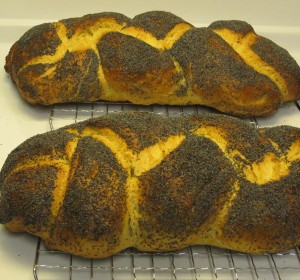 I’m easing into this starting this week. Therefore, this post, though an act of creation, is a signal not to expect a post from me anymore on Saturday mornings or during the day. If I make a Saturday post, it will be after sundown when the sabbath ends.
 We have entered the corporate zone. Black friday is a religious event in board rooms across this great land, accountants eagerly showing spreadsheets of how much money will be made from poor people desperate for a decent present to give loved ones. Yes, once we’ve put away the gravy boats, the extra large platters, the aluminum foil we can move on to the biggest revenue source-I mean, holiday-of all: Christmas.
 The notion of incarnation and its celebration hooked up with the Roman Saturnalia and the rest is Rudolph the Red Nosed Reindeer. I don’t know what percentage of annual retail sales occur post-Thanksgiving, but I’m sure it’s more than you’d think. According to
 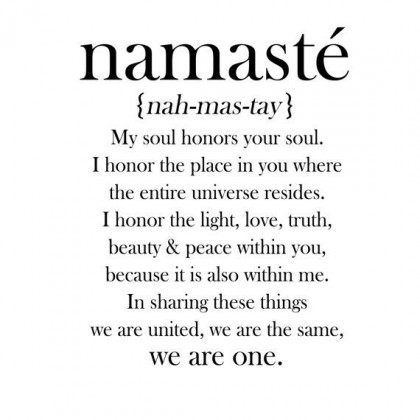 My version though puts forward not an individual event in Bethlehem, not just incarnation in one child, but an incarnation in every child. Each babe is a true miracle, the universe creating and recreating creatures who can reflect on it. Life, as a random feature of development on this blessed planet, animates, literally, inanimate matter. Life is a godlike power, awesome and equal to any of the claims about the powers of Allah, G*d, Vishnu, Mithras, Ahura-Mazda.