Category Archives: Faith and Spirituality

Too Much Salt?

Spring                                                  Wedding Moon

Ruthandgabeuppermax300The snow has been less than predicted, a good thing. Still, it’s the wet, heavy, slushy stuff that makes snowblowers clog up.

Jon, Ruth and Gabe are coming up tonight. Jon and Ruth will go skiing tomorrow and Gabe will stay with us. Ruth and I plan to take in a Fiske Planetarium (Boulder) show on black holes this evening. Kate’s making Mississippi Pot Roast. This is the sort of thing that, no matter how much we might have wanted to do it, was impossible when we lived in Minnesota.

Got rid of 4 bookcases bought long ago at Dayton’s warehouse in Minneapolis. They’d seen me through the house on Edgcumbe and in Andover. Most of these got sold off in Minnesota, but the remaining four held some books while the built-ins were under construction. That opens up space in the garage. It’s a priority as soon as the weather warms up. Would’ve been last year if it hadn’t been cancer season over the summer.
saltOK. I have a confession to make. I’ve been putting too much salt on my food for years. Big surprise, I’m sure, to all of you who have witnessed it. In fact, I was following an approach suggested by my internist, Charlie Petersen. His opinion was that once you passed a point where a problem, blood pressure in this instance, required treatment, you didn’t need to modify your behavior if the treatment worked. And it did. For many years. But, not now.

Over the course of the trip to Asia I stopped adding salt to my food. My blood pressure, which had been labile before the trip, suddenly fell into line. Damn it. Empiricism is such a bitch. And, not so small side benefit. It’s easier to sleep through the night since my fluid retention has significantly decreased.
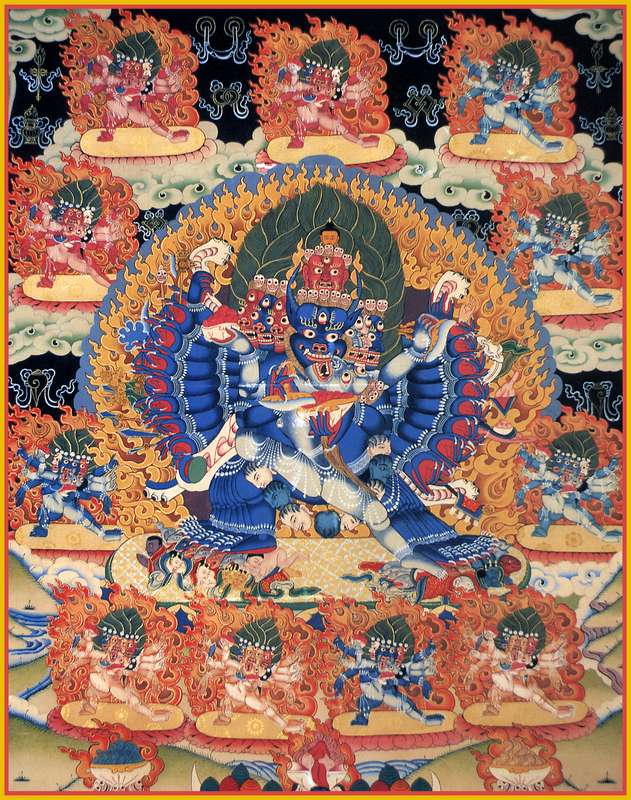
Yamantaka 13 Deitykat1

There is no doubt that I have a self-destructive homunculus in residence. Smoking and drinking took me several unpleasant years to put into the past. Just why this little guy is so interested in my demise, I don’t know. Maybe he’s the death wish that Freud believed we all have. He doesn’t give up. If I start one of these activities again, I quickly go back to the maximum use. I learned this while quitting smoking, several times.

It’s tough getting him to just sit still. You would think that, having visited Yamantaka (the slayer of death) many times over the years, he would calm down. Yamantaka is the Tibetan God of death itself. To worship him one thing you can do is look your own death straight in the face, imagine yourself dead, meditate on your own corpse. In this way Yamantaka helps us to accept death for what it is, a natural and not to be feared part of human existence.

Seems like that would get this homunculus to quiet down. Oh, it’s going to happen anyway and it’s ok, so why do I have to speed things up? But, no. Doesn’t appear to work that way.
Why grief?

Spring                                                         Wedding Moon

As you might expect, I’ve been thinking about death, about grief in the wake of Vega’s sudden death. In particular I’ve been wondering how I can have a grasp on my own death, no fear, but be so distressed at Vega’s.

Then, it occurred to me. In movie thrillers the torturers often open their usually neated packet of tools: knives, pliers, dental picks, pieces of bamboo with a flourish. Or, as in the Marathon Man, the dentist goes to work on you without anesthetic.  In many cases the torturee summons up inhuman courage or an anti-heroic defiance.

When the usual infliction of pain or disorientation fails, or when the torturer is portrayed as unusually sadistic, friends or colleagues or family members of the torturee are led into the room. Then the torturer goes to work on them. Seems effective in the movies I’ve seen.

Grief, at least in part, is because the universe is such a torturer. Not with malice, of course, but certainly with a sort of intention. Life has an endpoint and entropy sees that it arrives. So, it’s possible to have the notion of your own death sorted out while responding with agony to the grim torture of having your friends removed from the room .

But You Can Never Leave

Spring                                                            Wedding Moon

20160415_121403

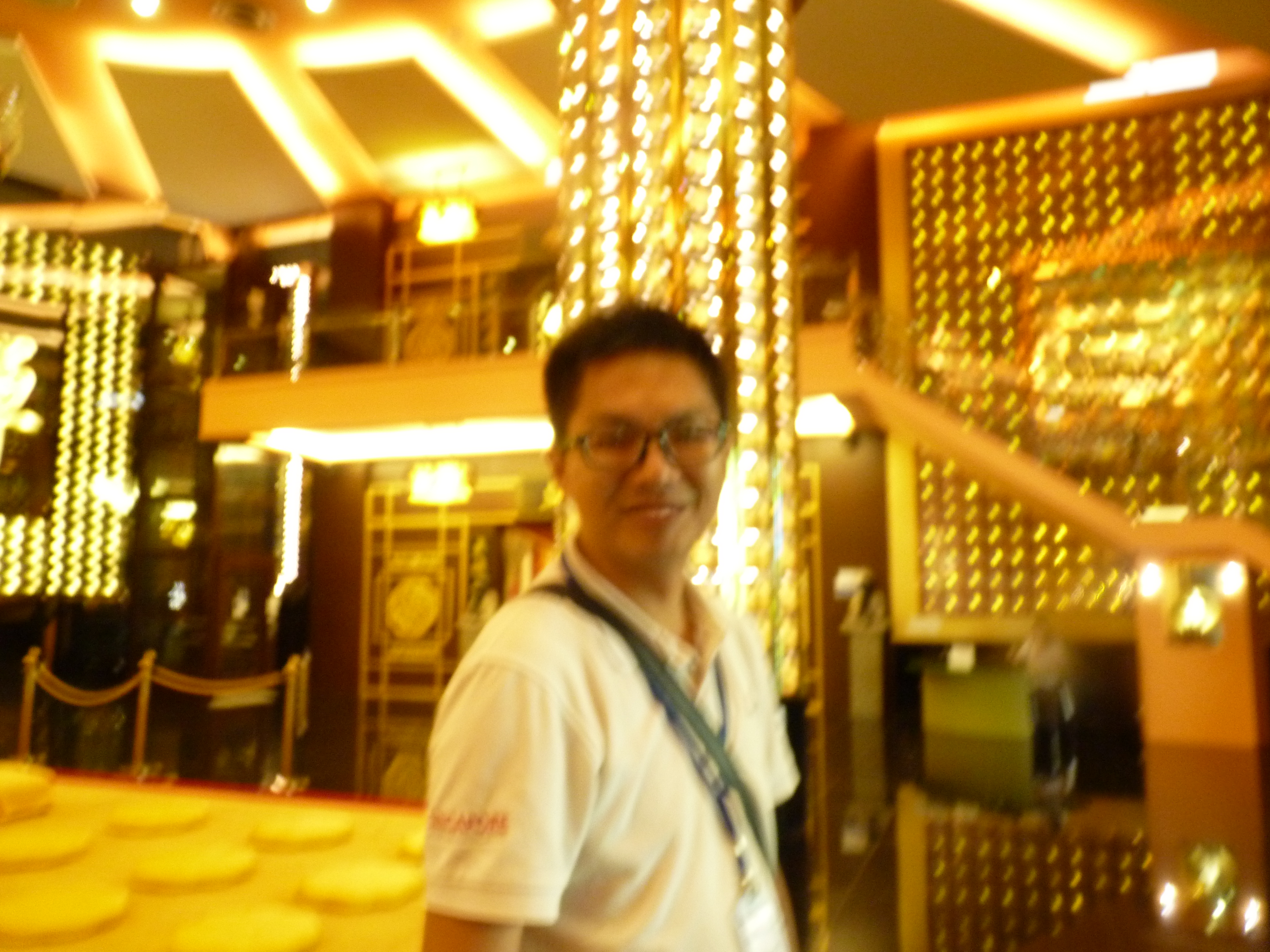
Kate and I have been to Nirvana. And even had lunch there. Hameed, our taxi driver, when asked whether it was a popular tourist attraction, shook his head. No, he had never taken anybody there. He seemed a bit bemused.

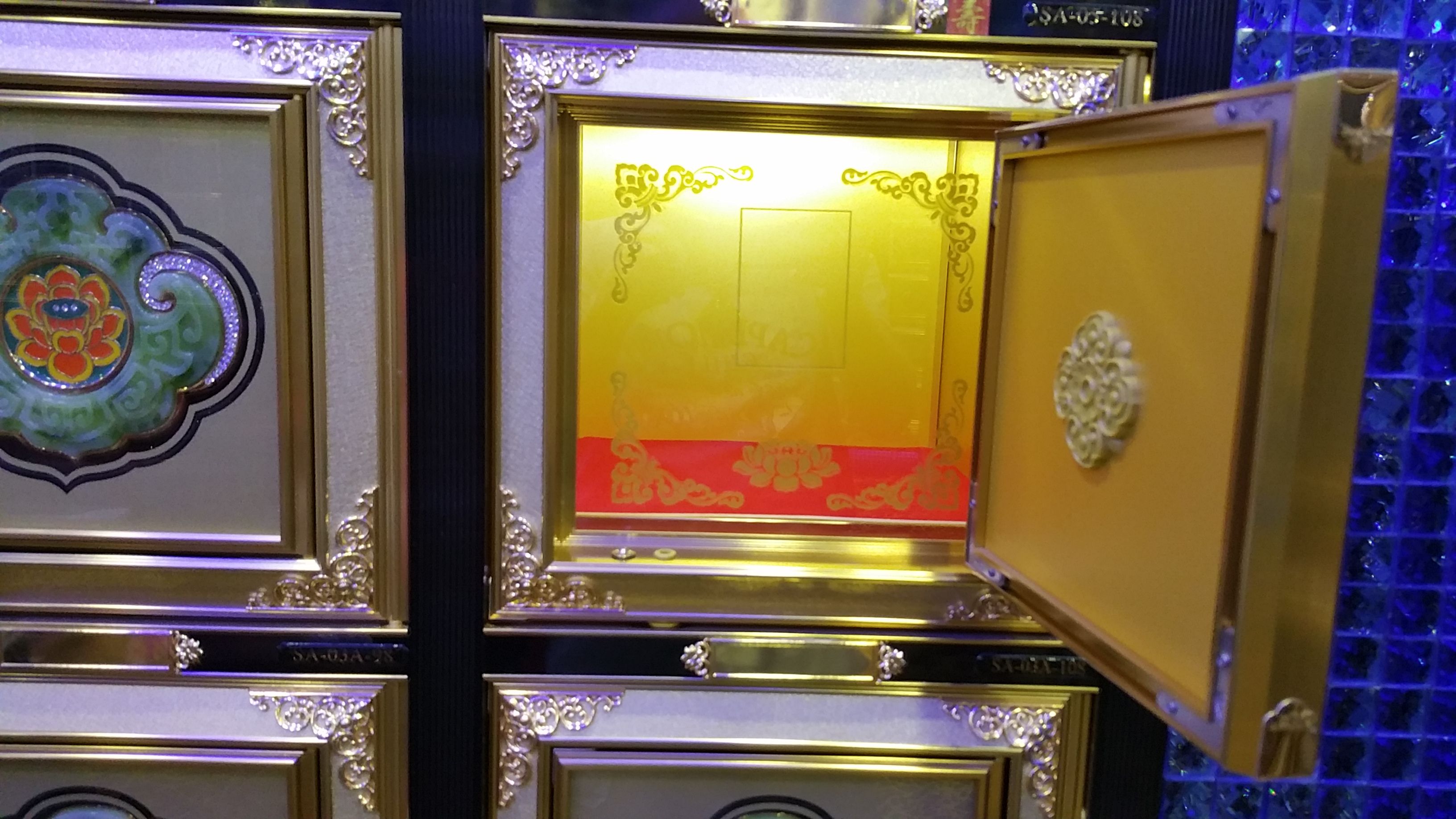
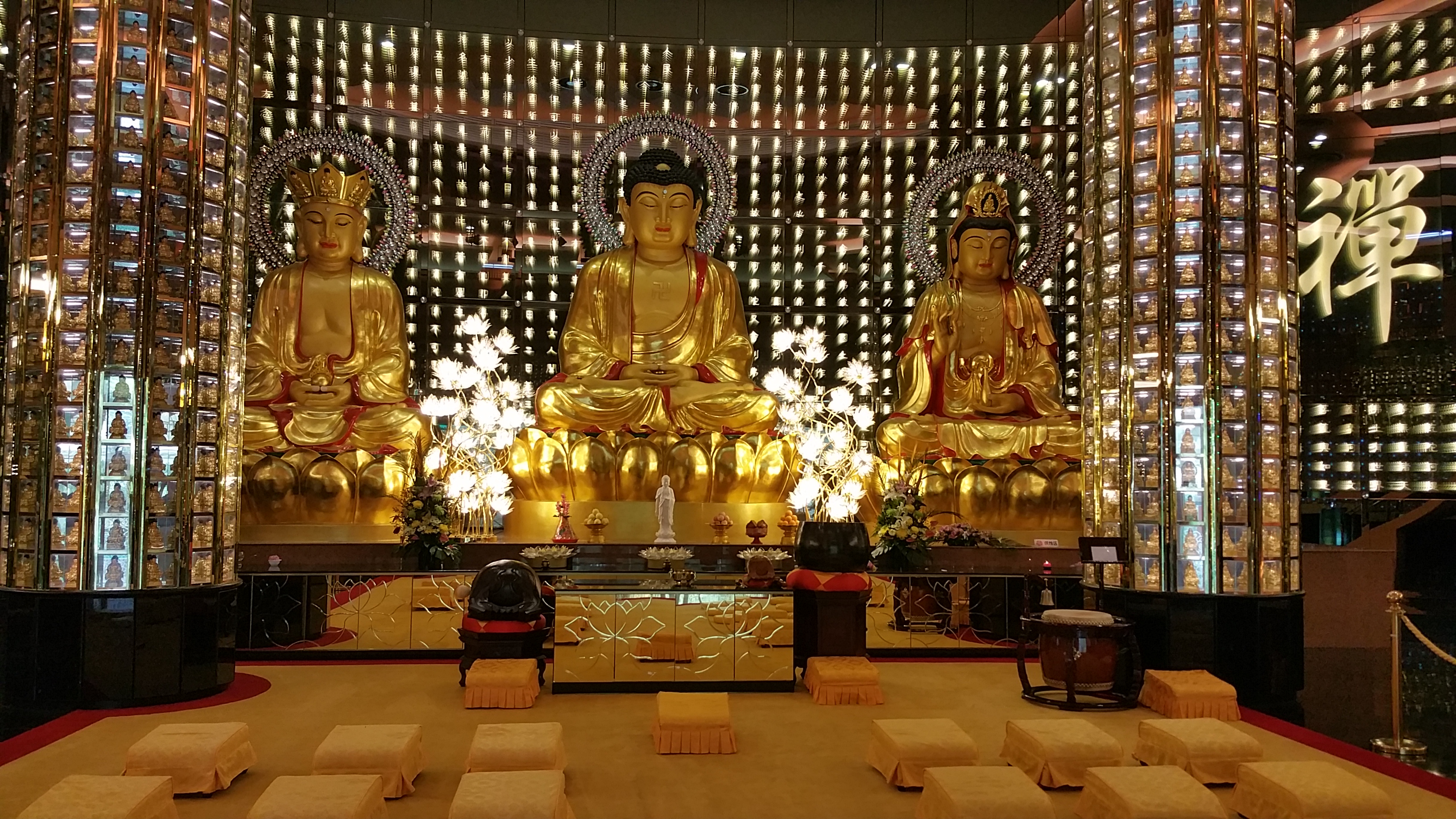
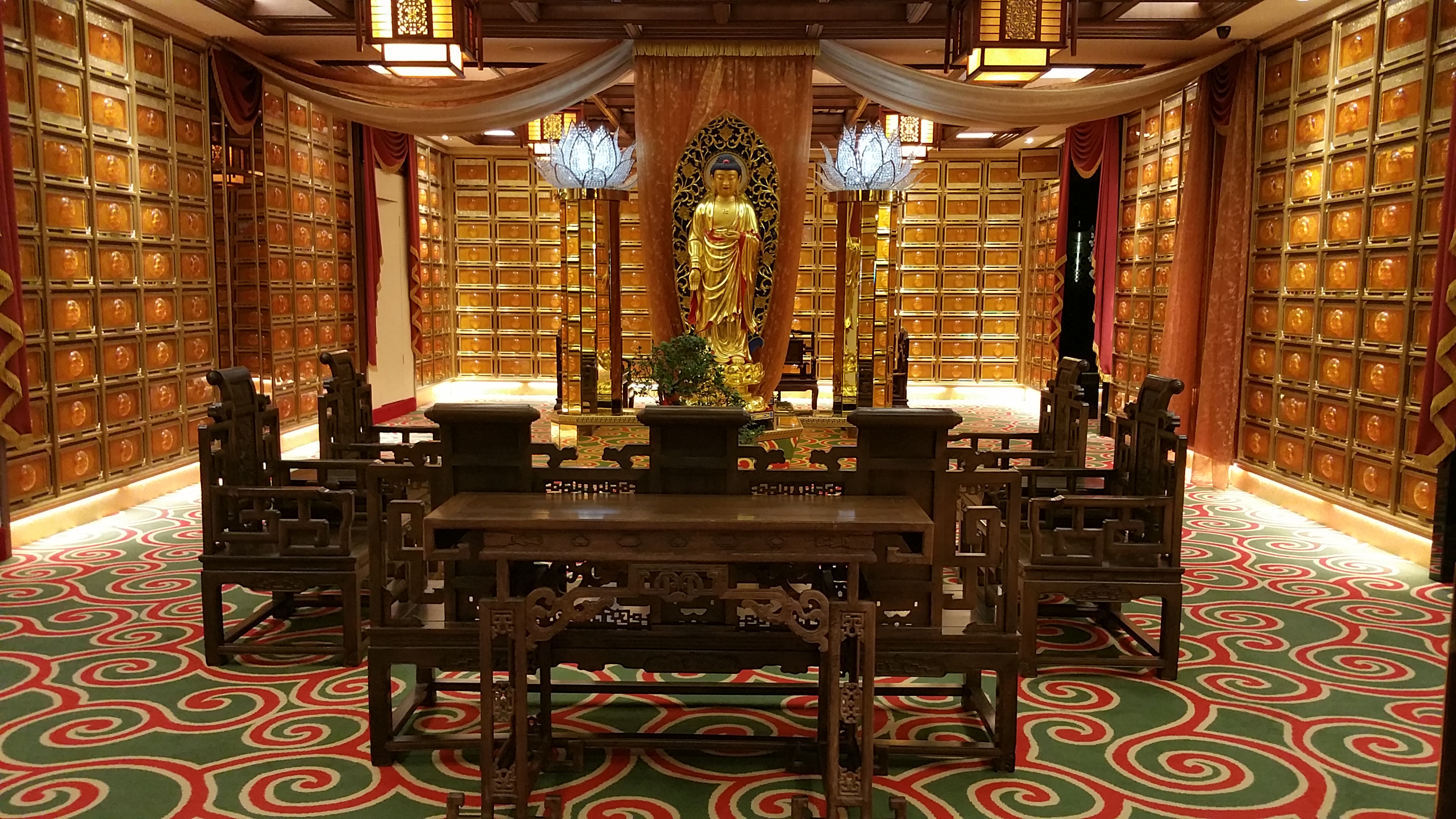
Nirvana has a website. And site duty agents who gave us an extended tour, explaining the entire concept, taking us through one of the three towers. Each one is five stories high like a pagoda with a circular ramp winding from top to bottom, a Guggenheim for the afterlife. Along the ramp, from top to bottom are rooms filled with niches and decorated according to the beliefs of those who choose to reside there.

20160415_111409

When the young Chinese man who gave us our tour referred more than once to “checking in”, the song Hotel California came immediately:

“Relax, ” said the night man,
“We are programmed to receive.
You can check-out any time you like,
But you can never leave! ” The Eagles

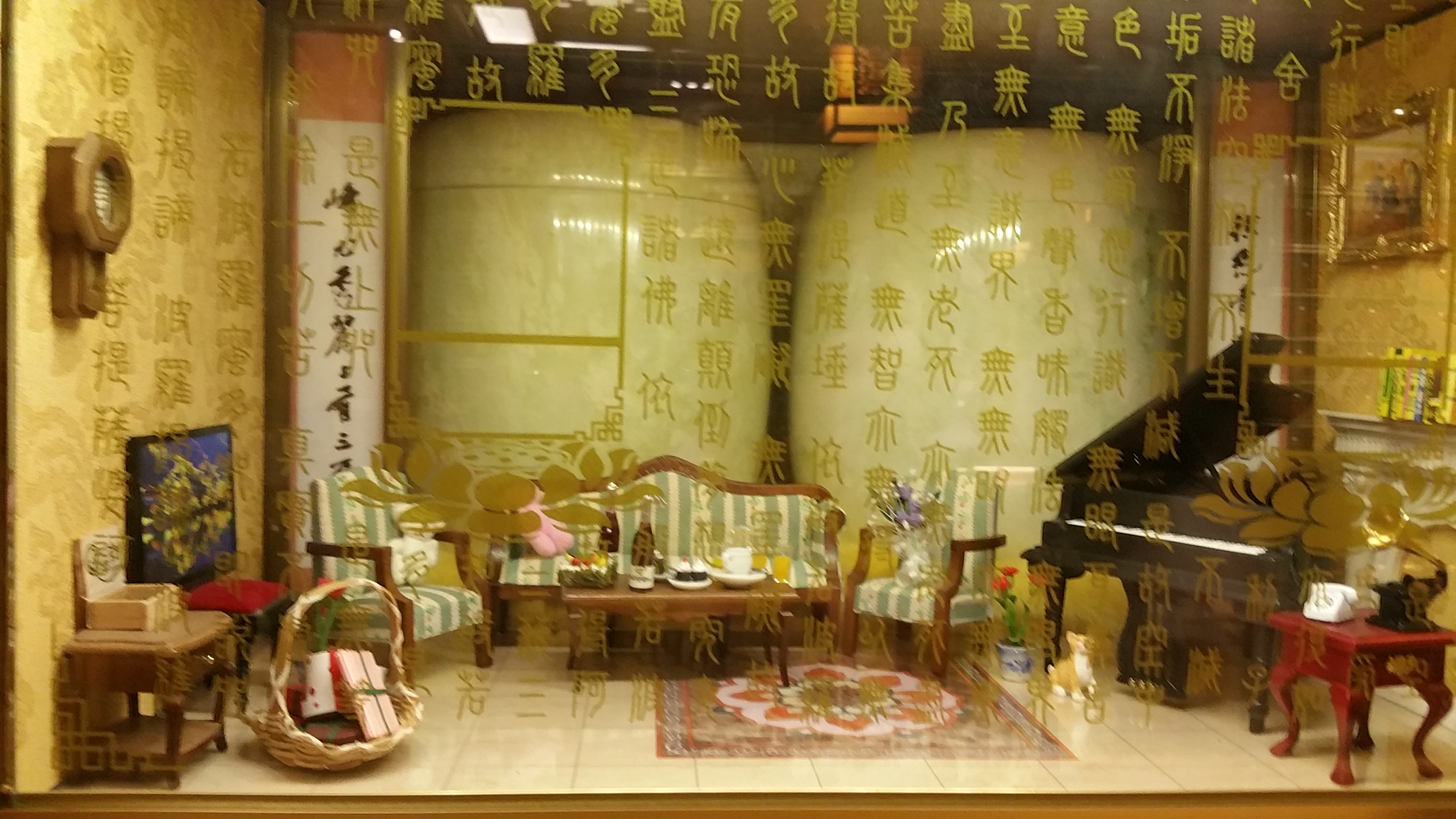
When you check in you can also place replicas of, say, your living room, in front of the urn(s) for your cremains.

20160415_111231

P1040093

The folks at Nirvana are pragmatic. We Chinese, the site duty agent said, take three joss sticks (incense) in when we pray with our ancestors. But, he went on, if three or four or eight or ten come in the room, then… So, we invite one person to go in and invite their ancestors outside. Problem solved.

There are, in a similarly pragmatic fashion, rooms for free-thinkers. In these rooms no statuary, no sounds of chanting, just sedate jade decorated niches. In this way the site agent said, if you’re a Buddhist and your child is a Christian, who might say, if you’re in the Buddhist room, I won’t come, the family can still be together.

Both Kate and I found the place oddly appealing. It’s quiet, respectful, out of the weather, air-conditioned. Instead of creepy it has a comforting feel. Not your usual tourist stop, but a fascinating one nonetheless.

Skygreens, the vertical farm, however, was not so welcoming. When we got there, we drove in to see the place no one was around. I had e-mailed them yesterday to see if we could visit, but received no reply. We took some pictures and I called the office. “We’re not open to the general public.” OK, then. Not quite the future of urban farming I’d expected. It looked run down and somewhat sad.


A Taxi to Nirvana rather than a Stairway to Heaven

Spring                                             Wedding Moon

Off to Nirvana with Hameed this morning. Nirvana is a huge columbarium that has intrigued ever since my sister sent me the link. And, besides, if I can get to Nirvana for the price of a taxi drive, why not?

We’ll go on about 10 minutes further to Skygreens, a vertical farm. Some evolution of this idea may well be the farm of the urban future and both Kate and I find it an interesting idea.

We’ve hired Hameed by the hour, $30 Singapore, about $22 U.S. I’ll let you know how Nirvana was when we get back. I think that’s what bodhisattvas do, so both Kate and I will accept the honorific when we return to the mountains.

Somewhat cooler today. But, only relative to 92 feels 102. So…

Have I mentioned that it’s hot here?

One Year Ago

Spring                                                                                   Maiden Moon

Had blood drawn yesterday for my third post surgery PSA. Right now they come every quarter, routine surveillance. The first two have showed .015 which is the clinical equivalent of none. Since the results have followed the best hoped for pattern, I’m experiencing no anxiety about them.

Today is my second annual physical with Dr. Lisa Gidday. This physical revisits a key moment from cancer season. The start of the season. It was last year at my first physical in Colorado when Dr. Gidday found a suspicious hardness in my prostate. I count cancer season as having begun with that physical on April 14th and ending in late September with my first follow up PSA.

It was a short time compared to my image of what cancer is typically like. It went: initial suspicion, see urologist who confirmed Gidday’s finding, biopsy, diagnosis, decision on treatment, surgery, recovery, first PSA after surgery. All this in six months.

There is the question of a cure. Does this mean I have no more prostate cancer? Did the end of cancer season mean the end of the cancer threat? No, it does not. Things look good, very good, but the clinical reality is that a few cancerous prostate cells could have escaped and are dormant right now. My gut says no, that is not the case. I feel rid of the traitorous bastards.

In fact, I feel very healthy right now. Yes, I have this damned knee, lower back and shoulder, but they’re nuisance level. Yes, I have chronic kidney disease, but it seems stable. In fact the numbers that gauge its severity actually improved in my last blood work done in October. Yes, I have insomnia, but it’s just one of those damned things.

My point here is that aging means an accumulation (for most of us) of chronic conditions. We can choose to focus on those as ongoing problems, become obsessive about them and drown ourselves in anxiety or we can recognize their inevitability and, if not embrace them, at least accept them with grace. Most of the time.

The anxiety is unnecessary. That is the point of Yama, the Tibetan deity. To worship Yama we envision our own death, see it coming, embrace its part in our story. When we can truly accept the reality of our own death, anxiety about what may deliver it to us becomes redundant. We may not know the particulars, but we do know the outcome of our life. It’s the same for all of us.


Still Pondering

Spring                                                                               Maiden Moon

New thoughts about old problems. My mind spins all day long, doesn’t stop at night. When I wake up, it’s not always monkey mind. Sometimes it’s just the one that wonders about reimagining faith, about what to do next in Jennie’s Dead or Superior Wolf, about the peculiar nature of this year’s primary season, about the nature of reality and life. Seems natural when I think about it this way, an extension into the night by what occupies me during the day. Of course, I still need sleep. But I get it in chunks rather than in a smooth 8 hours.

The friend problem. New information about friendship suggests that those of us who work on our own, on projects that matter to us-a lot-and especially those of us who work on creative or intellectual projects are happiest seeing friends occasionally. Most folks it seems are happiest when they see their friends often. I’ve always struggled with this idea, that I should have more friends, get out more, do more things with other people, but I’ve always gravitated to the quiet, the alone, the private.

In part this is because I am an introvert and I need private, quiet time to recharge and, conversely, find time with others enjoyable, but draining, not energizing. But, I’m also an introvert who has had, for as long as I can recall, various projects important to my own journey. Sometimes it was reading certain authors, other times researching topics like the Midwest, climate change, the Renaissance, the Enlightenment, Modernism, art history. More recently, the last 25 years or so, I’ve had specific creative projects: novels, essays, presentations for UU churches and two nonfiction works. The first non-fiction project, which is still in me, somewhere, was an ecological history of Lake Superior. The second, Reimagining Faith, remains active.


In retrospect I can see that the Woollies and the docents met my needs almost perfectly. I got to know others-in the case of the Woollies, deeply, and in the case of the docents, well. In both instances there were regular times for meeting, first and third Mondays with the Woollies plus an annual retreat and in the case of the docents, my touring day. Having these regular opportunities were just right for me.

Now that I’m here in Colorado, though I don’t have those regular opportunities, I still have the relationships, the friendships, from those times. So I need to make opportunities to nurture those relationships. And I have been doing that.

What I’m trying to say here is that I no longer feel less than because I’m not seeking new friends here. As I said yesterday, I imagine I’ll find some, at some point. But the bigger point is that I feel fine, happy, content as I am, at work and engaged with Kate, the dogs, family and those fine friends still in Minnesota.


something’s happening here

Imbolc                                                                           Maiden Moon

Diana Bass has written a book, Grounded, about what she believes is a revolution in religious thought. God’s no longer in the Holy Elevator business, press 2 for heaven, B for hell. No, God’s moved out of the three story universe and climbed into the world around you. Immanence, not transcendence. Bass finds God at the sea shore, in the clouds (no, not up there, the real clouds), in movements for social justice, in human relationships.

She seems very excited about all this, certain that a major inflection in Christian history has begun to unfold on her watch.

Here’s the problem I have with it. What does adding the word God to an experience of natural sublimity add? If God is found in human relationships, as Henry Nelson Wieman famously thought, again, what does adding the word GOD to a human relationship contribute?

I agree with Bass about the direction of what she and others call religious thought and practice. But I don’t believe an immanent God makes more sense, probably less in some ways, than the old boy with the beard in the sky where you go when you die. If you’re lucky.

Instead of moving the entirety of Christian history out of the heavenly and into the soil and peoples of this very mundane earth, why not imagine that a reenchantment of the world is well under way. That giant sucking sound you heard for the last 2,000 years or so was the Christian faith draining the spirit from nature, from human interactions and locating it in a transcendent realm. Sort of vampiric, taking the life force from the earth and its living beings and storing it far away in the care of one despotic ruler.

Well, it’s time to give it back. That’s what’s going on right now and the movement is not aided by reinterpreting the very theological systems that created the problem in the first place.

Anxiety

Imbolc                                                                        Maiden Moon

Palmer Hayden, a painter of the Harlem Renaissance, did a series of 12 paintings about the John Henry legend.  John Henry matched his muscle and steel-driving skill against a steam engine. When watching Alphago, the DeepMind computer program, play Go champion and legend himself, Lee Sedol, Michael Redmond, a Western go master at the 9-dan (highest level) said he really wanted to play the computer.

Here’s a quote from the only man who claimed to have seen the John Henry contest:  “When the agent for the steam drill company brought the drill here,” said Mr. Miller, “John Henry wanted to drive against it. He took a lot of pride in his work and he hated to see a machine take the work of men like him.” wiki, op cit


This is Lee Sedol and his daughter at Match 3. He lost, for the third game in a row, losing the match of 5 games to Alphago. Quite a different scene from Hayden’s imaging of John Henry’s loss, but still a human loss to a machine.

It occurs to me that both images evince a fundamental difference between humans and machines, love and concern for another. In Lee’s case, he and the Alphago team member are smiling, shaking hands. He has his arm around his daughter, another key distinction between  humans and machines, biological procreation. Parenting, the long task of raising a human child until they can take off on their own, is also a complex relational challenge, one well outside the current and possibly future capacity of artificial intelligence.


As John Henry lies dead, a heart attack brought on by the stress of the competition, others surround him. Their expressions vary from disbelief to sadness. One man has a ladle of water to offer, indicating that Henry must have just died. Too, the endurance of the legend and the song about John Henry show how deeply rooted are the questions. Is a human determined, defined by his or her capacity to defeat a machine? Ever?

Lee Sedol said, at the end of Match 3, “Lee Sedol lost. Not humankind.”

There is a fundamental anxiety about humanness revealed here. It is the question that Ray Kurzweil believes he has answered in his book, The Singularity Is Near. In Kurzweil’s mind, all of these human versus machine moments are stair steps toward the ultimate confrontation between humans and an artificial intelligence that is superior to us. The John Henry legend foreshadows what will happen. Like the steam drill a superior consciousness will simply eliminate the competition, not out of pique or malevolence, but because that is what happens when superior beings interact with inferior ones.


I don’t believe it. I believe the crowd around John Henry, the shaking hands at Match 3 with Alphago and the presence of Sedol’s daughter shows the true distance machines will have to travel to become superior to humans. And, when the contest is over love and compassion, the human characteristics on display in these two instances, then the machine will not want to eliminate us, but to embrace us.

The Goddess

Imbolc                                                                               New Maiden Moon

The goddess has moved back into her maiden form, having left the crone behind at Imbolc. She will remain a maid until Beltane when the earth becomes fecund. We are once again in the time of new beginnings, the temperate zones of mother earth readying themselves for a new growing season. This is a time to consider pruning those branches of your life that have died or no longer have the sort of energy you want to encourage.

While the antiquity of the triple goddess concept may be questioned, its archetypal power has moved it into a central position among contemporary pagans. Related both to the seasons of the year and the phases of the moon, the shifting from maiden to mother to crone offers us a regular opportunity to examine our life as a cyclical phenomenon of innocence, achievement and the gathering of wisdom.


Sabbath

Imbolc                                                                          Valentine Moon

Sunday’s occupy a different reality. Time slows down. Ambition flees. A good thing. In spite of my now long absence from the Christian faith the notion of a Sabbath, lifted from Judaism, has always appealed to me.  A seventh day when God rests. And us, too.

The notion of a divine creator soothing the chaos before speaking the world into being has faded from my belief system. The idea, however, of a time for setting aside work, domestic and otherwise for a reflective day every week still makes sense to me.

The sabbath can be seen as a form of radical hospitality for the self, a day when shaping our lives to the demands of others gives way. On a sabbath we could read, view art, listen to music, cook, play games, visit family.  The third phase of life, after we have set aside work and at home parenting, can be a sabbath phase, much like the last of the four Hindu life stages.

Something to consider.