Beltane and the Recovery Moon
Tomorrow is the Summer Solstice. The day of the sun’s maximum presence for the year. On the solstices the day/night balance shifts. On the Summer Solstice, the longest day of the year (though if you check the time tables the difference between June 21st and July 21st is only 13 minutes), the night begins to encroach, slowly.
Whatever guides my soul prefers the dark days, the fallow time. I celebrate on this holiday not the victory of the light, but the coming dominance of the night. I do like the bright blue days here in Colorado, not saying I don’t. Just that my soul gains more richness, more depth as darkness grows. Probably one of the reasons I felt so much at home in Minnesota, at the 45th latitude, half-way to the Northpole.
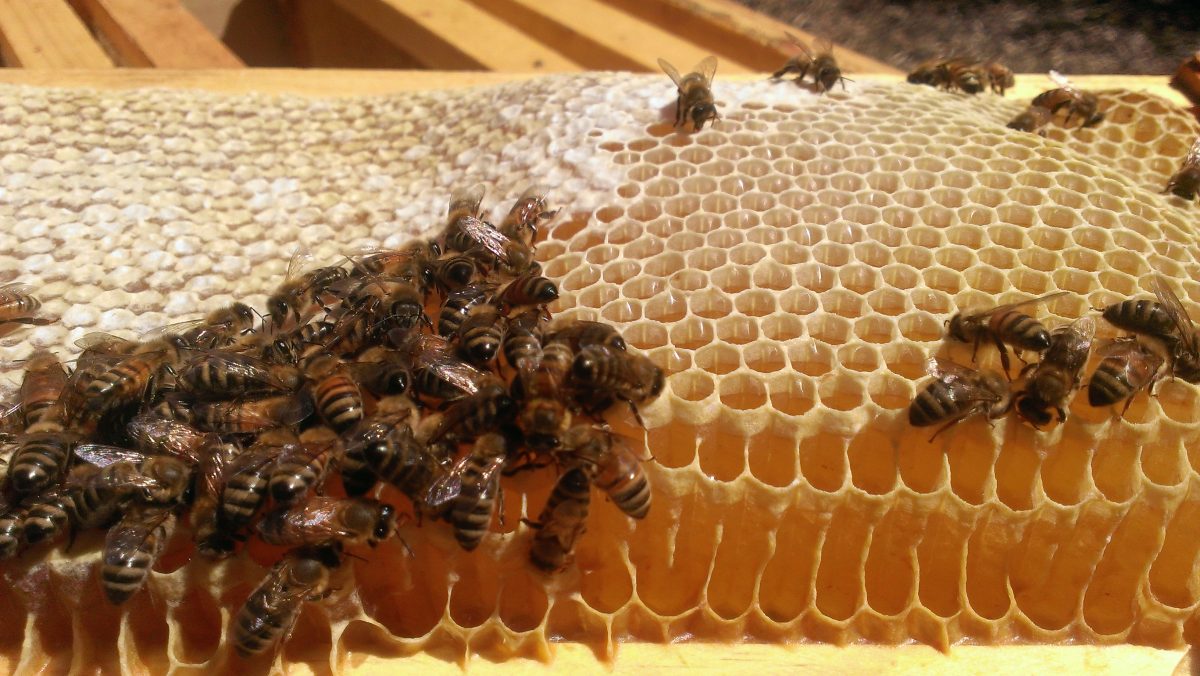
As a gardener, of course, I relished the light for the vegetables and fruits, for the flowers that fed our bees. The summer solstice signals the growing warmth and long days that nourish all plant life. It was also the time, though, that bugs grew more troublesome, when the humid weather encouraged fungus and mold, viral infections in the plants.
In Sweden, Scotland, and other Gaelic and Scandinavian countries the auld religion still calls to its people. Bonfires. Nudity. Parties through the night. Feasts. I like the idea of them. If there were one close by, I might go.
My relationship with neo-paganism is as fraught as my relationship with Christianity. Judaism, too, at the doctrinal level. There’s so much intellectualizing, writing of ideas, logic. I’ve come to believe that elaborating our feelings toward the natural world in a Wiccan or Asatru way, a neo-pagan syncretic way, is as damaging to the soul as the dogmas and laws of other religions.
In the language of Taoism, the one lens which seems to consciously push away dogma, I would say it this way: The religion that is written and elaborated is not religion. Barriers between our soul and its path.
Emerson has influenced me here and he was, in turn, influenced by Taoism. If you’ve read me for any length of time, you’ll have read these words more than once:
“Our age is retrospective. It builds the sepulchres of the fathers. It writes biographies, histories, and criticism. The foregoing generations beheld God and nature face to face; we, through their eyes. Why should not we also enjoy an original relation to the universe? Why should not we have a poetry and philosophy of insight and not of tradition, and a religion by revelation to us, and not the history of theirs? Embosomed for a season in nature, whose floods of life stream around and through us, and invite us by the powers they supply, to action proportioned to nature, why should we grope among the dry bones of the past, or put the living generation into masquerade out of its faded wardrobe? The sun shines to-day also.” Emerson’s Introduction to his essay, Nature.
It is this sensibility that I celebrate as each of the Great Wheel holidays roll round. The sensibility that helps us become native to the various places where we live. The sensibility that finds the soul’s interaction with the seasons enough. The sensibility that drags down, pulls away the words to look directly at this universe into which we are born. The sensibility that does not fight the turning of the wheel, but sees the seasons of our lives as one with the changing seasons. This is my understand of wu wei, conforming our life to what is, not what might be.
What I encourage is the sun on your face. Your hands in the soil. Your feet on a hiking path. Your ears alive to the buzzing of bees, the bugle of the elk, the bark of the dog, the words of your friends. What I encourage is living your life as it comes, knowing that it leads to death, yes, but that until death you are alive.
Hug. Smile. Laugh. Cry. Plant. Harvest. Compost. Be grateful. That’s enough.


 Read yesterday in the group. Iam asked me afterwards if I was a professional writer. Well, I write novels. But, I’ve not sold any so I don’t know if I’m a professional. Drina, who works for a website connected with the founders of
  We wrote spiritual steppingstones, what experiences in our life have led us to our current spirituality. Those of you who know me know that it’s been a long journey. An ongoing one, too. I would characterize my current spirituality as a tablespoon Taoist, two tablespoons existentialist, a teaspoon Christian, a teaspoon and a half Reconstructionist Jew, and a half cup of paganism (of the earth, the sun, the starting of the universe, aware of it and finding it enough). Mix together and bake until dead. Then, we’ll see.
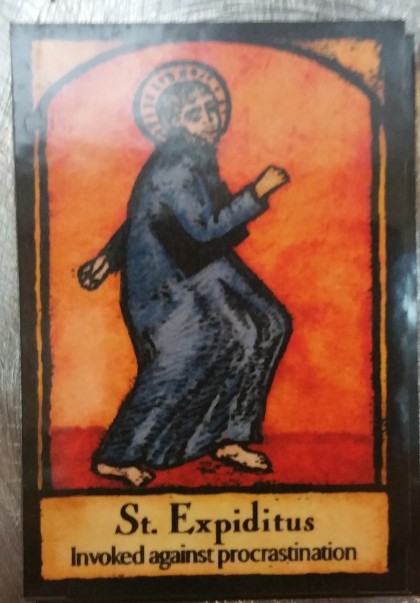 Lots of Catholic kitsch in the Mother Cabrini giftshop. I mean, lots. In fact, that’s almost all they have. St. Expeditius here is my favorite, especially his arms.This is a refrigerator magnet and there are others. Including St. Gregory the Wonder Worker invoked in desperate situations.
 We hit month 7 since Kate’s bleed yesterday. (To quote the Grateful Dead.) Procedures and imaging. Trips to the emergency room. Trips to doctors. The gradual shift in roles at home. Things have gotten clearer, some solutions have appeared, but nothing certain right now.
 Synagogue shootings. Mosque shootings. Church shootings. I’ve not read of any Hindu temple shootings, but if they’ve not happened, it seems inevitable. A Southern Baptist clergy said, “…no one should be gunned down in worship.”
 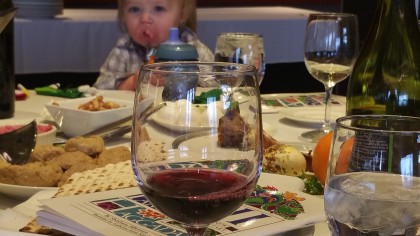 Back to mussar yesterday. First time in quite a while. It was a gift, as was the minyan for Debra Copes’ mother’s memorial the night before.
 Being away for a while makes me more aware of these moments. Yet Debra wanted me at her mother’s minyan. She did a universal worship service which consists of lighting candles for Hinduism, Zoroastrianism, Christianity, Buddhism, Islam, Judaism, and a general candle for other witnesses to the divine. Rabbi Jamie said, at a meeting a couple of weeks ago, “This ex-Presbyterian understands Reconstruction better than anybody else around this table.” Around the table were key leaders of the synagogue.
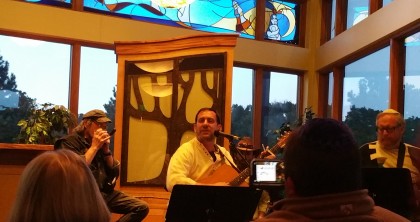 The Jewish approach to death, too. Sitting shiva with someone after a death. Having those in mourning stand and be acknowledged during the mourner’s kaddish at every worship service. Celebrating each year the yahrzeit, the year anniversary of a loved ones death. Calling together a minyan as Debra did for honoring her mother. Those who knew it, repeated the mourner’s kaddish from memory. A vital and key part of maintaining community, acknowledging that the dead live on, not gone, just absent.
 Why? What we know now about sexual abuse is that it often (usually) involves an authority figure and a subordinate. Sexual desire hasn’t waned in the last two thousand years, I’m sure of that. And the Catholic churches presumption of holy authority and that mediated through its bishops and their clergy trumps even the boss/employee relationship, the coach/athlete relationship, and the doctor/patient relationship.

 This particular Grateful Dead shabbat, they occur occasionally, honored Leah, who recently left her position as synagogue administrator. She’s a Dead-head who sells tie dyed shirts and other craft items at Grateful Dead tribute concerts. She had a small shrine to the Dead over her desk. What was remarkable about this evening was that Leah’s leaving the job was not completely voluntary.